Lumera H1 2026 Review


Table of Contents
1. Lumera Project Overview
2. H1 2026 Performance: Data Points to a Shift Toward Real Usage
2-1. Network Activity: Wallets, Transactions, and Staking Ratio
2-2. Infrastructure Usage: SuperNode and Cascade Storage Metrics
2-3. Community Growth: Driven by Foundry Events
3. H1 2026 Key Highlights: Roadmap Execution and Ecosystem Expansion
3-1. Roadmap Execution: Broader Access and Multichain Expansion
3-2. Key Development Updates: Building a More Reliable Cascade Network
3-3. Key Partnerships: Cascade Integration with Injective
4. Conclusion: Usage Is Now the Test
1. Lumera Project Overview
Lumera is a proof-of-stake (PoS) blockchain network built on the Cosmos SDK. As an application-specific chain, Lumera provides protocol-level Web3 AI infrastructure, including AI compute, permanent storage, and content authenticity verification.
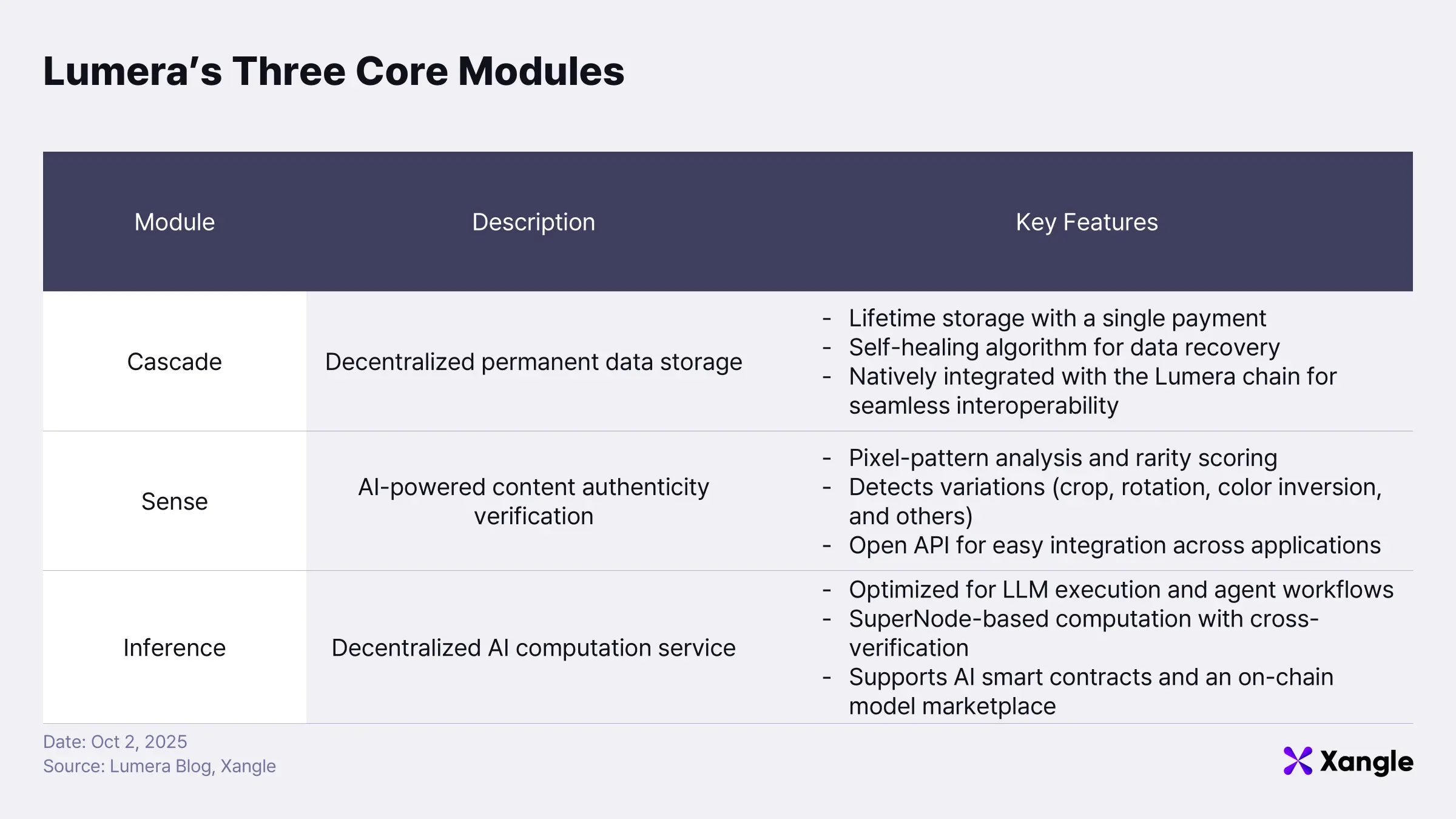
Unlike typical L1s built around general-purpose smart contract execution, Lumera is designed around modular services such as Cascade, Sense, and Inference. Cascade serves as a decentralized storage module for permanent data storage, Sense verifies content authenticity, and Inference supports AI model inference and intelligent computation. SuperNodes execute these services by handling the actual storage, AI compute, and verification workloads, while Validators remain responsible for consensus.
Lumera’s architecture positions the network beyond a simple data storage chain or AI-focused chain. The project is building toward a modular infrastructure layer where external chains and applications can call the AI, storage, and verification functions they need. More detailed information on Lumera can be found in Xangle’s report, “Lumera: 2026 Roadmap and Expansion Strategy.”
2. H1 2026 Performance: Data Points to a Shift Toward Real Usage
By the end of 2025, Lumera had established the core architecture for its modular infrastructure through its mainnet, Lumera Hub, Cascade, and the SuperNode Program. For 2026, Lumera laid out a strategy focused on broader deployment, expanded integrations, and sustained usage built on top of that foundation. The Lumera Foundation also allocated 12.5 million LUME for ecosystem expansion and marketing initiatives in 2026, with the funds intended to support community growth, multichain integrations, and the onboarding of developers, operators, and institutional partners.
Lumera’s H1 2026 metrics suggest that the project is moving from infrastructure buildout to usage validation. Wallet count, transactions, storage capacity, staking activity, and community size all increased, while average daily transactions in April more than doubled from the previous month. The following section examines Lumera’s growth trajectory through these quantitative indicators.
2-1. Network Activity: Wallets, Transactions, and Staking Ratio
Lumera’s network activity began to pick up visibly in Q1 2026. By the end of the quarter, total wallets had reached 159,813, representing a 101% quarter-over-quarter increase, while cumulative transactions rose 436% to 952,123. Total staked LUME stood at 62.4 million during the same period, with the staking ratio reaching 21.43%.
Transaction growth continued into April. According to the April update, Lumera recorded 159,908 wallets and 1,105,492 cumulative transactions. Average daily transactions in April reached approximately 5,680, more than twice the March average of around 2,453. The staking ratio also increased from 21.43% in March to 22.92% in April.
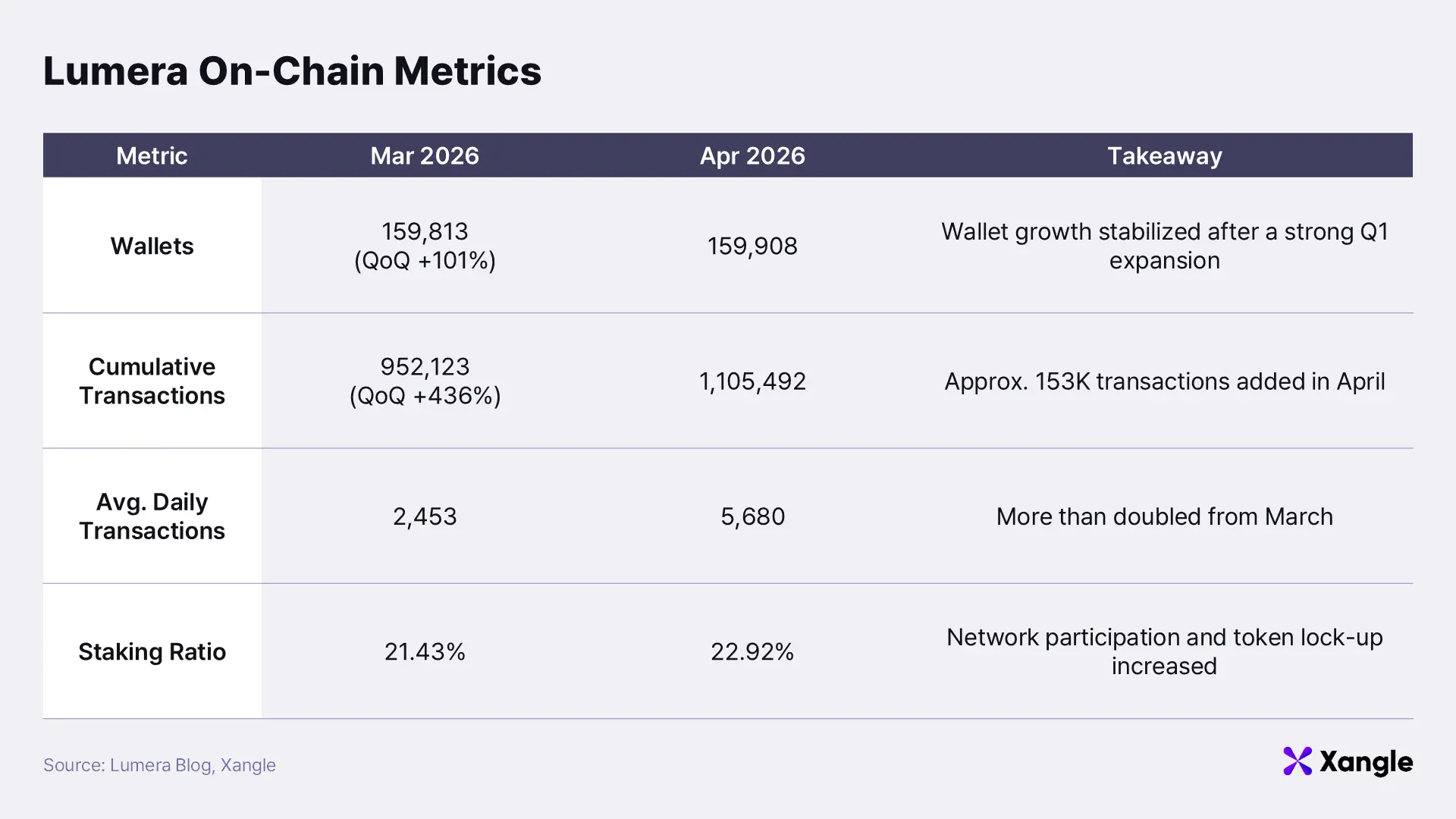
The more important signal from these figures is not wallet growth in isolation, but the simultaneous increase in transactions and staking ratio. While wallet count remained largely unchanged between March and April, transactions continued to rise and a greater share of circulating LUME was staked. Wallet count can fluctuate due to community campaigns, onboarding initiatives, or one-time participation events. Transactions and staking ratio, by contrast, are generally more direct indicators of actual network usage and users’ willingness to participate in the ecosystem. A rising staking ratio, in particular, suggests growing confidence among participants in the network’s long-term prospects.
April also presents a more nuanced picture. Wallet growth was minimal, likely because large-scale community campaigns such as Foundry Season 2 had already driven most new wallet creation during Q1. As a result, activity from existing users became more visible than new user onboarding. Although wallet count increased by only 95 addresses during the month, cumulative transactions and average daily transactions continued to grow. Lumera’s H1 2026 network activity can therefore be interpreted as a shift from user acquisition toward deeper engagement within an already established user base.
2-2. Infrastructure Usage: SuperNode and Cascade Storage Metrics
Unlike most Layer 1 networks, Lumera’s performance cannot be evaluated through transaction volume alone. The network’s core value proposition lies in modular services such as Cascade, Sense, and Inference, with SuperNodes providing the infrastructure that powers these services. Unlike Validators, SuperNodes are not responsible for consensus or block production. Instead, they function as high-performance infrastructure nodes that support Lumera’s key workloads, including decentralized storage, AI computation, and authenticity verification.
At the beginning of 2026, both SuperNode participation and Cascade usage showed strong growth. Between January and February, the number of active SuperNodes increased from 10 to 22, while Cascade’s total storage capacity expanded from 25TB to 40TB. Storage utilization also rose from 15TB to 20TB during the same period. These figures indicate that Lumera’s service infrastructure was scaling rapidly early in the year, with actual demand for Cascade storage growing alongside available capacity.
Growth continued into March. The network reported 27 SuperNodes in total, including 18 active nodes. Cascade storage capacity reached 53.18TB, while storage in use climbed to 33.22TB. Cumulative uploads on Cascade also surpassed 123,000. The jump in storage utilization—from 20TB in February to 33.22TB in March—is particularly noteworthy, as it suggests that user demand was increasing in parallel with infrastructure expansion rather than capacity being added without corresponding usage.
In April, the total number of SuperNodes increased slightly to 28, while the number of active nodes fluctuated between 14 and 21 throughout the month. Cascade storage capacity was reported at approximately 35TB, lower than the March figure. According to Lumera, this variation reflects changes in the availability and operating status of active SuperNodes. Unlike centralized cloud infrastructure, Cascade’s capacity is derived from a distributed network and therefore changes dynamically based on the resources contributed by participating nodes.
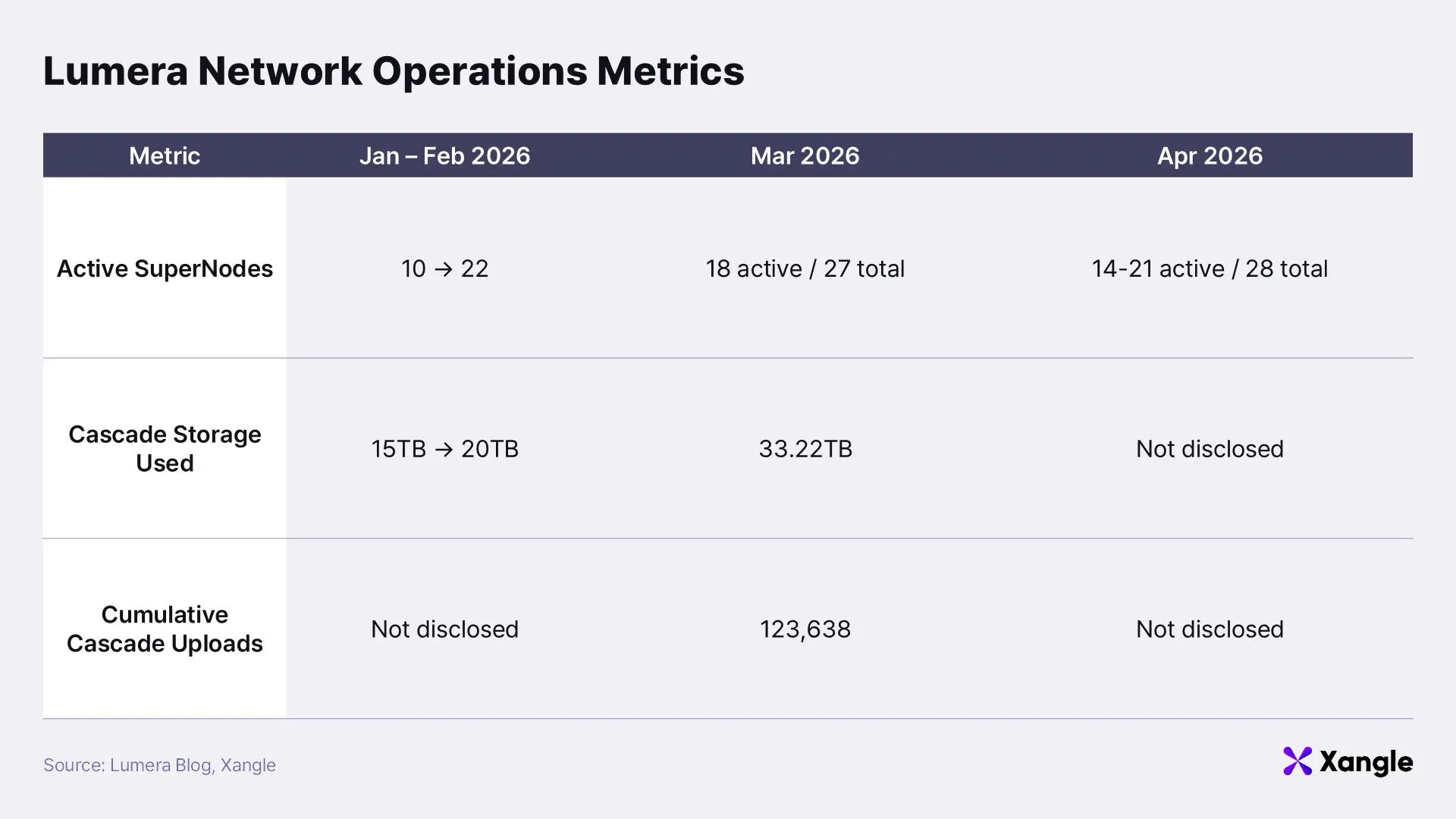
Overall, infrastructure metrics from Q1 through April 2026 suggest that Lumera is progressing beyond basic network activity and continuing to build out the service layer that supports its ecosystem. The number of SuperNodes increased steadily from the start of the year, while Cascade storage utilization reached 33.22TB by March. More than 120,000 cumulative uploads further indicate that the storage network is already seeing meaningful real-world usage.
At the same time, April’s data highlights the importance of interpreting Lumera’s infrastructure metrics in context. Measures such as active SuperNodes and total storage capacity can fluctuate as node operators join, leave, or temporarily go offline. As a result, headline figures alone do not fully capture network health. More meaningful indicators include the reliability of active SuperNodes and the consistency of storage demand generated through Cascade. While the dataset remains relatively early, the concurrent growth in node participation and storage utilization suggests that Lumera’s service infrastructure is gradually gaining scale and adoption.
2-3. Community Growth: Driven by Foundry Events
Lumera’s community growth has unfolded around Foundry. Foundry is Lumera’s community quest and reward program, structured so that users can complete missions, earn experience points (XP), and receive rewards based on leaderboard rankings and contribution levels. Through Foundry, Lumera has encouraged activities that lead not only to simple social engagement, but also to actual network participation, such as wallet setup, staking, Cascade usage, ecosystem learning, and content creation.

The Road to Mainnet campaign, which effectively served as Foundry’s precursor, helped build community attention ahead of mainnet launch. The campaign ended on September 9, 2025, after generating more than 44 million XP and over 75,000 quest completions. With mainnet launch, Lumera then rolled out Foundry Season 1. Season 1 ran for roughly 3.5 months, from September 11 to December 31, 2025, and came with a total reward allocation of 2.5 million LUME, covering Foundry rewards, ecosystem airdrops, and exclusive quests for early participants. Core quests included participation on X, Discord, and Telegram; content creation; Lumera module education; and engagement with ecosystem apps and partners. Season 1 therefore served as Lumera’s first formal effort to organize its post-mainnet community and familiarize users with the ecosystem’s basic functions and structure.
 https://x.com/lumera/status/2032212889470451757
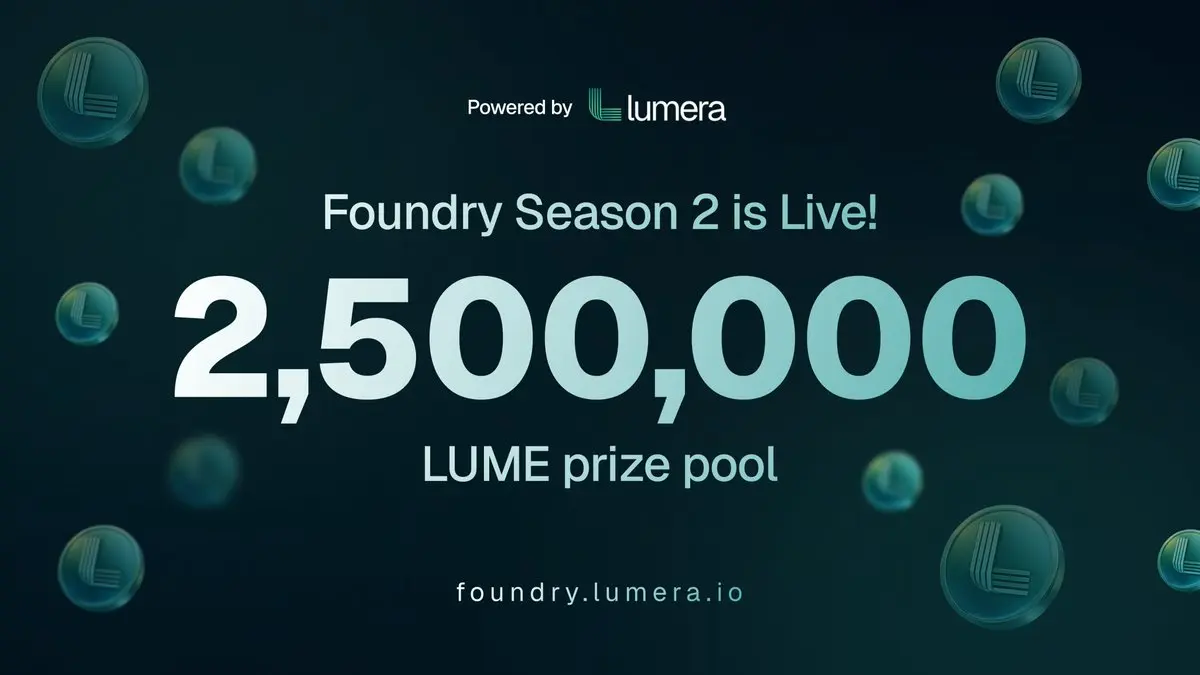
Foundry Season 2, held in Q1 2026, shifted this flow further toward actual protocol usage. While Season 1 focused on introducing Lumera and onboarding the community, Season 2 placed greater emphasis on direct network participation, including Lumera Hub usage, Cascade uploads, LUME staking, and on-chain activity. By the end of the season on March 31, 12,500 participants had completed more than 200,000 quests, while Discord membership increased from 16,719 to 25,262 during Q1.
Community metrics also improved quickly in January and February. X followers increased from 61,323 to 62,370, while Discord members grew from 16,719 to 18,798. Over the same period, Foundry members rose from 16,563 to 19,136, and completed quests increased from 83,006 to 124,332. These figures suggest that user engagement began moving beyond channel joins early in Season 2, translating into quest completion and network activity.
In April, community size showed some normalization following the end of Season 2, but sentiment improved. The share of positive messages on Discord rose from 22.5% in March to 33.4% in April, while Lumera continued to maintain community touchpoints through regular X Spaces.
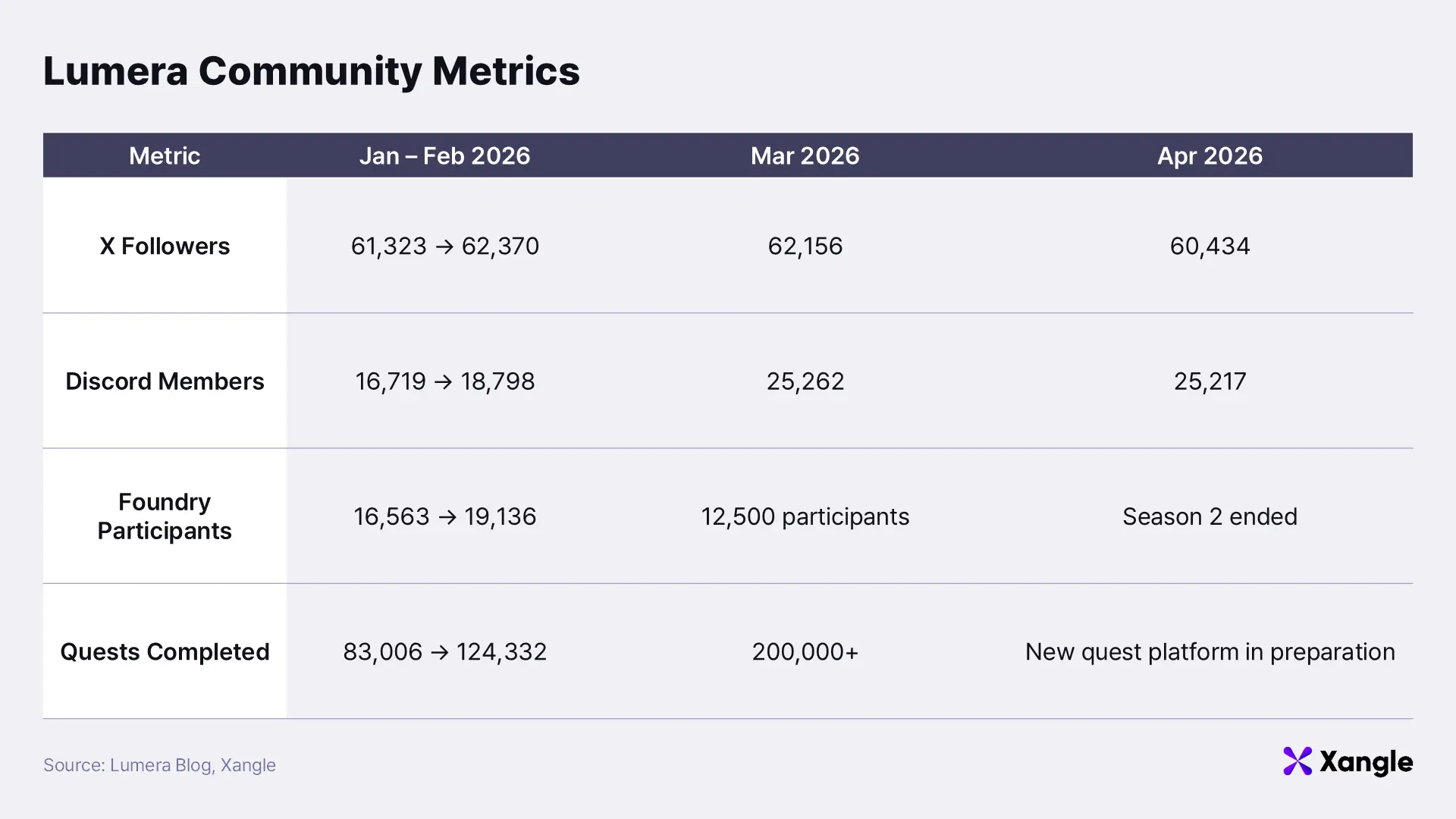
Overall, Lumera’s community growth has followed a progression from quest-based onboarding to post-mainnet community activation and then toward actual protocol usage. Road to Mainnet and Foundry Season 1 helped generate attention and early participation around mainnet launch, while Foundry Season 2 expanded that flow by steering users toward core network functions such as Lumera Hub, Cascade, and staking. Following the end of Season 2, the community saw some decline in participation, but improved Discord sentiment, educational content releases, and preparations for a new quest platform suggest that Lumera is working to turn community activity into a more sustained engagement loop.
3. H1 2026 Key Highlights: Roadmap Execution and Ecosystem Expansion
If the figures reviewed in Section 2 show Lumera’s H1 2026 performance through data, this section examines the actual process through which that performance was created. Lumera’s key updates in H1 2026 can be summarized into three major areas. First, the 2026 roadmap entered the full-scale execution phase. Second, protocol updates continued to advance the verification, reward, and operating systems for SuperNodes and Cascade. Third, real-world use cases for Cascade are expanding through partnerships with Injective, LUKSO, and others.
3-1. Roadmap Execution: Broader Access and Multichain Expansion
Lumera’s 2026 roadmap is centered on three priorities: broader deployment, expanded integrations, and sustained usage. The strategy starts with widening the access points into the network, then extends to making core modules such as Cascade, Sense, and Inference available across more chains and applications.
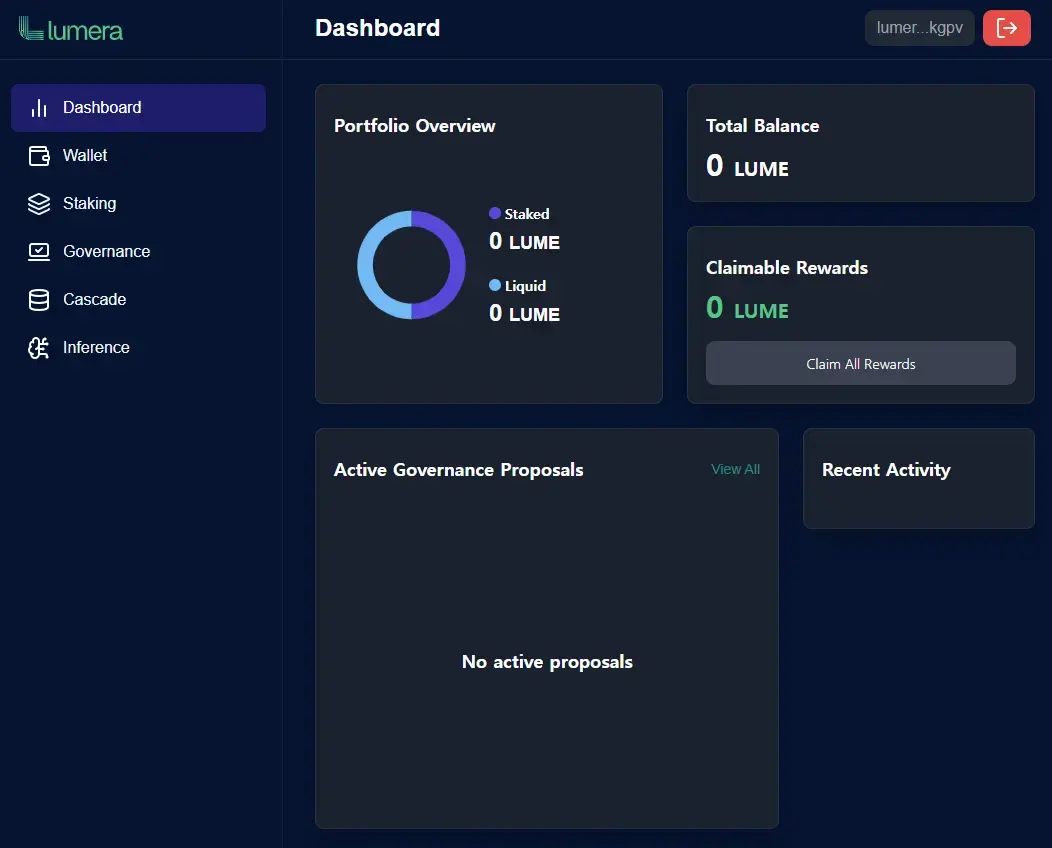
Execution of the roadmap gained momentum in H1 2026. Lumera has been expanding user touchpoints around the Hub, including staking, Cascade usage, and governance participation, while SuperNode onboarding has increased the infrastructure available to operate live services. The network has also added a Chainalysis-based on-chain analytics environment, making it easier for exchanges, custodians, and institutional participants to monitor Lumera’s network activity and status.
Ecosystem expansion has so far been led by integrations with Cosmos-based chains. According to Lumera’s Q1 update, progress included technical integrations with Cosmos-based Layer 1s, early collaboration with a zero-knowledge-focused Layer 1, and Cascade integration workshops. The Q2 roadmap also identifies broader collaboration with EVM- and SVM-based projects as a key priority. These efforts point to Lumera’s ambition to move beyond a single ecosystem and become modular infrastructure that can be used across multiple chains.
At the same time, several roadmap objectives remain in development. Usage metrics have started to emerge around Cascade and SuperNodes, while Sense and Inference still need to complete their testnet and mainnet transition phases. CEX listings, on/off-ramps, and DeFi integrations also remain ongoing initiatives rather than completed milestones.
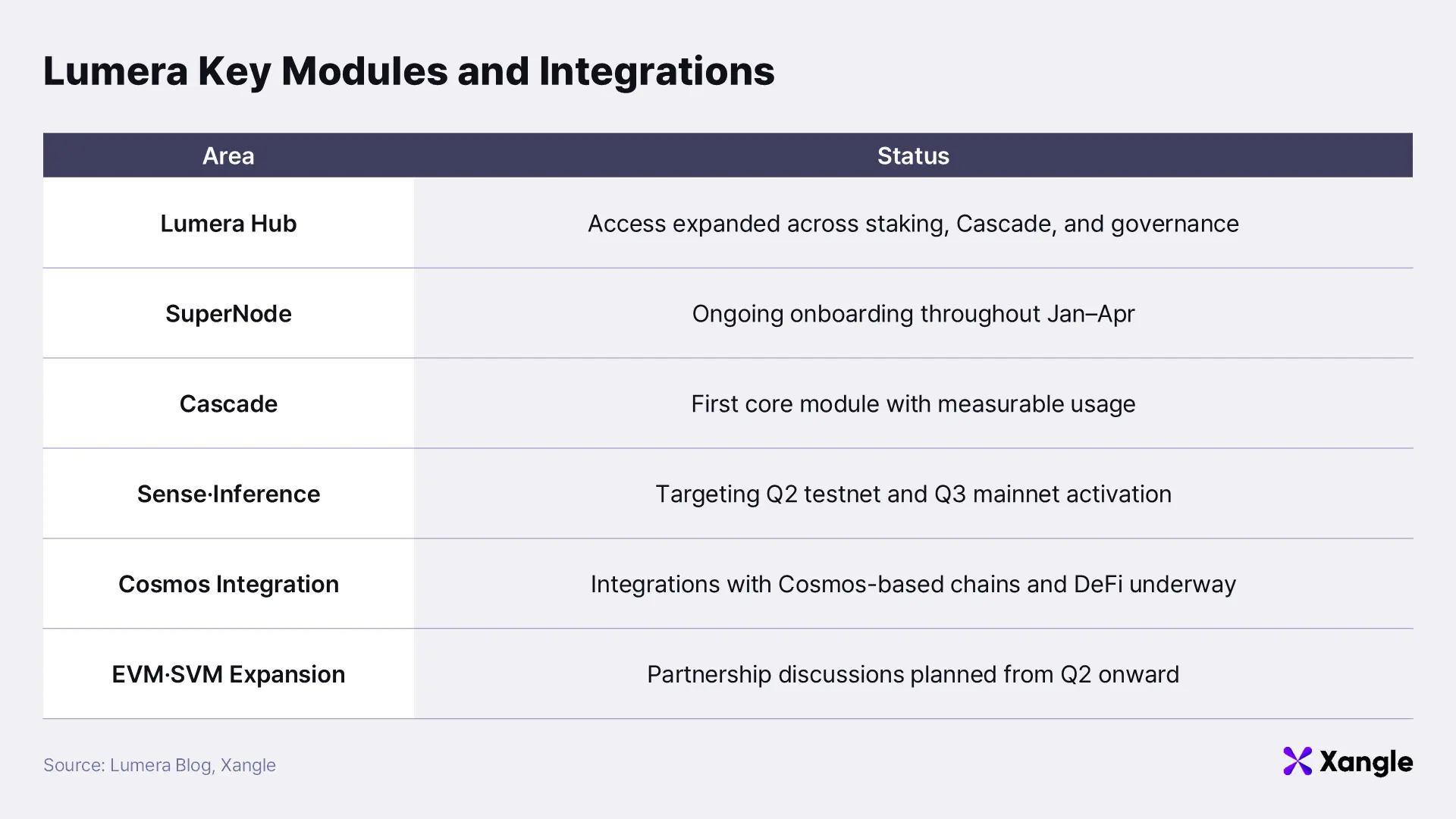
Taken together, H1 2026 progress has been concentrated around Cascade deployment and SuperNode expansion. The next phase will depend on bringing Sense and Inference into production and extending access through exchanges, wallets, and DeFi integrations. Even so, the broader trajectory is becoming more apparent: Lumera is positioning itself not as a standalone blockchain, but as a modular infrastructure layer that other chains and applications can leverage for AI, storage, and verification services.
3-2. Key Development Updates: Building a More Reliable Cascade Network
Lumera’s core services consist of Cascade, Sense, and Inference. Of the three, Cascade is currently the most active product, serving as the network’s permanent storage layer. When users upload files or data to Cascade, that information is distributed across SuperNodes, which are responsible for storing and maintaining it over time. For Cascade to work as intended, two things matter most: the data must remain available, and the SuperNodes storing it must perform their duties consistently.
Much of Lumera’s development work during H1 2026 focused on improving these fundamentals. The team introduced new monitoring tools, added ways to evaluate SuperNode performance, and strengthened the mechanisms used to confirm that stored data remains intact.
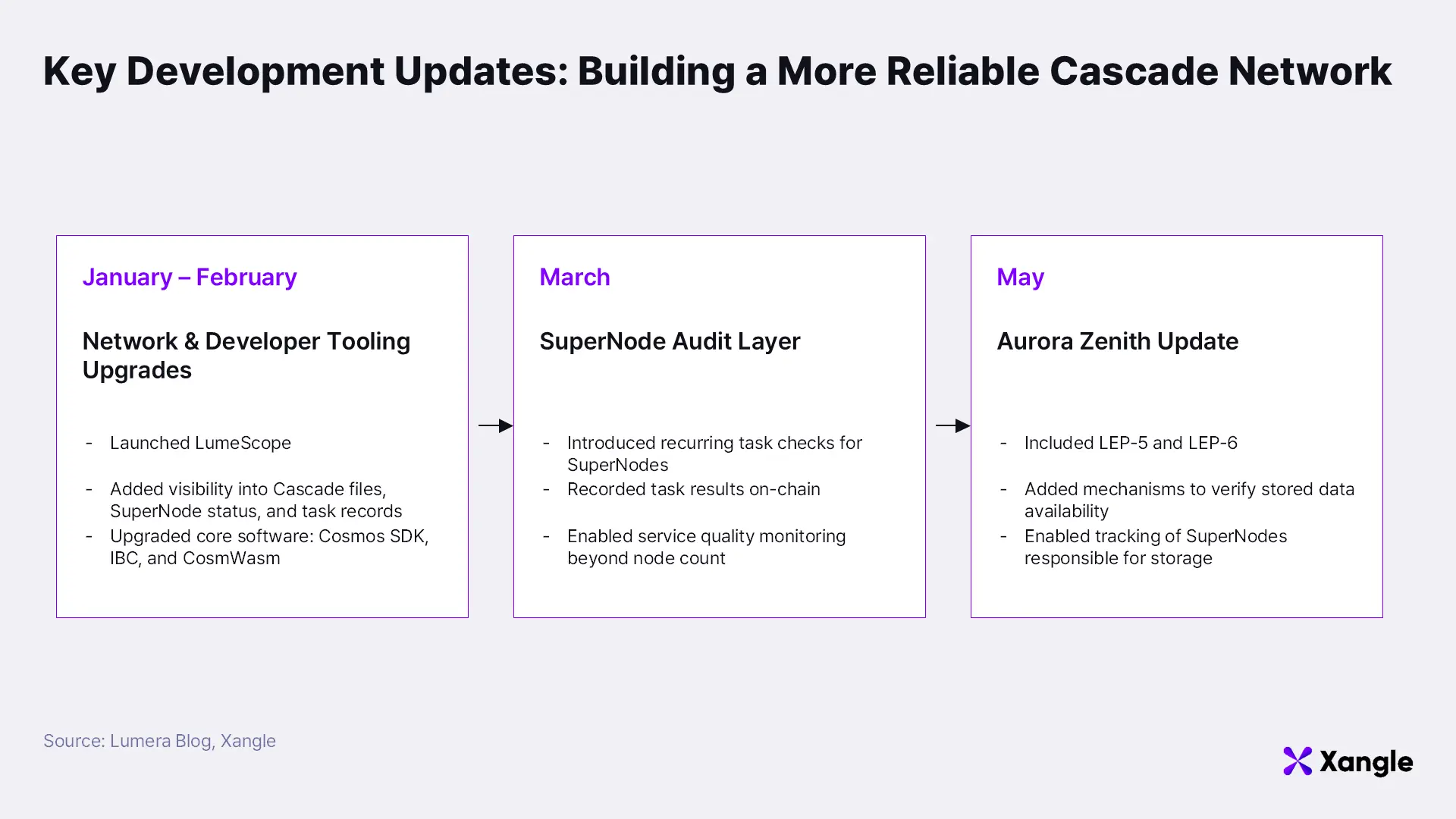
In January and February, Lumera first upgraded its network and developer tooling. The launch of LumeScope gave developers and analysts a clearer view into network status. LumeScope allows users to check information on files stored in Cascade, SuperNode operating status, network task records, and other related data.
In March, Lumera introduced the SuperNode Audit Layer to verify SuperNode task execution. Previously, the network could confirm that a given SuperNode was registered and had staked LUME, but verifying whether that node was actually storing data correctly was more difficult. With the Audit Layer, SuperNodes perform tasks on a regular basis, and the results are recorded on the network. Lumera can therefore manage not only the number of SuperNodes, but also the service quality of each node.
The next major step came in May with the v1.12.0 “Aurora Zenith” release. This update brought the same emphasis on accountability to Cascade’s storage system through the introduction of LEP-5 and LEP-6. These proposals added mechanisms that make it possible to verify both the condition of stored data and the behavior of the SuperNodes responsible for storing it.
In practical terms, LEP-5 and LEP-6 move Cascade beyond a simple file upload layer and into verifiable storage infrastructure. Even after uploading data, users can check whether that data remains properly stored on the network and identify which SuperNodes are responsible for maintaining it. This improves Cascade’s reliability while giving Lumera a more structured way to manage SuperNode-based storage operations.
Taken together, these updates reflect Lumera’s effort to improve the reliability and accountability of Cascade as usage grows. By increasing network transparency, introducing performance audits for SuperNodes, and adding verifiable storage mechanisms, Lumera is laying the groundwork for a storage network that applications and users can trust.
3-3. Key Partnerships: Cascade Integration with Injective
 https://x.com/lumera/status/2055333260855554294
The most notable partnership update for Lumera in H1 2026 was Cascade’s integration with Injective. Lumera and Injective completed an IBC-based integration, allowing dApp developers in the Injective ecosystem to use Lumera’s Cascade directly on mainnet.
Cascade is Lumera’s permanent storage module. Following the integration, Injective dApps can store application data, files, metadata, proof records, NFT assets, and other data on Lumera’s SuperNode network. Storage fees can be paid in either INJ or LUME, giving Injective developers access to Lumera’s storage infrastructure while still using familiar ecosystem assets.
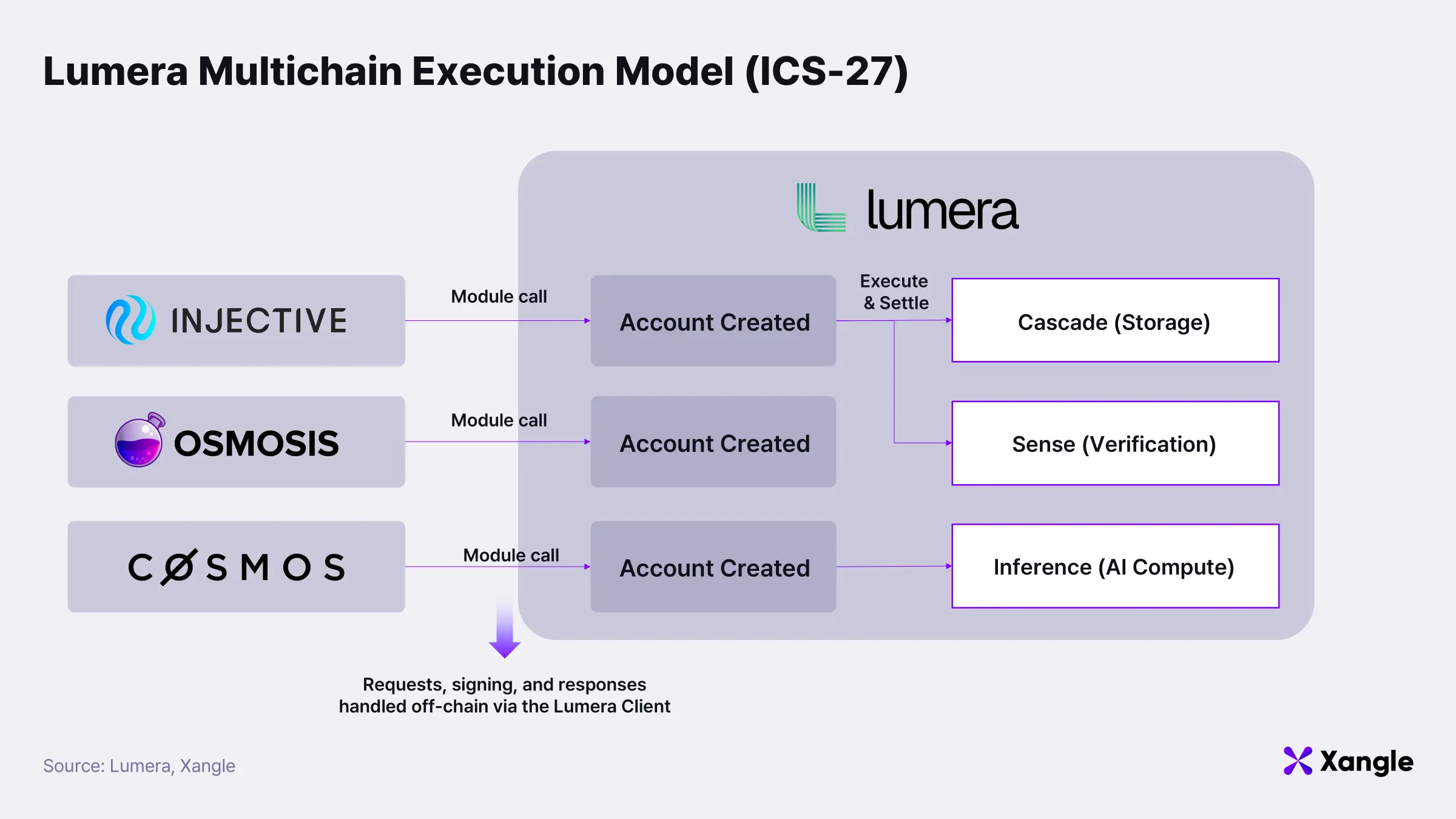
The integration is significant because it turns Lumera’s multichain strategy into a live use case. In our previous research, we explained that Lumera’s multichain strategy is not simply about moving LUME across chains. The goal is to allow external chains and applications to call modules such as Cascade, Sense, and Inference directly. The Injective integration puts that strategy into practice. Injective dApps can now call Cascade on mainnet to store data, while Lumera is expanding beyond an L1 used only within its own network and into modular infrastructure that provides services needed by external ecosystems.
 https://x.com/lumera/status/2059319904831254928
Injective highlights the demand for DeFi data storage, while LUKSO shows where Cascade can fit within NFTs and digital identity. Even when NFT tokens remain on-chain, the underlying content, such as images, videos, and metadata, often depends on external storage. If that off-chain data disappears or becomes inaccessible, the token may still exist, but the asset’s actual content can be compromised. Lumera’s partnership with LUKSO focuses on addressing this issue by integrating Cascade into the LUKSO ecosystem.
LUKSO is an EVM-based blockchain built for social, cultural, and creator ecosystems. Its strengths lie in representing digital identity, metadata, and assets on-chain through Universal Profiles and related standards. A Universal Profile is not a standard wallet address. It is LUKSO’s on-chain identity account, capable of holding a name, profile image, links, owned assets, NFTs, permission settings, and more. Cascade can therefore provide long-term storage not only for NFT media, but also for identity-related data connected to Universal Profiles, including profile images, bios, and related documents.
Together, the Injective and LUKSO partnerships show Cascade expanding into both DeFi data storage and NFT and identity data storage. On Injective, Cascade can store financial data that requires long-term retention, such as order books, transaction records, price data, and portfolio records. On LUKSO, it can store NFT media, metadata, and digital identity-related data in a permanent and verifiable way. The current integrations are still centered on Cascade, but as more external ecosystems adopt Lumera’s modules, Lumera has a stronger path to becoming modular infrastructure that multiple chains and applications can call, rather than simply another storage chain.
4. Conclusion: Usage Is Now the Test
During the first half of 2026, Lumera started turning the plans outlined in our January report into measurable activity and real-world integrations. Core indicators such as wallet growth, transaction volume, staking participation, SuperNode engagement, and Cascade usage all moved higher. At the same time, the team continued improving the monitoring and verification infrastructure that supports Cascade, making the network more transparent and reliable. Among recent developments, the Injective integration stands out as one of the first examples of an application on another blockchain actively using Lumera’s modular services in a live environment.
That said, most of Lumera’s current activity is still centered on Cascade. The longer-term goal is much broader: building modular AI, storage, and verification infrastructure across Cascade, Sense, and Inference. The next phase will be defined by whether Sense and Inference can progress beyond testing and attract meaningful real-world adoption, whether ecosystems such as Injective generate sustained demand for Cascade services, and whether that demand ultimately translates into protocol revenue and SuperNode incentives.
Improving accessibility remains equally important. Planned initiatives such as additional exchange listings, fiat on- and off-ramps, broader wallet support, and DeFi integrations with platforms like Osmosis and Helix are all part of the 2026 roadmap, but most are still in progress. Regardless of how advanced the underlying technology becomes, adoption will remain limited if users cannot easily acquire LUME, connect to the network, and use its services.
Lumera is now entering a stage where execution matters more than vision. The roadmap is increasingly being reflected in actual network activity, and metrics across usage, participation, and community engagement continue to move in a positive direction. Integrations with Injective and LUKSO also demonstrate how Lumera’s infrastructure can extend beyond its own ecosystem and support external chains and applications. Looking ahead, the key measure of success will not be the number of partnerships announced or short-term increases in on-chain activity, but whether developers and applications continue to rely on Lumera’s services over time. If Cascade, Sense, and Inference can become infrastructure that applications use consistently across multiple ecosystems—and if that usage creates a sustainable cycle of fees, rewards, and network participation—then Lumera will be much closer to realizing its long-term vision.
Disclaimer
I confirm that I have read and understood the following: The information contained in this article is strictly the opinions of the author(s). This article was authored free from any form of coercion or undue influence. The content represents the author's own views and does not represent the official position or opinions of CrossAngle. This article is intended for informational purposes only and should not be construed as investment advice or solicitation. Unless otherwise specified, all users are solely responsible and liable for their own decisions about investments, investment strategies, or the use of products or services. Investment decisions should be made based on the user’s personal investment objectives, circumstances, and financial situation. Please consult a professional financial advisor for more information and guidance. Past returns or projections do not guarantee future results. This article was written at the request of Lumera. All content in this article was written independently by the author(s), and neither CrossAngle nor Lumera had any editorial control or influence over the content. The author(s) may hold the cryptocurrencies mentioned in this article at the time of writing.
Xangle or its affiliated partners own all copyrights of the written or otherwise produced materials and content provided on the platform. Any illegal reproduction of such content, including, but not limited to, unauthorized editing, copying, reprinting, or redistribution will result in immediate legal actions without prior notice.
![[CIS Partner Summit Highlights] Ault's Financial Super App Strategy: OnlyBulls](https://resource.xangle.io/files/content/C1A19E1DB41B7FB86076143803C40D8E_1790125531662.webp)
![[Xangle RWA Series] Solana RWA: A Look at the Key Players](https://resource.xangle.io/files/content/F779A005246C0299246537AACB3A39F2_1782287059970.webp)