Decibel — Executing Aptos’ Vision as a Trading-Centric Layer 1

Table of Contents
1. Aptos’ Strategy in a PerpDEX-Driven Market
1-1. PerpDEXs Beyond PMF: From Experiment to Standalone Market
1-2. Decibel as Aptos’ Structural Response to PerpDEX Demand
2. Decibel as Aptos’ Global Trading Engine
2-1. Parallel Execution on Move: Enabling CEX-Grade Trading Performance
2-2. Unified Accounts and Risk: Decibel’s Integrated Asset Model
3. Decibel and the Next Phase of the Aptos Ecosystem
3-1. From Testnet Validation to Mainnet Execution (Q1 2026)
3-2. Token Launches as Demand Accelerators: Implications for Decibel and Aptos
4. Bottom Line
1. Aptos’ Strategy in a PerpDEX-Driven Market
1-1. PerpDEXs Beyond PMF: From Experiment to Standalone Market
Hyperliquid marked a clear inflection point for the onchain PerpDEX market. While short-term demand did emerge as participants searched for the “next Hyperliquid” following a large-scale airdrop, the more consequential shift lies elsewhere: onchain derivatives trading is no longer perceived as an experimental construct, but increasingly recognized as an independent market category.
Several structural factors underpin this change in perception. Most notably, order-book–based onchain PerpDEXs have undergone rapid technical maturation, directly addressing long-standing constraints around execution latency and liquidity depth. By deploying high-performance matching engines and dedicated execution environments, a subset of protocols has begun to offer trading speed and operational stability comparable to centralized exchanges (CEXs), even without adopting fully centralized architectures.
In parallel, onchain implementation of proprietary settlement and risk management frameworks has demonstrated a credible path to mitigating structural risks inherent to centralized exchanges. Liquidation logic, margin management, and position settlement processes are transparently disclosed and programmatically enforced, materially reducing concerns around counterparty risk and discretionary intervention. From a risk management perspective, this has positioned PerpDEXs as a practical alternative rather than a speculative experiment.
External stress events further accelerated this transition. The large-scale liquidation incident on Binance on October 10 illustrated how internal risk management failures at centralized venues, particularly under high leverage, can rapidly propagate into systemic market volatility. For a growing segment of traders, this episode reinforced the appeal of onchain derivatives infrastructure built on transparent liquidation rules and predefined execution logic as a defensive risk management tool.
Taken together, recent growth in the PerpDEX market reflects more than episodic liquidity migration driven by isolated events. Instead, it signals a broader structural shift in how trading infrastructure itself is evaluated and selected.
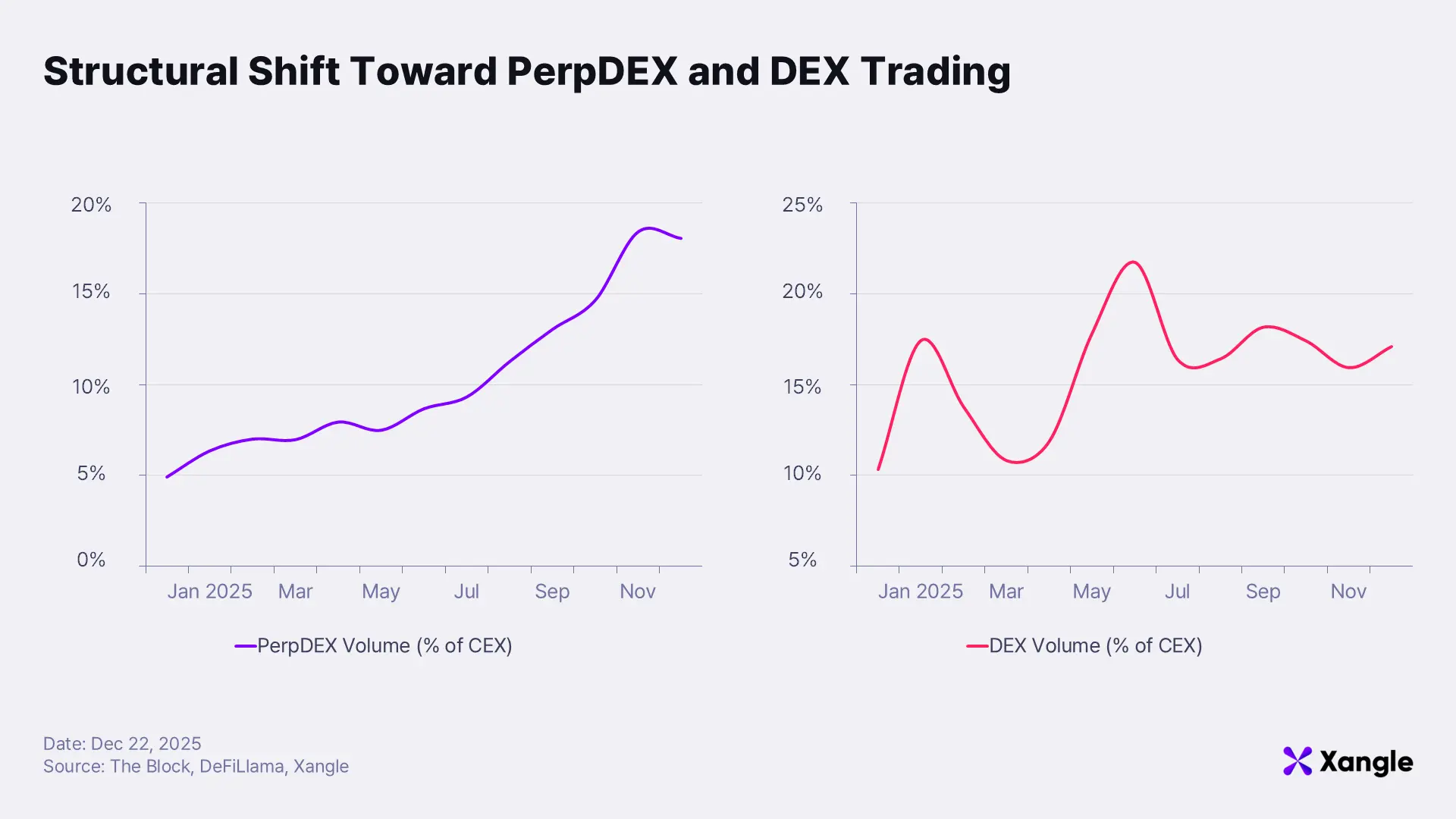
Market data supports this interpretation. PerpDEXs accounted for only around 5% of centralized exchange trading volume at the end of 2024; by the end of 2025, that share had risen to approximately 20, nearly a fourfold increase within a single year. A comparable pattern has emerged in spot markets. PerpDEX spot trading volume, which stood at roughly 10% at the end of 2024, exceeded 20% by mid-2025 and has since stabilized in the 16–17% range.
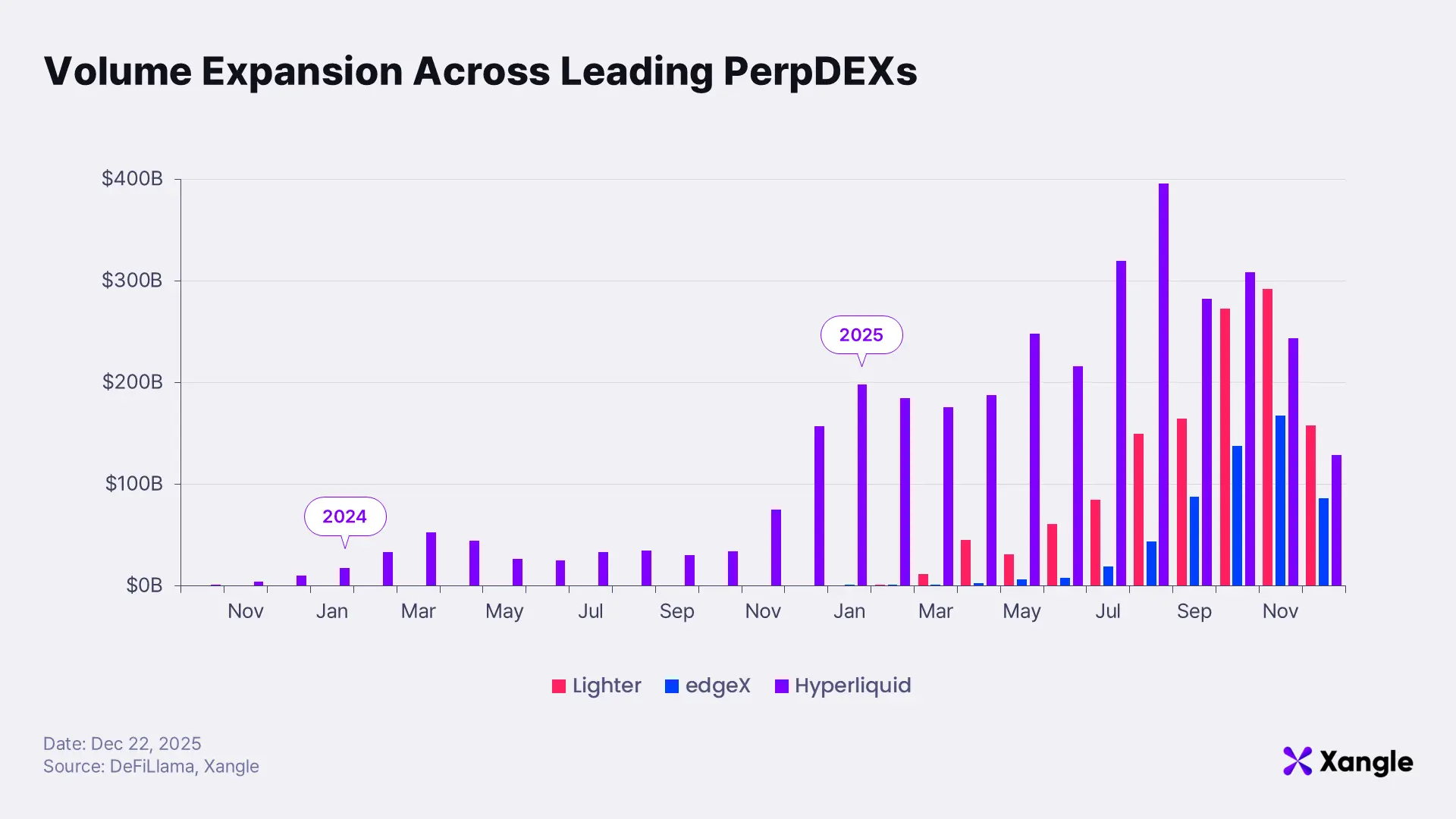
At the individual protocol level, the magnitude of this expansion becomes even more apparent. Hyperliquid’s trading volume in November 2025 increased approximately 61× compared to November 2023, while Vertex and EdgeX recorded volume growth of roughly 2,000× and 116×, respectively, relative to January 2025. Such figures indicate that PerpDEXs are not a transient trend driven by short-term catalysts, but a market segment steadily securing durable and recurring trading demand.
1-2. Decibel as Aptos’ Structural Response to PerpDEX Demand
The rapid expansion of the onchain derivatives market around PerpDEXs underscores a clear conclusion: onchain trading has moved beyond the experimental stage. Demand has already been validated, and the competitive focus is no longer centered on whether PerpDEXs can grow, but on which chains are structurally positioned to absorb this demand.
In this context, Aptos—a Move-based Layer 1—has elevated Decibel as a chain-level strategy rather than relying on isolated protocols to capture PerpDEX demand. Decibel is an onchain trading protocol developed with direct participation from Aptos Labs, designed to integrate spot trading, derivatives, and liquidity provisioning into a single interface and a unified cross-margin account. The objective is twofold: to secure PerpDEX-driven demand while consolidating fragmented trading experiences and capital flows across the onchain environment into a single execution engine, thereby improving capital efficiency and trading consistency.
Decibel is expected to serve as the core infrastructure that operationalizes Aptos’ vision of a “Global Trading Engine.” The Aptos ecosystem currently supports approximately $1.8 billion in circulating stablecoins, while BlackRock has issued roughly $306 million in tokenized money market funds on Aptos. Built on this capital base, Decibel can function as a key access point for a wide range of trading demand, spanning stablecoin-based trading, deposits, and perpetual futures, with the potential to expand further into real-world asset (RWA) markets. Ultimately, Decibel sits at the center of Aptos’ transition from a high-performance smart contract chain toward a global trading infrastructure.
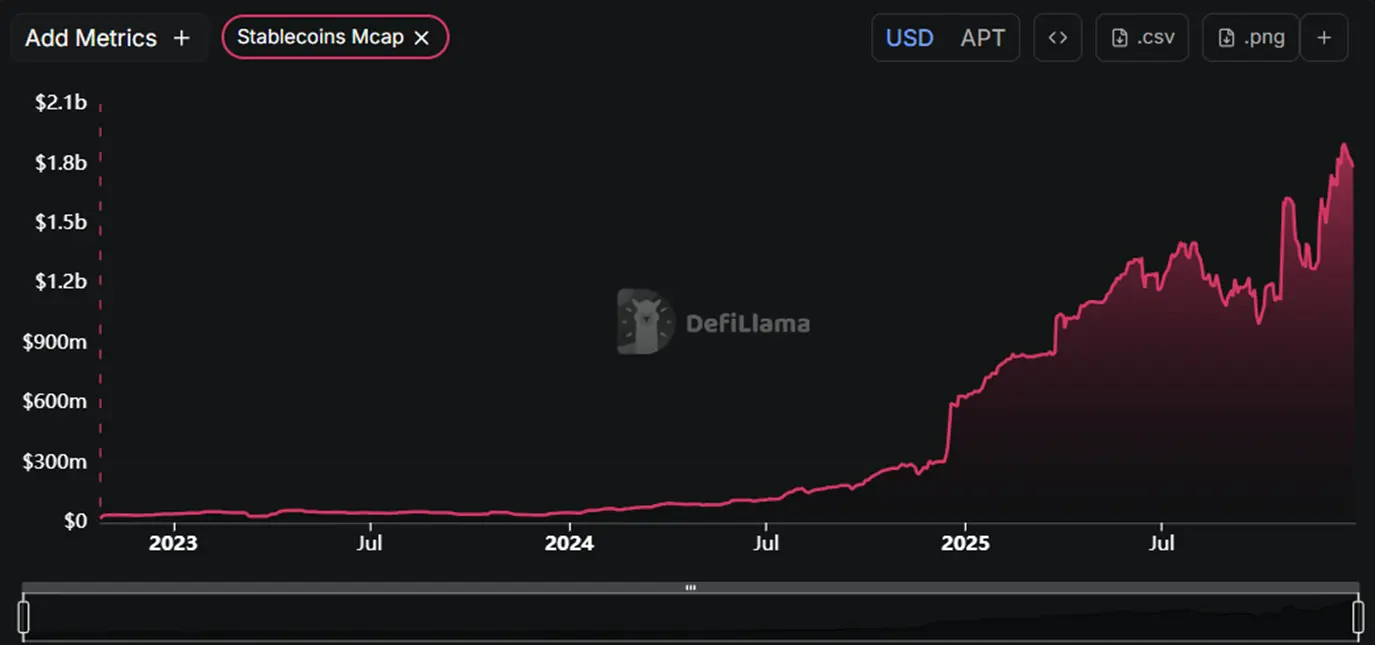
The Aptos ecosystem’s stablecoin market capitalization has shown a consistent upward trend, reaching approximately $1.8B (Source: DeFiLlama)
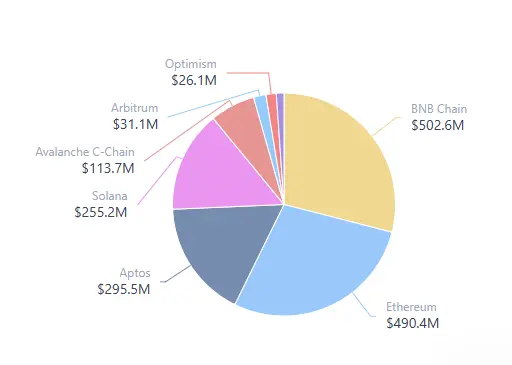
The Aptos network, which hosts the third-largest amount of BlackRock’s tokenized assets at $295.5M (Source: rwa.xyz)
2. Decibel as Aptos’ Global Trading Engine
2-1. Parallel Execution on Move: Enabling CEX-Grade Trading Performance
Decibel is designed as a Layer 1–native trading infrastructure that anchors liquidity and institutional capital within the Aptos ecosystem, with trading as its core function. While traditional DeFi has offered spot trading, derivatives, and liquidity provisioning through separate dApps, Decibel departs from this fragmented model by converging all three functions into a single onchain engine and an integrated account structure. This not only simplifies the user experience, but also ensures that margin structures, position management, and risk management operate consistently at the chain level rather than being handled independently at the application level. In effect, Decibel delivers a CEX-equivalent trading experience for a wide range of DeFi activities on top of a unified infrastructure.
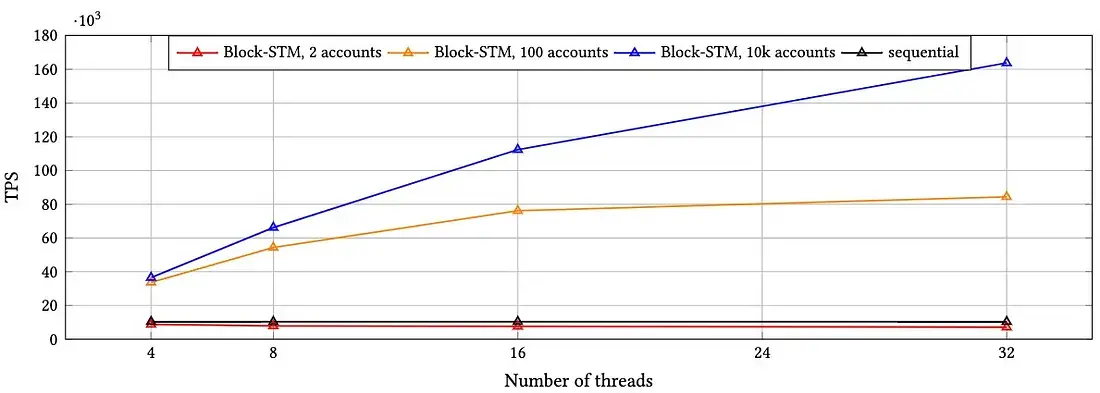
The technical foundation enabling this design lies in Aptos’ execution architecture and the Move programming language. Traditional EVM-based chains rely on account-centric state models and largely serialized execution over global state, which makes them prone to bottlenecks when transaction activity concentrates on order books or trading contracts. By contrast, Aptos leverages the Move resource model, where state access is explicitly constrained. This allows operations such as order placement, position updates, and price updates to be processed in parallel as long as they do not conflict.
At the execution layer, Aptos adopts Block-STM, an optimistic parallel execution framework that processes transactions concurrently and resolves conflicts after execution. When no state conflicts are detected, large volumes of transactions can be executed simultaneously. This architecture gives Aptos a theoretical throughput exceeding 160,000 transactions per second, and in practice the network demonstrated this capacity by smoothly processing 326.3 million transactions in a single day in August 2024.
The resource-centric design of Move also plays a critical role in system operations and risk management. Asset ownership and state transition rules are strictly enforced at the language level, ensuring that trading states such as margin adjustments or position size changes are managed consistently within clearly defined ownership boundaries. This significantly reduces the likelihood of intermediate states being externally exposed or the same state being modified concurrently through multiple execution paths. Even in a parallel execution environment, resource access constraints provide clear separation of state access, which is particularly advantageous for operations where state integrity is critical, including liquidation logic and risk checks.
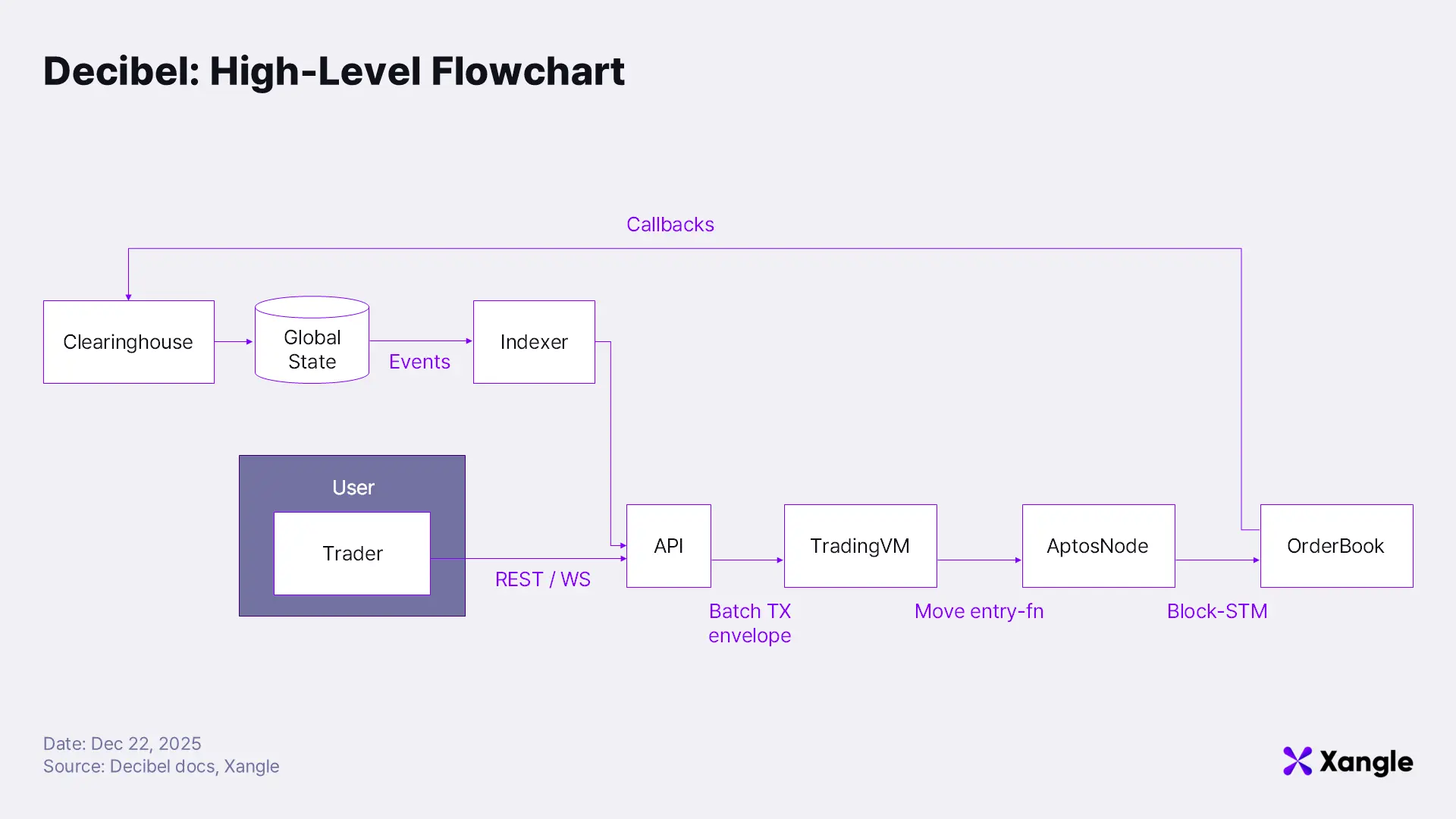
Building on this Aptos-native infrastructure, Decibel implements a Central Limit Order Book (CLOB) model in a fully onchain architecture. The CLOB is the standard trading model used by centralized exchanges, aggregating all buy and sell orders into a single order book and matching them based on price and time priority. In Decibel’s design, all orders, matching rules, and execution logic reside directly onchain, enabling public verification and full traceability of trading activity at the state level.
2-2. Unified Accounts and Risk: Decibel’s Integrated Asset Model
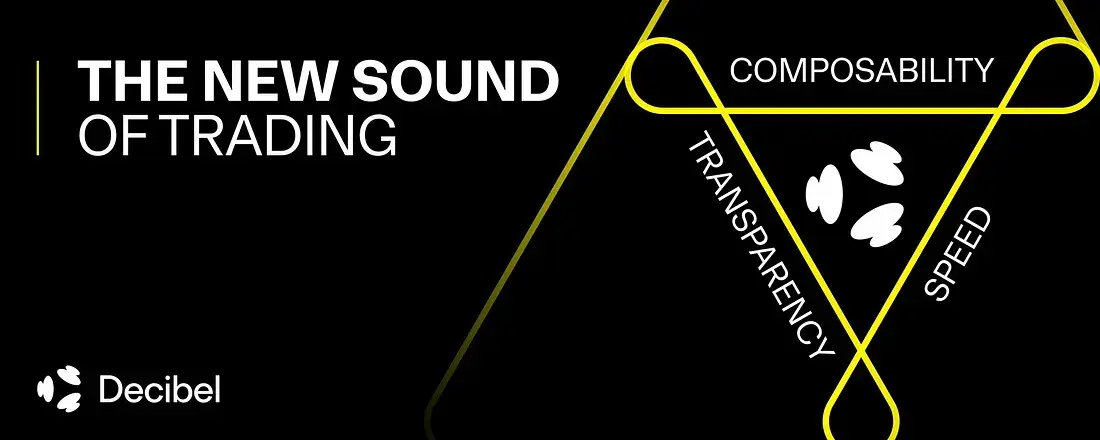
In traditional DeFi environments, spot trading, derivatives, and liquidity provisioning are typically managed independently across separate protocols, each operating with its own collateral requirements and risk rules. While this fragmentation reduces the complexity of individual functions, it makes holistic management and evaluation of a user’s total capital inherently difficult. Interdependencies between positions, as well as shifts in risk driven by capital movement, remain isolated at the protocol level. Decibel takes a different approach by adopting an integrated asset structure in which spot trading, derivatives positions, and yield farming are operated simultaneously within a single account. The objective is to define and manage returns and risk at the account level, thereby improving overall operational efficiency.
Decibel implements this approach by consolidating assets and positions into a single account and accounting unit known as a Vault. A single asset deposit grants users access to spot trading, derivatives positions, and yield farming, with all resulting asset states and position data recorded within the Vault. In this context, the Vault functions not merely as a user account, but as a system-level unit designed to comprehensively track and evaluate assets, positions, and yield strategies.
The underlying mechanism is provided by the resource model of the Move language. Assets, positions, and strategies are each managed as independent resources, with ownership relationships and state transition rules explicitly defined at the language level. Even when multiple strategies operate simultaneously, the Vault preserves consistent state transitions and accounting integrity. This foundation enables onchain implementation of unified margining, a single risk engine, and automated capital allocation.
As derivatives risk increases, asset allocation within the Vault adjusts accordingly; when excess collateral becomes available, capital is reallocated toward yield-generating strategies. Both capital movement and risk adjustment are expressed as coherent state transitions and recorded entirely onchain. Users can therefore verify, with full transparency, the composition of their Vault and the rules governing its operation. By reducing the need to manage assets and positions across multiple protocols while maintaining consistent evaluation and adjustment of capital flows and risk at the account level, Decibel delivers both operational simplicity and improved risk management efficiency.
3. Decibel and the Next Phase of the Aptos Ecosystem
3-1. From Testnet Validation to Mainnet Execution (Q1 2026)
Decibel remains in the testnet phase, where the focus is placed on validating how real user behavior and capital flows emerge within an integrated trading engine architecture.
The official roadmap positions the next phase of this process at the Q1 2026 mainnet launch. At that point, Decibel will transition into a full real-capital environment built on data and user behavior patterns accumulated during testnet operations. The mainnet rollout centers on perpetual futures trading through a single cross-margin account, while simultaneously activating multi-asset collateral structures, RWA-based derivatives, user-managed Vaults, and onboarding and incentive mechanisms designed to accelerate capital inflows—all operating within a unified execution engine.
The longer-term trajectory further clarifies Decibel’s intended role. Planned initiatives include a token launch, expansion of native bridge infrastructure, direct integration with institutional capital, and extension into RWA-based spot markets. Taken together, these objectives indicate that Decibel is not designed to serve short-term trading demand alone, but to evolve into a global trading infrastructure capable of absorbing both onchain and offchain assets.
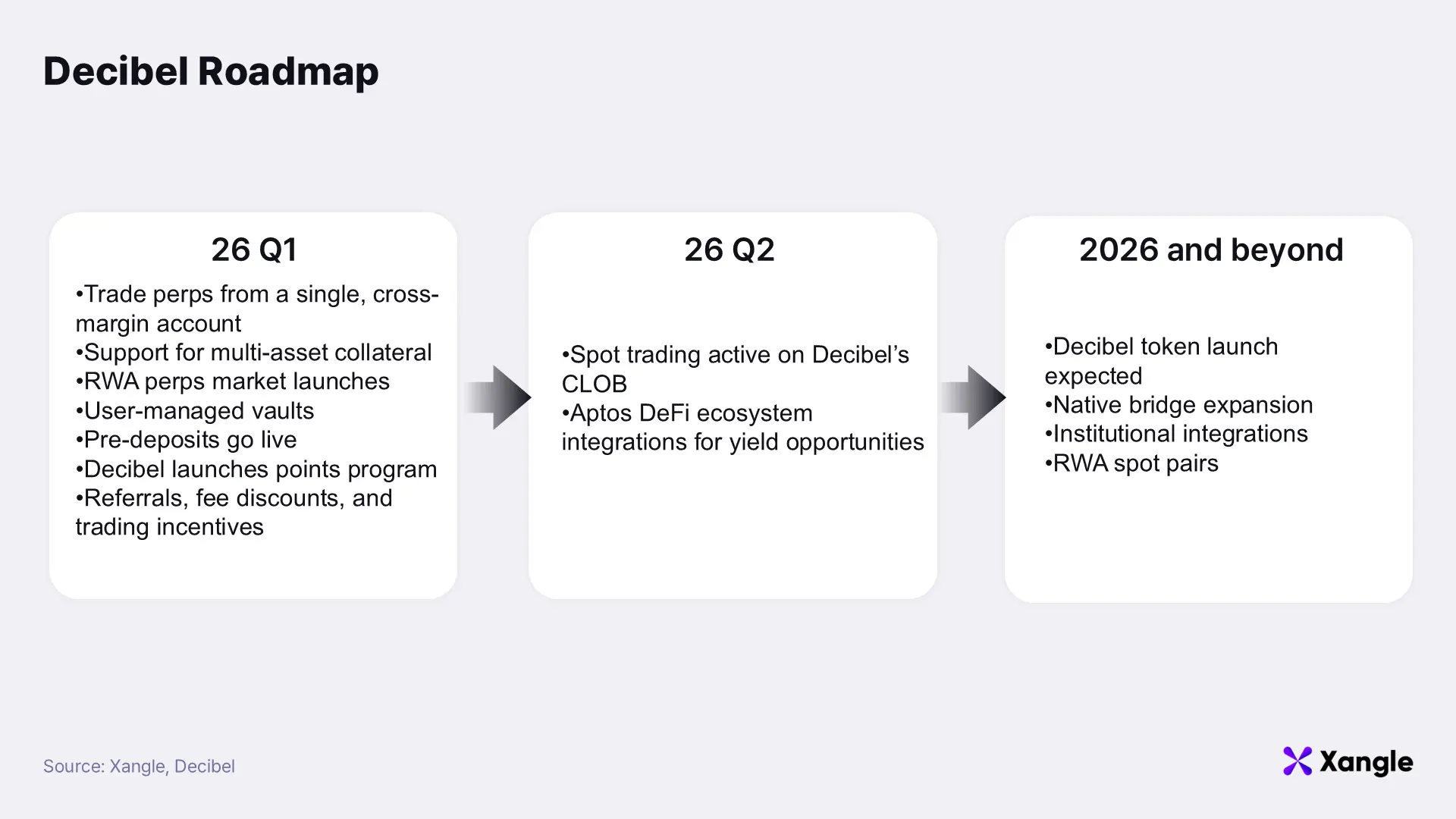
This development path aligns closely with the broader trajectory of the Aptos ecosystem. Aptos’ vision of a high-performance, low-latency global trading chain depends on the presence of applications that can generate sustained trading volume and capital flows at scale. From 2026 onward, Decibel is well positioned to become one of the primary sources of tangible trading traffic and liquidity on the network.
The timing is particularly significant given the ecosystem-wide push to bring a wider range of financial products onchain. As Aptos expands into a venue where perpetuals, RWAs, and other asset classes are actively traded, Decibel is likely to function as a central hub connecting capital and transaction flow. Over the longer term, Decibel is positioned to emerge as core infrastructure that integrates diverse asset classes, including RWAs, within Aptos’ vision of a global trading engine.
3-2. Token Launches as Demand Accelerators: Implications for Decibel and Aptos
Token launches have consistently served as more than simple reward mechanisms. In practice, they function as inflection points that rapidly expand protocol visibility and accelerate user onboarding. Major PerpDEXs such as Hyperliquid, Vertex, and EdgeX illustrate this dynamic clearly: as expectations around token generation events (TGEs) formed, both trading volumes and user bases expanded rapidly, often elevating the protocol’s standing within the broader ecosystem.
Hyperliquid provides a particularly clear reference case. When the points program was introduced in November 2023, daily perpetual futures trading volume stood at approximately $100 million. Within a matter of months, this figure surpassed $1 billion and later expanded to a peak of roughly $19 billion. The anticipation surrounding the $HYPE token launch acted as a powerful catalyst, directly translating expectations into increased user participation and liquidity provision.
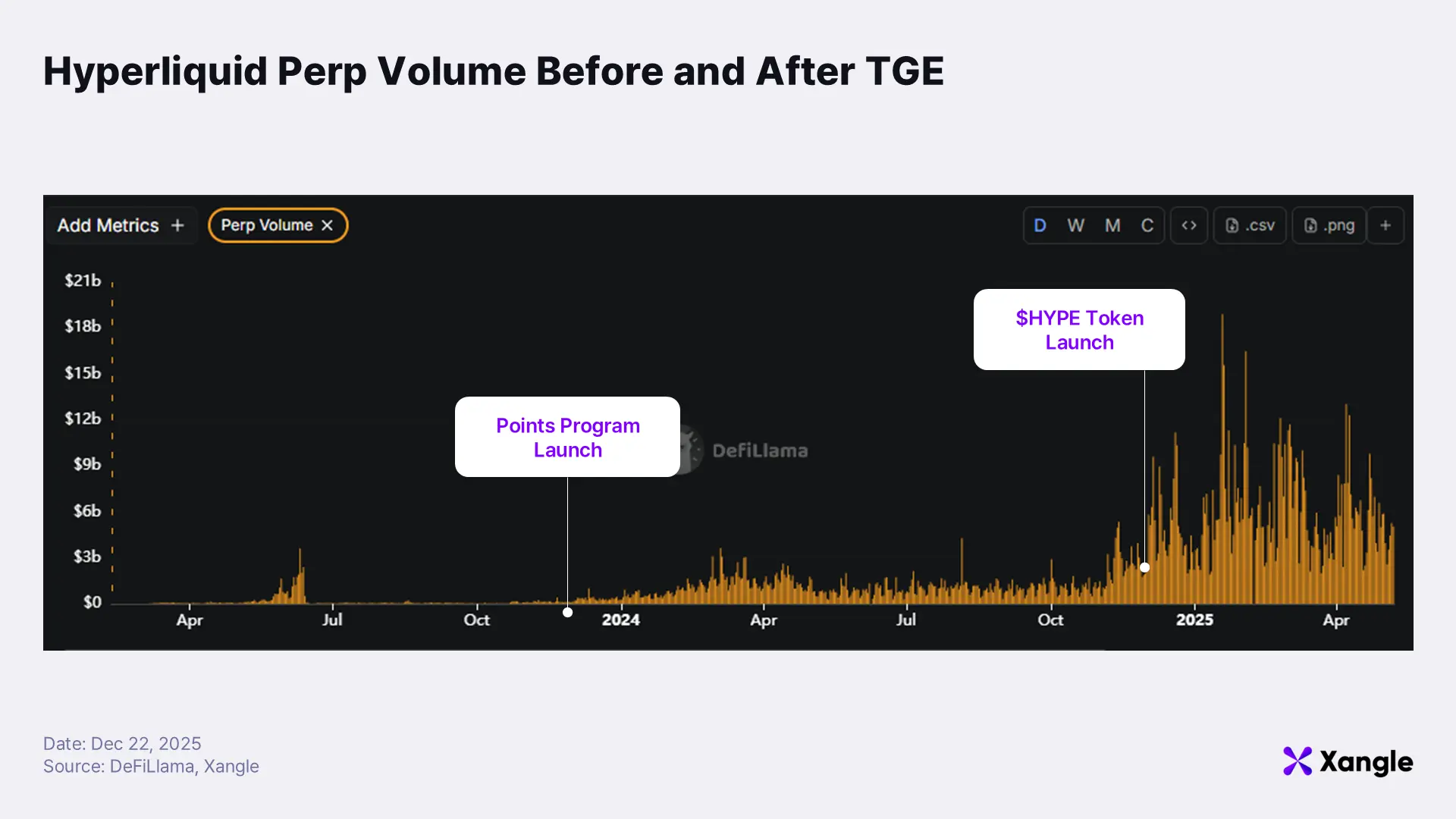
Decibel now stands at a similar inflection point. Its official roadmap explicitly leaves room for a future token launch, and precedent suggests that such an event could serve as a comparable demand catalyst. This potential is amplified by Decibel’s current positioning as a focal derivatives layer within the Aptos ecosystem, as well as by its role in operationalizing Aptos’ broader vision for high-performance, onchain financial infrastructure.
Token-driven momentum may not be limited to Decibel alone. Within the Aptos ecosystem, Shelby—a decentralized storage protocol jointly developed by Aptos Labs and Jump Crypto—has also emerged as a candidate for a future token launch. Both decentralized storage and PerpDEXs operate in categories where structural demand continues to expand, and peer benchmarks in each segment tend to command elevated fully diluted valuations. As of December 29, decentralized storage leaders Filecoin and Walrus report FDVs of approximately $2.6B and $610M, respectively, while PerpDEX benchmarks such as Hyperliquid and Aevo stand at roughly $25B and $5.8B.
The design choices surrounding token issuance and incentive alignment for Decibel and Shelby will therefore carry implications beyond individual protocols. Their ability to convert token narratives into durable user activity and sustained network engagement will shape whether Aptos’ next growth phase is driven by short-lived attention cycles or by structurally anchored economic activity.
Readers seeking a deeper understanding of Shelby may refer to Xangle’s article, “Shelby Drives New Momentum for the Aptos Ecosystem.”
4. Bottom Line
The PerpDEX market has entered a structurally different phase. In the post-Hyperliquid environment, onchain derivatives are no longer defined by experimentation or episodic liquidity, but by sustained trading activity and repeat user behavior. As a result, the competitive axis has shifted decisively: the question is no longer whether PerpDEXs can scale, but which base layers are capable of internalizing this demand at the infrastructure level.
Aptos’ decision to position Decibel at the center of its strategy follows directly from this shift. Decibel is not designed as an incremental PerpDEX, but as trading infrastructure that consolidates spot markets, derivatives, and capital management within a single account and a unified risk engine. Such consolidation is difficult to implement on most existing Layer 1 architectures, but aligns closely with Aptos’ Move-based parallel execution model and its broader ambition to operate as a global trading engine.
The upcoming mainnet launch in 2026 represents the first meaningful test of this thesis. Should Decibel succeed in attracting durable trading volume and liquidity under real capital conditions, Aptos’ positioning would extend beyond technical performance narratives toward tangible financial activity anchored onchain. A subsequent token launch would further reinforce this dynamic, consistent with historical PerpDEX growth patterns where incentives and participation scaled in tandem.
Ultimately, Decibel functions as more than a standalone protocol milestone. Its performance will determine whether Aptos’ bet on a trading-centric Layer 1 architecture can translate into sustained economic gravity. In that sense, Decibel is not merely a product launch, but the clearest signal yet of whether Aptos can convert architectural advantage into market reality.
Disclaimer
I confirm that I have read and understood the following: The information contained in this article is strictly the opinions of the author(s). This article was authored free from any form of coercion or undue influence. The content represents the author's own views and does not represent the official position or opinions of CrossAngle. This article is intended for informational purposes only and should not be construed as investment advice or solicitation. Unless otherwise specified, all users are solely responsible and liable for their own decisions about investments, investment strategies, or the use of products or services. Investment decisions should be made based on the user’s personal investment objectives, circumstances, and financial situation. Please consult a professional financial advisor for more information and guidance. Past returns or projections do not guarantee future results.
Xangle or its affiliated partners own all copyrights of the written or otherwise produced materials and content provided on the platform. Any illegal reproduction of such content, including, but not limited to, unauthorized editing, copying, reprinting, or redistribution will result in immediate legal actions without prior notice.