GRVT: Built for Scale—From Wall Street to the Masses
 Image Source: KPop Demon Hunters(Netflix)
Table of Contents
1. Derivatives Have Become the Center of the Crypto Market
2. GRVT: The “First Licensed DEX” to Break into Regulated Finance
3. GRVT’s Onboarding Strategy: Balancing User Accessibility and Global Scalability
3-1. A user-friendly UX designed for the DeFi era
3-2. The beginning of an on-chain fund marketplace beyond copy trading
3-3. An incentive-driven user onboarding strategy
4. ZK-Based Infrastructure That Delivers Both Execution Speed and Privacy
5. Closing Statement: Opening the Door to Both Wall Street and Retail
1. Derivatives Have Become the Center of the Crypto Market
In traditional finance, derivatives serve as a core component of market infrastructure. With a notional value exceeding $700 trillion, the global derivatives market far surpasses the size of global equity and bond markets. Originally introduced as a tool for hedging risk, derivatives have evolved into the primary mechanism for price discovery and liquidity provision. Today, it is no exaggeration to say that the global financial system revolves more around derivatives than spot markets.
A similar structure is emerging in the crypto space. As of 2025, trading volumes for perpetual futures have reached as high as $2.17 trillion, while standard futures trading has expanded to $1.11 billion. Open interest, an indicator of market participation and position size, surpassed $800 billion in perpetuals as of July. Notably, over 95% of these trades still occur on centralized exchanges (CEXs) such as Binance and OKX, highlighting the continued dominance of centralized venues. Yet, as blockchain infrastructure continues to mature, the implementation of perpetual futures exchanges via smart contracts is becoming technically viable. Mechanisms such as funding fees and liquidation processes can now be codified, laying the foundation for the full automation of complex derivatives trading on-chain.
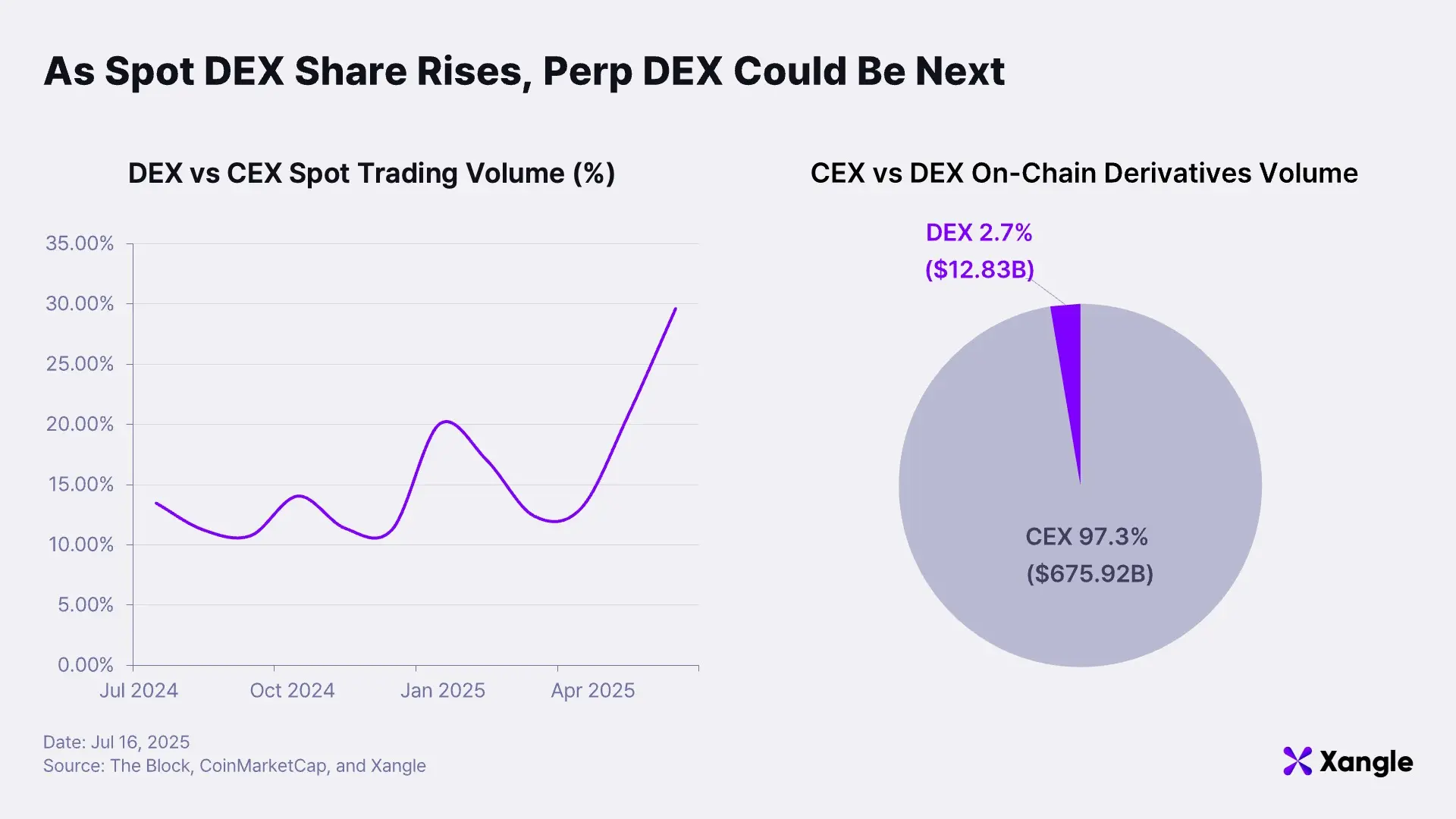
Amid this evolution, decentralized exchanges (DEXs) have begun to show meaningful signs of growth. In the spot market, DEXs expanded their market share from 11% at the end of last year to nearly 27% by June. The rise of perpetual DEXs (PerpDEXs) is also noteworthy. One leading example is Hyperliquid, which has launched an order book–based derivatives exchange on its own Layer 1 blockchain. Hyperliquid has rapidly attracted both users and liquidity, with its native chain now ranking in the top 10 globally by both market capitalization and total value locked (TVL). This momentum demonstrates that on-chain PerpDEXs are emerging as viable next-generation alternatives to the CEX-dominated structure. Although PerpDEXs still account for less than 3% of total derivatives volume, the rapid rise of spot DEXs—from a 10% to nearly 30% share—suggests that PerpDEXs may have even greater room for growth.
Despite this momentum, most DEXs remain difficult for non-crypto-native users and institutions to access. The complexity of wallet creation and key management, unfriendly onboarding processes, and unfamiliar interfaces present substantial friction, deterring wider adoption. Moreover, the structural limitation of on-chain transparency, where all trading positions are publicly visible, can introduce security risks such as strategy leakage or intentional slippage attacks. These vulnerabilities are especially critical for institutions and family offices that prioritize asset protection.
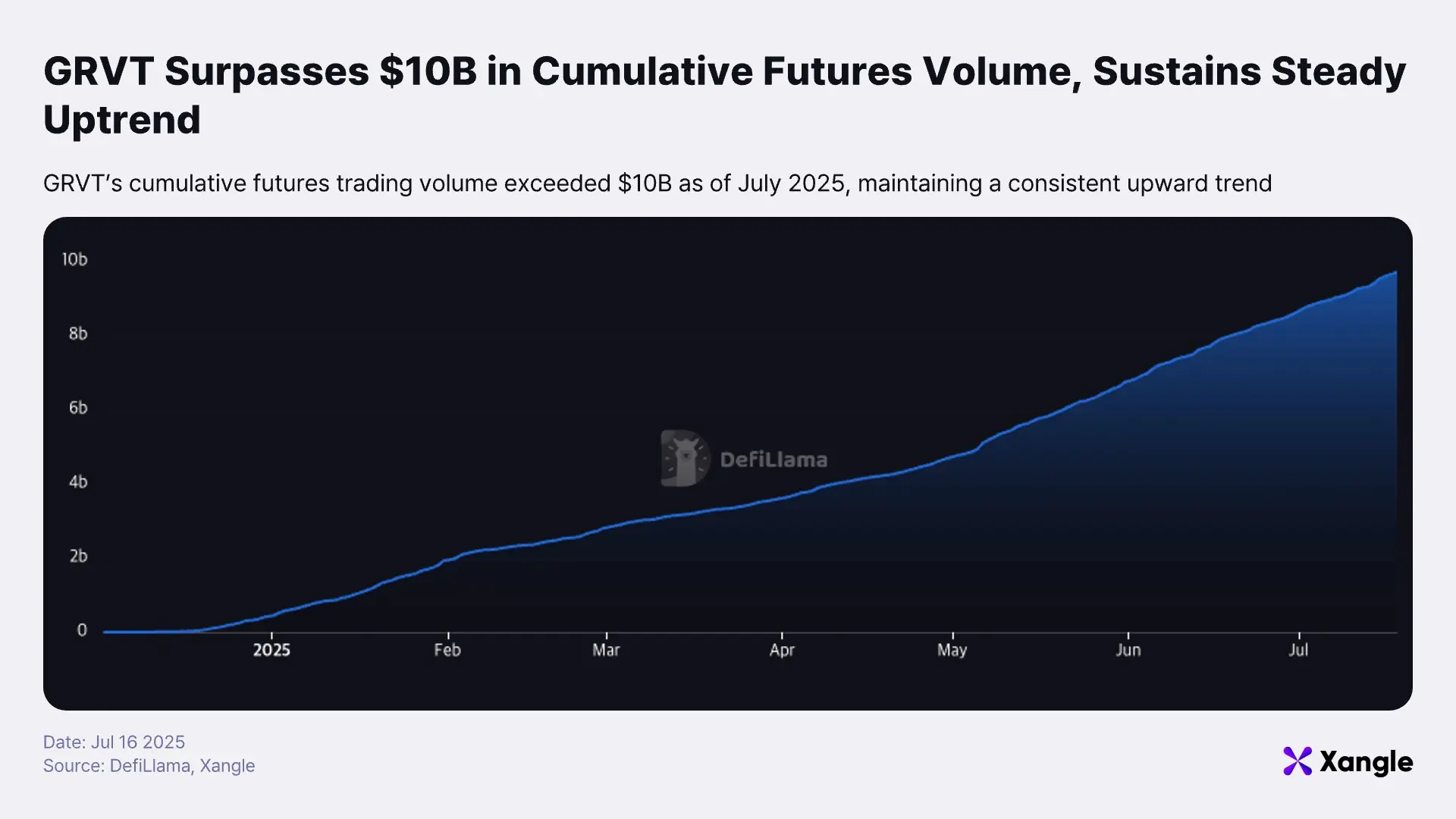
GRVT enters the market as a response to these limitations. Positioned as a hybrid on-chain derivatives exchange, it combines the intuitive access and execution speed of a CEX with the asset control and transparency of a DEX—while also embedding regulatory compliance and privacy safeguards. Since its launch, GRVT has recorded over $10 billion in cumulative trading volume, with institutional investors accounting for approximately 60% of that activity. This early traction suggests that GRVT is making meaningful progress in establishing an institutional- and retail-friendly on-chain trading venue.
2. GRVT: The “First Licensed DEX” to Break into Regulated Finance
On-chain derivatives trading has long remained on the fringes of experimentation. While numerous protocols have attempted to offer derivatives services in decentralized formats, institutional capital inflows have been minimal. The key reasons lie in the inability to meet the institutional-grade requirements demanded by traditional finance—namely, limited execution performance, real-time exposure of sensitive trading positions, and insufficient compliance infrastructure. For institutions in particular, the high bar for regulatory compliance has been a persistent barrier to engaging with blockchain-based financial services. Recent advances in infrastructure, especially around zero-knowledge (ZK) technology, have started to change that. Privacy-preserving, trust-anchored on-chain architectures are now beginning to take shape, enabling models that are both institution-ready and technologically sound.
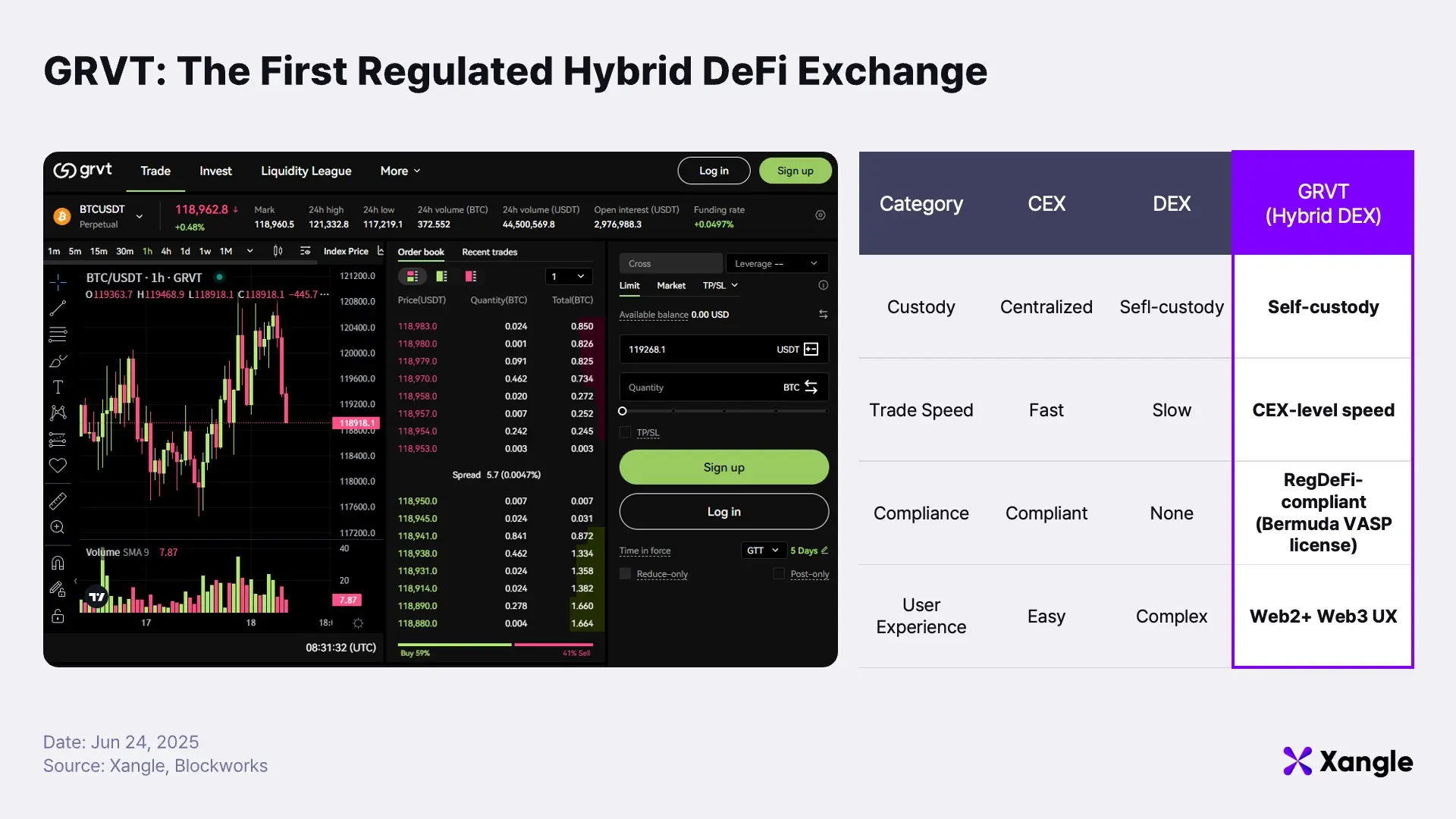
In December 2024, GRVT became the first on-chain derivatives exchange in the world to receive formal regulatory approval, having secured a Class M Digital Asset Business License from the Bermuda Monetary Authority (BMA). This milestone marked more than just technical achievement as it represented the first instance of an on-chain derivatives platform meeting the legal thresholds necessary to operate within a regulated financial framework. GRVT is now pursuing a full Class F license and actively engaging with other global regulatory regimes, including the EU’s MiCA framework and the Abu Dhabi Global Market (ADGM).
The exchange’s architecture is anchored in zkSync’s Validium framework, which encrypts trading data off-chain while validating trade integrity using zero-knowledge proofs. This setup ensures that sensitive information, such as liquidation paths or open positions, remains confidential, even as trade validity is cryptographically proven. For institutional participants, this privacy-first design eliminates the visibility risks traditionally associated with on-chain activity, making GRVT one of the few platforms that can realistically accommodate their risk requirements. In resolving what has long been the most critical technical hurdle for institutional adoption, confidentiality, GRVT emerges as a practical, production-ready solution.
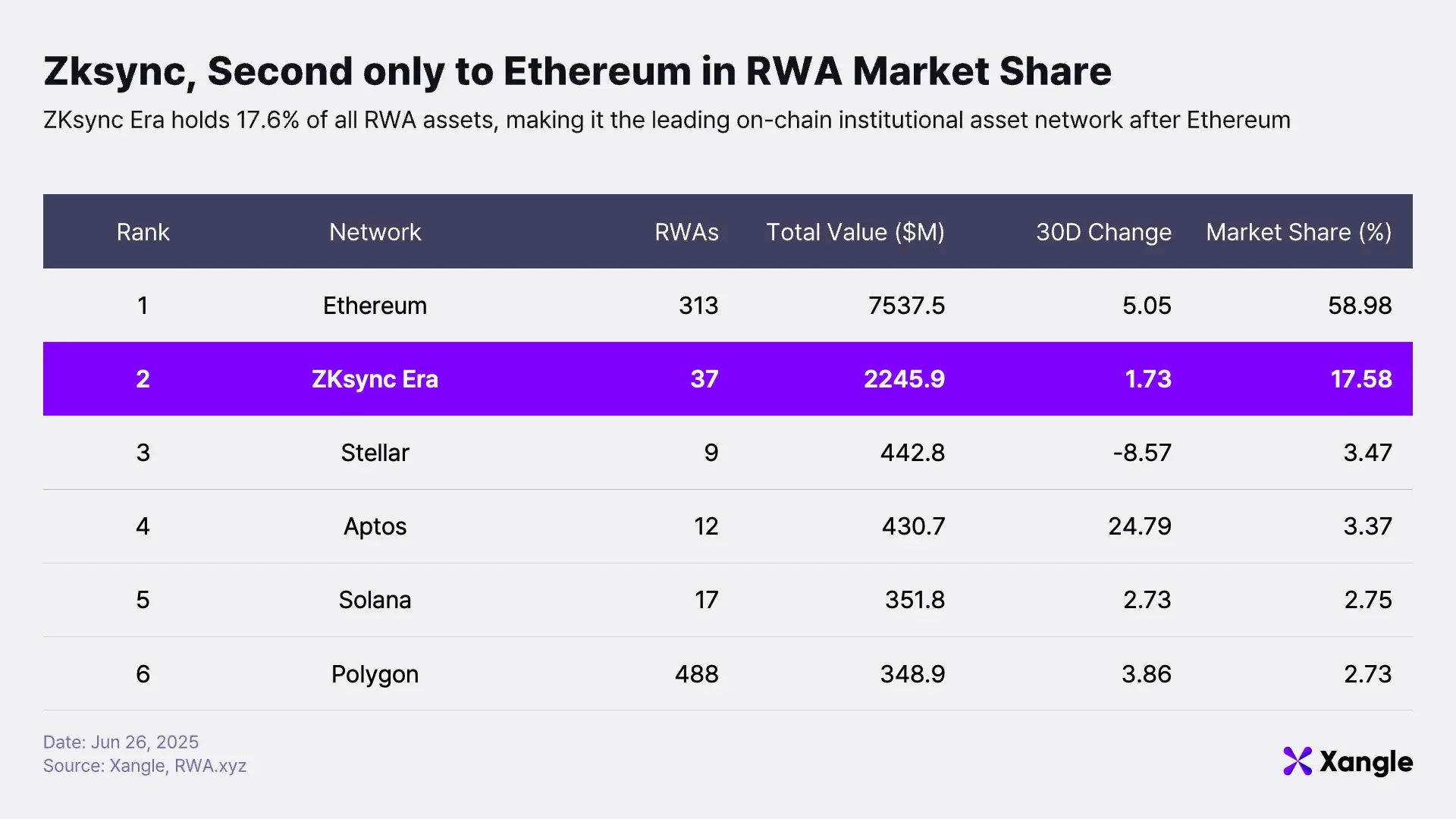
GRVT’s strategic alignment with the zkSync ecosystem further strengthens its institutional positioning. As of 2025, zkSync ranks second globally in total value locked (TVL) for real-world assets (RWA), and GRVT is carving out its niche as the ecosystem’s go-to perpetual DEX for institutional traders. This positioning allows GRVT to capture demand for hedging and leveraged trading of zkSync-native assets—making it not only a product but an infrastructure gateway for capital flows within the ecosystem.
In terms of execution performance, GRVT sets itself apart from legacy on-chain exchanges. The platform adopts the Central Limit Order Book (CLOB) model used in traditional finance, processing order matching off-chain at ultra-low latency while conducting settlements on-chain. This hybrid architecture enables GRVT to support over 600,000 transactions per second with millisecond-level execution speeds, delivering performance on par with leading CEXs—without compromising on-chain integrity. Moreover, GRVT remains non-custodial: user assets are never held by the platform and remain fully under the control of individual wallets.
A significant part of GRVT’s competitive edge lies in its regulatory-first, institution-friendly design philosophy—baked in from the outset. Its founding team includes veterans from Goldman Sachs, Facebook, and DBS, who prioritized compliance-readiness and institutional usability from day one. Features such as Role-Based Access Control (RBAC), an integrated margin system, and API-enabled automated strategies directly address institutional needs. At the same time, email-based wallet creation, intuitive user interfaces, and mobile accessibility broaden its appeal to retail participants.
The ecosystem is expanding rapidly beyond derivatives. GRVT now operates a strategy marketplace—Grvt Strategies—and is preparing to launch additional offerings across RWAs and options. Much like Hyperliquid in its early days, GRVT is also introducing reward programs designed to attract liquidity providers and strategy managers. This dual-track growth strategy—targeting both technical robustness and regulatory credibility—underscores GRVT’s ambition to serve as the first viable gateway between traditional finance and Web3.
3. GRVT’s Onboarding Strategy: Balancing User Accessibility and Global Scalability
3-1. A user-friendly UX designed for the DeFi era
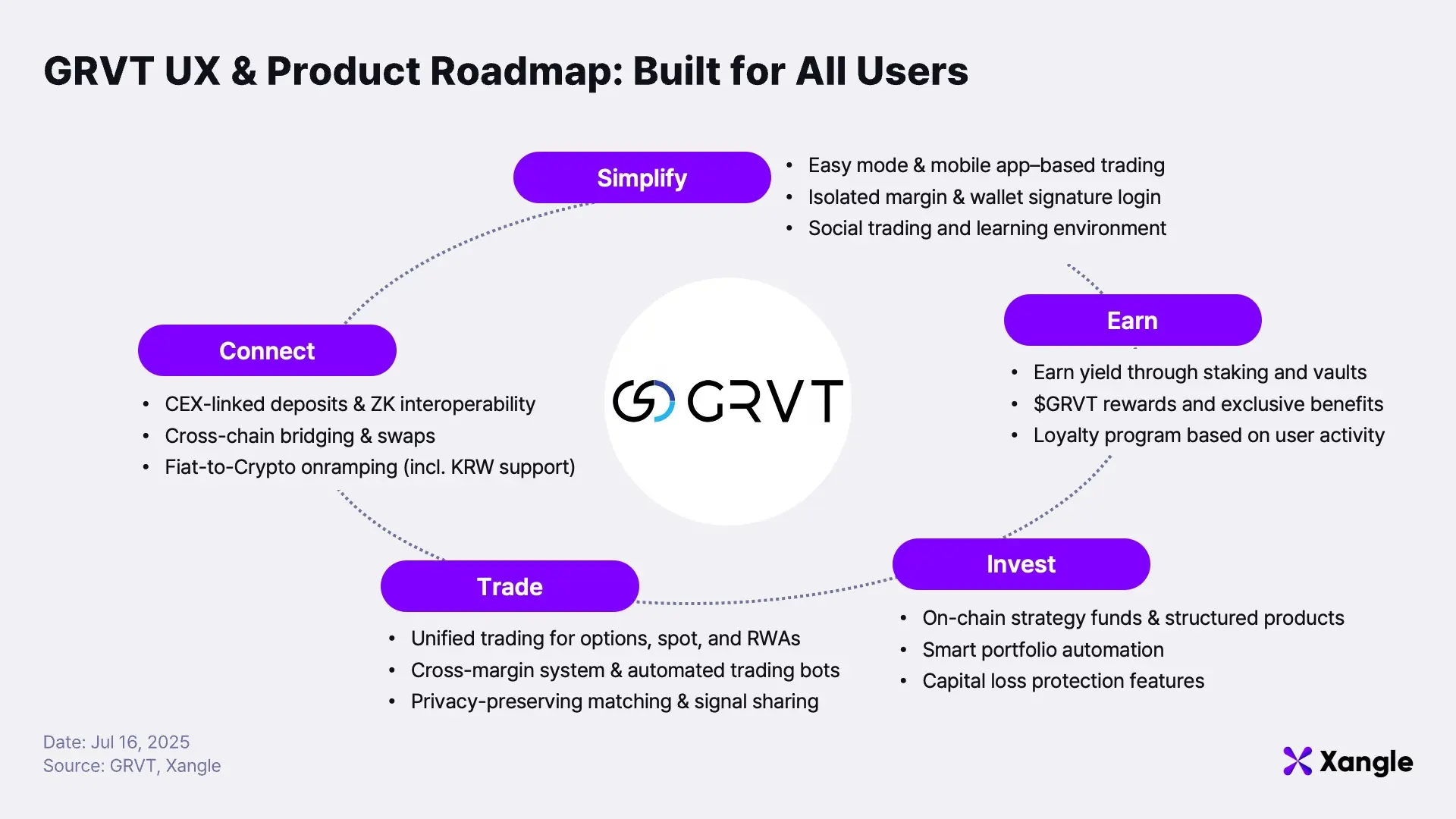
GRVT is designed as a hybrid exchange with the express goal of democratizing access to on-chain derivatives trading. Its architecture enables seamless entry for both traditional finance users and Web3 newcomers. At the core of this “hybrid” model is a structure where ultra-fast order matching occurs off-chain via a Central Limit Order Book (CLOB), while settlement is executed on-chain. This design delivers the execution speed of a centralized exchange (CEX) while preserving key DEX principles such as on-chain transparency and user custody of assets. Users can log in with just an email address and interact through a Multi-Party Computation (MPC) wallet, eliminating the need to manage seed phrases. This setup allows those unfamiliar with Web3 to trade on-chain without facing the usual technical hurdles. GRVT’s UX not only lowers barriers for retail investors but also provides a secure, privacy-conscious environment that meets the expectations of institutional participants.
Beyond onboarding convenience, GRVT offers direct financial incentives during the trading process, further increasing platform engagement. A standout feature is the on-chain implementation of the Retail Price Improvement (RPI) system—a mechanism commonly used in traditional markets to enhance execution prices for retail users. Designated market makers can quote better prices, and trades are automatically routed to these favorable prices without requiring user intervention. Every execution is governed by transparent smart contracts. While individual trade savings may appear modest, they compound meaningfully over time, positioning GRVT as not just accessible, but economically rewarding with continued use.
To further optimize the user experience, GRVT has partnered with institutional-grade service providers like CoinRoutesand LTP to deliver high-quality execution, and integrated fiat onboarding and invisible login flows using Onramper and Privy. The platform continues to enhance usability through features such as GRVT SecureKey upgrades, streamlined signing processes, and planned integrations with local exchanges in Korea. The Android app is already live, with the iOS version slated for release in the near term.
Looking ahead, GRVT aims to evolve into a full-stack trading and investment platform. Its development roadmap includes the introduction of spot and options order books, support for multi-asset trading pairs, take-profit and stop-loss (TPSL) functionality, algorithmic trading bots, smart portfolio management tools, launchpad-integrated strategy execution, and a range of earn and stake products. Beyond core trading features, the team is also building a broader financial ecosystem that encompasses a real-world asset (RWA) marketplace, social trading capabilities, loyalty rewards, a zero-knowledge–based privacy matching engine, and cross-chain bridges enabling seamless asset transfers between CEXs and DEXs. With this comprehensive suite of tools, GRVT aspires to become a unified on-chain financial platform that serves both institutional and retail users—realizing its vision of a hybrid exchange that is as intuitive as a CEX and as secure as a DEX.
3-2. The beginning of an on-chain fund marketplace beyond copy trading
While DeFi is often praised for its openness and accessibility, sophisticated strategy-based investing has largely remained exclusive to crypto-native or advanced users. For most retail participants, high entry barriers persist—stemming from the opacity of strategy design, risks embedded in smart contracts, and the lack of trust in unverified strategy operators. These issues go beyond surface-level UI complexity. What the space has lacked is a meaningful UX innovation that allows users to easily allocate capital to strategies and transparently share in their outcomes.
The popularity of copy trading reflects these challenges. At a glance, following an expert's trades seems intuitive. Yet in DeFi, structural constraints persist. Without real-time execution, slippage becomes inevitable, and high-frequency or algorithmic strategies remain technically difficult to replicate. Moreover, most copy trading models are built around individual traders and lack robust verification frameworks for long-term performance or strategic credibility. As a result, users are often relegated to lagging participants, a critical disadvantage in fast-moving crypto markets.
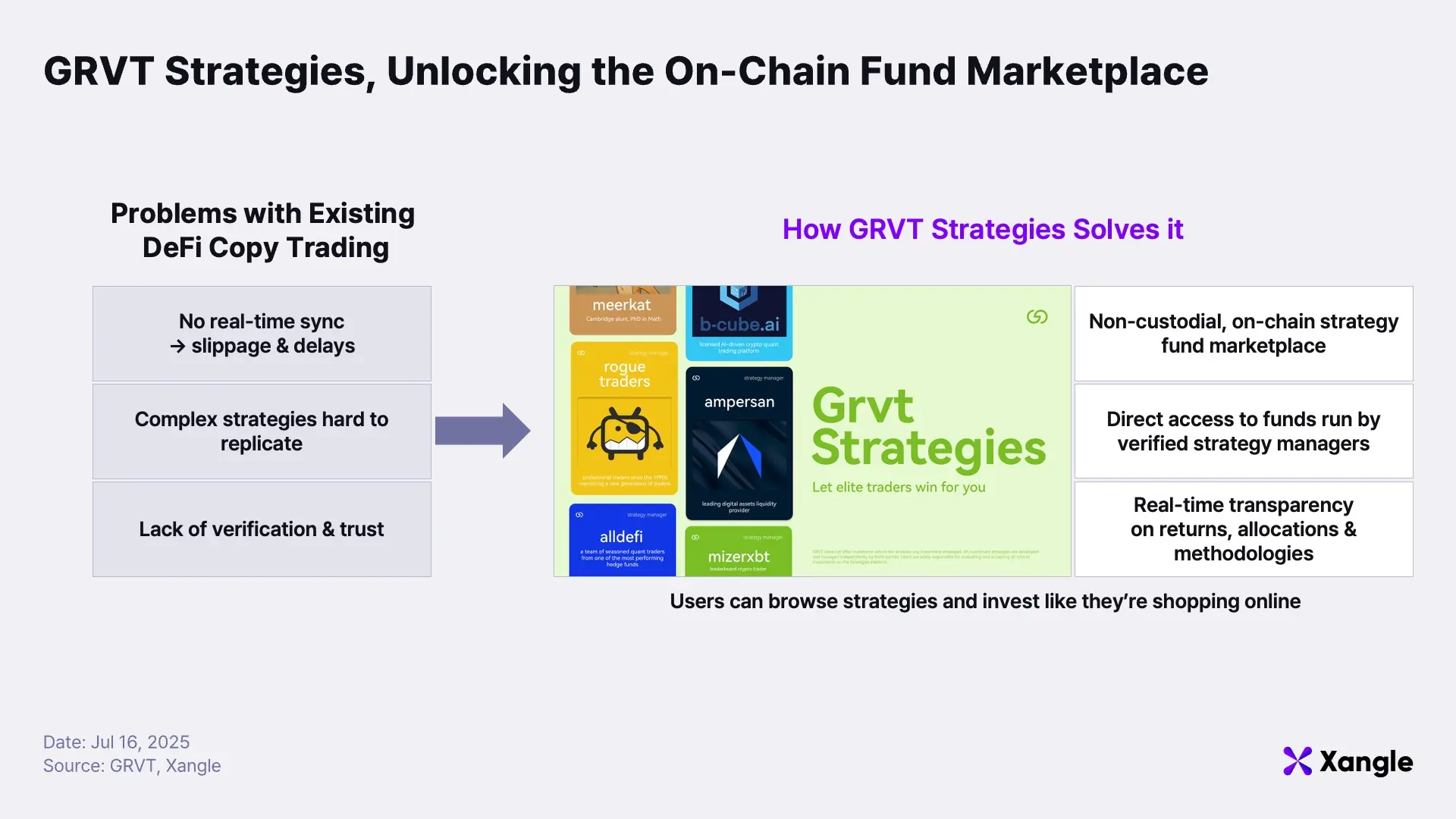
GRVT addresses these limitations head-on with the launch of Grvt Strategies, introducing a new on-chain fund marketplace that enables anyone to access institutional-grade strategies directly. Rather than copying trades passively, users invest into fully deployed strategy funds managed by vetted professionals. Each strategy operates on smart contracts, with investor funds managed on-chain in a non-custodial manner. Key data—such as real-time returns, asset allocation, and strategy descriptions—is disclosed with full transparency, while performance is verifiable using on-chain records. Investors can explore a wide array of strategies aligned with their own market views and risk preferences, in a format as intuitive as browsing listings on an e-commerce platform.
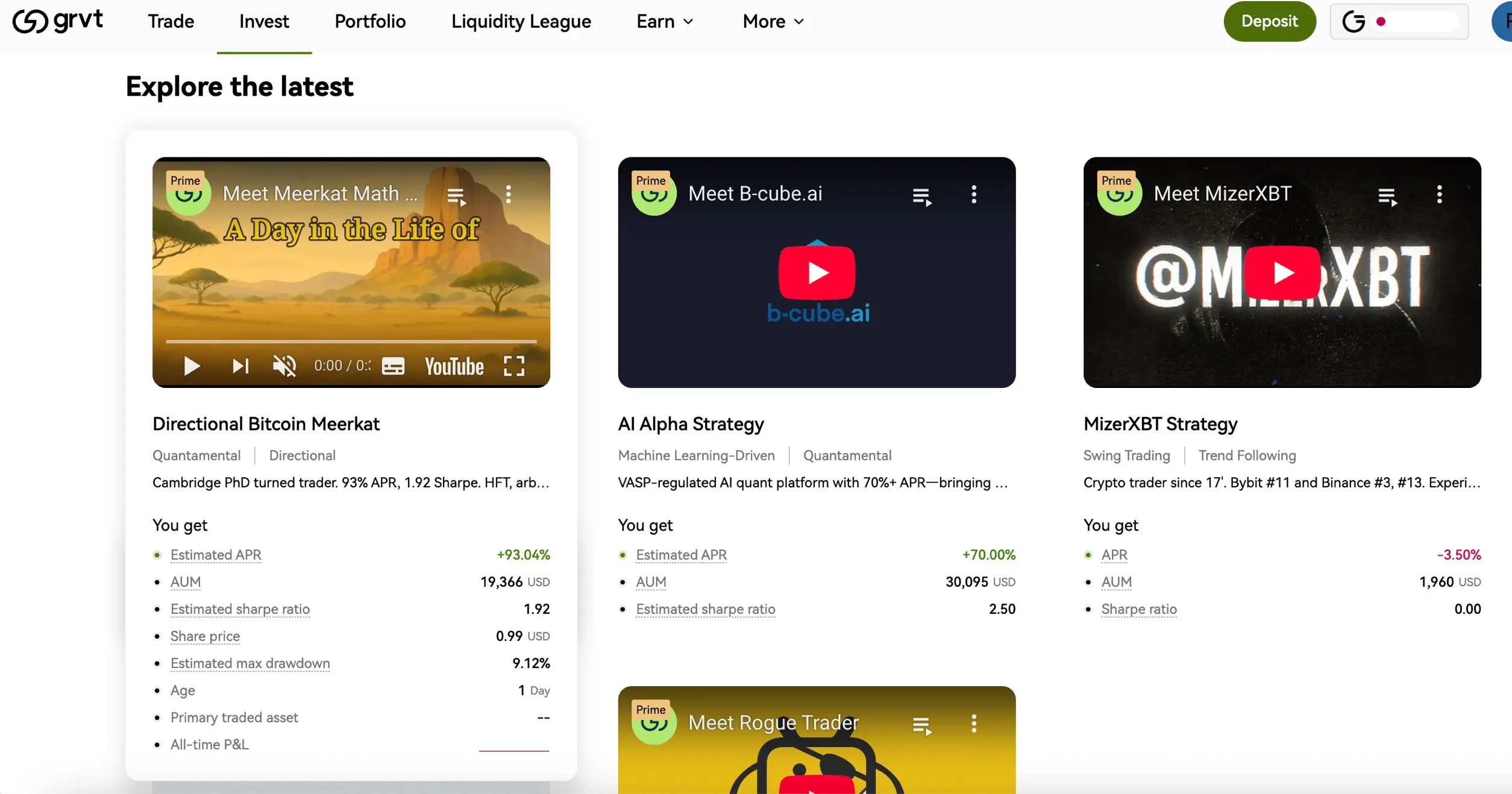
GRVT Strategies: An Intuitive On-Chain Fund Investment UI, Like Airbnb
The platform’s credibility is reinforced by its inaugural cohort of strategy managers, who bring extensive experience from both traditional finance and crypto markets. Notable participants include Ampersan, a digital asset liquidity provider founded by former Optiver traders; AllDefi, which delivers decentralized hedge fund–style alpha strategies; b-cube.ai, an AI-driven algorithmic trading platform; Rogue Traders, a professional trading collective; Meerkat, led by a PhD in mathematics; and MizerXBT, a top-performing trader on Binance and Bybit based on PnL rankings. These managers contribute deep domain expertise in strategy design and risk control. Each strategy undergoes formal onboarding, verification, and performance tracking to ensure transparency and accountability from the outset. Grvt Strategies marks a paradigm shift, moving beyond the limitations of passive replication models toward a decentralized, programmable fund marketplace—one that redefines how capital is allocated and managed in the on-chain investment ecosystem.
3-3. An incentive-driven user onboarding strategy
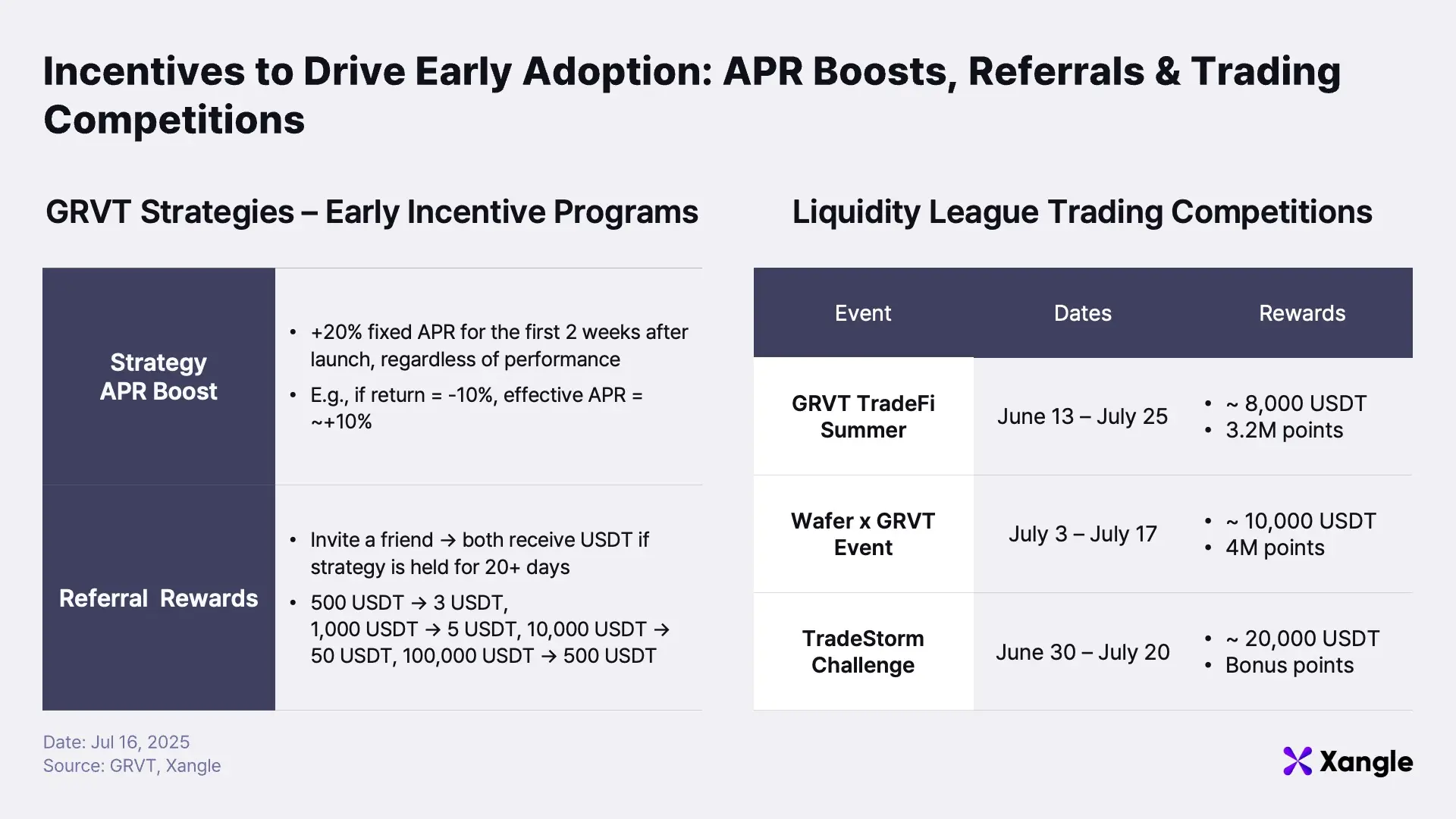
Grvt Strategies is more than just a platform for showcasing high-quality investment strategies—it’s designed with a structural incentive model that lowers entry barriers and encourages active participation. At the core of this model is a 20% fixed APR boost offered for the first two weeks after a strategy launches. If a strategy yields 10% on its own, the effective return to the investor rises to 30%. Even in cases of negative performance, the APR boost helps offset losses or reduce their severity. Similar fixed APR promotions have already proven highly effective in attracting early liquidity across both DEXs and CEXs, making this a powerful mechanism for onboarding capital into strategic investment products.
To further drive participation, GRVT operates a referral rewards program. Existing users can share a referral code with new participants. If the referred user registers and remains invested in any strategy for more than 20 days, both the referrer and the newcomer are rewarded with up to 500 USDT, depending on the referrer’s deposit tier. The system is designed to be easily accessible, distinguishing itself from typical DeFi campaigns that focus on superficial sign-up bonuses. By tying rewards to actual investment activity, GRVT promotes quality user acquisition and reinforces long-term strategy engagement.
Beyond passive incentives, GRVT also hosts volume-based competitions and thematic campaign series to attract active traders. Notable examples include TradeFi Summer, Wafer x GRVT, and VSE x GRVT, where top-volume traders are rewarded with USDT and millions of Trader Points. Each campaign has recorded trading volumes exceeding $20 million, with participation in the thousands. Since code entry is required for participation, these events organically drive user acquisition through social channels and community sharing. Alongside these time-bound incentives, GRVT also runs a points-based engagement system that rewards broader ecosystem involvement—forming the backbone of its long-term user retention strategy.
Together, these incentive mechanisms are not just designed for short-term traction—they aim to foster sustainable user conversion. For beginners, APR boosts and referral programs help lower the psychological and financial barriers to engaging with professional strategies. For more experienced traders, themed campaigns offer a clear path to building reputational track records and earning performance-based rewards. Although the program remains in its early phase, GRVT is aggressively deploying reward and incentive structures reminiscent of early-stage Hyperliquid to fuel ecosystem expansion. Going forward, the platform’s most critical challenge will be designing effective lock-in mechanisms to retain users after campaign incentives end.
All of GRVT’s financial products—including Strategies—are now available via web and mobile. Users can explore and access the full suite through the links below:
- GRVT Strategies: https://grvt.io/exchange/strategies
- The Liquidity League: https://grvt.io/exchange/liquidity-league
- Android App: https://play.google.com/store/apps/details?id=com.grvt.GrvtMobile&pli=1&ref=grvt.io
- iOS App: https://apps.apple.com/app/id6544785149
4. ZK-Based Infrastructure That Delivers Both Execution Speed and Privacy
GRVT is building a next-generation trading infrastructure that delivers both high-performance execution and robust privacy protections—a dual requirement especially critical for institutional participants. To address the persistent concern of position exposure, GRVT leverages zkSync’s Validium-based ZK Stack, which allows trade data to be stored off-chain while validating transaction integrity on-chain. This architecture ensures that strategies and position information remain private, shielding users from MEV exploitation and sandwich attacks.
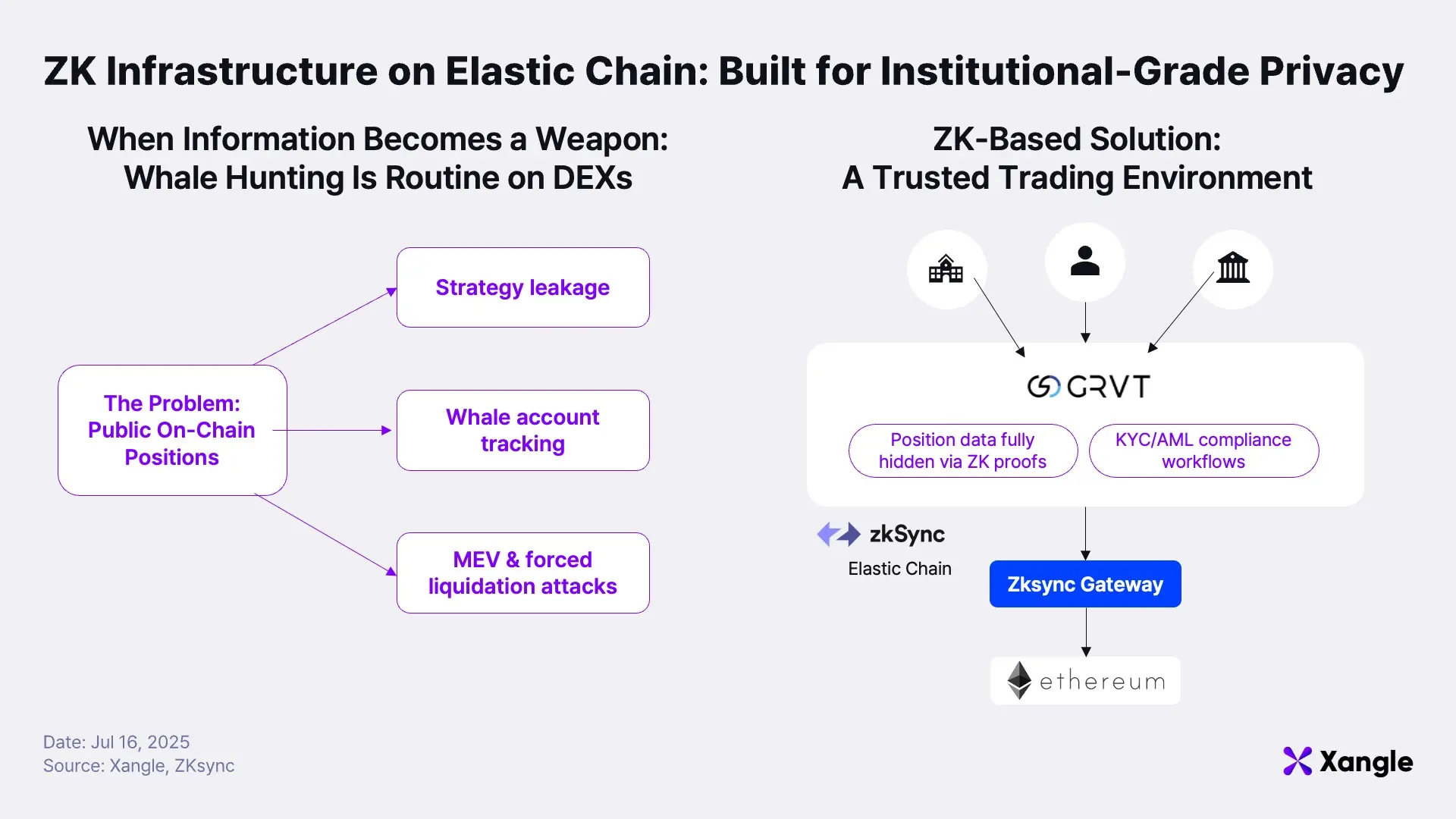
This structural choice represents a key departure from traditional DEX models, where all transaction details are recorded on-chain—effectively exposing trading logic and open positions to the public. On platforms like Hyperliquid, “whale tracking” has become common, with users attempting to front-run or liquidate large positions. GRVT’s approach prevents such vulnerabilities by keeping trade data private while maintaining verifiability via zero-knowledge proofs. The result is an environment where institutional capital and large-scale strategies can operate securely and confidently. Additionally, KYC and AML procedures are handled off-chain, preserving user privacy—an especially important factor for regulated entities managing sensitive or large volumes of capital.
GRVT also stands out in terms of raw performance. Its off-chain matching engine processes up to 600,000 transactions per second (TPS) with single-digit millisecond latency. Trade results are then securely transmitted to Ethereum via zero-knowledge proofs, ensuring trustless settlement without sacrificing speed. The platform also supports a gasless trading experience, eliminating transaction fees for actions such as order cancellations or modifications—an essential quality-of-life improvement for active traders.
This infrastructure is made possible by GRVT’s deployment as a dedicated Hyperchain on zkSync’s Elastic Chain. Operating on its own chain allows GRVT to maintain stable performance, free from congestion or competition for block space with other applications. Meanwhile, it maintains interoperability with other Hyperchains in the Elastic Chain ecosystem via zkEVM standards, combining execution speed, data privacy, scalability, and connectivity—a foundational set of attributes for any institutional-grade on-chain derivatives exchange.
That said, GRVT currently operates on a hybrid model, where execution remains off-chain while settlement is handled on-chain. In the long term, the platform intends to transition toward a fully on-chain architecture in which even order execution is decentralized—realizing its vision of end-to-end, trustless trading infrastructure.
5. Closing Statement: Opening the Door to Both Wall Street and Retail
For crypto to be fully integrated into the financial mainstream, decentralization and technical innovation alone are not enough. In high-risk, high-leverage markets like derivatives, legal credibility and technical resilience are fundamental prerequisites—not only for institutional capital, but also for broad retail participation. A truly trustworthy trading structure—one that encompasses regulatory compliance, privacy protection, high-speed execution, and sophisticated risk management—is no longer optional; it is a baseline requirement. Ultimately, what drives mass adoption is not technology in isolation, but the ability to design infrastructure that builds trust on top of technology.
GRVT stands out as one of the most grounded and actionable responses to this challenge. The project has combined intuitive UX, privacy-enhancing architecture, and high-performance execution with regulatory legitimacy—setting a new benchmark for what on-chain finance can look like. In doing so, GRVT acts as a bridge between traditional finance and blockchain, offering a safe, accessible entry point for both institutional traders and DeFi newcomers. Notably, Grvt Strategies—a structured fund marketplace that moves well beyond copy trading—has significantly broadened accessibility across the on-chain investment ecosystem.
The on-chain derivatives market remains a dynamic and experimental frontier, where innovation is accompanied by real risk. GRVT has navigated this space by striking a thoughtful balance between technology, regulation, and user experience. Its model now serves as a meaningful reference for builders shaping the future of decentralized finance. As a designer of trust-based financial infrastructure that welcomes both Wall Street and the broader public, GRVT’s journey is only just beginning.
Disclaimer
I confirm that I have read and understood the following: The information contained in this article is strictly the opinions of the author(s). This article was authored free from any form of coercion or undue influence. The content represents the author's own views and does not represent the official position or opinions of CrossAngle. This article is intended for informational purposes only and should not be construed as investment advice or solicitation. Unless otherwise specified, all users are solely responsible and liable for their own decisions about investments, investment strategies, or the use of products or services. Investment decisions should be made based on the user’s personal investment objectives, circumstances, and financial situation. Please consult a professional financial advisor for more information and guidance. Past returns or projections do not guarantee future results. This article was written at the request of GRVT. All content in this article was written independently by the author(s), and neither CrossAngle nor GRVT had any editorial control or influence over the content. The author(s) may hold the cryptocurrencies mentioned in this article at the time of writing.
Xangle or its affiliated partners own all copyrights of the written or otherwise produced materials and content provided on the platform. Any illegal reproduction of such content, including, but not limited to, unauthorized editing, copying, reprinting, or redistribution will result in immediate legal actions without prior notice.