Spring Unveiled: Initia Initiates Its Mainnet Launch

Table of Contents
1. April 24th: The Long-Awaited Mainnet Launch Date
2. Leveraging Tokenomics for Steady, Stage-by-Stage Growth
2-1. $INIT token launch and airdrops
2-2. Expanding the VIP program to drive sustainable rollup growth
2-3. Enshrined Liquidity: An innovative staking model ensuring both liquidity and security
3. Testnet Milestones: Enhancing the Technical Maturity of Initia
3-1. Optimizing OPinit Stack for greater technical maturity
3-2. Significant increase in rollup activity during the Initiation-2 phase?
4. The Interwoven Economy Continues its Diversified Expansion
4-1. Finance and DeFi: Anchoring Liquidity in the Interwoven Economy
4-2. NFTs and Gaming: The entertainment hub driving user adoption
4-3. AI and Web3: Evolving together within Initia’s ecosystem
5. “Weave”-ing the Next Decade: Initia’s Vision for Sustainable Growth
1. April 24th: The Long-Awaited Mainnet Launch Date
Thursday, April 24th, the highly anticipated launch date of Initia’s mainnet was finally set.

https://x.com/initia/status/1912800334197784664
The launch of Initia’s mainnet is an event eagerly awaited by many community members. It marks the official first step of Initia as a Layer 1 blockchain and also the day when community members who have been fond users of Initia will receive token rewards. Although preparations had been underway since the end of last year, the launch was delayed due to various external factors, such as mainnet code audits and schedule coordination with exchanges. Understandably, there were criticisms regarding these delays. Nevertheless, the Initia team cleverly responded with marketing campaigns such as the Frozen Jennie NFT, which humorously depicted the coding pause during audits, ultimately strengthening community unity and leading up to the official mainnet release.

Frozen Jennie
Initia is expected to garner significant market anticipation due to the simultaneous mainnet launch and listing on Binance. This report focuses on the evolution and advancements of the Initia ecosystem since the publication of the previous two Initia reports. It explores the implications of the tokenomics and VIP program revealed alongside the TGE, highlights key players within the Initia ecosystem and testnet results, and reviews the technological changes in the Initia layer. Additionally, the report examines how the Initia rollup ecosystem may continue to expand. For detailed insights into how Initia solves current blockchain UX challenges and the composition of the rollup stack on Initia, readers are encouraged to refer to the previous Xangle reports published last year: “Initia: The Initiation Report” and the “Omnitia Report.”
2. Leveraging Tokenomics for Steady, Stage-by-Stage Growth
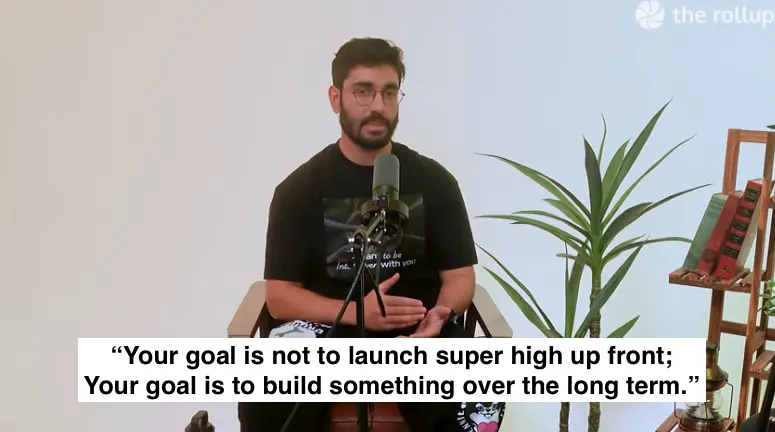
Zon, a co-founder of Initia, made the following remarks on a podcast last month: “Your goal is not to launch super high up front; your goal is to build something over the long term.”
https://www.youtube.com/watch?v=iPOVLe7RlZs
This stance contrasts somewhat with many other teams that aim for high valuations at the time of token launch. Zon explained that launching tokens at inflated prices, only to experience subsequent declines due to fading hype, could lead the team and overall ecosystem to lose momentum. Thus, it is reasonable to grow the ecosystem steadily, aligning token price increases with that growth. Initia’s tokenomics reflect this approach. Initia has increased the proportion of the long-term incentive program—the VIP program—and allocated airdrops and contributor rewards for community members and builders. In particular, the VIP program, which evaluates rollup contributions at each stage and rewards accordingly, is expected to serve as a pivotal incentive mechanism that will sustainably activate the ecosystem.
2-1. $INIT token launch and airdrops
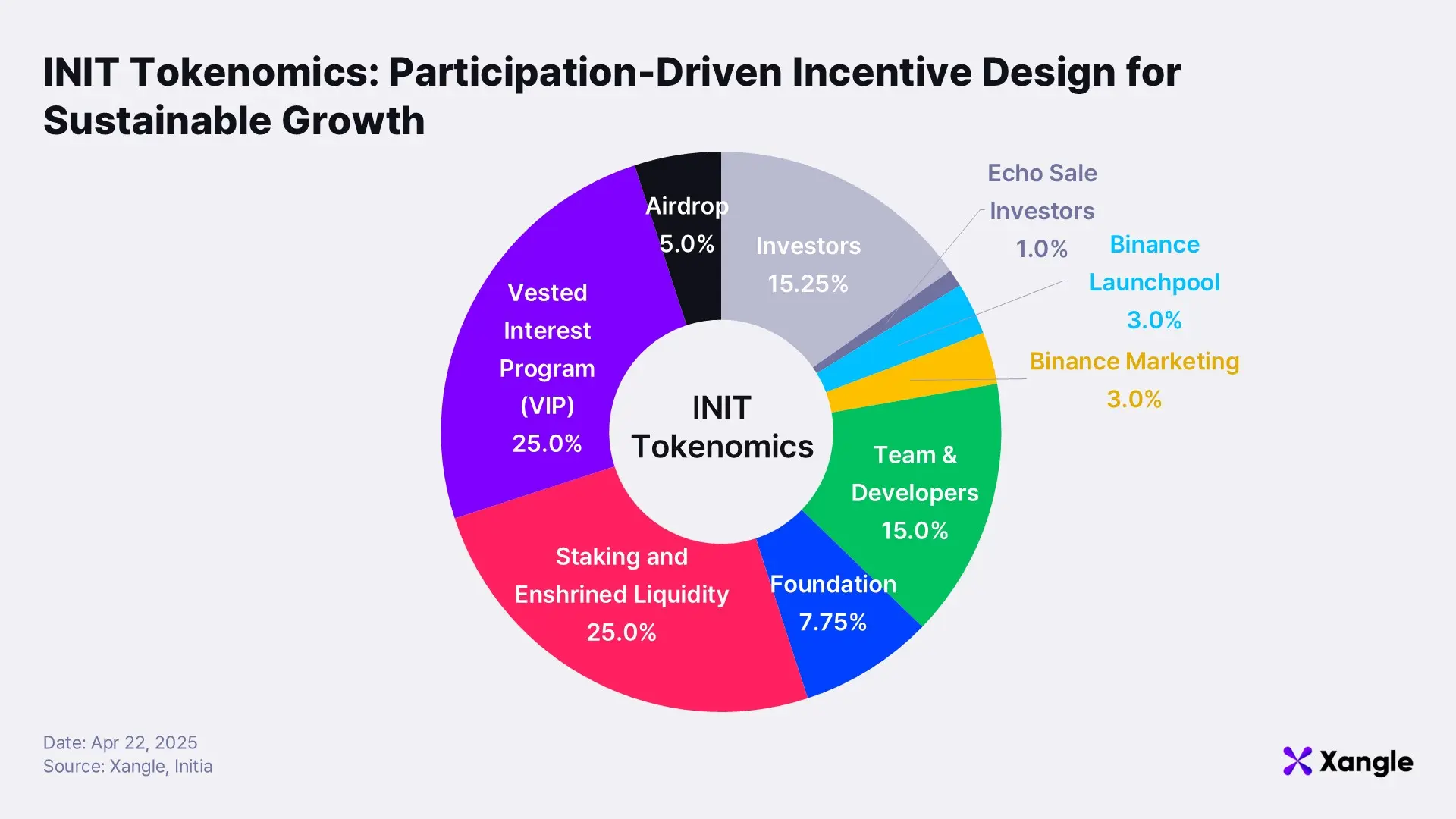
The native token of the Initia chain, $INIT, scheduled to be issued concurrently with the mainnet launch, is structured around two central pillars: “promoting ecosystem growth” and “strengthening network security.” The total issuance is fixed at 1 billion tokens, with 14.88% scheduled to circulate in the market at the time of the TGE (Token Generation Event). The initial circulating supply is primarily allocated to airdrops (5%) and Binance Launchpool & marketing (6%), indicating plans for rewarding early adopters and promoting marketing activities. Of the airdrop allocation, 89.5% goes to testnet participants, 4.5% to users of LayerZero, IBC, and Celestia, and the remaining 6% to community members contributing via social activities on platforms such as X (formerly Twitter) and Discord..
Ecosystem growth will be driven by allocations to the VIP program (25%) and Contributors (15%), while network security will be reinforced by the Staking & Enshrined Liquidity allocation (25%). Reflecting recent trends of reduced team token allocations and increased community and ecosystem rewards, Initia has set aside only 5.25% for the team. Details about the VIP program and Enshrined Liquidity—which together account for 50% of the total Initia token allocation—will be further explored below. Notably, the fact that half of the total token supply is dedicated to incentives based on actual usage and participation highlights Initia’s core strategic design: attracting long-term, aligned contributors into the ecosystem rather than promoting short-term liquidity farming.
2-2. Expanding the VIP program to drive sustainable rollup growth
Initia’s VIP Program is an incentive mechanism designed to reward active users and rollup developers within the network. The core criterion for rewards in each rollup is not simply economic activity or transaction volume; instead, it's the specific actions each application deems important. Rewards are concentrated toward participants who generate tangible value within the network. As a particular rollup becomes more active, it receives increased incentives, and additional incentives are also distributed to users who utilize that rollup.
Contribution is evaluated bi-weekly, and reward allocations (in the form of $esINIT tokens) are distributed according to predetermined criteria, such as gauge voting by $INIT holders and Enshrined Liquidity providers, and the proportion of $INIT bridged into specific rollups. Importantly, $esINIT tokens are not immediately liquid; recipients must sustain certain levels of activity for these tokens to gradually convert into liquid assets, making continued participation essential. Through this structure, the VIP program avoids short-term airdrops and instead directs rewards consistently toward active users and developers who create valuable services. While existing blockchain networks typically suffer rapid liquidity depletion once reward programs end, the VIP mechanism encourages sustained engagement, thereby creating a structure conducive to long-term growth.
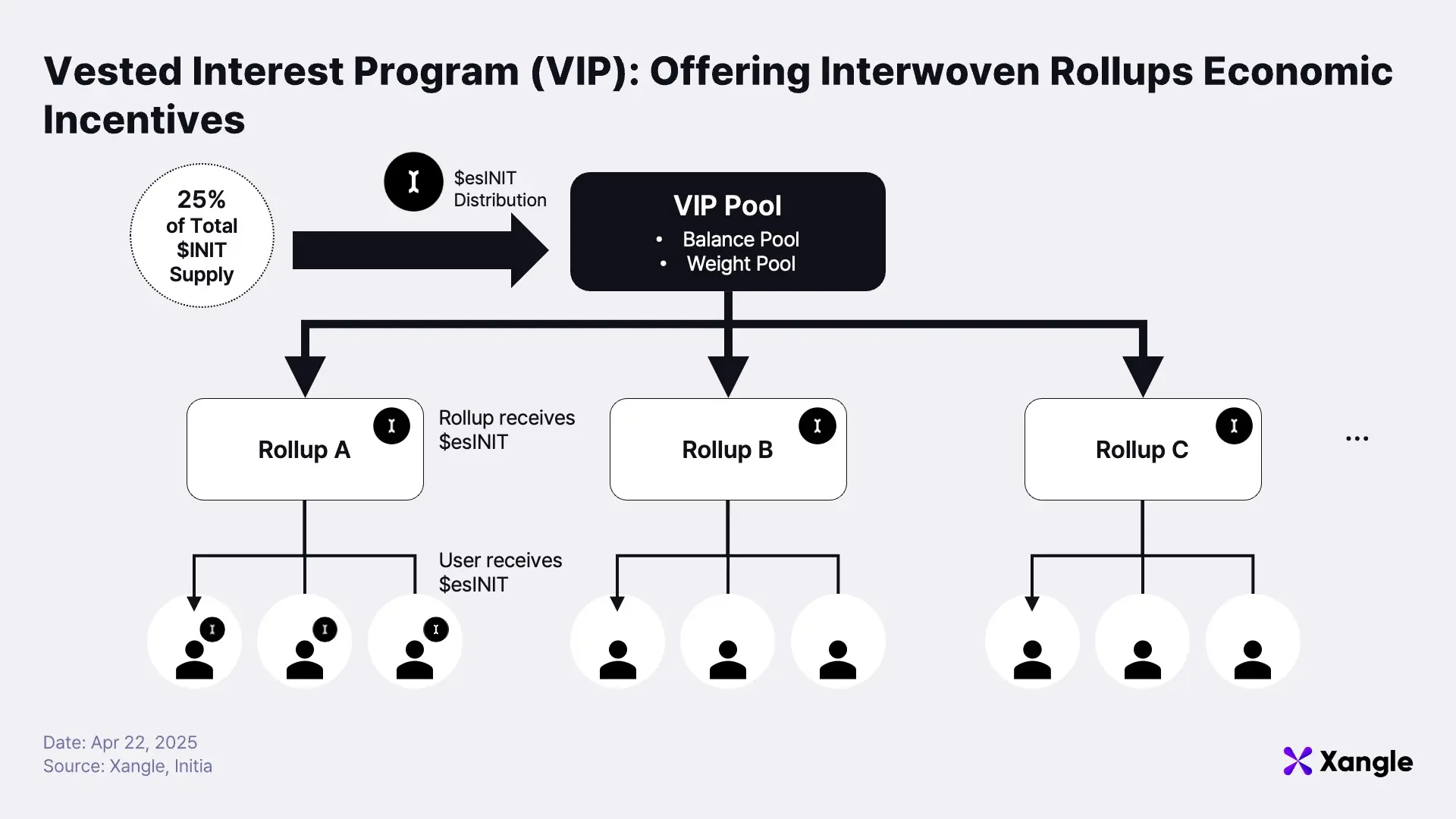
However, considering that the amount of $esINIT rewards is directly tied to the volume of staked $INIT, the issue of DeFi rollups capturing a substantial portion of rewards is something that may need gradual improvement. In fact, for the VIP cycle ending on April 23, the liquid staking protocol Inertia is projected to take approximately 60% of the allocated rewards. Of course, aligning rollup incentives with $INIT tokens is essential. This model notably attempts to address the cannibalization issue prevalent in existing Ethereum <> rollup token structures. Nonetheless, adjustments may be necessary to accommodate a broader array of rollup services that do not exclusively rely on $INIT staking.
Recently, the Initia team decided to significantly increase the token allocation to the VIP program from 10% to 25%. By expanding user and developer incentives by 2.5 times, they aim to achieve sustained long-term network growth. To accommodate this, the team reduced the staking reward allocation from its original 40% to 25%. By doing this, the team clearly expressed its preference to incentivize actual service users and developers creating valuable services on-chain rather than investors who primarily profit through staking alone.
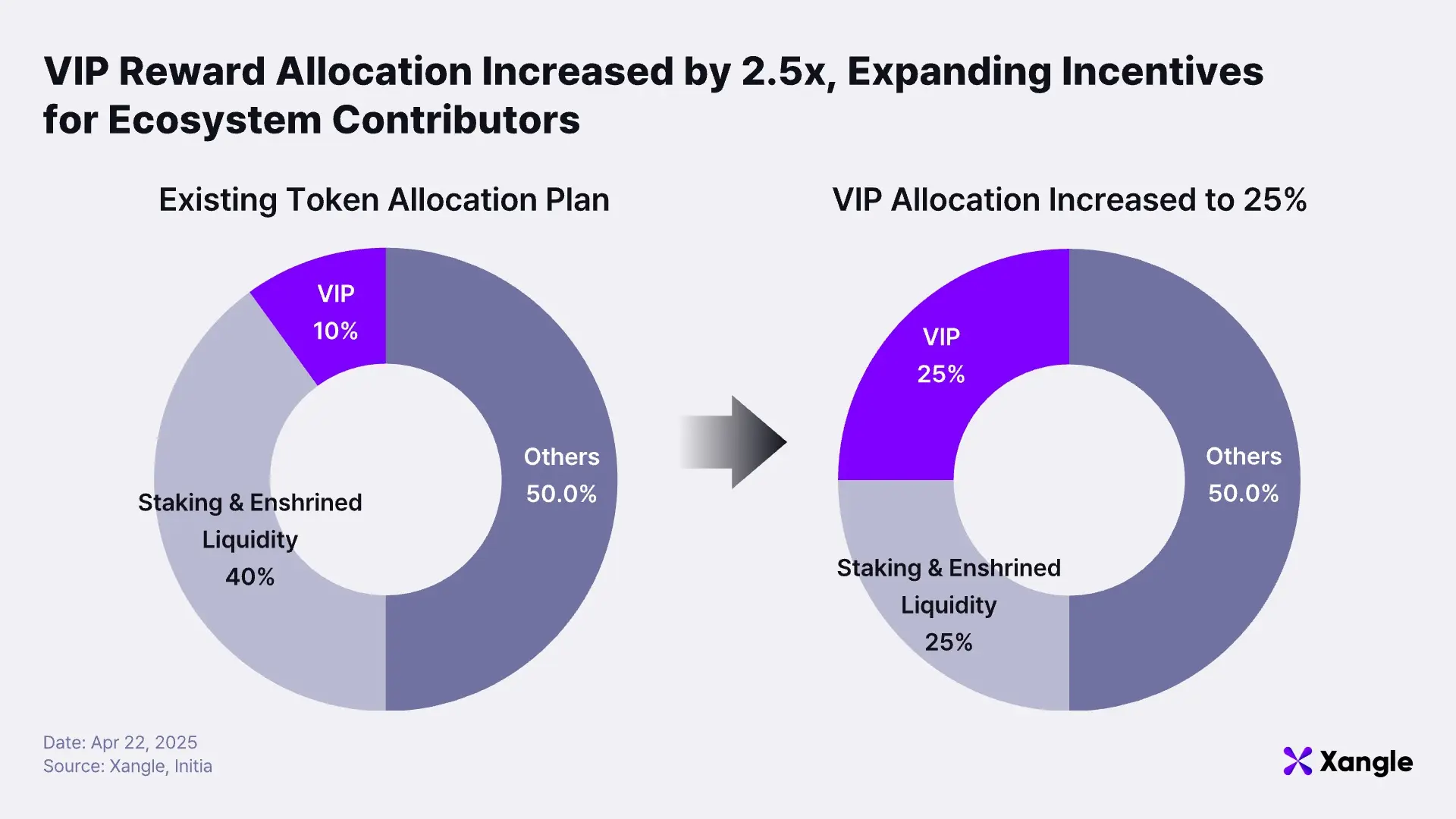
This decision deserves recognition, especially from the perspective of Web3’s core ethos: allocating value back to ecosystem contributors. Examples such as Blur capturing market share from OpenSea and Hyperliquid eating into the market share of existing centralized exchanges (CEXs) vividly illustrate the powerful motivating force of user incentives. Given intense competition among numerous Layer 1 blockchains, increasing the VIP program’s allocation was likely inevitable for Initia to attract talented developers and the limited pool of Web3 users. Therefore, the VIP program is expected to serve as a pivotal incentive, steadily driving step-by-step growth within the Initia ecosystem.
2-3. Enshrined Liquidity: An innovative staking model ensuring both liquidity and security
Initia introduces the concept of Enshrined Liquidity, an innovative staking model designed to simultaneously enhance both network security and liquidity. Traditional blockchain networks typically rely on staking native tokens solely to contribute to network security. In contrast, Initia employs a staking approach based on Liquidity Provider (LP) tokens, thereby achieving not only robust security but also maximizing capital efficiency across the network by incentivizing liquidity provisioning. Ultimately, Initia strengthens blockchain security and liquidity simultaneously, minimizing the operational burden for rollups dependent on Initia’s security.
Initia’s Enshrined Liquidity system operates in conjunction with InitiaDEX, allowing users to stake not just INIT tokens directly, but also LP pairs involving INIT, such as INIT-USDC. Through this approach, participants earn multiple revenue streams simultaneously—staking rewards, swap fees, and liquidity provision incentives—and additionally gain governance influence through participation in VIP gauge voting. Notably, participants in the aforementioned VIP program can also deposit their $esINIT rewards into Enshrined Liquidity, going beyond mere compensation to actively contribute to network security and liquidity. This structure forms a positive feedback loop: users gain rewards while also influencing governance decisions, guiding incentive alignment toward sustainable network growth. In short, Enshrined Liquidity is not merely a staking mechanism, but a fundamental instrument promoting capital efficiency and economic alignment within the Initia ecosystem.
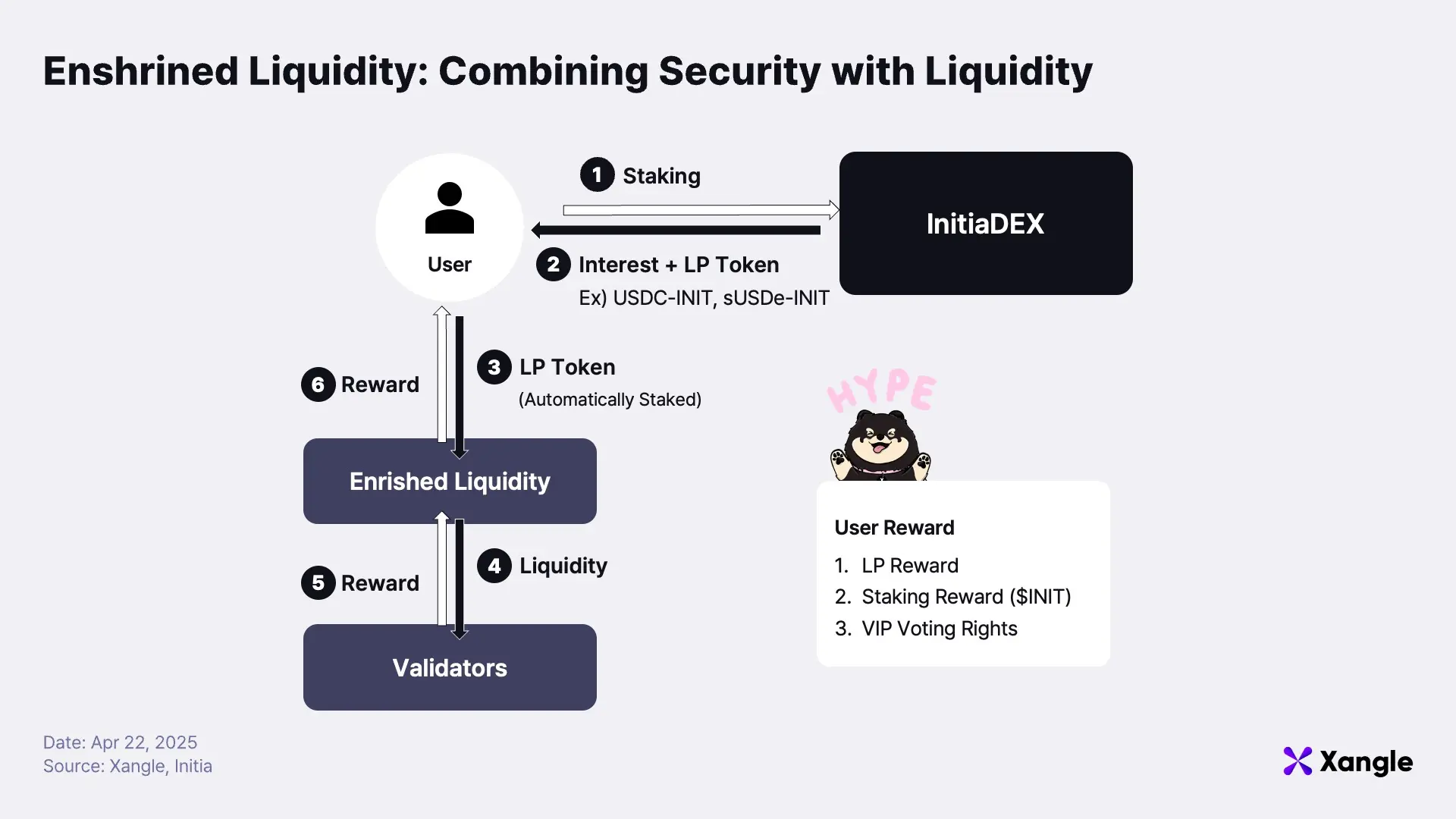
Furthermore, Enshrined Liquidity serves as a seamless liquidity bridge between Initia L1 and its Interwoven Rollups. In conventional blockchains, liquidity often becomes fragmented between Layer 1 and Layer 2, or managed independently within separate chains. Consequently, new rollups face significant initial costs associated with attracting liquidity, typically requiring high incentive spending. Initia’s Enshrined Liquidity model effectively addresses this by enabling liquidity generated on InitiaDEX to naturally flow across the entire rollup ecosystem, thus significantly reducing liquidity acquisition costs for rollups.
Recently, within the Initia ecosystem, the INIT-USDC-based Liquid Staking Token (LST) deINIT, launched by Drop, has drawn particular attention. deINIT extends the Enshrined Liquidity model by tokenizing INIT-USDC LP positions, enabling users to convert their liquidity into a yield-bearing asset. Through this structure, users not only contribute to network security but also receive staking rewards and swap fees via automatic compounding. Furthermore, Ethena plans to introduce a composite incentive structure for its INIT-sUSDe-based Enshrined Liquidity pool, combining native rewards, INIT staking yields, and swap fees. As sUSDe integrates with key Initia DeFi applications like Cabal, Echelon, and Rave, Ethena’s participation is expected to significantly boost the ecosystem’s credibility and liquidity.
The Enshrined Liquidity model aims to solve the liquidity fragmentation challenge often seen in traditional blockchain networks. By aligning network security and liquidity as complementary forces, rather than treating them as trade-offs, it establishes a sustainable capital structure. For new rollups struggling with bootstrapping liquidity, the model offers a scalable and long-term solution. If widely adopted, it is expected to serve as a central liquidity mechanism for Initia—optimizing capital flows between L1 and L2 networks and driving broader network efficiency.
3. Testnet Milestones: Enhancing the Technical Maturity of Initia
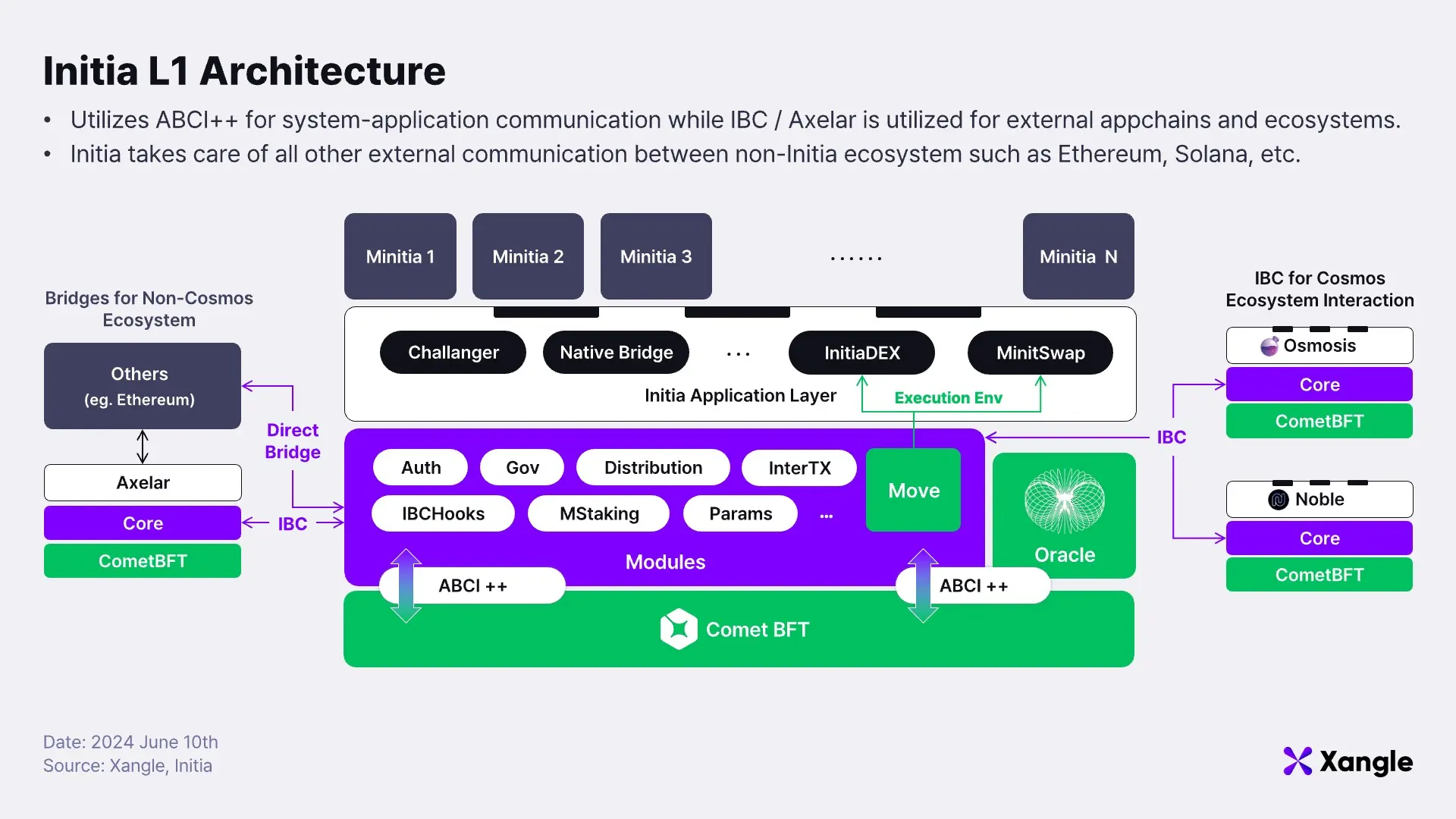
Initia's core mission and the values it strives to deliver are explicitly defined: addressing the deteriorating user experience caused by the increasing fragmentation and modularization of blockchain layers, and providing infrastructure that enables development teams to utilize optimized blockchains tailored specifically to their services. These twin objectives underpin Initia’s core vision. To achieve this, Initia has constructed an ecosystem centered around the Initia Layer-1 (L1), facilitating seamless interoperability among multiple rollup chains.
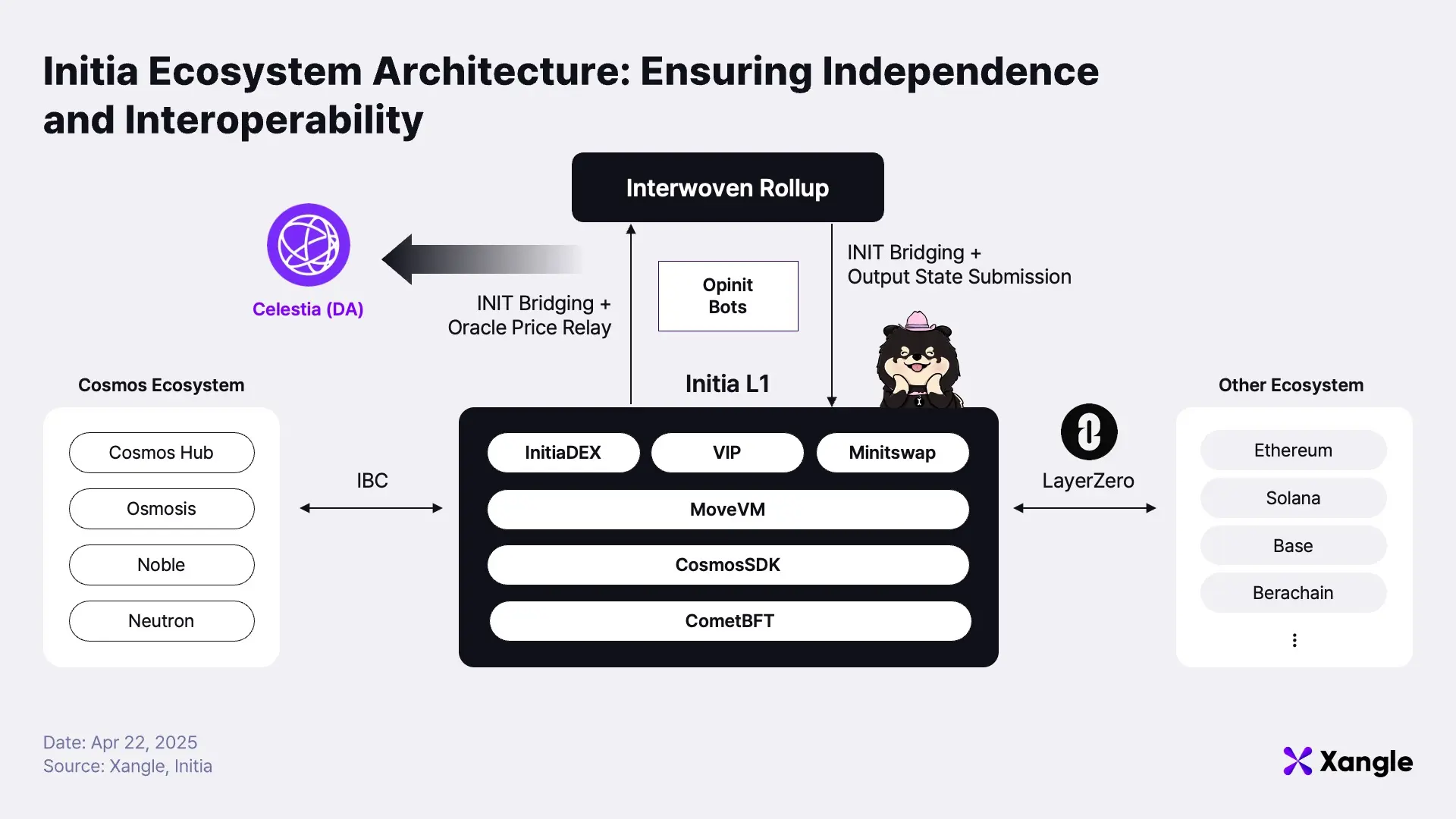
Examining this structure more closely, Initia’s architecture is a modular multi-chain design organized around three principal pillars: Initia L1, Interwoven Rollups (L2), and the Interwoven Stack (Development Stack).
- Initia L1 functions as the central hub, responsible for critical aspects including network security, liquidity management, governance, and bridging operations. It integrates seamlessly with external infrastructure such as Celestia Data Availability (DA), IBC, and LayerZero, thus simultaneously ensuring scalability and cross-chain interoperability.
- Built atop this foundational layer, the Interwoven Rollups can be flexibly deployed to accommodate diverse use cases across DeFi, NFTs, gaming, Real-World Assets (RWA), AI, and more. While each rollup shares the security and liquidity provided by Initia L1, each maintains an independent virtual machine (VM) and a self-contained economic system.
- Critical to this rollup ecosystem is the automation of data validation, bridging, and state synchronization, which is managed by specialized OPinit Bots. These bots facilitate real-time data relay and seamless asset bridging between individual rollups and the Initia L1 network.
- Lastly, the Interwoven Stack provides an integrated development tooling environment, enabling streamlined app-chain deployment, VM selection, and efficient data processing, thereby significantly simplifying the rollup development and operational experience for developers.
In this section, grounded upon this architectural framework, we closely examine the technological milestones achieved by Initia during its second-stage testnet period, as reported since our last Initia analysis. Additionally, we delve into concrete examples and detailed observations to illustrate precisely how the Interwoven ecosystem has expanded and evolved in practice.
3-1. Optimizing OPinit Stack for greater technical maturity
Among various infrastructure components, Initia has significantly focused on refining the OPinit Stack, as it aspires to become the central hub for multiple rollups, enabling developers to effortlessly deploy rollup chains. During the initial phase of the testnet, supported virtual machine environments for rollup execution were limited to WasmVM and MoveVM. However, during the Initiation-2 phase, support for the Ethereum Virtual Machine (EVM) was added, creating a more inclusive and developer-friendly environment. Moreover, the integration of Celestia as an additional Data Availability (DA) layer, along with the option for shared sequencing, empowers developers to construct execution environments optimally tailored to their specific application needs. These developments ultimately facilitate broader compatibility with diverse ecosystems.
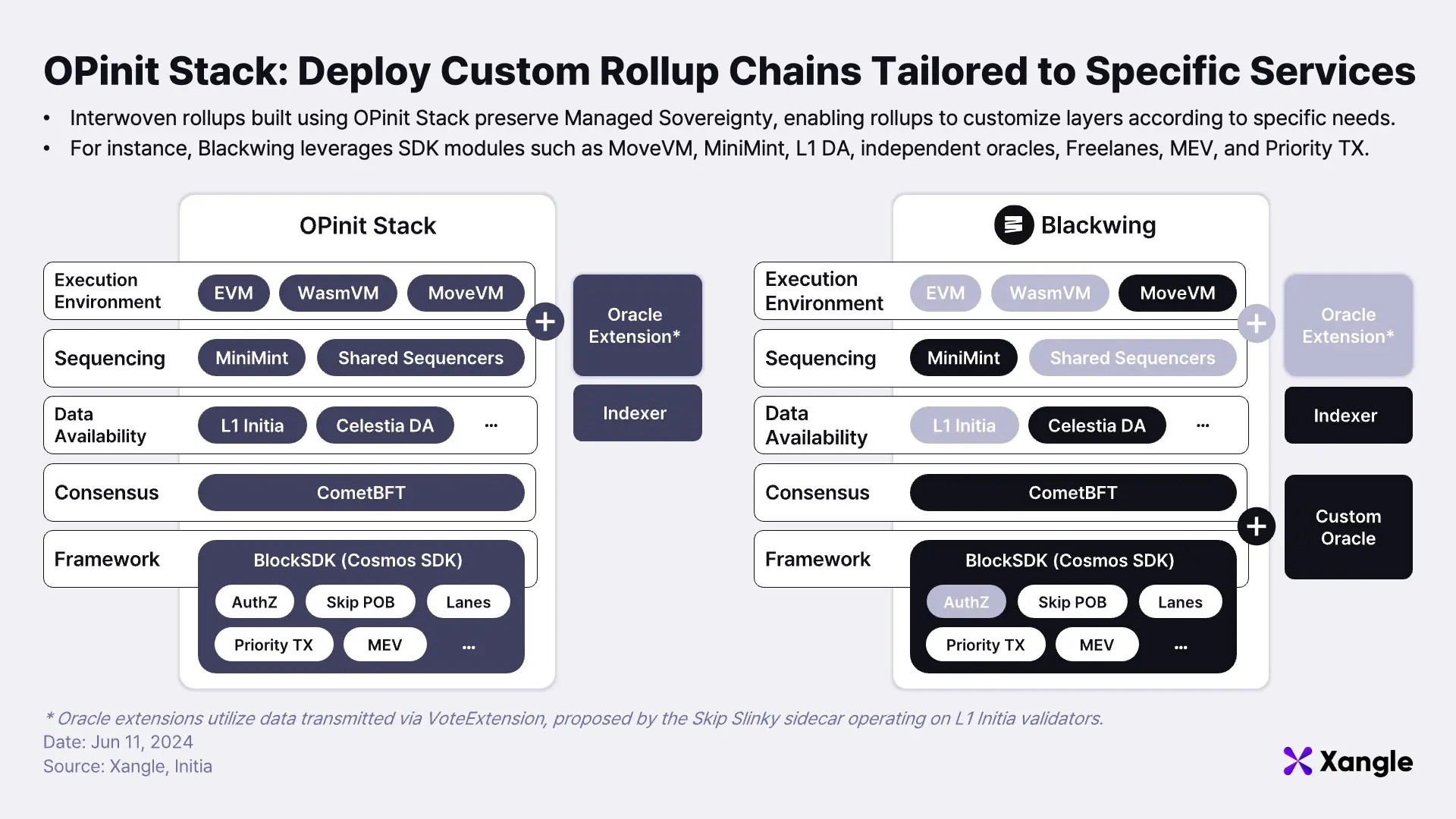
Recently, Initia further streamlined the deployment and operation of Interwoven Rollups with the release of its CLI toolkit, Weave. Providing a Rollup-as-a-Service (RaaS)-level simplicity, Weave combines ease of use with flexible control over local environments and self-hosted deployments. This allows developers—even those without advanced infrastructure expertise—to quickly deploy and experiment with their own rollups. By simplifying otherwise complex configurations into a single integrated interface, Initia has effectively lowered barriers to blockchain development, paving the way for diverse experimentation and customized infrastructure implementations.
3-2. Significant increase in rollup activity during the Initiation-2 phase?
Initia conducted its testnet in two distinct phases: Initiation-1 and Initiation-2. These stages allowed the network to validate its technological stability, collect real-world user feedback, and improve infrastructure prior to the official mainnet launch. The Initiation-1 phase primarily onboarded rollups based on Move and Wasm VMs and included user engagement initiatives such as the “Raising Jennie” content and bridge usage events. Initiation-2 introduced support for EVM-based rollups, implemented a VIP voting system for governance and incentive experimentation, and completed essential security audits ahead of the mainnet launch. While previous reports focused extensively on Initiation-1, this section will primarily highlight accomplishments from Initiation-2.
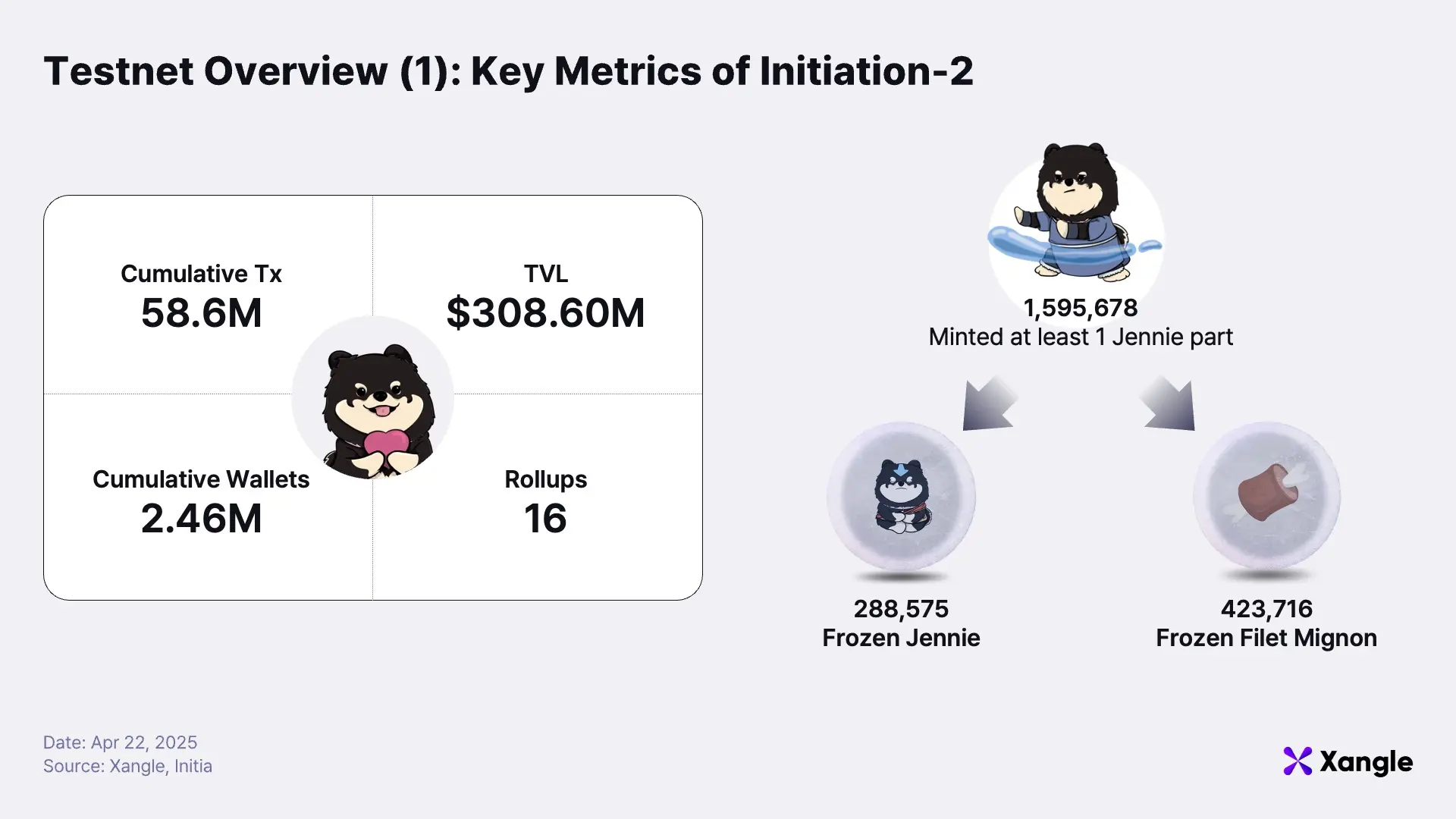
During Initiation-2, the Initia testnet recorded significant engagement metrics, reaching 58.6 million cumulative transactions, 2.46 million wallets, and a TVL of $308.6 million. Among the key testnet activities, the Jennie minting event was particularly noteworthy, resulting in the minting of approximately 1.59 million Jennies—290,000 of which were "Frozen Jennies," and 420,000 minted as "Filet Mignon Jennies," underscoring considerable user enthusiasm and participation.
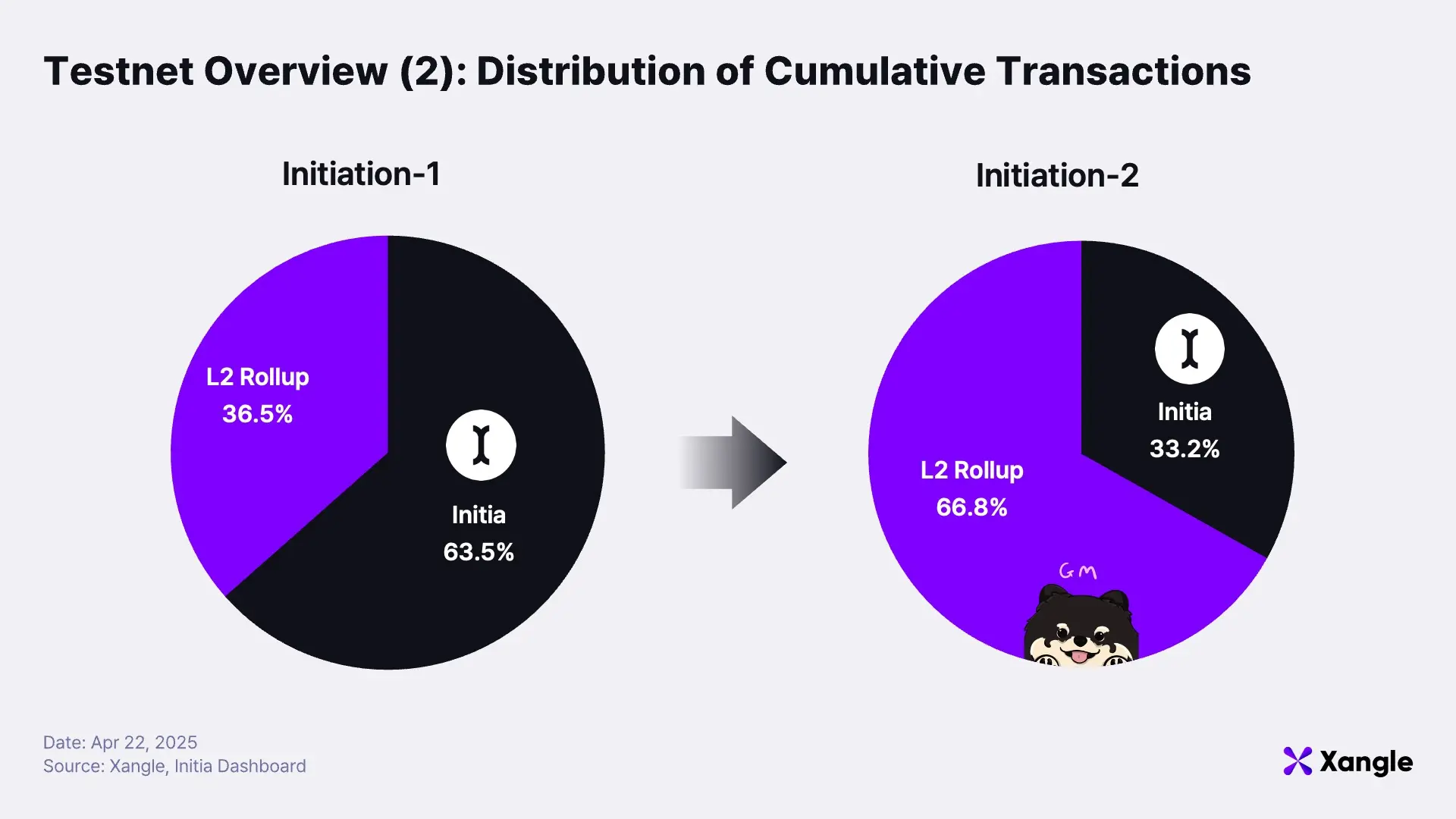
Among the metrics from the Initiation-2 testnet, the substantial growth in rollup activity stands out as particularly noteworthy. While rollup transactions accounted for only 36.5% of total transactions during Initiation-1, this figure surged to 66.8% during Initiation-2. For Initia—whose core vision is to serve as a central hub for diverse rollup chains—this significant increase in rollup transaction share is especially meaningful. It underscores the successful onboarding of competitive rollup chains, indicating their growing traction and validating their strategic importance within the broader ecosystem.
These figures represent the cumulative achievements of the Initia Layer-1 and its 16 interconnected rollups (Layer-2) operating on the testnet. Compared to the eight rollups active during Initiation-1, more rollups have successfully launched on Initia, and according to the team’s roadmap, additional rollup services are slated for release in Q3.
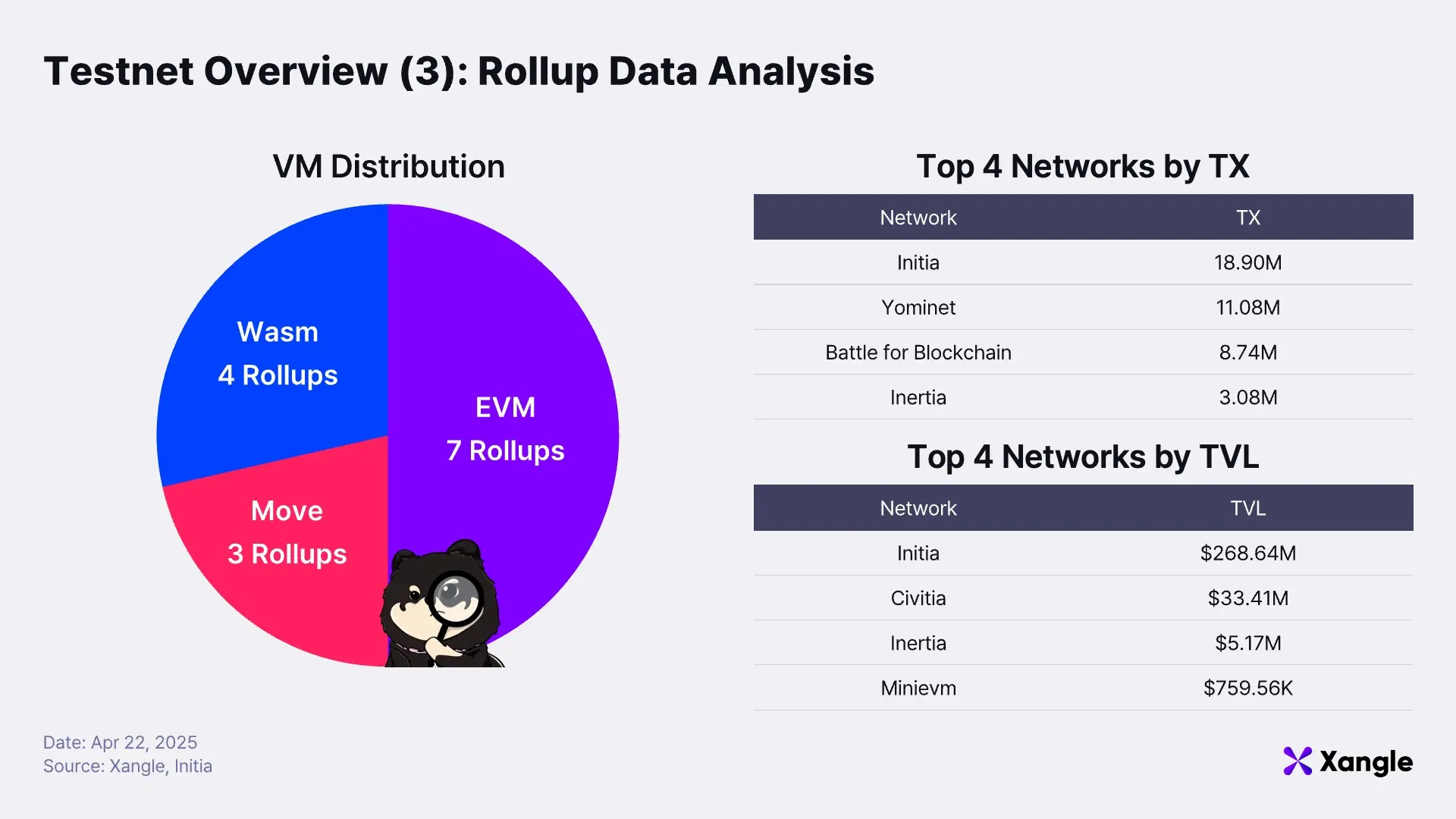
Examining rollup technology specifications reveals a diverse mix of virtual machines on the Initia testnet, including EVM (7 rollups), Move (3 rollups), and Wasm (4 rollups). Notably, despite EVM support being introduced relatively recently in Initiation-2, the majority of deployed rollups are EVM-based. This underscores Initia’s strategic compatibility with existing blockchain ecosystems, enabling seamless onboarding of numerous Ethereum-based decentralized applications (DApps), which likely contributed significantly to the rapid influx of new rollups. The team appears to be testing and planning to add new virtual machines (VMs) as part of their roadmap. It is likely that zkVM or SVM—both of which have been receiving significant attention recently—are currently being tested.
In terms of TVL and overall transaction volumes, the Initia main chain (Layer-1) continues to lead. However, notable momentum has been demonstrated by gaming-based rollups such as Yominet (Kamigotchi game) and Battle for Blockchain (BFB). Indeed, firsthand experience of BFB’s auto-battle gameplay revealed a polished user experience and commendable game quality. Additionally, Yominet, a prominent rollup game, has garnered substantial user participation, reaching cumulative transaction volumes (11.08M) nearly equivalent to Initia’s main chain. This demonstrates that game-focused rollups are effectively driving significant user traffic, and the growing TVL across these rollups further indicates sustainable and autonomous ecosystem expansion potential.
4. The Interwoven Economy Continues its Diversified Expansion
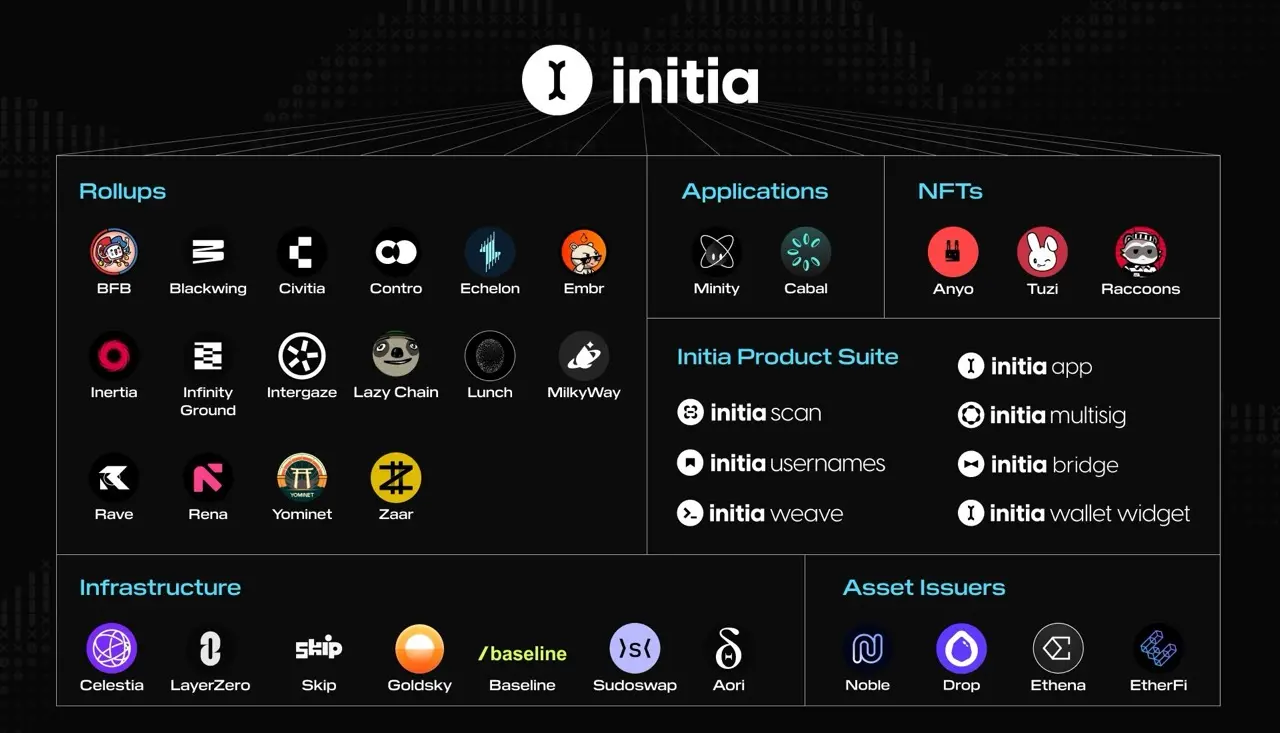
The Interwoven Economy represents a cohesive and scalable blockchain ecosystem that integrates Initia Layer-1 (L1) with a range of independently deployed rollups (Layer-2). Currently, the Interwoven Economy includes 16 live rollups, 2 applications, and 3 NFT projects that serve as core content for users within the Initia network. In this section, we explore newly launched rollups and highlight key projects that have demonstrated significant growth—driven primarily by the VIP program.
4-1. Finance and DeFi: Anchoring Liquidity in the Interwoven Economy
DeFi is central to the Initia ecosystem. Currently, Enshrined Liquidity on Initia's Testnet maintains roughly $268 million in Total Value Locked (TVL), with a total of seven active DeFi rollups. Given the anticipated rollout of additional DeFi rollups in Q3, this sector continues to attract significant attention. This report specifically covers the newly onboarded rollups during the Initiation-2 phase—RAVE, Echelon, and EMBR. (For more information on outstanding DeFi chains like Blackwing, Inertia, and Milkyway, we recommend referring to the previously published <Omnitia Report> by Xangle)
Rave
https://x.com/RAVE__Trade/status/1889461663231013099
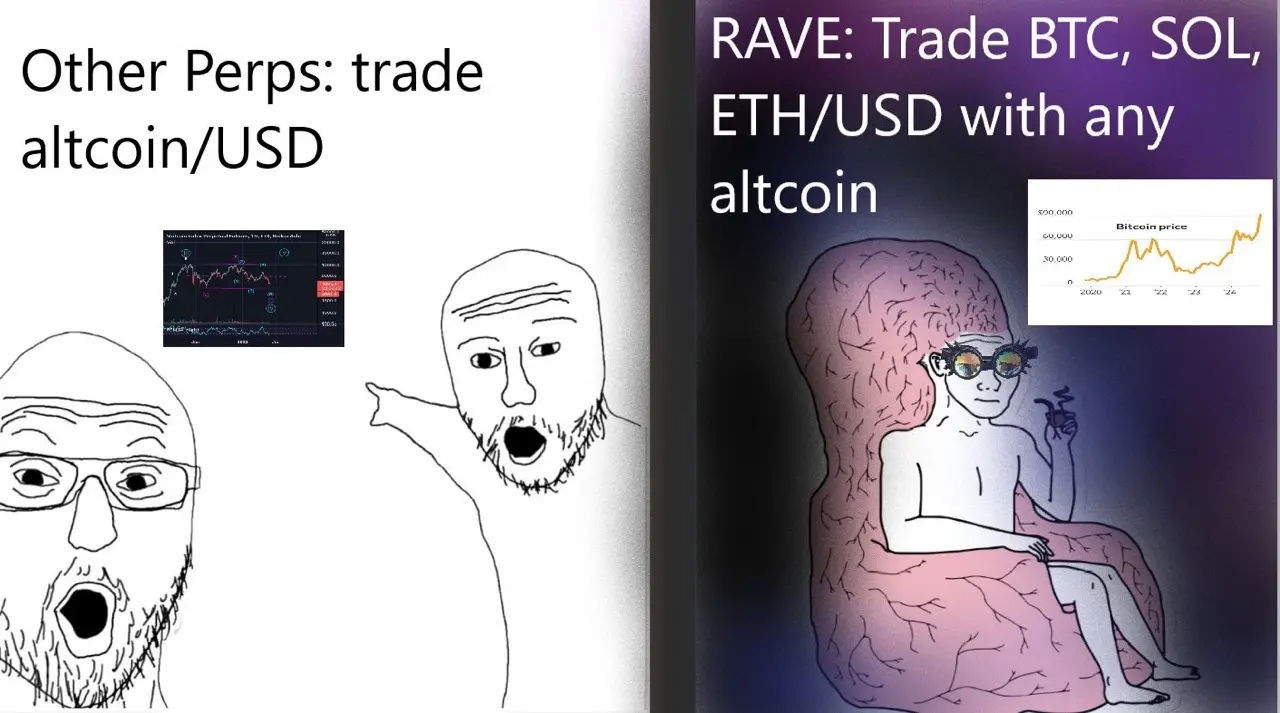
RAVE is a Quanto-based perpetual futures exchange rollup that allows virtually any asset to serve as collateral. Traders can open positions in major trading pairs such as BTC and SOL using diverse collateral types, including sUSDe, LRT tokens, or even meme coins, with profit-and-loss (PnL) settled in the collateral asset itself. This innovative structure eliminates price fluctuation risks tied to collateral assets, instead enabling PnL determination based purely on fixed market rates, maximizing capital efficiency. Liquidity providers participate through single-asset liquidity pools known as "Caves," earning fee revenue and enjoying the freedom to establish new trading markets. Backed by Maelstrom Fund, RAVE aims to redefine traditional derivative trading frameworks by delivering high autonomy, fast transaction processing, and omnichain asset accessibility through its distinctive Quanto perpetual futures design.
Echelon
https://x.com/initia/status/1872485142658445725
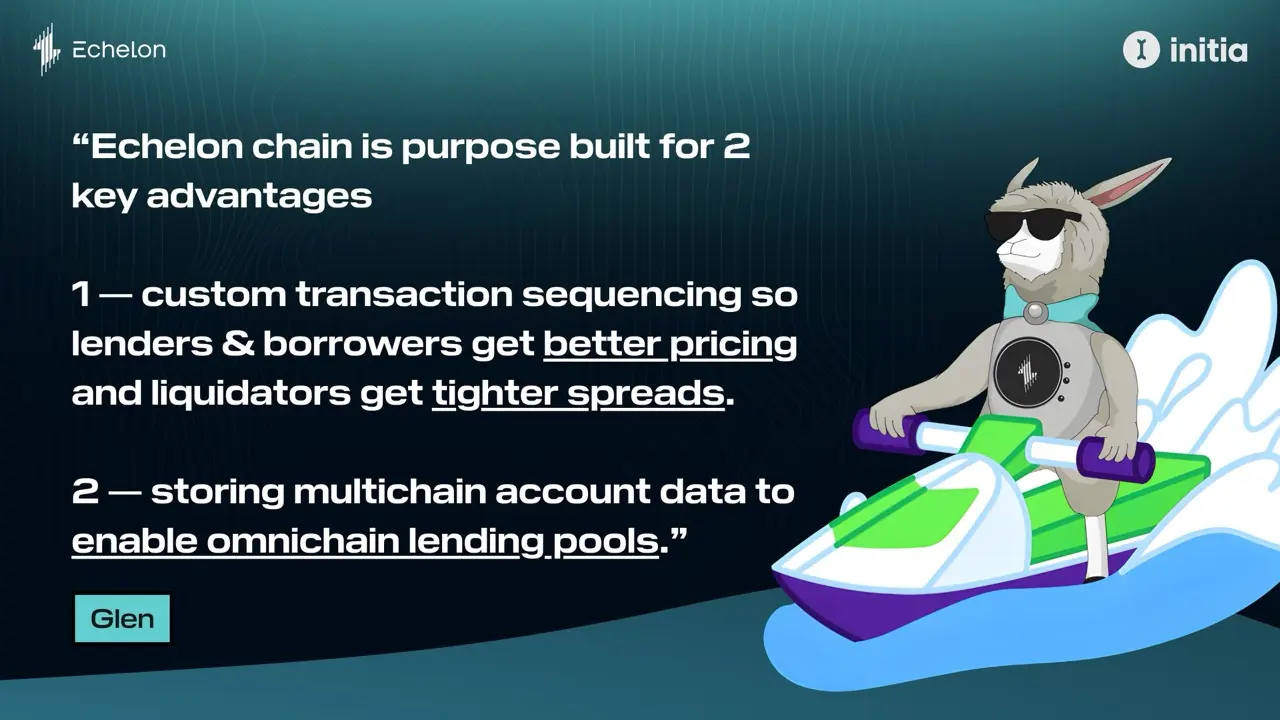
Echelon is a decentralized lending protocol built on Move VM technology, originally deployed on Aptos and now expanding onto Initia as a dedicated app-chain rollup. The platform facilitates leveraged positions via over-collateralized loans, supporting diverse collateral assets, Enhanced-Mode (E-Mode) loans with high loan-to-value (LTV), automated looping leverage mechanisms, and high-leverage stablecoin/Liquid Staking Token (LST) strategies. Echelon’s Initia-based rollup incorporates essential infrastructure components such as Celestia Data Availability, LayerZero bridges, Enshrined Oracles, and VIP program incentives. Its cross-chain lending accounts and liquidation infrastructure facilitate flexible integration with modular assets. Having already reached a combined TVL of $267 million on mainnet deployments across Aptos and Movement, Echelon is preparing for further expansion with the launch of Initia’s mainnet.
EMBR
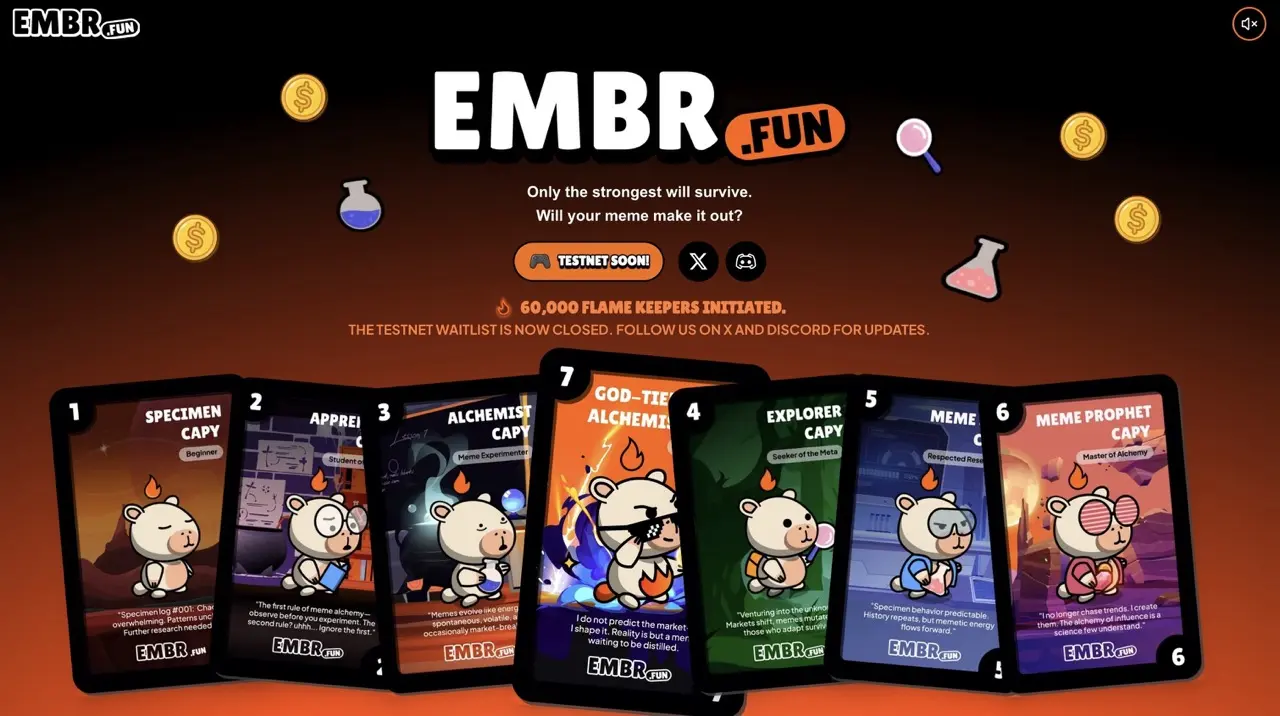
EMBR is an app-chain aiming to structurally address the prevailing shortcomings of the meme-coin market—characterized typically by short lifespans, influencer-dependent liquidity, and limited user retention. Introducing a novel "meme-coin survival game" mechanism, EMBR creates a competition framework based on liquidity and organic demand. Rather than simply issuing tokens, users on EMBR must create meme coins, engage directly with their communities, and collaboratively provide liquidity, thereby demonstrating sustained value beyond fleeting hype cycles. EMBR recently secured a $1.8 million seed funding round led by Robot Ventures and Lattice Fund and is currently approaching its beta launch phase.
4-2. NFTs and Gaming: The entertainment hub driving user adoption
NFTs and gaming have emerged as significant drivers of initial user adoption within the Initia ecosystem. Indeed, among testnet rollups, Yominet—hosting Kamigotchi—(11.08 million transactions) and Culinaris—hosting Battle for Blockchain—(8.74 million transactions) ranked first and second respectively in cumulative transaction volume, making them the most active networks after the main Initia chain itself (18.91 million transactions). This highlights the crucial role of gaming-focused rollups in fueling substantial on-chain activity. Whereas our previous report highlighted entertainment app-chains such as Civitia, Kamigotchi, Lunch, and Zaar, this section focuses primarily on new entrants: Intergaze, Battle for Blockchain, and Lazy Chain.
Intergaze
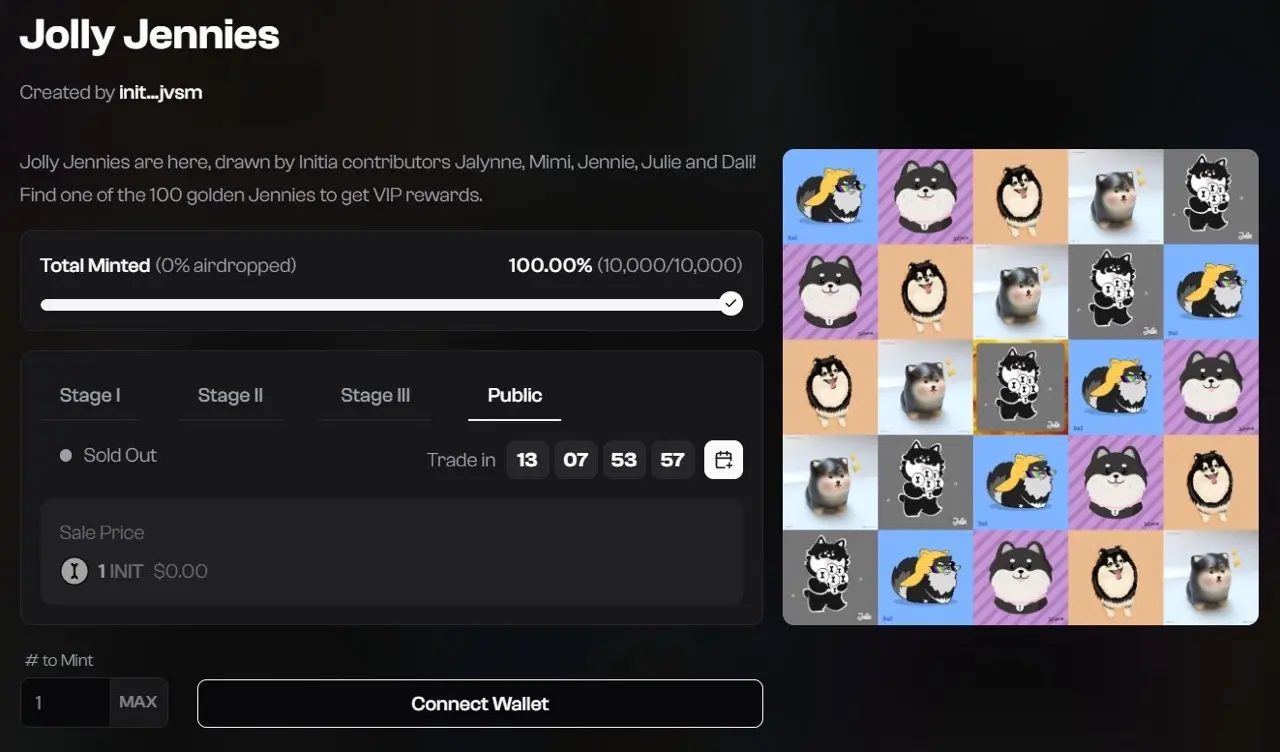
https://x.com/intergaze_xyz/status/1902632930612277630
Intergaze is a specialized NFT minting platform and Initia-based rollup developed by the Stargaze team. It offers a creator-focused set of functionalities, including gasless minting, randomized issuance, and tiered whitelists. Built upon the Interwoven Stack, NFTs minted on Intergaze can be transferred effortlessly across EVM, Move, and Wasm-based chains. Moreover, Intergaze employs VIP rewards to provide direct benefits to both creators and community participants. An integrated launchpad and marketplace are set to launch soon, with notable collections such as Team Tuzi, Rcoons, and ANYO preparing initial mints. During the testnet phase, Intergaze successfully launched a gas-free minting event for "Jolly Jennies," a limited collection of 10,000 NFTs, which swiftly sold out due to its smooth user experience and easy participation mechanism.
Battle for Blockchain
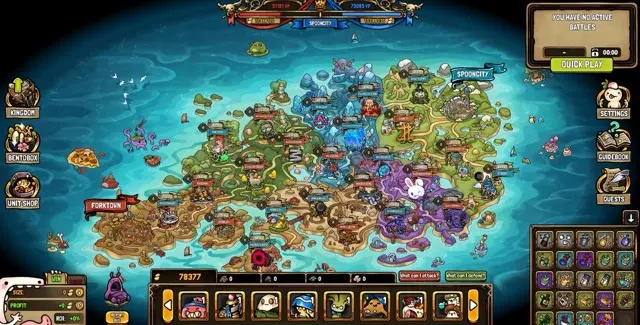
https://docs.battleforblockchain.com/
Battle for Blockchain (BFB) is a strategic auto-battle game set in a food-themed medieval fantasy world, operating on its own dedicated rollup, Culinaris. Players choose between the factions "Spoon City" and "Fork Town," recruit armies, and engage in battles, benefiting from an immersive real-time UX and automated combat system. The game asset $BFB is used for unit purchases, upgrades, and pre-sale participation via tokens such as Golden Forks and Spoons. Having surpassed 8.75 million cumulative transactions, BFB is now the third-highest rollup in the Initia ecosystem by transaction volume, just behind Initia L1 and Yominet.
Lazy Chain

https://x.com/Lazy_chain/status/1899809113724334105
Lazy Chain, driven by the Celestine Sloths community, is an on-chain community rollup initially developed on Astria but migrated to Initia’s Interwoven Stack for enhanced user experience and interoperability. Embracing the relaxed, humorous "Sloth Culture," Lazy Chain aims to build social, gaming, and community-driven applications leveraging meme-centric elements such as Jennie. It positions itself as a consumer-friendly blockchain platform prioritizing ease-of-use, appealing UX, and tangible real-world usability.
4-3. AI and Web3: Evolving together within Initia’s ecosystem
AI and Web3 have increasingly become complementary, jointly overcoming their inherent limitations and driving technological innovation. Web3 lends AI critical transparency and verifiability, while AI significantly improves Web3 user experiences and facilitates the creation of innovative services. Initia, in particular, leverages this complementary synergy through rollup-based implementations, aiming at infrastructure-level support for both "trustworthy AI" and "user-friendly AI development environments." This section highlights two initiatives—Rena, a Trusted Execution Environment (TEE)-based privacy-preserving AI app-chain, and Infinity Ground, a rollup supporting natural language app creation—to showcase how Initia is expanding its ecosystem towards AI and data-centric app-chains.
Rena
Rena is a TrustEE-based AI data-focused app-chain leveraging Trusted Execution Environments (TEE) to provide verifiable, privacy-preserving AI infrastructure. It facilitates trustworthy execution of AI models directly on-chain and is poised for integration across diverse project domains, including Large Language Models (LLMs), autonomous agents, DeFi, and gaming. Recently, Rena secured $3.3 million in pre-seed funding led by Paper Ventures and FactionVC. Its strategic aim is to establish a "verifiable AI" environment that simultaneously ensures AI trustworthiness and preserves user sovereignty.
Infinity Ground
Infinity Ground is an Intelligent Development Environment (IDE)-based rollup enabling users to effortlessly create game content and other AI-powered applications through natural language interfaces, integrating seamlessly into the broader Initia ecosystem. Specializing primarily in game-related data and content generation, Infinity Ground empowers individuals—even those without coding expertise—to rapidly develop and deploy games, DeFi apps, and social platforms using intuitive templates and automated asset generation. Recently, Infinity Ground raised a $2 million seed round led by prominent investors including Animoca Brands, MarbleX, and KuCoin Ventures. It is expected to become a core standard for AI-driven blockchain game creation within the Initia ecosystem.
5. “Weave”-ing the Next Decade: Initia’s Vision for Sustainable Growth
The launch of Initia’s mainnet and Token Generation Event (TGE) marks only the beginning of a long-term effort to build a sustainable on-chain ecosystem. As Initia co-founder Zon emphasized in a recent interview, blockchain projects must prioritize consistent development and stable network growth over achieving a high initial valuation. Many projects pursue rapid expansion through inflated initial FDVs (Fully Diluted Valuations) and overly aggressive incentive models. However, these approaches often fail to maintain user engagement and liquidity over time, leading to eventual decline. In contrast, Initia strategically designed structural mechanisms such as Interwoven Rollups, the VIP Program, and Enshrined Liquidity to support a sustainable network economy—consciously prioritizing long-term ecosystem building over short-term speculative liquidity. Following the mainnet launch, Initia now enters the critical validation phase, testing whether these structural choices effectively drive sustained growth and maintain network liquidity.
However, having robust network infrastructure does not guarantee success. Initia’s primary challenge moving forward will be attracting killer decentralized applications (DApps) and securing genuine user traffic. To achieve sustained growth in the blockchain market, applications must go beyond incentive-driven liquidity provision to organically attract and retain users. The true usability and viability of Initia’s infrastructure will be validated only when practical, compelling DApps utilizing Interwoven Rollups emerge and gain traction across DeFi, NFTs, AI, gaming, and other sectors. Although the testnet phase showed promising signs, it's crucial to monitor whether user activity persists post-TGE and whether competitive new rollup services continue to join the ecosystem.
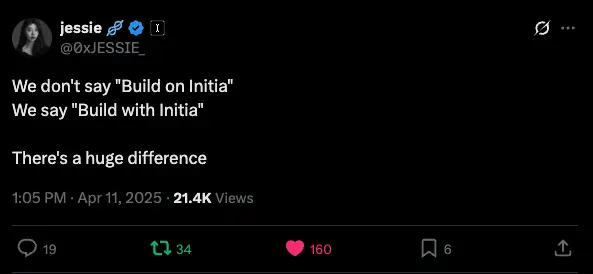
https://x.com/0xJESSIE_/status/1910544811230368127
As Jessie, Initia’s DevRel, succinctly captured in her recent tweet—"We don’t say ‘Build on Initia’. We say ‘Build with Initia’"—Initia positions itself as more than merely an infrastructure provider, aspiring instead to become a collaborative partner actively involved in ecosystem design and growth alongside developers. Ultimately, the core metric for success after TGE will hinge on whether Initia’s on-chain economy transcends short-term speculative influxes and matures into a genuinely sustainable structure built around active users and a vibrant developer community. The Interwoven Rollup-based on-chain economy envisioned by Initia will not materialize overnight. With the recent initiation of its mainnet and TGE, Initia embarks on a decade-long journey, carefully weaving together genuine users, real-world applications, and authentic value, one thread at a time.
Disclaimer
I confirm that I have read and understood the following: The information contained in this article is strictly the opinions of the author(s). This article was authored free from any form of coercion or undue influence. The content represents the author's own views and does not represent the official position or opinions of CrossAngle. This article is intended for informational purposes only and should not be construed as investment advice or solicitation. Unless otherwise specified, all users are solely responsible and liable for their own decisions about investments, investment strategies, or the use of products or services. Investment decisions should be made based on the user’s personal investment objectives, circumstances, and financial situation. Please consult a professional financial advisor for more information and guidance. Past returns or projections do not guarantee future results. CrossAngle is participating in the Initia network as a validator as of the date of this publication.
Xangle or its affiliated partners own all copyrights of the written or otherwise produced materials and content provided on the platform. Any illegal reproduction of such content, including, but not limited to, unauthorized editing, copying, reprinting, or redistribution will result in immediate legal actions without prior notice.
![[CIS Partner Summit Highlights] Ault's Financial Super App Strategy: OnlyBulls](https://resource.xangle.io/files/content/C1A19E1DB41B7FB86076143803C40D8E_1790125531662.webp)

![[Xangle RWA Series] Solana RWA: A Look at the Key Players](https://resource.xangle.io/files/content/F779A005246C0299246537AACB3A39F2_1782287059970.webp)