Avalon: Unlocking New Opportunities for Bitcoin
Image Source: Avalon Labs
Table of Content
1. The Growing Significance of Bitcoin DeFi
2. Avalon: Unlocking New Opportunities for Bitcoin
2-1. USDa: Unlocking Bitcoin’s liquidity
2-2. CeDeFi Lending: Balancing stability and yield
2-3. Establishing a presence in the DeFi market leveraging lending protocols
3. Avalon Poised for Growth Alongside the Bitcoin Ecosystem
3-1. Avalon to benefit from Bitcoin’s expanding financial utility
3-2. Avalon’s growth may strengthen bitcoin network security
3-3. Sustained growth post-TGE through multi-point farming strategies
4. Final Thoughts
1. The Growing Significance of Bitcoin DeFi
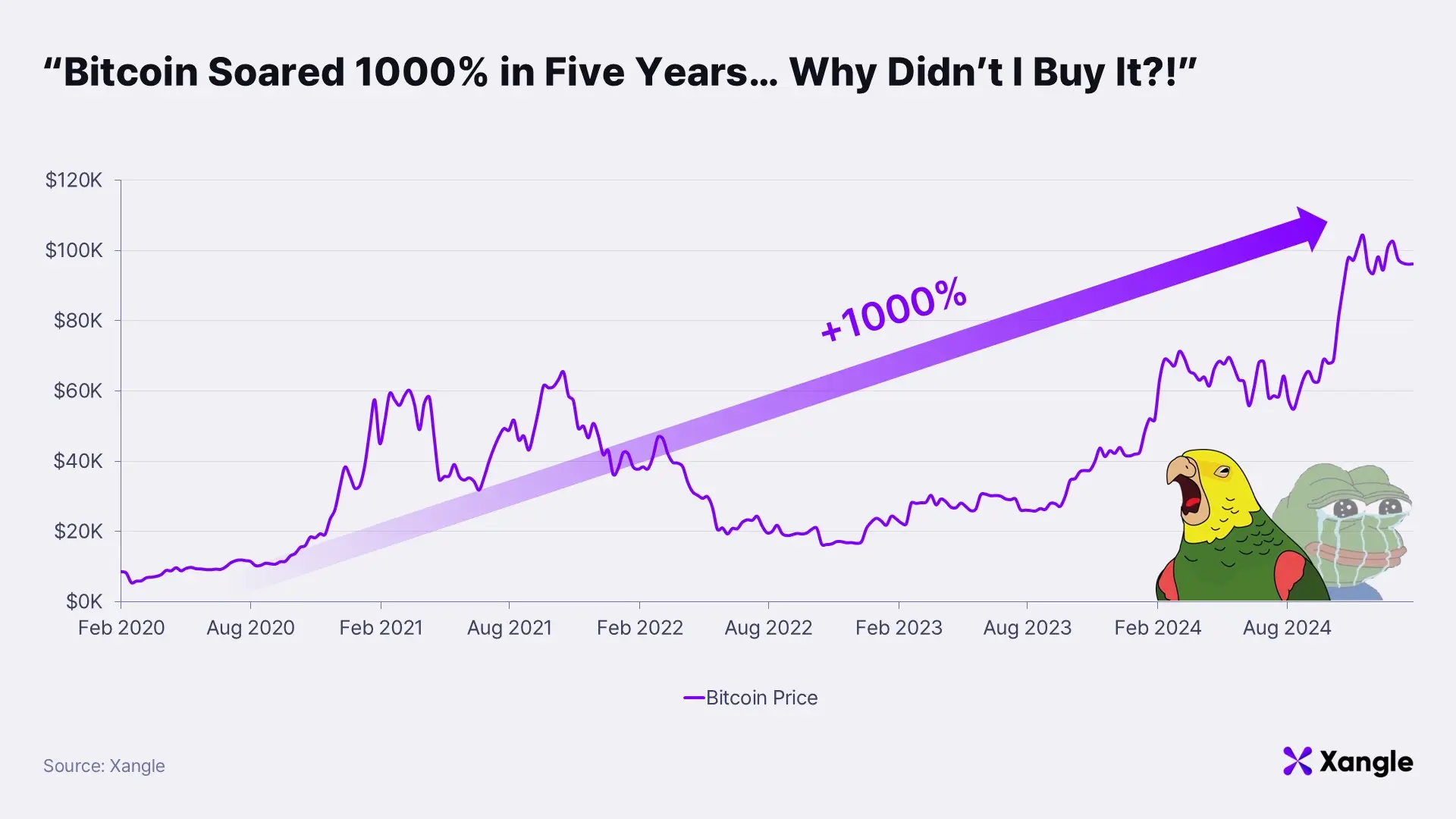
Bitcoin is widely regarded as the most stable and high-yielding asset in the crypto market. Analyzing the price trends of the top 50 cryptocurrencies by market capitalization reveals that Bitcoin has consistently outperformed most altcoins in both stability and price performance. Over the past year, Bitcoin’s price has risen by approximately 40%, ranking 18th in terms of growth rate. Although 17 cryptocurrencies have recorded higher gains during this period, their performance over a longer horizon pales in comparison to Bitcoin’s sustained dominance.
Nevertheless, many investors continue to favor altcoins over Bitcoin. The phrase "I should have bought Bitcoin" is perhaps the most common regret among crypto investors and represents a principle that is notoriously difficult to adhere to.
The primary motivation behind investing in altcoins is the pursuit of higher returns within a short timeframe. The crypto market is no stranger to instances where assets appreciate 10x, 100x, or even 1,000x in a matter of weeks. This often triggers FOMO (fear of missing out) among investors, prompting them to chase high-yield opportunities. However, assets that experience rapid surges frequently suffer equally dramatic declines, with investors ultimately serving as exit liquidity. A case in point is $GOAT, a token that once led the AI meme coin narrative. While it soared more than 200x in value within a short span, it subsequently plunged by approximately 92% from its peak in just three months.
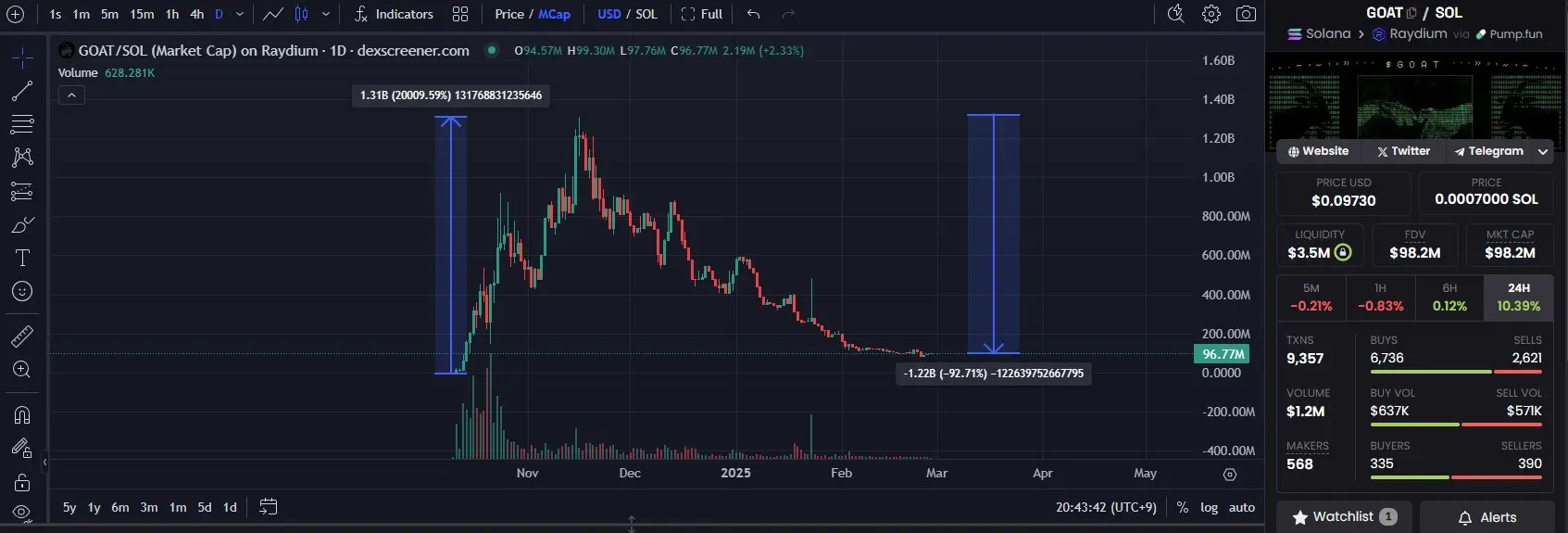 Source: Dexscreener
Under these circumstances, is it possible to invest in Bitcoin securely while also generating additional yield or gaining exposure to other assets? A project that seeks to provide an answer to this question is Avalon Finance (hereafter referred to as Avalon).
Avalon enables Bitcoin—historically utilized as a store of value—to be actively deployed in DeFi. This innovation enhances capital efficiency for Bitcoin holders, broadens investment strategies, and increases liquidity within the DeFiecosystem. As a result, Avalon has amassed a total value locked (TVL) of $1.55 billion, establishing itself as a frontrunner in the Bitcoin DeFi sector. This report will delve into the services Avalon offers, as well as its broader vision and strategic objectives in the following sections.
2. Avalon: Unlocking New Opportunities for Bitcoin
Avalon presents a suite of solutions designed to integrate Bitcoin into DeFi, offering everything from Bitcoin-backed stablecoins to lending platforms. Its core strategy is to provide Bitcoin holders with new avenues for utilization while supplying the DeFi ecosystem with a steady stream of stablecoin liquidity—a mutually beneficial structure. To achieve this, Avalon has developed three key services.
2-1. USDa: Unlocking Bitcoin’s liquidity
Avalon's flagship product is USDa, the first overcollateralized Bitcoin-backed stablecoin. Users can access USDa through three primary methods. The first is via CeDeFi Lending, as detailed in section 2-2, by depositing wrapped BTC assets like FBTC as collateral to mint USDa. The second is through Avalon's proprietary lending service, USDa Lend, where users deposit USDT to borrow USDa. In both cases, collateralization must exceed the loan amount, with a strict loan-to-value (LTV) ratio maintained between 60% and 80%. The third method is swapping USDa for USDT within decentralized exchange (DEX) liquidity pools.
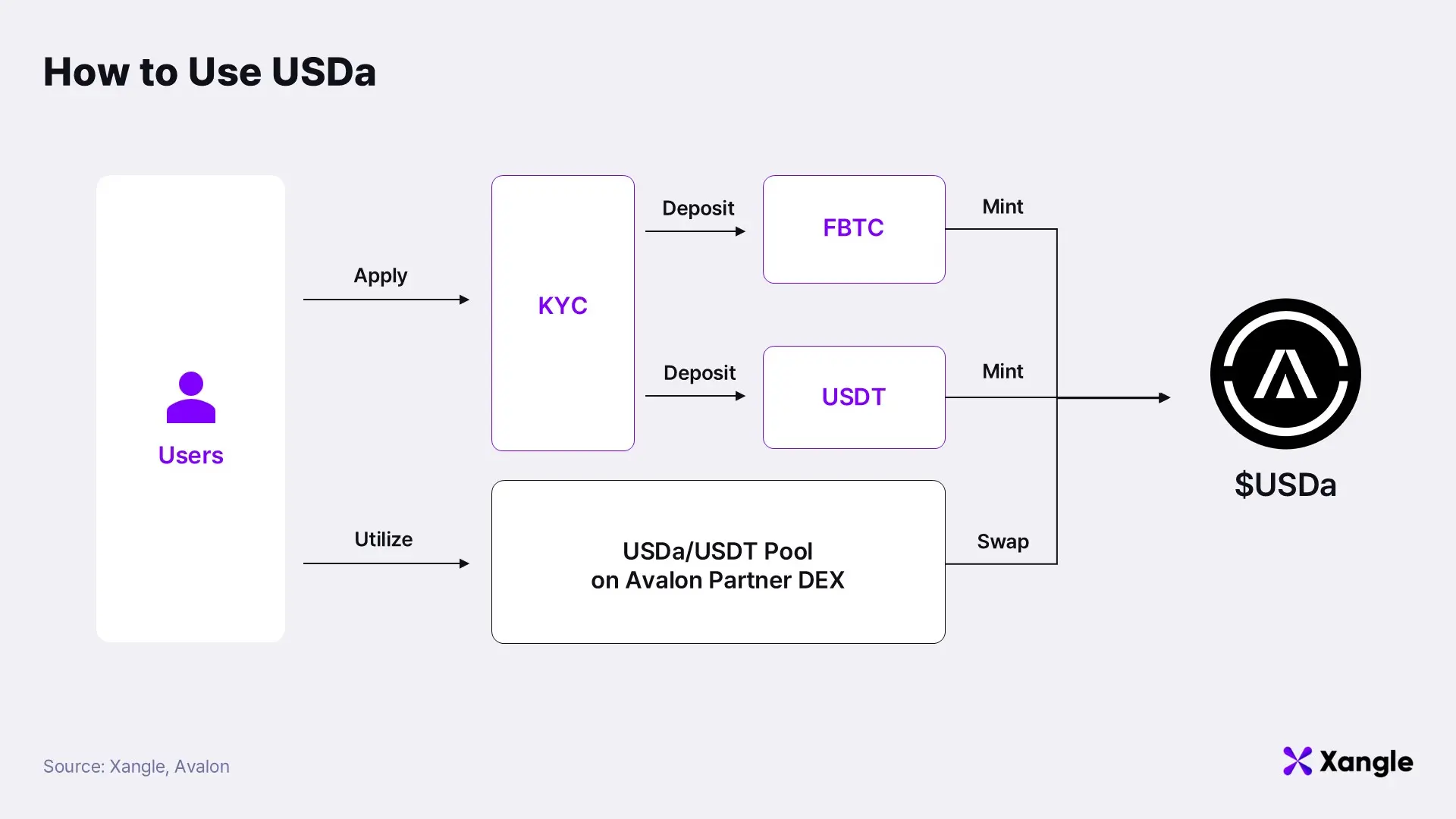
USDa differentiates itself through several key features. It is designed to maintain a 1:1 peg with USDT, ensuring price stability. Avalon upholds this peg by establishing a fixed exchange mechanism, allowing users to redeem USDa for an equivalent amount of USDT at any time. This structure ensures that USDa remains closely aligned with the value of the US dollar, maintaining stability as a decentralized stablecoin while offering a robust peg mechanism.
Additionally, Avalon provides a sustainable yield to USDa stakers. Specifically, when users stake USDa, they receive sUSDa, an interest-bearing token. sUSDa holders earn a share of the borrowing rate from USDa as well as a portion of the revenue generated by the USDaLend. As of March 7, the staking yield for USDa stands at 9%.
In summary, USDa is a Bitcoin-backed stablecoin that not only maintains a strong US dollar peg but also delivers sustainable interest earnings. This makes it an attractive option for investors seeking to unlock Bitcoin liquidity as well as those looking to earn predictable returns.
2-2. CeDeFi Lending: Balancing stability and yield
Avalon's second key solution is CeDeFi Lending, a hybrid financial model that integrates the liquidity and rapid capital deployment capabilities of centralized finance (CeFi) with the transparency and decentralization of DeFi protocols. By collaborating with traditional financial institutions, Avalon sources USDT liquidity to facilitate the issuance of USDa, allowing Bitcoin holders to unlock liquidity without liquidating their assets, thereby enabling greater utility within the DeFi ecosystem.
To participate in CeDeFi Lending, users must deposit FBTC as collateral (with additional asset support planned in the future). Prior to doing so, they must complete Know Your Customer (KYC) and Anti-Money Laundering (AML) verification processes, as only approved accounts are eligible for loans. Once FBTC is deposited as collateral, Avalon borrows USDT from CeFi institutions, mints an equivalent amount of USDa, and credits it to the user’s account. The USDT supplied by CeFi partners serves as the foundation for USDa issuance, with most loan settlements finalized within a day. Users can then swap their USDa for USDT at a 1:1 ratio or deploy it within DeFi protocols. Upon repayment of the principal and interest, collateral is returned to the borrower.
The key advantage of CeDeFi Lending is that it enables Bitcoin holders to access liquidity without liquidating their assets. By collaborating with CeFi institutions, Avalon ensures a stable issuance process for USDa, while borrowers benefit from a fixed 8% interest rate. Moreover, USDa's seamless 1:1 exchangeability with USDT enhances its utility across the DeFi ecosystem.
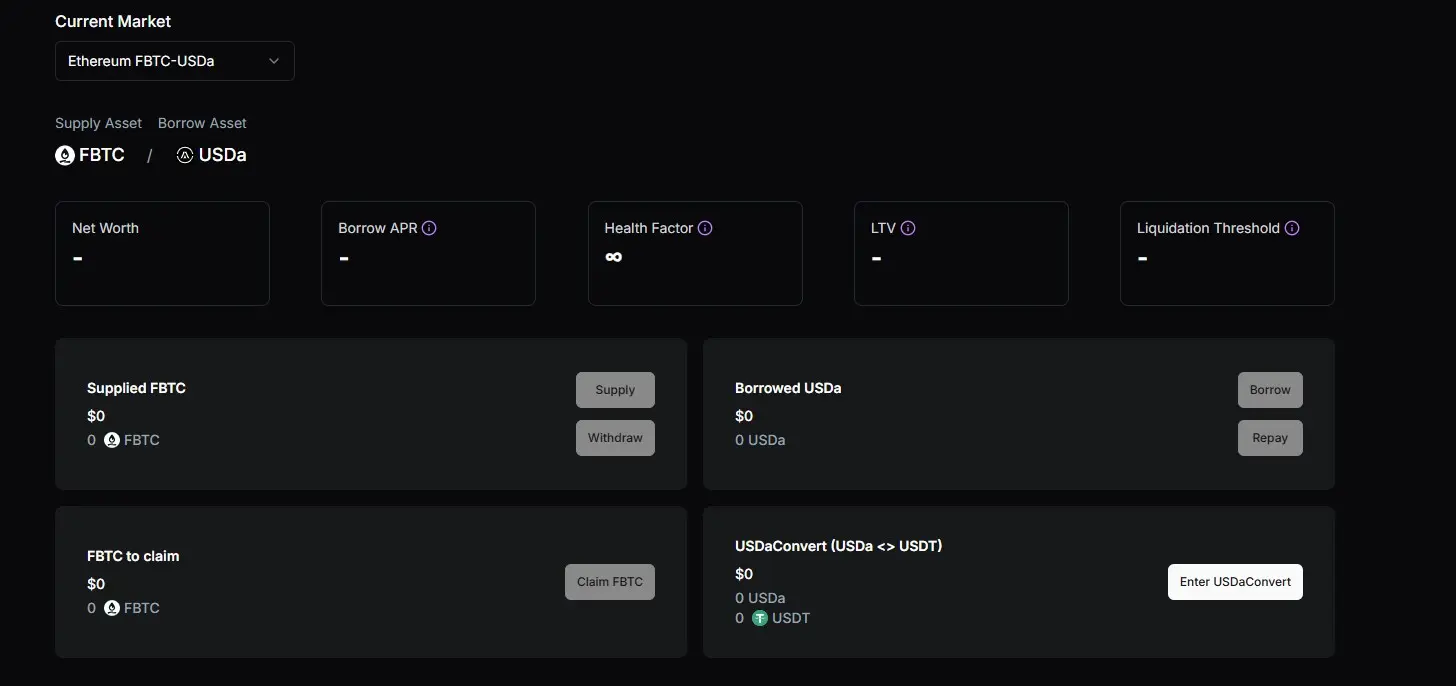 Source: Avalon
Avalon prioritizes asset security through strategic partnerships with leading custody providers such as Cobo, Fireblocks, and Coinbase Prime. These custodians safeguard collateral assets, and all custody addresses are publicly disclosed to ensure transparency.
Ultimately, Avalon’s CeDeFi Lending model merges the stability of centralized finance with the composability of DeFi, offering an efficient Bitcoin-backed lending solution. Bitcoin holders gain access to liquidity without needing to sell, CeFi institutions benefit from a secure lending structure, and USDa maintains a reliable peg to USDT. By bridging CeDeFi and DeFi, Avalon aims to expand stablecoin liquidity within the decentralized finance market.
2-3. Establishing a presence in the DeFi market leveraging lending protocols
Avalon’s third strategic pillar is its DeFi lending protocol. While CeDeFi Lending leverages centralized liquidity sources, Avalon’s DeFi lending pools connect on-chain liquidity providers directly with borrowers. Built on an Aave v3-based framework, Avalon’s multi-chain lending protocol facilitates decentralized lending across a wide range of assets. By incorporating isolated risk pools, multi-chain scalability, and a tiered liquidation bonus system, Avalon optimizes risk management and enhances liquidity across blockchain networks, with a primary focus on expanding Bitcoin-centric on-chain finance.
Avalon’s lending markets employ an isolated pool structure, allowing independent risk management for different asset classes. These pools include a dedicated market for Bitcoin and Bitcoin-backed liquid staking assets, a Real-World Asset (RWA) lending pool for tokenized physical assets, and a general lending market comprising major cryptocurrencies such as BTC, ETH, and various stablecoins. By structuring these pools separately, Avalon minimizes market contagion risks, ensuring that volatility in one asset does not disrupt the entire protocol. Loan-to-value ratios and risk parameters are carefully adjusted for each collateral type to provide a secure borrowing environment for both lenders and borrowers.
The protocol also employs a differentiated liquidation incentive structure to encourage participation from liquidators. A liquidation bonus grants liquidators the right to purchase collateralized assets at a discount when borrowers fail to maintain sufficient collateral. Avalon sets BTC liquidation bonuses at 15%, ETH at 5%, and stablecoins at 3%, creating an incentive structure that enhances market stability.
For example, if a borrower uses BTC as collateral to obtain a USDT loan and the BTC price drops, reducing the collateral value below the required threshold, liquidation is triggered. A liquidator can then repay a portion of the borrower’s debt in exchange for BTC at a discounted rate. If a liquidator covers 2.5 BTC worth of USDT, they would receive 2.875 BTC, factoring in the 15% liquidation bonus. This system not only incentivizes liquidators but also ensures the protocol maintains healthy liquidity levels.
Avalon’s DeFi lending protocol is deployed across multiple blockchain networks, prioritizing multi-chain expansion as a core strategy. Currently operating on Ethereum, BNB Chain, Base, Bitlayer, and a total of 19 networks, its largest deployment is on Bitlayer, with a total locked value of approximately $310 million. The protocol is actively expanding across Bitcoin Layer 2, Ethereum Layer 2, and Layer 1 networks, further strengthening its presence in the decentralized finance landscape.
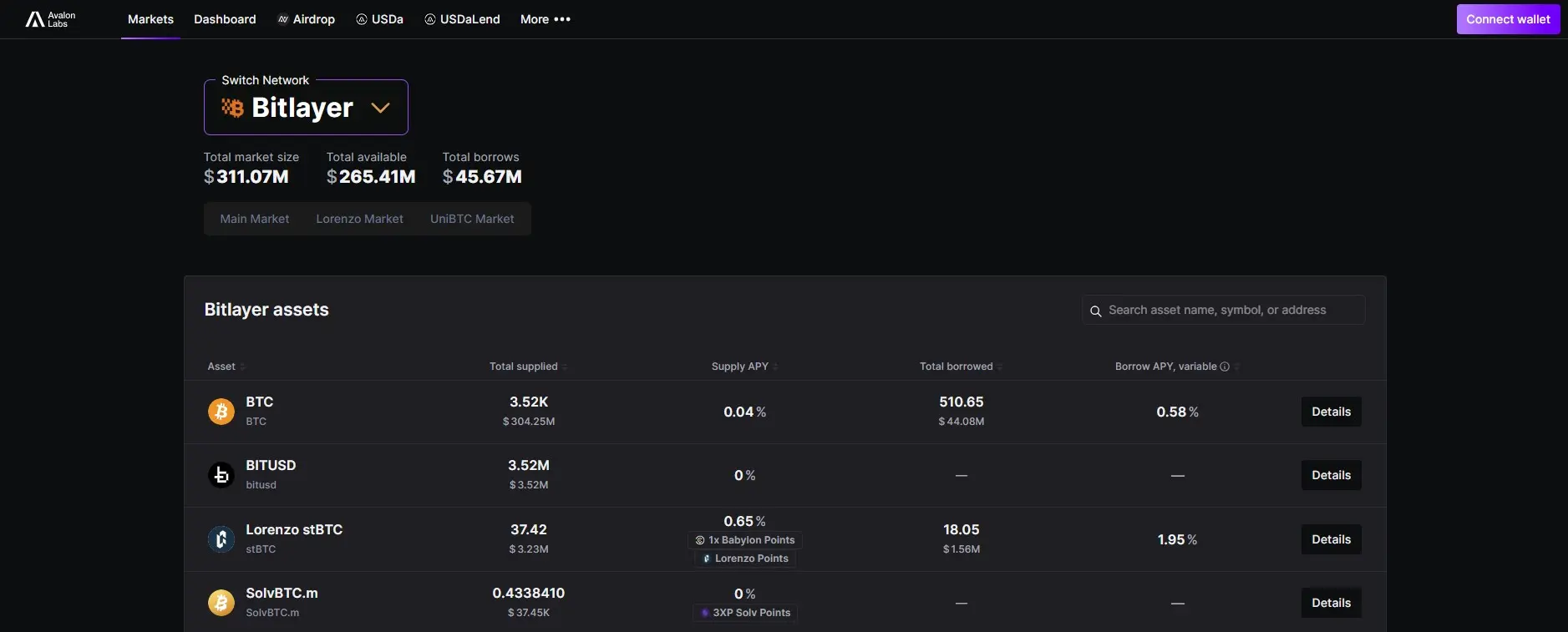 Source: Avalon
3. Avalon Poised for Growth Alongside the Bitcoin Ecosystem
3-1. Avalon to benefit from Bitcoin’s expanding financial utility
Traditionally, Bitcoin has been regarded primarily as a store of value. However, there is a growing demand to use it as collateral across various financial activities, including lending, stablecoin issuance, derivatives trading, and securing PoS mainnets. This trend reflects a shift toward integrating Bitcoin into financial products rather than merely holding it as an asset. Simultaneously, Bitcoin Layer 2 (L2) solutions such as CORE, BitLayer, and BSquared are enhancing Bitcoin’s smart contract capabilities. While the original Bitcoin network has inherent limitations in transaction throughput and smart contract complexity, advancements in L2 technologies are paving the way for a thriving decentralized finance (DeFi) ecosystem built on Bitcoin.
The momentum toward unlocking Bitcoin’s utility is accelerating. As of February 27, 343,662.58 wrapped Bitcoins have been issued on various chains, representing approximately $28.87 billion—or over KRW 41 trillion. Additionally, the number of Bitcoins locked within the Bitcoin network itself is increasing rapidly. Over the past year, Bitcoin’s total value locked (TVL) has surged more than 15-fold, reaching $5.78 billion.
Yet, despite this progress, it is worth noting that the combined value of wrapped Bitcoin and Bitcoin’s on-chain TVL accounts for only 2% of Bitcoin’s total market capitalization. This underscores the nascency of Bitcoin’s financial ecosystem and highlights its vast growth potential. The integration of Bitcoin into traditional financial markets and the development of financial products built around it are still in their early stages. In this evolving landscape, Avalon stands to directly benefit from the expansion of the BTC-DeFi ecosystem. By leveraging DeFi and L2 networks to introduce Bitcoin-based financial products, Avalon can maximize Bitcoin’s utility and play a crucial role in the ecosystem’s expansion.
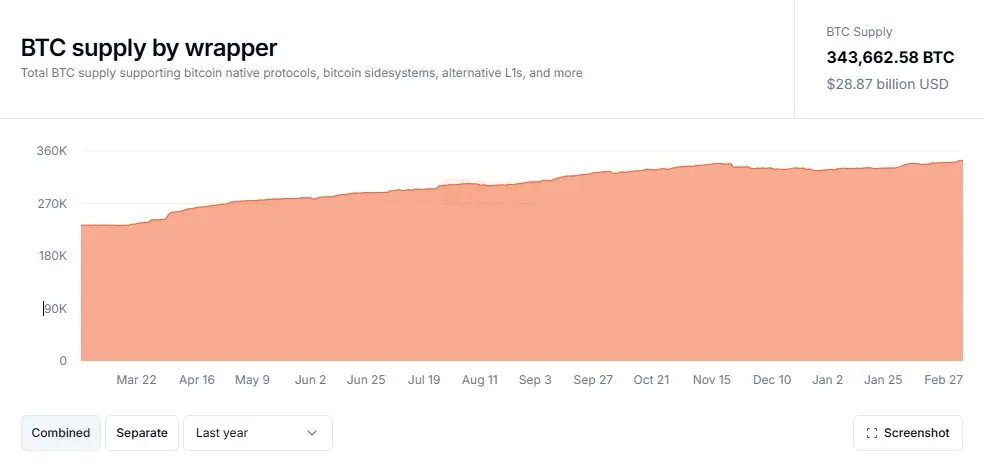
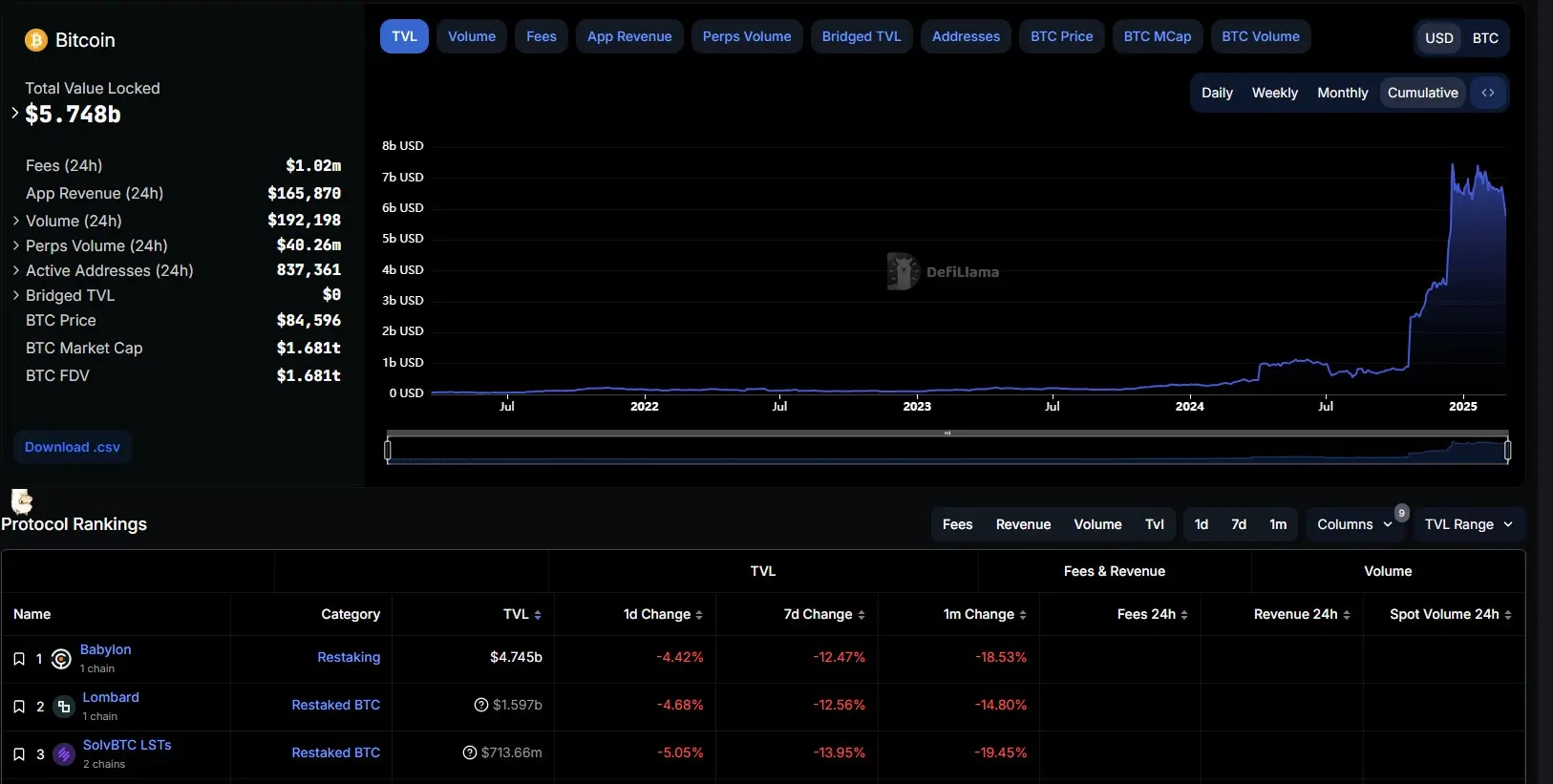
Source: Bitcoin Layers, DefiLlama
As Bitcoin’s financial ecosystem grows, Avalon is exploring the launch of a Bitcoin-backed bond fund designed for public investment. The company is currently assessing whether this product can be structured under the U.S. securities exemption Regulation A (often referred to as a “mini IPO”) and is conducting legal reviews with industry experts. Regulation A allows smaller companies to raise public capital without full SEC registration. If successfully applied, this exemption could make Bitcoin-backed financial products accessible to a broader investor base. Unlike existing Bitcoin financial products, which primarily target institutional investors, Avalon’s initiative could expand the Bitcoin lending market and accelerate its convergence with traditional finance.
If Avalon’s Bitcoin-backed bond model proves successful, Bitcoin could increasingly be recognized as a legitimate form of collateral in financial markets, much like traditional bonds. This would mark a significant shift, transforming Bitcoin from a passive asset into a foundation for real-world financial products. However, given the early-stage nature of this initiative, regulatory risks remain high. The SEC has rarely approved crypto-based Regulation A models, adding uncertainty to the process. Nevertheless, a key advantage for Avalon is the experience of co-founder Venus Li, who successfully secured SEC approval for a traditional bond fund in 2021.
Should this model gain traction, Avalon could emerge as a leading player in Bitcoin-based on-chain capital markets. This, in turn, could spur the development of a range of Bitcoin-backed financial products, including loans, bonds, and yield-generating instruments within both DeFi and CeFi. However, the ultimate success of this initiative will depend on SEC approval, market reception, and broader regulatory developments.
3-2. Avalon’s growth may strengthen bitcoin network security
The increasing utilization of Bitcoin facilitated by Avalon could have long-term positive implications for Bitcoin network security, particularly in the post-halving era. Bitcoin’s block rewards halve approximately every four years, and by around 2140, mining rewards will be effectively eliminated. In this scenario, the network must transition to a fee-based economic model to sustain security. However, given Bitcoin’s limited transaction throughput and relatively simple use cases, concerns have arisen over whether transaction fees alone will be sufficient to support miners.
To address this challenge, some have proposed increasing Bitcoin’s utility to drive higher transaction volumes and fee revenue. If Bitcoin DeFi protocols like Avalon gain widespread adoption, a rise in financial transactions—such as staking, lending, and stablecoin issuance—could lead to greater Bitcoin demand and increased on-chain activity. This, in turn, would generate higher transaction fees, supporting Bitcoin’s long-term security model.
Of course, there remains a segment of the Bitcoin community that advocates for preserving Bitcoin’s original purpose as a decentralized currency, and ensuring both security and usability for Bitcoin DeFi users will be crucial. Nonetheless, the gradual expansion of the Bitcoin DeFi ecosystem presents a viable pathway to strengthening Bitcoin’s financial utility while mitigating risks associated with declining block rewards. Avalon has the potential to play a key role in this transformation.
3-3. Sustained growth post-TGE through multi-point farming strategies
 Source: DefiLlama
As of February 27, Avalon maintains a robust TVL of approximately $1.55 billion. One of the key drivers behind this strong performance is its multi-point farming strategy, which expands airdrop incentives through partnerships with multiple projects. By collaborating with platforms such as Solv, Babylon, and Verachain, Avalon has enabled users to earn overlapping rewards, attracting significant liquidity to its ecosystem.
This strategy has positively impacted Bitcoin inflows. Users who had already staked BTC with projects like Babylon and Solv migrated their funds to Avalon to take advantage of multi-airdrop opportunities. Avalon’s sustained high TVL suggests that this approach has been effective. Another noteworthy observation is that despite Avalon’s Token Generation Event (TGE) on February 12, its TVL has remained stable. This indicates that the multi- point farming structure helped retain user engagement even after the TGE, preventing a sharp drop in liquidity.
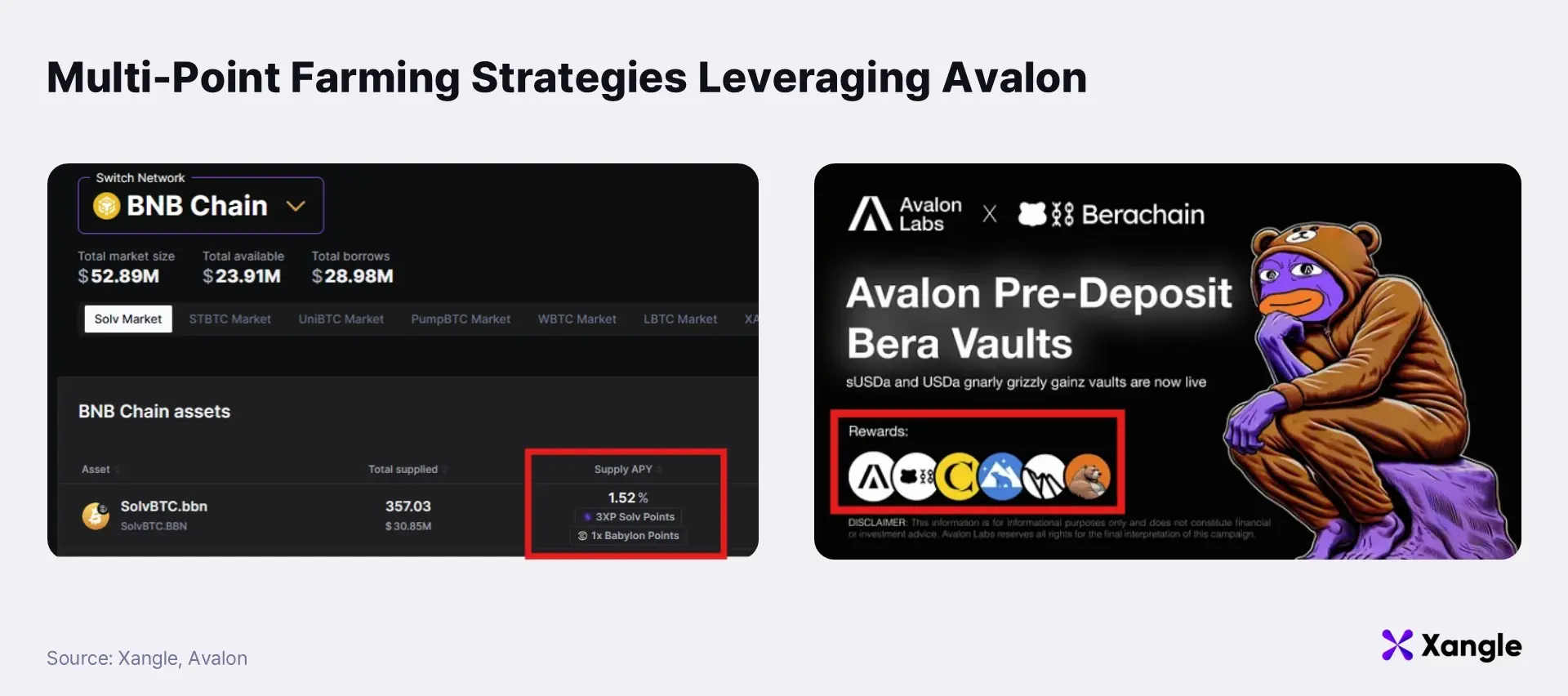
However, the long-term sustainability of this strategy remains uncertain. Projects like Solv and Verachain have already conducted their TGE, and Babylon is set to follow suit. Since airdrop incentives have been a primary driver of Avalon’s liquidity growth, there is a potential risk that TVL may decline once these programs conclude. Moving forward, Avalon must focus on expanding its ecosystem and creating sustainable demand for its platform to maintain long-term liquidity.
AVL Tokenomics
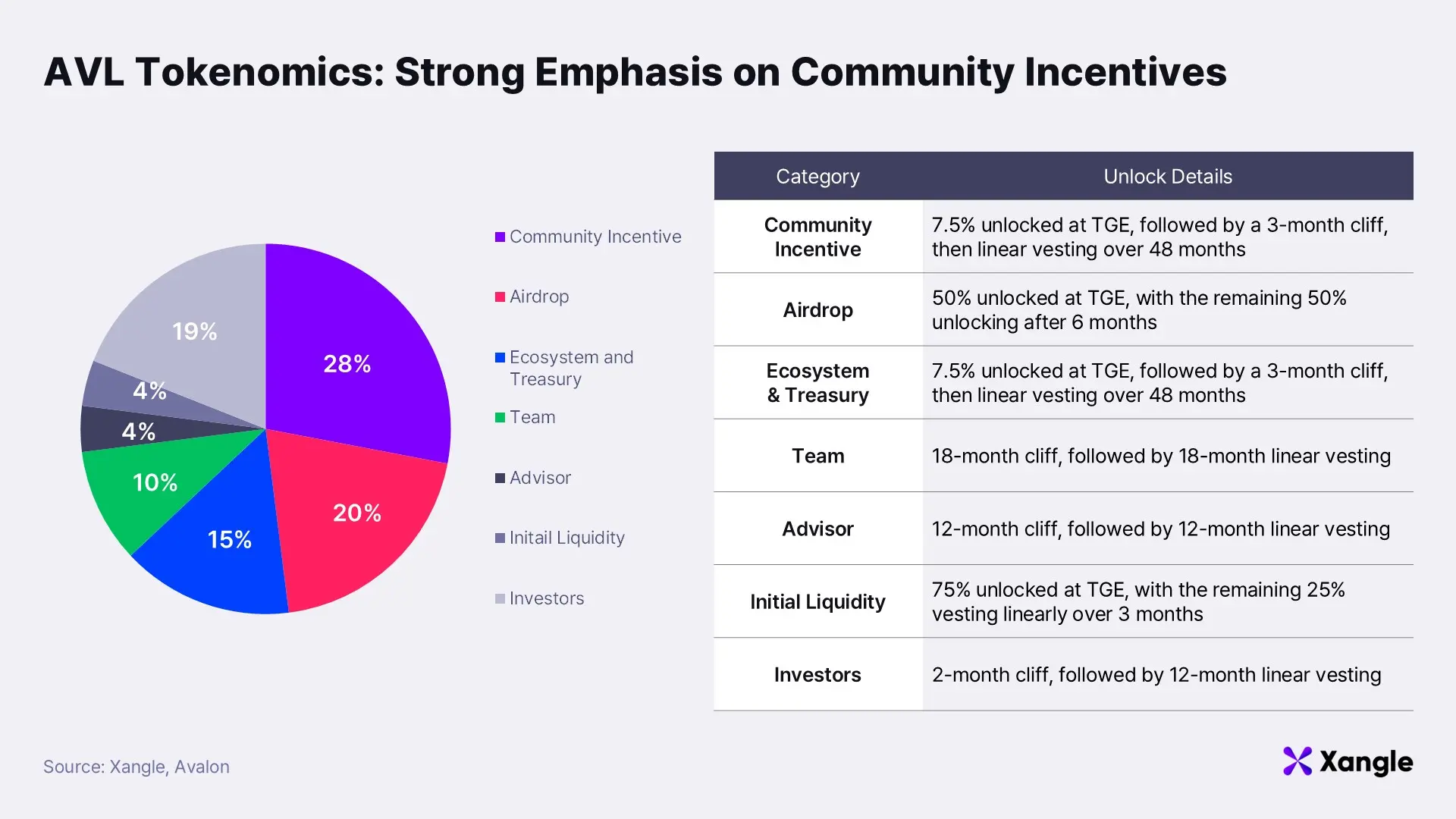
Avalon’s tokenomics model is heavily community-oriented, offering diverse participation opportunities for ecosystem members. Of the total AVL token supply (100 million tokens), 28% is allocated to community incentives, while 20% is reserved for airdrop distribution. This community-centric approach reflects Avalon’s long-term strategy of aligning participants as key stakeholders while simultaneously expanding its CeDeFi model and the USDa stablecoin ecosystem.
4. Final Thoughts
Avalon is emerging as a pivotal player in the expansion of Bitcoin’s DeFi ecosystem. As the most trusted asset in the cryptocurrency market, Bitcoin’s significance will only grow alongside the industry’s overall expansion. However, its functionality has traditionally been limited, primarily serving as a store of value rather than an actively utilized asset. Avalon seeks to address this limitation by introducing solutions such as CeDeFi Lending, USDa, and DeFi Lending, which allow Bitcoin to be used as collateral, thereby enhancing its liquidity within the DeFi ecosystem.
The CeDeFi Lending model is particularly noteworthy, as it integrates the strengths of both centralized and decentralized finance, creating a more stable and efficient lending environment. Bitcoin holders can unlock liquidity without selling their assets, while USDa’s 1:1 exchangeability with USDT enhances its utility in the market. Additionally, DeFi Lending facilitates liquidity provision by enabling various assets, including Bitcoin, to be used as collateral, thereby reinforcing Bitcoin’s role within the broader DeFi landscape.
Avalon’s long-term growth potential is significant, particularly given that Bitcoin’s financial ecosystem is still in its early stages. The development of Bitcoin Layer 2 (L2) solutions and the increasing adoption of DeFi protocols indicate a shift from passive Bitcoin holding toward its active utilization in financial products. Should Avalon successfully position itself as a key facilitator of this transition, it has the potential to become a leading platform bridging CeDeFi and DeFi.
However, several challenges remain. While Avalon has effectively sustained a high TVL through multi-point farming strategies and airdrops, the sustainability of its liquidity beyond these incentive-driven mechanisms will be a critical factor in its continued success. Ultimately, Avalon’s trajectory will be shaped by the pace of Bitcoin’s financial ecosystem expansion and its ability to implement effective scaling strategies. If Bitcoin evolves beyond its traditional role as a store of value to become a fully integrated financial asset, Avalon is well-positioned to serve as a cornerstone of this transformation.
Disclaimer
I confirm that I have read and understood the following: The information contained in this article is strictly the opinions of the author(s). This article was authored free from any form of coercion or undue influence. The content represents the author's own views and does not represent the official position or opinions of CrossAngle. This article is intended for informational purposes only and should not be construed as investment advice or solicitation. Unless otherwise specified, all users are solely responsible and liable for their own decisions about investments, investment strategies, or the use of products or services. Investment decisions should be made based on the user’s personal investment objectives, circumstances, and financial situation. Please consult a professional financial advisor for more information and guidance. Past returns or projections do not guarantee future results. This article was written at the request of Avalon Finanace. All content in this article was written independently by the author(s), and neither CrossAngle nor Avalon Finanace had any editorial control or influence over the content. The author(s) may hold the cryptocurrencies mentioned in this article at the time of writing.
Xangle or its affiliated partners own all copyrights of the written or otherwise produced materials and content provided on the platform. Any illegal reproduction of such content, including, but not limited to, unauthorized editing, copying, reprinting, or redistribution will result in immediate legal actions without prior notice.