Edgen: Your AI-Powered Chief Investment Officer

Table of Contents
1. The New Information Divide in an Overcrowded Market
2. Edgen: Converting Fragmented Market Data into a Single Coherent Insight
3. EDGM: The Orchestration Engine Behind Edgen’s Multi-Agent Architecture
4. Concluding Perspective: Intelligence as the New Edge for Individual Investors
1. The New Information Divide in an Overcrowded Market
In traditional finance, information asymmetry directly translated into differences in returns. Institutions had analysts, premium databases, DCF models, and large in-house research teams; individual investors, by contrast, were limited to publicly available news, outdated reports, and disclosure announcements that often reached them too late. The U.S. SEC’s introduction of Regulation Fair Disclosure (Reg FD) in 2000 softened this structural imbalance, yet a new issue has emerged over time: the problem is no longer a lack of information, but an overwhelming excess of it.

Modern investors face a constant stream of social media updates, breaking news, macro data releases, and corporate or project disclosures. Most of it is fragmented, redundant, or stripped of context. For individual investors, distinguishing meaningful signals from noise—and determining whether any given piece of information is even accurate—has become increasingly difficult. Meanwhile, professional traders and institutions leverage internal tools, proprietary infrastructure, and specialized research teams to stitch these fragments into a cohesive market narrative and convert it into actionable decisions. Superficially, access to information appears more equal than ever; in practice, the interpretation layer has become the new locus of information inequality.
The same dynamic exists in equity markets, but it manifests far more sharply in crypto. Making informed decisions in crypto requires navigating not only news, but also on-chain metrics, DeFi protocol data, token economics, and narrative flows—domains that remain unfamiliar to traditional finance participants. Most crypto-native data originates from on-chain activity and community channels rather than standardized disclosure systems, and few projects publish refined, periodic reports. Users must manually locate, verify, and interpret data on their own. Working directly with raw on-chain data is difficult, and even second-layer analytics tools such as Dune and DefiLlama come with steep learning curves and high complexity.
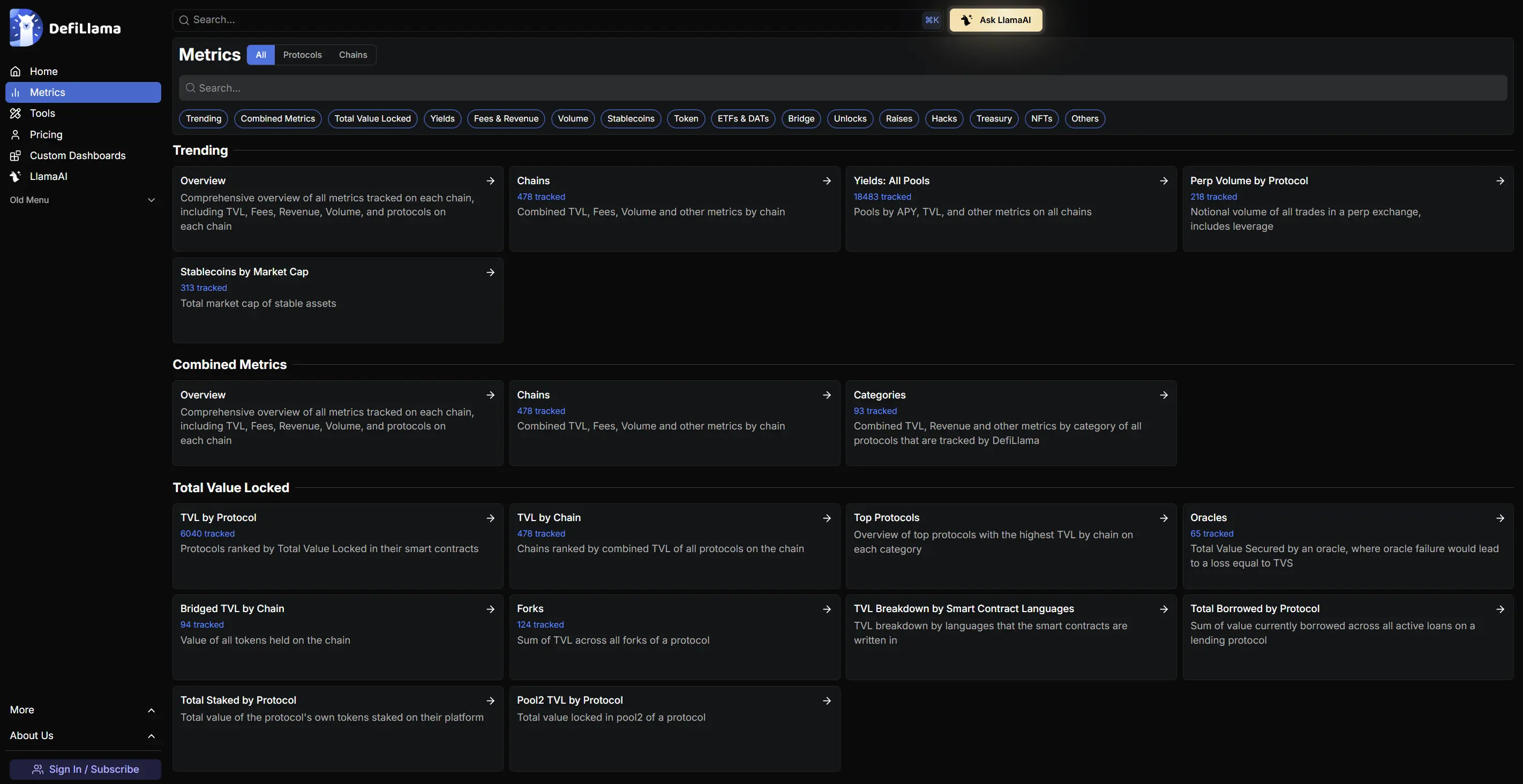 Source: DefiLlama — rich data exists, but investors often do not know what matters.
The landscape becomes even more fragmented when considering that no single platform covers everything. DeFi TVL, fees, and revenue are tracked on DefiLlama; fundraising and VC rounds on CryptoRank; market caps and trading volumes on CoinMarketCap; project overviews and research on Xangle. Investors must learn where each type of data resides and how to use each tool effectively. Information is abundant, yet investors lack a way to view it holistically and in context.
Edgen targets precisely this pain point. By automating the entire workflow—searching fragmented sources, structuring dispersed data, and interpreting it into coherent insights—Edgen transforms scattered information into digestible and actionable insights that were traditionally accessible only to institutional teams. The platform enables individual investors to operate with institution-level analytical capability, without hopping across multiple dashboards or research tools. This is the core problem Edgen is built to solve.
2. Edgen: Converting Fragmented Market Data into a Single Coherent Insight
Edgen is an AI-native market intelligence platform that not only brings fragmented equity, crypto, on-chain, and macro data into a single interface, but also organizes, interprets, and structures it into a complete market insight. On Edgen, users can query the market in natural language and instantly surface the information they need; they can also receive selectively curated news linked to specific assets or sectors. Research reports that were previously accessible only to professional analysts can now be generated faster, with higher accuracy, and at significantly lower cost—and can further be tailored to each individual’s interests and personal context.
What makes this possible inside Edgen is the EDGM (Efficient Decision Guidance Model), an AI orchestration system. EDGM is not a single LLM; it coordinates multiple specialized agents and tools so they work together in the most efficient way to accomplish a task. Each specialized agent covers a distinct role—fundamental and technical analysis, on-chain monitoring, macro interpretation, and more—and EDGM orchestrates them to produce an optimal output. Users therefore receive more than search-level answers; they gain fully contextual, cohesive market insights.
In this section, EDGM is treated primarily as an orchestration layer that coordinates multiple AI agents, while the focus remains on introducing the Edgen team and its core features. The specific architecture of EDGM, and how it actually executes decision-making, will be examined in greater detail in Section 3.
2-1. EVG: The Builder Behind Edgen’s Market-Intelligence Stack
 Source: EVG website
Edgen is a project directly incubated by EVG (Everest Ventures Group), a Hong Kong–based venture studio. Since its founding in 2018, EVG has built more than ten products—including Aspen Digital, T-Rex, Mugen, and LiveArt—and has emerged as one of APAC’s leading Web3 builders. Edgen is among these flagship initiatives. Today, EVG operates an extensive product portfolio spanning consumer infrastructure, entertainment dApps, and fintech platforms; the organization comprises over 200 engineers and serves more than 10 million cumulative users, giving it deep, end-to-end experience across the broader Web3 ecosystem.
EVG was co-founded by Allen Ng, Jerome Wong, and Ruby Cheng. Over several years working together, the three founders have developed a robust understanding of global capital markets and the digital asset landscape; substantial experience designing and operating large-scale consumer services; and strong domain expertise in AI and data engineering. Their mission centers on building highly scalable Web3 and AI products capable of serving both retail and institutional participants. Rather than chasing short-term trends, the team focuses on foundational infrastructure—systems that enable new forms of ownership, coordination, and intelligence.
EVG also plays a substantive role in ecosystem expansion through its venture arm. The group has made strategic investments in more than 100 Web3 companies, including Celestia, Wormhole, Berachain, Pudgy Penguins, Abstract, Infinex, Dapper Labs, Animoca Brands, The Sandbox, Stacks, Immutable, Kraken, and Dunamu.
2-2. Core Capabilities: The Intelligence Layers Powering Edgen
Edgen provides a broad suite of capabilities—Search, Themes (hot thematic clusters), News (AI-curated market intelligence), and 360° Reports (comprehensive analytical reports). Yet none of these features operates as a standalone module. Every component is interlinked through EDGM, the platform’s Intent-to-Tool architecture. This design allows outputs from different components to be merged into a single analysis stream.
The platform’s real strength lies not simply in offering these tools but in its ability to reassemble outputs from each module into a unified, user-centric insight. This synthesis is handled by the AI CIO, now a flagship feature following its recent full release—an update that reoriented Edgen’s architecture from being market-centric to fundamentally user-centric, redefining the platform’s structure and overall experience.
Although Edgen is built as a Web3-native product, its service layer spans beyond crypto into equities as well, enabling portfolio-level insight rather than isolated ticker monitoring. Sitting atop this multi-asset foundation, the AI CIO acts as a personal Chief Investment Officer, interpreting the market directly through the lens of the user’s portfolio and transforming the entire platform from a collection of search and data tools into an active decision-making engine.
1) AI CIO (Your Own Chief Investment Officer)
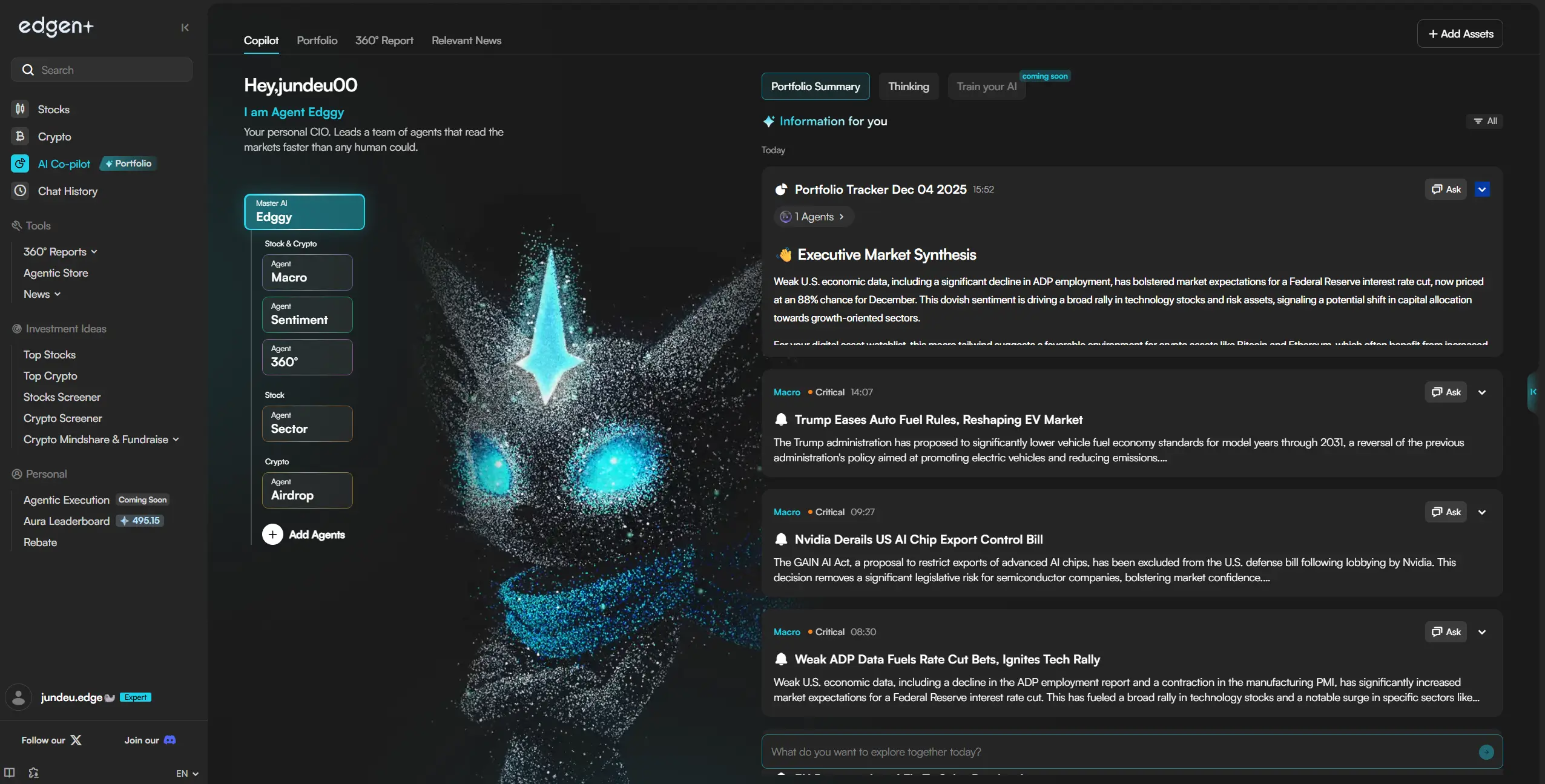
The AI CIO represents the highest tier of user experience within Edgen—an active AI co-pilot that reinterprets market conditions based on the user’s portfolio, risk preferences, and sector interests. While Search, Themes, and News each provide analysis at the data level, the AI CIO synthesizes these elements into portfolio-level intelligence.
Its release marks a significant milestone, shifting Edgen’s product paradigm toward a truly user-oriented model. The AI CIO does far more than summarize data: it autonomously identifies which signals and developments matter for the specific user, surfacing only the information relevant to that individual’s holdings and investment context. The tool thus breaks from conventional “assistant-style” solutions by delivering personalized, context-aware decision support.
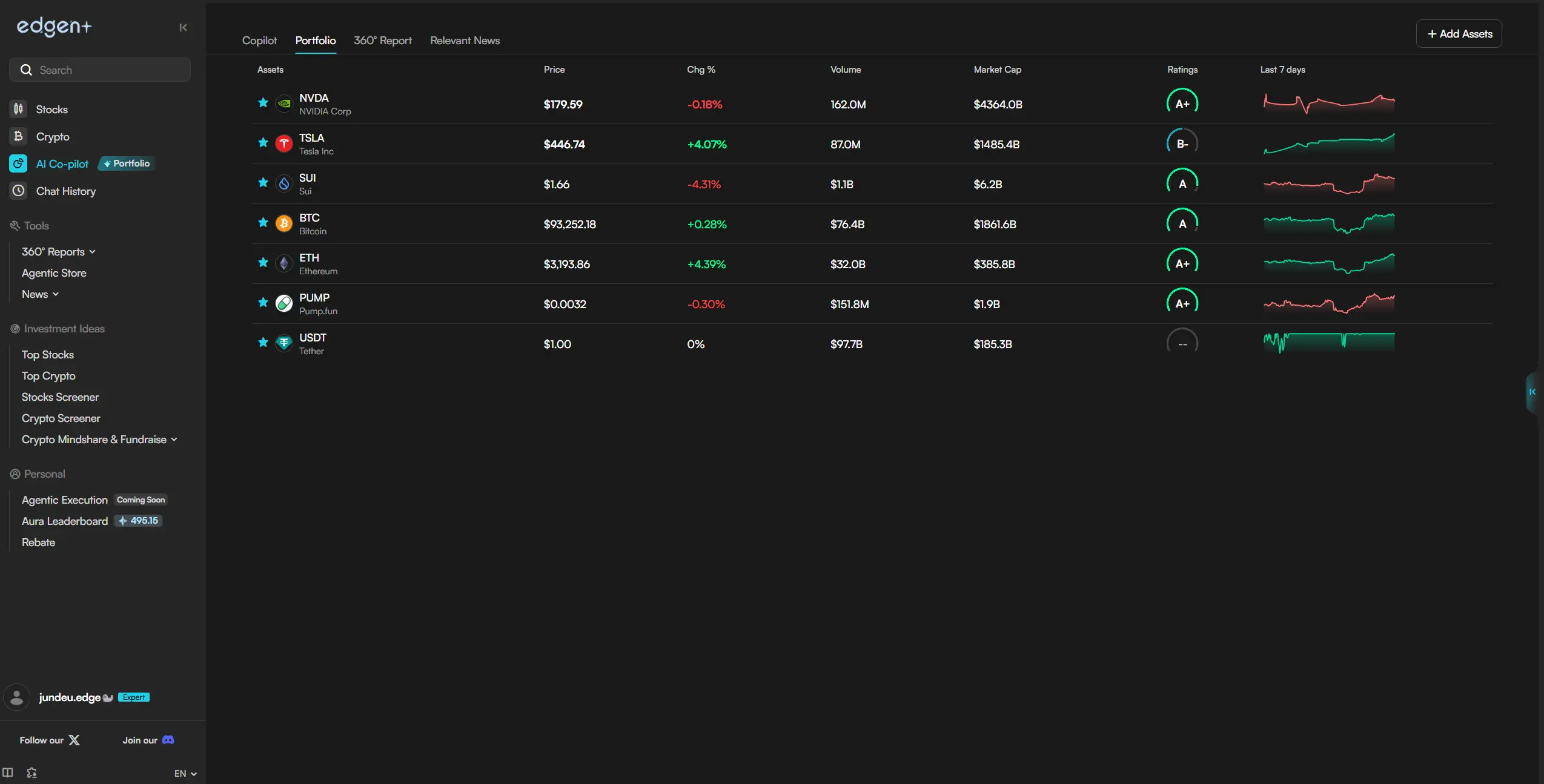
Setting up the AI CIO is straightforward. From the Edgen homepage, users navigate to the AI Co-Pilot tab, then to Portfolio, where they can freely add any combination of assets. Equities and crypto can coexist within a single portfolio; the AI CIO analyzes holdings, weights, P&L trends, narrative shifts, and asset-level risks to produce natural-language guidance that highlights only the critical signals that matter right now. As a result, users no longer need to manually parse large volumes of market data—only the developments with real portfolio impact surface to the top.
The feed adapts entirely to each user’s investment style. Conservative vs. aggressive posture, equity-heavy vs. crypto-heavy positioning, preferred thematic sectors—all of these shape the feed’s priorities and presentation. Much like an algorithmically personalized timeline on social platforms, Edgen reorganizes market information into a structure optimized for the individual user.
Crucially, the AI CIO interprets information at the portfolio level, not the asset level. When a market event occurs, the system automatically answers the essential question:
“Why does this matter for my portfolio?”
Rather than listing headlines, the AI CIO explains how an event alters risk, opportunity, or positioning across the user’s entire asset mix.
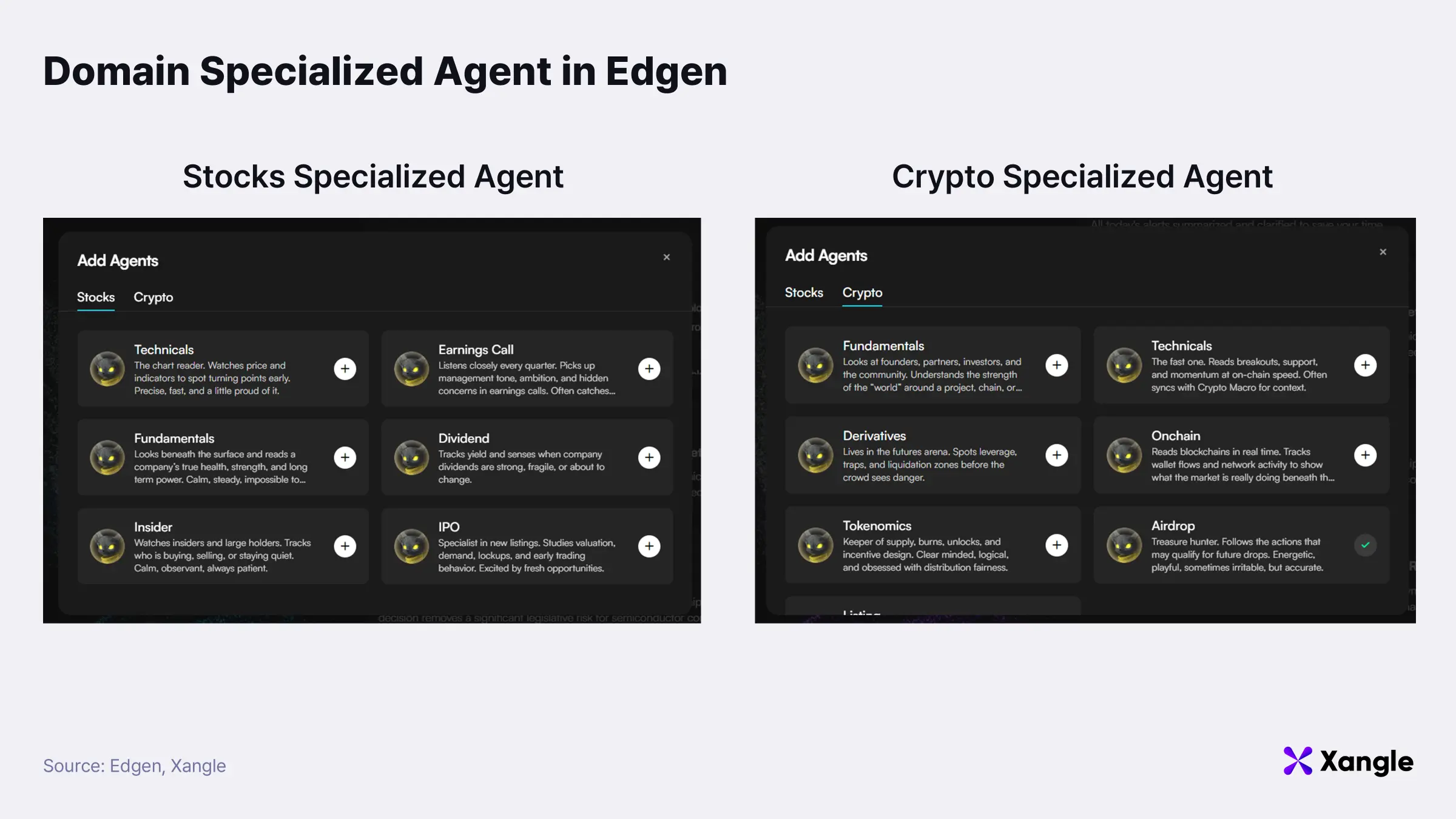
At the core of the AI CIO is Edggy, the platform’s master AI model, which delivers end-to-end portfolio analysis. Users can deepen insights further via domain-specific agents—including Macro, Sentiment, and the 360° Agent. Equity-oriented users may activate Technicals, Earnings Call, and Fundamentals agents, while crypto-native users can employ Derivatives, On-chain, Tokenomics, Airdrop, and other verticalized agents. A portfolio can thus be examined from multiple analytical dimensions simultaneously.
The AI CIO is only possible because Edgen already maintains a strong foundation of core features—Search, Themes, News, and 360° Reports—each performing a distinct analytical role. The following sections explore these foundational capabilities in detail.
2) Search (AI-Powered Exploration Engine)
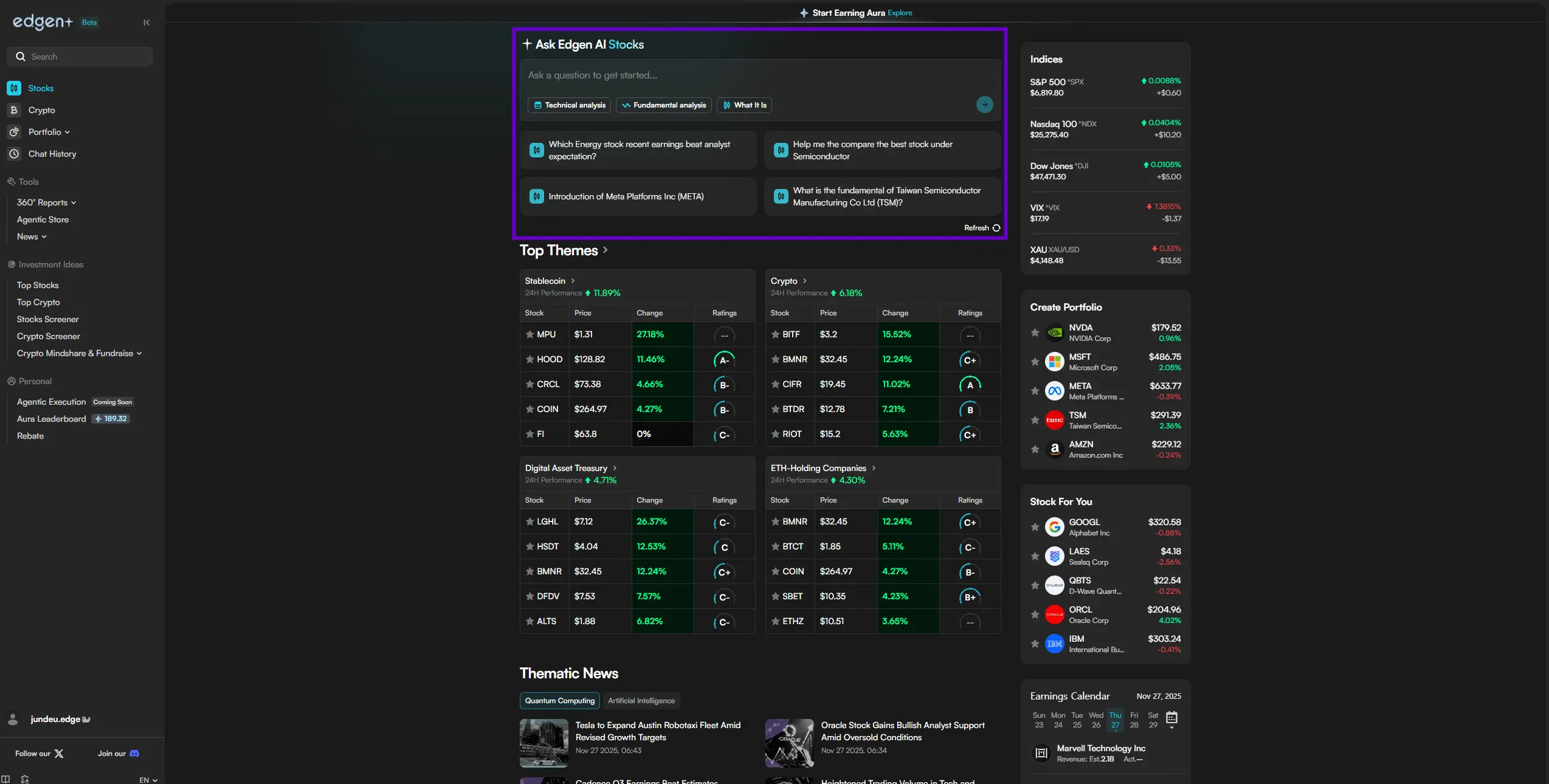
Visitors to the Edgen homepage are greeted first by the Search bar—an entry point where users can ask anything related to investing. Questions asked in Korean receive Korean responses; those asked in English are answered in English. More importantly, the system delivers insights that are immediately usable for decision-making rather than offering surface-level summaries.
Search operates in two main modes:
① Direct Answers (Fast Response)
Frequently asked questions and time-sensitive market inquiries receive instant responses. Asking a prompt such as “What is driving ETH’s price action this week?” triggers EDGM to aggregate on-chain flows, funding conditions, supply/demand imbalances, and narrative shifts, condensing them into a concise synthesis within seconds. What previously required hours of manual analyst review becomes available on demand.
② Deep Research
When a deeper analytical dive is required, multiple specialized agents scan disclosures, earnings releases, social sentiment, on-chain metrics, and structural market data to generate a full research document. These reports include sources, tables, and indicators, offering analyst-grade depth.
In effect, Search turns the simple act of typing into a real-time orchestration process: Edgen assembles multiple data layers on demand and restructures them into a coherent market narrative—functioning as a true exploration engine.
3) Themes (Narrative/Theme Board)
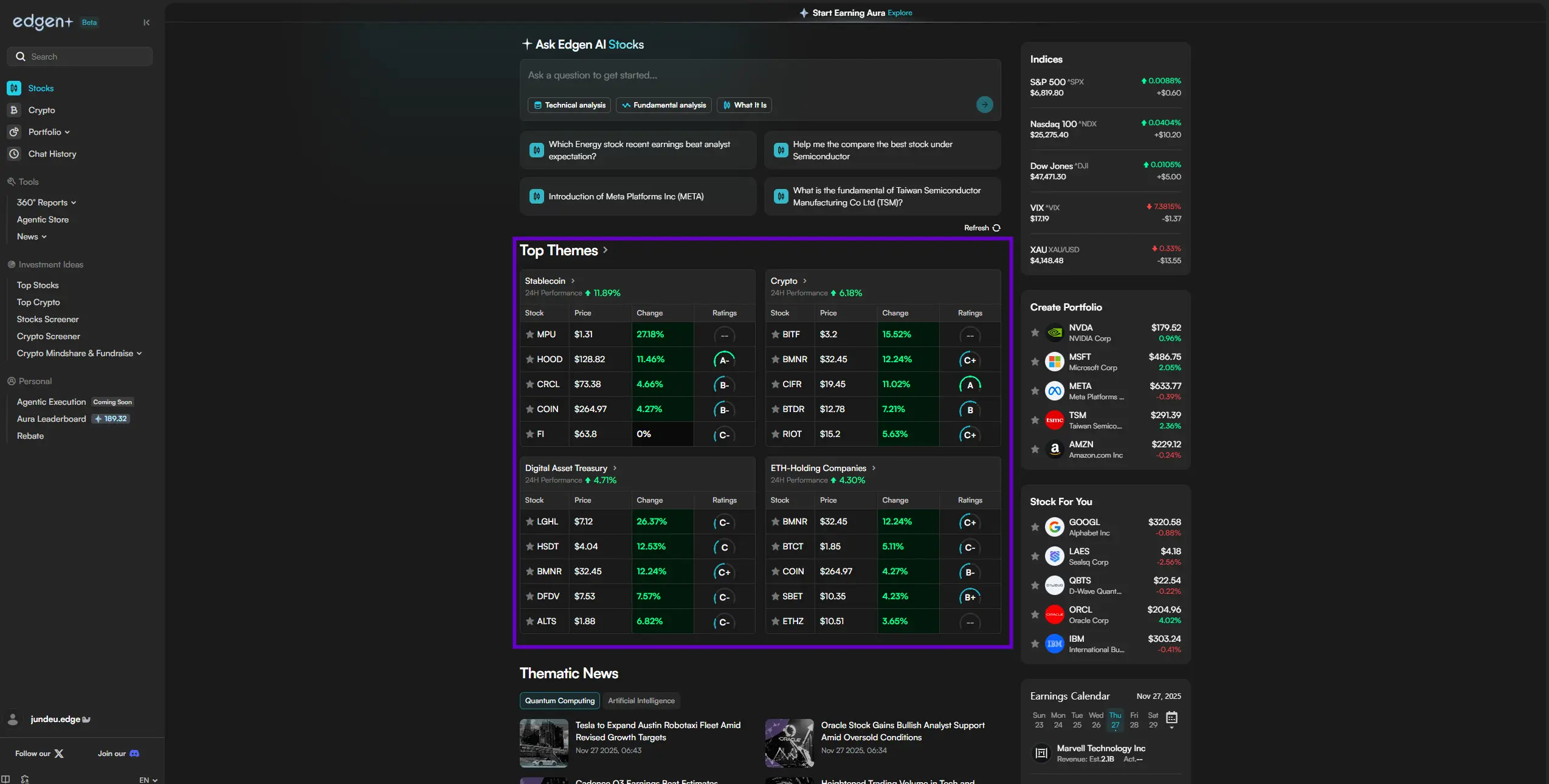
Just below the Search bar on the Edgen homepage is the Top Themes board. This module displays sectors with strong recent performance and allows users to browse thematic clusters across both equities and crypto. The system relies on a clustering model that automatically groups assets by shared narratives or sector similarities, giving users an immediate sense of prevailing market flows.
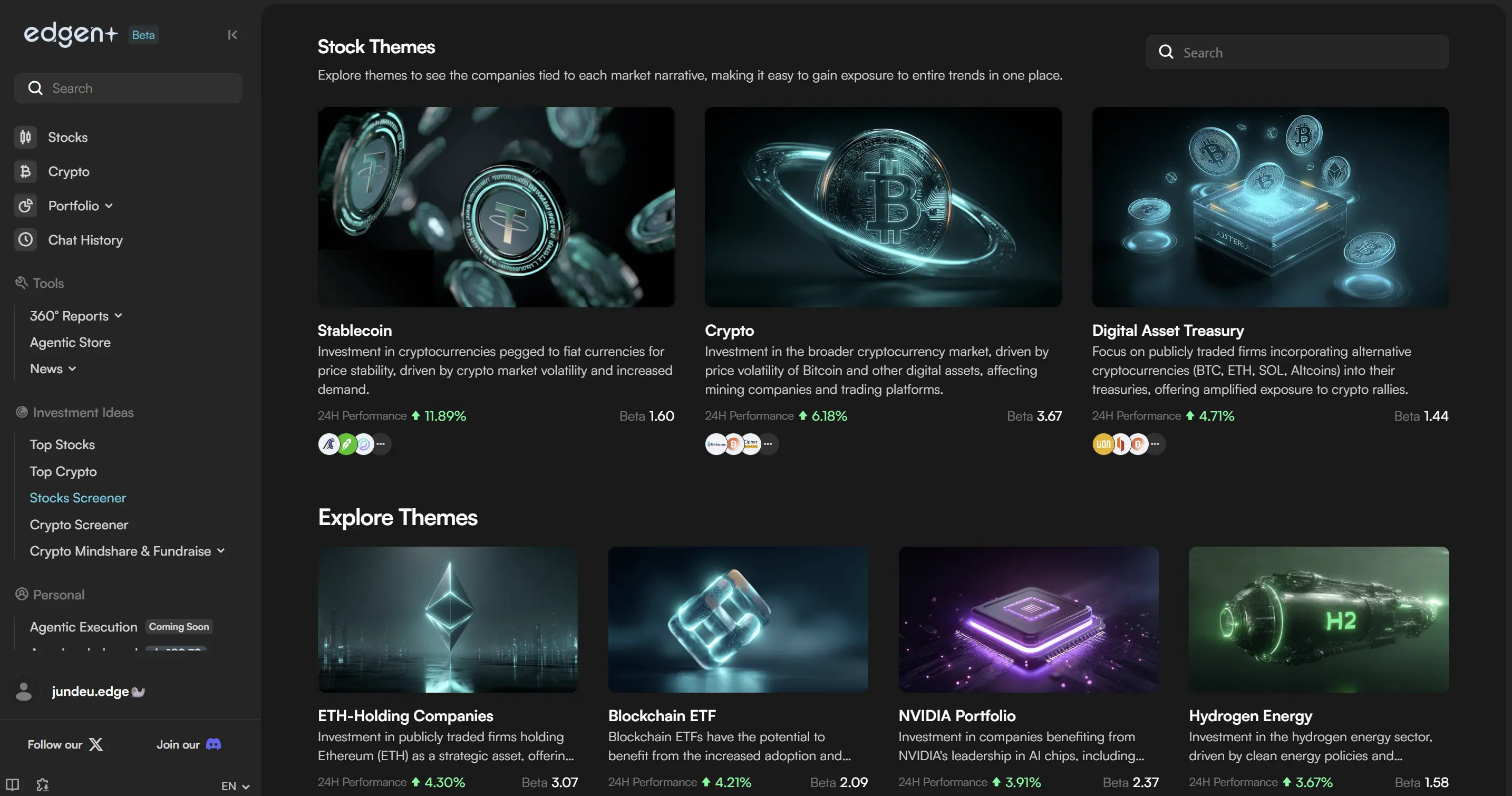
Selecting any theme reveals a broader list, as shown in the example above. The top three equity themes displayed—Stablecoin, Crypto, and Digital Asset Treasury (DAT)—are accompanied by more than fifty additional categories, including ETH-Holding Companies, Blockchain ETFs, NVIDIA Portfolio, and Hydrogen Energy. Each theme includes the underlying assets, performance metrics (such as average returns), Beta profiles, and other key indicators that allow users to quickly understand where market attention is concentrating. Themes thereby act as a high-level navigation layer, helping users identify emerging narratives and sector rotations before diving deeper into analysis.
4) News (AI-Curated News)
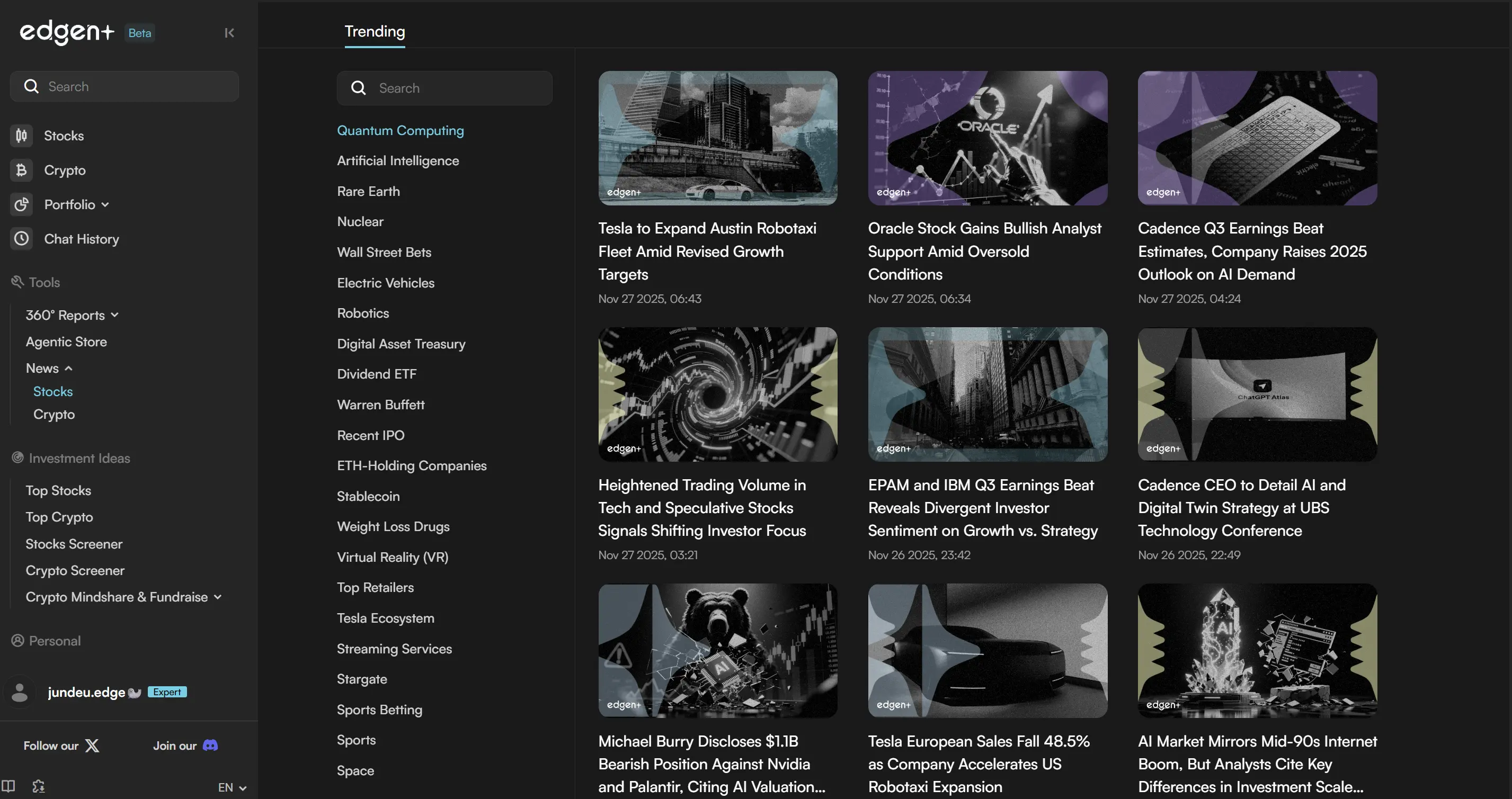
Edgen’s News module is far more than a feed that aggregates headlines. Its function is to identify only the stories that genuinely move markets and then map each development to the specific assets and sectors it affects—serving as a news-filtering intelligence layer purpose-built for investors. Rather than importing articles verbatim, Edgen reconstructs the news using insights gathered in real time by specialized agents that scan across multiple domains: corporate disclosures and earnings, macro releases, on-chain flows, protocol updates, governance actions, and more.
The system also links each story to its impacted assets or sectors and classifies it by materiality. Investors therefore see not just the headline itself but the market implications—how the event is likely to influence flows, positioning, volatility, or sentiment.
Consider a case in which disruptions in the AI semiconductor supply chain are detected. Edgen immediately connects the issue not only to NVIDIA and TSMC but also to AI infrastructure tokens and computing-related Web3 sectors. When the European Union releases a new regulatory framework for digital assets, the update is automatically mapped onto stablecoin market structure, CEX liquidity dynamics, BTC volatility patterns, and other metrics under its sphere of influence—producing a unified analytic view of the event.
Edgen’s News layer therefore functions as an intelligence engine that restructures real-time events into a connected graph of affected assets, themes, and market structures. Rather than a stream of headlines, investors receive a dynamically reconstructed map of how each development propagates across the market the moment it occurs.
5) 360° Report (Comprehensive Analytical Report)
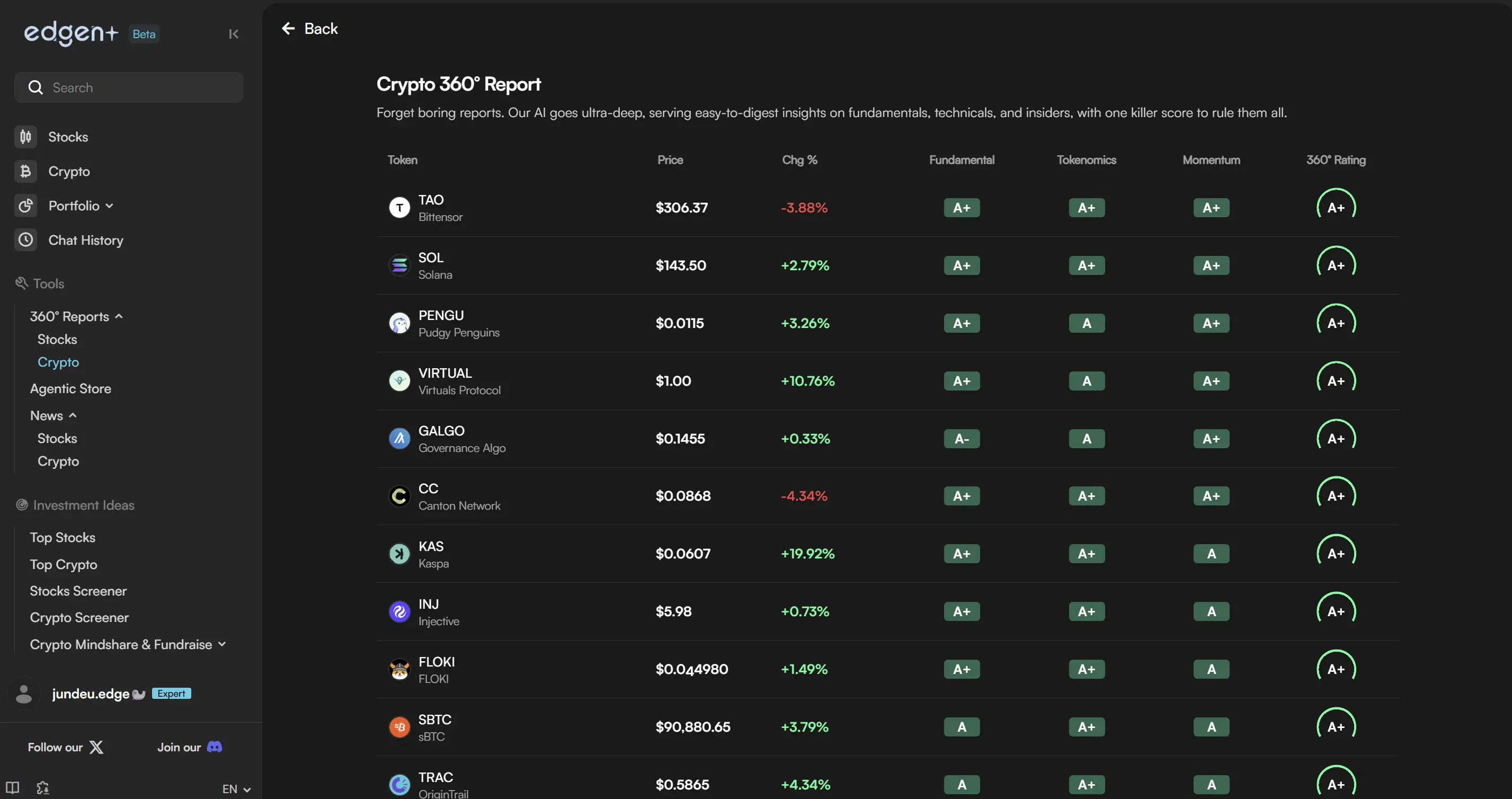
The 360° Report transforms any stock or token into a complete research document. It does far more than summarize data—Edgen consolidates project fundamentals, on-chain activity, token structure, and narrative momentum into a single, fully formed analytical output. All components are generated by Edgen’s AI agents using Contextual RAG (context-aware retrieval-augmented generation) and Graph RAG (relationship-based retrieval), ensuring that metrics are presented as part of an interconnected analytical framework rather than as isolated data points.
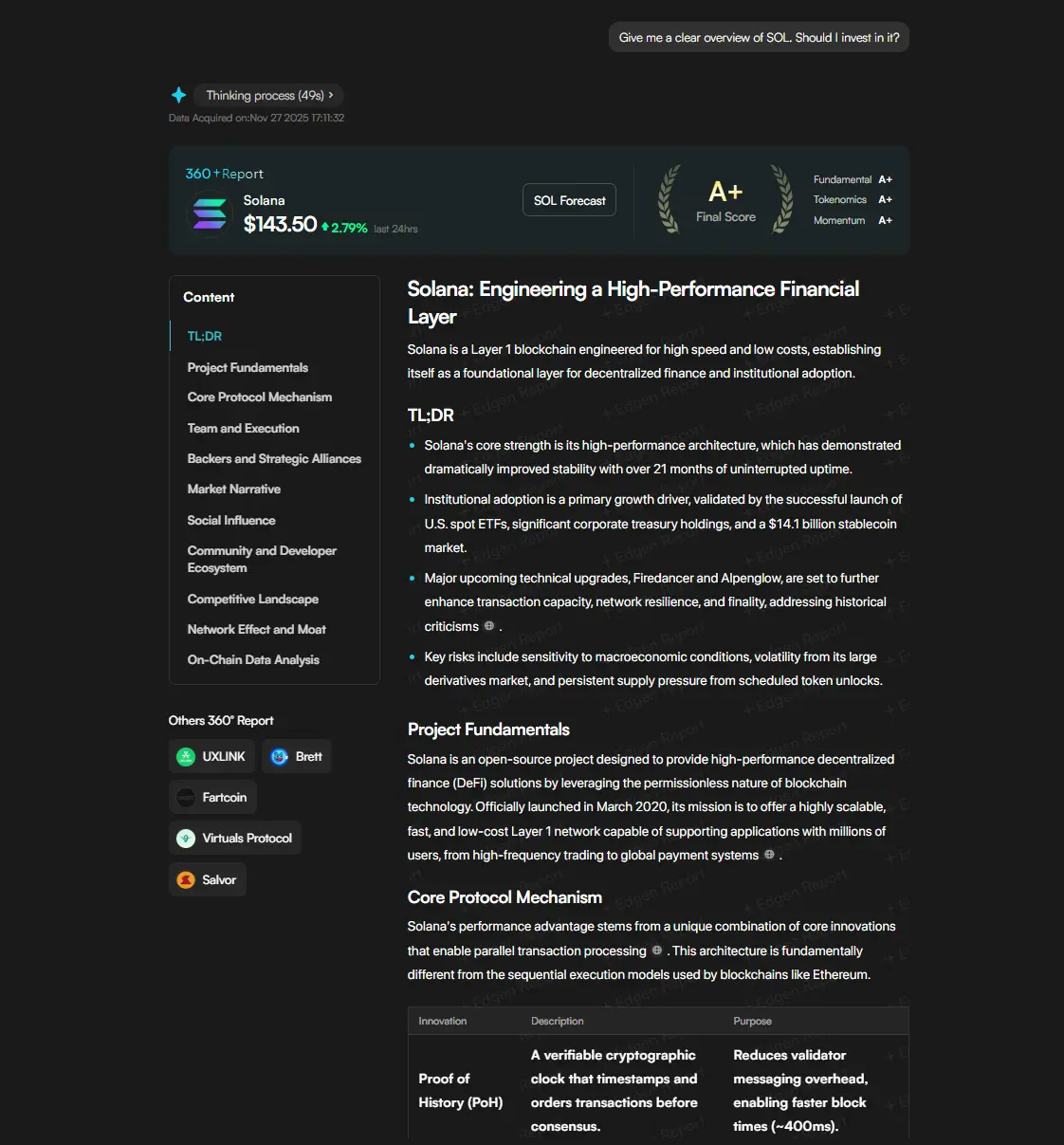
Each report begins with a summary designed for rapid decision-making. This includes the integrated Overall 360° Rating, derived from the outputs of multiple analytical agents; detailed letter-grade assessments (A–F) across fundamentals, tokenomics, and momentum; and essential market indicators such as price changes and current valuation. Even this high-level overview is sufficient for cross-asset comparison, while naturally guiding users into deeper sections when needed.
The main body reads like an institutional-grade analyst report. It spans the full analytical surface of an asset:
- Fundamentals explaining core architecture and long-term direction
- Protocol mechanisms detailing system design and operation
- Team assessment evaluating execution capability
- Capital and strategic networks mapping investors and partnerships
- Market context and narrative positioning
- Social data interpreting influence and distribution channels
- Community and developer ecosystem activity
- Competitive landscape analysis
- Network effects and barriers to entry
- On-chain usage trends
- Tokenomics, including supply and unlock schedules
In the Solana example above, the entire pipeline—from raw data to full institutional report—was generated in just 49 seconds. Multiple deep-analysis agents ran in parallel: fundamentals, tokenomics, momentum, social and sentiment analytics, and knowledge-graph evaluation. The result is the functional equivalent of having a dedicated analyst working beside the user at all times.
6) Agentic Store
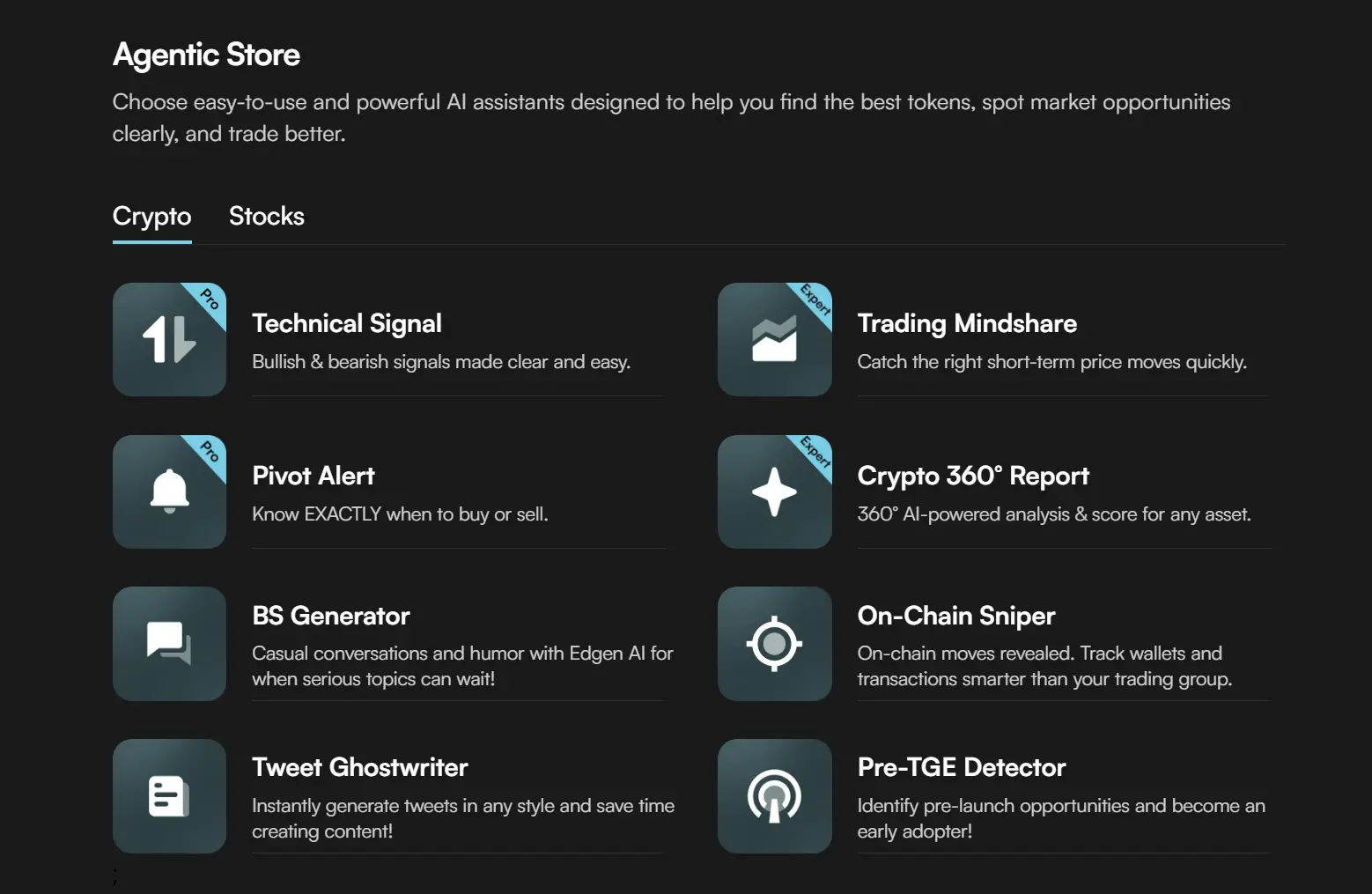
The Agentic Store serves as an extension layer within Edgen, offering a suite of specialized agents built to perform targeted analytical tasks. Each agent is designed to interpret the market from a distinct angle, enabling users to assemble combinations of tools that align precisely with their investment style. The primary agents currently available include Technical Signals, Trading Mindshare, Pivot Alerts, and 360° Reports.
- Technical Signals: Fast market diagnostics based on technical indicators
- Trading Mindshare: Analysis of liquidity flows and attention dynamics across exchanges
- Pivot Alerts: Automated detection of short-term inflection points (tops/bottoms)
- 360° Reports: Fully automated generation of comprehensive, deep-dive research reports
The agents support a range of trading styles and analytical objectives. Short-term traders, for example, may pair Technical Signals with Pivot Alerts to sharpen execution timing, while portfolio analysts might combine 360° Reports with Trading Mindshare to conduct structural, cross-asset comparative analysis.
All agents operate as subordinate modules of EDGM. When triggered, EDGM automatically retrieves and interprets the required datasets, logging results into the Edgen Knowledge Base. Because every agent shares EDGM’s unified backbone—including reasoning, retrieval, and reinforcement learning—each tool can deliver meaningful standalone insight; combining multiple agents, however, yields deeper and more multidimensional perspectives.
The Agentic Store is designed for continuous expansion. Developers and traders will be able to contribute their own agents directly, allowing new strategies, data pipelines, and analytical methodologies to accumulate within the Store as the ecosystem grows. Over time, this architecture broadens Edgen’s functional surface area and strengthens its position as an extensible, community-driven market-intelligence platform.
7) Agentic Execution (Strategy Execution Layer)
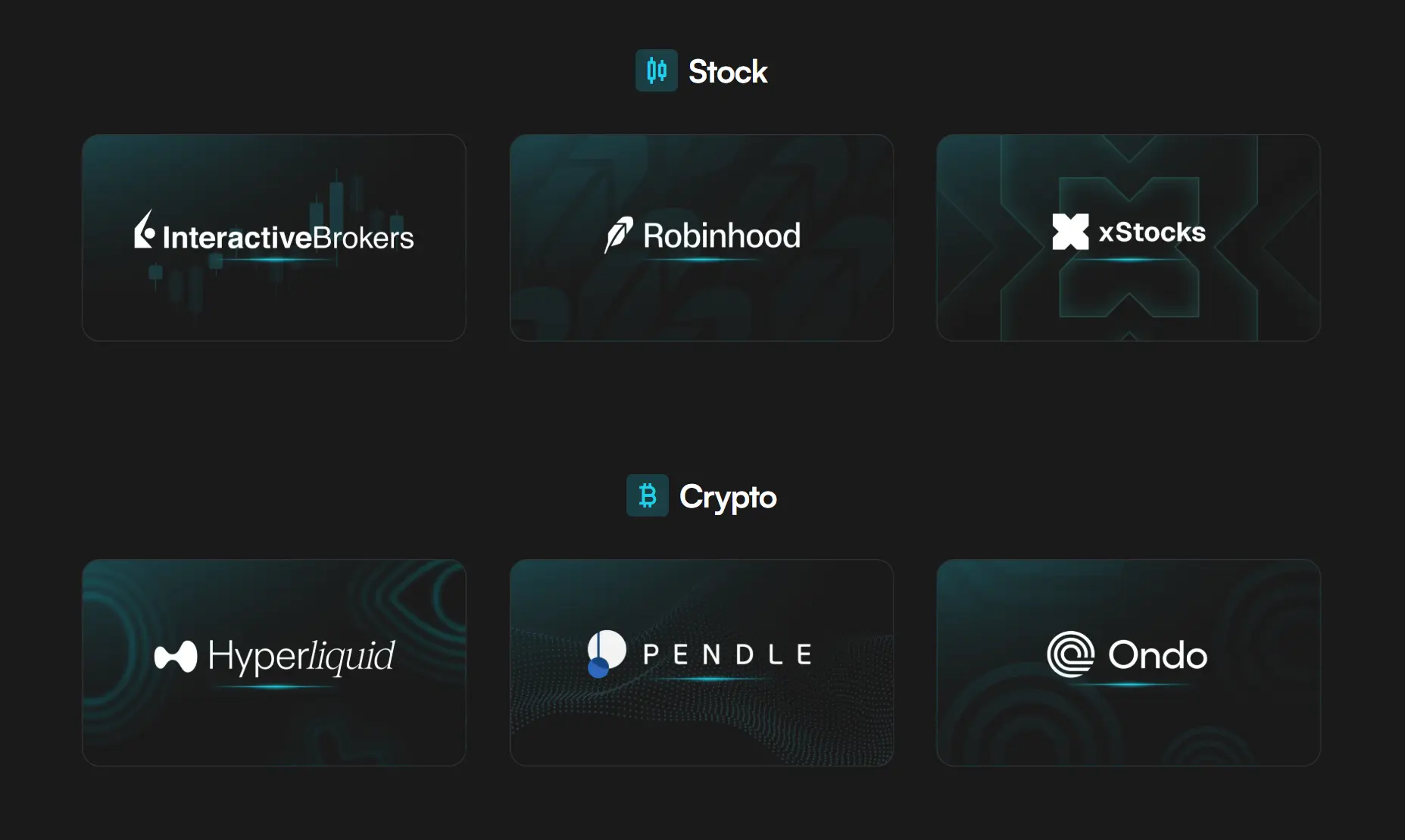
Edgen currently provides actionable insights that users can immediately apply to their portfolios; actual trade execution and strategy deployment, however, still occur manually. The long-term vision is to integrate execution directly into the platform, enabling a fully automated workflow in which Edgen handles the entire lifecycle—investment planning → position execution → post-trade management.
To advance toward this vision, Edgen is actively expanding its execution infrastructure. In equities, the team is preparing integrations with leading global brokers and stock-tokenization platforms such as Interactive Brokers, Robinhood, and xStocks. On the crypto side, execution capabilities are being developed through collaborations with major perp DEXs, DeFi protocols, and RWA platforms including Hyperliquid, Pendle, and Ondo. The expansion of Agentic Execution represents a pivotal step in Edgen’s evolution—from a sophisticated analysis engine into a true market co-pilot capable of overseeing not only intelligence generation but also the implementation of investment strategies end-to-end.
3. EDGM: The Orchestration Engine Behind Edgen’s Multi-Agent Architecture
All of Edgen’s core features are mediated and executed through EDGM (Efficient Decision Guidance Model). Rather than a single, monolithic LLM, EDGM is an orchestration layer that coordinates multiple specialized agents and tools to execute tasks in the most efficient way. The following sections outline why Edgen adopted this architecture and examine EDGM’s structure and execution model in detail.
3-1. Failure Modes of Single-LLM Market Systems
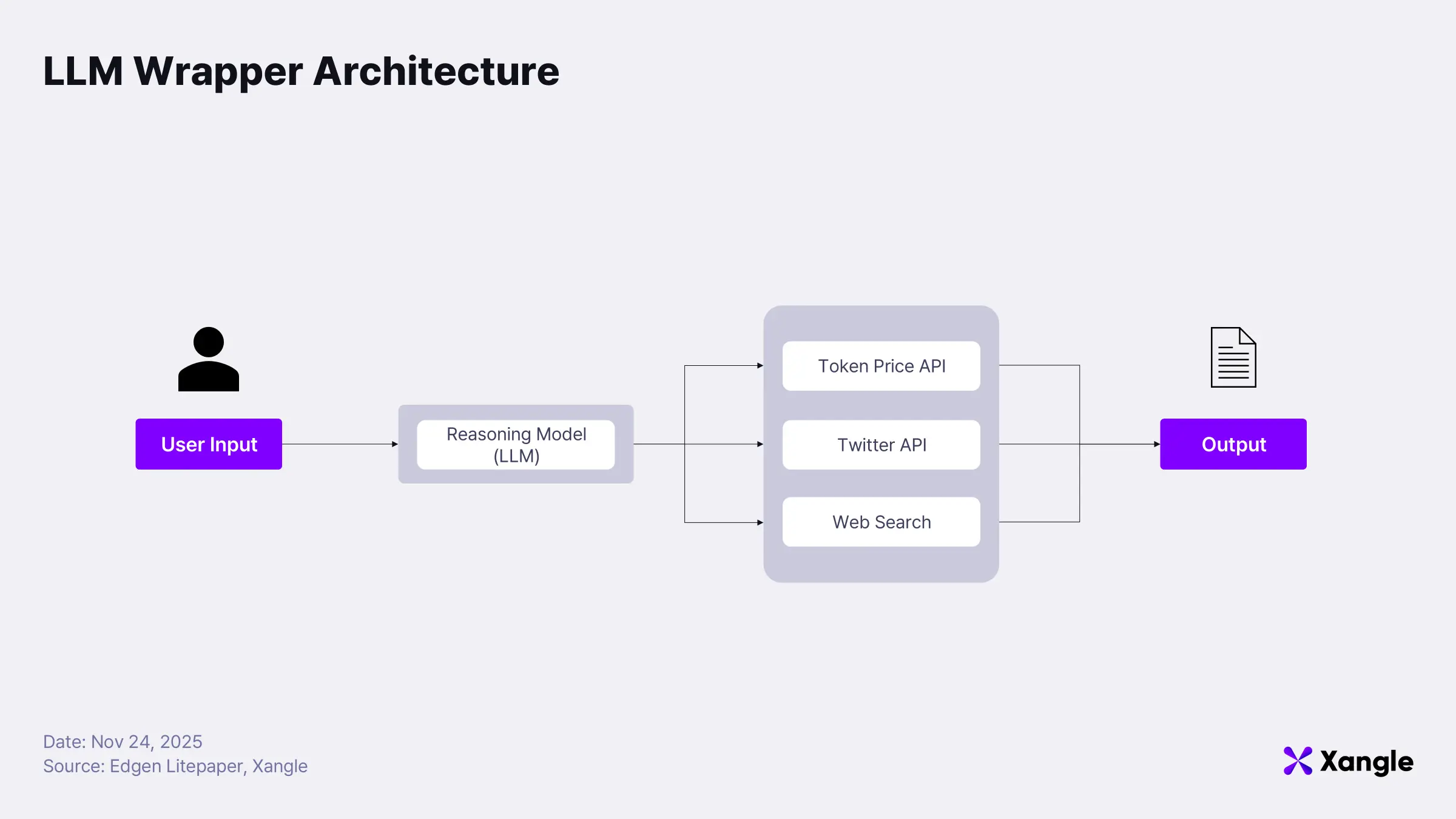
The primary reason Edgen adopted a multi-agent architecture is straightforward: a single LLM, by design, struggles to keep up with markets that are organic, highly interconnected, and constantly evolving in real time.
A typical LLM workflow can be summarized as follows. The model receives a user query, performs internal reasoning, optionally calls basic web search or simple external APIs, then aggregates the retrieved information into a single response. In practice, the model’s interaction surface with the outside world is largely constrained to web-text lookups. Once that paradigm is applied to an environment where financial data, on-chain activity, macro signals, and narrative flows all operate simultaneously, several structural issues appear:
-
Numeric and indicator errors:
LLMs cannot directly query live on-chain data, derivatives term structures, or financial statement line items; as a result, they frequently hallucinate numbers or misstate critical metrics.
-
Inconsistent logical structure:
Market data is inherently relational and must be analyzed as such, yet most LLMs lack a robust, stepwise decision-making framework. Analyses easily become fragmented, with key links between data points missing or misaligned.
-
Failure in domain-specialized tasks:
Questions such as “What drove ETH’s strength this week?” require integrating multiple data planes—on-chain flows, derivatives positioning, funding, spot flows, narratives, and macro context. A standalone LLM often fails to consistently isolate the true drivers across these heterogeneous sources.
-
Static response patterns:
Market regimes shift in real time, but a single-model setup cannot dynamically reconfigure its toolchain or analytical steps as conditions change. The same inference pattern is applied regardless of volatility, liquidity, or structural breaks.
In other words, a single LLM is poorly suited to perform decision-making in environments like financial and crypto markets, where multilayered, unstructured, real-time data must be fused into a coherent view.
To overcome these constraints, Edgen adopted a Multi-Agent architecture in which specialized agents share responsibilities and collaborate via intent-driven routing (Intent-to-Tool), rather than relying on a single model call. This design allows EDGM to decompose user intent, route it to the right tools and agents, and reassemble the results into an analysis that is both structurally sound and aligned with how markets actually behave.
3-2. EDGM (Efficient Decision Guidance Model)
The architectural answer to the limitations of a single-model system is EDGM (Efficient Decision Guidance Model), the core coordination layer developed by Edgen. Rather than relying on one LLM to handle every task, EDGM interprets the user’s intent and routes it to the most suitable combination of specialized agents and tools—functioning as a dynamic orchestration engine.
The operational flow of EDGM proceeds as follows:
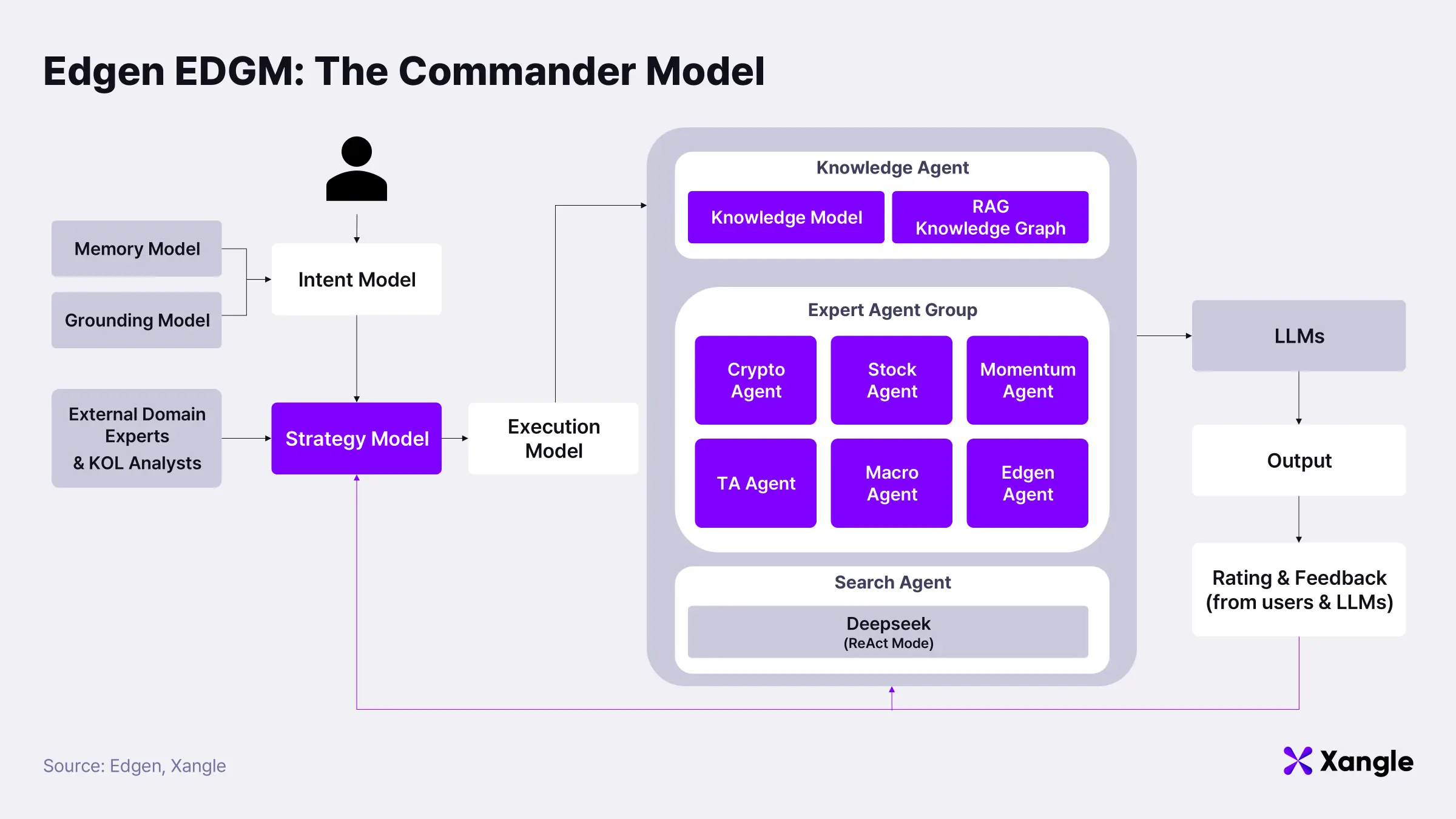
- Intent Model The intent model interprets a user’s prompt as an investment objective, not a simple question. It identifies the analysis type required by combining user context, memory, and grounding signals, setting the direction for the entire workflow.
- Strategy Model The strategy model converts the interpreted intent into a structured plan—selecting which agents, datasets, and processes to activate. It defines the analytical pathway that EDGM will execute.
- Execution Model The execution model carries out the strategy by coordinating knowledge agents, expert agents, and search agents. It ensures the right tasks run in the right order and that analysis is consistently executed.
- Knowledge Agent The knowledge agent provides contextual depth through internal research and a RAG-based knowledge graph. It supplies historical patterns and foundational understanding to support accurate reasoning.
- Expert Agents Expert agents perform focused analysis across fundamentals, technicals, macro, momentum, and more. Each produces specialized outputs using domain data pipelines and narrow expertise.
- Search Agent The search agent retrieves missing or real-time information through external search and RAG retrieval, filling gaps that agents cannot resolve with internal data alone.
- Latest LLMs The LLM synthesizes the structured information generated by agents and tools into human-readable outputs—text analysis, charts, tables, and narrative conclusions. At this stage, the model translates multi-agent reasoning into a cohesive insight.
- Output EDGM integrates all agent-level outputs into a single, consistent analysis. Conflicts are resolved, redundant information is pared back, and the final synthesis is delivered in a format optimized for immediate decision-making—often as a clean, report-like summary.
All stages of the workflow are logged. Over time, Edgen AI becomes increasingly sophisticated by learning from feedback and reviewing its own multi-agent reasoning history.
The full pipeline—Intent Model → Strategy Model → Execution Model → Specialized Agents → LLM— is designed to improve structure, contextual alignment, and consistency of outputs compared to a single-model system.
3-3. Open Contribution (Store & Aura)
If EDGM serves as Edgen’s analytical engine, Open Contribution acts as the community-driven expansion mechanism that propels the platform’s growth. Edgen is not a closed system in which only the internal team builds new features; instead, it adopts an open architecture designed for external developers and traders to create agents and contribute directly to the ecosystem. This structure allows Edgen to adapt quickly to evolving market conditions, while the community’s accumulated strategies and operational knowledge become naturally embedded into the platform’s intelligence layer.
The Agentic Store introduced earlier will soon support user-generated agents—anyone will be able to create and register their own specialized analytical modules. Through this model, Edgen can expand its analytical capabilities without bound, integrating user-built strategies, data pipelines, and automation workflows as new layers of intelligence.
Edgen also quantifies user contributions through a reputation system called Aura. Aura functions as a contribution score, measuring how accurately a user’s submitted insights align with real-world outcomes and how much trust those insights gain from the community. Anyone can accumulate Aura by posting market insights publicly on X (Twitter). These insights become training data for EDGM, improving the system’s models; the refined AI then delivers sharper signals; those signals lead users to generate higher-quality insights; and those insights feed back into Aura—forming a continuous, self-reinforcing feedback loop.
In effect, Open Contribution transforms Edgen from a sophisticated tool into a collective intelligence platform that evolves alongside its users. This approach may support faster capability expansion and allows community insights to influence system behavior over time.
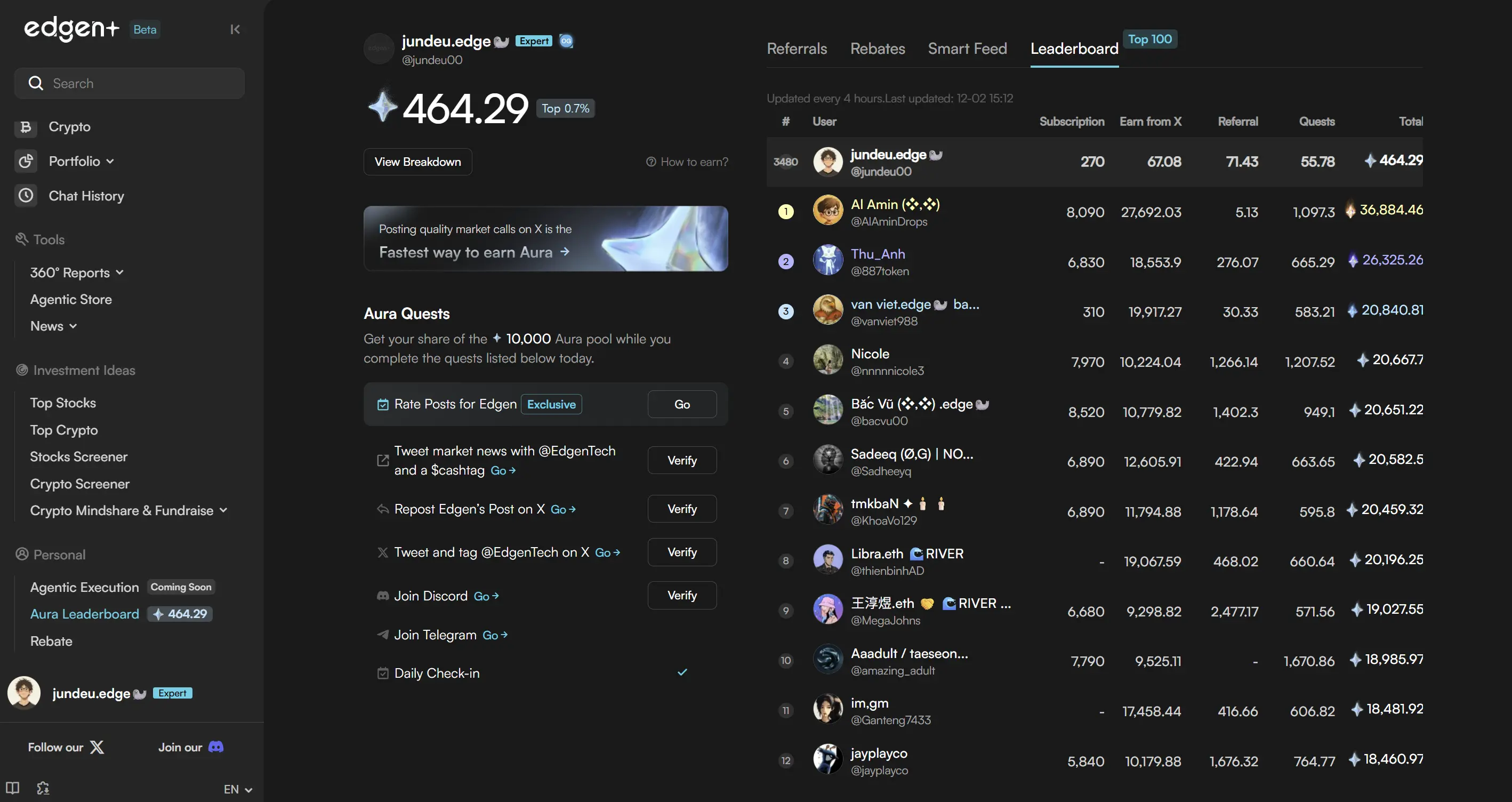
Anyone can link their X account and begin Aura Farming through the Edgen homepage. Current ways to earn Aura include paid subscriptions, insightful posts on X, referrals, and social quests. While the precise reward structure has not yet been announced, Aura’s role as a metric of contribution to the Edgen ecosystem makes it reasonable to expect the introduction of a reward system tied to Aura points in the future.
4. Concluding Perspective: Intelligence as the New Edge for Individual Investors
Information asymmetry in both traditional finance and crypto has shifted from a gap in access to a gap in interpretation. Investors today have equal visibility into headlines, financial statements, on-chain flows, and social sentiment; yet determining what matters, how disparate signals connect, and what those connections imply for one’s portfolio is far from trivial. As information volume expands, opportunity concentrates in the hands of those able to consolidate scattered data into a unified narrative—and a decisive course of action.
Edgen is designed to address precisely this challenge. Search, Themes, News, 360° Reports, the Agentic Store, and the AI CIO operate not as isolated tools for “displaying data,” but as an interconnected system built to deliver decision-ready intelligence. Users receive continuous, portfolio-relevant signals in natural language without navigating multiple platforms, and can transition into deep analysis seamlessly whenever needed.
Edgen remains a growing project. Several challenges lie ahead: completing the Agentic Execution layer, integrating with external brokers and protocols, advancing data quality, and expanding the roster of specialized agents. The platform’s long-term viability depends on how quickly these challenges are resolved and on whether flagship features such as the AI CIO and 360° Reports deliver measurable performance improvements for users.
The strategic direction, however, is unmistakable. Edgen is not positioning itself as another research tool—it aims to serve as an AI layer that equips anyone with institution-grade market intelligence. In a landscape where the way information is contextualized within a portfolio matters more than sheer data volume, Edgen is catalyzing a shift in how individual investors engage with markets: moving from fragmented, asset-by-asset perception toward a coherent, portfolio-centered decision-making framework.
Should this vision materialize, Edgen will help create a new market environment—one where individual investors can analyze, interpret, and respond to market conditions with the same clarity and sophistication as institutions.
Disclaimer
I confirm that I have read and understood the following: The information contained in this article is strictly the opinions of the author(s). This article was authored free from any form of coercion or undue influence. The content represents the author's own views and does not represent the official position or opinions of CrossAngle. This article is intended for informational purposes only and should not be construed as investment advice or solicitation. Unless otherwise specified, all users are solely responsible and liable for their own decisions about investments, investment strategies, or the use of products or services. Investment decisions should be made based on the user’s personal investment objectives, circumstances, and financial situation. Please consult a professional financial advisor for more information and guidance. Past returns or projections do not guarantee future results. This article was written at the request of Edgen. All content in this article was written independently by the author(s), and neither CrossAngle nor Edgen had any editorial control or influence over the content. The author(s) may hold the cryptocurrencies mentioned in this article at the time of writing.
Xangle or its affiliated partners own all copyrights of the written or otherwise produced materials and content provided on the platform. Any illegal reproduction of such content, including, but not limited to, unauthorized editing, copying, reprinting, or redistribution will result in immediate legal actions without prior notice.
![[CIS Partner Summit Highlights] R25, Vault Infrastructure for the Next Generation of Finance](https://resource.xangle.io/files/content/6957A34223D0EE05827E59990EB751D2_1790656054398.webp)