OpenLedger: The Octopus Reviving the Dead Internet


Table of Contents
1. The Octopus Reviving the Dead Internet
2. Building Momentum Before the TGE
3. Sustaining Momentum After the TGE
4. Rebuilding the Living Internet — A Community-Led Future
1. The Octopus Reviving the Dead Internet
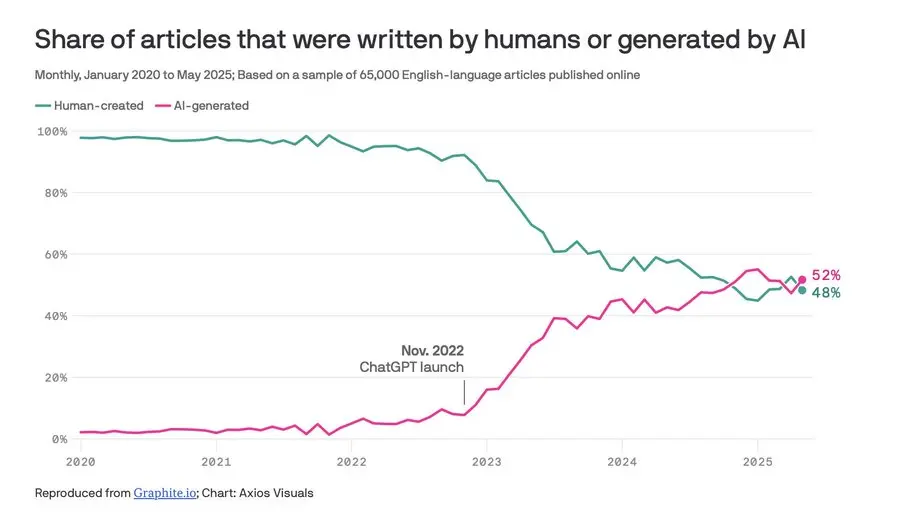 Source: Perplexity on X — Ratio of AI-generated to human-written content
According to a recent post by Perplexity that went viral on X, AI-generated writing has now surpassed human-authored content across the internet. In 2020, only around 5% of all online material was estimated to be AI-generated; by 2025, that figure had climbed to 52%, and projections suggest it will exceed 90% by next year.
As “original writing” continues to vanish, the internet has become dominated by derivative content—machine-produced and algorithmically recombined. What we read online today is rarely the product of human intent. Interactions that once occurred between people are increasingly taking place between algorithms, a phenomenon now widely known as the “Dead Internet Theory.”

The decline of the living internet cannot be explained by the acceleration of AI technology alone. The deeper issue lies in the disappearance of incentives for humans to write, share, and contribute. Even a thoughtful essay crafted over ten hours can be summarized, analyzed, and reassembled by an AI model in seconds. Faced with that imbalance, creators naturally turn to automation—choosing replication and reconfiguration over original effort.
The current AI space only deepens this erosion. Leading models such as GPT-4 do not compensate the creators of the data on which they were trained, and vast amounts of publicly available human work continue to be absorbed into training datasets without consent, license, or payment. The result is a digital ecosystem increasingly saturated with AI-made content and steadily deprived of human creativity.
OpenLedger approaches this crisis—the loss of human incentive—as a problem of economic alignment. As AI systems grow more sophisticated, the data that matters most will no longer be generic public information but high-quality, domain-specific knowledge in areas such as medicine, law, and finance. General-purpose models like GPT-4 may achieve above-average results across multiple fields, yet they consistently fall short where expert judgment or contextual reasoning is required. The solution is not simply scaling models further, but developing Specialized Language Models (SLMs); fine-tuned systems built for specific domains.
By embedding blockchain-based attribution and reward mechanisms, OpenLedger enables producers of expert datasets to receive fair and transparent compensation. The design restores incentives for human contribution and builds an economy in which AI evolves not as the force that kills the internet, but as the engine that revives it. For a more detailed breakdown of this architecture, refer to OpenLedger: The AI Blockchain Where Data and Models Become Money.
This report examines how OpenLedger, which captured significant attention following its Token Generation Event (TGE) in September 2025, built its community and ecosystem prior to launch and how it continues to expand under a well-defined post-TGE roadmap.
2. Building Momentum Before the TGE
OpenLedger reached a milestone few projects achieve—securing a spot listing on Binance, the benchmark exchange for Web3 projects, while also landing dual listings on Korea’s major platforms Upbit and Bithumb. Following the TGE, the $OPEN token peaked at $1.89 on Binance, marking a fully diluted valuation (FDV) of $1.89 billion. The price has since consolidated around $0.40, maintaining an FDV near $400 million. This moderation reflects the natural cooling of post-launch market exuberance—a pattern seen across many recent token launches. The following section explores how OpenLedger cultivated its community and ecosystem ahead of the TGE, and how that groundwork translated into one of the most successful launches of 2025.
$8M Seed Round Led by Polychain Capital
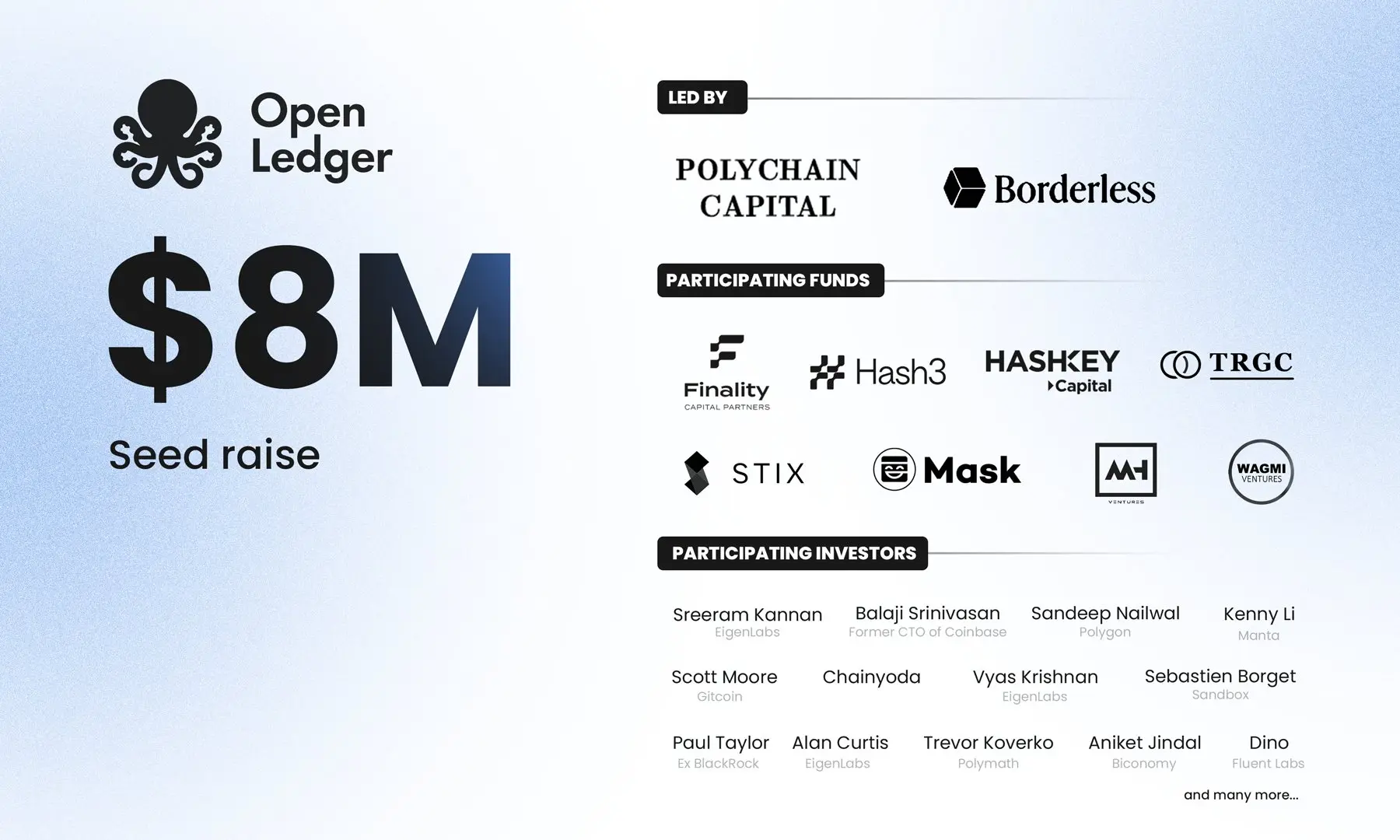
OpenLedger entered the spotlight after revealing an $8 million seed round led by Polychain Capital. The size of the raise, coupled with Polychain’s reputation, immediately drew attention across the Web3 community and set the foundation for the project’s early following.
Community Onboarding: Kaito & Cookie.fun Campaigns
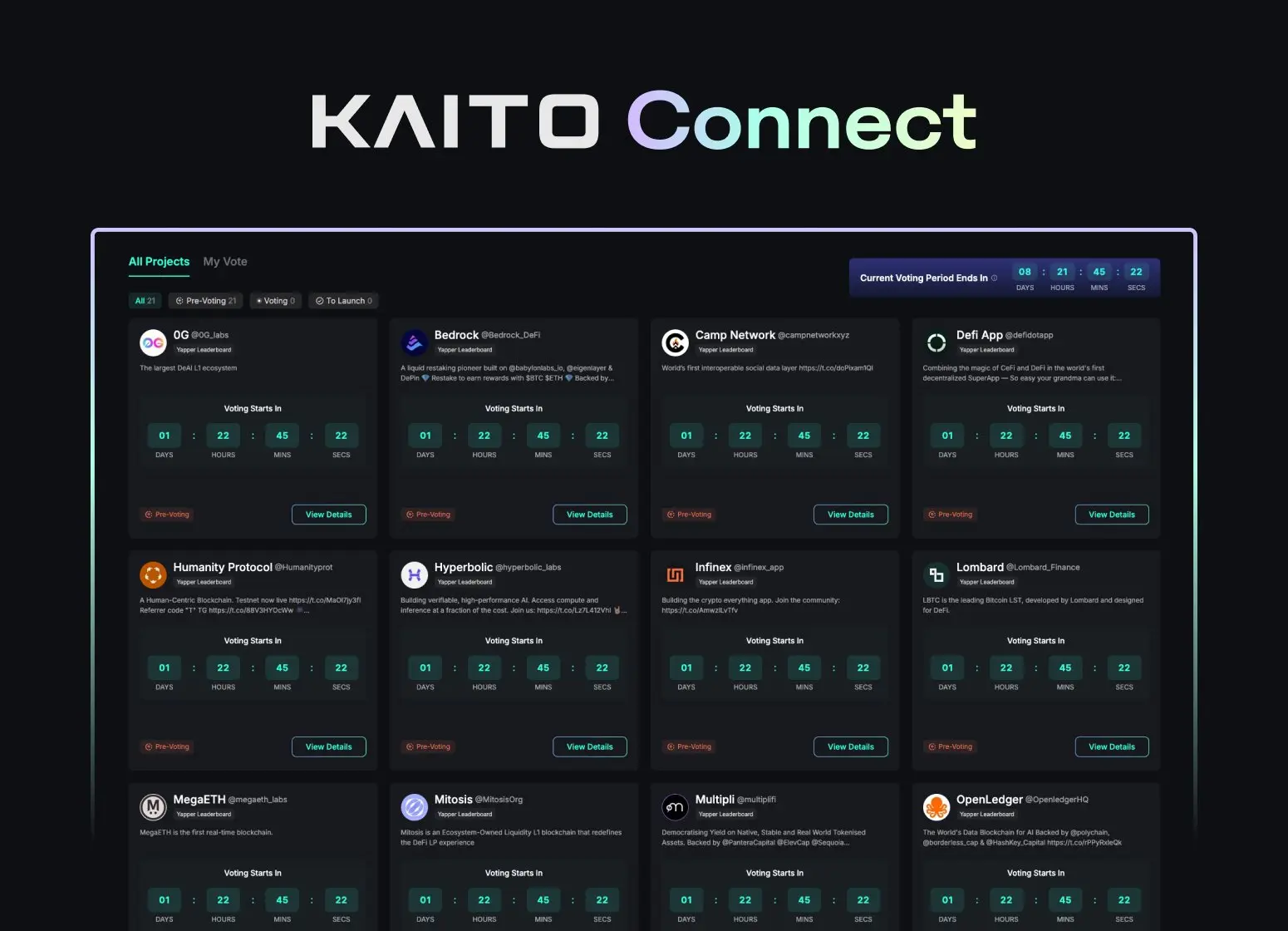
In January 2025, OpenLedger joined Kaito Connect, an onboarding program on the Info-Fi platform Kaito that admits projects through community voting. The campaign garnered 35.9 million votes, earning OpenLedger a February onboarding and strong traction among Kaito’s user base.
Momentum continued in June 2025 with a collaboration with Cookie.fun on a Snapping Campaign offering $350,000in total rewards. The structure allowed users to earn dual incentives across both platforms, fueling engagement and expanding awareness of OpenLedger’s brand.
Testnet Epoch 1 & 2: Early Growth Metrics
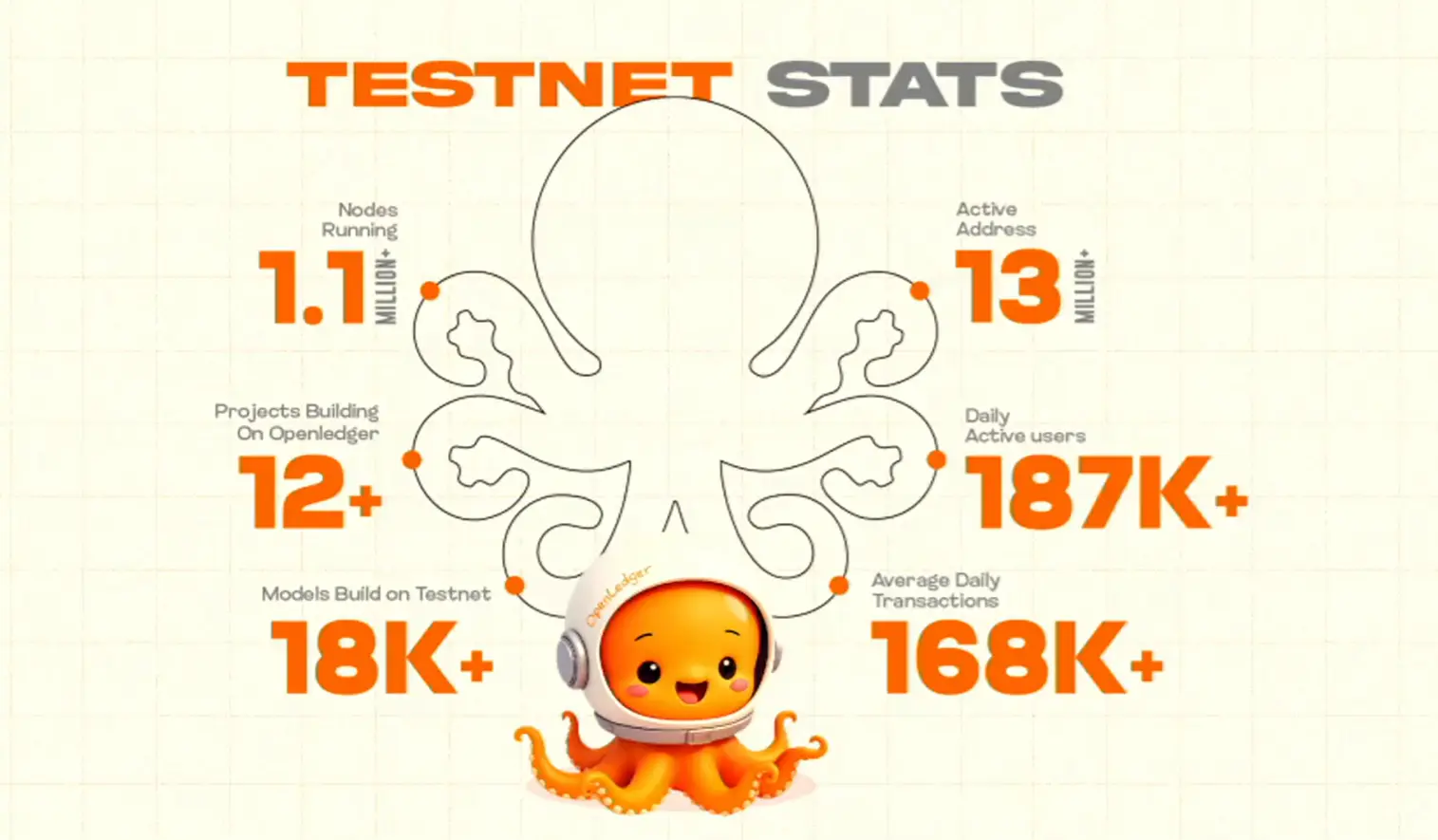
Buzz on X (formerly Twitter) quickly accelerated as OpenLedger launched its testnet with a mission-and-points systemdesigned to help new users explore the network. The response was remarkable—over 1.1 million downloads within two weeks of the January 9 launch.
Epoch 1 concluded successfully in February, followed by Epoch 2 in March, which saw even stronger participation. By the end of the testing phase, the network recorded: 1.1 million + nodes, 13 million + active addresses, 87 k + daily active users (DAU), and 168 k + average daily transactions. Such metrics underscored the speed of community growth and depth of network participation, validating the project’s traction well before mainnet launch.
Growing the Korean Community
 OpenLedger Korean community event banner
In April 2025, OpenLedger officially launched its Korean Telegram community, marking a key milestone in its regional expansion strategy. As of October 30, the group counted 2,777 members and maintained an impressive engagement rate of 300–400 reactions per post. The community quickly became the central hub for Korean users—hosting localized campaigns, sharing real-time project updates, and serving as a vital channel of communication between the team and local supporters. Even after the TGE, the Korean community remained highly active, continuing to play a central role in maintaining transparency and engagement across the broader Asian user base.
Xangle Coverage Boosts Market Awareness
In May 2025, OpenLedger gained additional visibility through its first Korean-language research publicationdistributed by Xangle. The piece was simultaneously shared across multiple channels — including Xangle’s official Telegram and Twitter accounts, Bloomberg, and Coinness — reaching both Web2 and Web3 audiences. This exposure helped investors and general users better grasp OpenLedger’s technical foundations and long-term vision, while significantly enhancing its brand credibility and recognition in the Korean market.
Asia Expansion: China Community Tour
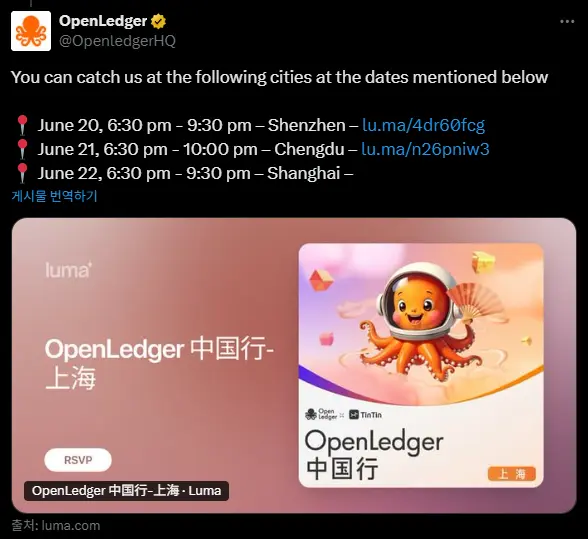 Source: OpenLedger X
As part of its regional expansion efforts, OpenLedger hosted a series of AMAs and in-person meetups across key Chinese cities, including Shenzhen, Qingdao, and Shanghai. Over three consecutive days, the team met with local communities and partners, strengthening relationships and expanding its footprint across Asia’s rapidly growing Web3 space.
Korea-Focused AMAs and Meetups
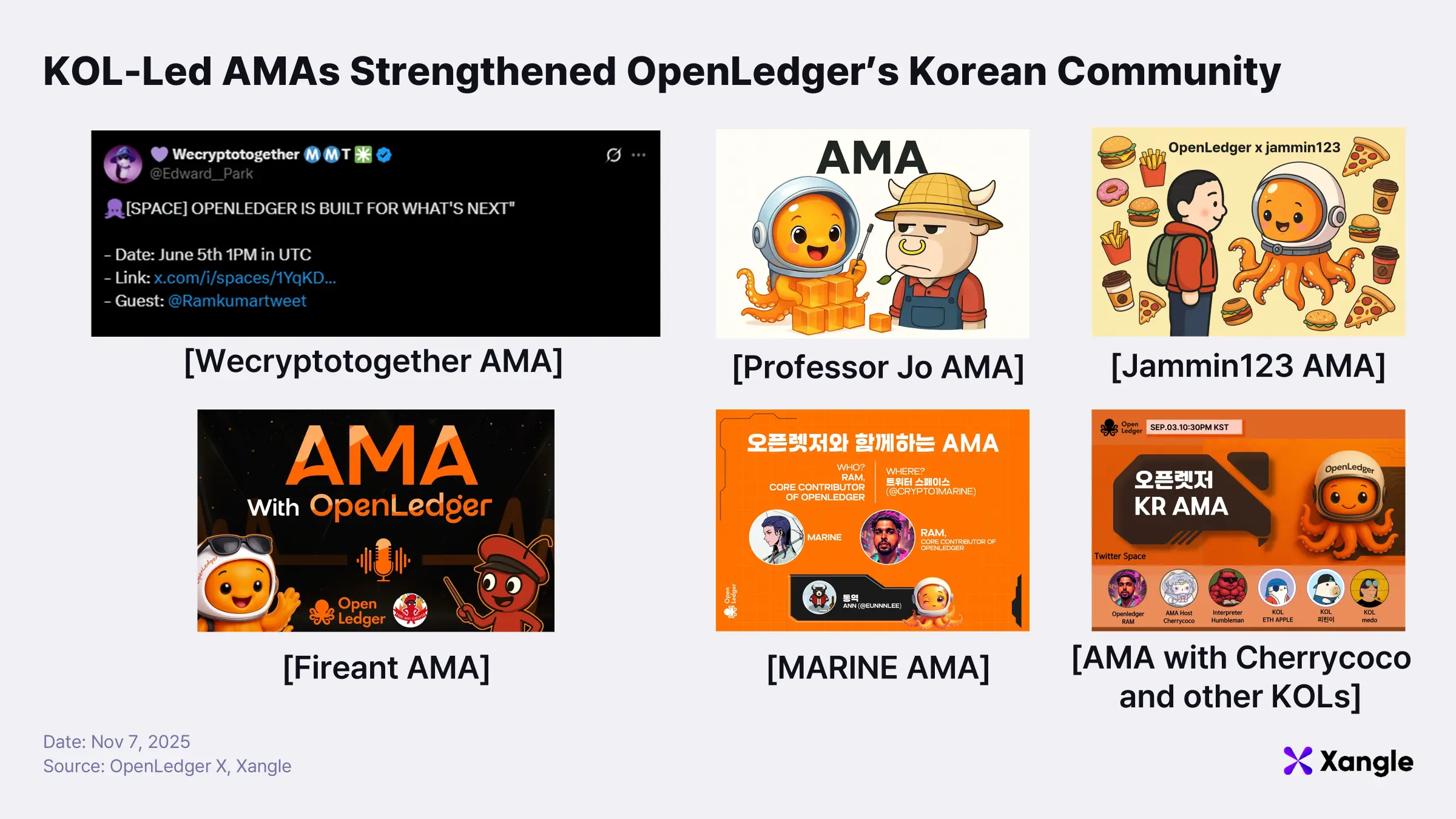
Among its Asian initiatives, Korea emerged as one of OpenLedger’s most active and strategically important markets. The team collaborated with prominent local KOLs such as Wecryptotogether and Fireant to host multiple AMA sessions, maintaining ongoing dialogue rather than one-off promotional events.
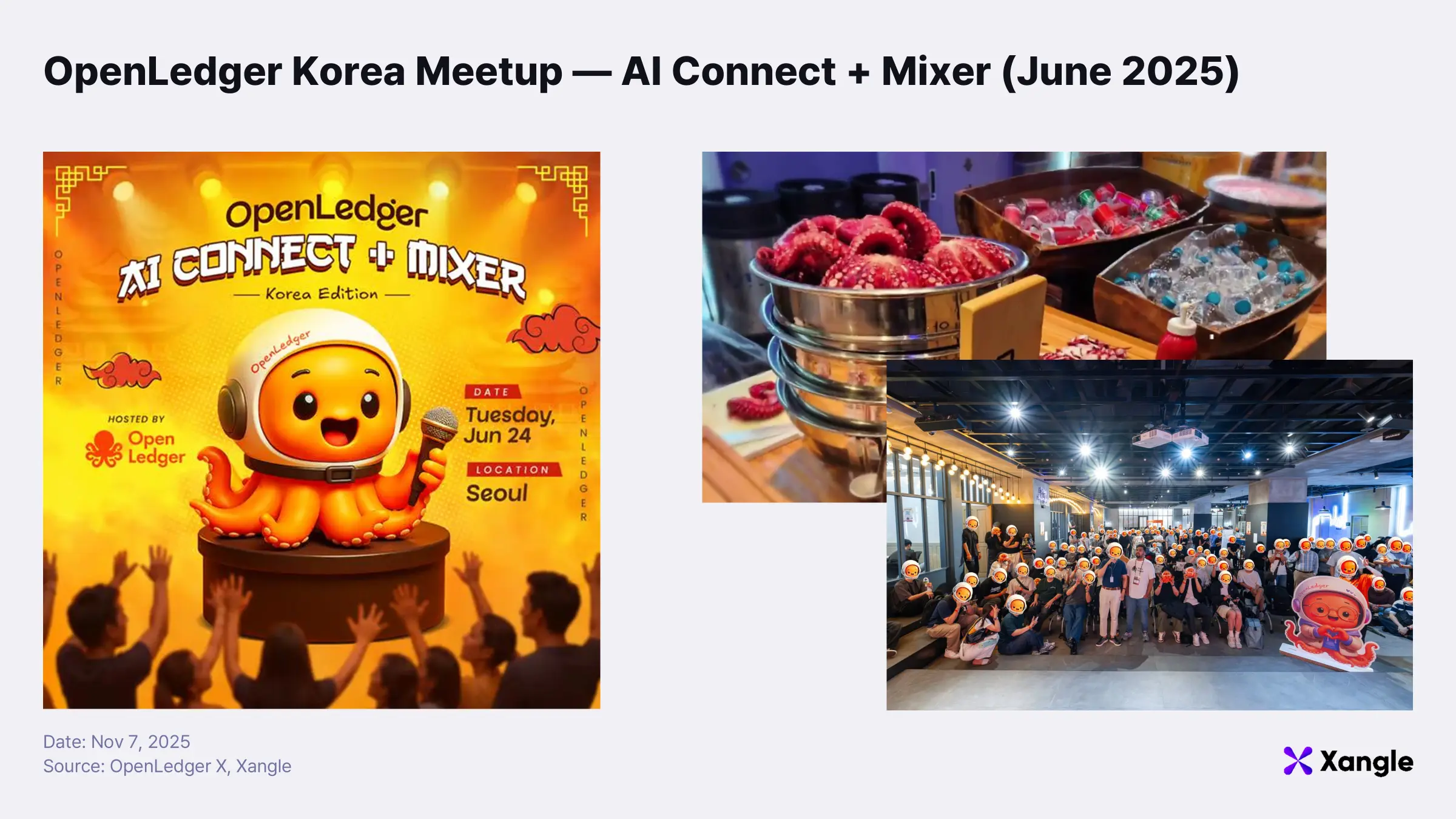
In June 2025, OpenLedger hosted an offline meetup in Seoul, creating a rare opportunity for Korean users to engage directly with the team. The event drew attention for its creative twist, serving an octopus dish inspired by the project’s mascot, and concluded with an $OPEN token airdrop, which drove exceptionally high attendance and strong viral engagement across the community.
Community Solidarity: Flood Relief Donation
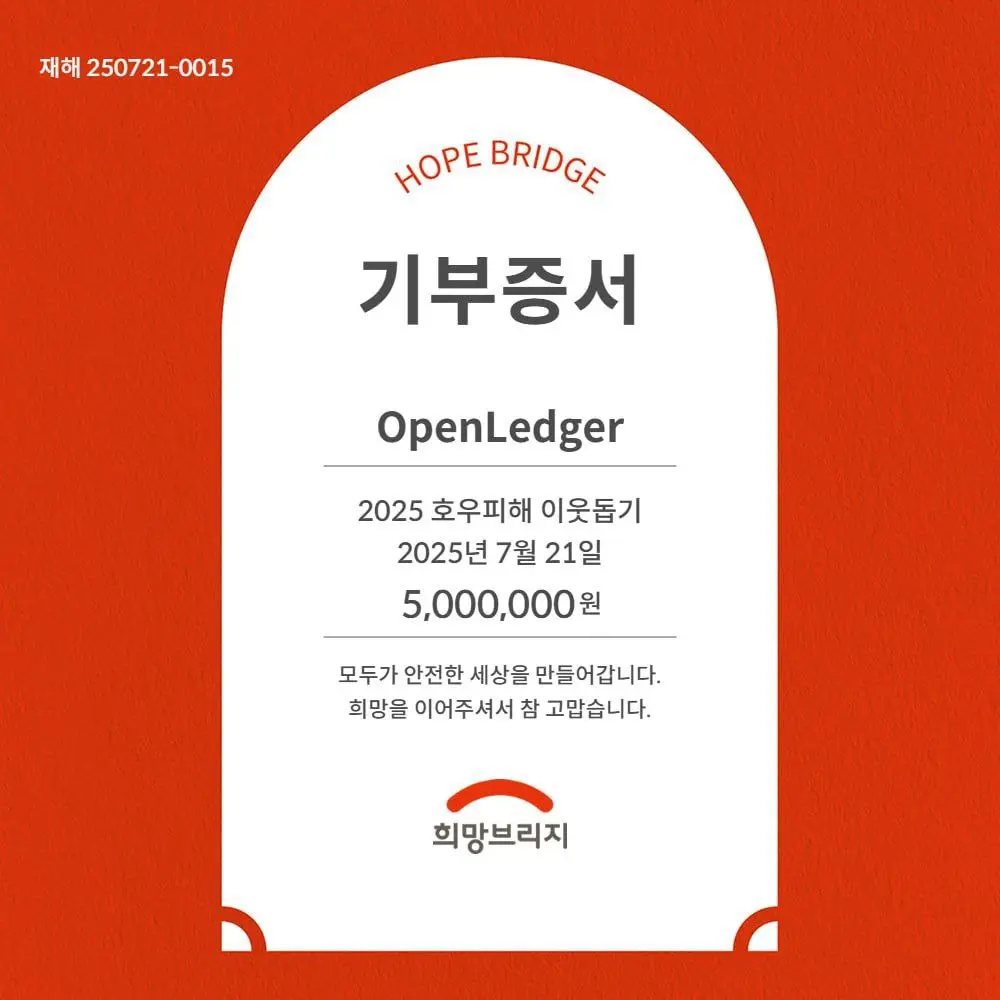
In July 2025, OpenLedger donated ₩5 million to assist residents affected by severe flooding in Sancheong, Gyeongnam Province. The region had already endured wildfires earlier that year, and subsequent floods caused widespread landslides and displacement. The donation stood out as a meaningful gesture of genuine commitment to the Korean community, reinforcing OpenLedger’s image as a project that values social responsibility alongside technical innovation.
OpenLedger’s steady cadence of community-focused initiatives, from online AMAs and offline meetups to global campaigns, laid the groundwork for a highly engaged and loyal user base. These activities went beyond conventional marketing; they empowered users to participate directly in the project’s growth and identity. Active engagement across Asia, and particularly in Korea, sparked organic content creation, viral visibility, and deep community trust, creating powerful network effects in the lead-up to the TGE. By the time of launch, OpenLedger had transformed its grassroots momentum into tangible market attention, achieving a high-profile, community-backed TGE supported by strong local conviction and brand credibility.
3. Sustaining Momentum After the TGE
OpenLedger has worked deliberately to preserve the strong momentum it built in the run-up to its TGE. The team continues to engage actively in major global conferences to strengthen brand visibility while reinforcing market confidence through $OPEN token buybacks funded by enterprise revenue. At the same time, OpenLedger is expanding its technical infrastructure and ecosystem footprint through strategic partnerships with projects such as LayerZero, RedStone, and Uphold. Anchored by a clear and executable post-TGE roadmap, the project is evolving toward an on-chain AI economy in which data, models, and agents operate autonomously and transact seamlessly. This section examines OpenLedger’s key initiatives following the TGE—its ecosystem expansion strategy and the tokenomics supporting its AI-driven economic model.
3-1. $OPEN Tokenomics
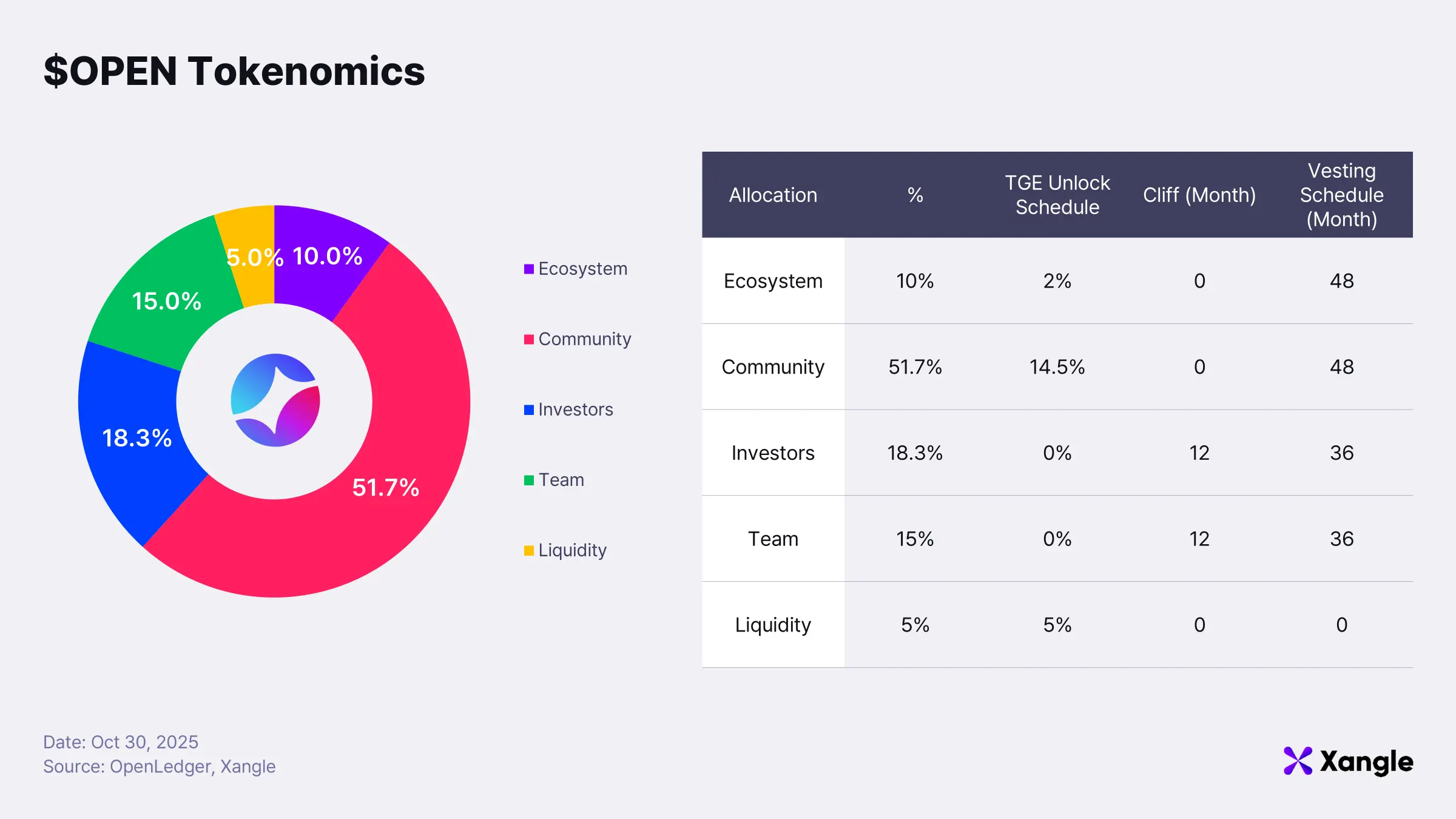
- Token Ticker: $OPEN
- Total Supply: 1,000,000,000 (1B)
- Initial Circulating Supply: 21.55%
- Distribution:
- Ecosystem: 10%
- Community: 51.7% (including 5% airdrop)
- Investors: 18.29%
- Team: 15.00%
- Liquidity: 5.00%
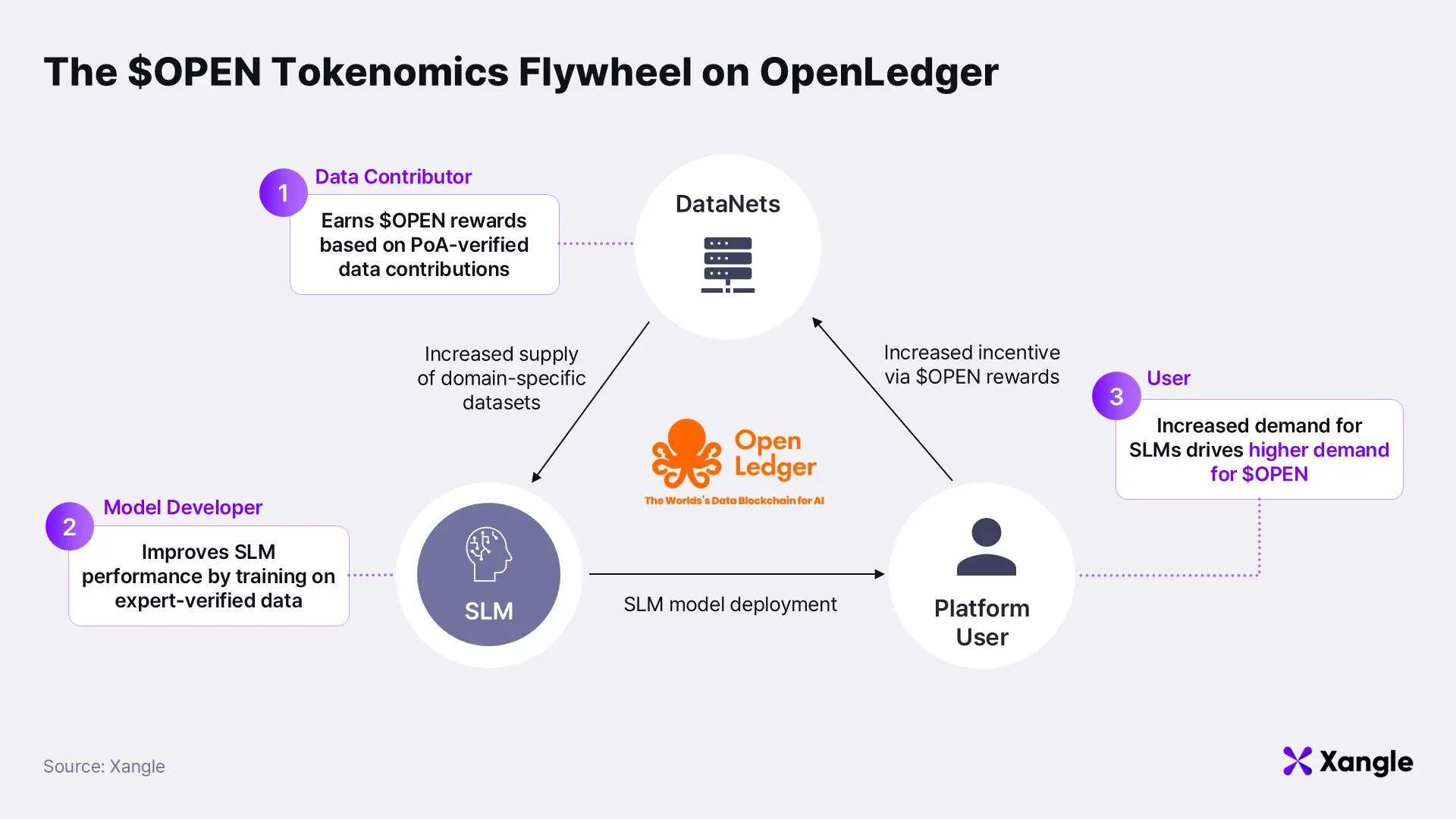
The $OPEN token sits at the heart of the OpenLedger AI economy, functioning as the core utility and transactional layer that powers every activity across the network. All operations—from data contribution and model training to inference and deployment—are denominated in $OPEN, making it the system’s fundamental economic fuel.
- Data contributors are automatically rewarded via the Proof of Attribution (PoA) protocol whenever their datasets are used in model training.
- Developers use $OPEN to register, train, and deploy AI models within the network.
- Users pay in $OPEN when accessing AI-powered services and applications.
- Token holders participate in governance, determining network direction and treasury allocation.
- Models and agents stake $OPEN to secure operational accountability and ensure network reliability.
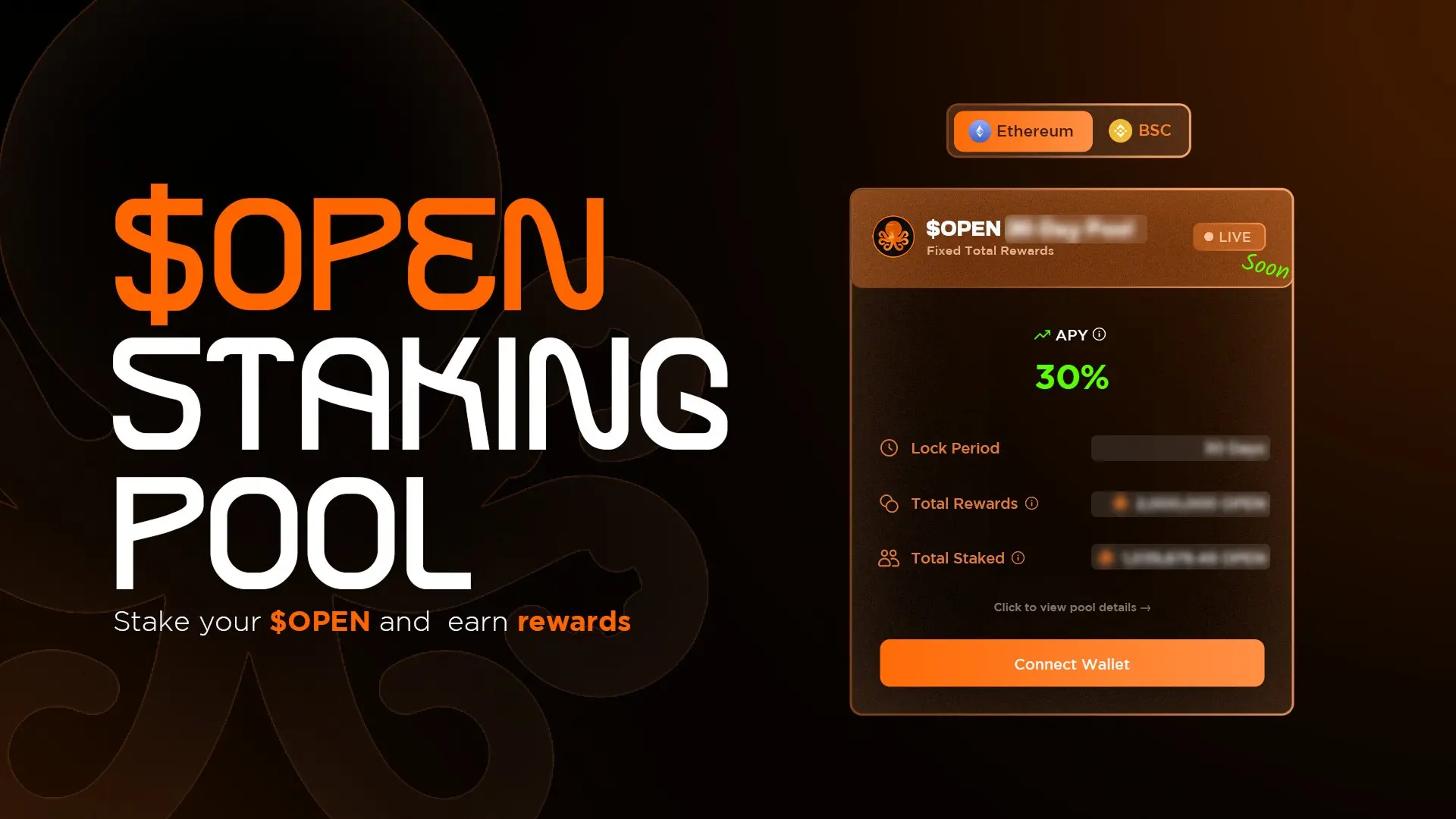
Following the TGE, OpenLedger launched its $OPEN staking program, further reinforcing the network’s participant-driven economy. Rather than serving solely as a yield mechanism, the staking framework acts as a core layer of security and decentralized governance. Participants who stake their tokens contribute to validator balance and overall network stability while receiving real-time staking rewards. Those meeting higher staking thresholds gain governance privileges, enabling direct participation in proposal voting and protocol-level decision-making. The OpenLedger Foundation is progressively rolling out the staking system to maintain validator equilibrium and optimize security across the network. This gradual deployment ensures long-term stability and fair distribution among participants.
OpenLedger’s tokenomics and staking architecture are designed to extend far beyond a simple reward model. Together, they form the economic backbone that sustains the project’s credibility, security, and long-term viability, ensuring that its AI-native ecosystem operates with both technical integrity and economic resilience.
3-2. Key Post-TGE Developments
Expanding Global Presence — KBW & TOKEN2049
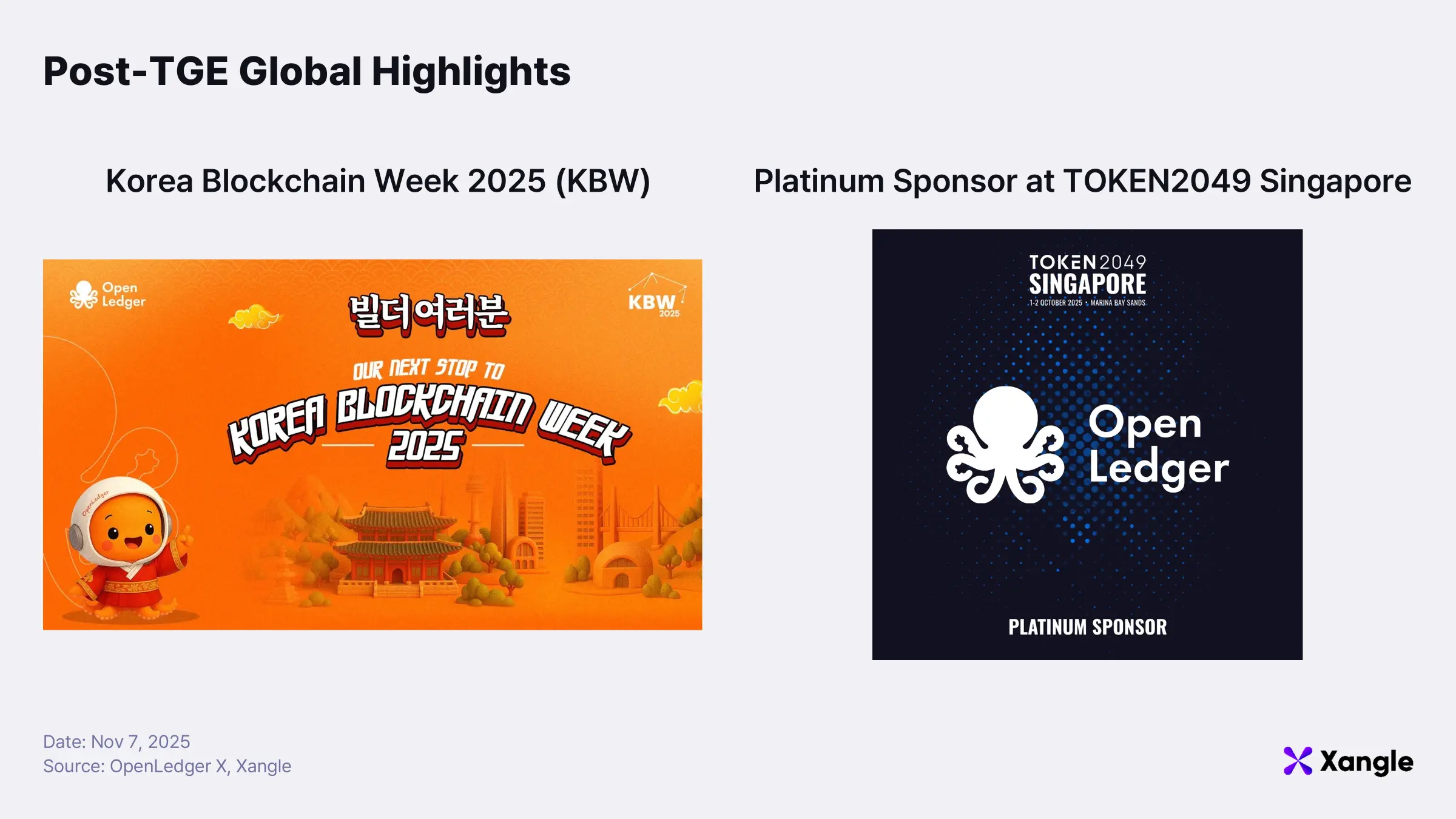
Following the TGE, OpenLedger maintained strong post-launch visibility by taking part in two of the world’s leading blockchain conferences — Korea Blockchain Week (KBW) and TOKEN2049 Singapore. During KBW, the team actively engaged beyond the main event, hosting and attending various side events and networking sessions to strengthen ties with domestic and international communities, partners, and investors. At TOKEN2049 Singapore, OpenLedger participated as a Platinum Sponsor, connecting directly with global investors, projects, and media representatives to communicate its long-term vision and ecosystem roadmap.
Rather than treating these appearances as one-off promotional opportunities, OpenLedger has continued to prioritize consistent, in-person engagement as part of a broader strategy focused on global brand-building and community expansion.
Long-Term $OPEN Buyback Strategy
OpenLedger operates a continuous $OPEN token buyback program, financed by revenue generated from its enterprise business operations. The initiative is intended to strengthen liquidity, reinforce market confidence, and protect long-term holder value—a deliberate step toward sustainable tokenomics management.
In the project’s initial design, 5% of total token supply was allocated to liquidity and 2% to ecosystem growth. However, during the platform’s expansion, approximately 4.5% of the liquidity allocation was redirected toward ecosystem incentives, including data contributor rewards. This temporarily reduced the liquidity pool size, prompting OpenLedger to launch a long-term buyback plan to restore the pool to its original 4.5% target.
As of October 3, OpenLedger had already executed proactive buybacks equivalent to approximately 2.9% of total token supply. Following that date, the team conducted two additional market purchases totaling about 4 million tokens (roughly 0.4% of the supply). In total, around 3.7% of all tokens have been repurchased to date, completing this phase of the liquidity restoration plan.
OpenLedger also plans to initiate a governance vote on whether to proceed with the buyback of an additional 4 million tokens held by early investors. The team has not yet finalized whether these repurchased tokens will be burned, recirculated, or reallocated for liquidity provisioning, leaving some short-term uncertainty regarding near-term market effects.
All buyback transactions are executed transparently through wallet address 0x453243D085E73f1ed471E87cc4cDc7F42AfB9780, with full on-chain verification available to the public. Rather than pursuing short-term price stabilization, OpenLedger’s buyback framework is designed to sustain long-term liquidity health and reinforce ecosystem credibility, underscoring its broader commitment to transparent, fundamentals-driven network growth.
3-3. Ecosystem Partnerships and Strategic Alliances
 Source: OpenLedger X
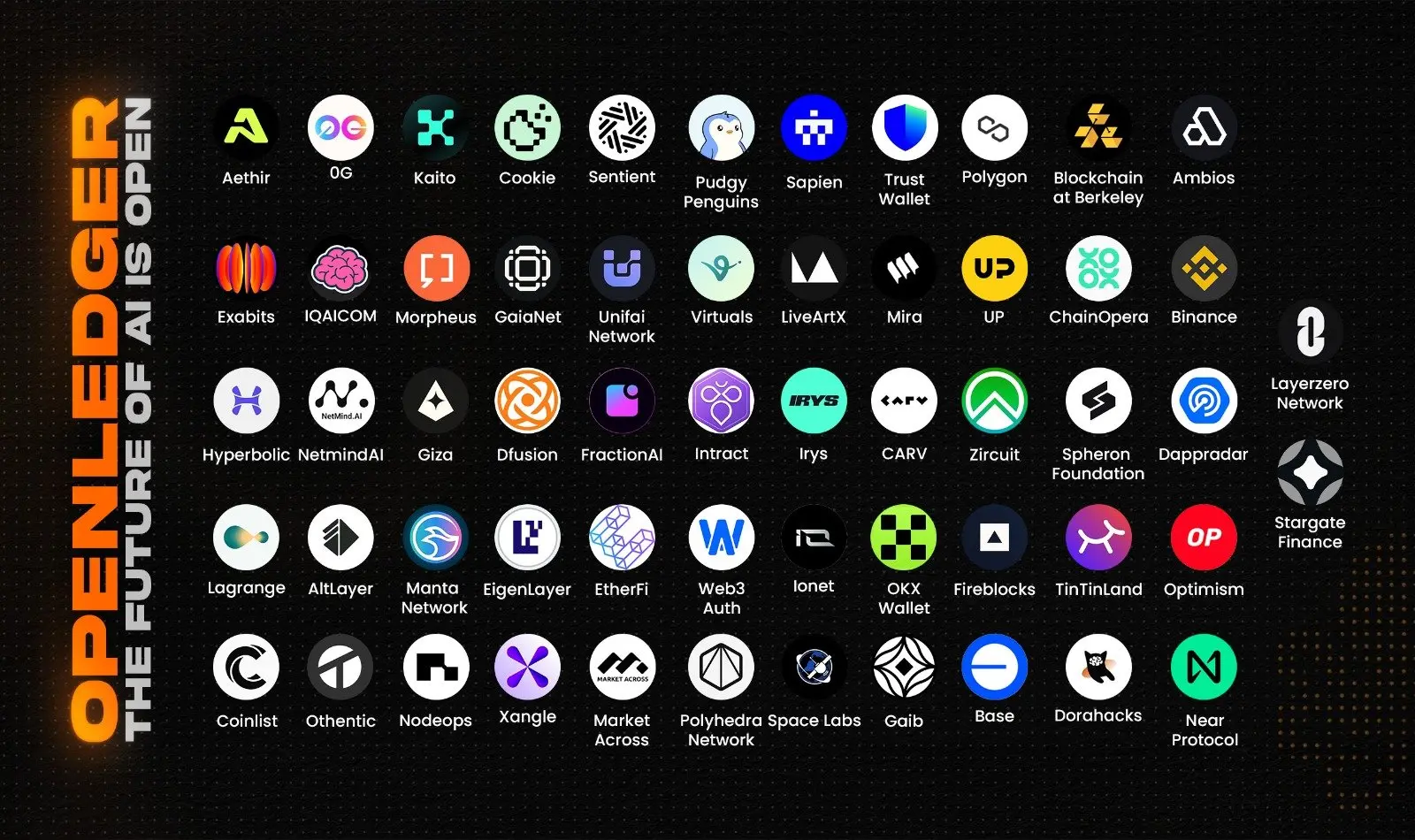
OpenLedger has cultivated a broad network of partners spanning every layer of the AI × Web3 ecosystem.
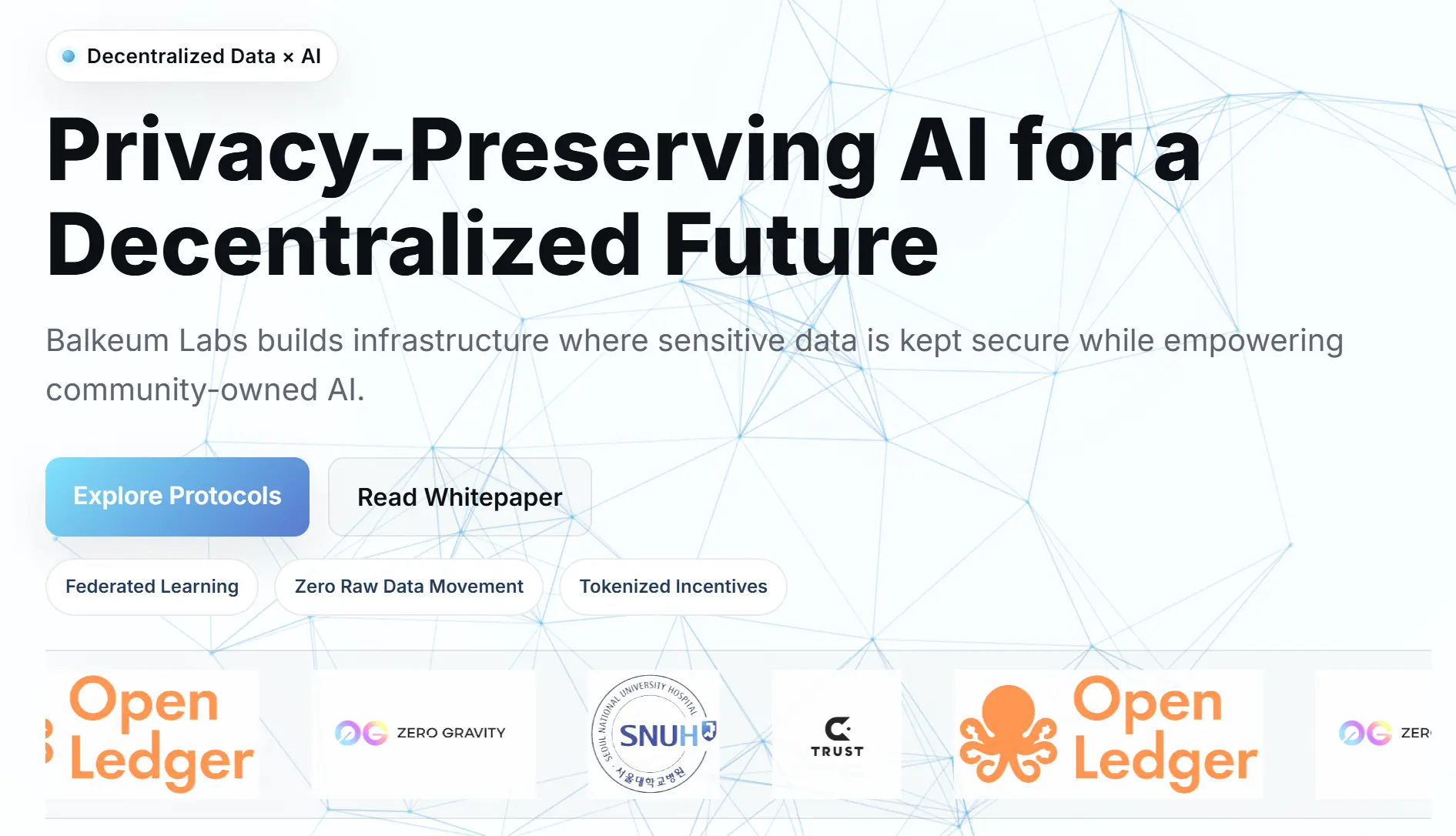
The project also runs the Asia AI × Blockchain Grants Program, an initiative that identifies and funds innovative AI-blockchain projects across the region. Its first grantee was Balkeum Labs, a Korea-based startup.
 Source: Balkeum Labs official website
OpenLedger continues to expand its ecosystem through strategic collaborations with AI and Web3 ventures across multiple verticals. Under the Asia AI × Blockchain Grants Program, the first award went to Balkeum Labs, an AI company specializing in medical and bioinformatics data. Balkeum Labs develops privacy-preserving AI infrastructure that enables individuals to share and analyze personal medical data securely. In partnership with Seoul National University Hospital, the project is building a collaborative data model linking hospitals, research institutions, and individuals. Using OpenLedger’s privacy-preserving learning stack, it ensures transparent medical-data utilization and a fair compensation structure for contributors.
Beyond Balkeum Labs, OpenLedger’s partnerships span the full AI stack—data, compute, models, agents, applications, and wallets. The main categories and representative partners are outlined below.
1. Data Pipes
Projects that convert raw data into “attributed signals” to strengthen AI transparency and provenance. These pipelines serve as curated, domain-specialized data sources for AI model training.
Representative partners: Kaito AI, Ambios Network, Sapien, Xangle, Fraction AI, dFusion AI
2. Compute Rails
Projects creating decentralized GPU infrastructure to scale AI computation and dismantle centralized compute monopolies. These networks provide the computational backbone for model training and inference within OpenLedger’s ecosystem.
Representative partners: Aethir, io.net, Hyperbolic Labs, Exabits, NetMind, Lagrange Foundation, NodeOps
3. Model Cores
Initiatives developing foundational AI model engines—the core of autonomous intelligence. Each project builds verifiable and explainable open models, reinforcing the reliability and transparency of AI systems.
Representative partners: Sentient AGI, Space Labs, 0G Labs, Polyhedra Network
4. Agent Networks
Projects establishing autonomous AI systems capable of proving and attributing their own actions. These networks enable verifiable autonomy, where agents operate transparently with full provenance tracking.
Representative partners: Virtuals, Morpheus, Giza, ChainOpera, Mira Network, NEAR Protocol
5. Apps
User-facing projects built on OpenLedger’s AI infrastructure that translate model capabilities into practical use cases. Each application connects AI functionality with real-world experiences for end users.
Representative partners: EtherFi, LiveArt, DappRadar, Intract
6. Wallets
Projects designing gateways that let users own their data and interact directly with AI services. Wallets act as both the entry point to AI ecosystems and the security layer safeguarding user assets and privacy.
Representative partners: Trust Wallet, Binance Wallet
Partnerships announced in October 2025 further reinforced OpenLedger’s technical base and ecosystem interoperability:
-
LayerZero
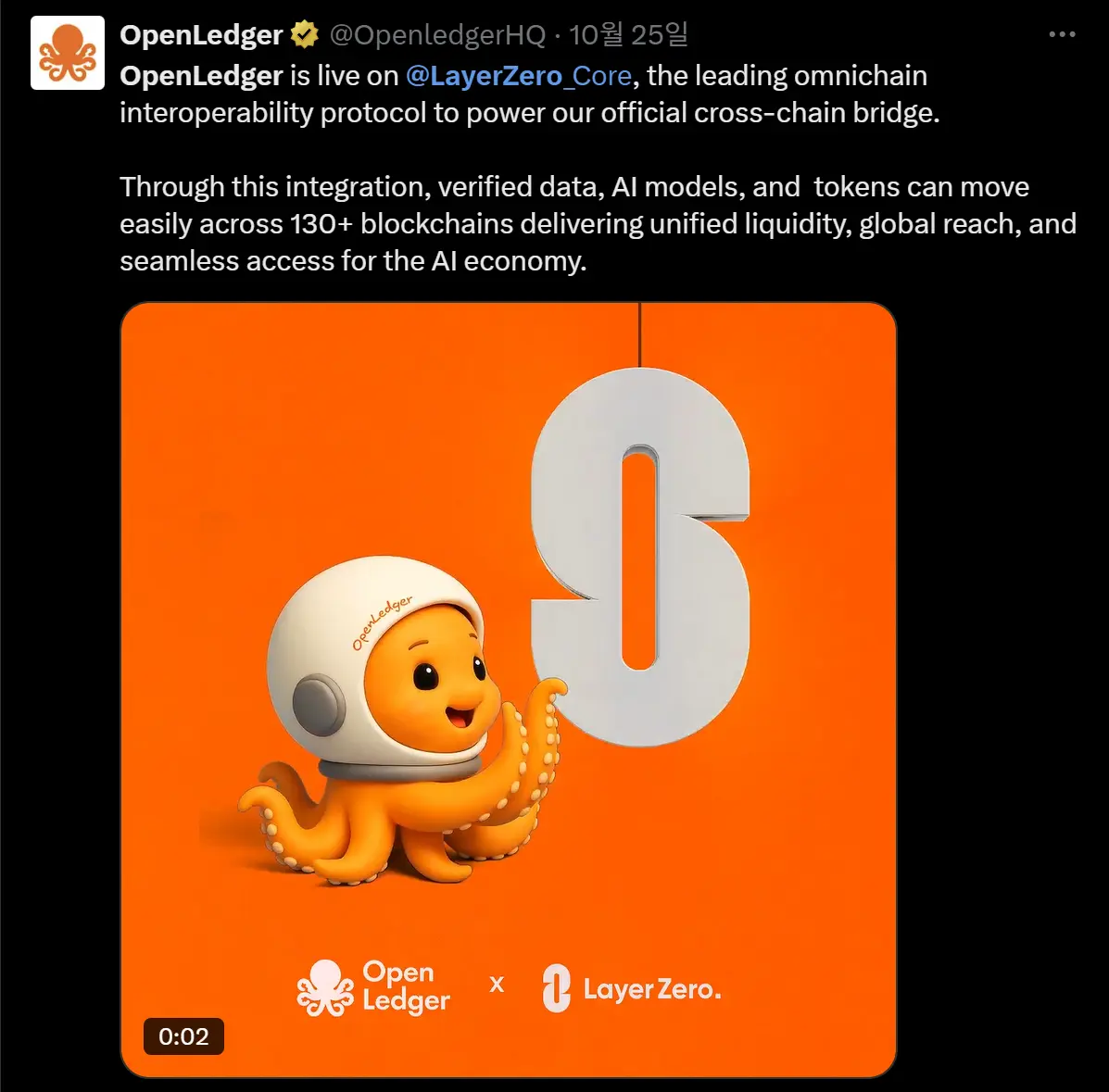
Integration with the global omnichain protocol LayerZero now enables transfer of verified AI data, models, and tokens across 130+ blockchains. This advancement unifies AI-economic liquidity and substantially strengthens OpenLedger’s cross-chain scalability.
-
RedStone
Collaboration with RedStone, a leading on-chain oracle network, introduced a transparent price-oracle layer natively embedded on-chain. The upgrade allows AI systems to function on tamper-proof, verifiable data, improving reliability across DeFi and AI-agent applications.
-
Uphold
Uphold, a U.S.-based digital-asset financial platform, provides institutional-grade OTC services and regulatory-compliance infrastructure that bridge blockchain with traditional finance. Partnering with Uphold grants OpenLedger institutional-level liquidity and compliance rails, strengthening its position as a bridge between decentralized AI and traditional financial systems.
3-4. Post-TGE Roadmap and Long-Term Vision
Following its TGE, OpenLedger has entered a new phase of ecosystem expansion and technological advancement. Its core mission is to establish an AI-native economic infrastructure where data, models, and AI agents autonomously interact, transact, and generate value directly on-chain.
To achieve this, OpenLedger’s post-TGE roadmap is structured around three key pillars: 1) Foundation & Protocol Expansion, 2) Core Protocol & Ecosystem Development, and 3) DeFAI Models & x402 Protocol (AI Agents and DeFi Infrastructure).
1) Foundation & Protocol Expansion
 Source: OpenLedger X
The first pillar focuses on strengthening cross-chain connectivity and data-network infrastructure. By integrating LayerZero, OpenLedger enables seamless transfer of assets and data across multiple blockchains, while Stargate integration facilitates cross-chain liquidity flow. The project also implemented multi-signature governancefor its Omnichain Fungible Token (OFT) contracts to reinforce network security and transparency.
At the same time, the DataNets expansion adds support for a wider variety of data formats — including audio and image datasets — allowing AI models to train on richer, multimodal inputs. A leaderboard system is being designed to promote community participation by managing on-chain reputation and contributor rewards in a transparent manner. This feature will be rolled out alongside the mainnet launch.
2) Core Protocol & Ecosystem Development
The second pillar focuses on expanding the content, storage, and DeFi ecosystems that enable creators, developers, and AI models to grow together. Integration with Story Protocol allows content ownership and creative attribution to be tracked directly on-chain, giving creators the ability to tokenize their works and capture revenue flows from them. This structure ensures transparent copyright management and equitable revenue distribution.
OpenLedger is also building a multi-chain storage layer across Sui, BNB Chain, and other networks, enabling data to remain verifiable and persistent across chains. These efforts together form the backbone for a self-sustaining, on-chain AI economy where data, assets, and content circulate fluidly within a unified environment.
3) DeFAI Models & x402 Protocol (AI Agents and DeFi Infrastructure)
 Source: OpenLedger X
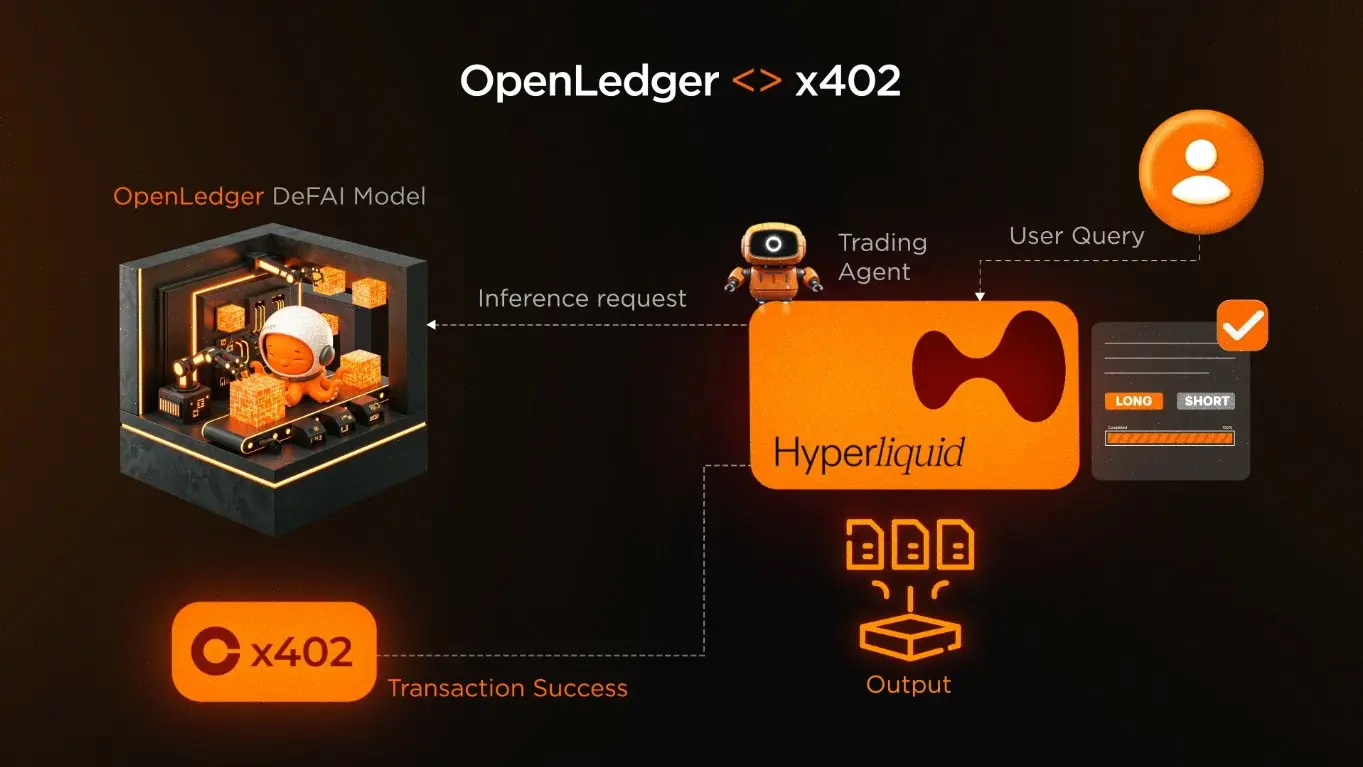
The third pillar aims to realize an autonomous AI economy powered by AI models and agents. OpenLedger is collaborating with Hyperliquid, Aster, and Polymarket to build Power Agents — self-governing AI entities capable of executing automated trading, data arbitrage, and market prediction. These agents rely on real-time data feeds from RedStone and Chainlink oracles, enabling verifiable, on-chain decision-making. Far beyond simple automation tools, they act as independent economic participants, initiating transactions and executing reasoning-based actions on-chain.
The project is also implementing the highly anticipated x402 Protocol, which enables AI systems to transact and settle payments directly on-chain. The protocol adopts the web-standard “402 Payment Required” code to facilitate usage-based (pay-per-use) payments for digital resources such as APIs, data, and GPU compute. When a model inference request or GPU computation occurs, the x402 payment flow handles settlement automatically, while all usage data is recorded immutably through Proof of Attribution (PoA). AI agents are even capable of interacting directly with one another, without intermediaries or API keys, ensuring that all economic activity remains transparent, auditable, and fully on-chain.
OpenLedger’s post-TGE roadmap advances along three tightly connected tracks: 1) Expanding foundational infrastructure to establish a robust technical base; 2)developing the core ecosystem to empower creators, developers, and models; and 3) building DeFAI and AI-agent infrastructure to realize a truly autonomous AI economy. By advancing across these dimensions in tandem, OpenLedger is steadily materializing its long-term vision: an on-chain economy where AI creates, exchanges, and monetizes value independently, redefining how digital intelligence generates and captures economic worth.
4. Rebuilding the Living Internet — A Community-Led Future
The phrase “Dead Internet” ultimately reflects a world where people no longer have a reason to contribute online. OpenLedger tackles this problem with its Proof of Attribution (PoA) framework, which transparently records the origin and usage history of data so that contributors receive fair and verifiable rewards for their work. The project’s vision, however, extends far beyond technical innovation. From its earliest days, including Kaito onboarding, the Cookie.fun campaign, community-driven testnets, and a series of AMAs and offline meetups, OpenLedger has built growth around genuine participation. This human-centered approach has shaped a community that acts not as passive users but as active stakeholders, jointly guiding the project’s evolution and governance.
Within this community structure, anyone can contribute data, help train AI models, and automatically earn rewards via PoA whenever their contributions are utilized. Every action is recorded on-chain, creating a decentralized knowledge economy where creation and compensation circulate transparently — without intervention from centralized servers or corporations. In this emerging model, trust on the internet is rebuilt collectively, no longer dictated by a handful of dominant platforms but upheld by the participants themselves.
The project’s symbol, the octopus, captures this philosophy. Just as its tentacles extend in every direction, the OpenLedger network expands through the contributions of countless individuals and communities. At the end of each tentacle lies human knowledge and experience — connected back to AI models to generate new forms of value. OpenLedger envisions not a future where AI replaces people, but one where humans and communities coexist and evolve alongside AI, co-creating a dynamic, living internet. Wherever those tentacles reach, the once-silent web can come alive again.
Disclaimer
I confirm that I have read and understood the following: The information contained in this article is strictly the opinions of the author(s). This article was authored free from any form of coercion or undue influence. The content represents the author's own views and does not represent the official position or opinions of CrossAngle. This article is intended for informational purposes only and should not be construed as investment advice or solicitation. Unless otherwise specified, all users are solely responsible and liable for their own decisions about investments, investment strategies, or the use of products or services. Investment decisions should be made based on the user’s personal investment objectives, circumstances, and financial situation. Please consult a professional financial advisor for more information and guidance. Past returns or projections do not guarantee future results. This article was written at the request of OpenLedger. All content in this article was written independently by the author(s), and neither CrossAngle nor OpenLedger had any editorial control or influence over the content. The author(s) may hold the cryptocurrencies mentioned in this article at the time of writing.
Xangle or its affiliated partners own all copyrights of the written or otherwise produced materials and content provided on the platform. Any illegal reproduction of such content, including, but not limited to, unauthorized editing, copying, reprinting, or redistribution will result in immediate legal actions without prior notice.