The NodeOps Journey to a More Accessible Web3


Table of Contents
1. Introduction
2. Lowering the Entry Threshold for Blockchain Infra Participation
3. Sustaining Post-TGE Momentum on Real Demand
4. NodeOps’ Sustainable Tokenomics: Converting Revenue into Token Value
5. SafeSend Unlocks Secure Remittance and Ecosystem Expansion
6. Conclusion
1. Introduction
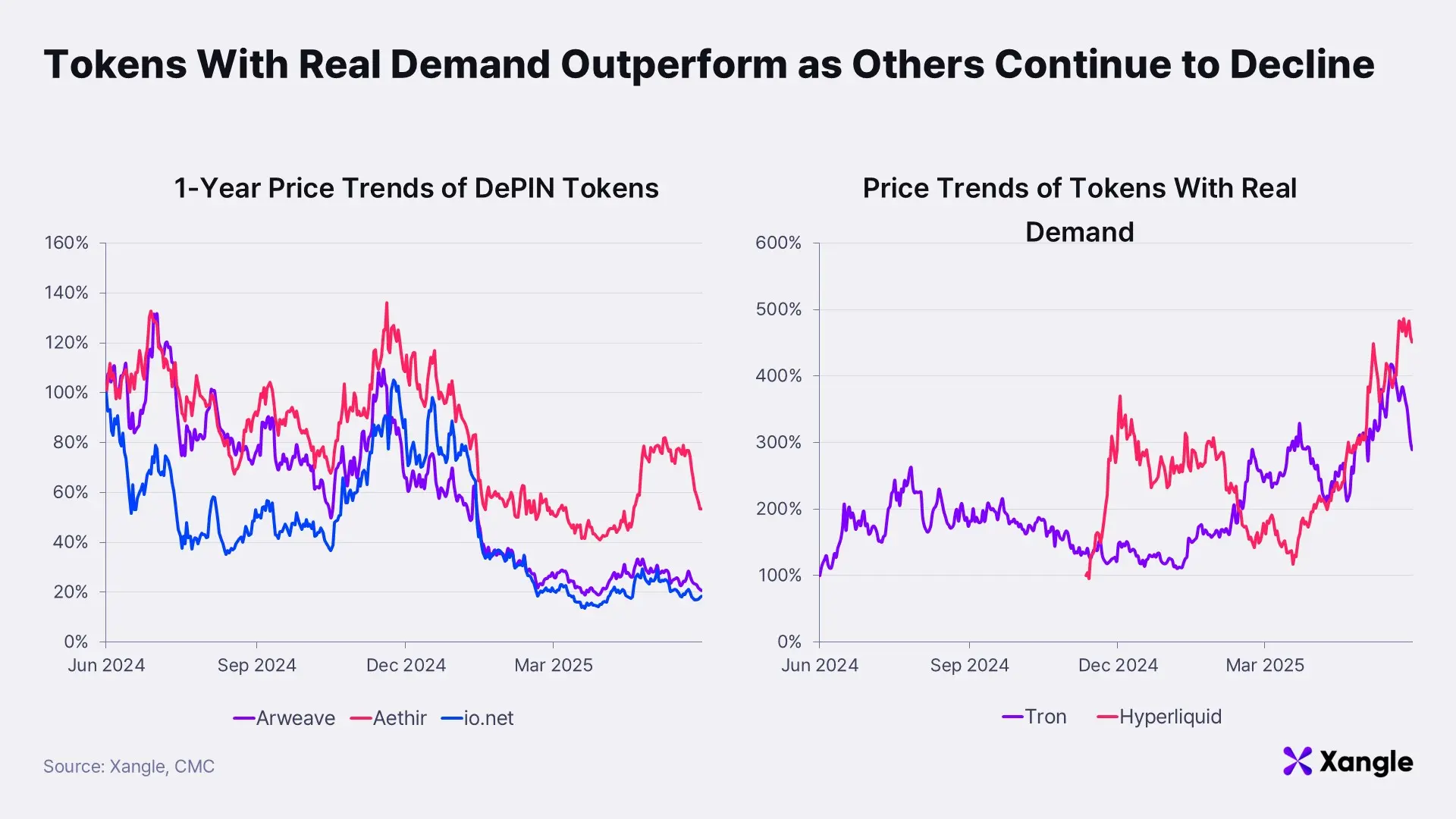
Most blockchain infrastructure and DePIN (Decentralized Physical Infrastructure Network) projects face a steep downturn after their TGE (Token Generation Event). As incentives diminish, user activity and revenue both contract, and token prices inevitably follow. The structural reality behind many so-called “permissionless and decentralized networks” becomes exposed; rather than being sustained by organic participation, they are often propped up by temporary, incentive-driven activity.
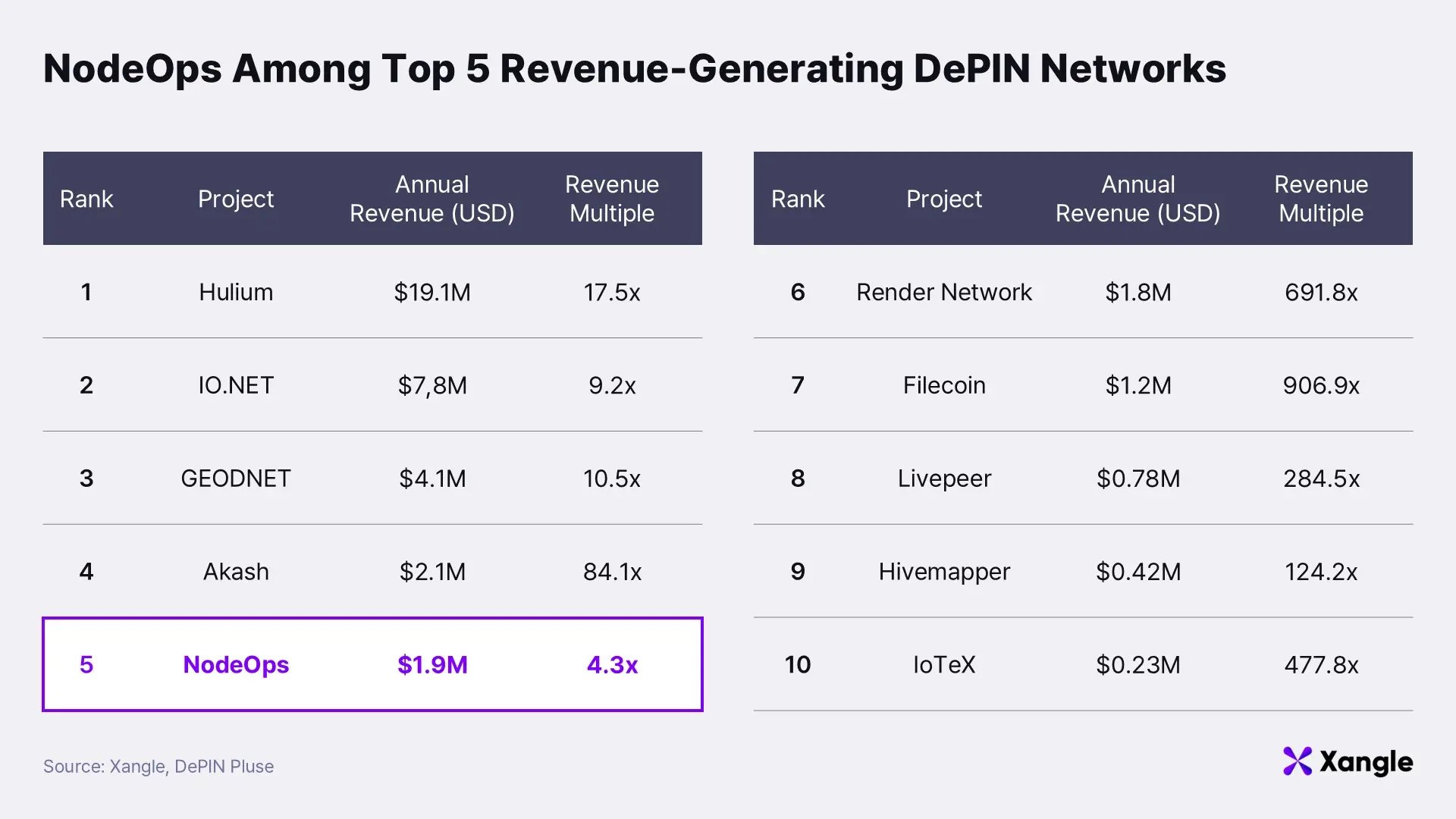
NodeOps, however, has charted an exceptional path. Since completing its TGE in June, the project has continued to post steady revenue, signaling a shift toward sustainable, usage-driven growth beyond short-term incentives. As of October 23, NodeOps ranks fifth among all DePIN projects in annual revenue, while its market-cap-to-revenue multiple stands at 4.3, making it the most undervalued among the top ten.
Understanding how NodeOps has avoided the post-TGE slump requires examining the core problem the project set out to solve — and the vision that underpins its product design.
The core issue is the disconnect between the ideal of “a blockchain anyone can join” and reality. Blockchain networks are premised on permissionlessness, yet only a small minority can actually run nodes and participate directly in network operations. Most remain indirect participants, delegating tokens via staking. The reasons are straightforward: high technical barriers, complex setup, and non‑trivial cost burdens. Under this structure, the decentralization of participation is constrained, and the blockchain’s core values, openness and decentralization, are ultimately distorted.
NodeOps directly targets this structural disconnect. By reimagining node operation as an accessible, productized experience, it lowers the technical threshold for participation and links infrastructure providers with end users in a seamless, demand-driven model. The project is also extending beyond node management toward a general-purpose computing infrastructure layer across AI, data, and cloud — building an environment where anyone can easily become part of the blockchain infrastructure economy.
This report explores how NodeOps has evolved since its TGE and how it is materializing its vision of becoming “infrastructure for everyone.” The analysis centers on the project’s user-driven growth, the sustainability of its revenue architecture, and its potential trajectory for broader ecosystem expansion.
For readers seeking deeper insight into NodeOps’ technical framework and architectural design, refer to Xangle’s earlier report, “NodeOps Brings DePIN Infrastructure to Everyone.”
2. Lowering the Entry Threshold for Blockchain Infra Participation
Before examining NodeOps’ broader trajectory, it is helpful to understand its core product suite. The project’s foundation is built around three primary offerings: NodeOps Console, NodeOps Cloud, and the Staking Hub.
The NodeOps Console is a no-code infrastructure management tool built to remove the technical barriers to running blockchain nodes. Users can deploy and manage validator, pool, or light nodes from a web interface—without complex server configuration or command-line execution. The Console integrates automated scripting and maintenance systems, enabling upgrades and security management to run seamlessly after deployment. As a result, non-technical users can participate in infrastructure operations, while developers and project teams scale networks more efficiently. This architecture provides a practical foundation for deeper decentralization across blockchain networks.
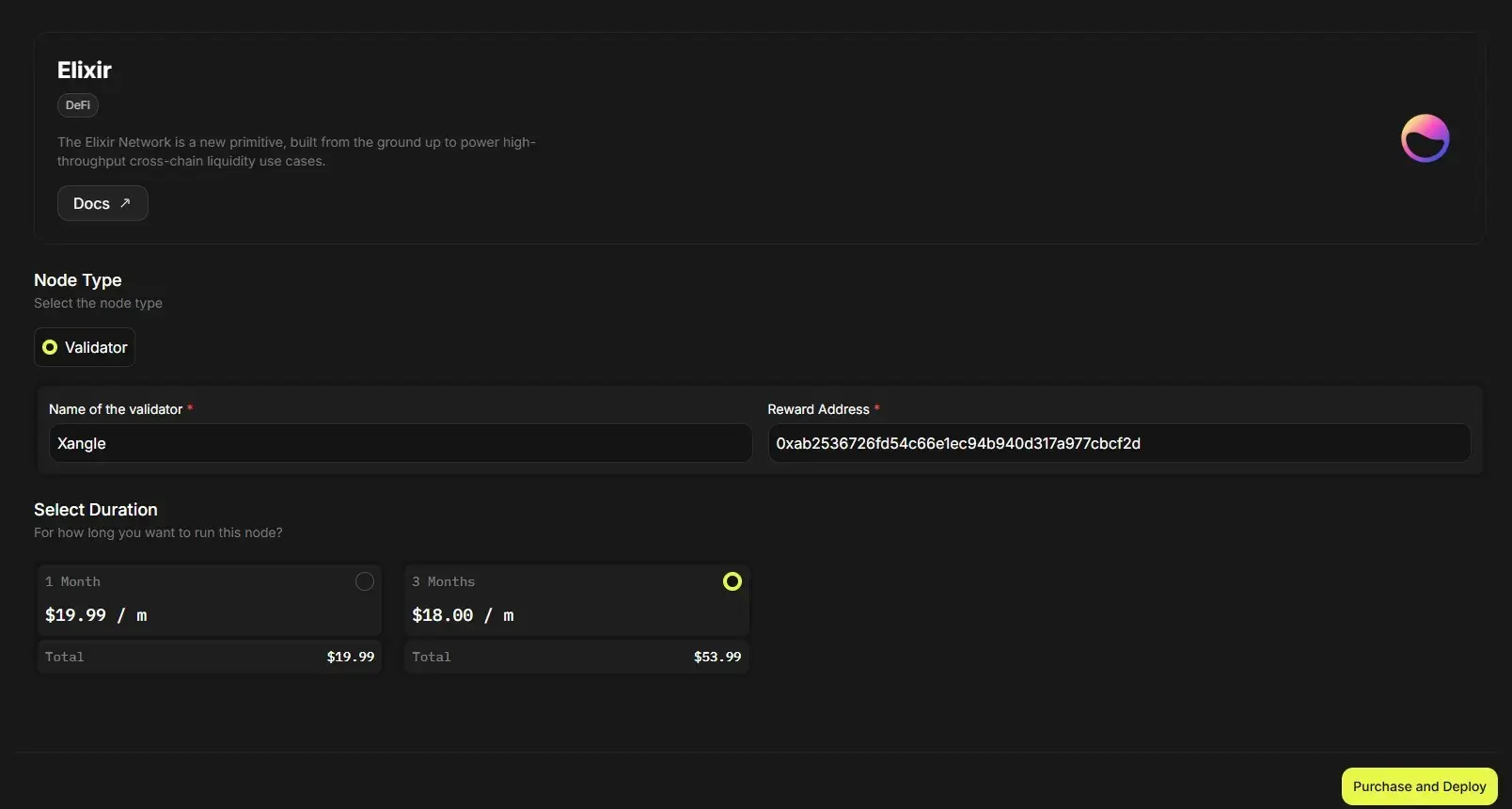 A validator node on Elixir can be deployed simply by entering the validator name and the wallet address to receive rewards. (Source: NodeOps)
The NodeOps Cloud functions as a decentralized cloud marketplace for supplying and consuming computing resources in a peer-to-peer model. It supports diverse computational workloads — from AI training and data processing to game server hosting and blockchain node management. Anyone can connect their own servers or idle capacity to become a provider. Providers earn real-time rewards proportional to their contributed resources, while users can access flexible, cost-efficient compute power on demand. This two-sided open model fundamentally addresses the resource monopolization and allocation inefficiencies inherent to centralized cloud systems. As global demand for high-performance compute, particularly GPUs, surges, NodeOps Cloud emerges as a practical alternative capable of alleviating supply bottlenecks at a global scale.
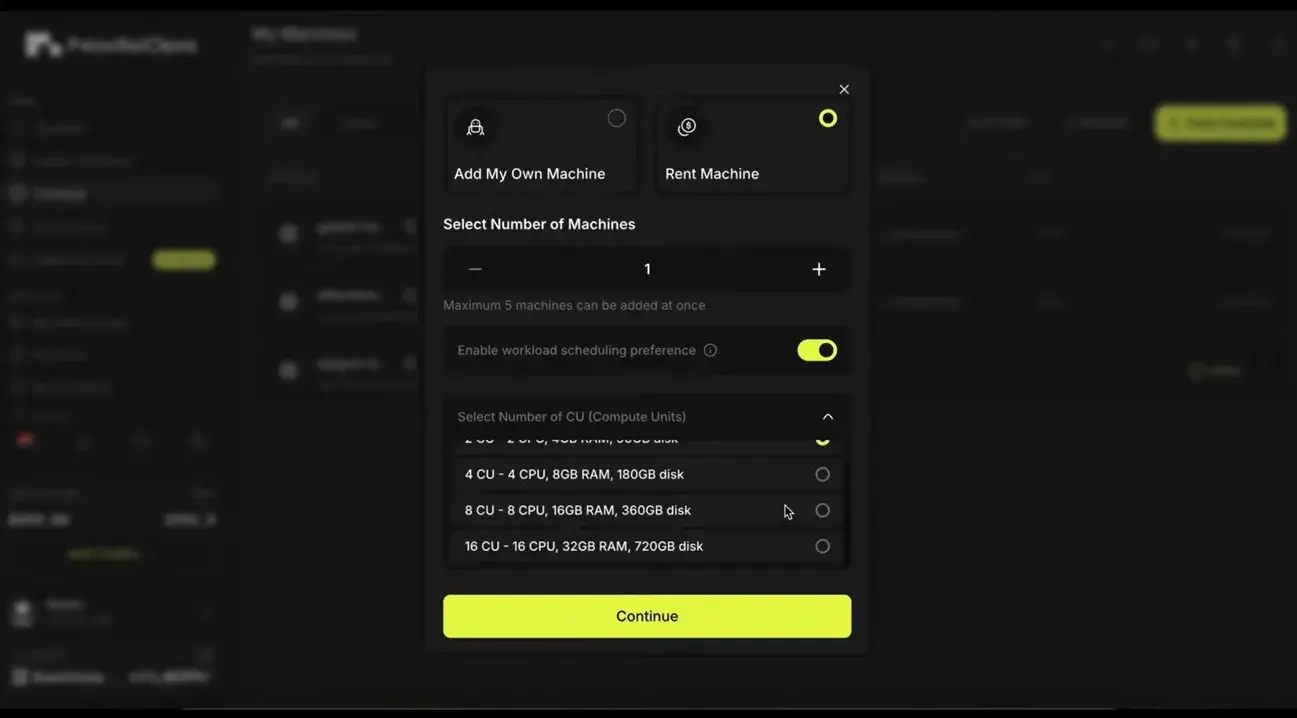 Renting computing power on NodeOps. (Source: NodeOps) - For a detailed walkthrough, see this video.
The Staking Hub completes the suite — an integrated, non-custodial interface built to resolve the fragmented and complex staking experience that has long characterized PoS networks. Traditional staking often requires chain-specific interfaces, manual validator selection, and cumbersome delegation management, resulting in low accessibility and complicated reward tracking. NodeOps addresses these frictions by enabling multi-network staking within a single no-code interface. Users can start staking in a few clicks, without any technical setup. While NodeOps operates validator infrastructure on behalf of delegators, it employs a non-custodial design that ensures users retain full control of their assets. The result is a system that combines trust, transparency, and complete ownership, allowing anyone to participate securely and easily in the staking process.
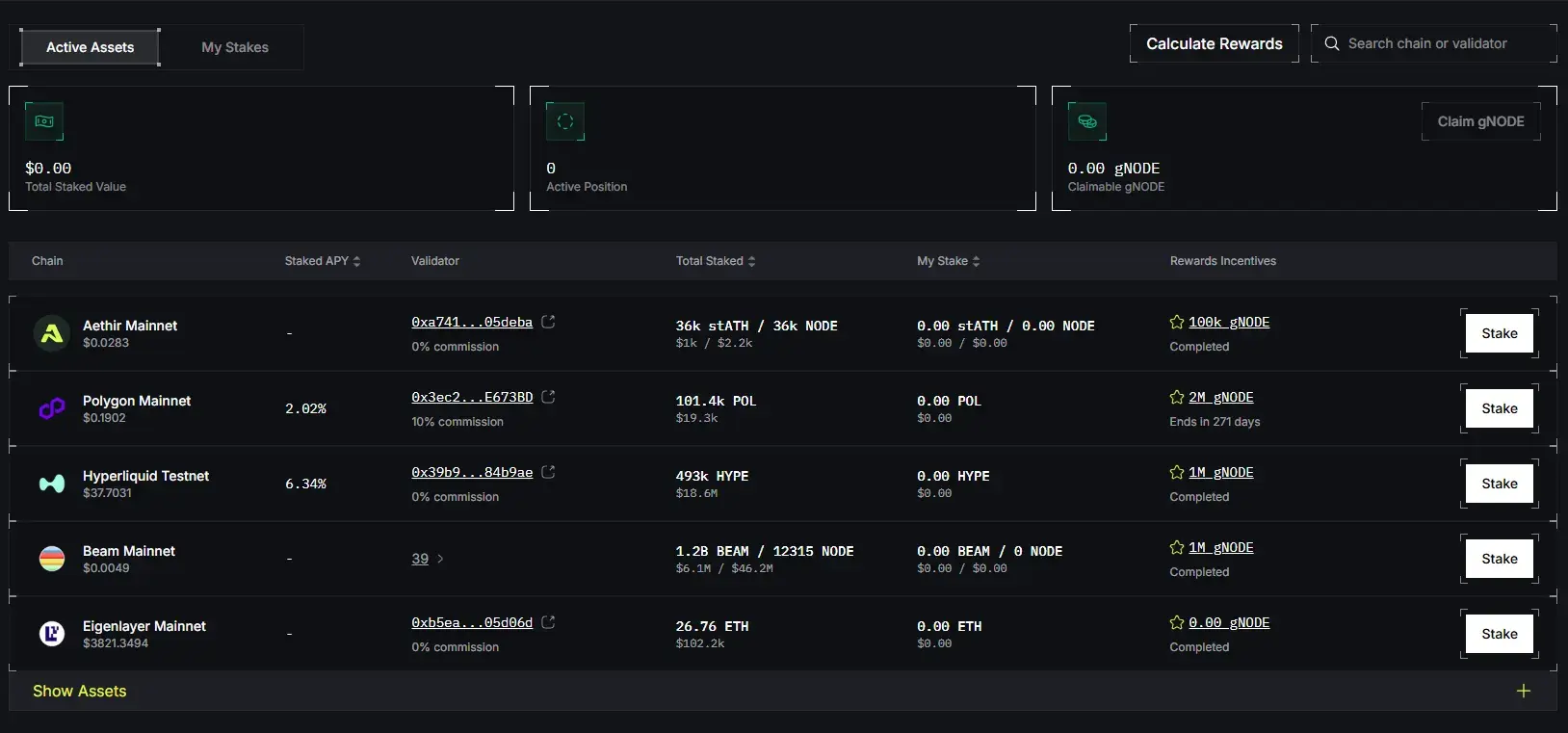 NodeOps Staking Hub Dashboard (Source: NodeOps)
3. Sustaining Post-TGE Momentum on Real Demand
In most cases, a project’s growth momentum slows sharply after its TGE. Users who entered for short-term incentives often engage not out of genuine product demand, but to claim airdrops and rewards. A clear example is Ethereum Layer-2 project Blast, which recorded around 180,000 daily active users at the time of its TGE. That number has since fallen to fewer than 5,000, a decline of nearly 98%, with revenue collapsing by roughly 99% over the same period.
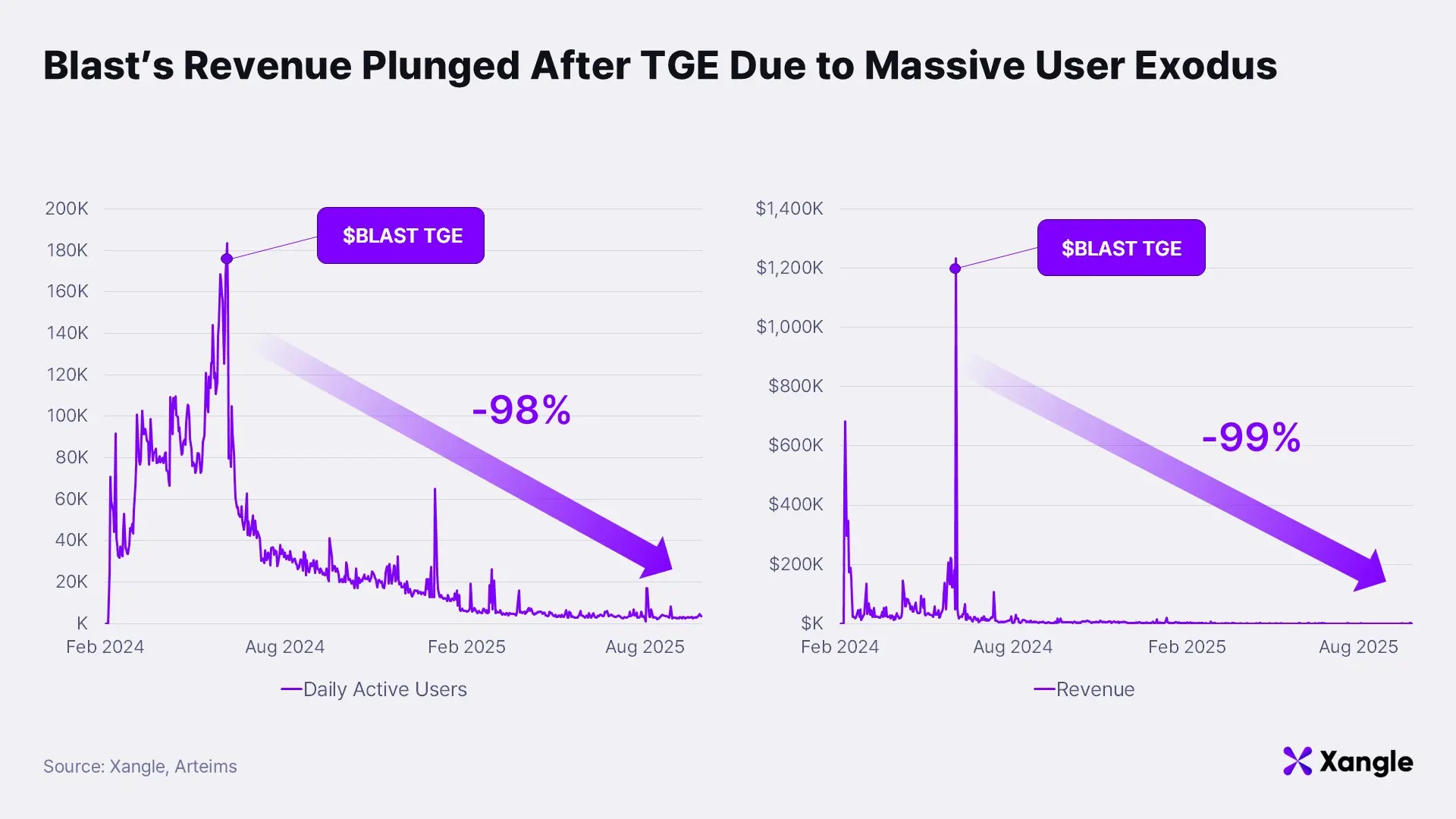
NodeOps, by contrast, has become a rare exception—one of the few projects maintaining stable revenue even after its TGE. The continued performance is notable, even accounting for the presence of ongoing incentive programs.
Active demand across both the NodeOps Console and NodeOps Cloud continues to generate a consistent revenue stream. According to Dune Analytics, NodeOps’ cumulative revenue has reached approximately $4.45 million, with quarterly figures of $630,000 in Q1 2025, $670,000 in Q2, and $570,000 in Q3.
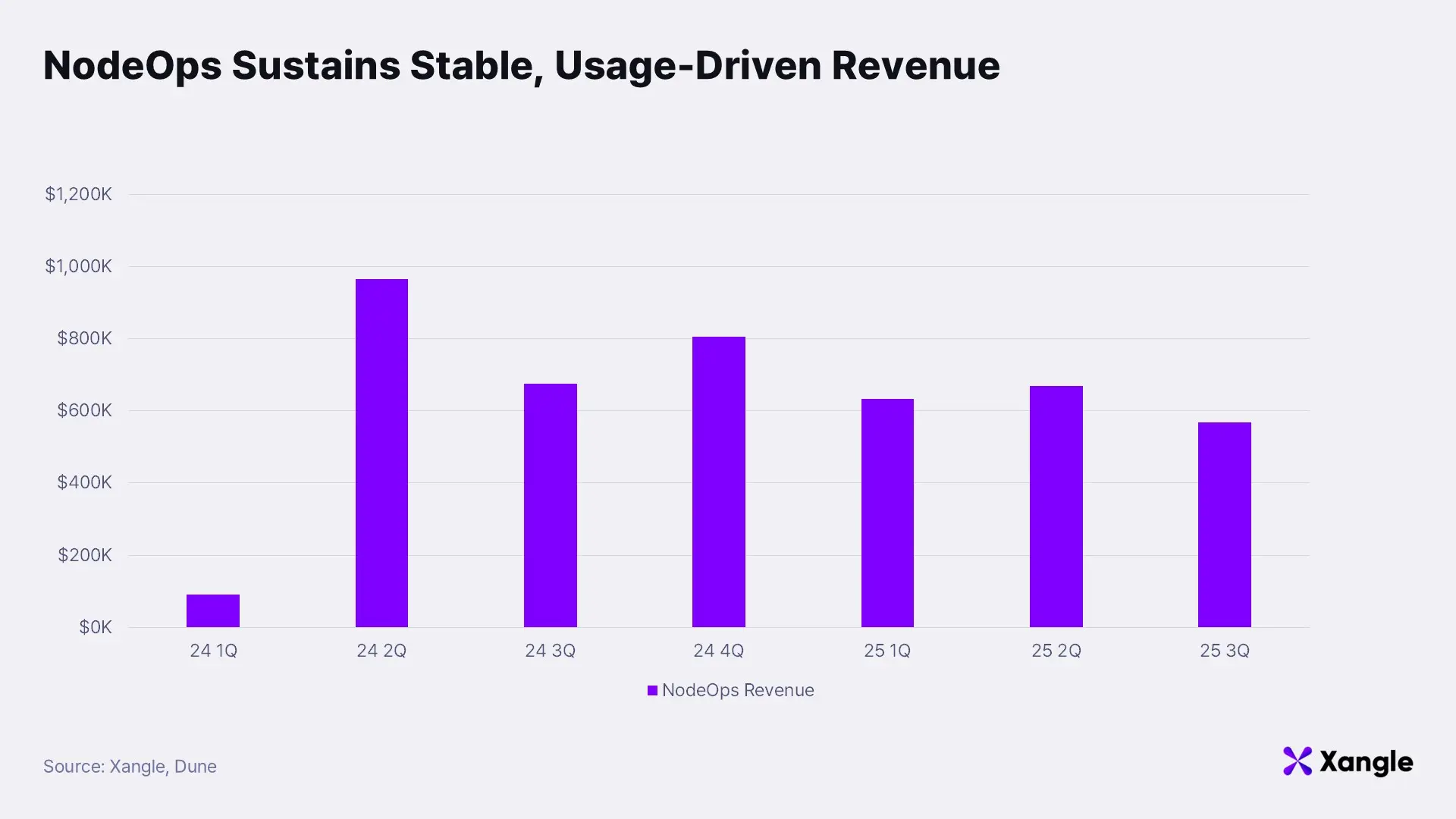
A closer breakdown shows that revenue originates from node deployment demand across multiple ecosystems, including UNO, Aethir, and Beam. This highlights that the NodeOps Console is actively underpinning infrastructure operations across diverse blockchain networks.
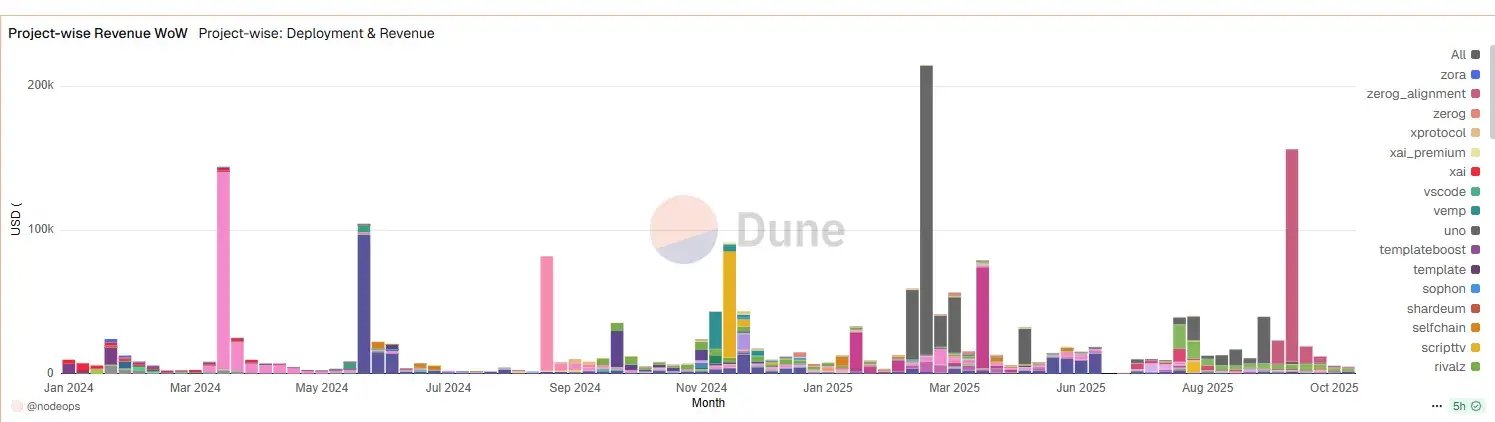 Source: Dune(@NodeOps)
Such indicators suggest that NodeOps is moving well beyond short-term, incentive-driven models—positioning itself as a sustainable DePIN infrastructure platform built on real usage and recurring revenue. By consistently generating on-chain, usage-driven income even after its TGE, NodeOps stands out as a demonstrable example of genuine value creation within the DePIN sector.
4. NodeOps’ Sustainable Tokenomics: Converting Revenue into Token Value
NodeOps’ tokenomics are designed not merely to distribute incentives, but to convert real protocol-generated revenue into token value. While most DePIN projects adopt inflationary issuance models to attract early participants, such mechanisms inevitably lead to oversupply and value dilution over time. In contrast, NodeOps issues tokens only when revenue is generated, and ties token burns directly to network utilization, ensuring that actual economic activity translates into token scarcity.
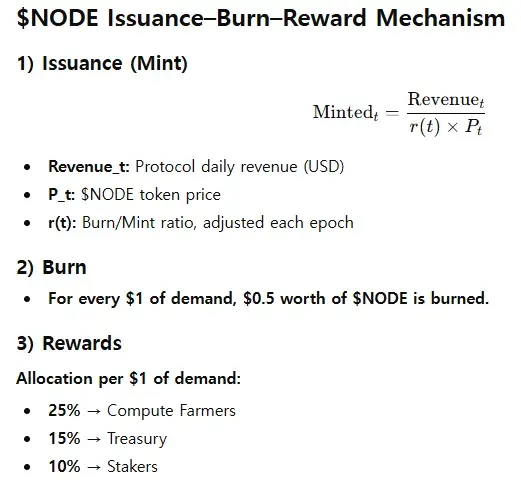
At the core of NodeOps’ model lies a Dynamic Mint-and-Burn (dMdB) mechanism. Unlike fixed issuance systems, it automatically adjusts the minting of $NODE based on on-chain variables such as network revenue and market price. In effect, no revenue leads to no issuance, and higher revenue triggers proportional burns. This self-regulating structure maintains equilibrium between network growth and token supply, enabling a sustainable, controlled-inflation incentive model aligned with real network activity.
The detailed issuance and burn mechanism operates as follows:
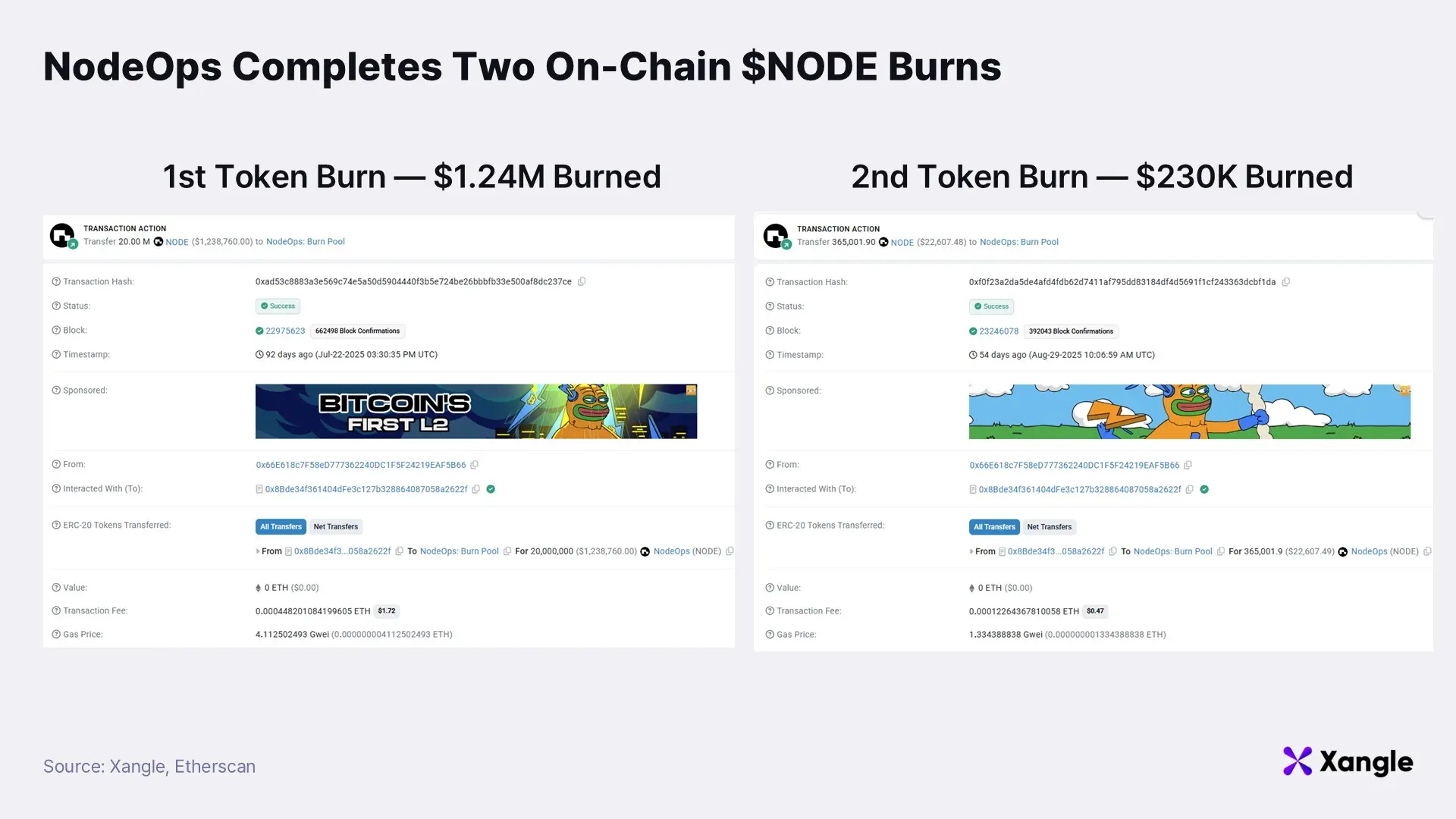
In July and August 2025, NodeOps conducted two rounds of permanent burns, removing a total of 20,365,011.90 $NODE from circulation; equivalent to roughly 3% of total supply and 18% of circulating supply at the time. Each burn was sent to a single verifiable on-chain address, permanently locked as a burn address that cannot be recovered or re-transferred at the contract level. These transactions represent irreversible, protocol-level supply reductions, not marketing-driven events. More importantly, these two burns marked a structural inflection point, which is the first tangible link between protocol revenue and token value transfer at the economic layer of the network.
In mid-July, $NODE traded around $0.05, rising to $0.10–$0.12 by late August after the two burn events. While overall market dynamics naturally influenced price movements, the combination of supply contraction expectations and verifiable, revenue-backed burns reinforced the token’s scarcity narrative. Following these burns, NodeOps reduced its total supply from 678 million to 658 million, and its circulating supply from 133 million to 113 million. These figures underscore that a systemic, revenue-driven deflationary mechanism is now active — not a temporary marketing exercise.
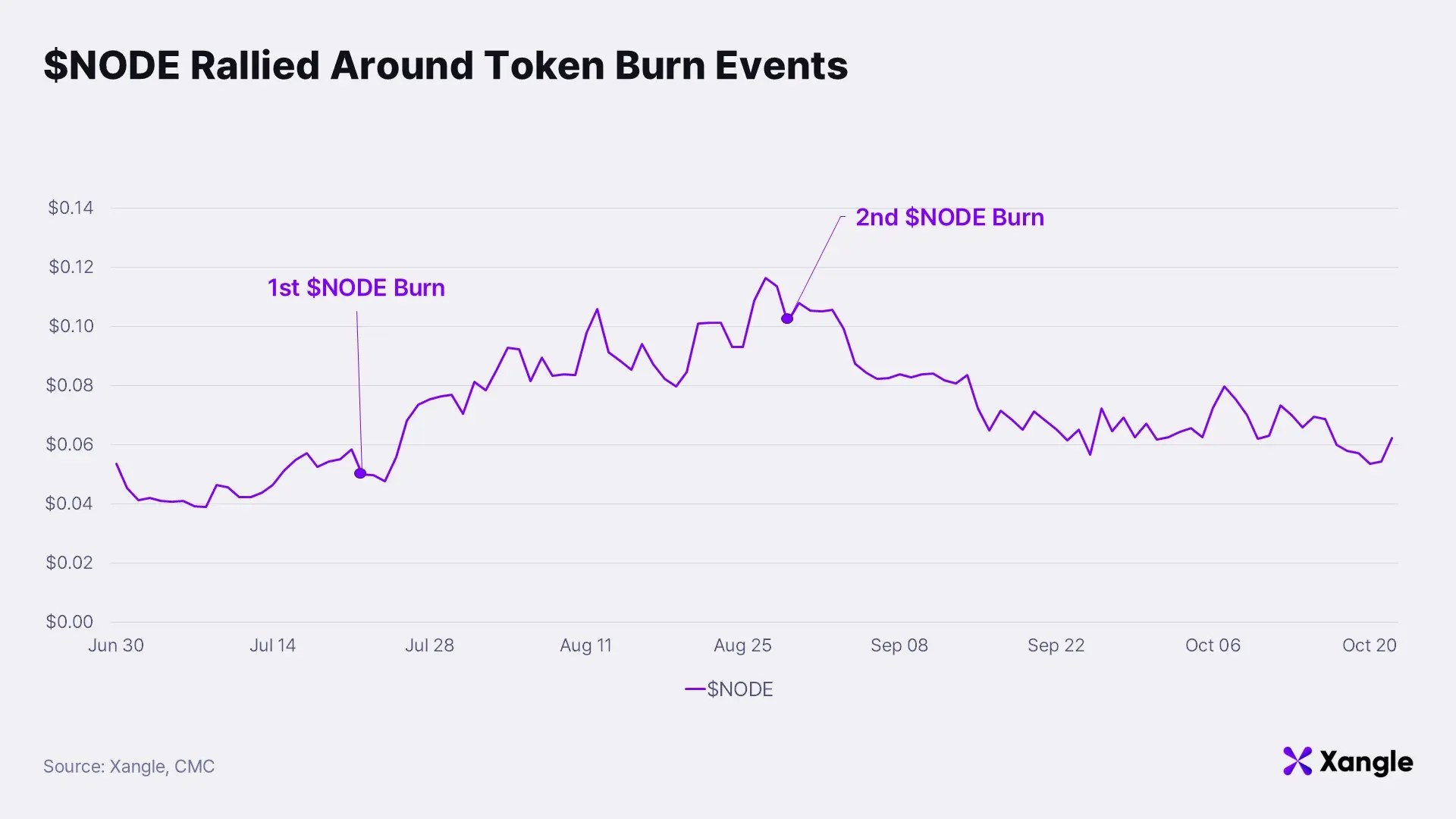
At the heart of NodeOps’ dMdB architecture is the principle of “burn as you earn.” Revenue generated from infrastructure services automatically triggers on-chain burns, all aggregated into a single immutable address. The token’s value, therefore, is not rooted in speculative expectations, but in verifiable deflation directly backed by real revenue flow. When the network grows, token value strengthens; when revenue slows, supply self-adjusts. In doing so, NodeOps achieves a self-balancing, revenue-synchronized token economy, where protocol activity and token value remain structurally aligned.
5. SafeSend Unlocks Secure Remittance and Ecosystem Expansion
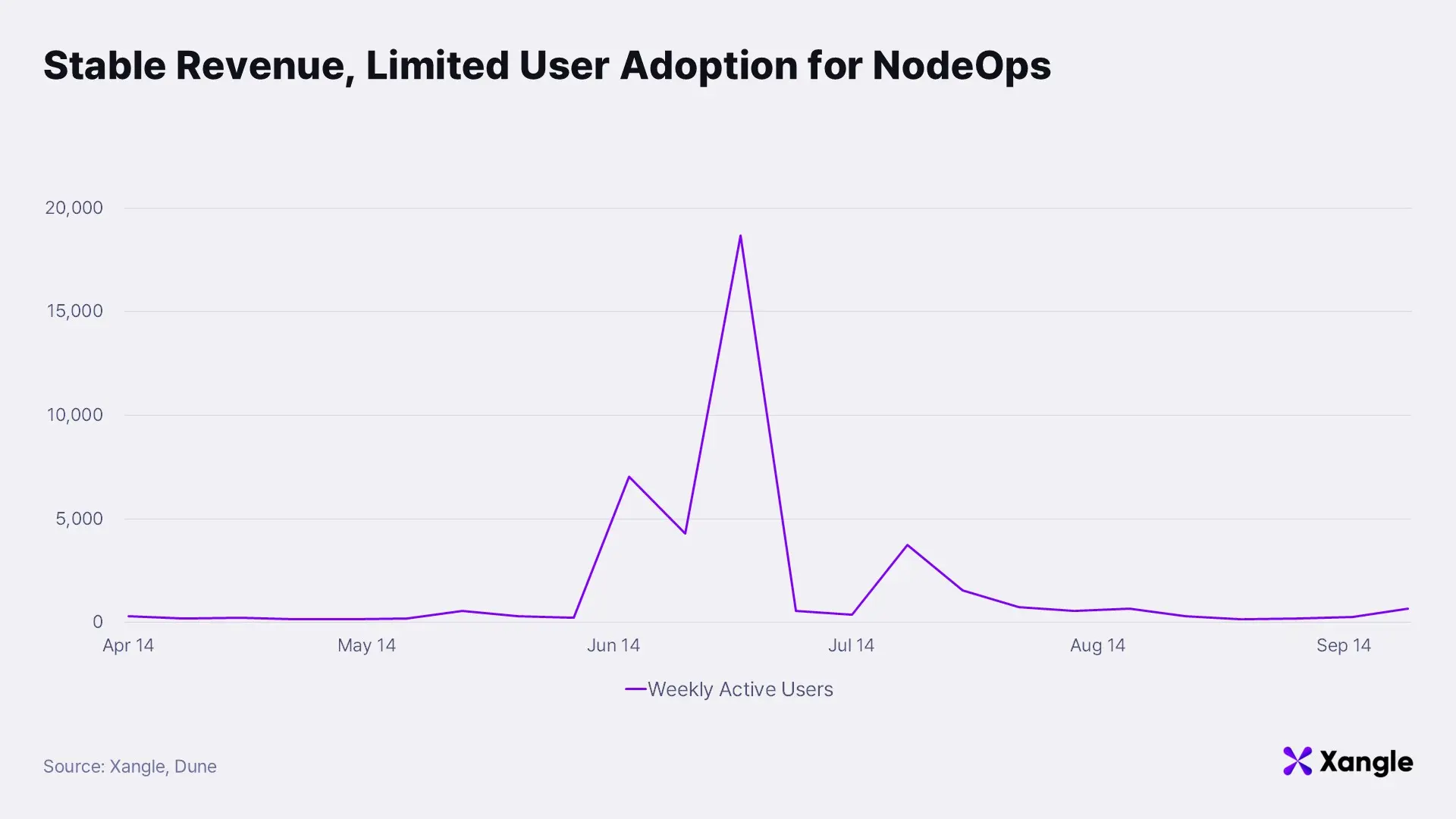
Although NodeOps has maintained stable revenue even after its TGE, the project still faces the challenge of ecosystem expansion. This is because, while there is some demand for direct participation in blockchain infrastructure, that demand remains limited in scale. Only a small fraction of users actually operate nodes or participate in staking, while the vast majority continue to view blockchain infrastructure as a “background technology,” which something they need not understand or interact with directly. As a result, NodeOps’ overall user base remains relatively small. Excluding the temporary surge in users around its TGE, the project’s average weekly active user count hovers around 600.
Against this backdrop, NodeOps identified a new expansion opportunity in the global remittance market. Today, a large portion of real, consistent demand for blockchain networks originates from cross-border payments. Blockchain-based remittances offer clear advantages: fast settlement speeds, low transaction costs, and round-the-clock global accessibility.
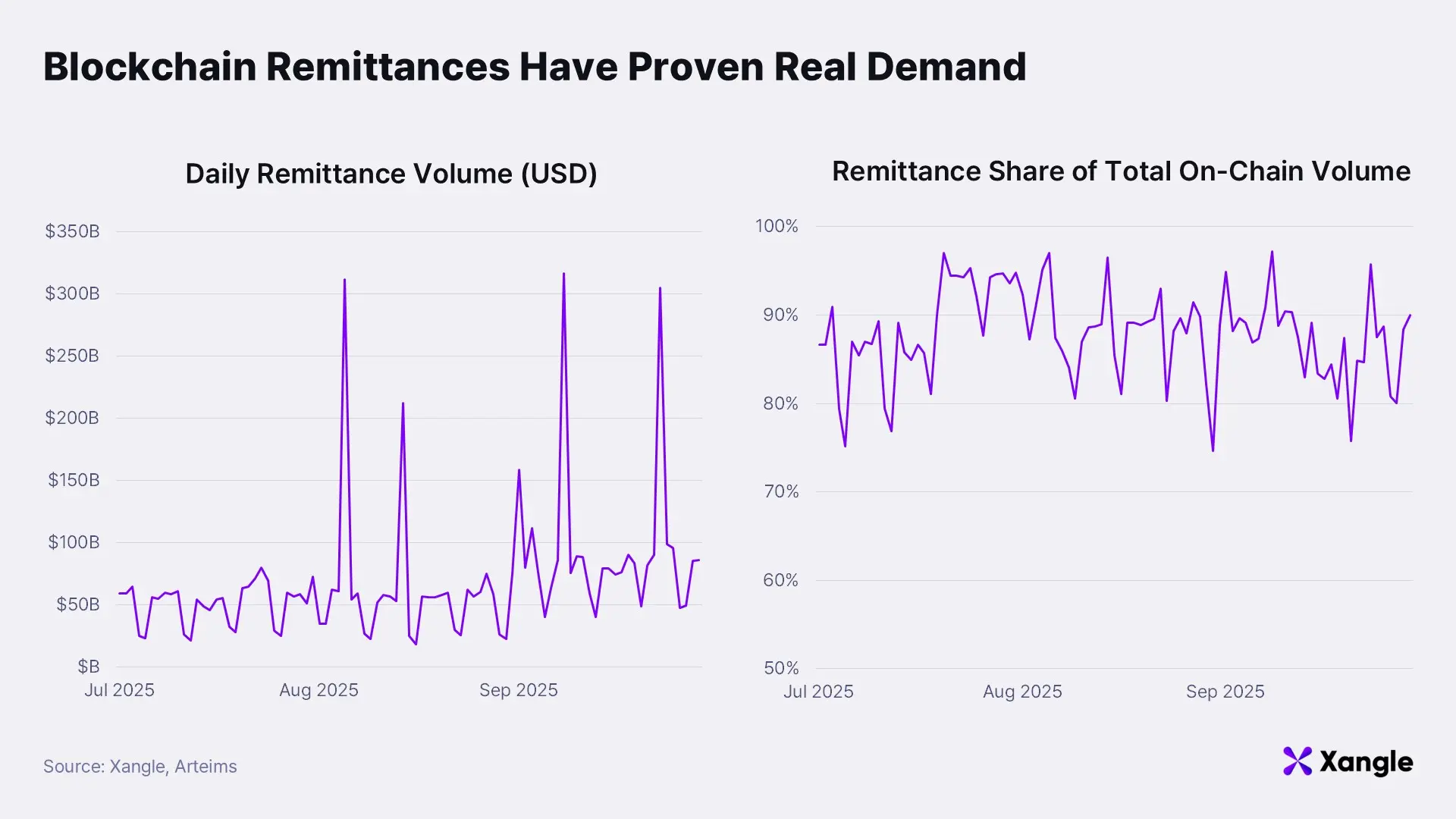
Market data reinforces this trend. Over the past three months, average daily on-chain remittance volume has reached approximately $69 billion, accounting for about 88% of total blockchain transactions. This highlights that remittances have become not merely one use case but the most universal and tangible demand driver in the blockchain ecosystem. In particular, stablecoin-based remittances are expanding rapidly in emerging markets, and recently, even institutional participants have begun to adopt them.
However, blockchain-based remittances still face fundamental frictions and risks. First, an incorrect address or chain selection makes the transaction impossible to reverse. Second, users remain vulnerable to malicious smart contracts or unlimited approvals that can result in permanent asset loss. Third, test transfers are often performed manually, creating duplicated fees and operational friction. Such issues represent key obstacles to mainstream adoption. For the blockchain remittance market to mature, it must offer a seamless user experience and institutional-grade security, both of which are critical for gaining trust beyond the retail segment.
To address these issues and broaden practical on-chain usage, NodeOps launched SafeSend, a remittance security solution, in October 2025. SafeSend is designed to automatically detect and block user errors and security risksduring transfers, simplifying the flow while reinforcing reliability and user confidence.
Specifically, SafeSend combines test-transfer verification with a two-step decentralized approval process. Users can connect their wallets via the official SafeSend website, and before initiating a main transfer, the system automatically performs a small test transaction to verify the recipient address and transaction parameters. Once successful, a Telegram-integrated approval step is triggered, allowing both sender and recipient to confirm the transaction outcome through the SafeSend bot. The final transfer executes only after approval from both parties. The entire process completes in just a few clicks, requiring no additional wallet installations or complex configuration. Every remittance is recorded on-chain for auditability, and transaction logs allow real-time monitoring by users.
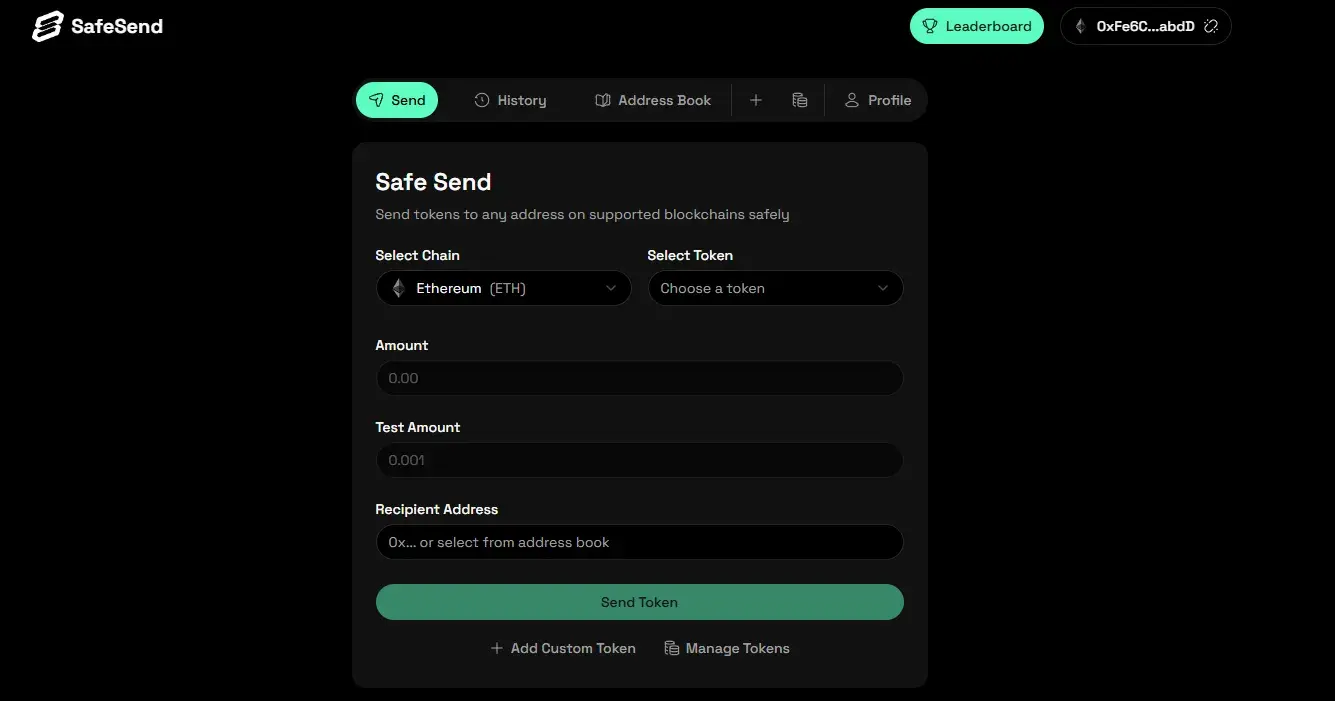 SafeSend transaction interface (Source: SafeSend)
6. Conclusion
This report has examined the evolution of the NodeOps ecosystem following its TGE. Even after token issuance, NodeOps has managed to maintain a stable level of users and revenue, demonstrating the potential to evolve from a short-term, incentive-driven project into a sustainably growing, real-usage-based network. Notably, NodeOps’ revenue-linked token burn mechanism represents a significant innovation in blockchain infrastructure design — creating a direct connection between protocol-level economic activity and token value. This structural experiment introduces a new paradigm for DePIN projects: one where token economies are backed not by rewards or speculation, but by real revenue and economic productivity.
Advancing to the next stage hinges on translating that stable revenue base into broader real‑world usage. Revenue is recurring, but the user base remains constrained; closing the gap will require clear, user‑facing service expansion. In that context, the launch of SafeSend constitutes the first substantive move from the infrastructure layer toward direct, real‑usage touchpoints.
Looking ahead, the key watchpoint is whether SafeSend and other real-world use cases can generate sustained demand — and whether that demand, in turn, can strengthen the usage–revenue–burn flywheel between real economic activity and token value. If that flywheel builds momentum, NodeOps will establish itself not merely as an infrastructure provider, but as a self-sustaining blockchain network with a robust, revenue-backed economic model.
Disclaimer
I confirm that I have read and understood the following: The information contained in this article is strictly the opinions of the author(s). This article was authored free from any form of coercion or undue influence. The content represents the author's own views and does not represent the official position or opinions of CrossAngle. This article is intended for informational purposes only and should not be construed as investment advice or solicitation. Unless otherwise specified, all users are solely responsible and liable for their own decisions about investments, investment strategies, or the use of products or services. Investment decisions should be made based on the user’s personal investment objectives, circumstances, and financial situation. Please consult a professional financial advisor for more information and guidance. Past returns or projections do not guarantee future results. This article was written at the request of NodeOps. All content in this article was written independently by the author(s), and neither CrossAngle nor NodeOps had any editorial control or influence over the content. The author(s) may hold the cryptocurrencies mentioned in this article at the time of writing.
Xangle or its affiliated partners own all copyrights of the written or otherwise produced materials and content provided on the platform. Any illegal reproduction of such content, including, but not limited to, unauthorized editing, copying, reprinting, or redistribution will result in immediate legal actions without prior notice.