
CIS 2026 Recap

Table of Contents
1. Introduction
2. Institutional Forum: Financial Infrastructure Transition
3. Retail Program: Onboarding and Market Engagement
4. Conclusion
1. Introduction
The blockchain industry has undergone a rapid structural transformation over the past few years. Early narratives were centered on decentralization as a technological alternative to the legacy financial system, with emphasis on disruption and replacement. Over time, however, asset ownership structures have steadily shifted toward institutional concentration. In jurisdictions such as the United States, digital assets are now even being considered for inclusion as strategic reserve assets.
At the same time, repeated security incidents and high-profile exploits have expanded skepticism toward decentralization. The center of gravity has consequently shifted. The discussion now focuses less on decentralization itself and more on how blockchain infrastructure can integrate with and extend the existing financial system. The digital asset market is no longer defined by niche communities or so-called “degens.” Institutional investors and financial institutions are now entering in scale, marking a clear transition into a new phase.
At the core of this shift are RWA tokenization, stablecoins, and on-chain financial infrastructure. Asset tokenization efforts, including Security Token Offerings (STOs), go beyond digitizing traditional financial products; they reshape transaction structures and liquidity formation itself. In parallel, stablecoins have evolved from simple settlement instruments into global payment and value transfer rails, rapidly expanding their interface with traditional finance. Digital assets are no longer positioned as an alternative system. They are being absorbed into the financial system from within.
Against this backdrop, Xangle organized CIS 2026 to more concretely frame the future direction of the digital asset market. The event was held over three days from April 17 to 19. Day 1 took the form of a closed, institution-focused forum, bringing together institutional investors, financial institutions, and global projects, with approximately 300 participants. Discussions centered on structural themes: regulation, asset tokenization, stablecoins, and on-chain financial infrastructure.
Days 2 and 3, in contrast, were designed as open, retail-focused events. Approximately 1,500 participants attended, and the program combined conference sessions with interactive booth experiences. The structure went beyond a conventional event format and functioned as an onboarding layer, enabling participants to not only understand digital assets but engage with them directly.
CIS separated institutional discourse from retail participation while maintaining a clear linkage between the two. Institutions led discussions around infrastructure, regulation, and asset structures. Retail participants engaged through experience and application. Market expansion at scale requires this sequencing. Institutional infrastructure must come first, followed by user adoption layered on top. CIS 2026 ultimately demonstrated how this transition is already underway.
2. Institutional Forum: Financial Infrastructure Transition
2-1. Institutional Adoption and Strategic Repositioning
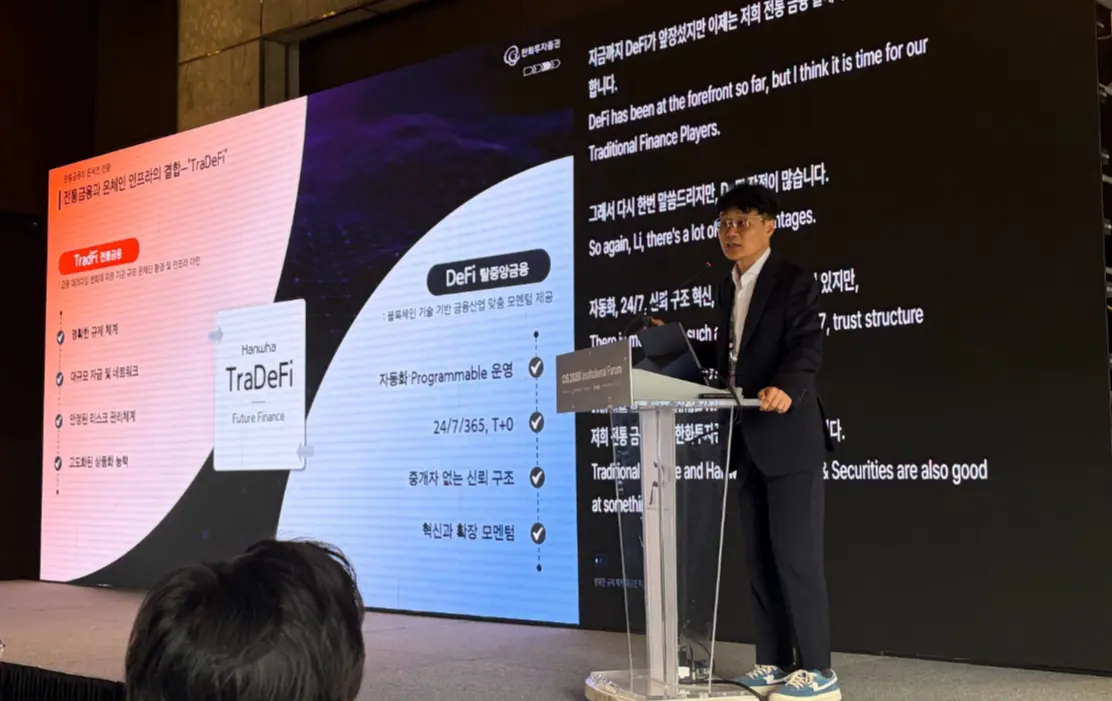 Hanwha Investment & Securities, CSO Jongmin Son
The institutional forum highlighted how financial institutions are approaching the digital asset market and how their strategies are evolving. Major players such as Hanwha Investment & Securities, Meritz Securities, Hana Securities, and Toss Bank participated, indicating that efforts to incorporate digital assets into core financial business are moving into a more active phase.
Son Jongmin, CSO of Hanwha Investment & Securities, presented one of the clearest frameworks for understanding this shift. His presentation centered on the concept of “TraDeFi,” describing how traditional finance (TradFi) and decentralized finance (DeFi) can be combined within a single structure. The focus was not on replacement, but on integration. Trust and regulatory frameworks from TradFi are combined with the efficiency and continuous execution of on-chain systems. In this model, digital assets function as an extension of the existing financial system rather than an alternative to it.
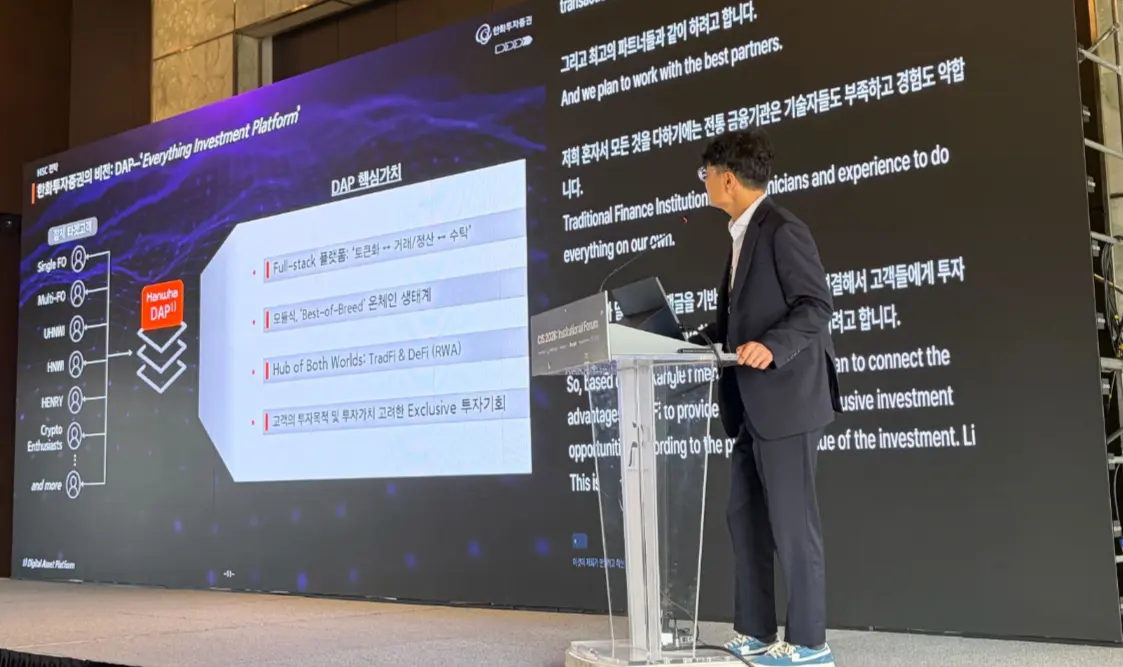 Hanwha Investment & Securities, CSO Jongmin Son
He also explained that the firm is developing a Digital Asset Platform (DAP) based on this direction. The goal is to create an environment where various asset classes can be invested in on-chain. DAP is not limited to digital asset trading. It is designed as an integrated platform where equities, bonds, and real-world assets can be issued, distributed, and invested in within a single on-chain framework. This effectively replaces fragmented, asset-specific investment channels with a unified structure.
The implications extend beyond adding new products. The approach reshapes the full investment process, from issuance to distribution to user experience. On-chain systems provide clear advantages in speed, cost, and accessibility. When combined with potential links to global assets, this model could contribute to a broader structural expansion of capital markets.
2-2. Regulatory Gaps in the Korean Market
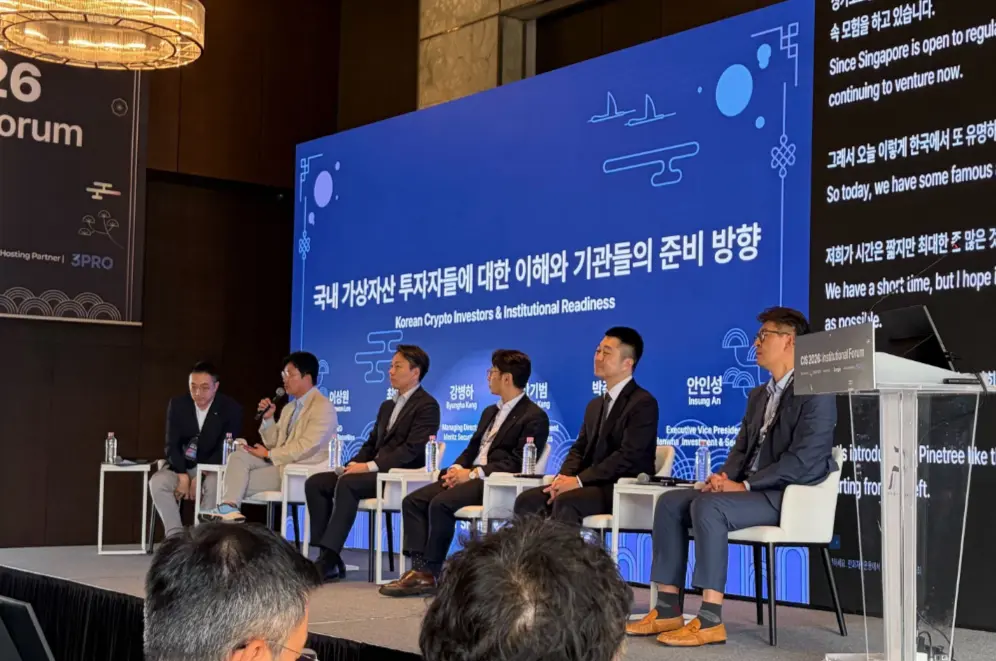
The following session, “Korean Crypto Investors & Institutional Readiness” brought together representatives from major financial institutions, including Hanwha Asset Management, Meritz Securities, Hana Securities, Toss Bank, Hanwha Investment & Securities, and PineTree Securities. The discussion converged on a single issue: regulation. The concern was not that regulation is excessive, but that clear standards are missing. There is no consistent definition of how digital assets should be treated within the institutional framework. Without clarity on what is permissible, institutions struggle to define strategy. Preparation continues, but execution remains delayed.
A more concrete picture emerged through the panelists’ remarks. Young-jin Choi, EVP, Chief Marketing Officer & Chief Digital Asset Officer at Hanwha Asset Management, emphasized that institutional demand already exists. The rapid growth of spot ETFs in the U.S. was cited as a key example. Growth was driven not by retail participation, but by the availability of institutional-grade access. Entry tends to occur through structured vehicles such as ETFs or listed company treasury strategies, rather than direct exchange exposure. Korea faces a different constraint: demand is present, but the infrastructure to absorb it is limited.
Ki-beom Kang, head of digital new business at Hana Securities, focused on practical constraints. Security Token Offerings (STOs) were identified as the most realistic entry point under current conditions. At the same time, legal definitions and distribution frameworks for atypical assets, such as investment contract securities, remain unclear. Product structuring is possible. Distribution is not. Delivering products to investors requires a complete institutional stack across issuance, distribution, and custody. That layer remains underdeveloped.
Byung-ha Kang, a managing director at Meritz Securities, highlighted execution challenges within institutions. Regulatory uncertainty remains a key constraint, but internal alignment presents an equally significant hurdle. IT systems, compliance, and risk management must all be coordinated before a product can move forward. Blockchain-based transactions introduce unfamiliar risk profiles, making internal approval more complex. Despite these constraints, preparation continues. Near-term openings are expected in atypical securities and fractional investment markets. Meritz Securities is preparing tokenization initiatives focused on real-world assets such as ships, aircraft, and real estate, where financial structuring is more straightforward.
Jun-ha Park, CTO at Toss Bank, addressed the issue from a technology and infrastructure perspective. Blockchain technology itself is already capable of supporting a wide range of financial services. Constraints lie in the surrounding infrastructure. Corporate accounts, custody frameworks, and transaction structures remain undefined. Digital asset transactions operate on global networks and require different models of risk and responsibility. Without established standards, direct participation by financial institutions remains limited.
Global markets present a clear contrast. Entry pathways already exist across ETFs, tokenized funds, stablecoins, and custody-based asset management. Each functions as a gateway for institutional participation. Korea, by comparison, remains constrained by restrictions on corporate accounts, custody regulation, and delays in token securities frameworks.
Domestic institutions are therefore turning to indirect approaches through overseas entities and global partners. Short-term access is possible. Structural sustainability is not. The session ultimately made one point clear: preparation across Korean financial institutions is well underway, but execution continues to be held back by the absence of a coherent institutional framework.
2-3. Chain Differentiation: Ethereum vs. Solana
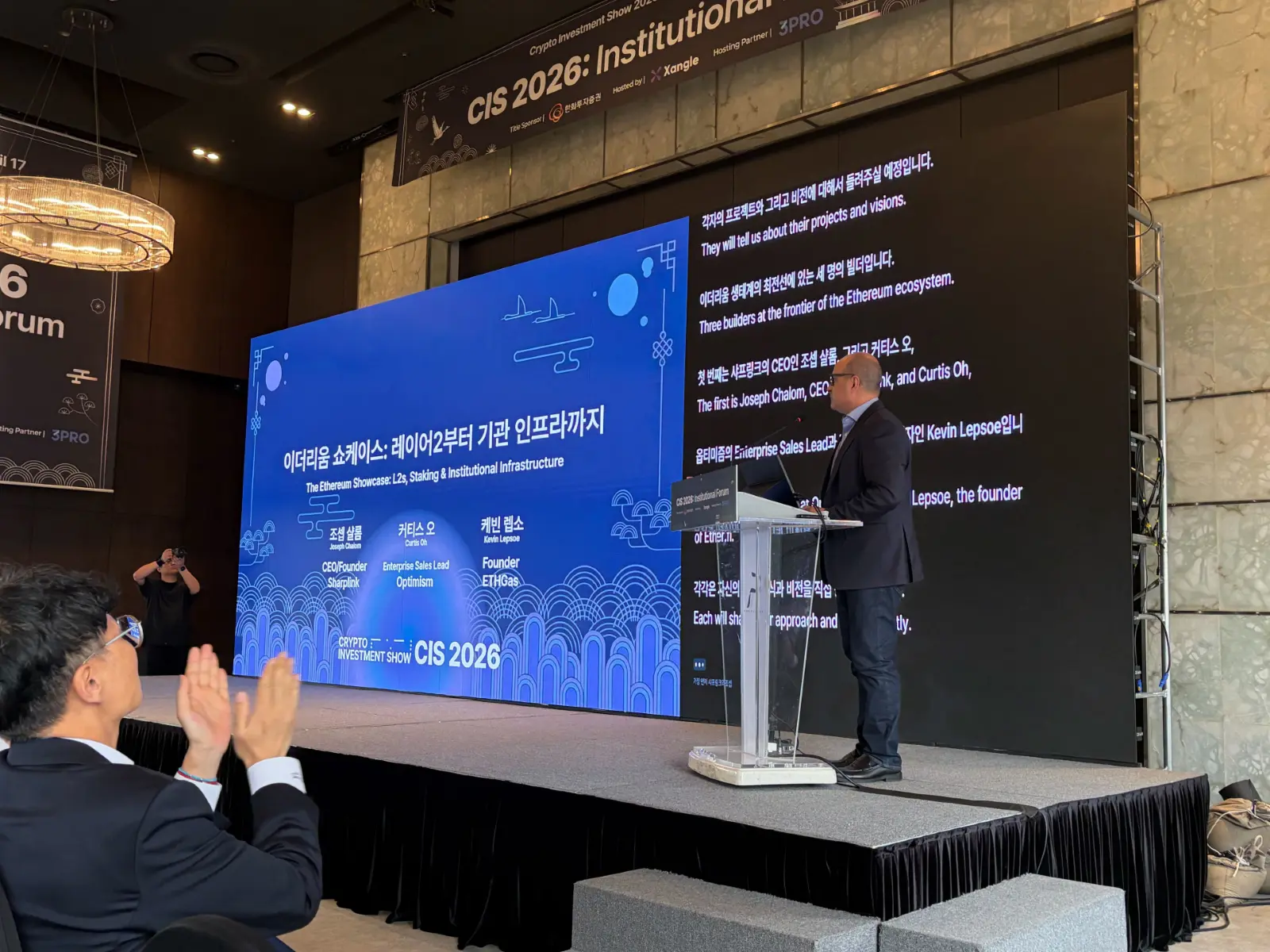 Sharplink CEO/Founder, Joseph Chalom
Institutional sessions highlighted a clear shift: digital assets are no longer viewed solely as investment instruments, but increasingly as financial infrastructure. Within this evolving structure, Ethereum and Solana are taking on differentiated roles. Ethereum is positioned as a trust and settlement layer, while Solana functions as a network optimized for transaction execution. Each is developing along a distinct axis within the broader financial stack.
Ethereum-focused sessions featured presentations from Sharplink, Optimism, and ETHGas, with a strong emphasis on institutional requirements. For large investors such as pension funds and asset managers, the key consideration is not technological novelty, but whether digital assets can be integrated into real-world portfolios in a stable, secure, and operationally viable way.
Sharplink approached the topic from an asset management perspective, emphasizing that institutional demand is ultimately driven by the need for a stable environment in which existing financial assets can be managed. Stablecoins and tokenized assets are already beginning to connect with traditional financial products, suggesting that Ethereum is emerging as the core infrastructure supporting this integration.
Optimism focused on how scalability and execution environments can be built on top of this foundation. Institutions and enterprises face a dual requirement: leveraging the openness of public blockchains while maintaining regulatory compliance and control over data. Within this context, Layer 2 is evolving beyond a simple scaling solution into an execution layer capable of supporting real financial services.
ETHGas addressed Ethereum from the perspective of network performance and blockspace. As on-chain transaction volume increases and network utilization grows, the associated revenue model also expands. This perspective suggests that Ethereum is evolving beyond passive infrastructure into a network that can generate economic value in its own right.
 DoubleZero Co-Founder, Austin Federa
Solana-focused sessions, including DoubleZero, Jito, Sanctum, and Metaplex, presented a different trajectory for on-chain finance. The emphasis was not only on technical performance, but also on real-world usability and capital efficiency, offering a contrasting approach to Ethereum.
DoubleZero highlighted that blockchain performance is not determined solely by the design of the chain itself, but also by the underlying network infrastructure. Existing internet architecture was not originally built for high-performance financial systems, and even millisecond-level latency differences can affect transaction outcomes. To address this, the introduction of a dedicated network layer was presented as a solution, illustrating how blockchain infrastructure is expanding beyond software into the physical network domain.
Jito focused on a yield model that combines staking and MEV within the Solana ecosystem. Rather than simply holding assets, participants can generate additional returns through network participation and redeploy those returns within the ecosystem. This structure was presented as an example of how on-chain assets can achieve higher capital efficiency compared to traditional financial assets.
Sanctum approached Solana as an integrated economic system, focusing on how capital can be deployed more efficiently within it. The presentation emphasized the importance of unifying staking, liquidity, and collateral usage into a single framework, allowing assets to be continuously utilized. This reflects a transition from a transaction-centric network toward a financial environment where capital is actively managed.
Metaplex approached the topic from the perspective of tokenization and the on-chain asset layer. The emergence of asset structures combined with AI agents was highlighted, suggesting a future in which value-generating entities are created directly on-chain and capitalized through tokens. This points to a broader shift in which blockchain evolves beyond financial infrastructure into a platform for new forms of economic activity.
Taken together, these discussions suggest that Solana is not simply a high-performance chain defined by speed. It is evolving into an execution environment where real transactions occur, liquidity forms, and capital circulates. Payment, trading, and yield generation are increasingly integrated within a single system, indicating that the on-chain economy is already functioning in practice.
2-4. Content Platforms as a Bridge to Retail
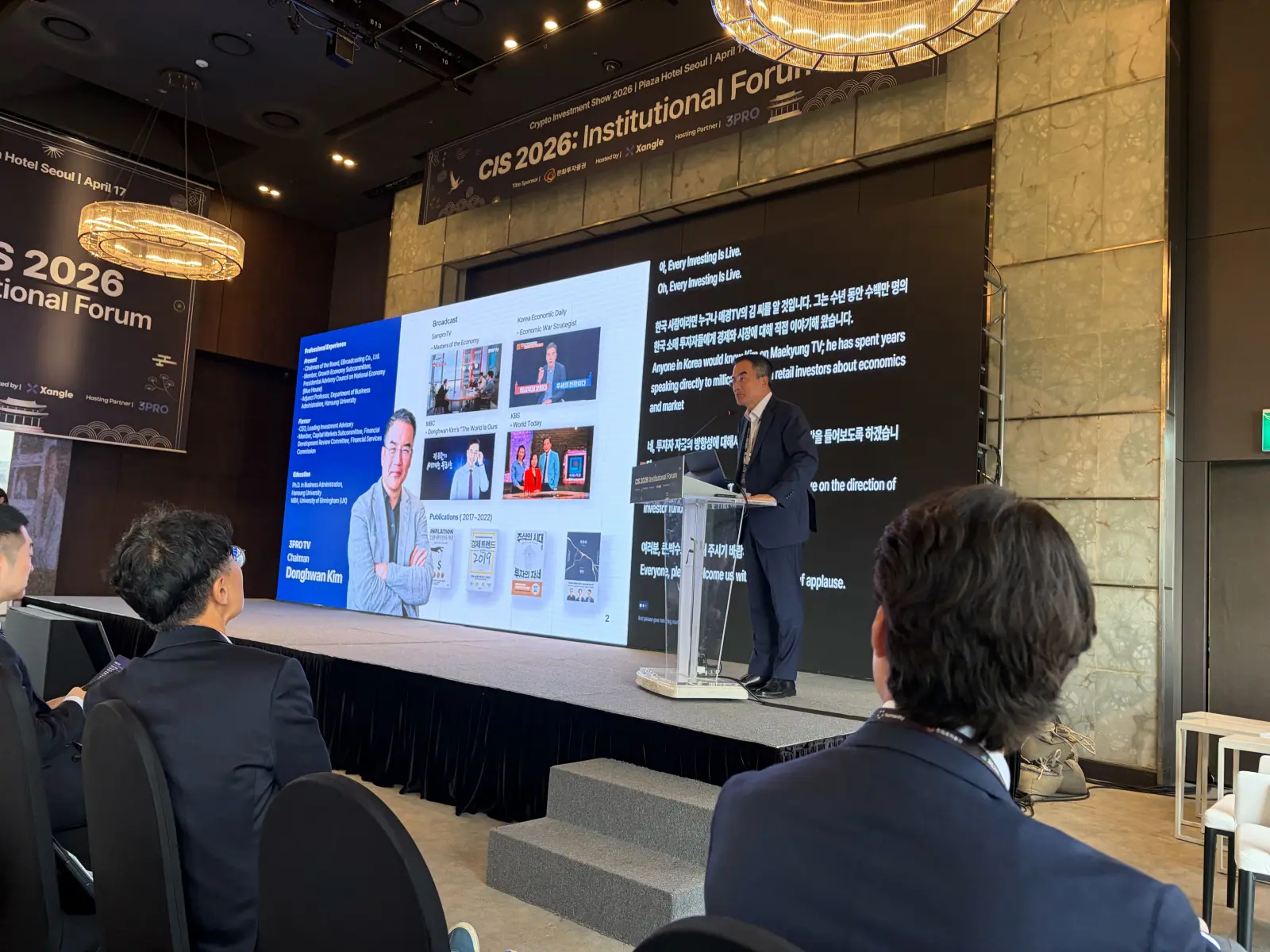 3PROTV Chairman, Kim Dong-hwan
3PROTV, one of Korea’s leading economic content platforms, stood out in the institutional sessions. As a hosting partner of CIS, it brought a perspective that connects market structure with investor behavior. Chairman Kim Donghwan used the session to explain how traditional financial investors are reassessing digital assets and how content shapes that transition.
The presentation focused in particular on the rationale behind 3PROTV’s expansion from equities and fixed income into digital assets. In the past, the primary issue was information asymmetry between institutions and individuals. More recently, the more critical gap has emerged between global markets and domestic investors. Faster delivery of information from global financial markets, including digital assets, has therefore become essential. The expansion into digital asset content reflects this shift. The speed and method by which global information reaches domestic investors increasingly influence investment outcomes, positioning content platforms as a key distribution layer.
Investor perception of digital assets was also clearly visible on-site. Digital assets are no longer confined to a specific investor segment. Adoption is expanding among traditional financial investors as well. Since expanding its digital asset coverage, 3PROTV has seen consistently strong engagement. The response indicates that retail demand in Korea is already well established.
The session also highlighted the role of content in driving market expansion. Boundaries between traditional finance and digital asset markets are gradually blurring. Information channels connecting the two are expanding, and the investor base is broadening alongside them. The structure connects directly to the retail program that followed, where institution-driven narratives transitioned into actual user participation.
3. Retail Program: Onboarding and Market Engagement
3-1. Retail Onboarding via Interactive Booths
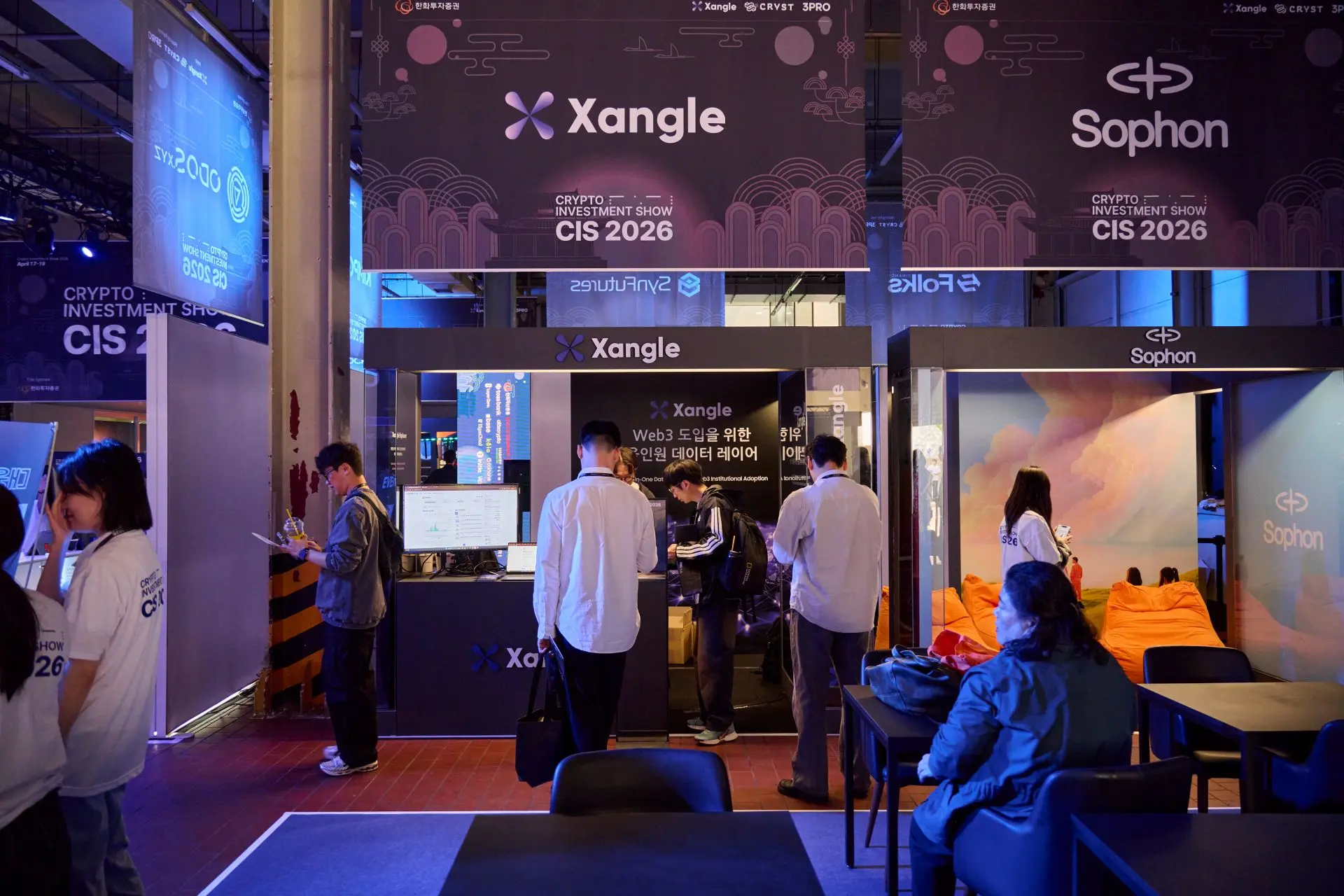
Days 2 and 3 drew approximately 1,500 retail participants and were structured around hands-on experiences rather than lecture-driven sessions. The program was designed so participants could engage directly with digital assets instead of passively consuming information. This format reflects a broader shift in the market, where adoption is expanding beyond crypto-native users to include retail investors with traditional finance backgrounds, as well as those with little prior exposure to digital assets.
Booths were operated by a range of projects and companies, including Solana, Metaplex, Humanity, GRVT, Hanwha Investment & Securities, and Xangle. Visitors moved between booths, receiving explanations and interacting with services in real time. The space was not designed as a typical promotional setup. Each booth functioned as an entry point into the ecosystem, allowing participants to understand the role of each project in a natural and intuitive way. This structure lowered the barrier to entry and made the ecosystem more accessible to first-time users. A stamp mission and prize event further shaped the flow of the venue. Participants were guided through multiple booths in sequence, encouraging exploration across different projects. The result was an environment where exposure to the broader ecosystem occurred organically rather than through a single-point interaction.
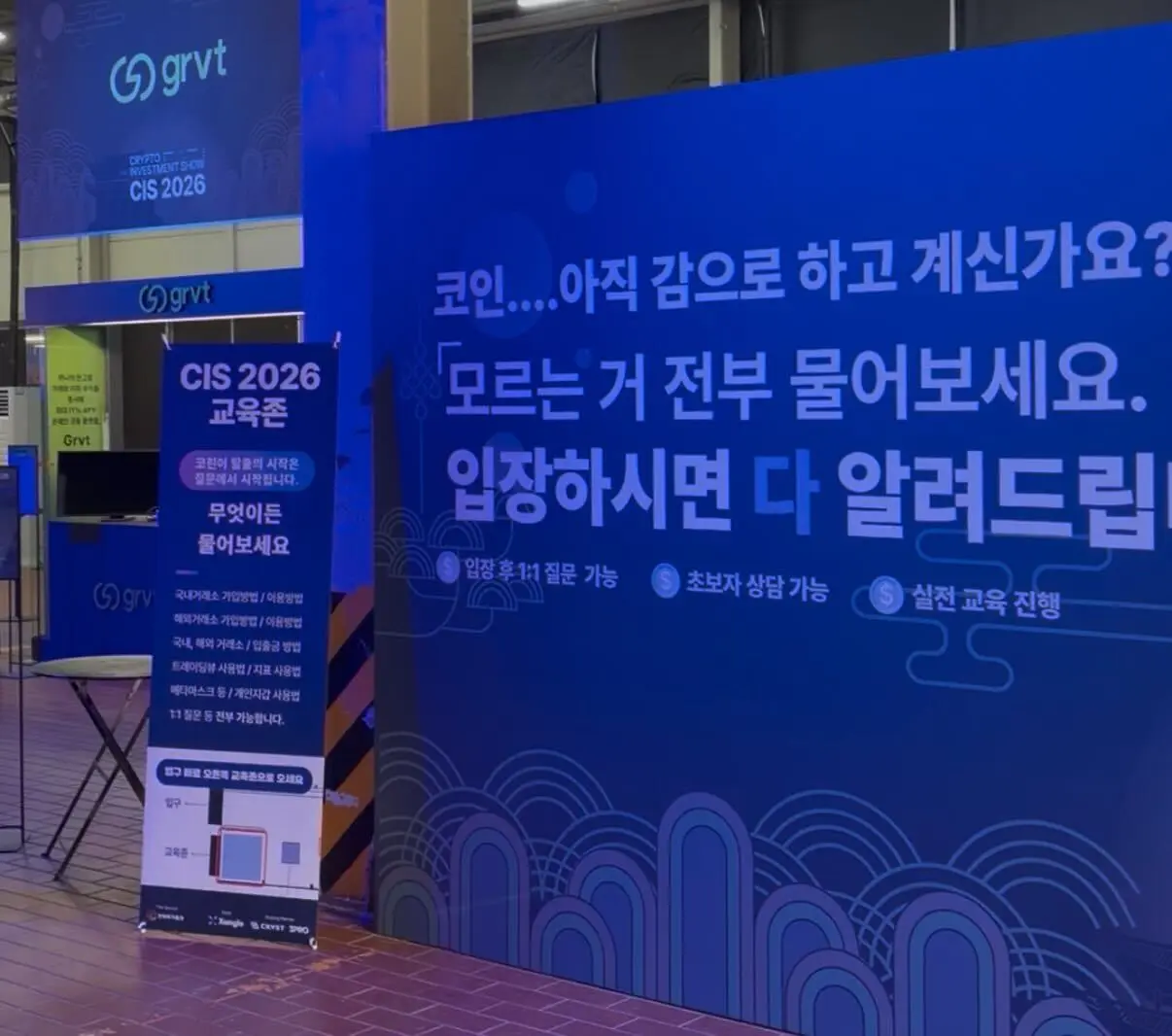
The “Education Zone” at the entrance served as a core onboarding layer. Foundational programs covered exchange onboarding, deposits and withdrawals, TradingView and indicator usage, and personal wallet management. The design focused on moving participants from understanding to actual usage. Rather than stopping at explanation, the program enabled participants to create wallets and move assets on-site, directly lowering the initial barrier to entry.
3-2. Global Infrastructure and Market Narratives
Sessions held in the conference hall on the first day of the retail program covered a wide range of topics, including regulatory developments, institutional integration, stablecoins, cross-chain interoperability, and broader shifts in global financial infrastructure. A consistent theme emerged across these discussions: digital assets are no longer confined to investment use cases and are increasingly becoming integrated into the broader financial system.
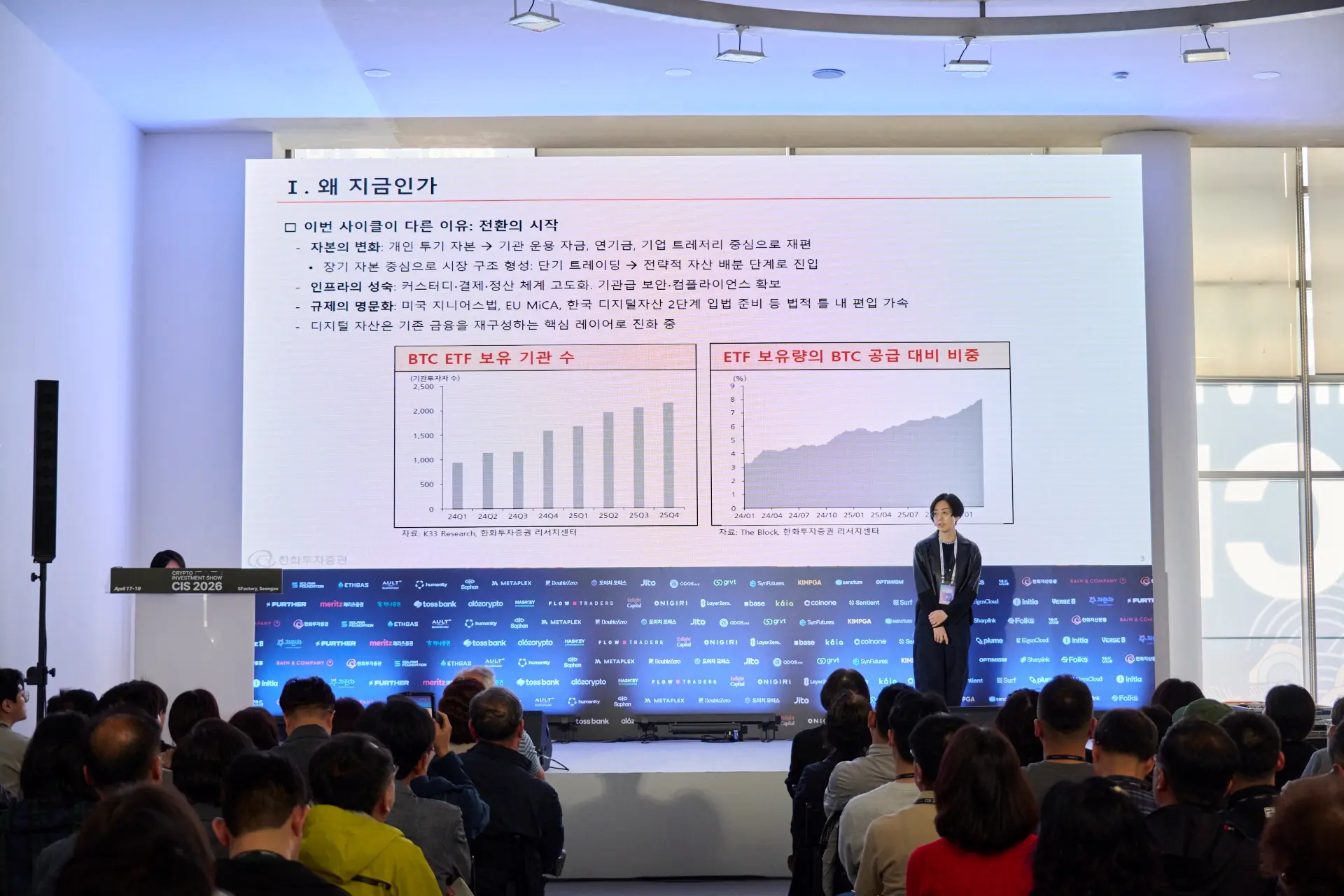
The morning session featured Choy Yoon-young, head of digital asset research at Hanwha Investment & Securities, who presented on “The Institutional Outlook on the Future of Digital Assets.” Audience interest was evident even before the session began, with most seats filled in advance. During the presentation, participants were actively taking notes and capturing materials, reflecting strong engagement. Choy framed global regulatory developments not as a constraint, but as a foundation for market expansion. Institutional adoption is accelerating in the United States and Europe, where regulatory clarity is improving. In Korea, discussions around the Digital Asset Basic Act are gradually shaping licensing frameworks, stablecoin issuance, and institutional participation. Progress remains slower, but the underlying conditions for market growth are already in place.
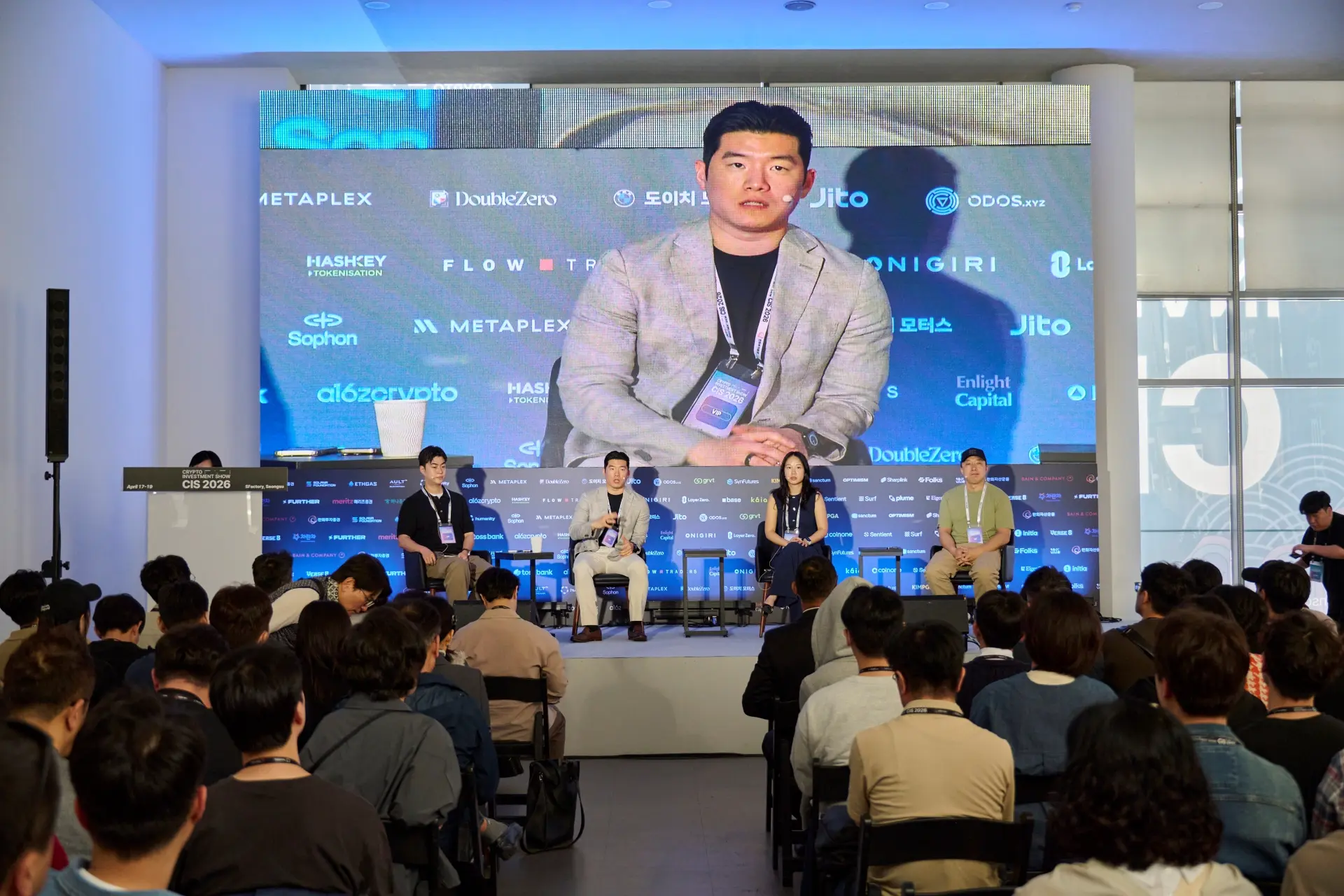
The following session, “a16z portfolio companies' penetration into APAC market,” brought together perspectives from global projects including a16z, LayerZero, and the Solana Foundation. Stablecoins and cross-chain interoperability were highlighted as some of the fastest-moving use cases in the market. Their role extends beyond trading, functioning as infrastructure for cross-border value transfer. LayerZero pointed to the scale of asset movement already occurring on-chain and suggested that this trend could expand into foreign exchange markets. AI and blockchain integration also emerged as a key theme, with a shift away from simple data processing toward the creation of trusted execution environments.
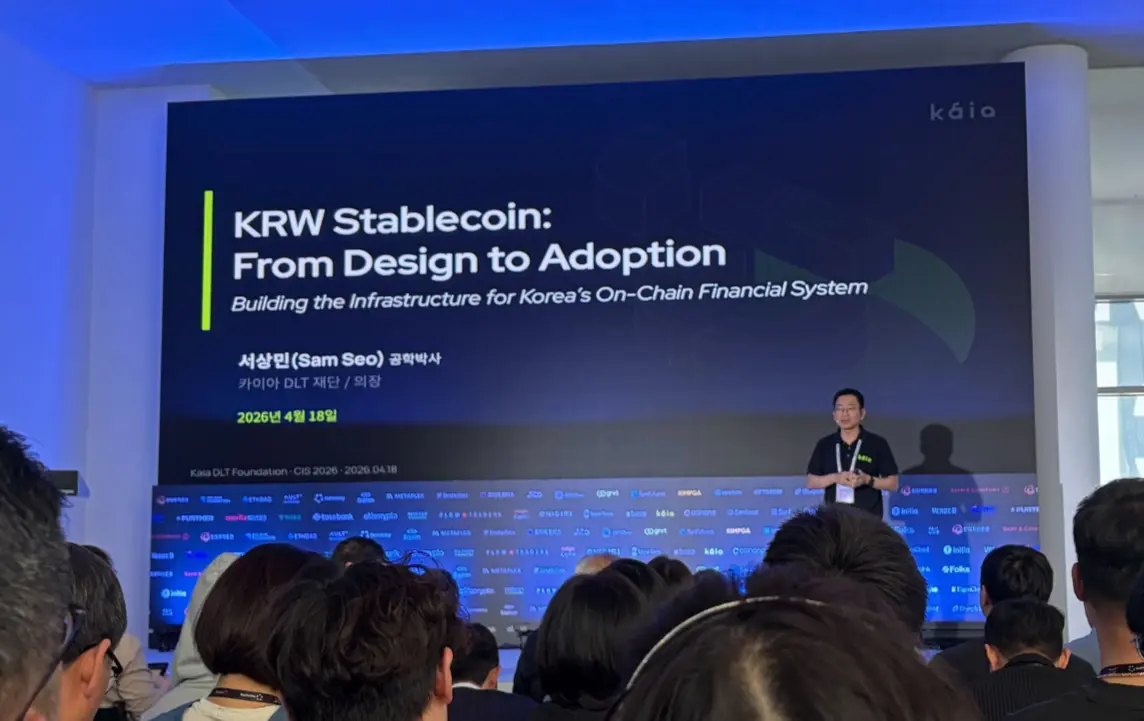
Chairman Sam Seo of the Kaia Foundation approached stablecoins from a policy and structural perspective. Stablecoins were framed not as investment assets, but as functional money used in real transactions. Blockchain-based financial infrastructure is already reshaping payment and settlement systems. The rapid expansion of dollar-denominated stablecoins is strengthening the role of the dollar in digital environments, with potential implications for national financial systems.
Kaia presented a direction for building a KRW stablecoin as usable infrastructure rather than a simple issuance model. Core requirements include reserve management, redemption stability, and issuance structure, alongside real-world use cases such as corporate payments and cross-border transactions. Efforts have progressed beyond conceptual discussions. A detailed architectural proposal has been developed, outlining design and operational frameworks for a KRW stablecoin. The approach reflects a focus on implementation rather than theory and highlights the potential for a KRW stablecoin to function as part of Korea’s financial infrastructure.
Overall, the discussions point to a broader shift in the market. Digital assets are no longer operating as an isolated investment category. They are evolving within a system closely linked to regulation, infrastructure, and global capital flows.
3-3. Shift Toward Investment-Led Retail Participation
The second day of the retail program marked a clear shift toward an investment-driven perspective. Sessions were led by a mix of YouTubers, traders, and influencers, focusing on practical topics such as market cycles, asset allocation, and investment timing.
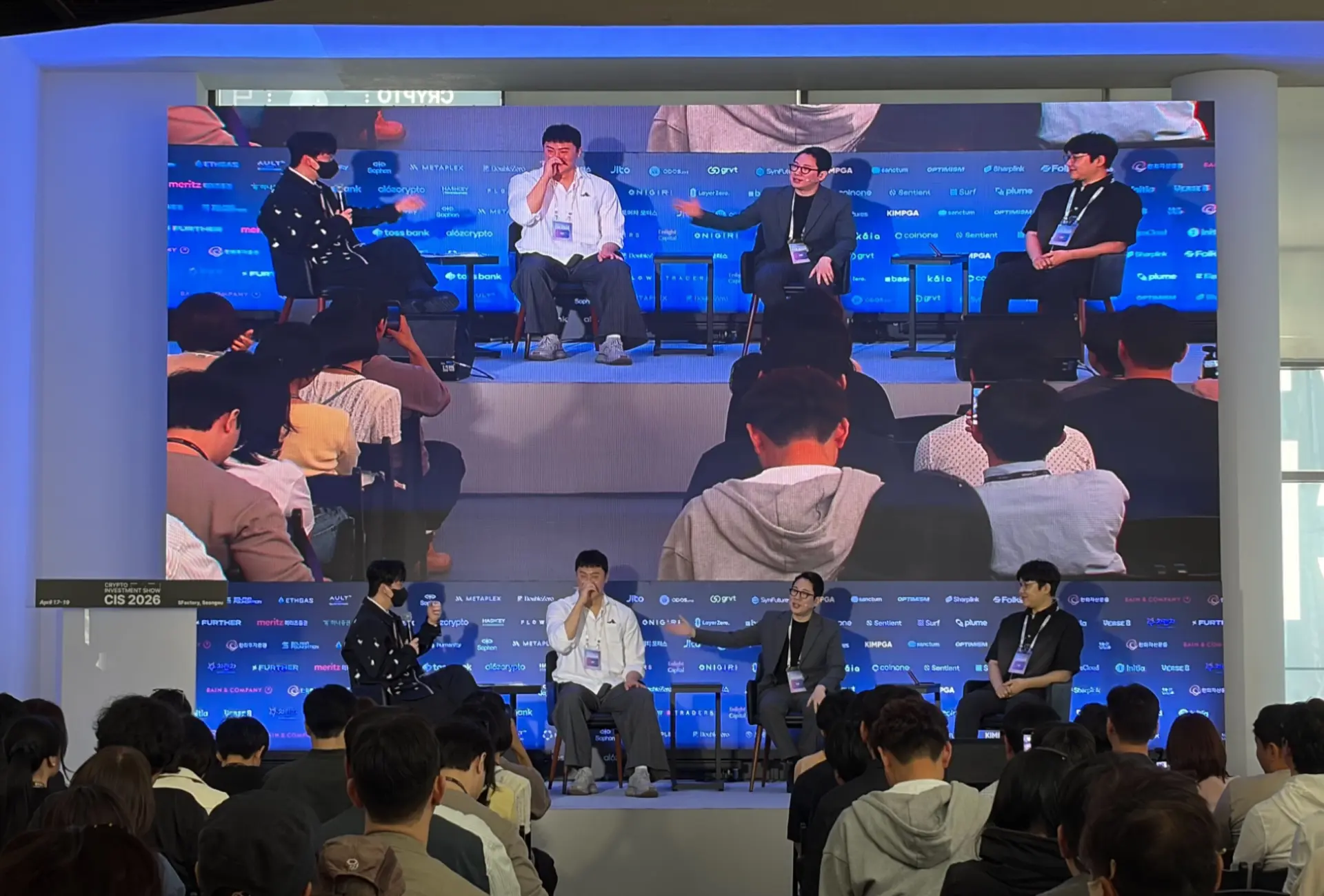
Sessions titled “Are We Early or Late? Decoding the Bitcoin Cycle with Data & Liquidity” and “KOL Perspectives on the Market: Current Trends and Future Outlook” centered on positioning the current market and forming expectations for what comes next. The emphasis was on practical decision-making rather than technical or infrastructure-level discussions.
Market analysis sessions also incorporated specific projects and companies, including XRP and Circle, providing more concrete reference points for retail investors. The overall structure placed greater emphasis on market narratives, liquidity flows, and investment strategy rather than technical explanations. The format reflects how the digital asset market is gradually evolving toward a structure more comparable to traditional financial investment markets.
Across Days 2 and 3, the program combined education, hands-on experience, and investment-focused content to actively drive retail participation. The design reflects a broader trend: market expansion built on top of institution-led infrastructure, with a growing user layer forming above it.
Participant composition provided another clear signal. General retail investors in their 40s and 50s made up a significant portion of attendees, contrasting with the industry insiders and so-called “degen” investors typically seen at crypto events. The outcome was not incidental. The event was explicitly designed to target this demographic. Many of the economic and investment-focused YouTubers and influencers followed by this group were invited, and the content itself was structured around market interpretation and investment perspectives.
The structure points to a broader shift in the digital asset market. Expansion is no longer limited to crypto-native communities. Participation is widening to include mainstream investors, particularly those with prior experience in traditional finance. The trend suggests a transition beyond speculative engagement toward a more mature investment environment. It also signals that mass adoption is moving past the early stage and entering a phase defined by real user base expansion.
4. Conclusion
CIS 2026 captured the current state of the digital asset market. The program was clearly divided between an institutional forum and a retail-focused event. Institutional sessions centered on infrastructure, regulation, and asset structures. Retail sessions focused on hands-on experiences and investment perspectives.
Institutional discussions showed how digital assets are moving closer to the traditional financial system. Financial institutions are actively exploring strategies around Security Token Offerings (STOs), stablecoins, and on-chain financial infrastructure. In Korea, however, execution remains constrained. Regulatory gaps persist across key areas such as corporate accounts, custody, and token securities frameworks, slowing the transition from strategy to implementation.
Global trends were equally visible. Stablecoins and tokenized assets are becoming core tools for payments and asset management. Blockchain networks are evolving along distinct roles. Ethereum is emerging as a trust and settlement layer, while Solana is positioning itself as a transaction and execution network. The market is no longer defined by a single dominant chain, but by a layered structure.
The retail program made it clear how these trends are extending into actual user participation. An onboarding structure built around interactive booths and an education zone, combined with investment-focused content, reflected how digital assets are expanding into a market with real-world usability. A large share of attendees came from retail investors with prior experience in traditional finance, pointing to a broader expansion of the participant base.
CIS 2026 ultimately showed a market moving in a single direction. Institutional preparation and retail participation are no longer separate developments. They are forming a continuous flow. The digital asset market is moving beyond a phase defined by limited participation and technology-driven narratives. Financial infrastructure and real user adoption are now converging, shaping the next stage of market expansion.
Disclaimer
I confirm that I have read and understood the following: The information contained in this article is strictly the opinions of the author(s). This article was authored free from any form of coercion or undue influence. The content represents the author's own views and does not represent the official position or opinions of CrossAngle. This article is intended for informational purposes only and should not be construed as investment advice or solicitation. Unless otherwise specified, all users are solely responsible and liable for their own decisions about investments, investment strategies, or the use of products or services. Investment decisions should be made based on the user’s personal investment objectives, circumstances, and financial situation. Please consult a professional financial advisor for more information and guidance. Past returns or projections do not guarantee future results.
Xangle or its affiliated partners own all copyrights of the written or otherwise produced materials and content provided on the platform. Any illegal reproduction of such content, including, but not limited to, unauthorized editing, copying, reprinting, or redistribution will result in immediate legal actions without prior notice.

![[ADOPTION] L1 - Why Global Enterprises Are Betting on Avalanche](https://resource.xangle.io/content/thumbnails/2063/content_2063_thumbnail_7f6244bf.webp)