The Mantle Thesis: Why All Capital Ultimately Routes On-chain Through Mantle

Table of Contents
1. On-chain Finance and the Restructuring of Global Capital Markets
2. Infrastructure Layer: Institutional Funds, Regulated Custody, and On-Chain Credit
3. TaaS, QCDT, xStocks Platform Layer: TaaS, QCDT, and xStocks
4. Application Layer: Mantle Global Hackathon, and RWA ScholarSHIP
5. Closing Thoughts: Mantle’s Positioning as the Financial Layer of the On-chain Economy
1. On-chain Finance and the Restructuring of Global Capital Markets
Recently, as the SEC shifts toward a more permissive regulatory stance, the global financial market has accelerated its move into real-world asset tokenization (RWA). Once issuance, trading, and settlement migrate from off-chain systems to on-chain environments, the gains in transparency, settlement speed, and automation become substantial; yet large-scale institutional usage requires a trust-anchored on-chain financial infrastructure that institutions can rely on without hesitation. The challenge is that today’s on-chain environment remains underdeveloped in key areas—regulation, custody, and governance. As a result, no matter how efficient on-chain finance appears, structural barriers have continued to prevent institutional capital from entering in a meaningful way.
This gap has created growing demand for a financial network that is not merely another Layer-2 competing on throughput and fees, but one capable of combining traditional finance’s institutional trust architecture with the operational efficiency of on-chain systems. Institutions need an environment where RWAs can be issued, custodied, and distributed, and where real financial applications can run natively atop that infrastructure. Several projects have attempted to present such a vision in the past; most, however, focused narrowly on technical innovation while failing to build core prerequisites such as regulatory alignment, custodial frameworks, institutional liquidity, and an application layer designed for actual usage—ultimately preventing their vision from materializing.
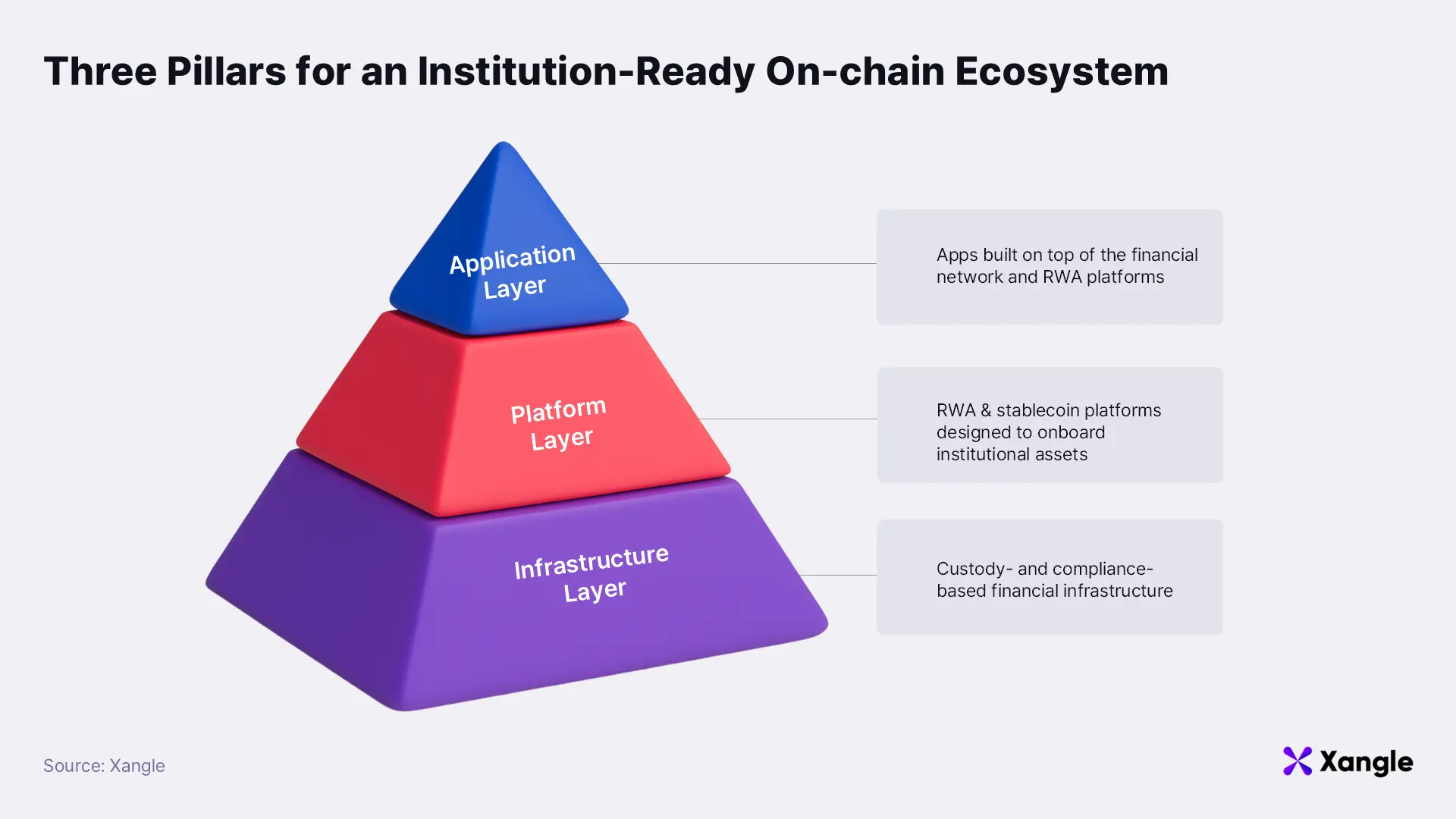
Against this backdrop, Mantle—strategically supported by Bybit—occupies a distinctly differentiated position. It does not define itself as a mere Layer-2 network; rather, Mantle aims to become a financial-infrastructure chain that reconstructs the financial system at large by transplanting traditional finance’s institutional, regulatory, and operational scaffolding onto the blockchain. The project has concentrated on fortifying three pillars essential for an institution-centric ecosystem.
The first pillar is financial infrastructure grounded in custody and regulatory compliance. By integrating with Anchorage Digital, Mantle is now positioned within institutional treasury accounts and regulated custodial environments. Complementing this, the institution-friendly MI4 digital asset index fund, alongside MNT-based trading fees, VIP systems, and institutional lending and leverage programs, has created a viable entry path for institutions seeking exposure to on-chain markets.
The second pillar is an RWA- and stablecoin-based platform capable of onboarding institutional-grade assets. QCDT—the tokenized money market fund (MMF) launched with DMZ Finance and Bybit—secured approval from the Dubai Financial Services Authority (DFSA), becoming the world’s first L2-based real-world MMF. Mantle’s collaboration with Backed Finance further extended this foundation by bringing the tokenized-equity platform xStocks onto Mantle, establishing the groundwork for migrating portions of the U.S. capital market into an L2 environment.
The third pillar is the application layer that operates on top of the network and platform stack. Mantle Global Hackathon 2025 and the Mantle RWA ScholarSHIP Program are designed to identify and cultivate RWA-native applications built atop Mantle’s tokenization, compliance, and liquidity infrastructure. These programs also lay the groundwork for a supporting narrative and content ecosystem—an essential component for ecosystem-level adoption.
Mantle is therefore emerging as one of the very few finance-centric L2s that integrate RWA infrastructure, regulatory and custodial foundations, and a practical application layer—surpassing the speed-and-fee-centric paradigm that defines most L2s. The project’s ambition is not to remain a scalability solution; it seeks to build the operational financial layer required for the global financial system’s eventual migration onto blockchain rails. Mantle is positioning itself not merely as a gateway between traditional finance and on-chain finance, but as the foundational layer of an institution-driven RWA ecosystem.
2. Infrastructure Layer: Institutional Funds, Regulated Custody, and On-Chain Credit
As noted earlier, even with regulatory easing opening the door for on-chain finance, institutions still face meaningful barriers to entry: regulatory uncertainty, recurring security breaches, and fragile operational environments make the space difficult to approach. A trustworthy and secure infrastructure layer must be established before institutional capital can enter with confidence. Mantle has built its strategy around addressing this very requirement, and the clearest manifestation of that approach is the MI4 Fund launched in April.
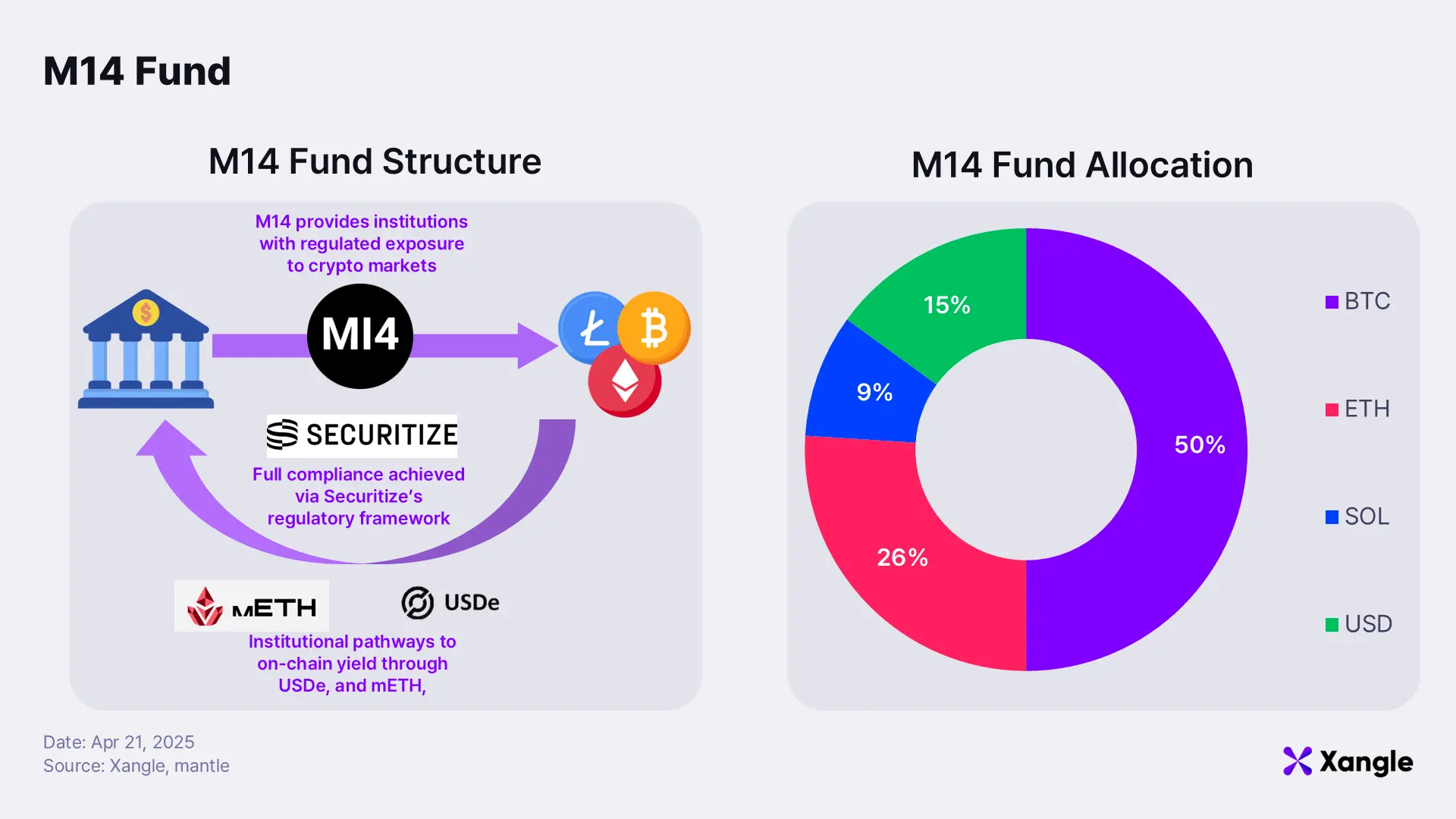
MI4 is an institution-aligned digital asset index fund that merges traditional finance’s operational rule set with the structural efficiencies of on-chain finance. Its portfolio—composed of Bitcoin, Ethereum, Solana, and USD-based assets—is managed through a quarterly rebalancing framework. Mantle Treasury directly committed USD 400 million as initial capital to secure deep fund liquidity, establishing a new institutional gateway into on-chain assets. MI4 targets USD 1 billion AUM over the long term; the initiative not only provides institutional investors with a regulated avenue to gain digital-asset exposure, but also represents one of the first large-scale experiments in transplanting a traditional asset-management model onto blockchain rails.
Momentum strengthened further once Mantle’s native asset, MNT, secured custody support from Anchorage Digital. As the first and only federally chartered crypto bank in the United States, Anchorage Digital offers institutional-grade infrastructure for safekeeping and operating digital assets in a regulated environment. Incorporation of MNT into this custody framework now allows global institutions to hold the asset directly within treasury accounts and portfolio mandates. The shift marks a meaningful inflection point—not merely wallet support, but recognition of MNT as a treasury-grade asset within regulated institutional systems.
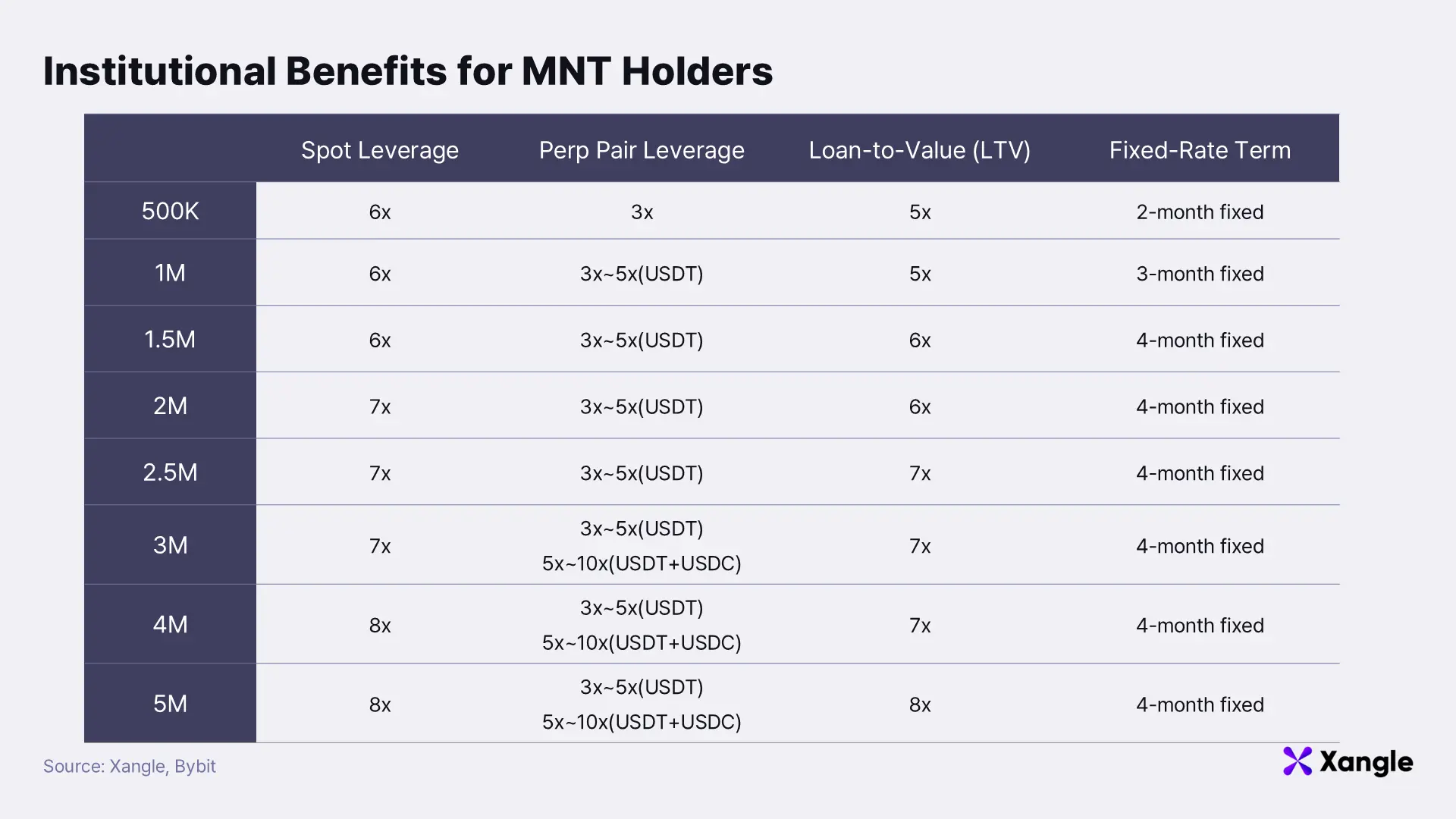
Mantle has also expanded MNT’s utility through its growing collaboration with Bybit. By the third quarter of 2025, the relationship between the two organizations had evolved well beyond a standard listing; MNT began functioning as a core asset across trading activity, fee payments, VIP tiers, and institutional financial products. Bybit subsequently introduced the MNT × Bybit Institutional Program, enabling institutional clients to post MNT as collateral for up to 8x spot-margin leverage and fixed-rate loans with maturities of up to four months—a significant expansion of MNT’s regulated financial utility.
Altogether, these developments align directly with Mantle’s institution-centric roadmap for 2025. The progression—from creating institutional inflow channels via MI4, to securing regulatory and custodial foundations via Anchorage Digital, to expanding real-world MNT usage through deeper integration with Bybit—illustrates Mantle’s evolution beyond a conventional L2 project. It is positioning itself as a network engineered to support an institution-first on-chain RWA and DeFi ecosystem. The result is a meaningful enhancement of Mantle’s liquidity profile and market depth, while simultaneously solidifying its status as a network structurally prepared for institutional adoption in the global digital-asset landscape.
3. TaaS, QCDT, xStocks Platform Layer: TaaS, QCDT, and xStocks
Mantle has already established a regulatory-aligned and secure infrastructure layer capable of supporting institutional capital. Infrastructure alone, however, is not enough. For real capital to flow atop that foundation, a wide range of assets—bonds, equities, MMFs and beyond—must be onboarded on-chain, alongside platforms that allow those assets to be deployed, traded, and integrated into financial workflows. Mantle’s focus on unifying regulation, liquidity, infrastructure, and distribution stems from this necessity: institutional capital requires not only a safe entry point, but a complete environment in which on-chain financial activity can occur at scale. The architecture needed to achieve this is built on three pillars: institution-friendly tokenization infrastructure, regulatory barrier removal, and globally accessible liquidity and distribution pathways.
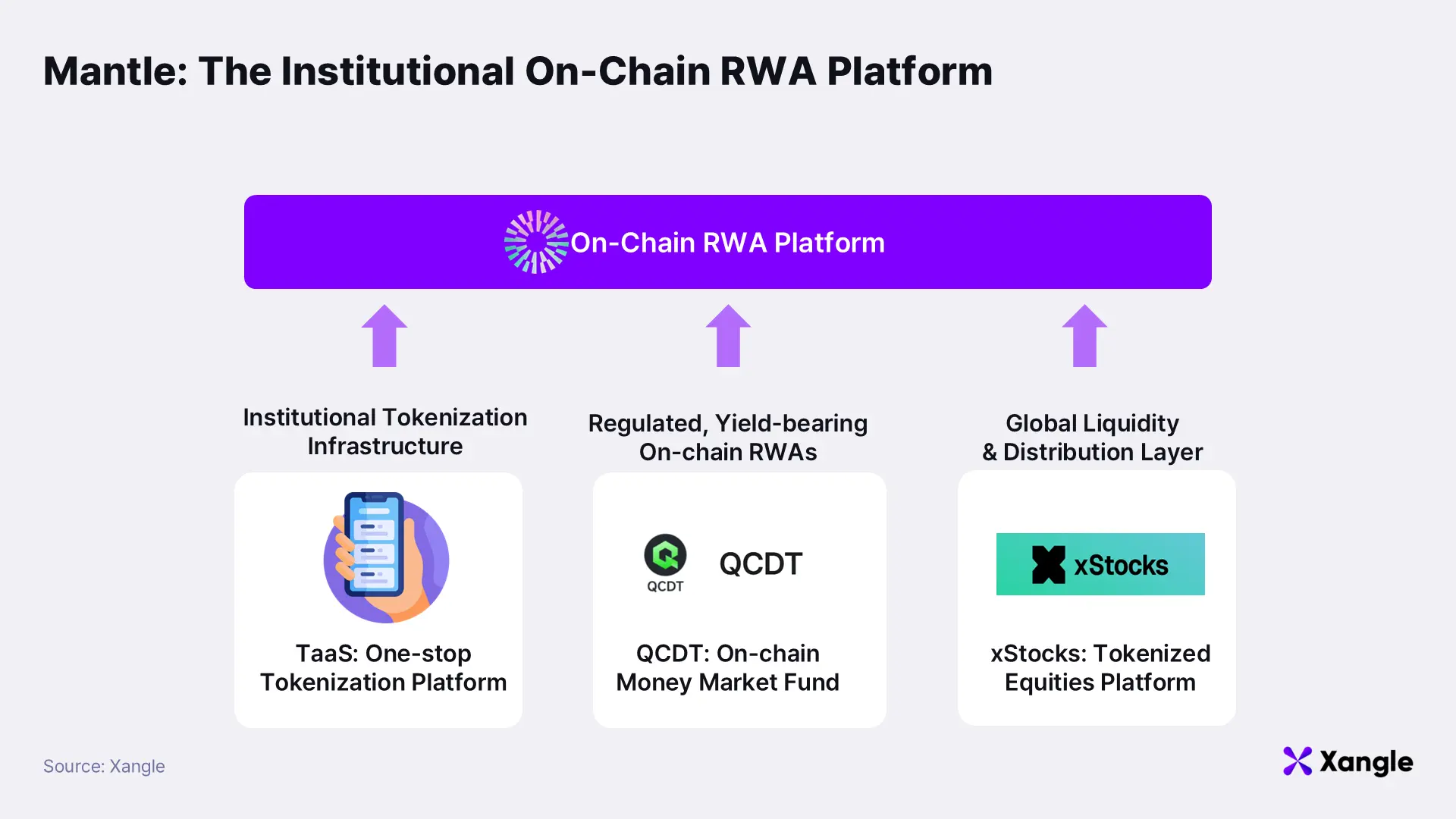
The first pillar is the construction of institutional-grade tokenization infrastructure. Mantle’s Tokenization-as-a-Service (TaaS) offering is a full-stack tokenization platform that provides everything issuers and financial institutions require to launch on-chain assets: licensing support, KYC, legal structuring, smart contract deployment, security monitoring, and regulatory UI components. With Anchorage Digital’s custody integration layered on top, MNT is now eligible for direct institutional holding. This shift established the operational foundation for institutional index funds—such as MI4—to run natively on-chain; Mantle further accelerates institutional inflows by anchoring the system with USD 400 million of its own treasury capital.
The second pillar is the expansion of regulated, compliance-ready RWAs. QCDT—launched in partnership with DMZ Finance and Bybit—is an L2-based tokenized money market fund (MMF) that secured formal approval from the Dubai Financial Services Authority (DFSA). It fully tokenizes real yield-generating assets (U.S. Treasuries, short-term deposits, etc.) directly on-chain. In contrast to earlier RWA initiatives that struggled to scale due to unresolved regulatory barriers, QCDT is the first product to satisfy all three institution-critical criteria: regulatory authorization, real yield, and institutional accessibility. Mantle is therefore transitioning from an “experimental RWA chain” into the L2 analogue of real financial infrastructure—something institutions can integrate into actual operations. Reinforcing this trajectory, WLFI and Donald Trump Jr. announced that the USD1 stablecoin will launch on Mantle. USD1’s selection of Mantle—a fully regulation-aligned stablecoin choosing a regulation-aligned chain—signals Mantle’s strengthening position as the compliance-forward blockchain environment.
The third pillar is global liquidity and distribution expansion. Mantle is not content with merely issuing RWAs or aligning them with regulatory requirements; its focus is on building the liquidity infrastructure necessary for these assets to be actively traded and consumed in real markets. The expansion of xStocks—Backed Finance’s tokenized equity platform—onto the Mantle network is a key example: major equities and ETFs such as SPYx, NVDAx, and QQQx are gaining the ability to trade directly on Mantle. The initiative is part of a larger, long-term vision to migrate segments of the U.S. capital market on-chain and reconstruct traditional financial infrastructure atop a modular L2 architecture.
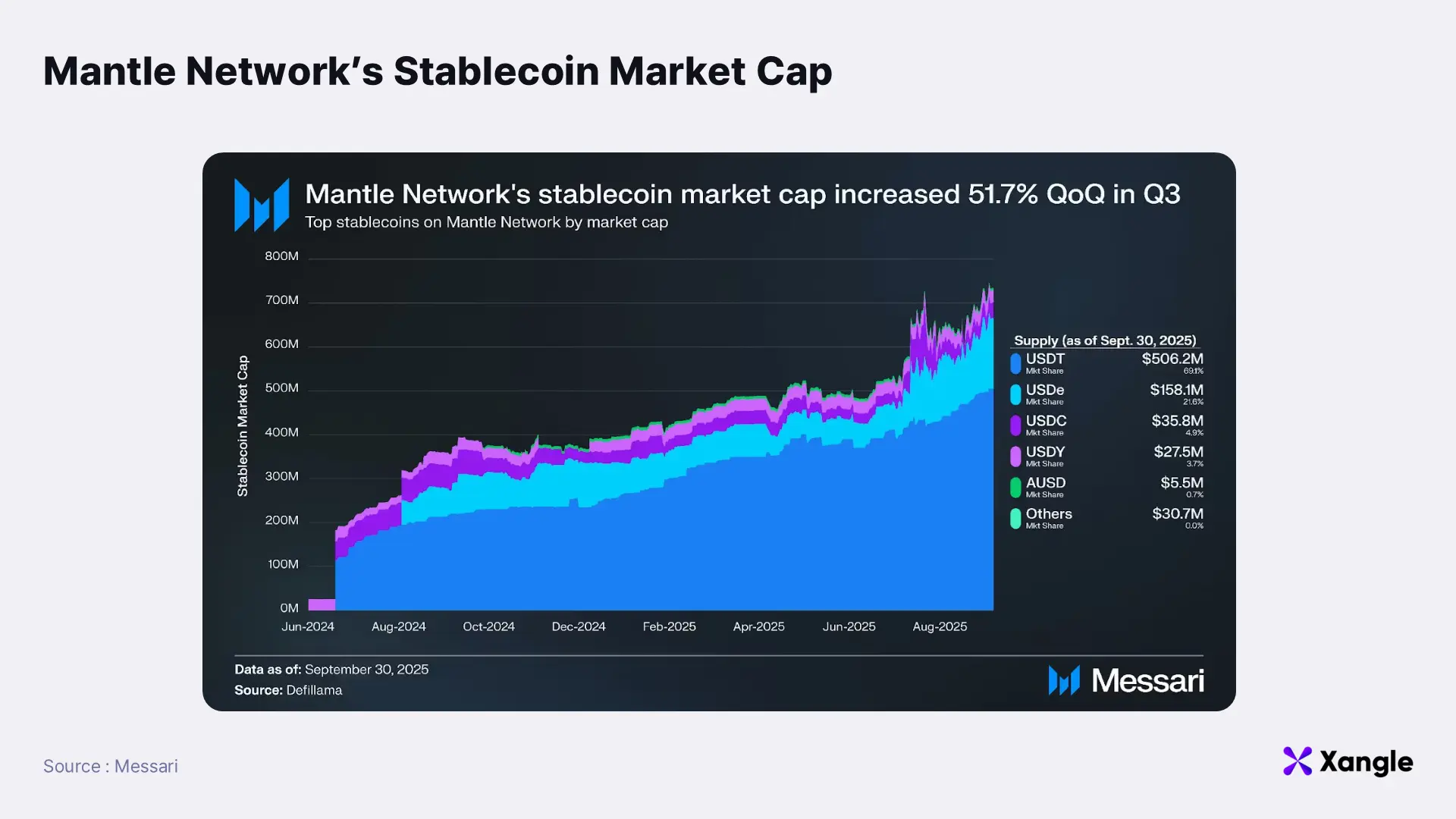
The strategic expansion of Mantle’s platform layer has produced measurable results. Stablecoin supply on the network surged to an all-time high of USD 713.8 million, up 210% year-over-year, according to an August 2025 announcement. The milestone indicates that Mantle is rapidly becoming the functional utility layer for digital currencies and on-chain liquidity. Accelerating stablecoin adoption also reflects Mantle’s maturation into a central nexus where real capital flows begin to consolidate.
As these three pillars—tokenization infrastructure, regulated real-world RWAs, and global liquidity channels—interlock, Mantle has emerged as one of the defining players in the 2025 RWA cycle. It is establishing itself as the first L2 RWA hub equipped with regulation-ready infrastructure, deep liquidity networks, and broad distribution rails. Mantle’s overarching ambition is not to scale any single RWA project; the objective is to position itself as the core hub orchestrating the structural migration of the global financial system onto blockchain rails.
4. Application Layer: Mantle Global Hackathon, and RWA ScholarSHIP
Mantle is pushing its RWA strategy beyond the infrastructure layer and into full ecosystem expansion at the application layer. The USD 150,000 Mantle Global Hackathon 2025 and the Mantle RWA ScholarSHIP Program are central to this shift; they are not simple developer events, but core pillars in Mantle’s plan to secure the “real builders” who will define and lead the next phase of the RWA market. With tokenization infrastructure, regulated custody, and liquidity networks already in place, Mantle is now entering the phase of filling the application, project, and content layers that operate atop this foundation.
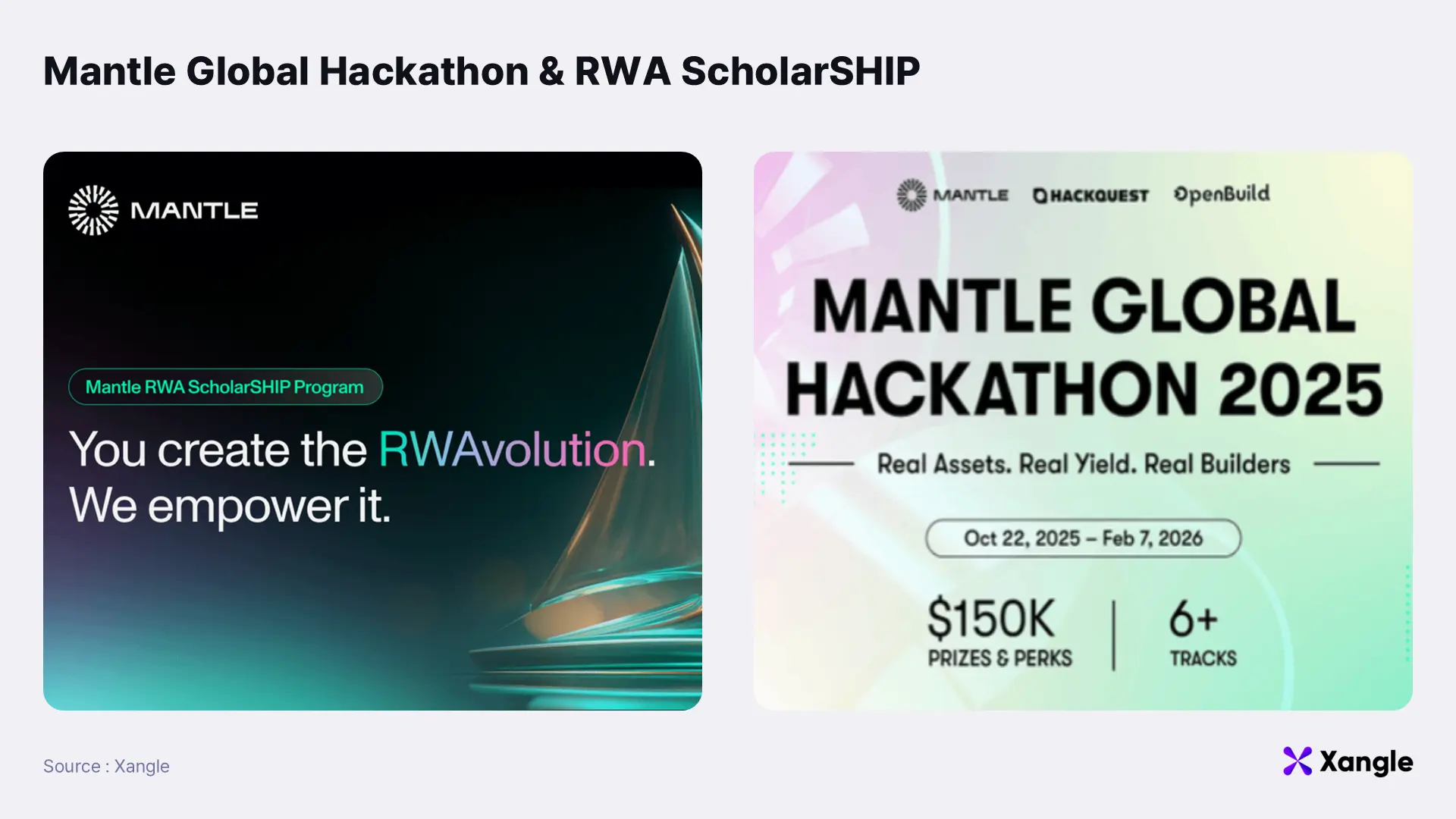
Mantle Global Hackathon 2025 centers on the themes of RWA, Real Yield, and Real Builders, identifying innovative app-layer projects across six categories—RWA, DeFi, GameFi, ZK, AI, and Infra—from developers worldwide. The modular architecture of Mantle, which separates data availability, execution, and settlement, provides a high-efficiency environment; yet it is ultimately the developer community that transforms this architecture into “institution-adoptable RWA applications.” The hackathon therefore serves as a mechanism to populate Mantle’s ecosystem with software-driven real use cases and reinforces Mantle’s identity as an RWA-focused L2.
The Mantle RWA ScholarSHIP Program extends ecosystem building beyond technical development into content, storytelling, and expert analysis. Creators selected as Mantle Scholars participate in global events, articulating the value, innovation, and broader impact of RWAs while amplifying Mantle’s brand and narrative. This approach moves beyond conventional developer-centric ecosystem cultivation—signaling Mantle’s intent to establish thought leadership in the RWA sector through knowledge production, narrative shaping, and content strategy. The complementary ScholarSHIP Content Bounty opens participation to community creators, enabling them to contribute content and experimentation as part of Mantle’s RWA journey; the program functions as a mechanism to extend competitive differentiation into the narrative layer of the RWA market.
Mantle’s hackathon and ScholarSHIP initiatives are therefore strategic instruments—designed to build the RWA-native platforms and applications that will operate atop Mantle’s financial infrastructure. By expanding real RWA use cases that bridge traditional and on-chain finance, and by cultivating an ecosystem where global developers and creators engage directly with Mantle’s roadmap, the project is solidifying its position as an RWA-centric Layer 2.
5. Closing Thoughts: Mantle’s Positioning as the Financial Layer of the On-chain Economy
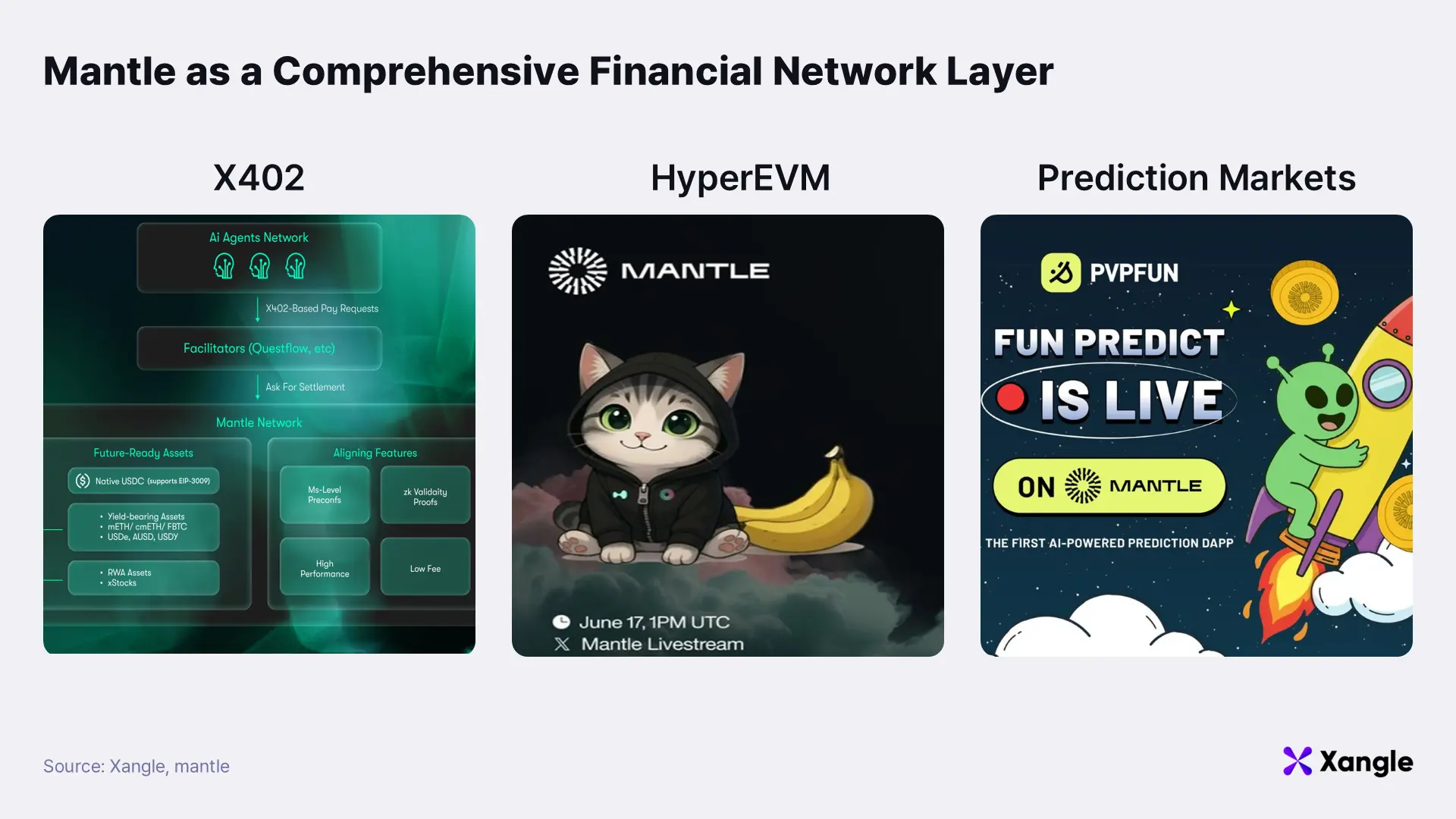
In 2025, Mantle is evolving beyond the scope of a conventional L2 and into a comprehensive financial layer—one that connects traditional finance with on-chain finance in a fully integrated architecture. Institutional inflow structures established via the MI4 Fund, regulated custody foundations secured through Anchorage Digital, and enhanced real-world financial utility achieved through its integration with Bybit collectively form the core infrastructure enabling institutions to manage on-chain assets in a safe and operationally viable manner. Built on this foundation, Mantle has launched tokenization, liquidity, and distribution platforms such as TaaS, QCDT, and xStocks, onboarding a diverse range of real-world assets onto the blockchain and effectively initiating the formation of an on-chain capital market spanning U.S. Treasuries, MMFs, and equities. Mantle is further completing the application, content, and narrative layers through the Global Hackathon and ScholarSHIP programs, forming a multi-layered RWA ecosystem in which developers, institutions, and creators participate as co-builders.
Mantle’s ambition is to construct a fully integrated financial stack: regulatory infrastructure that enables institutions to deploy and manage capital; platforms where tokenized real-world assets can be traded, settled, and distributed; and an application and content ecosystem that delivers financial services and user experiences on top of this foundation. The structure represents a strategic break from the performance-centric competition seen in typical L2s. It elevates on-chain finance toward the trust, reliability, and operational rigor of traditional finance, while laying the groundwork for a new era in which RWAs, stablecoins, MMFs, equities, and bonds operate natively on blockchain rails. By unifying infrastructure, platforms, and applications into a coherent architecture, Mantle not only stands at the center of the 2025 RWA trend but is also positioning itself as the L2 uniquely capable of shaping the emerging standard when the global financial system begins its shift onto on-chain infrastructure.
Disclaimer
I confirm that I have read and understood the following: The information contained in this article is strictly the opinions of the author(s). This article was authored free from any form of coercion or undue influence. The content represents the author's own views and does not represent the official position or opinions of CrossAngle. This article is intended for informational purposes only and should not be construed as investment advice or solicitation. Unless otherwise specified, all users are solely responsible and liable for their own decisions about investments, investment strategies, or the use of products or services. Investment decisions should be made based on the user’s personal investment objectives, circumstances, and financial situation. Please consult a professional financial advisor for more information and guidance. Past returns or projections do not guarantee future results.
Xangle or its affiliated partners own all copyrights of the written or otherwise produced materials and content provided on the platform. Any illegal reproduction of such content, including, but not limited to, unauthorized editing, copying, reprinting, or redistribution will result in immediate legal actions without prior notice.