
Chainlink: Abstraction Paving the Way for Blockchain Mainstream Adoption


Table of Contents
1. Introduction: Why Abstraction Is the Prerequisite for Mainstream Adoption
2. Technical Abstraction: Standardizing Chains and Data
2-1. CCIP and Chain Abstraction: Making Multichain Work Like the Internet
2-2. ODP and Data Abstraction: The Bloomberg Terminal for Onchain Data
Economic Abstraction: Unifying Payments and Settlement
3-1. Payment Abstraction: Converging Every Asset into LINK
3-2. Chainlink Reserve: Strategically Accumulating LINK from Revenues
4. Operational Abstraction: CRE as a Unified Execution Environment
5. True Institutional Adoption Lies in Demand, Not Supply
6. Conclusion: How Chainlink Turns Blockchain into Everyday Infrastructure
1. Introduction: Why Abstraction Is the Prerequisite for Mainstream Adoption
New technologies are often unfamiliar and complex. For non-experts, understanding and making use of concepts and structures that lack user-friendly interfaces is rarely straightforward. As a result, the process of a new technology becoming widely adopted cannot rely simply on greater public understanding; it inevitably takes far too long. What ultimately determines adoption is how well that complexity can be abstracted and delivered in a form that anyone can easily use.
History has repeatedly demonstrated the power of abstraction, with the power grid being one of the clearest examples. In the early days of electricity, each region maintained its own power plant, and the design of transmission networks and voltage standards varied widely. Some areas used direct current (DC), others alternating current (AC). Even plug shapes and voltages differed, leaving systems incompatible. For households and businesses, this meant contracting directly with a specific power plant and managing their own wiring—clear obstacles to broad adoption.
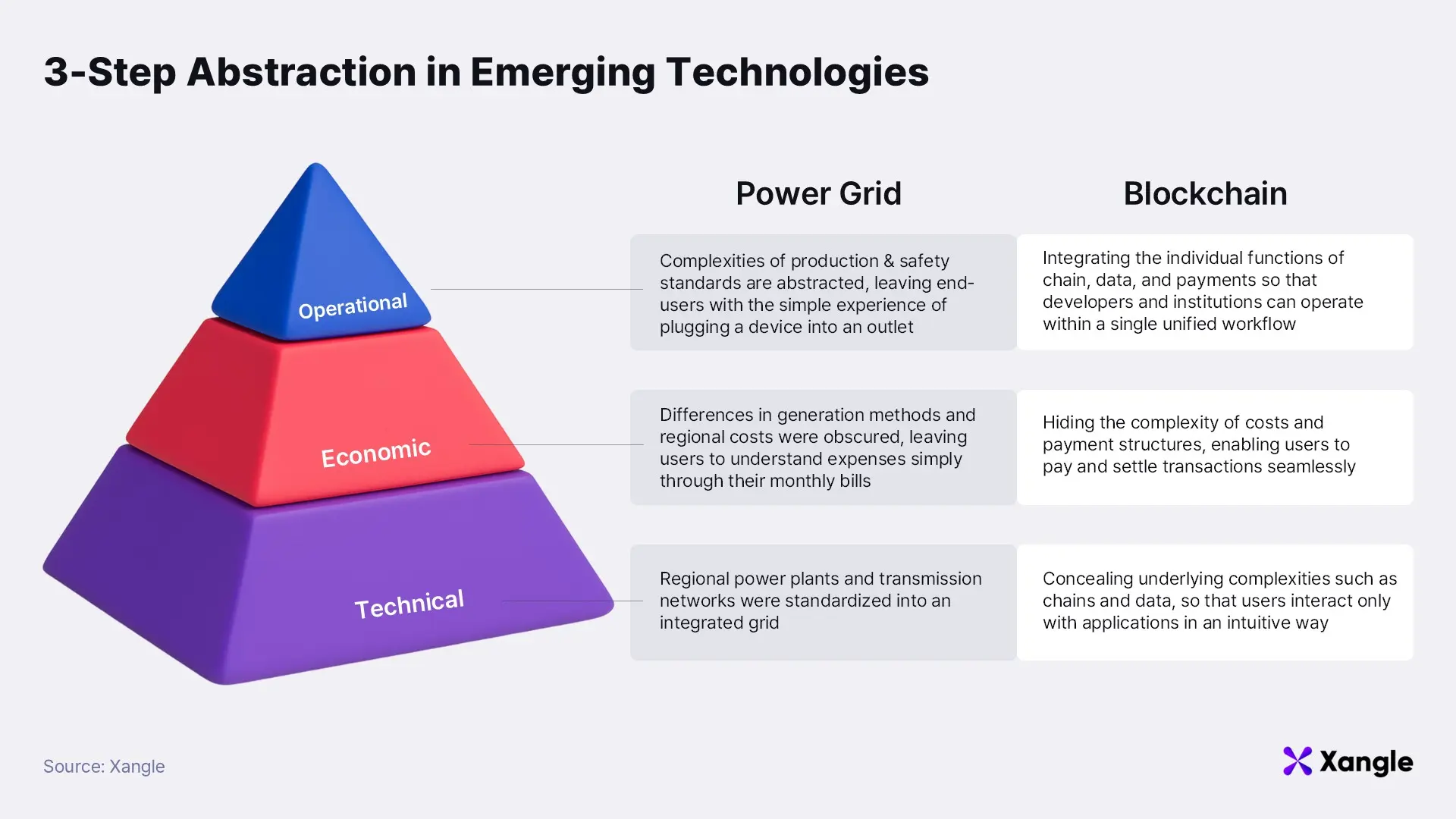
Over time, however, the power grid underwent three stages of abstraction that allowed it to become a universal foundational technology. First came technical abstraction: regional power plants and transmission networks were standardized into an integrated grid, hiding the technical details of “where and how electricity was generated.” Next was economic abstraction: differences in generation methods and regional costs were obscured, leaving users to understand expenses simply through their monthly bills. Finally, operational abstraction: all the complexities of production, settlement, and safety standards were handled behind the scenes, leaving end-users with the simple experience of plugging a device into an outlet.
By successively abstracting technology, cost, and operations, electricity was able to take root as an everyday resource. The internet and smartphones followed similar paths. The internet unified diverse communication standards under TCP/IP, enabling global users to access the web in the same way. Smartphones abstracted away complex hardware and telecom infrastructure under operating systems and app stores, opening the way to mass adoption.
What is most striking is that today, the vast majority of people who use electricity, the internet, or smartphones have little understanding of the underlying technical principles. What matters is not expertise, but the presence of an abstracted interface that makes the technology easy to use. Abstraction is not simply a convenience—it is a prerequisite for any new technology to cross into the mainstream.
Blockchain should be understood in the same light. Its usefulness as a technology has already been debated at length. The focus of this report, however, is not the intrinsic value of blockchain itself but how it can become a widely adopted foundational technology through abstraction. In this context, abstraction can be considered across three layers:
- Technical abstraction: Concealing underlying complexities such as chains and data, so that users interact only with applications in an intuitive way.
- Economic abstraction: Hiding the complexity of costs and payment structures, enabling users to pay and settle transactions seamlessly.
- Operational abstraction: Integrating the individual functions of chain, data, and payments so that developers and institutions can operate within a single unified workflow.
It is precisely at this point that Chainlink emerges as the most prominent attempt at abstraction.
2. Technical Abstraction: Standardizing Chains and Data
2-1. CCIP and Chain Abstraction: Making Multichain Work Like the Internet
The current blockchain environment is strikingly similar to the internet before the advent of TCP/IP, when private intranets existed in fragmented silos. Today, hundreds of public and private chains coexist, each with its own consensus mechanism (PoS, PoW, PoA, etc.), runtime environment (EVM, SVM, MOVE, etc.) token standards (ERC-20/721/1155, etc.), and messaging structure. This heterogeneity translates directly into complexity for design and development. Application providers must maintain separate deployment pipelines for each chain, while even the most basic functions, such as asset transfers, delegation, and governance, must be reimplemented to fit each chain’s architecture. The result is a costly and cumbersome development process.
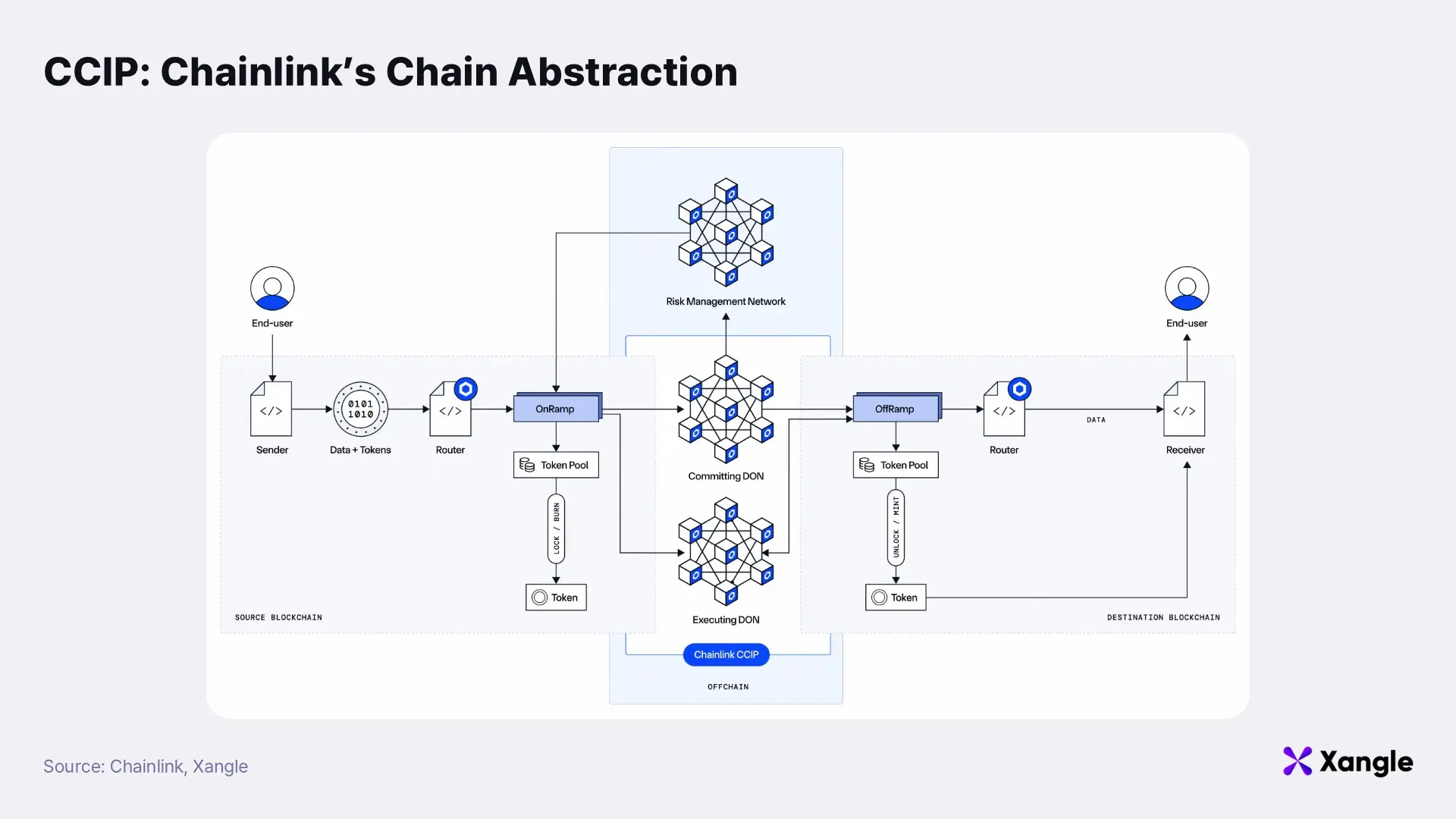
Chainlink’s Cross-Chain Interoperability Protocol (CCIP) addresses this fragmentation by unifying inter-chain heterogeneity under a single interoperability standard. At its core lies the combination of secure cross-chain messaging and programmable token transfers. Events and states confirmed on one chain are observed (read), aggregated by multiple nodes through off-chain consensus (verification), and then recorded on the target chain alongside tokens (delivery). This in turn immediately triggers (execution) subsequent actions such as collateral deposits, repayments, purchases, or burns. In effect, CCIP enables the entire on-chain transaction workflow (observation, verification, delivery, and execution) to flow seamlessly across chain boundaries. Compliance with institutional risk management frameworks, including SOC 2 Type 1 and ISO 27001 certifications, further enhances its credibility.
The significance of chain abstraction through CCIP extends well beyond simplifying asset transfers. From the perspective of the app economy, it allows multiple chains to operate as if they were a single vast network, vastly improving both development efficiency and market scalability. In today’s multichain environment, developers must otherwise redeploy the same application repeatedly and take on separate operational and maintenance overhead for each chain, given their differing consensus mechanisms, runtime environments, messaging rules, and token standards. CCIP abstracts away these differences through a standardized interface, enabling developers to serve a far broader market with a single codebase. The benefits are clear: reduced development costs, faster time-to-market, and a consistent application experience for users across many chains.
User experience improves just as dramatically. Until now, users had to be acutely aware of chain differences: “This asset only exists on Ethereum, this app only runs on Polygon, and bridging requires extra steps.” CCIP removes that friction. Just as people do not think about TCP/IP when visiting a website, users simply experience “I sent a token” or “I used an app.” This seamless UX is critical for blockchain’s mainstream adoption.
The impact on markets and liquidity is equally profound. Liquidity is currently siloed by chain, leading to different prices for the same token and lower capital efficiency due to fragmentation. By consolidating liquidity and workflows, CCIP helps create deeper, more efficient markets and accelerates network effects. When cross-chain compatibility is guaranteed, both capital and users naturally migrate toward the most convenient environment, increasing the overall growth rate of the blockchain ecosystem.
Ultimately, CCIP standardizes the multichain environment into a “blockchain internet.” Just as TCP/IP in the 1990s catalyzed mass adoption by connecting disparate intranets into a single global network, CCIP serves as the essential abstraction layer for the multichain era. This represents not just a technological breakthrough but the opening of a new paradigm: the era of “borderless blockchain.” CCIP is therefore both a core driver of the blockchain app economy’s next leap and the technical foundation for its mainstream adoption.
2-2. ODP and Data Abstraction: The Bloomerg Terminal for Onchain Data
At its core, a blockchain functions as a “closed computer.” It can store and process agreed-upon states but cannot directly access information from the external world. Yet the vast majority of financial and real-world asset applications fundamentally require external data. RWA tokenization, security tokens, DEXs, derivatives, and insurance are all inoperable without off-chain inputs. A collateralized loan needs collateral prices, a fund redemption requires NAV, and an insurance contract must validate weather conditions or the occurrence of specific events. Crucially, what is needed is not mere “data access.” Applications can only operate safely when data quality (accuracy), availability (persistence), and resistance to manipulation (security) are all guaranteed simultaneously.
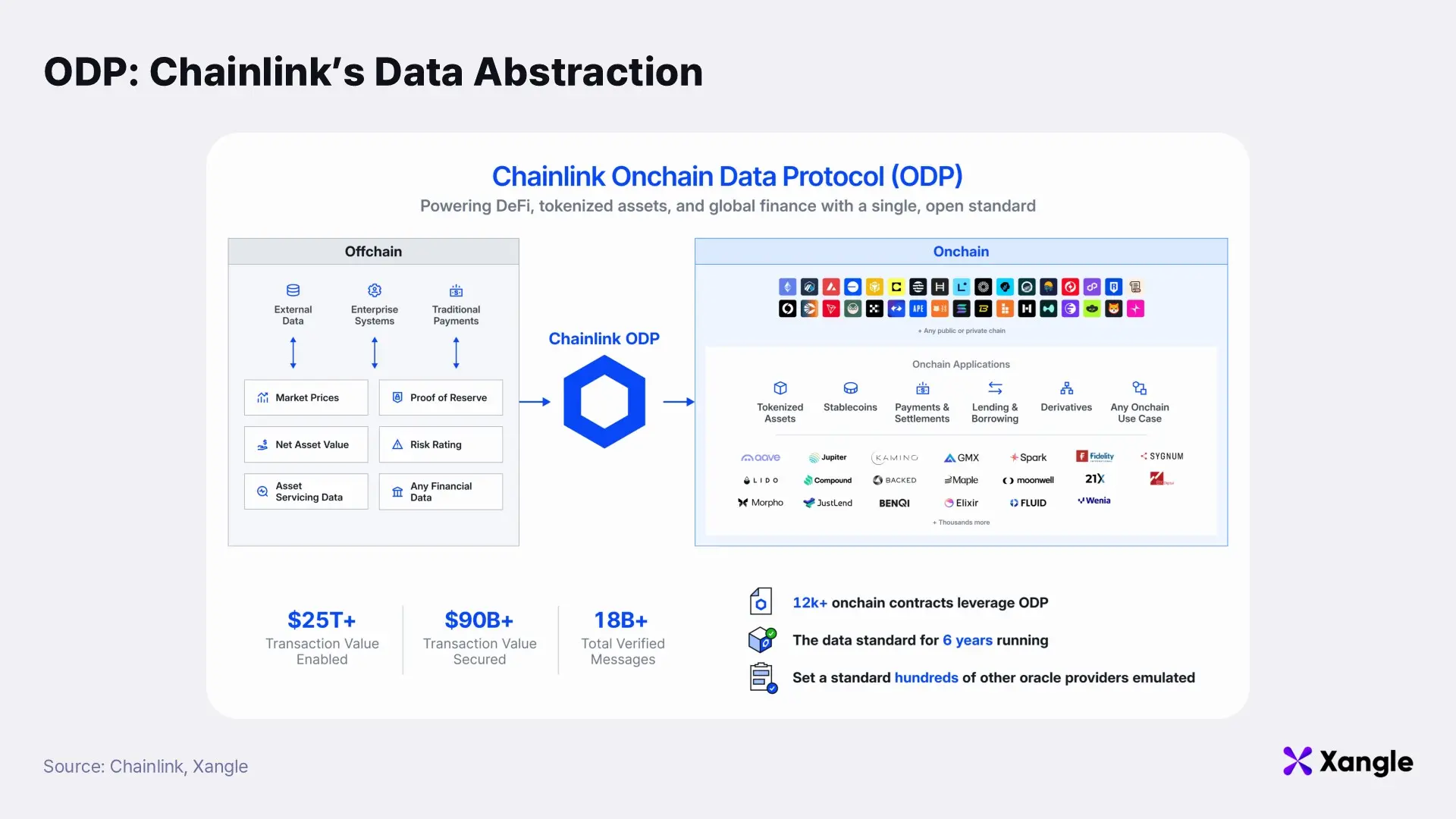
Chainlink’s Onchain Data Protocol (ODP) abstracts this entire process in a systematic way. It standardizes the full pipeline of data collection, consensus, distribution, and consumption at the protocol level. Independent nodes pull information from premium data sources (such as exchanges and data providers), aggregate and verify it through OCR (Offchain Reporting), and then deliver the validated results to blockchains via a unified interface. For developers, integration becomes straightforward: simply call Price Feeds, Data Streams, or SmartData (e.g., Proof of Reserve, NAV) without needing to manage the hidden complexities of source diversification, aggregation logic, or update cycles (heartbeats). In effect, the entire data pipeline is encapsulated within a single abstraction layer.
From a developer’s perspective, ODP functions much like an onchain Bloomberg Terminal. Just as Bloomberg consolidates data across asset classes into a single screen, ODP unifies thousands of data sources under one interface. This ensures that when new chains, assets, or data types are added, developers can still access them in exactly the same way. The code used to fetch data remains unchanged; only the call parameters differ. This radical simplification accelerates product launches, streamlines operations and maintenance, and enhances overall productivity for developers. For financial institutions, ODP serves as a trusted mechanism for reliable and verifiable data delivery.
From a developer’s perspective, ODP functions much like an onchain Bloomberg Terminal. Just as Bloomberg consolidates data across asset classes into a single screen, ODP unifies thousands of data sources under one interface. This ensures that when new chains, assets, or data types are added, developers can still access them in exactly the same way. The code used to fetch data remains unchanged; only the call parameters differ. This radical simplification accelerates product launches, streamlines operations and maintenance, and enhances overall productivity for developers. For financial institutions, ODP serves as a trusted mechanism for reliable and verifiable data delivery.
3. Economic Abstraction: Unifying Payments and Settlement
3-1. Payment Abstraction: Converging Every Asset into LINK
Payments remain one of the most significant institutional and psychological bottlenecks to blockchain adoption. For institutions in particular, directly holding or transacting in digital assets is highly challenging due to regulatory compliance, accounting treatment, and internal risk management. Web2 institutions that hold crypto assets and use them for economic activities incur considerable effort and cost. For this reason, institutions tend to prefer familiar instruments—stablecoins such as USDC, traditional fiat currencies like USD, or mainstream digital assets like ETH. The Chainlink Network, by contrast, is coherently designed around a single economic unit—LINK. Node rewards, staking, and the security model are all structured around this common denominator, which underpins the network’s cryptoeconomic security. The challenge, then, is reconciling institutional preferences for non-crypto or stable assets with Chainlink’s reliance on LINK. That reconciliation mechanism is Payment Abstraction.
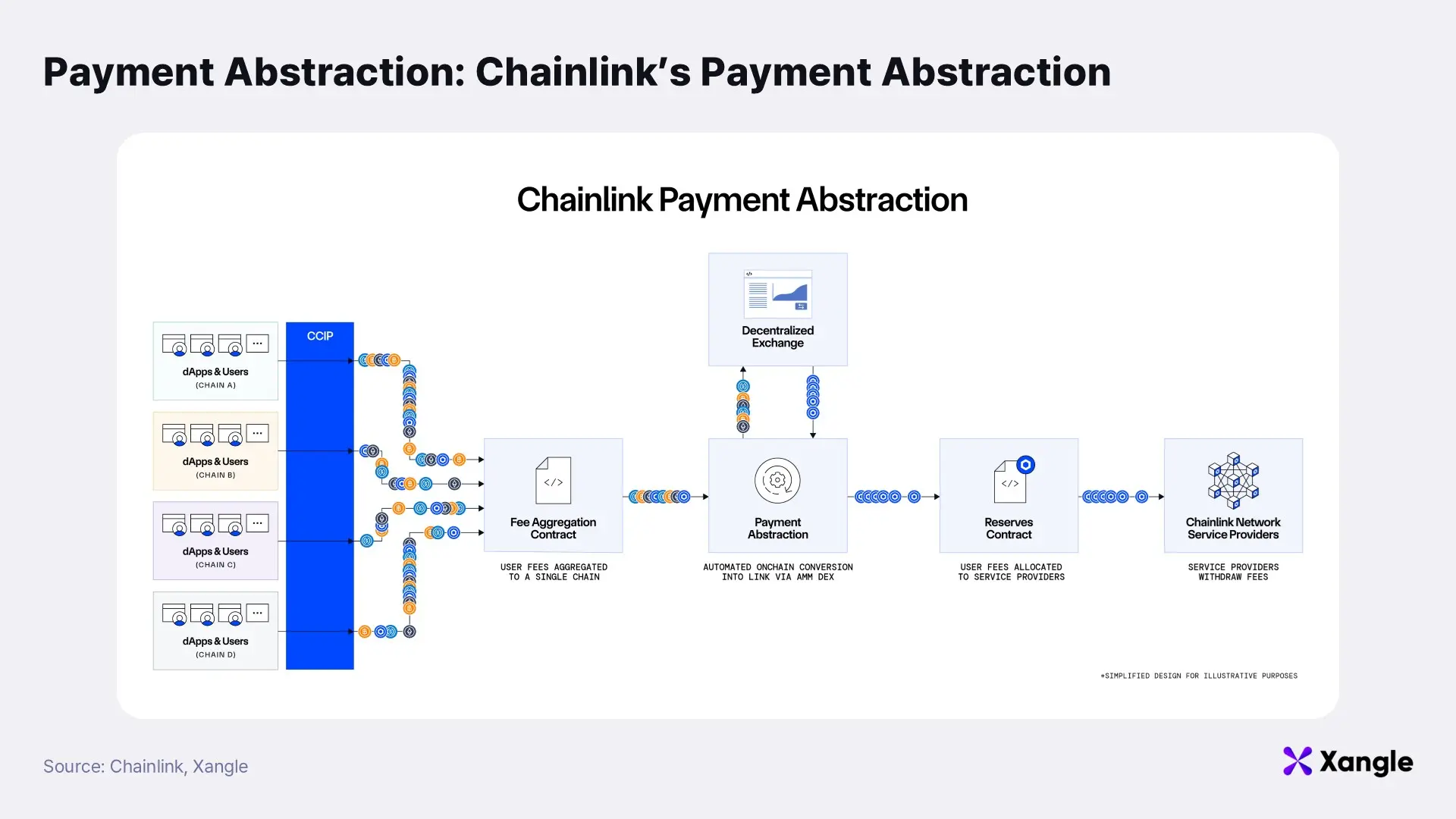
The workflow operates as follows:
- Fees are collected in multiple assets across different service chains.
- These assets are periodically consolidated via CCIP onto Ethereum, which serves as the “payment hub chain.”
- The aggregated assets are automatically converted into LINK on a DEX (initially Uniswap V3), with conversion rates secured by Price Feeds.
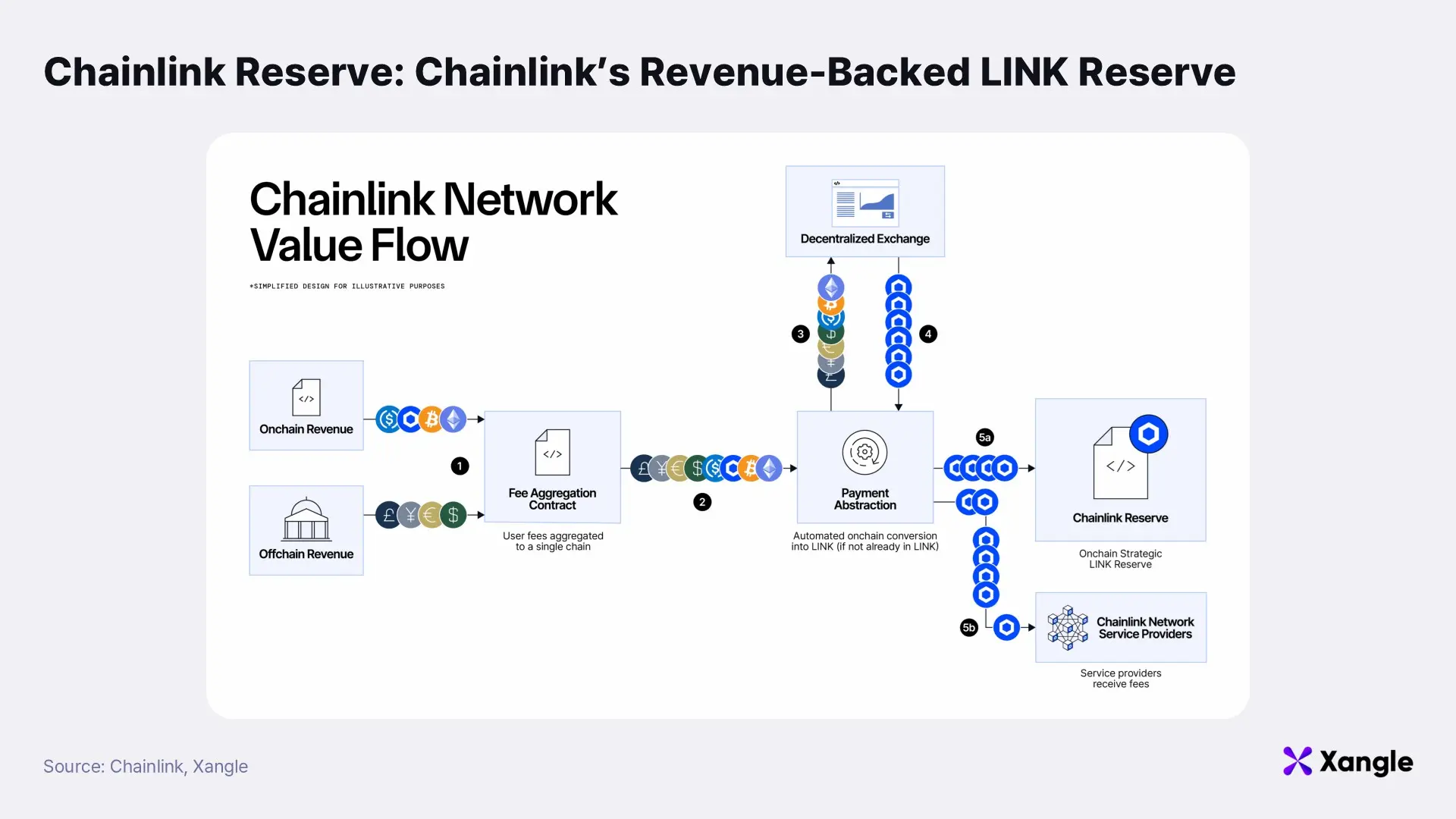
- The resulting LINK is deposited into a Reserve contract, from which service providers (nodes and stakers) can withdraw.
The system incorporates token whitelists, slippage protection, automated execution, and multi-signature security, minimizing systemic risk. In effect, an invisible infrastructure ensures that diverse payment assets ultimately converge into LINK as the single settlement unit in the Chainlink Network.
For the end user, the experience mirrors that of credit card networks. Regardless of currency or geography, the act of paying is experienced simply as “swiping a card.” Behind the scenes, conversion, settlement, clearing, and fee allocation occur invisibly. Chainlink’s Payment Abstraction works in precisely this way. A user may see only that payment was made in ETH, USDC, or USD, while the conversion into LINK that powers network operations remains hidden. Enterprises can continue to use existing payment systems while accessing Chainlink services, and developers are no longer forced into design trade-offs because of payment UX. Payments are simplified, while the underlying system operates reliably in an unseen layer.
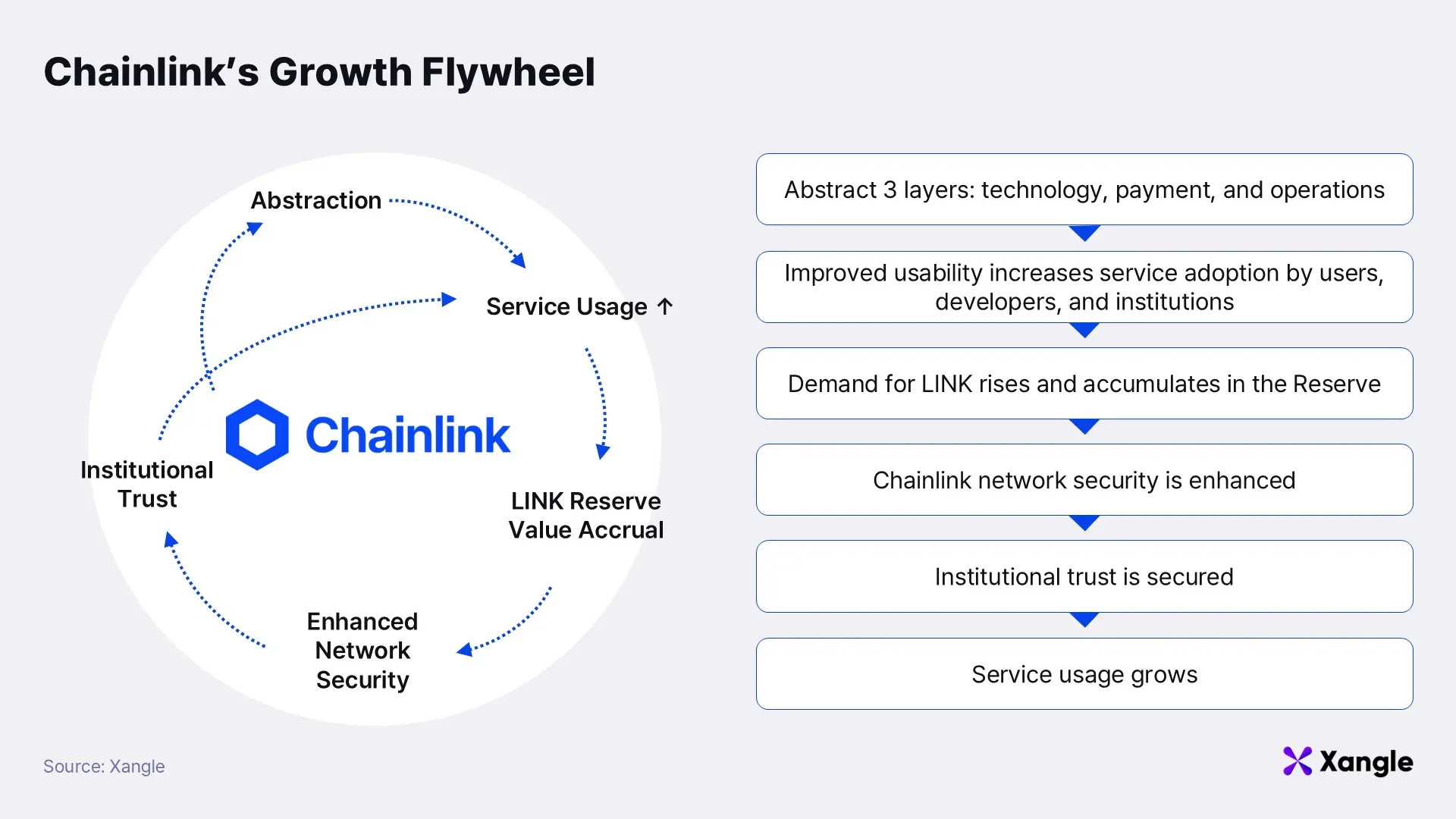
The economic implications are profound. Greater flexibility in payment methods leads to higher service usage and, consequently, increased on-chain revenue. Because every transaction ultimately converts into demand for LINK, the token economy is reinforced. What emerges is not just improved convenience but a virtuous cycle: better UX → higher usage → increased LINK demand → stronger network security. Payment Abstraction is the point at which the technical and economic layers resonate in tandem.
3-2. Chainlink Reserve: Strategically Accumulating LINK from Revenues
If Payment Abstraction is the invisible layer of conversion and settlement that removes user friction, the next step is ensuring that various forms of revenue are continuously retained within the network. This is the function of the Chainlink Reserve. The Reserve operates as an on-chain smart contract, aggregating not only on-chain user fees but also off-chain contractual revenues, such as payments for data services and maintenance, by converting them into LINK. Even at an early stage, more than $6.6 million worth of LINK has already been deposited into the Reserve, with no short-term plans for withdrawal. Far from being a simple “storage” of LINK, it serves as a strategic financial buffer designed to support the network’s long-term growth.
The Reserve’s core value lies in consolidating on-chain and off-chain revenues into LINK. For example, even when a protocol pays Chainlink service fees in USDC or ETH, Payment Abstraction automatically converts them into LINK and deposits them into the Reserve. The accumulated LINK then becomes the foundational asset that underpins the network’s economic stability and finances its security budget.
This mechanism closely parallels the role of ”foreign exchange reserves” in traditional finance. Just as central banks hold U.S. dollars to stabilize their domestic currencies, Chainlink builds resilience and trust by steadily accumulating LINK through its Reserve. The existence of the Reserve acts as a stabilizing anchor, ensuring that the network can continue operating reliably even amid future market volatility or unexpected shocks.
For institutions, this structure is highly compelling. Revenues generated through contracts with Chainlink, whether by institutional investors or data providers, are ultimately converted into LINK, which in turn enhances the network’s security. The infrastructure these institutions depend on thus becomes more stable. Whether acting as service users or data providers, institutional participants immediately contribute to the sustainability of the Chainlink Network. The result is a virtuous cycle in which every participant reinforces the system’s long-term resilience.
4. Operational Abstraction: CRE as a Unified Execution Environment
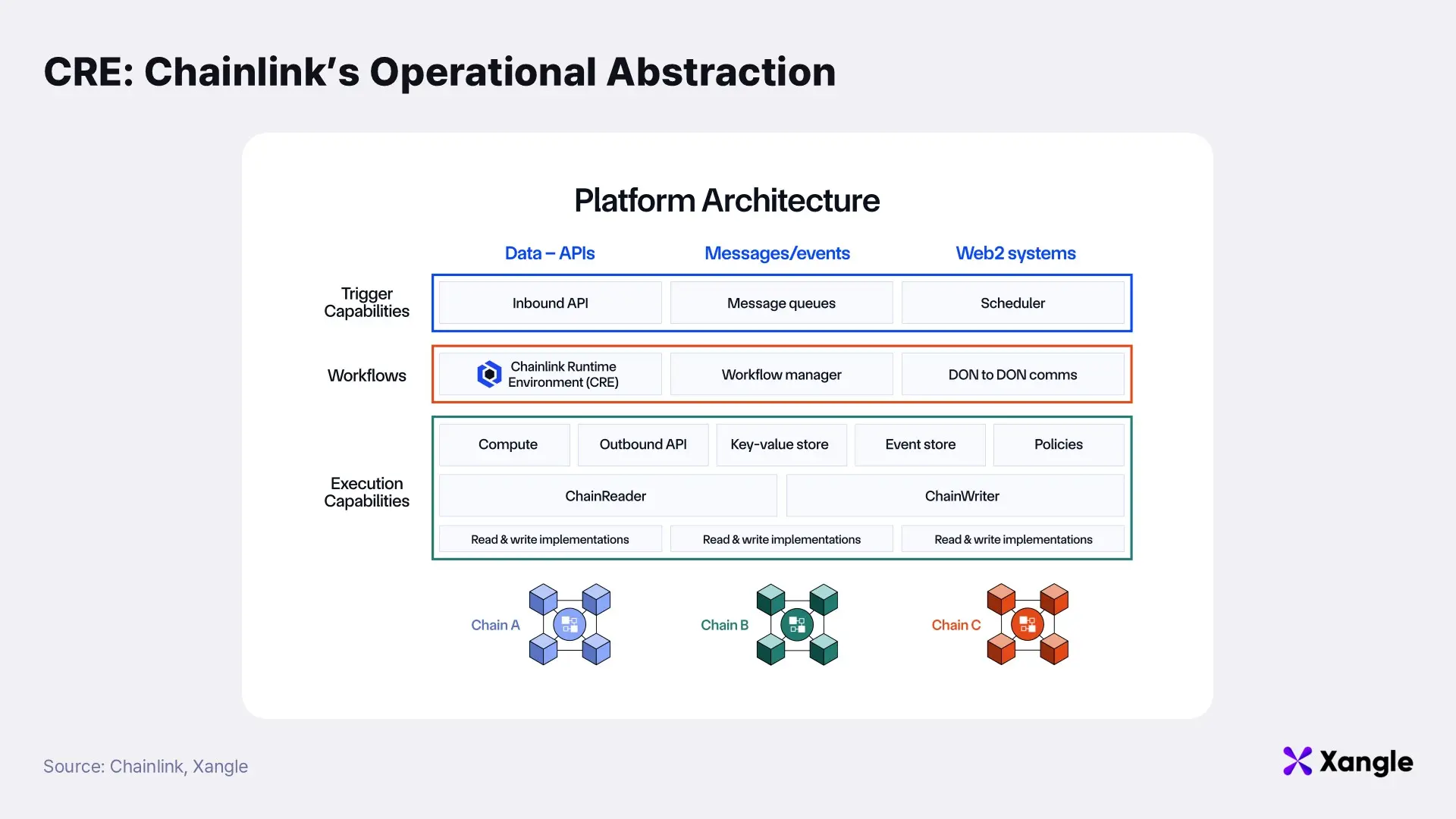
The chain, data, and payment abstractions discussed so far have focused on simplifying specific backend functions necessary for blockchain operations. For true mass adoption, however, simplification at the backend alone is insufficient. What is needed is an integration of the functions that end-users directly interact with at the frontend, delivering a consistent and seamless platform experience. This is precisely where the Chainlink Runtime Environment (CRE) comes in.
CRE is an integrated execution layer that consolidates the standardized capabilities Chainlink has developed over the years—data, interoperability, privacy, and compliance. Developers need only define their desired business logic in the form of “Trigger – Action – Output.” CRE then decomposes complex workflows into modular functions, executes them across multiple DONs (Decentralized Oracle Networks), and reassembles the results. Much like how a developer launches an app on Android or iOS while the operating system invisibly manages countless hardware resources and network connections, CRE orchestrates blockchain functions and external systems as an unseen operating system.
The value of this approach lies in its ability to “compress complexity into a single line.” Just as the TCP/IP standard once unified disparate networks into a single web, and just as the Java Runtime Environment (JRE) allowed developers to focus on application logic without being constrained by hardware details, CRE implements hybrid onchain–offchain workflows under a unified orchestration layer. The result is a single environment where developers can control multiple chains, diverse data sources, existing financial systems, and even country-specific policy and regulatory logic.
In essence, CRE represents more than functional abstraction; it is the cornerstone of a vision to transform blockchain into a vast operating system. For developers, it lowers barriers to entry. For institutions, it provides a safeguard that enables existing workflows to be seamlessly ported on-chain. For users, it creates the experience of everything being seamlessly connected. Ultimately, CRE exemplifies the decisive moment when a collection of abstractions evolves into a platform.
5. True Institutional Adoption Lies in Demand, Not Supply
The series of abstraction efforts does more than reduce technical complexity—it translates directly into tangible improvements in user experience. The question, then, is how these abstractions are driving blockchain’s mainstream adoption and how institutional players are positioning themselves within this ecosystem.
“Institutional adoption” is one of the most frequently discussed themes in the blockchain industry. Many observers tend to interpret institutional involvement solely from the standpoint of data provision. A representative example is the U.S. Department of Commerce (DOC) distributing official U.S. macroeconomic data on-chain through Chainlink. This type of development is indeed highly significant. Once authoritative institutional data is available on-chain, the key indicators required for DeFi and tokenized securities markets, such as prices, exchange rates, interest rates, and fund net asset values (NAVs), can be utilized in ways that are far more reliable and verifiable.
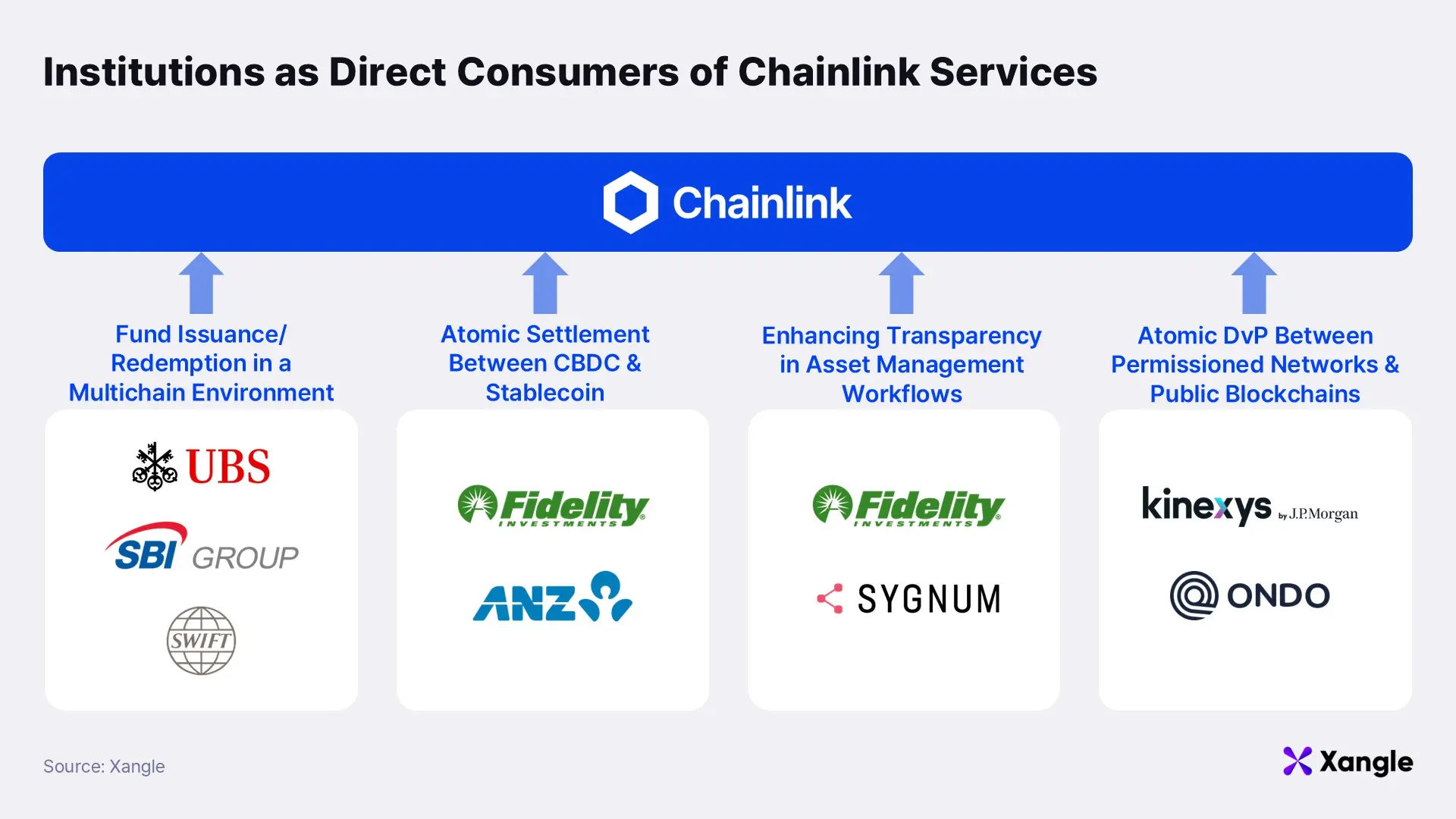
Yet true institutional adoption goes beyond playing the role of data supplier. Institutions are increasingly turning into service consumers that actively leverage blockchain. Banks use Chainlink’s CCIP and ODP to facilitate cross-chain payments and settlements. Asset managers employ them to automate the issuance, subscription, and redemption of tokenized securities and funds. Infrastructure enterprises integrate them to automate policy enforcement and risk management processes. Notable examples include UBS, SBI, and Swift, which have automated the fund lifecycle across multichain environments; ANZ and Fidelity, which have experimented with PvP (payment-versus-payment) settlement between CBDCs and stablecoins; J.P. Morgan’s Kinexys and Ondo Finance, which have demonstrated atomic DvP (delivery-versus-payment) between permissioned networks and public chains; and Fidelity and Sygnum, which have brought fund NAV data on-chain to enable transparent reporting and automated settlement.
Taken together, these cases underscore a critical point: institutions are no longer confined to “providing data to blockchain” but are increasingly acting as demand-side participants that consume blockchain services. In areas such as asset tokenization, trading infrastructure, and regulatory-aligned payments, leading financial institutions are adopting the Chainlink platform as a core connective layer. Institutional adoption, therefore, is progressing on both the data and service fronts simultaneously, forming the foundation for the explosive growth of the Web3 ecosystem.
6. Conclusion: How Chainlink Turns Blockchain into Everyday Infrastructure
The greatest barriers preventing blockchain from becoming a mainstream technology are its technical opacity and institutional complexity. Chainlink addresses these not simply through performance improvements, but by systematically abstracting three critical layers—technology, payments, and operations—into a unified platform experience.
- Technology: CCIP and ODP standardize multichain environments into something akin to the internet, concealing inter-chain heterogeneity while creating a data funnel that enables off-chain data to be consumed consistently on-chain.
- Payments: Payment Abstraction and the Chainlink Reserve consolidate payments, settlements, and rewards into a single economic unit—LINK—enhancing user experience while reinforcing network security.
- Operations: CRE integrates these abstractions into a single execution environment, enabling developers and institutions to manage complex onchain/offchain workflows seamlessly.
Together, these layers of abstraction transform blockchain into an invisible operating system and shared infrastructure for finance and business. End users encounter only simple interfaces. Developers rapidly build on productive tools. Institutions can transplant their existing workflows into multichain environments with minimal modification. At the same time, all economic activity converges on LINK, strengthening both network security and long-term sustainability.
More importantly, these abstractions do more than provide technical convenience—they are actively driving institutional adoption. Institutions are no longer confined to the role of data suppliers; they are becoming direct consumers of blockchain services. Banks are testing cross-chain payments and settlements via CCIP. Asset managers are leveraging ODP-powered data to automate the issuance, subscription, and redemption of tokenized securities. Infrastructure enterprises are migrating policy execution and risk management into on-chain workflows. This marks blockchain’s gradual integration into the operational logic of finance and industry, where institutional participation on both the supply and demand sides combines to make mass adoption a reality.
In this way, Chainlink interweaves abstraction, institutional demand, and a sustainable economic structure into an organic framework, establishing itself as the “invisible standard” that elevates blockchain to an industry norm. Just as the power grid’s outlets, the internet’s TCP/IP, and the smartphone’s app store enabled mass adoption, Chainlink provides the decisive pathway for blockchain to become the everyday foundational technology of global finance and the real economy.
What remains is a single question: with this powerful abstraction engine at its core, what path will Chainlink take next? As blockchain enters its next stage as mainstream infrastructure, the answer will be revealed in how Chainlink expands its business models and services to fulfill its vision.
Disclaimer
I confirm that I have read and understood the following: The information contained in this article is strictly the opinions of the author(s). This article was authored free from any form of coercion or undue influence. The content represents the author's own views and does not represent the official position or opinions of CrossAngle. This article is intended for informational purposes only and should not be construed as investment advice or solicitation. Unless otherwise specified, all users are solely responsible and liable for their own decisions about investments, investment strategies, or the use of products or services. Investment decisions should be made based on the user’s personal investment objectives, circumstances, and financial situation. Please consult a professional financial advisor for more information and guidance. Past returns or projections do not guarantee future results.
Xangle or its affiliated partners own all copyrights of the written or otherwise produced materials and content provided on the platform. Any illegal reproduction of such content, including, but not limited to, unauthorized editing, copying, reprinting, or redistribution will result in immediate legal actions without prior notice.
![[CIS Partner Summit Highlights] Sumsub: AI-Powered Trust Infrastructure for Digital Asset Businesses](https://resource.xangle.io/files/content/746AECF01E9094566488AD287BDF5977_1789025319904.webp)

![[Xangle RWA Series] Compliance](https://resource.xangle.io/files/content/9EB5169D9605BBF00DEC081C07A10955_1784185676780.webp)