
RecycleFarm: On-Chain Infrastructure for Fair and Efficient Carbon Markets


Table of Contents
1. The Growth Potential and Structural Constraints of the Carbon Credit Market
1-1. A Market on Track to Reach USD 4.7 trillion
1-2. Yet Persistent Inefficiencies from Measurement Errors and Data Distortion Must Be Solved
2. RecycleFarm: Building Fair and Efficient Carbon Markets Through On-Chain Infrastructure
2-1. Replacing Inaccurate MRV Systems with Real-Time, Quantitative, and Transparent Data Through ECO-DePIN
2-2. Building a Full-Stack Infrastructure From Decarbonization Activities to Carbon Data Trading
2-3. Democratizing Access to Real-World Carbon Infrastructure via RCF Staking
3. How RecycleFarm Scales: Liquidity, Physical Infrastructure, and Token Incentives
3-1. Unlocking Borderless Carbon Markets Through Blockchain Rails
3-2. Scaling the Data Layer Through Deep R&D and Real-World Infrastructure Integration
3-3. $RCF: The Incentive Layer Powering User Participation and Infrastructure Growth
4. Closing Thoughts: A Long Road Ahead, With a Clear Path to Scale
1. The Growth Potential and Structural Constraints of the Carbon Credit Market
1-1. A Market on Track to Reach USD 4.7 trillion
The carbon credit market has emerged as one of the fastest-growing new industries worldwide. Carbon credits serve as a policy instrument that assigns a financial cost to greenhouse gas (GHG) emissions from countries and companies, thereby incentivizing reductions. The mechanism was formally introduced under the 1997 Kyoto Protocol, and the market began taking shape as a global system following the launch of the EU ETS (Emission Trading System) in 2005.
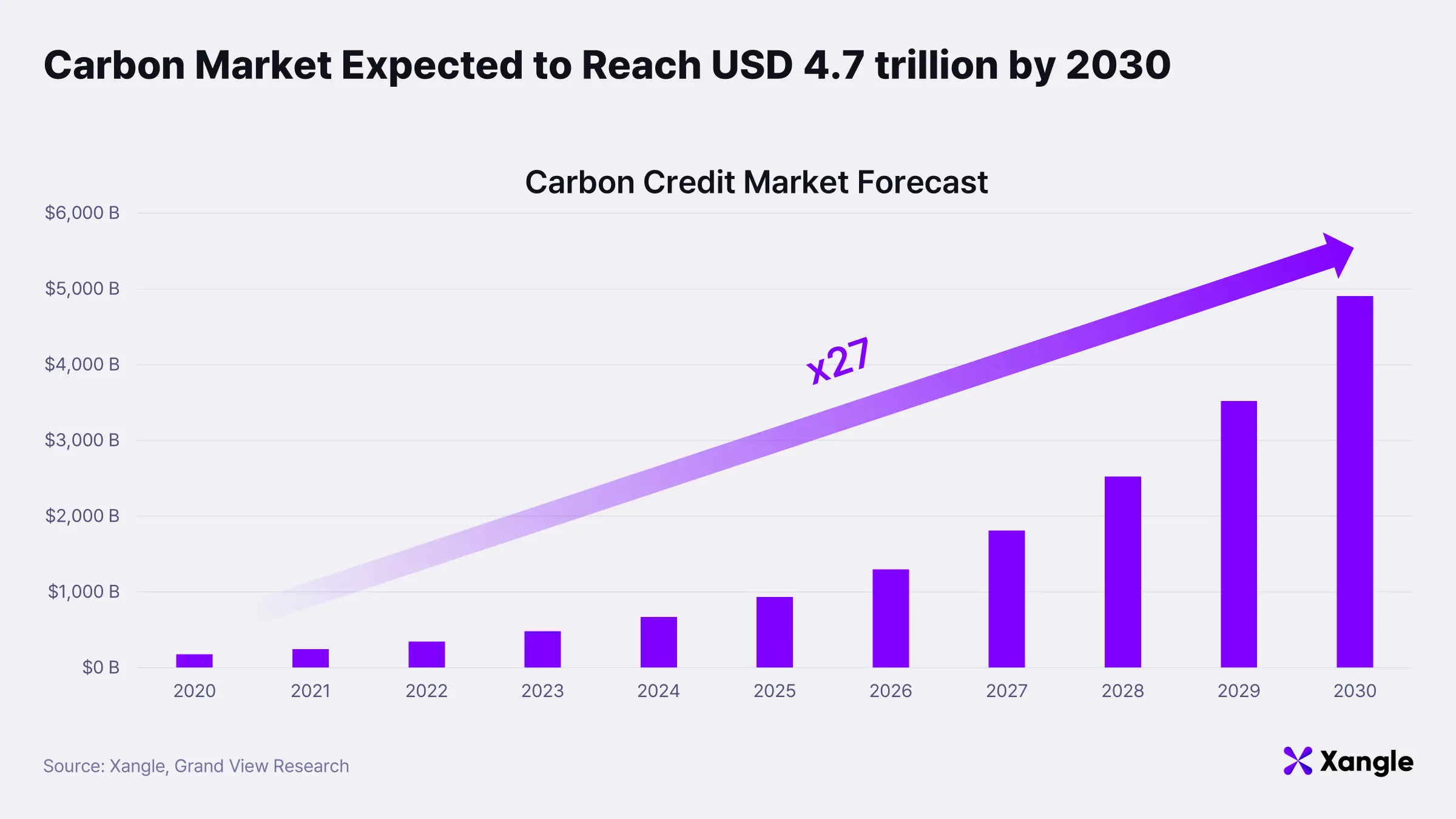
The expansion accelerated rapidly after 2010, driven by ESG-related regulation and a wave of corporate Net Zero commitments. According to the global consulting firm Grand View Research, the global carbon credit market was valued at approximately USD 479.4 billion in 2023; with a projected CAGR of 39.4%, the market is expected to reach USD 4.7343 trillion (roughly KRW 7 quadrillion) by 2030.
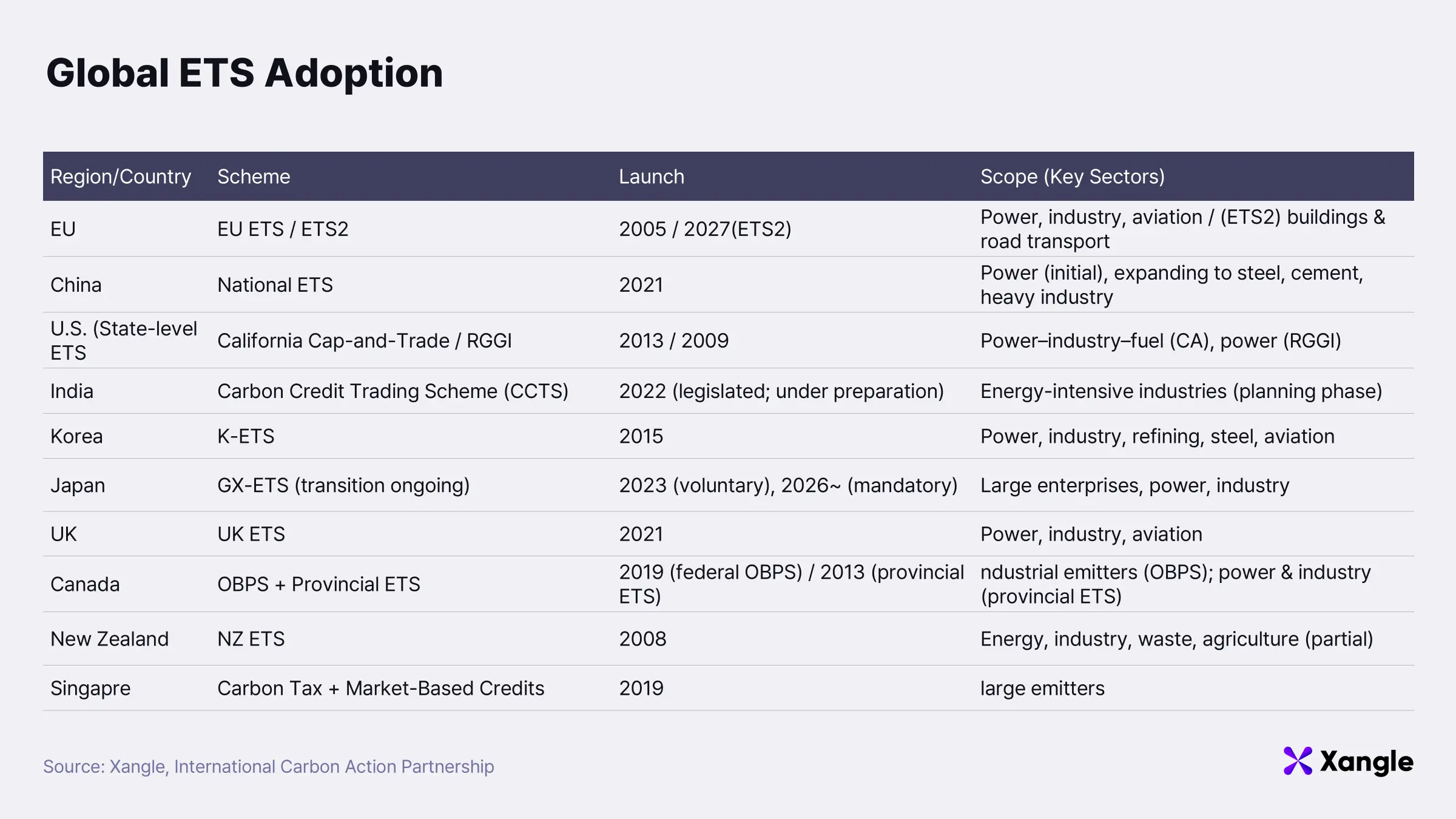
Several structural factors explain why the carbon credit market continues to attract strong interest. Regulatory mandates form the first and most decisive driver. The European Union enforces strict carbon regulations across the power and industrial sectors under the EU ETS and has introduced CBAM (Carbon Border Adjustment Mechanism), which effectively imposes carbon costs on external exporters as well. Starting in 2027, the EU plans to implement ETS2 as a separate system that expands coverage to buildings and road transport. China launched its national ETS in 2021, establishing the world’s largest single carbon market and gradually widening the scope from the power sector to heavy industry. While the United States lacks a federal-level ETS, state and regional programs—such as California’s Cap-and-Trade and the RGGI (Regional Greenhouse Gas Initiative)—have formed a de facto carbon market with robust regulatory infrastructure.
Other major economies, including South Korea, India, Japan, the United Kingdom, Canada, and Australia, have also introduced or strengthened emissions trading systems. As these systems become legal and institutional requirements across large economic blocs, companies can no longer avoid acquiring carbon credits; regulatory expansion has become a direct structural force driving demand in the carbon credit market.
The second driver stems from the growing impact of ESG performance on corporate value and financial outcomes. MSCI—an index and portfolio analytics provider—has found that companies with strong ESG scores outperform low-scoring peers by 3–5 percentage points over the long term. S&P Global likewise reports that firms with superior ESG ratings benefit from an average 10% reduction in capital-raising costs.
Carbon reduction has also become increasingly central to brand strategy and revenue performance. A joint study by McKinsey and consumer analytics leader NielsenIQ analyzed real-world U.S. sales data spanning 600,000 consumer products, 4,400 brands, and USD 400 billion in annual sales between 2017 and 2022. Products labeled with ESG-related claims achieved significantly higher sales growth than unlabeled products.
Across a five-year cumulative period, ESG-labeled products grew by +28%, whereas non-ESG products grew by only +20%. The data demonstrates that consumers now treat sustainability not as a preference but as an explicit purchasing criterion. Brand loyalty follows the same pattern: brands for which ESG-labeled products account for more than half of total sales show repurchase rates of 32–34% (three or more purchases per year), while brands with lower ESG penetration record repurchase rates below 30%.
These findings confirm that brands prioritizing ESG-based product lines gain a distinct long-term advantage in customer loyalty. Sustainability has moved well beyond reputation management; it has become a concrete business metric directly tied to revenue growth, repurchase behavior, and brand competitiveness.
One recent trend, however, deserves attention: the correlation between ESG significance and stock performance has weakened. Global supply chains fractured during COVID-19, and energy prices spiked after the Russia–Ukraine conflict. Many companies were compelled to prioritize price stability, inventory security, and the defense of core operations over carbon reduction. The energy sector surged while ESG-linked sectors lagged, fueling short-term skepticism around ESG investing.
Yet macro conditions are shifting again. Inflation pressures have eased; supply chain instability is gradually diminishing; and geopolitical risks have moderated—creating room for corporate and investor attention to return to medium- and long-term structural priorities such as carbon reduction and Net Zero transition strategies.
1-2. Yet Persistent Inefficiencies from Measurement Errors and Data Distortion Must Be Solved
The carbon credit market is undoubtedly expanding at a rapid pace, yet the system responsible for calculating emission reductions still carries unresolved structural weaknesses. The issue is commonly referred to as MRV (Measurement, Reporting, Verification): a framework in which errors can arise at any stage of measuring, reporting, or validating reduction data. For carbon credits to be issued legitimately, actual reductions must be recorded with precision. In reality, however, cases of overestimation, inaccurate calculations, or unverified activity data being accepted into the market remain widespread.
Three structural factors account for MRV’s recurring inaccuracies. First, verification data is managed within centralized certification bodies, which limits independent external validation and leads to inconsistent measurement standards across institutions. Second, much of the reporting still relies on manual, PDF- and Excel-based workflows — a process highly vulnerable to omission, manipulation, or exaggeration. Third, double-recording occurs frequently across countries, companies, and individual project operators; reductions attributed multiple times degrade both the quality and credibility of the market.
The consequences of incomplete MRV are not theoretical; they have already materialized as tangible market losses. A 2023 joint investigation by The Guardian, Die Zeit, and SourceMaterial revealed that roughly 90% of forest-protection credits issued by Verra — the world’s largest certifier — lacked any real reduction impact. More than 100 million tons of credits, valued between USD 700 million and 1.5 billion (KRW 1–2 trillion), were effectively fraudulent. Ecosystem Marketplace, a leading carbon-market analytics group, similarly estimates that 40–60% of voluntary credits may not reflect true reduction volumes, indicating a structural issue across the entire market rather than the failure of a single organization.
Reliable data is therefore indispensable for the sustainable growth of the carbon credit market. Without accurate, consistent, and externally auditable records, the economic and environmental significance of carbon credits inevitably weakens. This recognition has prompted growing attention toward sensor-, IoT-, and satellite-based real-time MRV systems — paired with blockchain and DePIN infrastructures that store data in tamper-resistant formats. These technologies are increasingly considered viable solutions capable of addressing the structural vulnerabilities embedded within traditional MRV methodologies.
2. RecycleFarm: Building Fair and Efficient Carbon Markets Through On-Chain Infrastructure
The earlier sections examined the opportunities and limitations of the carbon credit market for a reason: RecycleFarm—the subject of this report—is a team attempting to solve precisely these structural issues. Its approach centers on building blockchain-based data infrastructure that addresses MRV opacity, inconsistent standards, and double counting, while transforming reduction data into a real-time, transparent, and tamper-resistant format. This technical vision has already gained international validation; RecycleFarm was selected for YZi Labs’ (formerly Binance Labs) EASY Residency program, spending ten weeks in New York refining its product and securing strategic investment, thereby laying the groundwork for a global launch.
2-1. Replacing Inaccurate MRV Systems with Real-Time, Quantitative, and Transparent Data Through ECO-DePIN
RecycleFarm is developing ECO-DePIN (Decentralized Physical Infrastructure Network), a blockchain-based MRV infrastructure designed to resolve the structural weaknesses of conventional MRV systems—namely their dependence on centralized verification bodies, reliance on manual reporting, and susceptibility to double counting.
The architectural core of ECO-DePIN involves redesigning the lifecycle of carbon reduction data into three stages: automatic on-site measurement → on-chain recording → decentralized verification. Physical devices equipped with automated measurement capabilities are connected to the blockchain network, enabling standardized collection of all carbon-related data, whether produced by micro-level individual actions or large-scale infrastructure.
A closer look at ECO-DePIN’s mechanics illustrates how the system operates:
- 1. Measurement: IoT modules, sensors, and AI quantify carbon-reducing activities in real time. For instance:
- When a PET bottle is inserted, the AI-RVM (Reverse Vending Machine) automatically identifies its material.
- EVs automatically log mileage and electricity consumption via manufacturer APIs.
- Smart tumblers measure and record users’ drinking volume and usage frequency.
- Solar energy generation and DAC (Direct Air Capture) capture volumes will also be recorded directly at the device level.
- 2. Reporting: Measured data is uploaded to the blockchain (BNB Chain), where device IDs, timestamps, and activity types are stored in a tamper-proof, immutable format.
- 3. Verification: Smart contracts and the community validate the data in a decentralized manner. PET classification verification, for example, can be performed directly by users—avoiding the traditional MRV structure in which a single institution monopolizes all verification authority.
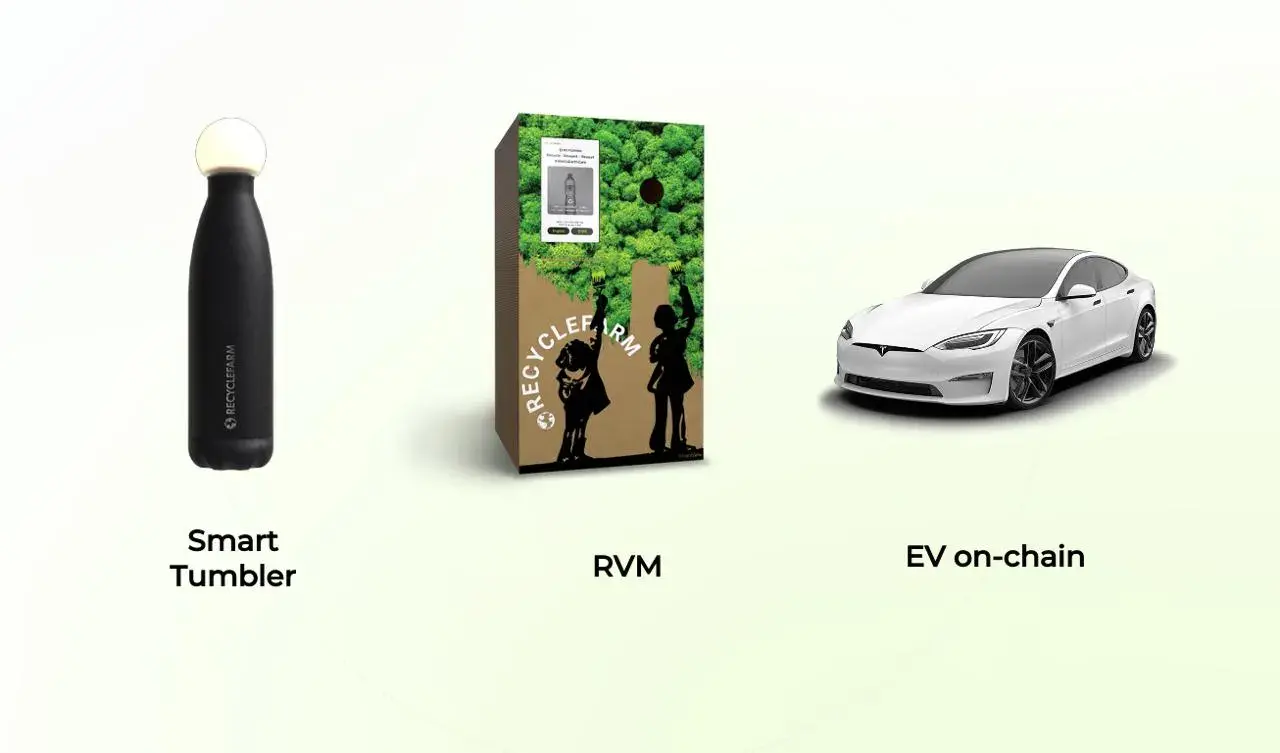 RecycleFarm Carbon Reduction DePIN Devices: Smart Tumbler (in-house development, automatic water intake volume measurement), Plastic Resource Collection Machine (in-house development, AI-based recovery), EV (manufacturer-linked, automatic recording of mileage and battery charging). Source: RecycleFarm
ECO-DePIN ultimately reconstructs the entire MRV process into an infrastructure that is real-time, quantitative, and decentralized. The design eliminates long-standing issues in the traditional market—tampering, data contamination, and double counting—at a technical level. The resulting data layer forms the foundation for issuing high-quality carbon credits, while materially improving trust, fairness, and transparency across the broader carbon market.
2-2. Building a Full-Stack Infrastructure From Decarbonization Activities to Carbon Data Trading
RecycleFarm’s differentiation extends far beyond building a transparent MRV system. The project aims to construct a full-stack carbon infrastructure that unifies all reduction activities—ranging from micro-level actions in everyday life to macro-scale reductions from solar and DAC infrastructure—into a single on-chain architecture, and connects these data flows directly to carbon credit issuance and trading. The intention is clear: secure proprietary reduction infrastructure, capture everything from individual user reductions to large-scale environmental facility output, and build a complete ecosystem in which these data streams move seamlessly through verification, on-chain recording, and financial asset creation.
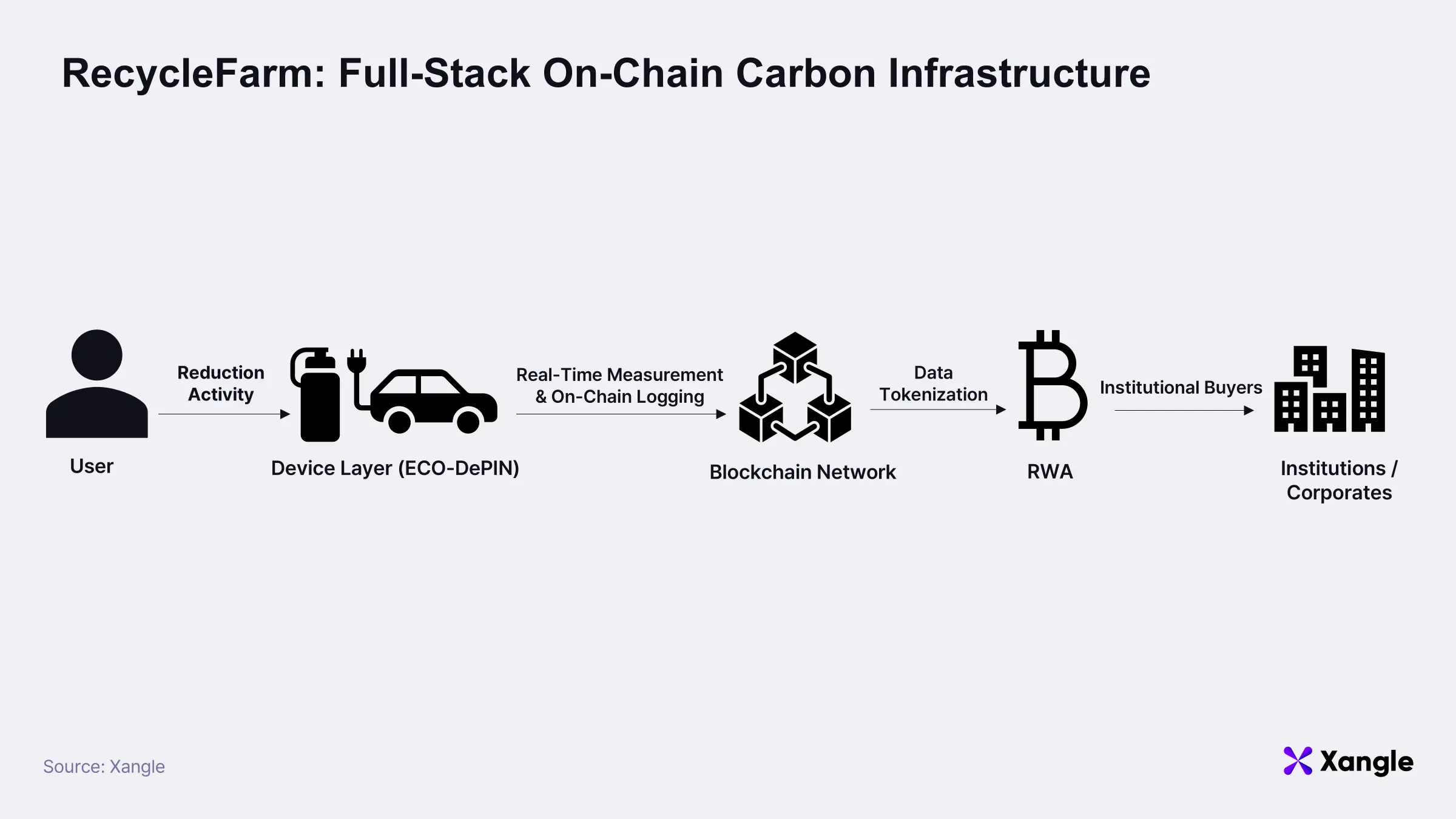
Micro-level reduction data forms the first layer of this stack. Activities such as smart tumbler usage, PET bottle recycling, and EV driving generate small yet measurable reductions, which RecycleFarm quantifies through device-based measurement and on-chain recording. Such activities have historically been excluded from carbon markets due to high verification costs and the difficulty of obtaining reliable data. ECO-DePIN devices—including AI-RVMs, smart tumblers, and EV integrations—allow RecycleFarm to convert each micro-activity into a standardized on-chain carbon data asset.
Macro-level reduction data forms the second layer. Large-scale infrastructure—such as solar power plants and DAC facilities—produces substantial reductions at the enterprise or institutional level. RecycleFarm is working with multiple partners to build infrastructure that automatically captures and records core data points through ECO-DePIN: generation output, electricity sales volumes, carbon removal quantities, and certification or issuance histories. These pipelines make it possible to transparently track the performance of specific companies or projects and establish a robust data foundation for future high-quality credit issuance.
The combined micro- and macro-level reduction data will eventually be tokenized and issued as RWAs. This architecture opens an on-chain marketplace where global corporations and institutions can freely transact carbon-related assets, significantly improving the accessibility and liquidity of the market. Although these on-chain carbon assets differ from regulated ETS credits used for direct compliance, they serve meaningful real-world use cases: corporate Net Zero and ESG reporting (Scope 1, 2, and 3 offsetting), high-quality voluntary carbon market (VCM) credit trading, and MRV-backed data layers required for green bonds and sustainability-linked bonds (SLBs). In short, the data RecycleFarm captures is positioned to become directly usable within the practical, rapidly expanding demand landscape surrounding decarbonization.
2-3. Democratizing Access to Real-World Carbon Infrastructure via RCF Staking
RecycleFarm aims to build more than just MRV and RWA infrastructure; the team is constructing a new financial layer that converts users’ staked native tokens ($RCF) into capital for the construction and operation of real-world carbon reduction infrastructure. The direction is clear: evolve beyond providing MRV data rails and become a financing infrastructure capable of expanding the physical assets that generate carbon credits.
At the heart of this model is a four-stage cycle: capital raising → infrastructure construction → generation of real-world revenue → on-chain distribution. When users deposit $RCF into a staking pool tied to a specific project, the capital funds the upfront installation and operating costs of revenue-producing assets such as solar power plants or DAC facilities. Once these assets come online, they generate stable real-world income streams—electricity sales, REC issuance, carbon credit sales, and more. These revenues flow periodically into the staking reward pool and are distributed proportionally to participants based on their staking share.
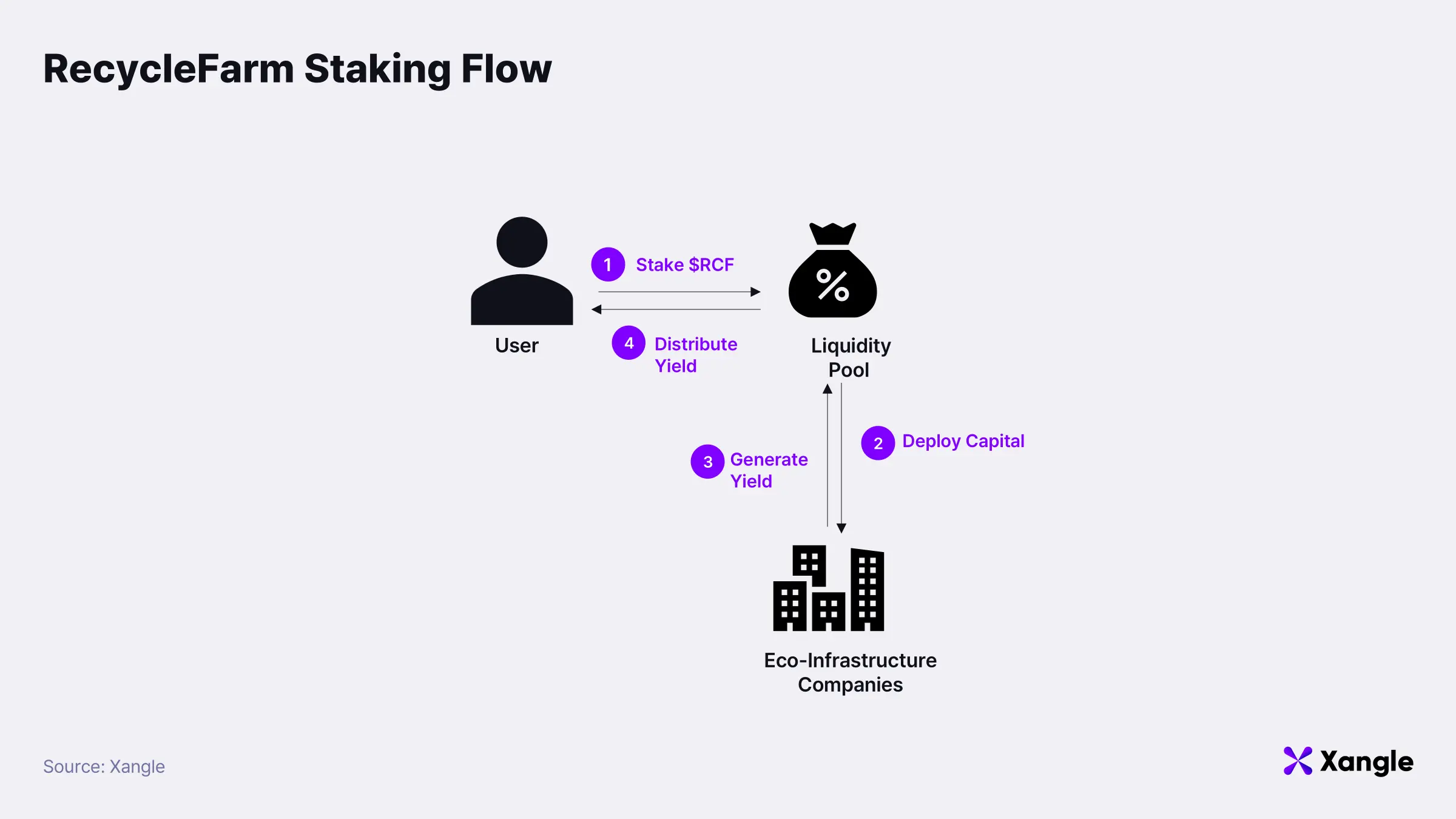
This design, however, introduces challenges that must be actively managed. Deploying staked $RCF as project capital requires liquidating a portion of tokens on the open market, creating sell pressure that can heighten price volatility. Token declines affect far more than staking APY—they directly constrain the scale of real-world capital that can be raised, forming a structural risk for the entire model. To mitigate this, RecycleFarm is evaluating a range of mechanisms, including stablecoin-based staking options, caps on staking pool capacity, and buyback-and-burn programs funded by infrastructure-generated revenue, all intended to dampen short-term volatility. These tools may help stabilize token dynamics, yet fluctuations driven by macroeconomic conditions or broader market sentiment will remain unavoidable. Ensuring that the $RCF staking model matures into a resilient financial layer will require continuous monitoring; its long-term stability will ultimately depend on how effectively the team designs, implements, and operates these price-stabilizing mechanisms as the ecosystem scales.
3. How RecycleFarm Scales: Liquidity, Physical Infrastructure, and Token Incentives
3-1. Unlocking Borderless Carbon Markets Through Blockchain Rails
Reduction credits issued by private certification bodies have been traded internationally for years, yet the underlying market architecture has long remained closed and non-standardized. Most transactions occurred through OTC agreements among brokers, project developers, and corporate offtakers—executed not via formal exchanges or open order books, but through email negotiations, bilateral contracts, and traditional bank transfers. Minimum trade sizes often ranged from hundreds to thousands of tons, effectively excluding retail users or anyone seeking to participate at smaller scales. Because transfers were allowed only between internal registry accounts, credits remained locked within restricted ledgers tied to specific national or institutional account structures.
Cross-border movement was technically possible, but the market could not reasonably be considered open or globally accessible. Transactions were slow and opaque; structural bottlenecks—broker margins, information asymmetry, settlement delays, and double-recording issues—persisted. These inefficiencies explain why participation in legacy carbon markets was effectively limited to a small number of large corporations and institutions.
A Web3-based model fundamentally reshapes this dynamic. When locally generated reduction data is recorded and tokenized according to on-chain standards, it no longer remains confined within a particular country’s registry. Instead, it becomes an open digital reduction asset—accessible, verifiable, ownable, and tradable by anyone. On-chain settlement executes instantly without the frictions of remittance regulations or banking procedures, enabling a marketplace where global users, DAOs, and communities participate under the same conditions, replacing the broker-dominated, institution-centric paradigm.
Web3 also alleviates long-standing capital bottlenecks in environmental infrastructure. Solar, waste-management, and carbon-removal facilities are inherently local projects, and under traditional finance, foreign capital faces significant constraints due to national regulations, permitting systems, and domestic financial frameworks. Within a Web3 structure, these frictions diminish considerably. Anyone with a wallet can participate under identical rules; stablecoin-based on-chain staking enables immediate capital formation without international transfer hurdles or foreign-investment restrictions. Because revenue distribution is automated via smart contracts, complex legal and financial structures become unnecessary. Infrastructure located within a single country can therefore raise capital from a global user base—a level of scalability difficult to achieve through traditional financing channels.
The broader implication is straightforward: Web3 enables locally generated carbon reduction data to be traded globally, while simultaneously introducing a new financial architecture that connects real-world decarbonization infrastructure to global users and global capital. RecycleFarm’s strategy is to leverage precisely this structure—securing a borderless user base unbound by any single jurisdiction or regulatory market, and using that foundation to accelerate ecosystem expansion.
3-2. Scaling the Data Layer Through Deep R&D and Real-World Infrastructure Integration
Building an on-chain carbon data infrastructure ultimately hinges on the volume and quality of reduction data that can be continuously accumulated. Even the most sophisticated technical architecture cannot scale if it is not fed by meaningful, verifiable reduction data. Securing such large-scale datasets requires the ability to integrate directly with real-world devices, sensors, and industrial infrastructure capable of measuring carbon-reducing activities at the point of origin—a capability that becomes a critical competitive edge for any project operating in this domain.
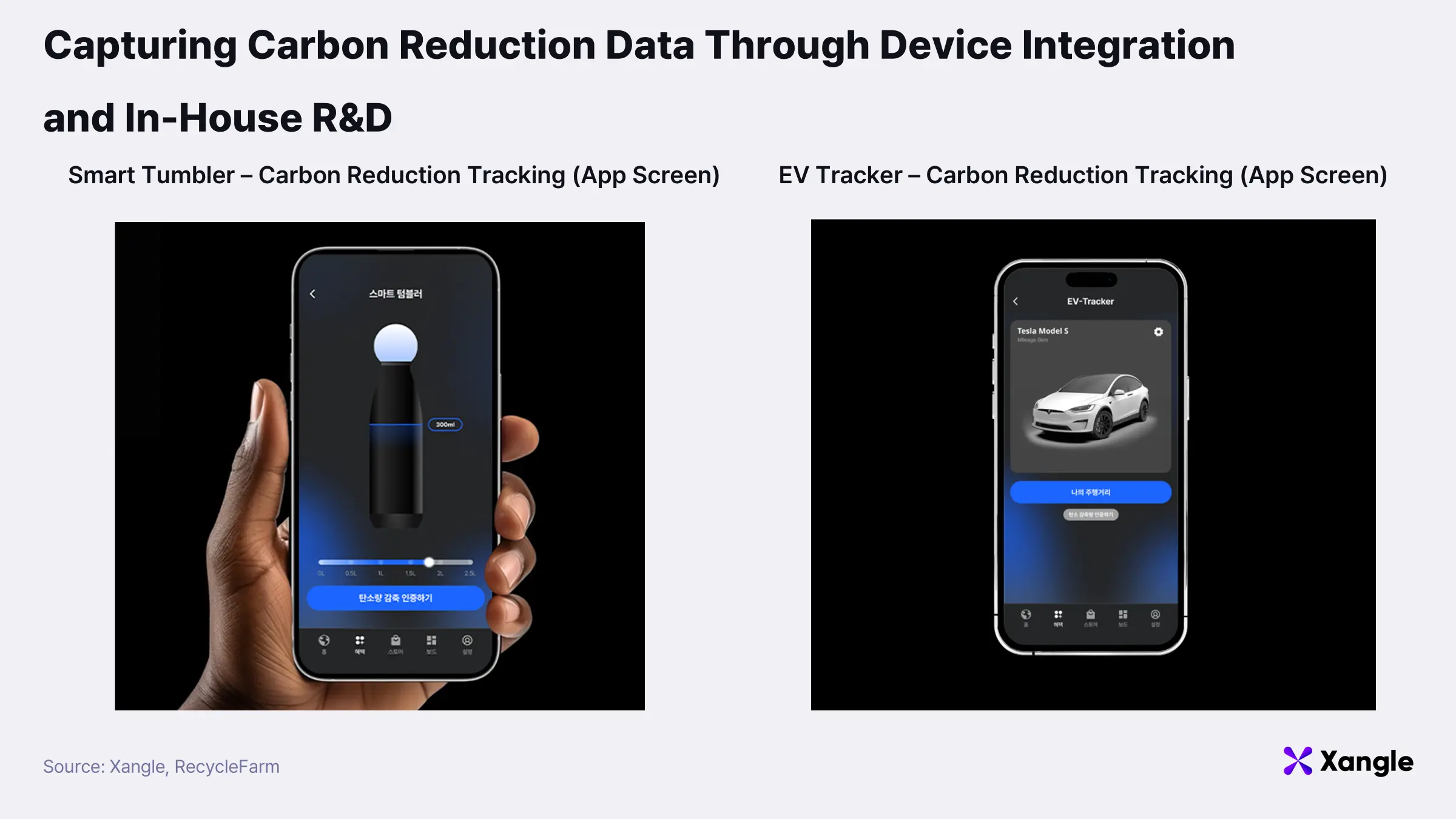
RecycleFarm distinctly excels on this front. The team has developed a wide range of carbon-reduction devices through its own in-house R&D, and it has already executed integrations with real-world infrastructure such as electric vehicles, resource recovery systems, and DAC facilities. Smart tumblers, on-chain RVMs, and EV data integrations have moved beyond concept into deployed devices and pilot infrastructure. According to the team, RecycleFarm is also conducting joint research with Seoul National University on next-generation high-efficiency DAC technology, and preparations are underway for integrations with solar power infrastructure. RecycleFarm is therefore not simply providing blockchain rails for data storage; it is building the physical supply chain that populates those rails with authenticated real-world carbon reduction data.
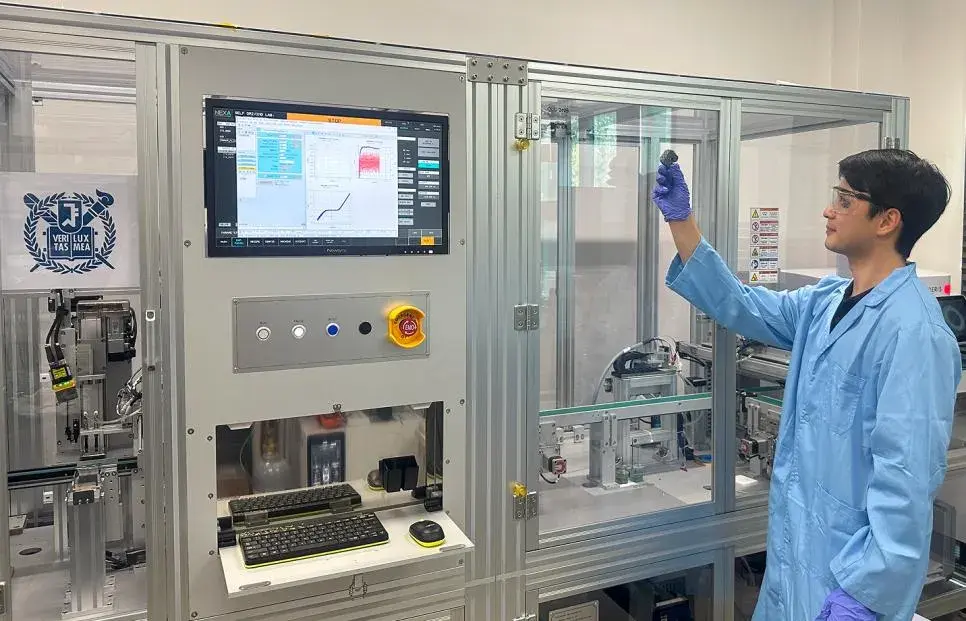 Source: Professor Jungwon Park’s Laboratory, Department of Chemical and Biological Engineering, Seoul National University (Professor Park serves as the research director of the global C2H Center, a carbon capture, storage, and energy conversion initiative conducted in collaboration with Seoul National University, POSTECH, Korea University, Stanford, MIT, Northwestern University, and the University of Chicago.)
A sustained expansion strategy that reaches deep into the physical layer positions RecycleFarm to capture and standardize vast volumes of real-world reduction activity into a large-scale on-chain ecosystem. If this direction continues, the project is well placed to establish a unique growth trajectory defined by its ability to bring real-world decarbonization data onto the blockchain at scale.
3-3. $RCF: The Incentive Layer Powering User Participation and Infrastructure Growth
The primary engine behind RecycleFarm’s ecosystem expansion is its native token, $RCF. Rather than serving as a simple reward mechanism, $RCF is designed as the central incentive layer that activates user participation, draws out carbon reduction activities, and drives demand across the entire ecosystem. Users earn $RCF as they engage in reduction behaviors, and—crucially—the token is architected to carry real utility within the ecosystem instead of functioning as a one-directional payout.
RecycleFarm’s incentive structure is straightforward and intuitive. When carbon reduction data generated through activities such as smart tumbler usage, recycling, EV driving, and participation in DAC or solar programs is validated through digital MRV, users immediately receive two types of credits: ESA Credit (ESA) and DePIN Credit (DPN). ESA is awarded for general environmental protection activities. DPN is issued when users verify carbon reduction using a DePIN device within the app. Both credit types ultimately convert into $RCF, forming a clear behavioral loop in which everyday sustainable actions map directly to token rewards.
The $RCF earned by users is not meant to be a one-off benefit. The token links directly to real-world infrastructure investment via staking, enabling revenue generated by solar facilities, DAC units, and other assets to circulate back on-chain. Users earn tokens through reduction activities, stake those tokens into infrastructure pools, and then receive a share of real-world proceeds—reinforcing the intrinsic value of $RCF and strengthening ecosystem alignment. This flywheel of reward → participation → revenue embeds $RCF as a core asset that accelerates ecosystem expansion.
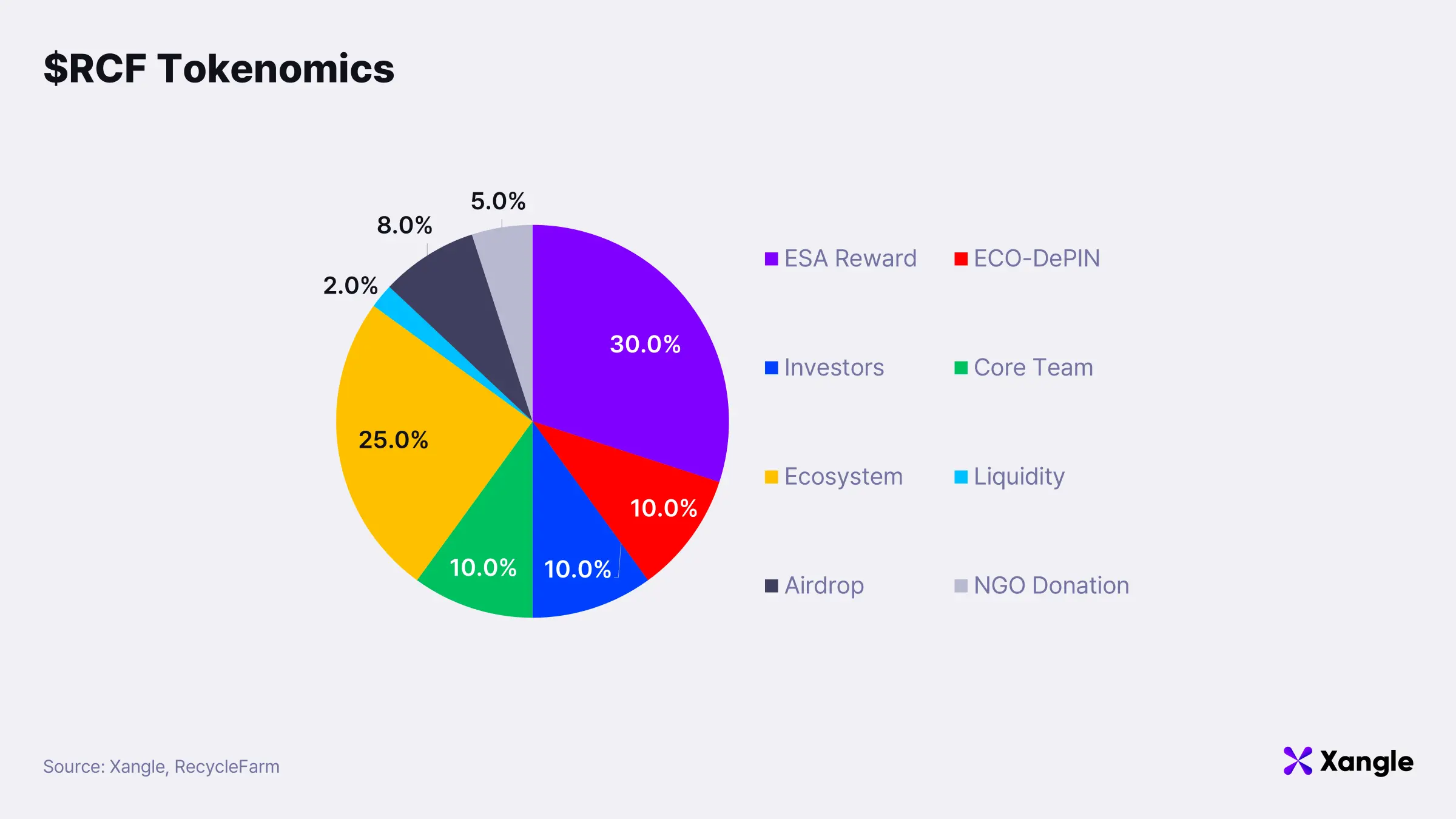
Token allocation reflects this behavior-driven design. Of the total supply of 10 billion tokens, 30% is reserved for ESA activity rewards, 10% for ECO-DePIN infrastructure rewards, and over 30% for ecosystem expansion and airdrops. These allocations remain preliminary and may be refined as the project evolves.
Still, as with any native-token-based financing model, structural risks remain: token price stability, liquidity pressures from converting tokens into real-world capital, and broader market volatility all impact durability. Over the long term, RecycleFarm will need to consider additional tokenomic stabilizers—such as fee switches or buyback mechanisms—to ensure that $RCF’s market value aligns naturally with the project’s actual business growth. The effectiveness of this model will ultimately depend on how well these mechanisms are designed and managed as the ecosystem scales.
4. Closing Thoughts: A Long Road Ahead, With a Clear Path to Scale
RecycleFarm still has substantial ground to cover. The team must continue developing additional devices, secure a large and active user base, and build infrastructure capable of issuing and circulating RWAs derived from the reduction data generated by those devices. The carbon data trading market and the real-world decarbonization investment model will also require ongoing expansion and refinement. Significant challenges remain: how to structure capital formation, how to manage token price volatility, and how to ensure long-term stability within the staking framework.
Even so, the vision and execution RecycleFarm has demonstrated to date are undeniably noteworthy. Its in-house R&D capabilities, its on-chain MRV infrastructure powered by ECO-DePIN, and its full-stack architecture that integrates micro- and macro-level reduction data into a unified layer represent competitive advantages not easily replicated by other Web3 carbon projects. Real-world traction further reinforces this point. The cumulative EV mileage verified through the RecycleFarm app has already reached 1,813,376 km—the equivalent of 39 laps around the Earth—corresponding to approximately 272 tons of CO₂ reductions. That reduction volume matches the annual CO₂ absorption capacity of roughly 41,000 pine trees, or the emissions from 5,000 round-trip flights between Seoul and Busan. These tangible outcomes illustrate that RecycleFarm’s device-driven ecosystem is not merely theoretical; it is operating meaningfully in practice. Building on this early performance, the team aims to integrate one million reduction devices into the system over the next two years and accumulate one million tons of on-chain reduction data annually.
The carbon credit market is expected to grow substantially under structural forces such as regulatory expansion, Net Zero mandates, and accelerating ESG-driven capital flows. If RecycleFarm maintains its current trajectory and secures a meaningful position within this evolving landscape, it holds significant potential to build an entirely new ecosystem—one in which real-world decarbonization activities flow seamlessly into an on-chain economy. The challenges ahead are real, but so is the scale of the opportunity. RecycleFarm is, without question, a project worth watching.
Disclaimer
I confirm that I have read and understood the following: The information contained in this article is strictly the opinions of the author(s). This article was authored free from any form of coercion or undue influence. The content represents the author's own views and does not represent the official position or opinions of CrossAngle. This article is intended for informational purposes only and should not be construed as investment advice or solicitation. Unless otherwise specified, all users are solely responsible and liable for their own decisions about investments, investment strategies, or the use of products or services. Investment decisions should be made based on the user’s personal investment objectives, circumstances, and financial situation. Please consult a professional financial advisor for more information and guidance. Past returns or projections do not guarantee future results. This article was written at the request of RecycleFarm. All content in this article was written independently by the author(s), and neither CrossAngle nor RecycleFarm had any editorial control or influence over the content. The author(s) may hold the cryptocurrencies mentioned in this article at the time of writing.
Xangle or its affiliated partners own all copyrights of the written or otherwise produced materials and content provided on the platform. Any illegal reproduction of such content, including, but not limited to, unauthorized editing, copying, reprinting, or redistribution will result in immediate legal actions without prior notice.
![[CIS Partner Summit Highlights] Sumsub: AI-Powered Trust Infrastructure for Digital Asset Businesses](https://resource.xangle.io/files/content/746AECF01E9094566488AD287BDF5977_1789025319904.webp)


![[Xangle RWA Series] Compliance](https://resource.xangle.io/files/content/9EB5169D9605BBF00DEC081C07A10955_1784185676780.webp)