MapleStory Universe Begins: A Game-Changer for Web3 Gaming
Table of Contents
1. MSU Stuns Industry by Allocating 97% of Tokens to the Community
2. How RX 2.0 Will Transform the MapleStory IP
2-1. Expanding the MapleStory Universe
2-2. Expanding content creation via community collaboration
2-3. Maintaining item rarity and reward certainty
3. $NXPC, the Master Key to Unlocking It All
3-1. $NXPC Tokenomics: Prioritizing ecosystem vitality above all else
3-2. The NXPC ↔ Item basket exchange: A novel model by the MSU team
3-3. Fixed exchange rate between $NXPC and $NESO
4. How Does the Nexpace Team Generate Revenue?
5. Final Thoughts
1. MSU Stuns Industry by Allocating 97% of Tokens to the Community
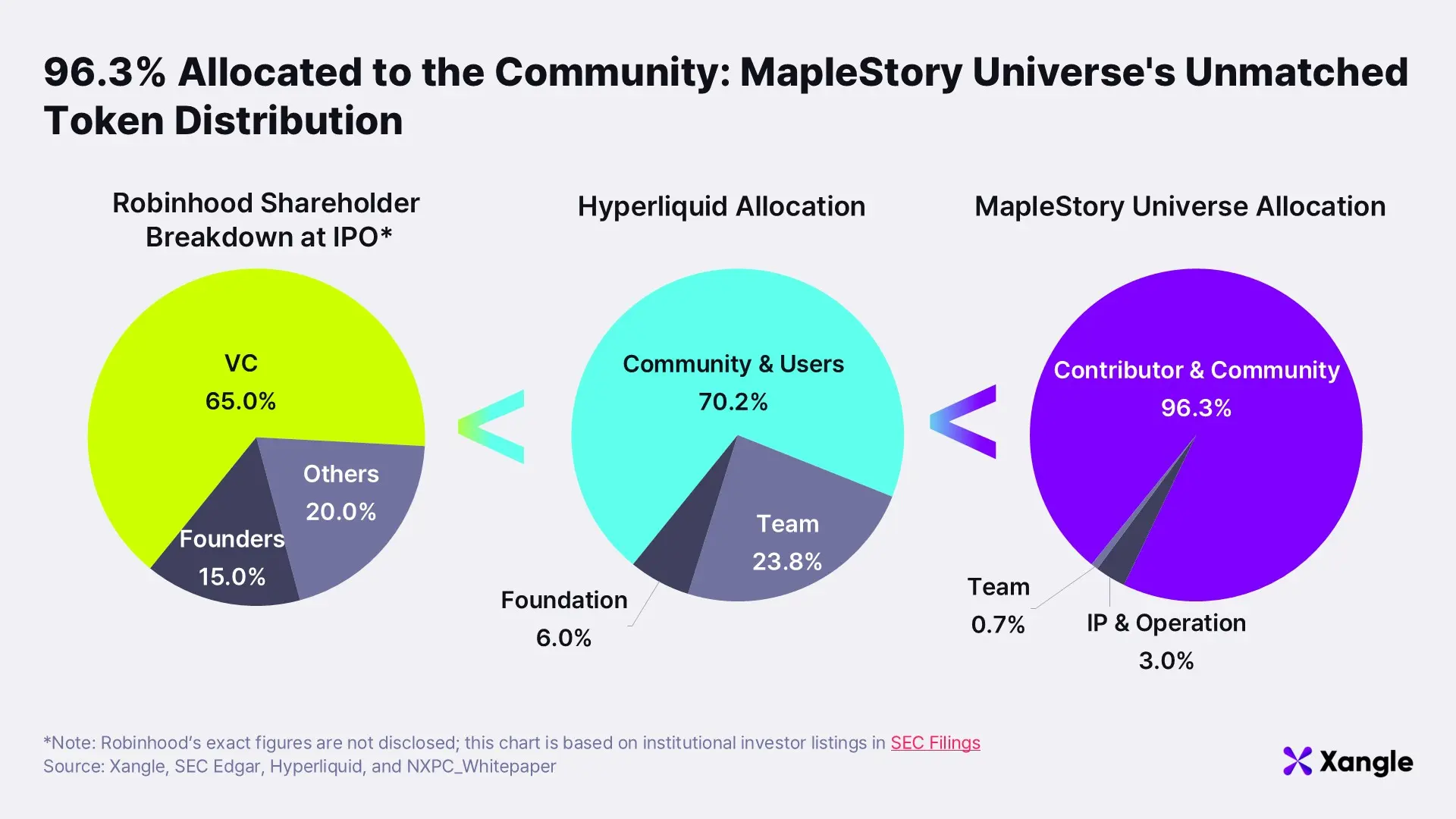
The highly anticipated whitepaper and tokenomics of MapleStory Universe (MSU)—one of the most eagerly awaited Web3 gaming projects—have finally been unveiled. Particularly striking was MSU's unprecedented announcement of allocating 97% of its total tokens to the community, stunning industry insiders once again. A distribution of 97% is practically unparalleled, astonishing even upon reflection. Over the years, MapleStory Universe consistently sparked curiosity and intrigue by continuously adopting forward-thinking strategies, prompting questions like: "What considerations went into this latest decision?" and "Why does this team consistently choose unconventional paths?" The recently released NXPC whitepaper and tokenomics provide valuable clues to these very questions.
Nexon’s motivation for integrating Web3 elements into the MapleStory IP is clear. Firstly, the aim is to significantly elevate the user experience by providing an unlimited supply of engaging content. Secondly, Nexon seeks to discover new business models capable of fundamentally expanding the scope and utility of the IP. Ultimately, this strategy moves beyond MapleStory’s traditional consumption-focused approach, instead aiming to unlock a deeper dimension of the IP’s inherent value. (For more details, refer to Xangle’s article "MapleStory Universe: Reawakening Nexon's Innovative DNA".)
The governance token of MSU, $NXPC, is expected to play a pivotal role in achieving this vision. Additionally, the newly introduced Reward Experience 2.0 (RX 2.0)—designed to provide an even more immersive user experience compared to previous MapleStory iterations—will serve as the foundational framework supporting this vision. In this report, we delve into how the RX 2.0 system and the recently revealed $NXPC tokenomics will drive the expansion of a genuinely community-led IP ecosystem, as well as how it will innovatively reshape the conventional gaming business model.
With numerous Web3 games having disappeared after failing to meet expectations, MSU has the potential to emerge as a key milestone for the upcoming wave of blockchain gaming. Just as Nexon established the foundations of the online RPG genre with Nexus: The Kingdom of the Winds nearly 30 years ago, and pioneered the successful free-to-play model through QuizQuiz, MapleStory Universe carries forward the innovation DNA from Nexon’s early days. This legacy heightens anticipation around the groundbreaking path MSU will pave in the near future.
2. How RX 2.0 Will Transform the MapleStory IP
MapleStory is an exceptional RPG that has continuously evolved for over 20 years, reshaping the online gaming industry. Its remarkable longevity and popularity stem primarily from its ability to continually deliver fresh, engaging content, ensuring ongoing enjoyment for its vast user base. The NXPC whitepaper explicitly attributes MapleStory’s sustained success to "the development team’s unwavering commitment to continuously providing intrinsic enjoyment (reward experiences).”
However, even the most exceptional development teams inevitably face limitations regarding the quantity and diversity of content they can produce. Particularly in today’s environment, characterized by platforms like YouTube where creators endlessly produce new content, traditional one-way methods of content delivery struggle to remain competitive. Recognizing this critical challenge, the MSU team aims to completely redefine the MapleStory experience through RX 2.0—a novel system integrating blockchain technology and token economies. RX 2.0 will expand the MapleStory IP through the following three core pillars:
2-1. Expanding the MapleStory Universe
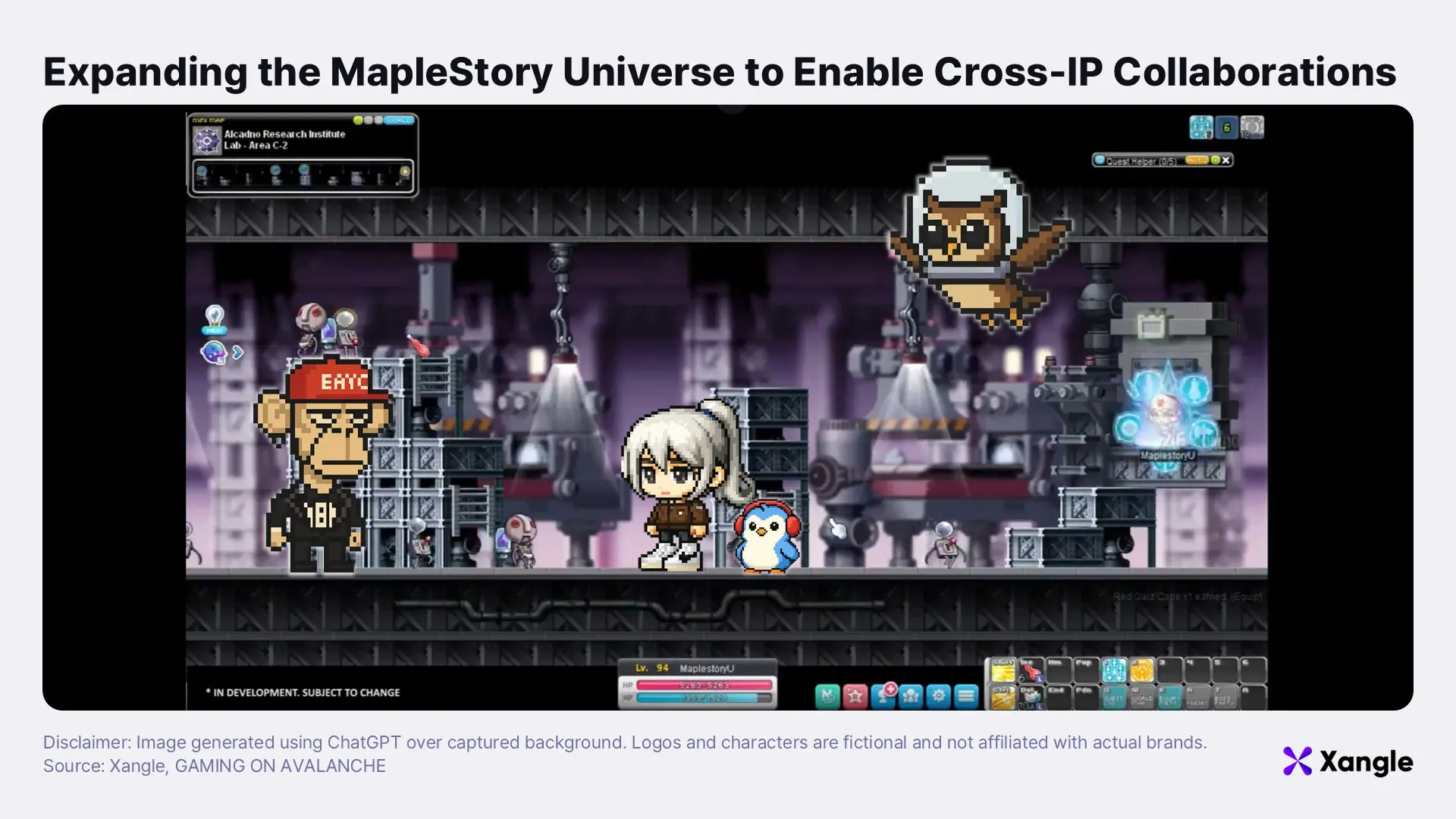
Many of us, particularly during childhood, imagined thrilling crossovers and dreamed of scenarios such as, "Why can't Batman and Superman team up?" or "What if MapleStory's iconic Pot Lid appeared in Diablo?" Such imaginative scenarios have occasionally become reality in the film industry. For instance, the crossover film Batman v Superman: Dawn of Justice was released in 2016—50 years after Batman’s initial film appearance—and the ensemble superhero film Avengers: Endgame later drew over 300 million viewers globally. These examples vividly illustrate audiences' strong desire to see distinct universes intersect, creating new and compelling narratives.
Leveraging blockchain’s inherent capability to transcend boundaries, MapleStory Universe (MSU) intends to bring about precisely this type of “universe crossover.” Items acquired within MSU will become usable beyond just MSU itself, extending into other services. Blockchain technology facilitates collaborations with diverse IPs, transforming user imaginations into realities—such as summoning BAYC characters, having Pudgy Penguins as pets, or facing Moonbirds as boss monsters.
2-2. Expanding content creation via community collaboration
As the MapleStory Universe expands and demand for diverse content skyrockets exponentially, it becomes practically impossible for a single development team to shoulder the entire content production burden. Traditionally, doubling or tripling content output required proportionately scaling up the development team. Recognizing this limitation, the MSU team is strategically shifting towards a community-driven content model. Rather than the conventional one-directional flow from “developer to user,” MSU aims to build an ecosystem where users themselves actively create and consume content—much like YouTube. RX 2.0 thus differentiates itself significantly from the traditional MapleStory, fostering an open environment where anyone can become a creator. This innovative approach is expected to maximize IP utilization, substantially enhancing its economic potential in the long run.
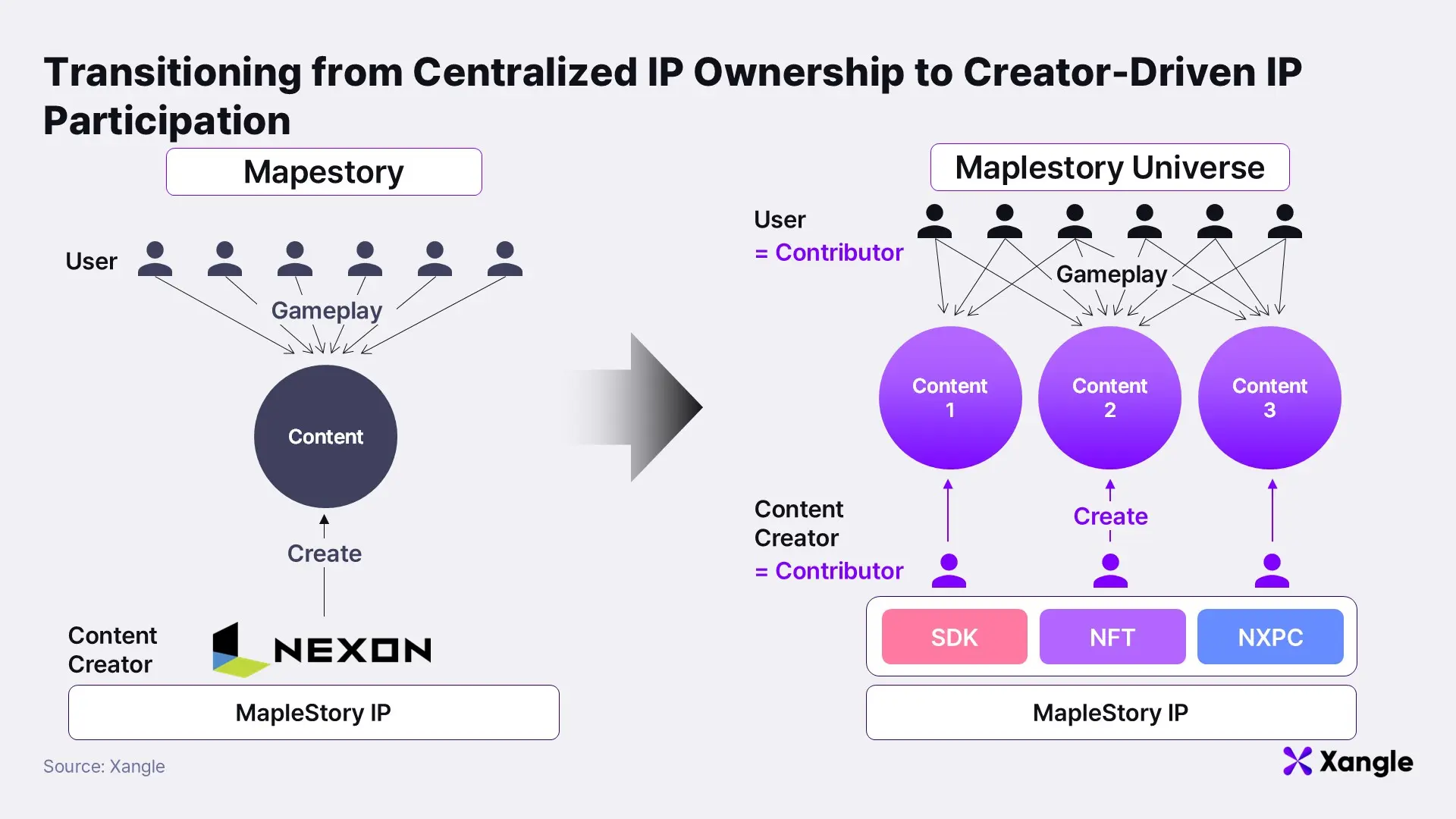
For community members (contributors) to participate actively in content creation, specialized development tools within MSU, notably an SDK (Software Development Kit), are essential. The MSU team has revealed five core features of its creator-focused SDK thus far:
-
Open API Architecture
Developers gain free and open access to character data, NFTs, marketplace information, and network-related data.
-
Customizable Metadata
By reading and writing application-specific metadata on MapleStory NFTs, developers can creatively redesign NFTs for various purposes and unique applications.
-
Extensible Asset Composition
Built upon token standards and metadata, developers can construct interconnected ecosystems across multiple applications, layering new utilities atop existing features.
-
NESO Integration
Integrated SDK tools allow direct incorporation of NESO tokens into business models, enabling their use both inside and outside the game environment.
-
Contributor Reward Mechanism
Developers can regularly earn $NXPC rewards based on performance metrics of their applications and their contributions toward expanding NFT utilities.
With these five SDK tools, creators can effortlessly design reward structures for content contributions, implement novel NESO-driven content models, and build architectures where diverse NFT assets dynamically interact.
2-3. Maintaining item rarity and reward certainty
A longstanding challenge faced by all online games, including MapleStory, is the gradual decline in item rarity over time. The value of rare items is directly tied to the effort players invest in acquiring them. If too many items become available, player motivation inevitably decreases, leading to diminished overall user experiences. Despite its remarkable 20-year legacy, MapleStory was no exception to this persistent issue. Could blockchain-driven RX 2.0 finally offer a solution?
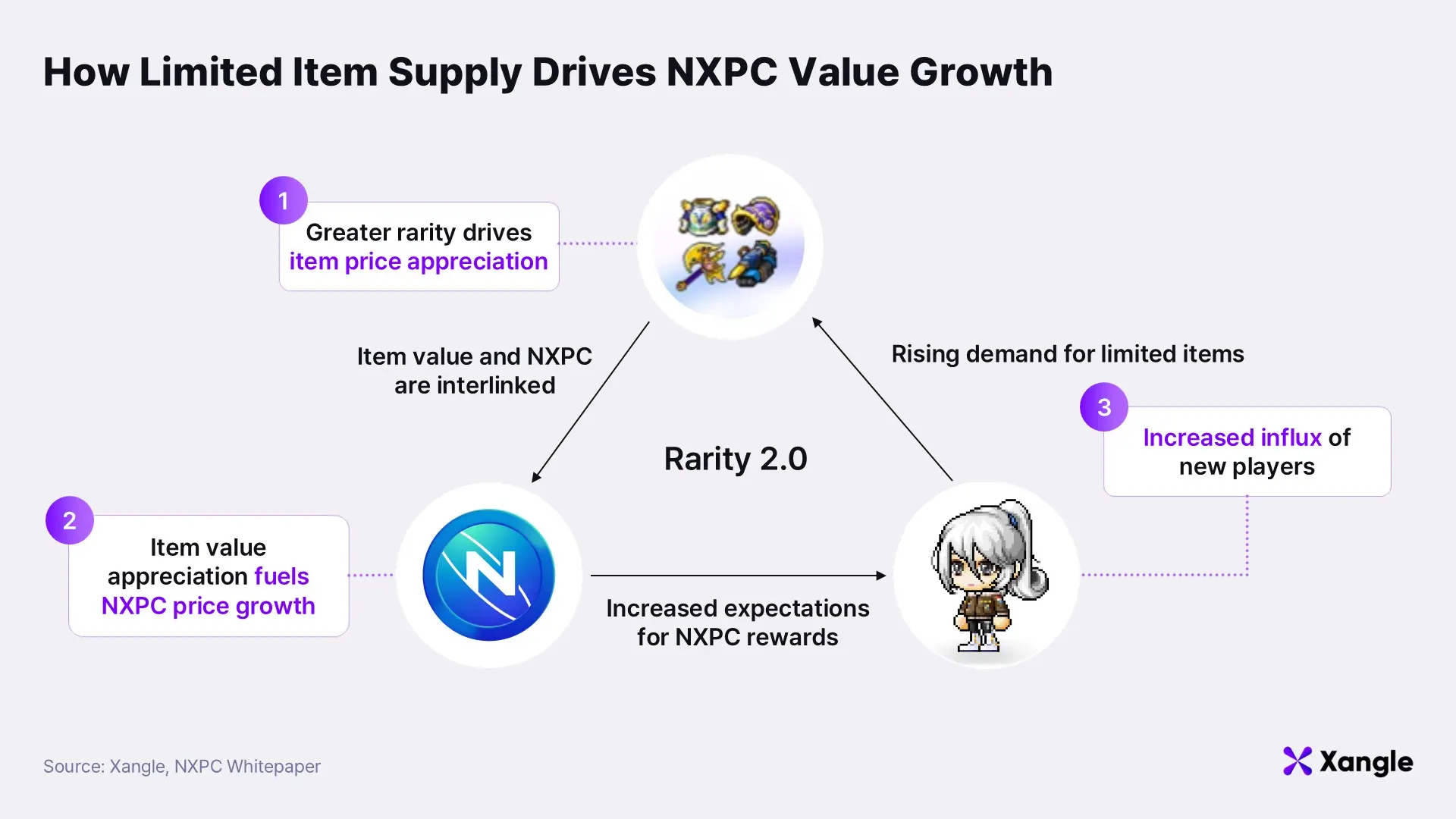
In its recently released documentation, MSU introduces a novel concept called "Rarity 2.0" precisely aimed at addressing this challenge. Central to Rarity 2.0 is the shift away from unlimited item creation toward establishing predetermined maximum quantities, effectively maintaining the inherent rarity of items. Additionally, these items will be issued as NFTs, transparently disclosing their total supply and distribution status directly to users via blockchain technology.
Furthermore, these limited-supply items are explicitly designed to be interchangeable with the $NXPC token. Ecosystem participants—such as players and creators—can utilize their earned $NXPC tokens (awarded based on contributions) to purchase item collections, or alternatively, convert item collections back into $NXPC tokens for monetization. This structure intrinsically ties the value of scarce items to the capped supply of $NXPC, setting the foundation for a positively reinforcing economic loop. Consequently, the long-term value of both items and $NXPC tokens is expected to appreciate. Players, in turn, will experience enhanced motivation due to the increasing value and rarity of their hard-earned items, reinforced further by the continuous opportunity to exchange these items for $NXPC, thus encouraging sustained engagement with the game.
3. $NXPC, the Master Key to Unlocking It All
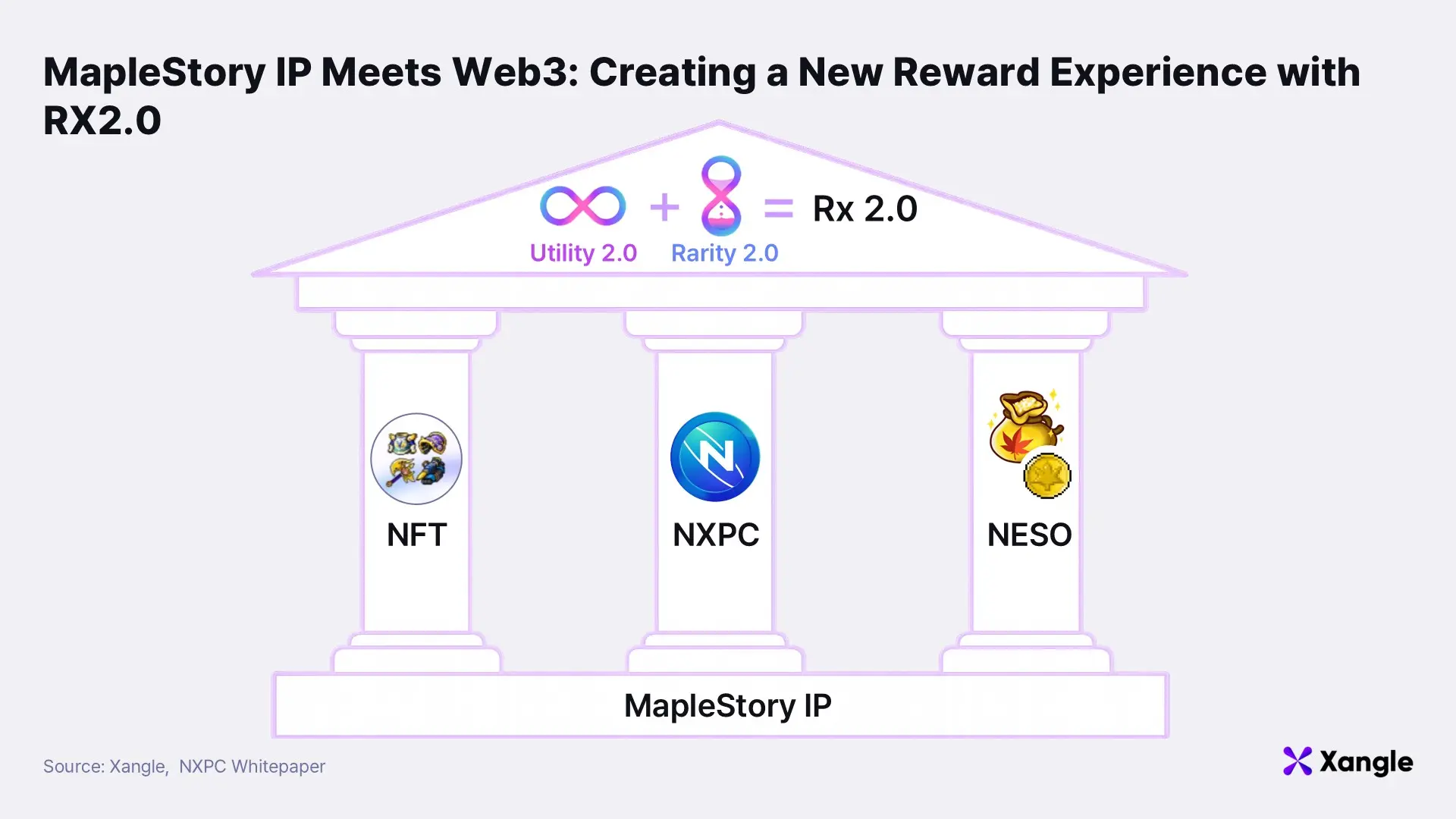
How can the previously discussed vision of RX 2.0 MapleStory become reality? The recently unveiled $NXPC tokenomics and whitepaper provide valuable clues. The overall tokenomics structure of MapleStory Universe (MSU) comprises NFTs (game items), $NESO (in-game tokens), and $NXPC. NFTs assign rarity and value to game items, $NESO rewards gameplay, and crucially, $NXPC functions as the primary incentive resource supporting the entire ecosystem. Specifically, $NXPC is expected to serve as the "master key," not only enabling the new RX 2.0 MapleStory but also providing the MSU team with new, sustainable business models. This section will explore in detail how the $NXPC tokenomics are designed to play an instrumental role in establishing and expanding the MSU ecosystem.
3-1. $NXPC Tokenomics: Prioritizing ecosystem vitality above all else
The $NXPC tokenomics—with a total supply of 1 billion tokens—has been meticulously designed to prioritize community engagement and ecosystem vitality above all else. The extraordinary allocation of 97% of the total token supply to community and ecosystem contributors clearly demonstrates this commitment. Specifically, 80% of all tokens will be gradually distributed to ecosystem contributors. Of the remaining 20%, approximately 16% is earmarked for initial onboarding, community initiatives, campaigns, and liquidity provision—critical steps in firmly establishing the ecosystem. In contrast, internal stakeholders such as the developer (NEXPACE), IP holder (Nexon), and advisors collectively receive less than 3% of the total token supply.
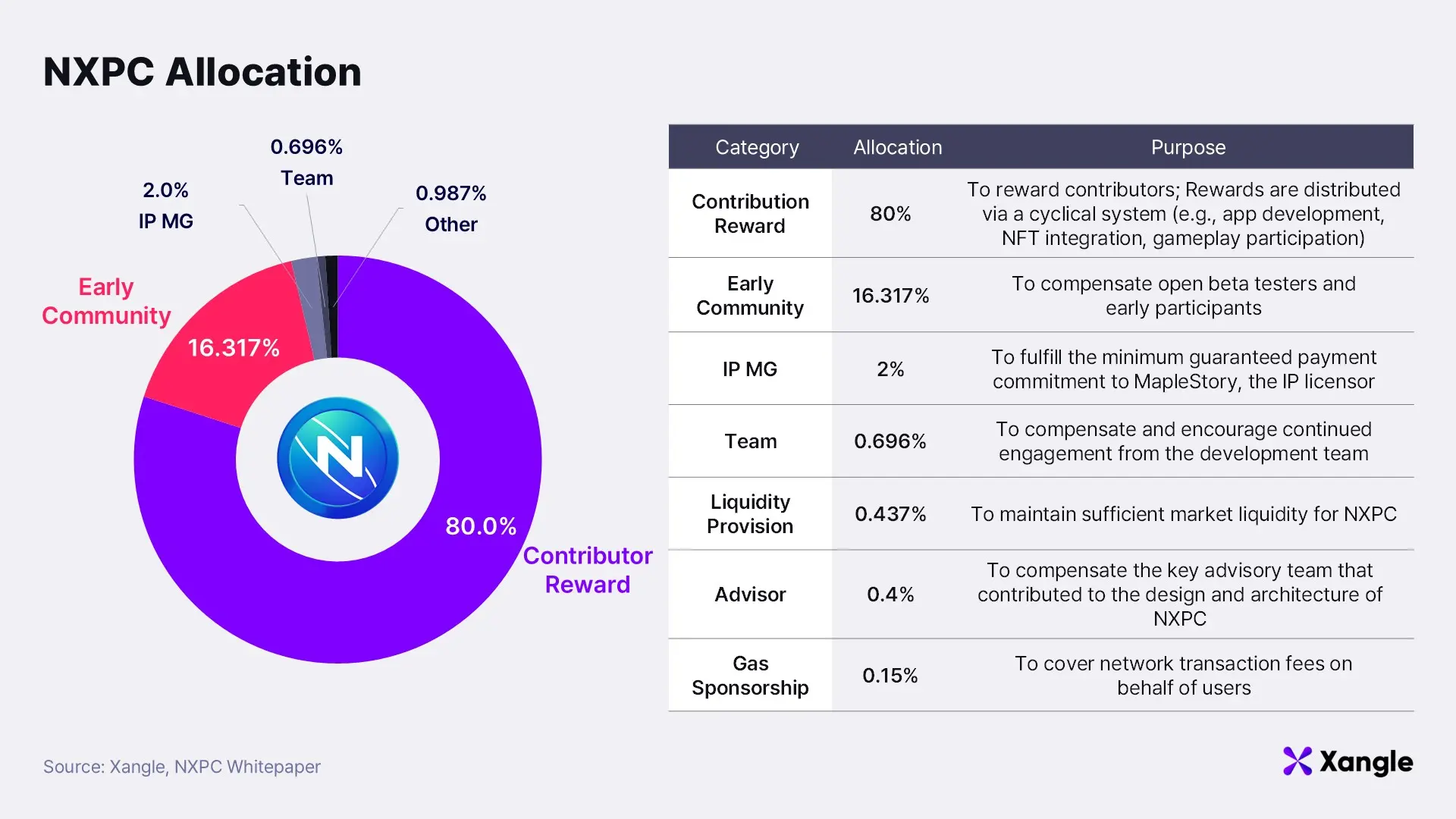
The primary motivation behind allocating such a substantial proportion to contributors is a strategic shift away from merely attracting users through rewards and towards cultivating a vibrant community driven by abundant, high-quality content. The rapid collapse of past reward-centric Play-to-Earn (P2E) games served as a cautionary tale, guiding the MSU team toward designing a more sustainable tokenomics framework. Long-term success in gaming fundamentally relies on continuous enjoyment, driven by an ever-evolving supply of engaging content and activities. Moreover, to maximize rewards for players, the tokenomics also establish a fixed exchange rate mechanism, allowing users to convert NESO earned through gameplay directly into $NXPC tokens.
With the largest allocation (80%) dedicated to contributor rewards, clearly defining how to measure contributions and accordingly distribute tokens becomes crucial. To address this, the MSU team introduced two specific criteria:
- App KPIs: Metrics such as user activity, session duration, and NFT holdings.
- NESO Consumption: Reflecting how actively users spend NESO within the game.
These criteria are designed to incentivize contributors to create content genuinely valued by users while simultaneously promoting active NESO consumption—thus preventing in-game inflation and fostering a sustainable economy. These dual objectives are vital for continually attracting and retaining more users, preserving item and $NXPC value, and ensuring long-term game sustainability. Token distributions under these criteria follow a diminishing supply model—conceptually similar to Bitcoin's halving mechanism—where the weekly token release gradually decreases over time. Early contributors thus receive relatively higher rewards, making initial onboarding especially attractive to developers. Simultaneously, the gradual reduction in supply is intended to support long-term appreciation in $NXPC's value. Ultimately, a total of 800 million tokens are earmarked exclusively for contributor rewards.
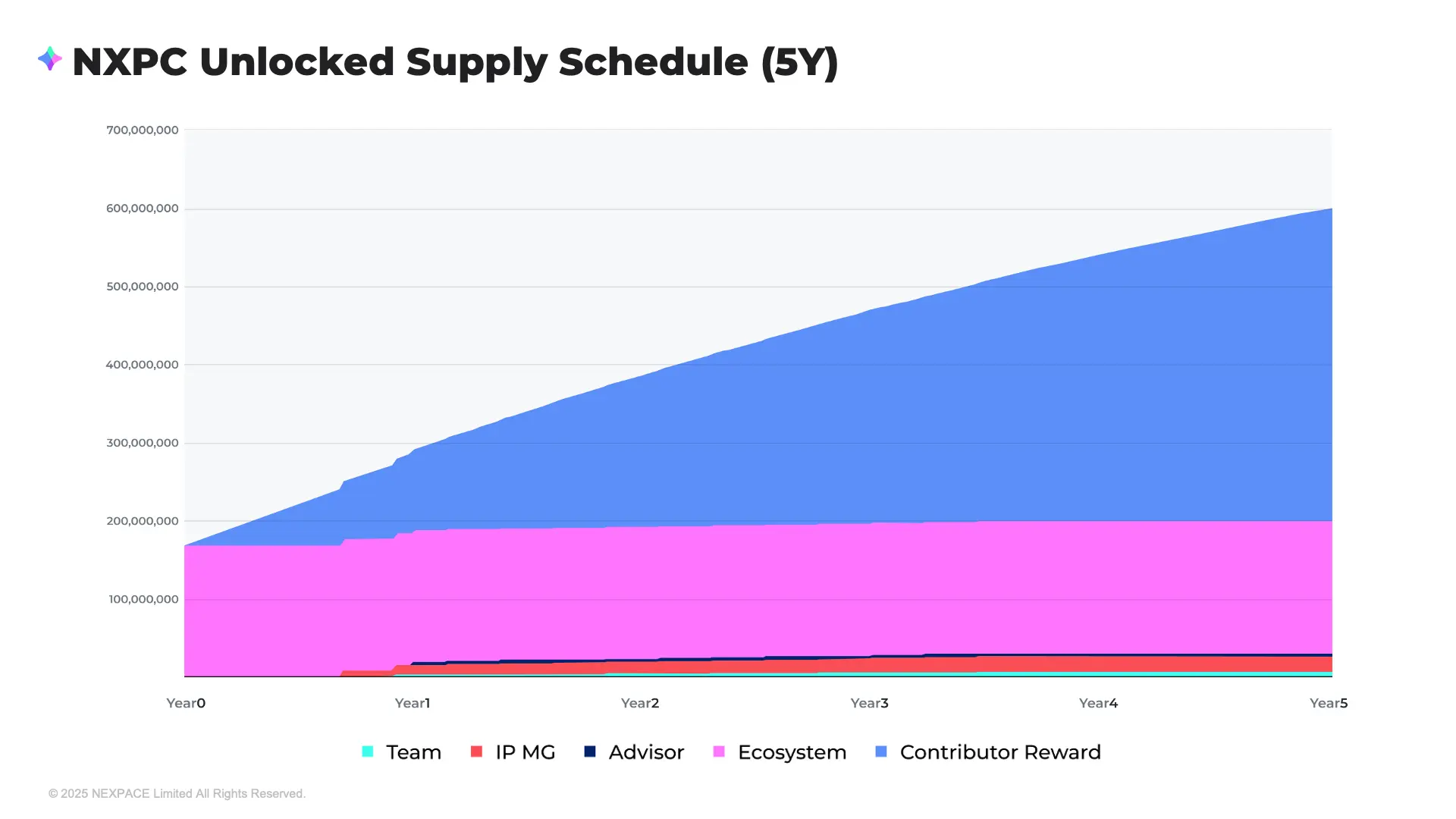 Source: NXPC Whitepaper
However, as of now, few external development teams beyond Nexpace are actively contributing content to the ecosystem. Thus, it remains essential to validate how effectively community-driven content (apart from Nexpace-produced content) can genuinely enrich the game's ecosystem. Moreover, considering Nexpace itself participates as a contributor and consequently receives $NXPC rewards—which is anticipated to become one of their key business models—there is a potential for perceptions of self-rewarding behaviors. Clear and proactive communication about this dynamic will be necessary. The two contribution criteria established by MSU are quantitatively defined and seem intentionally designed to prevent such potential controversies from arising.
With the groundwork now firmly established, the next critical step will be onboarding talented external development teams, thereby filling the MSU ecosystem with diverse, distinctive, and compelling content that clearly differentiates it from the original MapleStory experience.
3-2. The NXPC ↔ Item basket exchange: A novel model by the MSU team
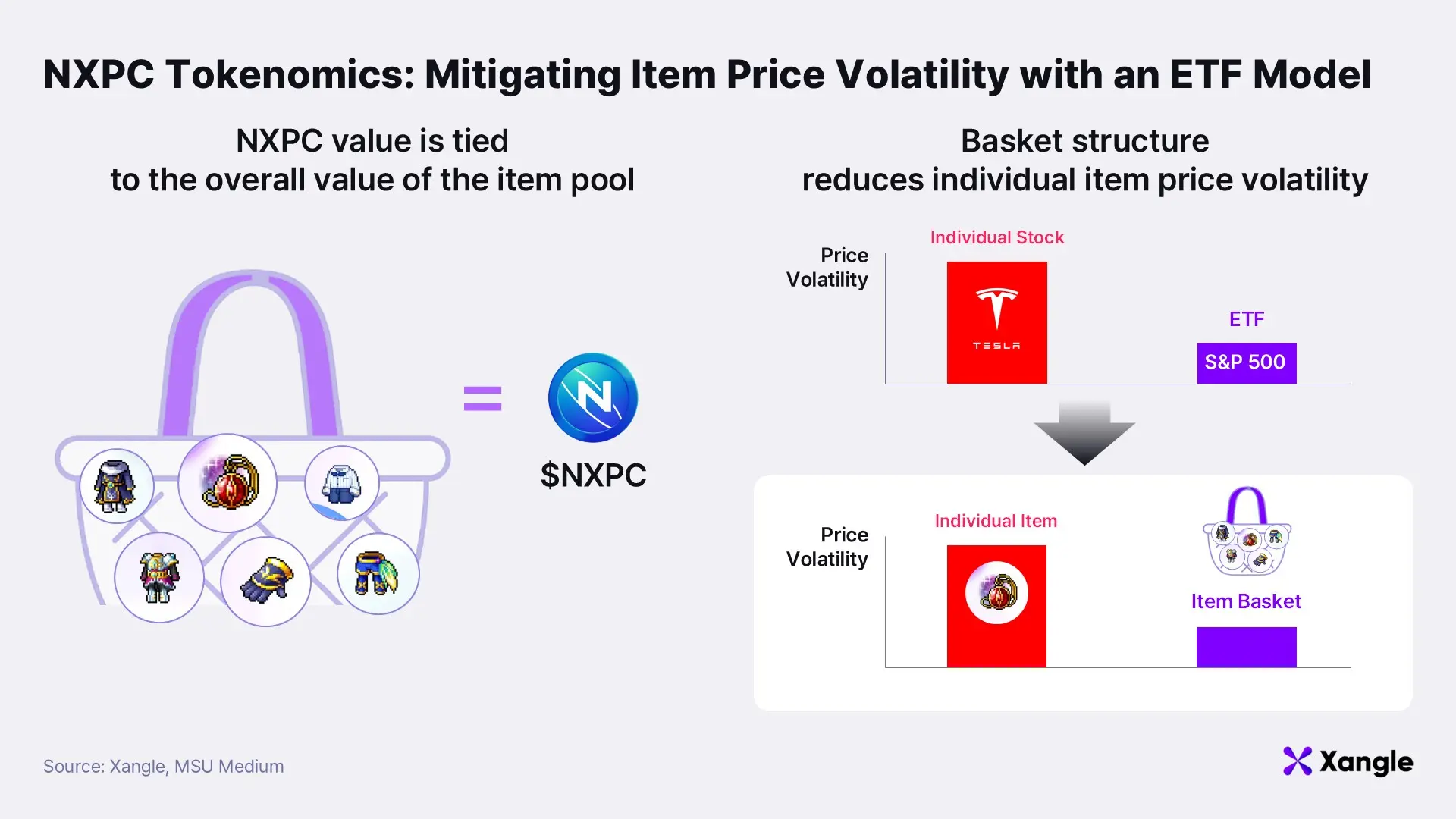
One of the most intriguing aspects revealed in the NXPC tokenomics is the ETF-inspired exchange system between $NXPC tokens and item "baskets." Until now, exchanging game items for in-game currency or cash has traditionally meant a straightforward one-to-one transaction. However, MSU deliberately breaks from convention by adopting a "basket-based" exchange, where a single $NXPC token corresponds to multiple items (1:N). Within the MSU ecosystem, the process of exchanging $NXPC tokens for a diversified basket of various NFT items is termed "Fission," whereas exchanging a basket of multiple NFT items back into $NXPC is termed "Fusion." At first glance, this basket-based approach may seem inconvenient for creators or users aiming for specific items. Why, then, did the MSU team adopt this unique system?
Fundamentally, this approach reflects the team's determination to protect the value of $NXPC, the critical "master key" of the ecosystem. To put it more simply, the value of the MSU intellectual property (IP) can be represented by game items. By structuring the exchange in the form of baskets rather than single items, $NXPC effectively becomes a container holding the collective value of the MSU IP itself. Nathan, who participated in designing the tokenomics, publicly explained that this system was inspired by traditional finance’s ETF (Exchange-Traded Fund) structure, aiming to encapsulate the entire ecosystem’s IP value into the token.
Intellectual property, as an asset class inherently possessing intrinsic value, typically exhibits lower price volatility compared to tokens lacking substantial backing. Historically, Play-to-Earn (P2E) gaming tokens, which often had loose value linkages to their underlying game IP, suffered significant volatility. This was particularly evident when external macroeconomic factors dramatically influenced token values, consequently destabilizing in-game economic systems. In this context, MSU’s basket-based system is expected to function as a buffer, absorbing external shocks. After all, if something as trivial as a single tweet from an influential figure (e.g., Donald Trump) could significantly impact the value of a game's currency, players would be unable to truly enjoy their gaming experience.
From the perspective of individual NFT items, the basket exchange system is also valuable in terms of liquidity provision. Popular and unpopular items typically experience significant liquidity disparities, leading to notable price distortions. However, when items are traded collectively in ETF-like baskets, these liquidity gaps narrow significantly. Consequently, even items with lower individual demand benefit from improved liquidity and minimized pricing distortion. Moreover, blockchain and cryptocurrency inherently enhance the liquidity and tradability of game items, attracting a more speculative player base compared to Web2 games. Such speculative trading behavior often introduces price volatility, potentially harming genuine users. The basket system addresses precisely this issue, serving as a stabilizing mechanism against harmful price manipulation.
Additionally, the system offers a flexible user experience, as players don't necessarily have to own an entire basket to participate. Users can exchange individual items by adding them to existing baskets. In this scenario, users receive $NXPC based on a reference price derived from the fixed supply of the items added, meaning that even players owning just one or two items can easily convert them into $NXPC.
Considering these detailed strategic elements, the MSU team has designed an entirely novel gaming economy powered by Web3-inspired tokenomics, notably through its innovative basket exchange system. Given that numerous detailed mechanisms and structures supporting this system are thoughtfully embedded within the gameplay, players will have the added enjoyment of discovering and interacting with these features during their game experience.
3-3. Fixed exchange rate between $NXPC and $NESO
Alongside NFT items, $NESO functions as the primary in-game reward currency and serves as the fundamental unit for content consumption within MSU. Players earn $NESO through various activities, including hunting monsters or defeating bosses, and subsequently use it for diverse in-game activities such as item enhancements, accessing additional content, or purchasing marketplace items. Critically, $NESO is designed to be universally applicable across all types of content created by multiple contributors, effectively establishing it as the base currency within the MSU game environment.
This foundational in-game currency, $NESO, is exchangeable with $NXPC tokens at a predetermined fixed exchange rate. This fixed exchange rate aligns with the RX 2.0 philosophy, emphasizing the maximization of user rewards by stabilizing the value of $NESO tokens earned through gameplay. By tying the inherently inflationary $NESO to the intrinsic IP-backed value encapsulated within $NXPC, $NESO effectively gains greater economic stability and perceived inherent value. However, an inherent challenge arises here: whereas $NXPC has a capped total supply of 1 billion tokens, the supply of $NESO expands continuously as players earn more tokens through gameplay, potentially resulting in inflationary pressures and declining token value. If left unchecked, excessive $NESO inflation could subsequently increase pressure on $NXPC supply, adversely impacting its market stability and price. Therefore, mechanisms designed to regulate the circulating supply of $NESO become essential. This supply-regulation principle precisely explains why one of the key evaluation criteria for contributors explicitly focuses on "NESO consumption." Nevertheless, if these control mechanisms fail to sufficiently curb $NESO inflation, causing a significant depreciation in $NXPC’s value, it may become necessary to revisit and adjust the fixed exchange rate accordingly.
As previously explored in the $NXPC tokenomics section, the economic model of MapleStory Universe represents a deliberate and ambitious departure from the structural pitfalls frequently encountered by traditional Play-to-Earn (P2E) models. MSU thoughtfully incorporates the proven operational philosophies of the MapleStory IP, cultivated successfully over two decades, into an intricately designed Web3 ecosystem. Centered around $NXPC, NFT items, and $NESO tokens, this carefully engineered economic loop adheres to free-market principles while simultaneously leveraging blockchain’s innate advantages of transparency and predictability. Rather than merely distributing profits, this innovative economic structure actively encourages both users and creators to engage collaboratively within a dynamic circulation system. It will undoubtedly be fascinating to observe how this uniquely sophisticated tokenomic structure translates into practical ecosystem vitality, growth, and sustained user engagement.
4. How Does the Nexpace Team Generate Revenue?
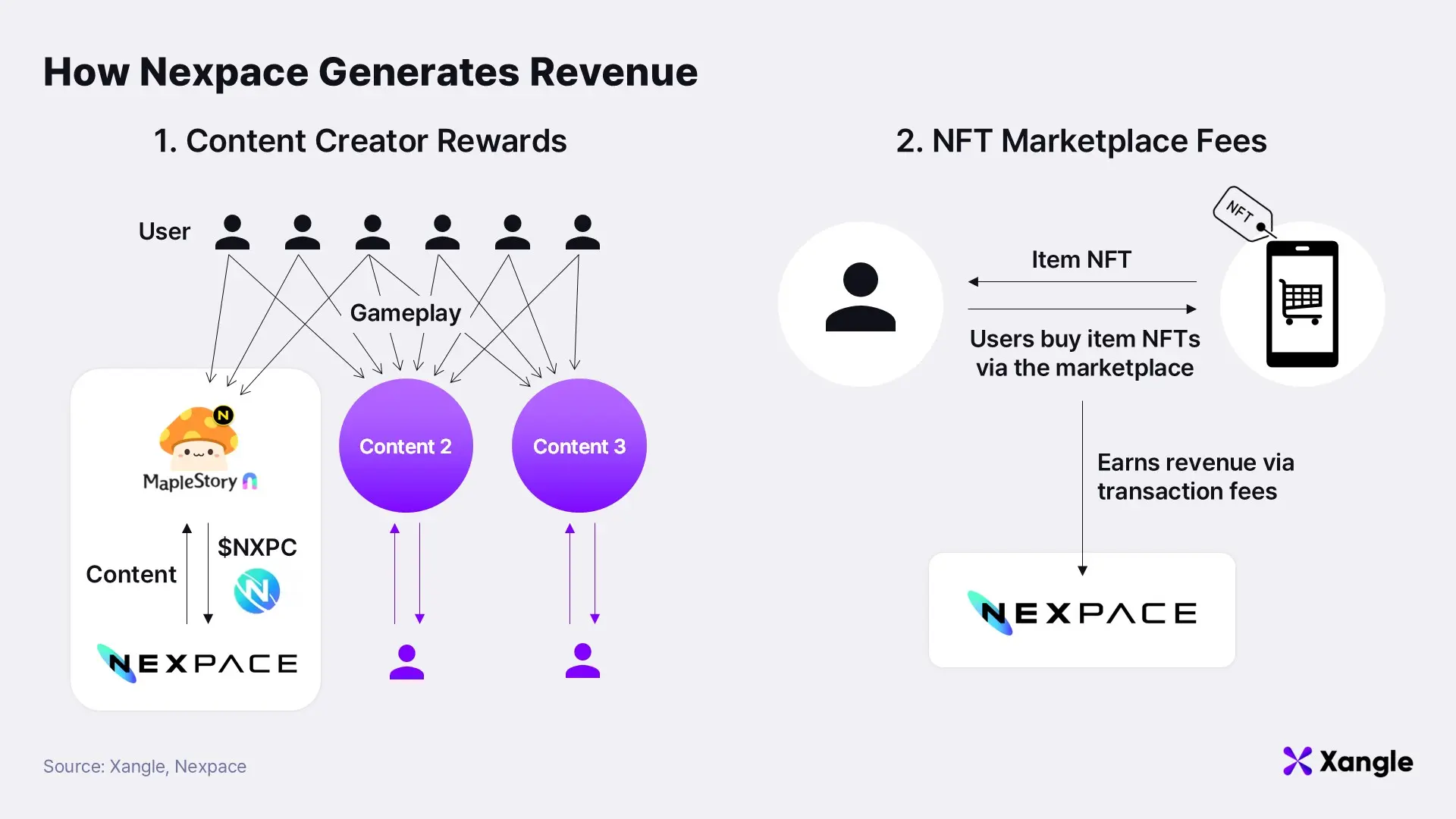
The Nexpace team’s first business model will likely revolve around direct participation in the ecosystem’s “Contributor Reward Mechanism,” earning $NXPC tokens as compensation. As previously noted, contributors involved in various platform activities—such as content creation, item planning and design, and smart contract validation—will directly earn $NXPC tokens proportionate to their contributions, drawing from the allocated 80% of total tokens earmarked specifically for contributors. Within this framework, the Nexpace team itself participates actively as a key contributor, playing a pivotal role in ecosystem development. Consequently, the Nexpace team is expected to generate meaningful revenue through these $NXPC rewards, reflecting their foundational contributions. Indeed, given that establishing the initial IP and core gaming ecosystem necessitates proactive and extensive ecosystem design efforts, appropriate compensation for such foundational work is fully justified. However, clear and transparent communication regarding compensation criteria and processes is essential to ensure community understanding and approval.
The second revenue model centers on generating transaction fee income from in-game NFT item trading. Among the synergy apps revealed by the Nexpace team, one of the key internally developed services is the marketplace. Each time users trade tokenized game items (NFTs) on this marketplace, a predefined percentage fee—paid in $NESO—is collected as revenue by Nexpace. This fee is set as a proportion of the transaction value, meaning that as trading volume grows, so too will Nexpace’s operational capital and development resources. If a strong IP-based NFT marketplace is successfully launched within the game, it could serve as a powerful moat—offering a competitive edge over external NFT platforms by embedding the trading experience directly into the game environment.
Ultimately, these two complementary revenue streams—contributor rewards and marketplace transaction fees—are expected to synergistically underpin a sustainable and resilient business model for the Nexpace team.
5. Final Thoughts
MapleStory Universe, reborn as a Web3 ecosystem, represents far more than merely integrating blockchain technology into an existing game. Instead, it proposes a fundamentally new model for gaming ecosystems—one that harmoniously integrates community-driven IP expansion with tokenomics rooted firmly in free-market principles. In this report, we have analyzed the MSU tokenomics and economic framework of MSU, focusing on two key questions:
First, "How can MapleStory leverage blockchain and token technologies to drive community-led IP ecosystem expansion?"
MSU provides a compelling answer through RX 2.0, a system designed to amplify reward experiences. By issuing a limited number of items as NFTs, MSU effectively enhances their rarity and value, thus motivating greater player engagement. Additionally, MSU establishes a robust reward structure for ecosystem contributors (content creators), fostering a continuous and diverse stream of content that consistently delivers enjoyable experiences to players.
Second, "How does the $NXPC tokenomics system practically support and realize RX 2.0?"
The carefully considered allocation of 80% of tokens specifically to ecosystem contributors, the implementation of a fixed exchange rate linking the inflationary in-game currency ($NESO) to the stable, IP-backed $NXPC token, and the innovative basket-based exchange mechanism between NFT items and $NXPC all demonstrate MSU’s meticulous planning. These strategic pillars form the essential infrastructure needed to actualize RX 2.0.
However, despite this meticulous design, MSU will inevitably face operational challenges as it launches and scales. Potential weaknesses or unforeseen loopholes within its tokenomic model could disrupt incentive structures, and the newly devised business models may not generate revenue as anticipated. Furthermore, despite proactive anti-bot measures, persistent bot accounts observed during test phases could continue to pose significant challenges after the official launch, potentially undermining MSU’s primary goal of reward optimization. Additionally, regulatory constraints in various jurisdictions—including South Korea—present another substantial challenge to onboarding and retaining a global user base over the long term.
Yet, despite these potential hurdles, the efforts behind MapleStory Universe’s ambitious transition to Web3 gaming are undeniably significant. Unlike other game companies that merely attached blockchain technology to outdated or declining IP, MSU leverages its strong core IP, demonstrating genuine commitment to creating a sustainable ecosystem rooted deeply in blockchain and token economics. By introducing pioneering Web3 tokenomics—including the item basket and the fixed $NXPC exchange rate mechanism—MSU once again showcases Nexon’s pioneering spirit and innovative DNA. Ultimately, the vision outlined by MSU—a self-sustaining ecosystem in which user contributions and creativity are meaningfully rewarded, driving sustained ecosystem growth—represents a significant advancement for Web3 gaming. If realized successfully, MSU will set a new industry standard, demonstrating the viability and potential of blockchain-based gaming ecosystems.
Disclaimer
I confirm that I have read and understood the following: The information contained in this article is strictly the opinions of the author(s). This article was authored free from any form of coercion or undue influence. The content represents the author's own views and does not represent the official position or opinions of CrossAngle. This article is intended for informational purposes only and should not be construed as investment advice or solicitation. Unless otherwise specified, all users are solely responsible and liable for their own decisions about investments, investment strategies, or the use of products or services. Investment decisions should be made based on the user’s personal investment objectives, circumstances, and financial situation. Please consult a professional financial advisor for more information and guidance. Past returns or projections do not guarantee future results.
Xangle or its affiliated partners own all copyrights of the written or otherwise produced materials and content provided on the platform. Any illegal reproduction of such content, including, but not limited to, unauthorized editing, copying, reprinting, or redistribution will result in immediate legal actions without prior notice.