Zircuit: Simplifying DeFi through AI-Powered Layer 2


Table of Contents
1. From Search to Conversation—A Shift in User Experience
2. DeFAI Begins with GudTech: An AI Agent Simplifying the Complexity of DeFi
3. Zircuit’s AI-Centric Infrastructure Design
4. Smart Ways to Leverage Zircuit and GudTech
5. Final Thoughts: AI as the Core of Zircuit’s Cognitive Blockchain Vision
1. From Search to Conversation—A Shift in User Experience
Decentralized finance (DeFi) provides lucrative investment opportunities and innovative financial services, yet remains challenging and complex for everyday users. The tasks of managing digital wallets, navigating between various blockchain networks, and interacting with smart contracts can feel akin to learning an entirely new language. Consequently, many potential users remain hesitant to engage, resulting in DeFi trading volumes stagnating at merely 10–20% of centralized exchange (CEX) volumes. Some experts warn that, unless this complexity is adequately addressed, DeFi risks remaining an exclusive domain reserved only for highly proficient users.
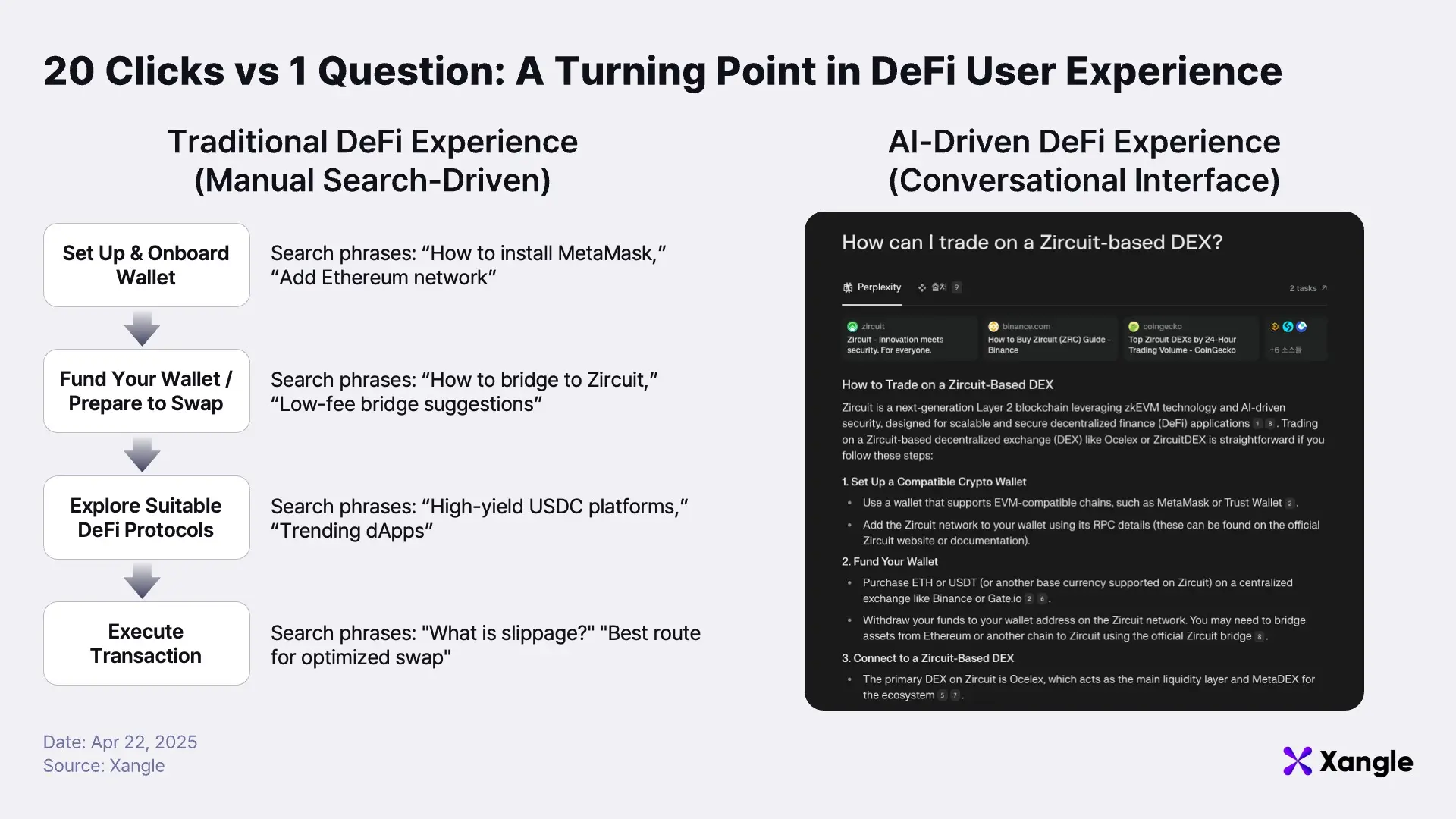
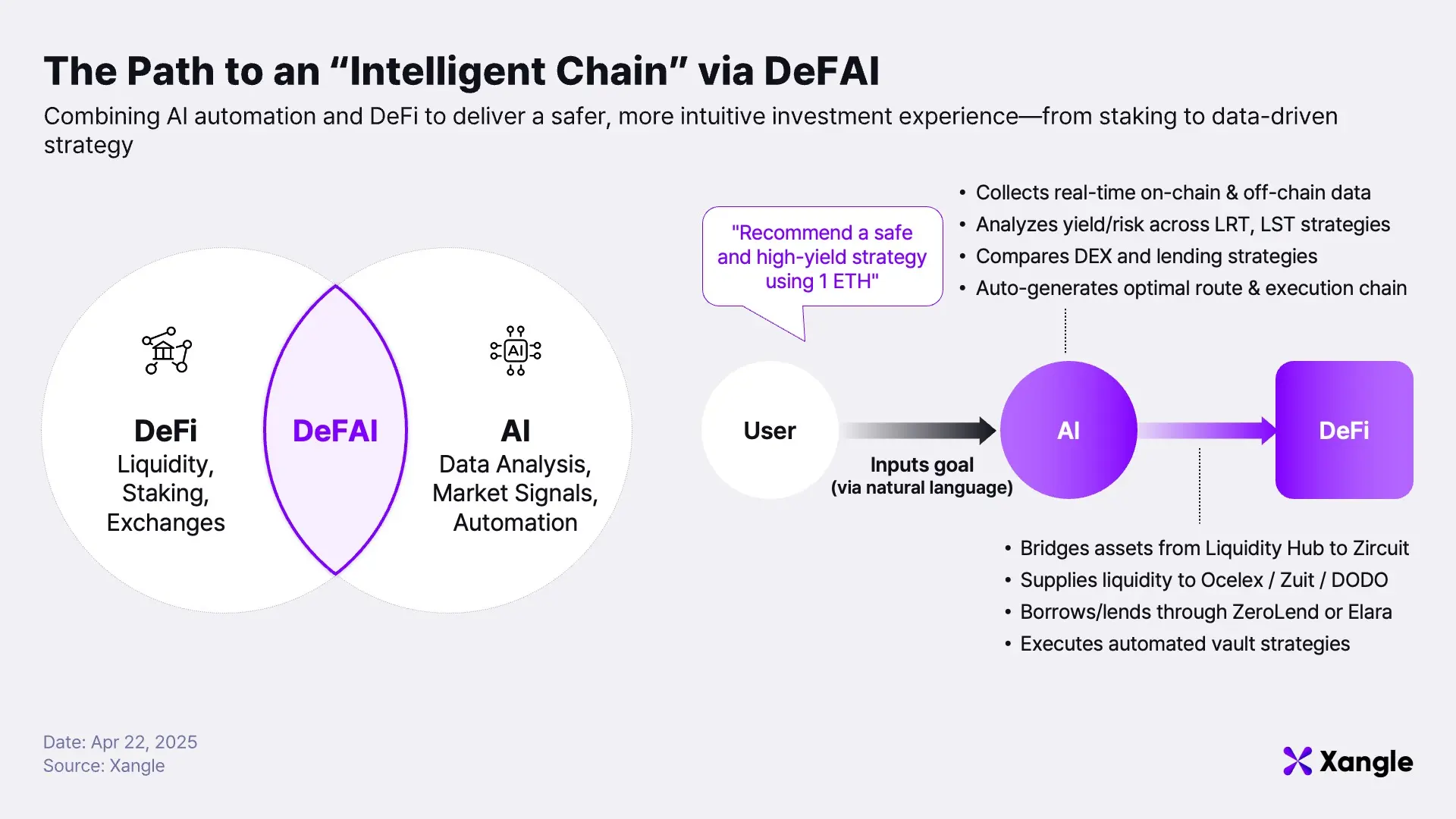
Meanwhile, recent advancements in artificial intelligence (AI) technology offer promising solutions to these barriers. Just as conversational AI services like ChatGPT have transformed the search experience, combining DeFi and AI—termed DeFAI (Decentralized Finance + AI)—is emerging as a key factor to fundamentally reshape the DeFi user experience. DeFAI integrates AI into decentralized financial protocols, creating smarter, automated financial services. By allowing AI tools to handle optimization and personalization of DeFi strategies, the technology aims to make complex DeFi activities accessible to the general public. For instance, simply instructing an AI agent, "Deposit my USDC into the pool with the highest yield and lowest risk," allows the agent to autonomously handle everything—from identifying the optimal pool to executing the deposit transactions—without requiring multiple manual steps. This conversational interface and automation can make sophisticated DeFi investing as seamless and intuitive as consulting a personal financial advisor at a bank.
Zircuit has emerged as an AI-driven, DeFi-specialized Layer 2 blockchain, aspiring to spearhead this new DeFAI era. The Zircuit team envisions a “Cognitive Blockchain”—an automated financial hub where AI agents serve as primary users—and is actively building infrastructure optimized specifically for the seamless execution of DeFAI strategies. Since its inception, Zircuit has uniquely emphasized integrating blockchain security technologies (such as Sequencer Level Security, or SLS) with advanced AI capabilities. Demonstrating remarkable early traction, Zircuit rapidly grew its user base to over 110,000 and amassed more than $1 billion in total value locked (TVL) within mere months after launch. Leveraging proprietary AI agent technology and continuously refining its user-centered infrastructure, Zircuit now embarks on an ambitious journey to transform the DeFi user experience—just as GPT reshaped the landscape of online search.
This research delves deeply into Zircuit’s AI-driven DeFi-specialized Layer 2 strategy and infrastructure built around enhanced user experiences. First, it explores how DeFAI technology is realized through Zircuit’s proprietary AI agent, "GudTech," and how this differs from traditional DeFi platforms such as Uniswap. Next, the paper examines the Layer 2 chain-level design of Zircuit that supports seamless DeFAI implementation. Finally, practical ways of leveraging Zircuit and GudTech are introduced, along with insights into the concept of a cognitive blockchain and its implications for the future of DeFi.
2. DeFAI Begins with GudTech: An AI Agent Simplifying the Complexity of DeFi
GudTech is the first AI agent central to Zircuit's DeFAI vision, going beyond a mere information provider to become an autonomous agent actively executing DeFi strategies on behalf of users. GudTech gathers and analyzes both on-chain data and off-chain information—such as real-time news and Twitter feeds—to learn and execute market-appropriate trading strategies, aiming to operate as a "24-hour AI trader" within the crypto market. Unlike traditional chatbots that merely respond passively to user queries, GudTech actively collects data from its environment and makes autonomous decisions. For example, when a user instructs, "Invest my 1 ETH into the strategy with the highest yield," GudTech autonomously searches through various DeFi protocols and executes the relevant transactions.
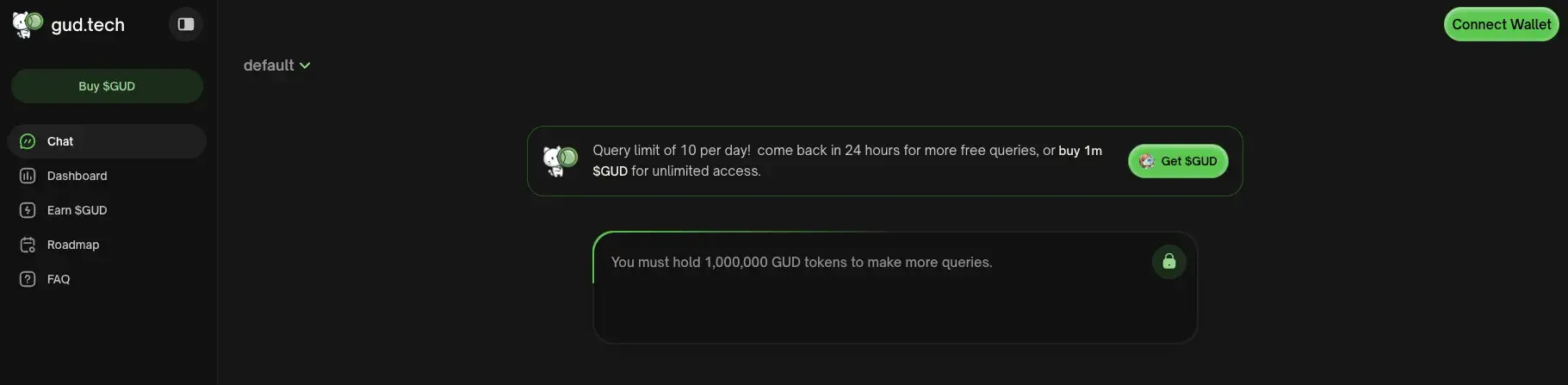
Gud.Tech Terminal UI
Since the mainnet launch late last year, GudTech has rapidly evolved through the DeFAI initiative, which has become a cornerstone narrative for Zircuit. In January, GudTech launched an interactive terminal, "Gud.tech," featuring real-time market briefings, alpha discovery, and strategy evaluation. It also introduced a neural-network-based trading bot capable of refining investment signals from Twitter and performing backtesting. By February, upgrades included enhancements to the agent framework, implementation of streaming-response UI, improved Telegram bot functionalities, and optimization of the core codebase. Additionally, Zircuit partnered with RhinoFi to bolster multi-chain trading environments, enabling bridging of the $GUD token (a utility token used within GudTech) to major chains like Base. These advancements substantially improved liquidity and user accessibility within the ecosystem. GudTech now offers not only information retrieval but also personalized trading strategy recommendations based on users’ staking positions and asset composition, as well as structured algorithmic vaults. Going forward, GudTech aims to evolve into a neural-network-driven architecture capable of executing more complex strategies and generating sophisticated trading signals.
GudTech’s user experience (UX) clearly distinguishes itself from traditional DeFi platforms. While legacy DeFi platforms, such as Uniswap, require users to manually handle every step—from pool selection and amount entry to transaction execution—GudTech’s UX only requires the user to set an "objective," allowing the AI to handle the entire process autonomously. In other words, GudTech employs an imperative, objective-based interface that automates the entire workflow—from strategy identification to execution. Thus, DeFAI UX surpasses simply easing information delivery; it reshapes the entire DeFi experience by autonomously developing and executing optimal strategies aligned with user intentions. Ultimately, GudTech aims to establish itself as a genuine AI assistant, actively leveraging tools on behalf of users. To achieve this, Zircuit has developed advanced infrastructure improvements including SLS-enhanced security, optimized on-chain data access, and integrated APIs for AI agents. Future expansions are also planned, including direct trade execution features, smart wallet integration, and advanced functionalities tailored specifically to professional users.
Importantly, GudTech represents just the beginning of Zircuit’s broader AI initiative. As the main sponsor at ETHDenver 2025, Zircuit introduced a new category, "Best DeFAI Project," and operated a dedicated hackathon track to foster DeFAI ecosystem growth, actively supporting the development of AI-focused projects within the Zircuit ecosystem. Various projects, including Pixie AI, Ava, and Nextmate.ai, received awards, showcasing practical AI × Web3 applications such as prediction-market AI and multi-chain operational agents. This clearly illustrates the ecosystem’s direction—moving beyond merely utilizing GudTech, Zircuit seeks to establish an environment where AI actively functions as economic agents within the blockchain space.
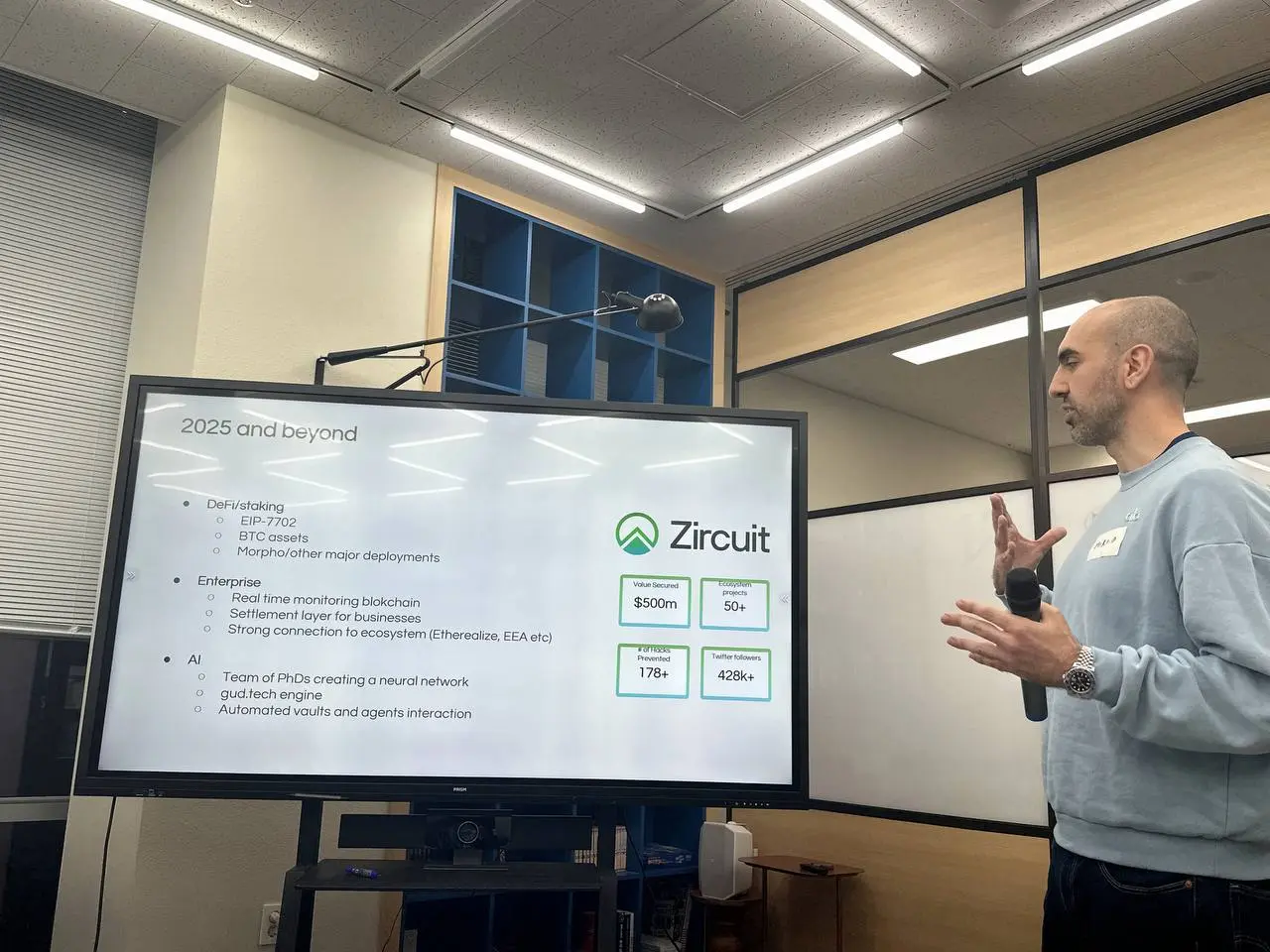
Zircuit Team Session at DEFAI Chimaek Party with Zircuit & Xangle
Furthermore, at the Zircuit x Xangle Korea meetup held on April 14, coinciding with BUIDL Asia in April, Zircuit unveiled its roadmap for evolving into a platform supporting multiple interconnected and collaborative AI agents, going beyond GudTech alone. Zircuit aims to transition into a multi-agent blockchain ecosystem, where multiple AI agents cooperate, receive delegated assets, and execute decentralized strategies. This represents a gradual shift away from traditional "user-driven finance" toward fully automated, AI-driven financial systems.
3. Zircuit’s AI-Centric Infrastructure Design
With the recent launch of the Garfield Testnet, Zircuit has executed a comprehensive upgrade across its infrastructure. Garfield establishes a robust foundation for significantly improving the scalability and stability of the mainnet by integrating support for Ethereum’s Cancun and Pectra OpCodes, advanced prover enhancements, and optimized cluster configurations. Following thorough testing and validation on the testnet, Garfield is scheduled for mainnet integration by May 31, 2025. Alongside these upgrades, Zircuit will introduce additional enhancements such as high-speed, low-latency RPC connections, an improved blockchain explorer utilizing smart contract verification via Sourcify integration, an optimized asset bridge, and the "Escape Hatch" feature—ensuring continued asset access even during sequencer outages. By reinforcing chain performance and reliability through these upgrades, Zircuit is poised to accelerate its efforts in creating truly AI-native infrastructure, setting the stage for differentiated ecosystem expansion.
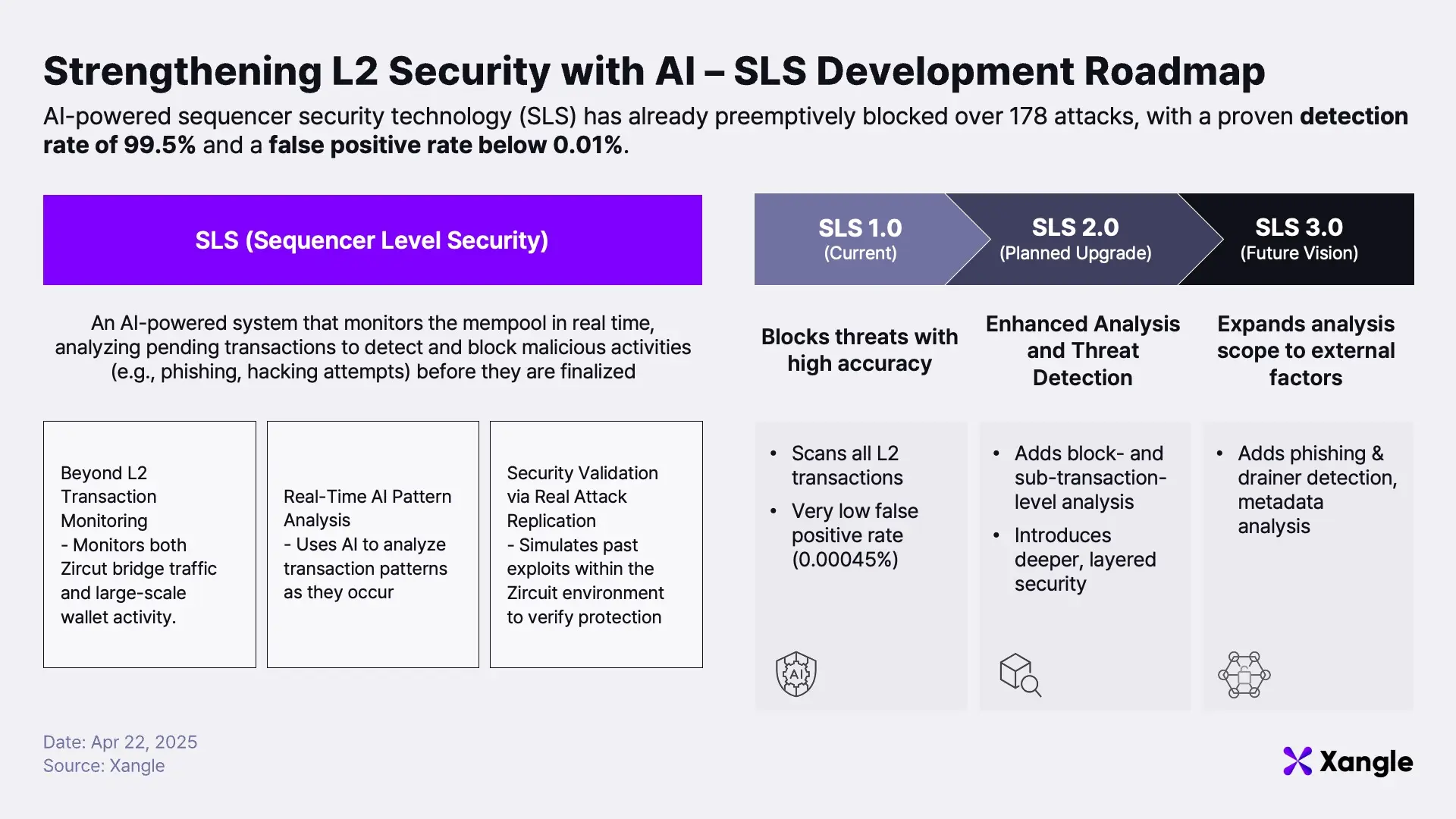
Zircuit is not merely a blockchain enhanced with AI functionality—it has been architected from the outset as an AI-native infrastructure. At its core lies Sequencer Level Security (SLS), an AI-powered sequencer security technology. SLS monitors transactions in real-time, preemptively blocking threats even before they're included in blocks. Demonstrating its effectiveness, SLS has successfully thwarted more than 178 potential attacks, achieving a 99.5% detection rate with a false-positive rate below 0.01%. Moreover, Zircuit plans to sequentially introduce SLS versions 2.0 and 3.0 in 2025, extending AI analysis and response capabilities from individual transactions to entire blocks and transaction batches. Such a security mechanism in DeFi specifically translates into processes like AI pre-auditing of smart contracts to identify and halt risky transactions (automatic auditing) and real-time monitoring and response to investment activities by AI agents (preemptive monitoring).
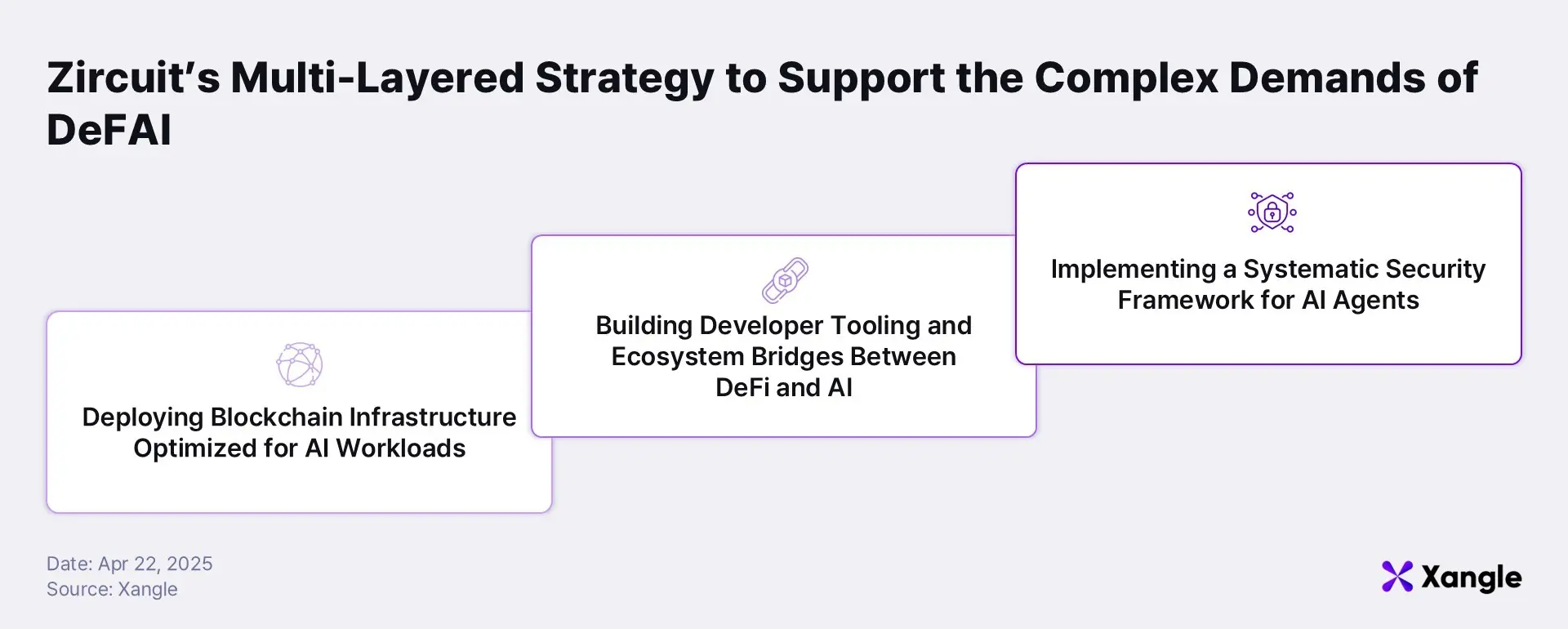
Complementing its advanced AI-driven security solutions, Zircuit is developing infrastructure that simplifies AI agent utilization across multiple blockchain networks. Zircuit’s Liquidity Hub, for instance, provides seamless investment access to over 25 Liquid Restaking Token (LRT) and Liquid Staking Token (LST) products, attracting more than 100,000 users and accumulating over $1 billion in total value locked (TVL). Just as this Liquidity Hub has successfully centralized staking assets in the DeFi sector, Zircuit now aims to position its DeFAI agents as a singular, intuitive interface for users to access optimal yields and opportunities across multiple networks, effectively becoming a hub for multi-chain DeFi activities.
To support this ambition, Zircuit is making extensive efforts at both the tooling and ecosystem application levels, allowing diverse AI agents beyond GudTech to provide superior financial services. For instance, it is actively adopting Account Abstraction technology, enabling users to seamlessly utilize DeFi applications on other chains while retaining their assets securely within Zircuit. Additionally, Zircuit’s collaboration with RhinoFi has produced low-cost bridges, automated yield farming vaults, and transaction safes, significantly lowering barriers by allowing users to execute "complex multi-chain yield strategies" with simple, one-line commands.
Beyond functional implementation, Zircuit proactively addresses structural security risks hindering wider DeFAI adoption. DeFAI ecosystems face multi-layered threats beyond simple smart-contract vulnerabilities, including Prompt Injection, Model Misalignment, Retrieval-Augmented Generation (RAG) poisoning, and Jailbreaking—specific risks to Large Language Model (LLM)-based agents. Rather than placing security responsibility solely on individual projects or AI agents, Zircuit provides foundational infrastructure at the blockchain level to facilitate safe and reliable AI operations. For instance, Zircuit is developing an integrated multi-chain framework, featuring low-latency communication infrastructure and reliable data sources, to enhance the operational reliability of AI agents.
Ultimately, Zircuit’s vision for a “Cognitive Chain” involves designing infrastructure at the blockchain level to ensure security and usability, enabling AI to function as reliable economic agents. Users merely specify their goals and risk appetites, leaving the rest to autonomous AI-driven decision-making and execution, creating an entirely new financial interface experience. Concurrently, Zircuit accommodates ecosystem scalability and development flexibility, allowing various projects to build and interconnect different forms of AI agents. This strategic infrastructure ensures blockchain interactions become safer through AI oversight, systematically protecting financial activities facilitated by AI. Consequently, users can effortlessly enter the blockchain domain through AI, even without deep technical understanding, creating a new entry point into blockchain finance.
4. Smart Ways to Leverage Zircuit and GudTech.
Having explored the infrastructure design and vision pursued by Zircuit, let's now examine how users can practically utilize various features on the Zircuit platform. Currently, Zircuit's DeFi ecosystem primarily comprises three main components: (1) Liquidity Hub, (2) DeFi Protocols, and (3) AI Agent GudTech.
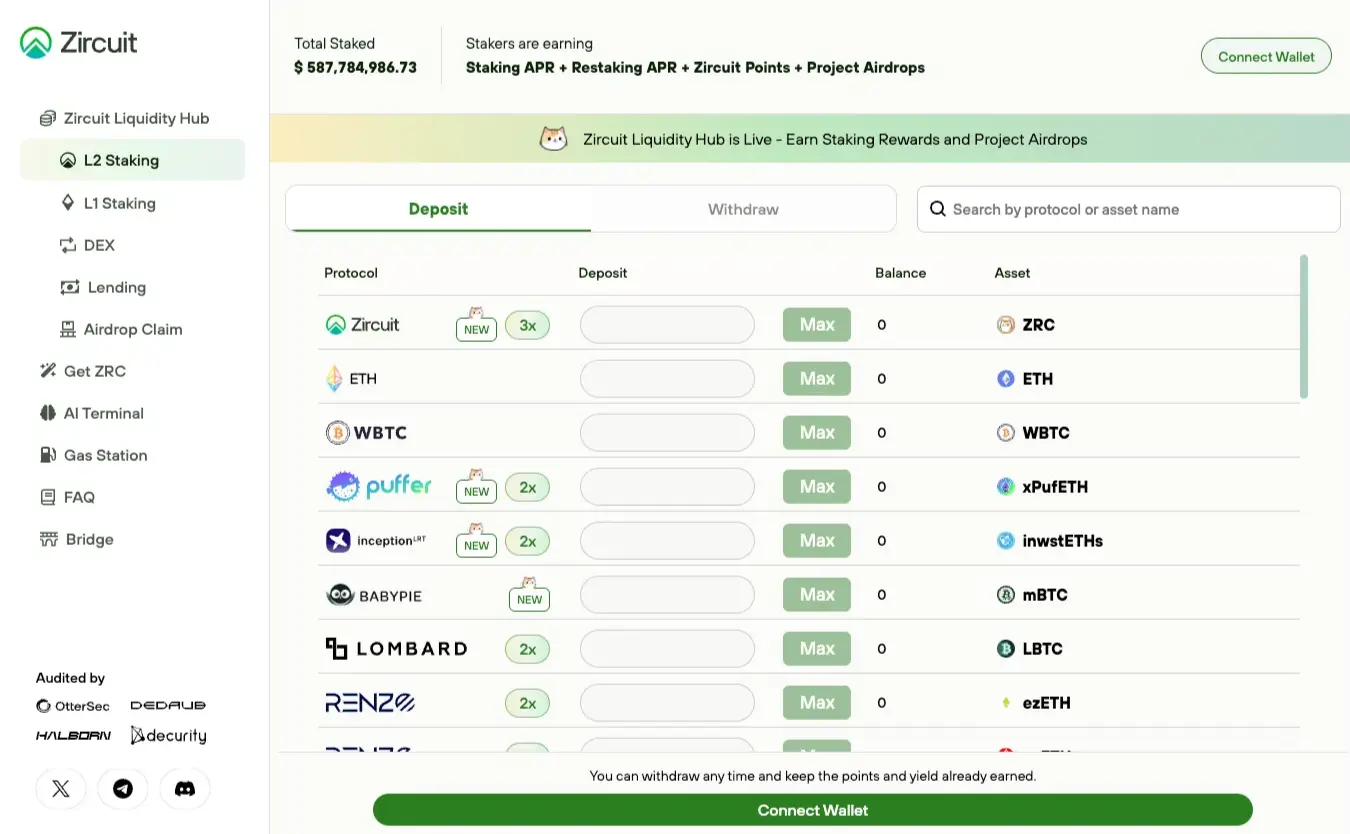
Zircuit Liquidity Hub UI https://app.zircuit.com/liquidity-hub
First, Liquidity Hub serves as a unified portal, providing integrated services such as ZRC token staking, L1/L2 liquid staking, decentralized exchanges (DEX), lending and borrowing, and even a Gas Station (a program allowing users to exchange ZRC tokens for ETH to cover gas fees). Through this hub, users can easily bridge Ethereum-based LST/LRT assets into Zircuit and execute sophisticated yield strategies by integrating multiple protocols.
A key advantage of Zircuit’s Liquidity Hub is its comprehensive presentation of various reward structures, such as the Zircuit Points Program, which helps users effectively optimize their yield strategies. Zircuit has allocated 21% of its total tokenomics to airdrops. With Seasons 1 (7%) and 2 (3%) already concluded, users can expect additional rewards through the remaining 8.55% allocated via the points program.
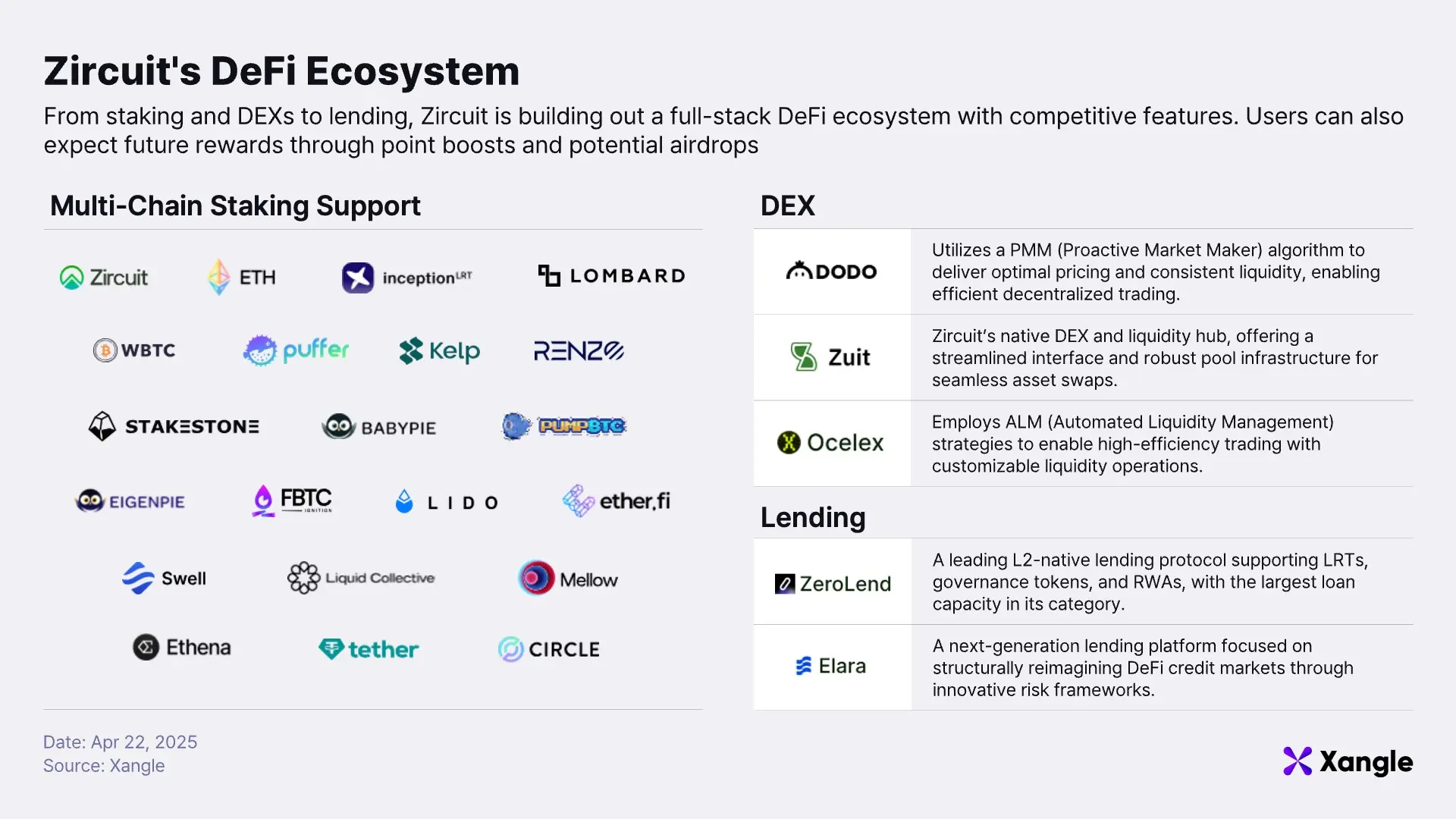
Particularly notable is the staking sector, offering the most stable returns: Zircuit Staking on L2 provides the highest benefit through a 3x point boost. Additionally, various liquid restaking projects such as Puffer, Lombard, and Renzooffer further incentives via 2x point boosts. From users' perspectives, this means that ETH and BTC stakers can deposit their staked tokens once more into Zircuit, thereby farming Zircuit tokens as an additional incentive. Due to users pursuing these maximum yield optimization strategies, Zircuit’s own protocol, Zircuit Staking, has become the top ecosystem protocol, recording around $625.8M TVL (combined L1+L2). The second-largest protocol, Magpie Ecosystem, holds $256.2M TVL within Zircuit, actively participating in liquid restaking connected to Pendle, EigenLayer, and Babylon. Renzo and KernelDAO closely follow in TVL rankings.
In the DEX and lending space, native DEX platforms are experiencing significant growth. Providing liquidity on platforms such as Zuit Swap and Ocelex earns substantial point boosts: WETH-ZRC (3.5x), WETH-USDT (3x), WETH-WBTC (3x), USDT-USDC (2x). Similarly, the lending platform Elara offers point accumulation for supplying assets: ZRC (3x), WETH, WBTC, USDC, USDT (2x each). By offering these incentives across staking, trading, and lending activities, Zircuit maximizes users' opportunities to accumulate points, thus structurally supporting consistent token demand across the ecosystem. Additionally, multi-chain partner protocols like DODO and ZeroLend offer similar point benefits, further enhancing user engagement through diverse decentralized applications (dApps). Consequently, Zircuit remains an attractive chain for DeFi enthusiasts seeking profitable opportunities.
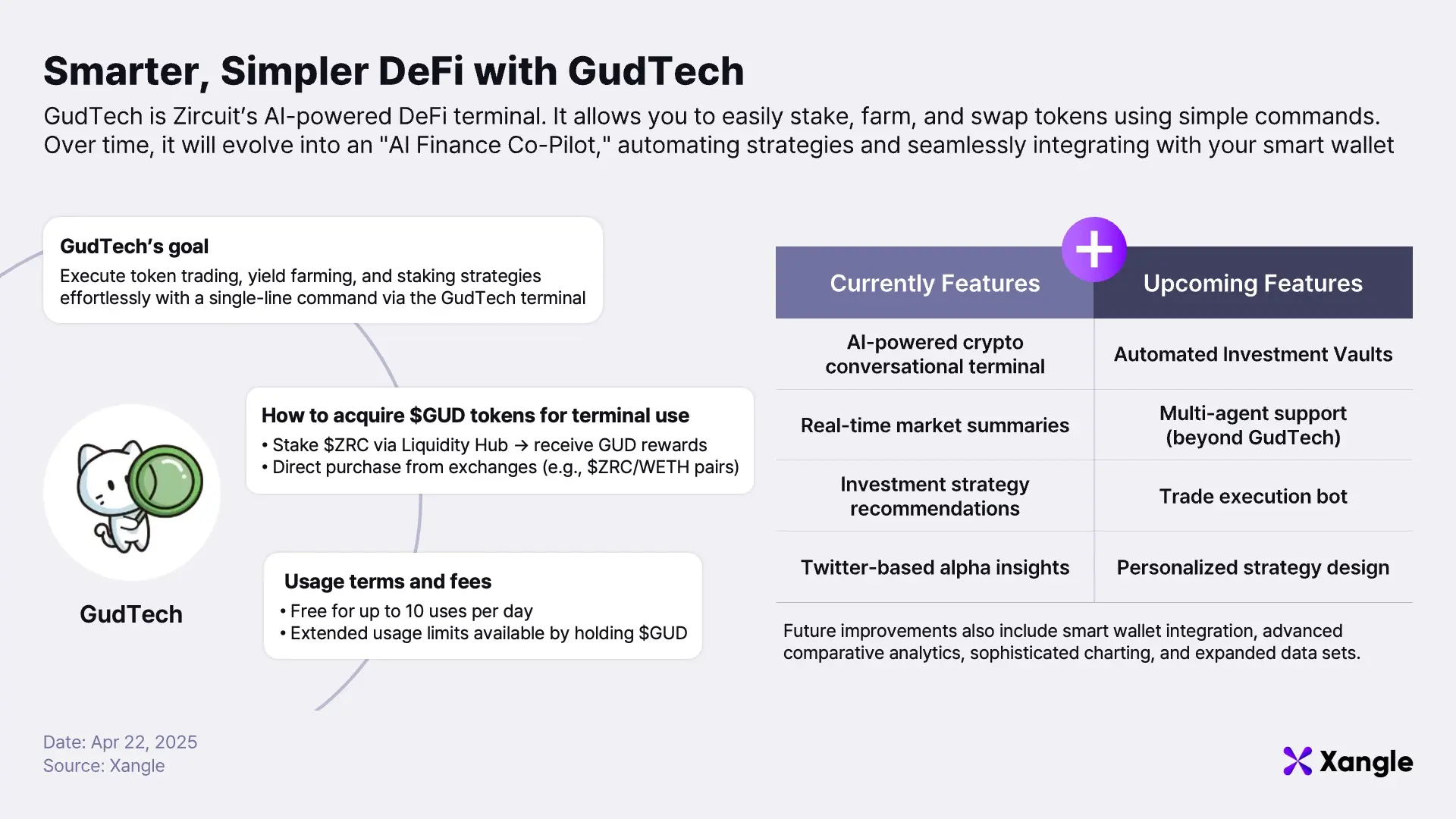
To assist even beginners in exploring diverse DeFi strategies easily, Zircuit offers intuitive guidance through its AI agent, GudTech. For example, when users ask GudTech straightforward questions like "What's happening in the market today?", GudTech analyzes on-chain data and external sources such as Twitter, providing real-time insights and actionable investment strategies. Users can utilize GudTech up to 10 times daily for free, and beyond that, they can gain further access by holding $GUD tokens, purchasable on DEXs or obtainable as staking rewards by staking $ZRC in the Liquidity Hub. Apart from staking-based protocols, GudTech uniquely stands as the only project within Zircuit’s top 5 by TVL, underscoring its impressive growth and market potential.
5. Final Thoughts: AI as the Core of Zircuit’s Cognitive Blockchain Vision
Zircuit’s vision of a “Cognitive Chain” highlights a critical direction currently emerging within the broader DeFi landscape. Rather than simply embedding AI as a supplementary feature, Zircuit’s Cognitive Chain architecture leverages AI comprehensively—spanning from transaction security to automated execution of complex yield strategies—to function effectively as a personalized financial advisor for every user. At both infrastructure and application levels, Zircuit natively integrates AI capabilities, significantly enhancing usability and enabling intuitive navigation across the complex, multi-chain ecosystem, even for users unfamiliar with traditional on-chain interactions. In essence, Zircuit is shifting away from the conventional paradigm of direct user interaction with blockchain complexities towards a more intuitive financial experience, where users simply set their goals and risk preferences while AI autonomously handles the operational details.
Naturally, this ambitious vision also faces practical and technical challenges. Critical among these are the need to transparently explain AI agents’ decision-making processes and effectively manage emerging threats unique to AI—such as prompt injection attacks or model misalignment. Nonetheless, Zircuit proactively acknowledges these challenges and is systematically addressing them through strategic initiatives like Sequencer Level Security (SLS) advancements and decentralized AI agent frameworks. Moreover, the substantial capital inflows Zircuit has attracted through its points-based incentive programs are expected to further underpin its DeFAI vision. Going forward, it will be worth observing closely whether Zircuit’s ongoing development of an "AI-centric financial ecosystem" can transcend mere market trends to fundamentally enhance user experience and accessibility in DeFi.
Disclaimer
I confirm that I have read and understood the following: The information contained in this article is strictly the opinions of the author(s). This article was authored free from any form of coercion or undue influence. The content represents the author's own views and does not represent the official position or opinions of CrossAngle. This article is intended for informational purposes only and should not be construed as investment advice or solicitation. Unless otherwise specified, all users are solely responsible and liable for their own decisions about investments, investment strategies, or the use of products or services. Investment decisions should be made based on the user’s personal investment objectives, circumstances, and financial situation. Please consult a professional financial advisor for more information and guidance. Past returns or projections do not guarantee future results.
Xangle or its affiliated partners own all copyrights of the written or otherwise produced materials and content provided on the platform. Any illegal reproduction of such content, including, but not limited to, unauthorized editing, copying, reprinting, or redistribution will result in immediate legal actions without prior notice.