Zircuit 4Q24 Review

Table of Contents
1. Project Overview
2. 4Q24 Highlights
3. Key Partnerships and Updates
3-1. Mainnet Phase 2 launch, TGE, and beyond
3-2. DeFAI Initiative: Expanding the ecosystem via DeFi and AI agents
3-3. Technological advancements for a secure and high-performance Web3 experience
4. On-Chain Performance
5. Closing Summary
1. Project Overview
Zircuit is a Layer 2 rollup project that combines the Optimistic Rollup-based OP Stack with zkEVM technology in a hybrid architecture. It enhances network stability through AI-powered Sequencer Level Security (SLS), offering a more secure DeFi environment. Following the launch of its first mainnet in August 2024, Zircuit has been upgrading its proof system based on a modular prover design. Future plans include transitioning to zkVM to further enhance scalability and efficiency. Since its Token Generation Event (TGE) in late 2024, Zircuit has rapidly expanded its ecosystem by integrating restaking assets into a unified liquidity hub and forming strategic partnerships aligned with the AI narrative. This aggressive expansion has elevated Zircuit to the third position in total rollup Total Value Locked (TVL), reflecting strong and sustained growth.
2. 4Q24 Highlights
Mainnet Phase 2 launch, TGE, and beyond
- Mainnet Phase 2 Launch: Introduction of the L2 liquidity hub and bridge
- $ZRC TGE & Airdrop: Official token launch and distribution
- EIGEN Fairdrop: A more inclusive staking model
The DeFAI initiative: Expanding the Ecosystem with DeFi & AI Agents
- Zircuit ranks 3rd in DeFi rollup TVL
- GudTech Launch: Strengthening the AI-agent-powered DeFAI ecosystem
Technological advancements for a secure and high-performance Web3 experience
- Zircuit v2: Enhancing ZK proof efficiency and network performance
- Zircuit’s AI-Driven Evolution: SLS upgrades and AI agent support
- Zircuit’s long-term vision: Sustainability through technology and ecosystem growth
3. Key Partnerships & Updates
3-1. Mainnet Phase 2 launch, TGE, and beyond
Mainnet Phase 2 launch: Introducing L2 liquidity hub and bridge
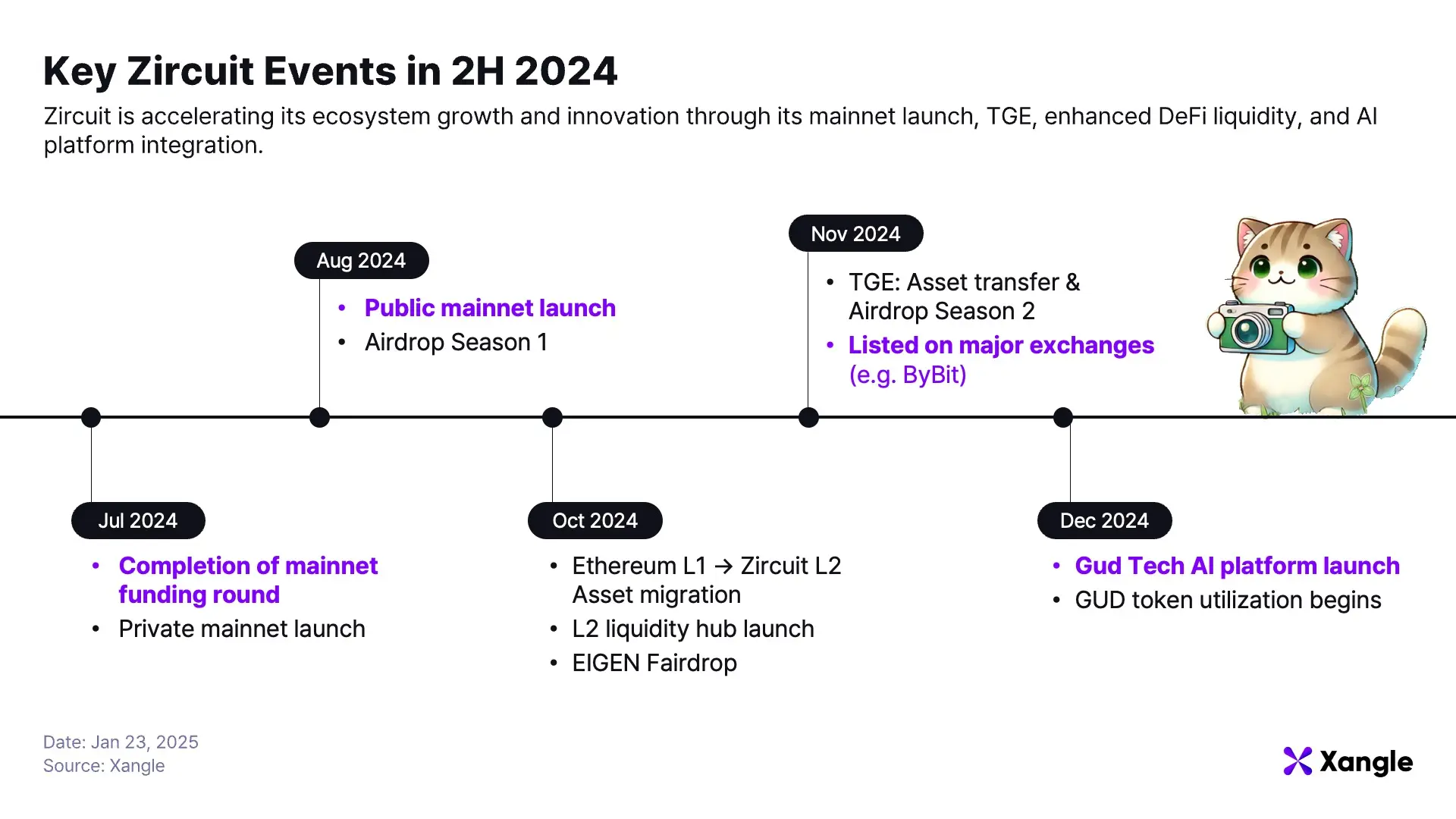
In Q4 2024, Zircuit entered a pivotal phase of ecosystem expansion with the launch of "Mainnet Phase 2." Leading up to this milestone, the project had been conducting extensive research and development on its OP Stack-based rollup, leveraging the Halo2 proof system. After operating a private testnet and unveiling a public testnet at Istanbul DevConnect in November 2023, Zircuit successfully validated its AI-driven SLS technology. Following the private mainnet launch in July 2024, which ensured initial network stability, the public mainnet (Phase 1) was introduced alongside Airdrop Season 1. In October, the Mainnet Phase 2 upgrade was implemented, significantly improving user experience through support for ERC-20 tokens, establishment of a unified liquidity hub, migration of staked assets, and lifting withdrawal restrictions on mainnet assets.
The core feature of Mainnet Phase 2 is the full deployment of the liquidity hub and bridge. Users can now benefit from staking-based incentives, including EigenLayer and Symbiotic points, native staking rewards, Zircuit partner ecosystem incentives, and airdrop allocations. Furthermore, by staking $ZRC within the liquidity hub or engaging with DeFi platforms (e.g., ZeroLend, Elara), participants can earn additional rewards, including fee-sharing benefits. Liquidity providers, in particular, stand to receive substantial incentives, including multipliers on Zircuit points, trading fees, liquidity mining rewards, and APR exceeding 100% in certain cases. Ocelex, a key participant, saw its TVL surge 228.17% within three days, reaching $4.6M. With bridging limits removed and integration with external bridges underway, Zircuit has made asset transfers on L2 more seamless than ever.
$ZRC TGE and Airdrop
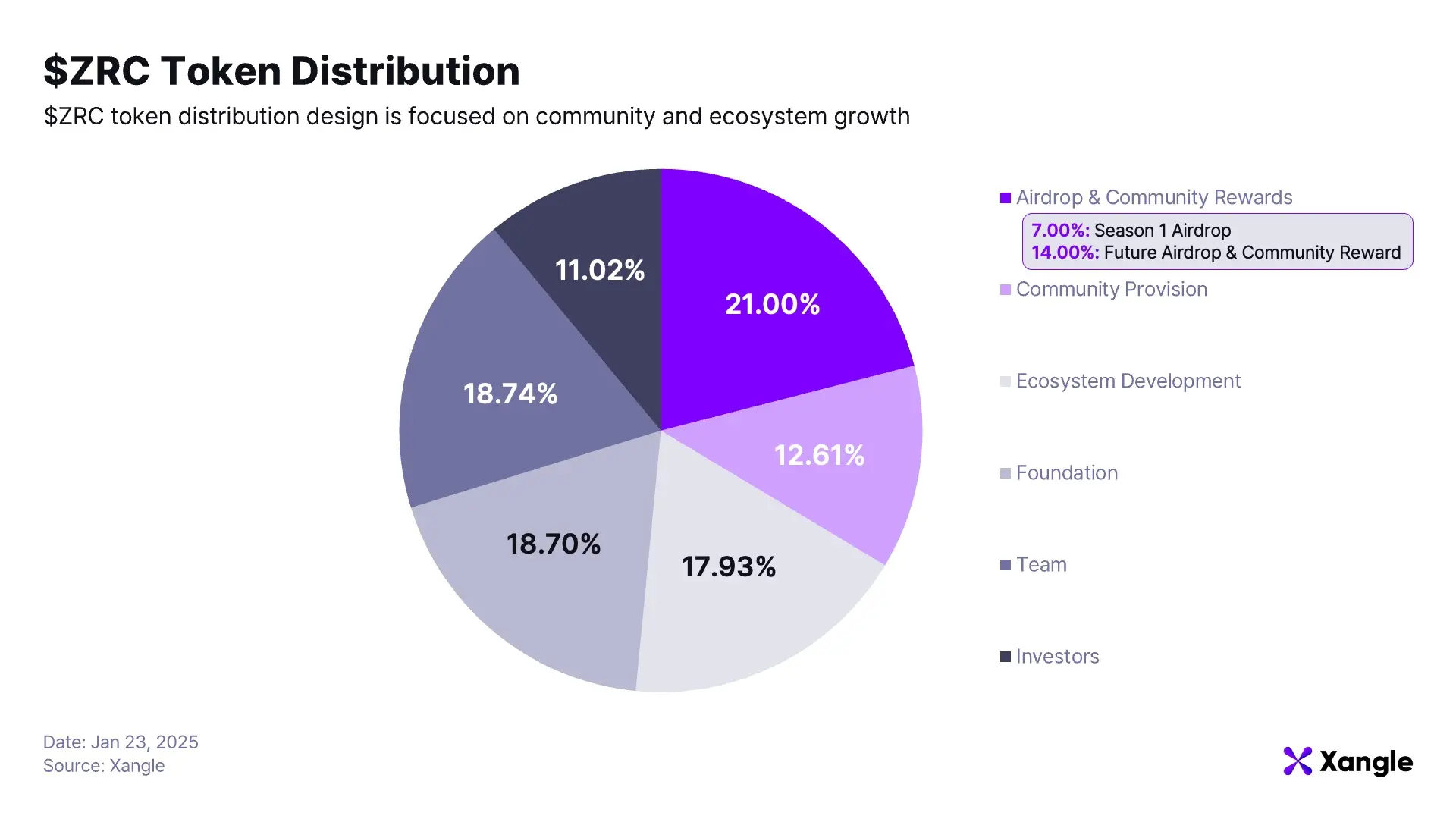
In November 2024, Zircuit initiated Airdrop Season 2, officially enabling $ZRC token transfers and trading, marking the full-scale implementation of its tokenomics. According to the tokenomics framework disclosed by the Zircuit team: 21.00% is allocated to airdrops and community rewards, 12.61% to community supply, 17.93% to ecosystem development, 18.70% to the foundation, 18.74% to the team, and 11.02% to investors. During Airdrop Season 1, held as part of Mainnet Phase 1 in August 2024, Zircuit distributed 7% of the total 10 billion $ZRC supply to approximately 262,200 addresses, including early stakers, partners, and builders. The remaining allocations will be distributed in multiple phases through targeted airdrop programs and growth-driven initiatives. This phased distribution strategy, aligned with Zircuit’s ecosystem expansion roadmap, is designed to ensure equitable token distribution among actual network participants. As a result, community engagement has significantly increased.
With the conclusion of Airdrop Season 2 in November, Zircuit announced the launch of Airdrop Season 3, shifting its focus from L1 staking rewards in Season 1 and L2 staking rewards in Season 2 to incentivizing L2 liquidity provision and real on-chain activity. Unlike previous airdrop phases, Season 3 prioritizes rewarding participants for active engagement within the network. Existing participants in Zircuit’s L1 and L2 liquidity hubs are already accumulating Season 3 points automatically, while additional rewards can be earned through DeFi protocol interactions and liquidity provision. By integrating airdrops with launchpools and ongoing incentive programs, Zircuit continues to strengthen its community-driven foundation, fostering an ecosystem where liquidity providers and active network participants are directly rewarded.
Beyond airdrops, Zircuit has actively accelerated ecosystem expansion through strategic launchpool initiatives. HashKey Global designated Zircuit ($ZRC) as its 12th launchpool project, allowing users to stake $HSK and $ZRC in exchange for $ZRC rewards. Meanwhile, Catizen selected Zircuit as its first-ever launchpool project, enabling participants to stake $CATI and NFTs (Cats) to earn $ZRC. By leveraging high-visibility platforms with strong community engagement, these launchpool initiatives provide additional staking incentives while driving higher network participation and liquidity expansion. As a result, Zircuit has successfully established a solid foundation for sustained ecosystem growth.
EIGEN Fairdrop: A more inclusive staking model
https://www.zircuit.com/blog/the-zircuit-fairdrop-a-reward-for-eigenlayer-holders-and-stakers
To enhance fairness and accessibility in staking, Zircuit launched the EIGEN Fairdrop, addressing the inherent limitations of traditional staking models. Typically, staking rewards disproportionately benefit large token holders ("whales"), creating barriers for smaller participants. However, the EIGEN Fairdrop introduces a more inclusive staking rewards model, ensuring that smaller holders also receive equitable benefits. On October 8, 2024 (Ethereum block #20919999), Zircuit conducted the EIGEN Fairdrop, distributing 2% of the total $ZRC supply to over 190,000 addresses holding at least three EIGEN tokens. Eligible participants can claim their rewards at app.zircuit.com/fairdrop, with additional airdrops planned for EIGEN holders on exchanges. This initiative not only incentivizes EigenLayer stakers to actively participate in the Zircuit ecosystem but also redefines staking participation beyond mere asset holdings, emphasizing the value of community engagement. Zircuit has reaffirmed its commitment to building a truly accessible and equitable L2 staking ecosystem, ensuring that anyone can participate seamlessly, regardless of their asset size.
3-2. DeFAI initiative: Expanding the ecosystem via DeFi and AI agents
Zircuit ranks 3rd in DeFi rollup TVL
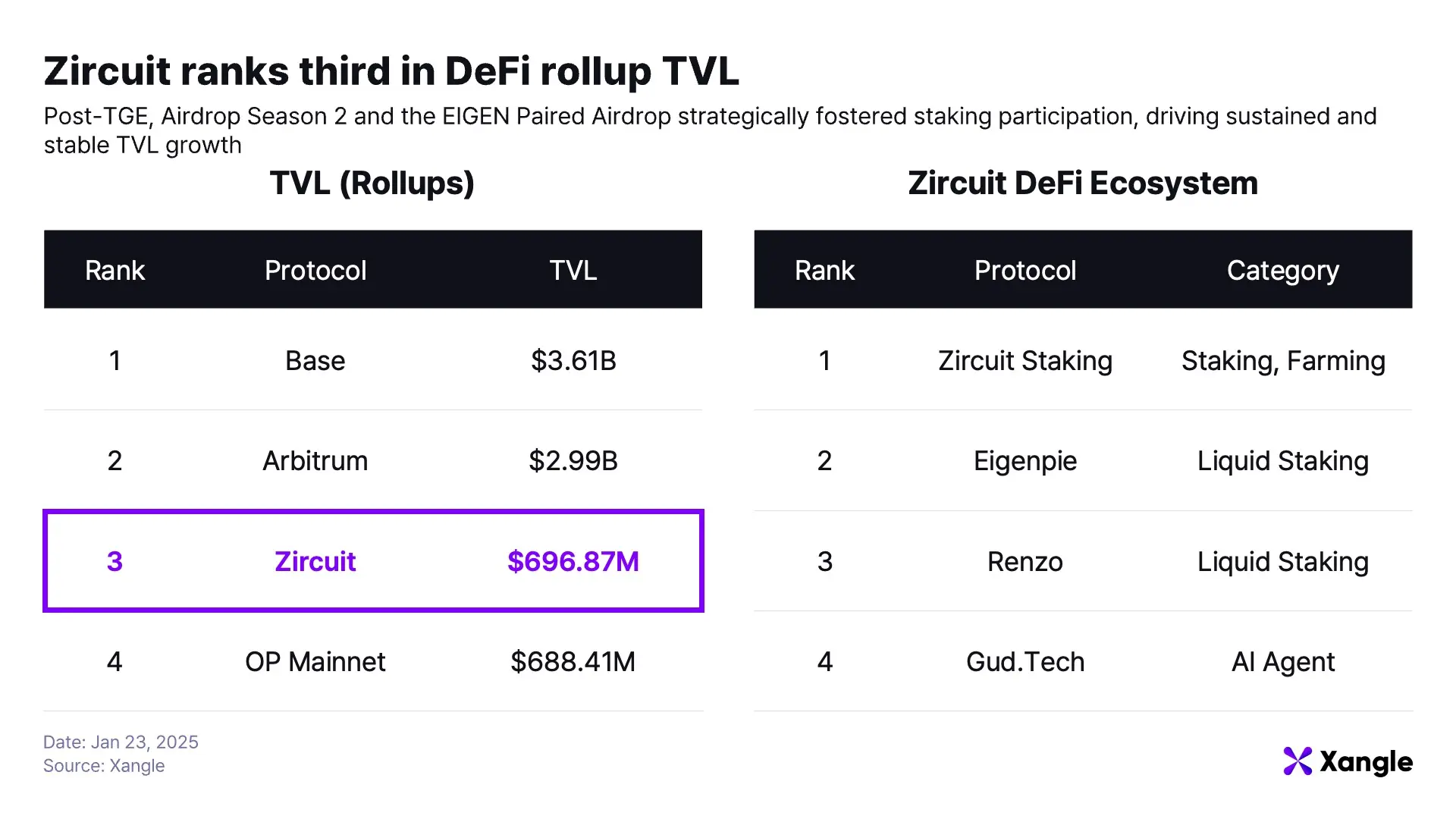
As previously mentioned, Zircuit has successfully bolstered its TVL by implementing an airdrop program that offers substantial rewards to early liquidity providers. In addition, the platform introduced EIGEN Fairdrop, creating an inclusive staking reward mechanism that also benefits smaller investors, further accelerating liquidity expansion. Specifically, the combined effect of the airdrop initiatives and EIGEN Fairdrop propelled Zircuit’s staking TVL and Eigenpie’s TVL, significantly driving ecosystem growth. Among DeFi protocols, Eigenpie has gained prominence within Zircuit due to its unique mechanism that converts Ethereum Liquid Staking Tokens (LSTs) into Isolated Liquid Restaking ETH (ILR-ETH). This innovation allows stakers to earn yields from both standard staking and EigenLayer, all while maintaining high liquidity without requiring asset lockups. As a result, Eigenpie has climbed to second place in TVL within the Zircuit ecosystem.
Beyond attractive reward programs and protocol onboarding, Zircuit prioritizes user experience, ensuring a secure and seamless onboarding process. Through its Liquidity Hub, the platform provides boosted yields from over 25 LRTs and LSTs, enhancing accessibility for users. To further optimize capital efficiency, Zircuit has partnered with Rhino and other solutions to mitigate gas fees associated with native bridging. These efforts have translated into over 100,000 users staking more than $1B on Zircuit, significantly increasing network adoption and user satisfaction.
Looking ahead, Zircuit is dedicated to continuously improving its infrastructure and tools to enhance the integrity and convenience of DeFi activities while actively exploring AI integration. Through upcoming upgrades—including account abstraction in a multi-chain environment and enhanced cross-chain yield optimization and trading functionalities—Zircuit aims to significantly elevate the user experience. Additionally, by introducing AI-powered automated investment strategies, Zircuit seeks to establish an innovative DeFi ecosystem where users can effortlessly access optimal yield opportunities across multiple chains without the need to switch wallets.
GudTech Launch: Strengthening the AI-agent-powered DeFAI ecosystem
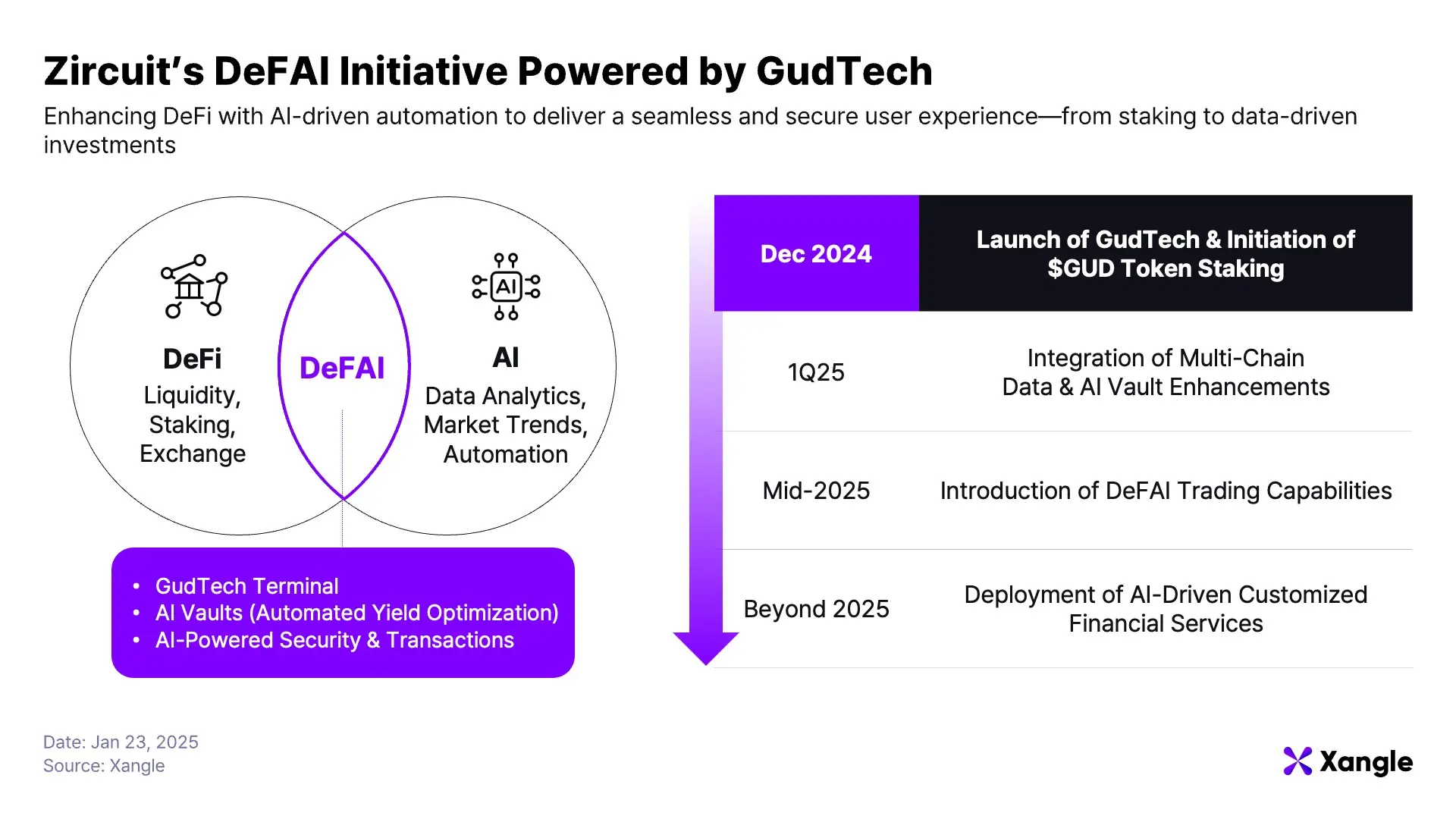
In 2025, Zircuit is poised to accelerate ecosystem expansion with DeFAI (Decentralized Finance AI) and AI agents as core strategic pillars. A key milestone in this initiative is the launch of GudTech, a project designed to address data asymmetry and inefficiencies in the crypto market. GudTech distributed its native token, $GUD, via a fair launch staking model, securing over $9M in $ZRC staking—a remarkable achievement considering it launched without pre-sales or venture capital funding.
At the heart of GudTech is the GudTech Terminal, an AI-driven analytics platform that aggregates real-time market data to generate actionable trading signals. This empowers users to make automated, data-driven financial decisions. For instance, if negative market sentiment surrounding a particular asset intensifies, the AI Terminal can detect the trend and promptly alert users to reposition their holdings. This AI-driven strategy is reinforced by GudTech’s multi-chain trading infrastructure and AI-powered vaults, providing an environment where users can effortlessly identify and capitalize on optimal investment opportunities across different networks.
GudTech is more than just a trading bot—it is building an innovative market intelligence model that integrates quantitative, qualitative, and social data to address information asymmetry and support efficient investment decisions. With an intuitive UX, the platform ensures accessibility not only for professional traders but also for retail users. Moreover, GudTech is interconnected with Zircuit’s DeFAI strategy and DeFi-focused technical advancements, enabling real-time trading in a multi-chain environment through AI agents and account abstraction technology. It remains to be seen whether this initiative will become a key driver of Zircuit’s ecosystem expansion, significantly reducing the complexity of blockchain-based financial activities and accelerating user and capital onboarding.
3-3. Technological advancements for a secure and high-performance Web3 experience
Zircuit v2: Enhancing ZK proof efficiency and network performance
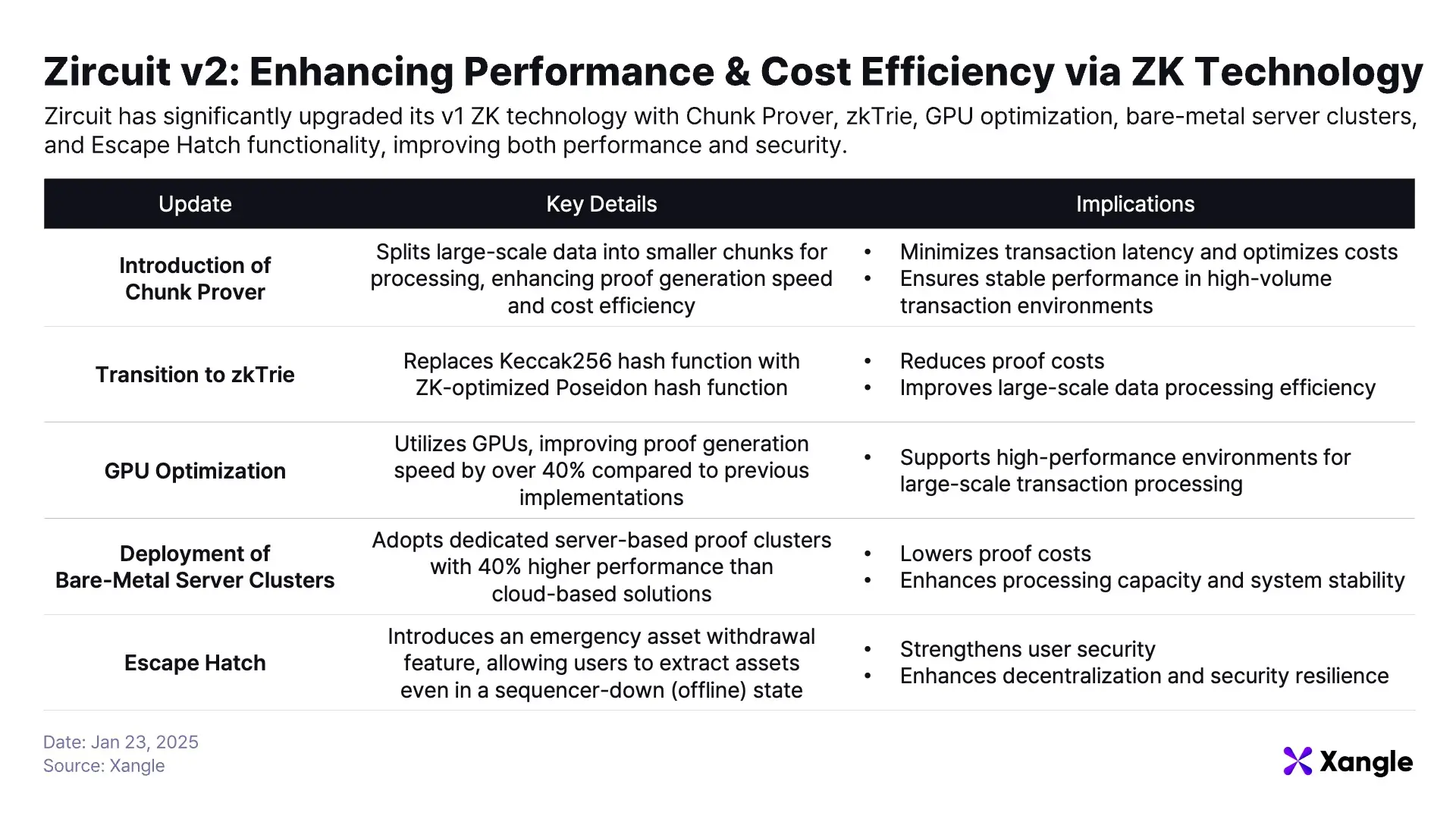
Zircuit has announced a series of critical updates to advance its Zero-Knowledge (ZK) rollup technology, with the introduction of the Chunk Prover being the most notable. Previously, Halo2-based proof systems suffered from inefficiencies due to redundant computations when filling lookup tables with sparse data. The Chunk Prover addresses this by processing data in smaller segments, significantly reducing computational overhead. This ensures minimal network latency even when handling high-volume or complex transactions, ultimately enhancing system performance.
Another key upgrade is the transition to zkTrie. The current Keccak256 hashing algorithm, while widely used, incurs high proof costs in ZK rollups. By adopting Poseidon hash, which is optimized for ZK environments, Zircuit aims to drastically reduce proof costs while increasing throughput. Additional infrastructure enhancements include GPU optimizations and the deployment of a bare-metal server cluster, projected to improve proof generation speed by over 40%, ensuring seamless large-scale transaction processing. Moreover, the Escape Hatch function will allow users to withdraw assets instantly even if the sequencer goes offline, reinforcing network security and resilience.
Zircuit is currently evaluating a potential transition to a Zero-Knowledge Virtual Machine (zkVM) as part of its ongoing efforts to enhance scalability and efficiency. While zkEVM (Zero-Knowledge Ethereum Virtual Machine)maintains high compatibility with the Ethereum Virtual Machine (EVM), it also presents challenges such as frequent updates and complex circuit designs, which drive up proof costs and reduce efficiency. In contrast, zkVM offers a more generalized architecture with greater adaptability to Ethereum upgrades, making it a promising alternative to overcome zkEVM’s inherent limitations. If implemented, zkVM would elevate Zircuit’s technological framework beyond its current OP Stack-based infrastructure, unlocking new levels of developer efficiency and scalability. However, if a full transition to zkVM is deemed infeasible, Zircuit plans to optimize its existing Halo2-based proof system, focusing on maximizing proof efficiency while minimizing costs. The team is carefully assessing all available options to determine the most effective technological direction for the protocol’s long-term evolution.
Zircuit’s AI-Driven Evolution: SLS upgrades and AI agent support
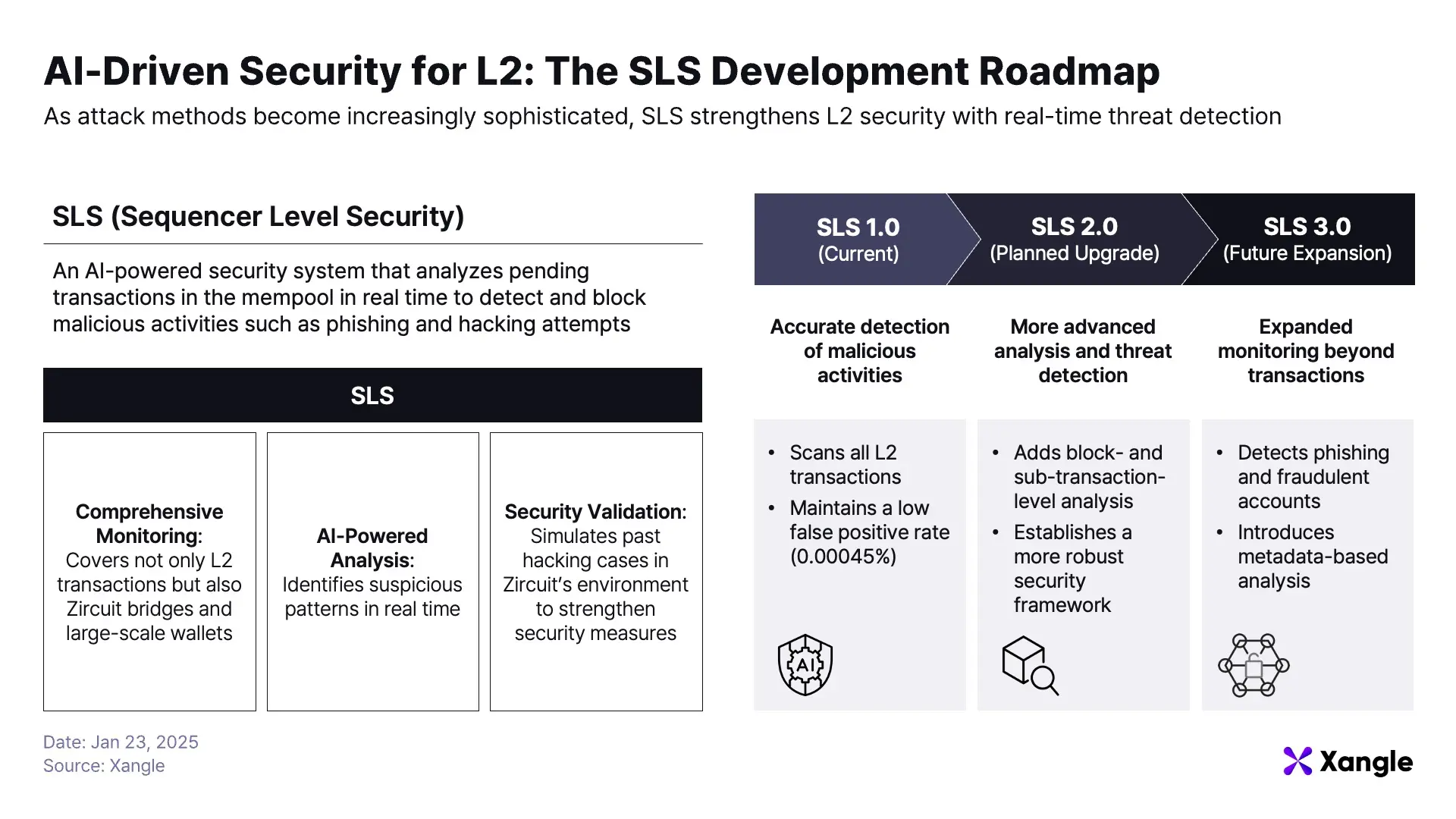
As part of its comprehensive AI roadmap, Zircuit is preparing to roll out Sequencer Level Security (SLS) 2.0 and 3.0 upgrades by mid-2025. These enhancements aim to strengthen both network security and scalability by leveraging AI-driven real-time transaction analysis to detect and mitigate malicious activities. At its current SLS 1.0 stage, the system scans all transactions while maintaining an exceptionally low false positive rate—ensuring that legitimate transactions are not mistakenly flagged as malicious. The upcoming SLS 2.0 and 3.0 upgrades will introduce advanced AI algorithms capable of identifying malicious patterns at both block and sub-transaction levels. This will fortify network security against increasingly sophisticated attacks while preserving transaction speed and user experience.
In parallel, Zircuit is developing a dedicated AI SDK to facilitate the seamless integration of AI applications and agents within the blockchain ecosystem. Given the growing adoption of AI agents, Zircuit’s SDK will be designed to simplify blockchain integration for AI developers by enhancing on-chain data accessibility and optimizing gas fees. Whether these efforts will successfully expand the potential for AI-blockchain convergence and activate a diverse range of AI agent activities—ultimately delivering tangible value to both developers and users—remains to be seen.
Zircuit’s long-term vision: Sustainability through technology and ecosystem growth
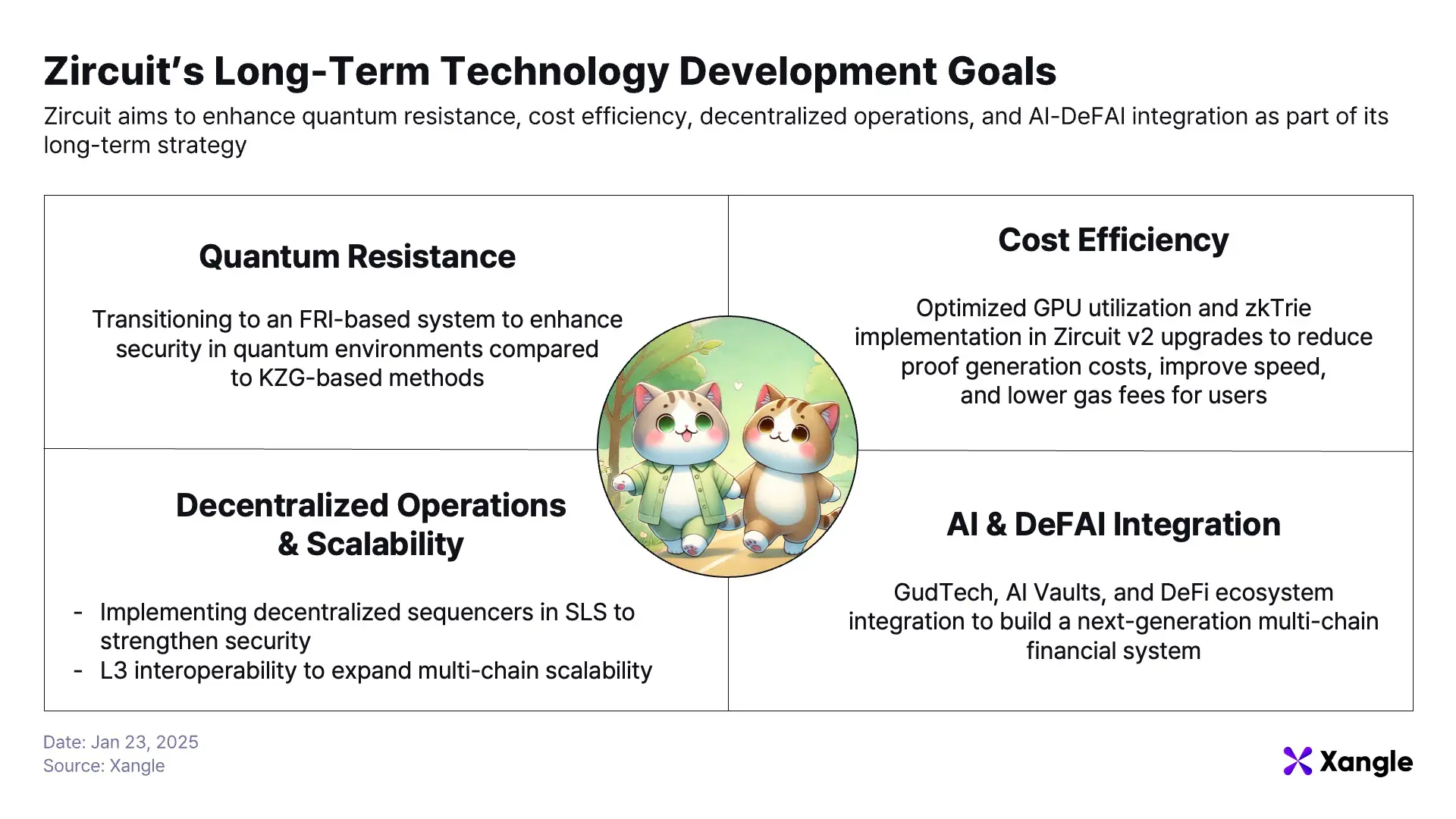
Beyond 2025, Zircuit is strategically pursuing four long-term objectives: quantum resistance, cost efficiency, decentralized operations with enhanced scalability, and deeper AI & DeFAI integration. With the advent of quantum computing threatening conventional cryptographic security, Zircuit is proactively reinforcing its infrastructure by transitioning from KZG commitments to an FRI-based system, ensuring resilience against quantum attacks. This initiative aligns with broader efforts within the Ethereum ecosystem, which is also preparing for post-quantum security challenges.
On the data management front, Zircuit currently leverages EIP-4844 to optimize costs. However, it remains flexible, exploring alternative chains or additional optimizations through its v2 upgrade to further enhance proof efficiency. In terms of decentralization, Zircuit is actively working towards a decentralized sequencing model, allowing L1 participants to contribute to transaction ordering while maintaining AI-powered security through SLS technology. Additionally, Zircuit is advancing its interoperability with Layer 3 solutions, expanding AI application support, and refining account abstraction (AA) to establish itself as an independent, highly scalable ecosystem built atop Ethereum.
4. On-Chain Performance
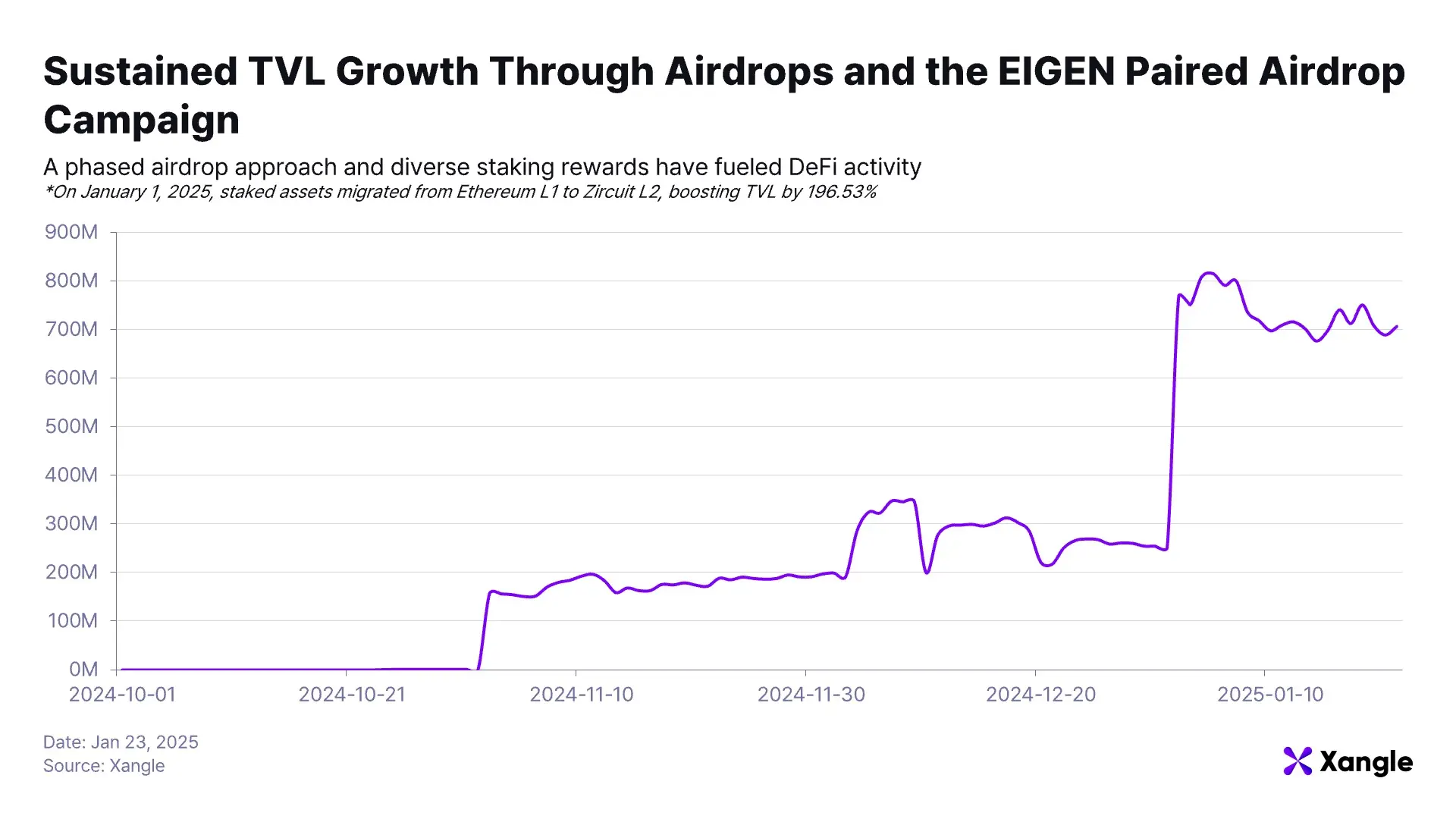
Since October 2024, Zircuit’s Total Value Locked (TVL) has been on an upward trajectory, experiencing explosive growth in early 2025. This surge coincided with the launch of Airdrop Seasons 2 and 3 and a significant migration of staked assets from Ethereum L1 to Zircuit L2. The combined impact of these events, along with the Eigen Fairdrop, drove substantial user engagement and liquidity expansion, at one point pushing TVL past $800M. This underscores the effectiveness of staking and DeFi-based incentive programs in accelerating Zircuit’s ecosystem growth.
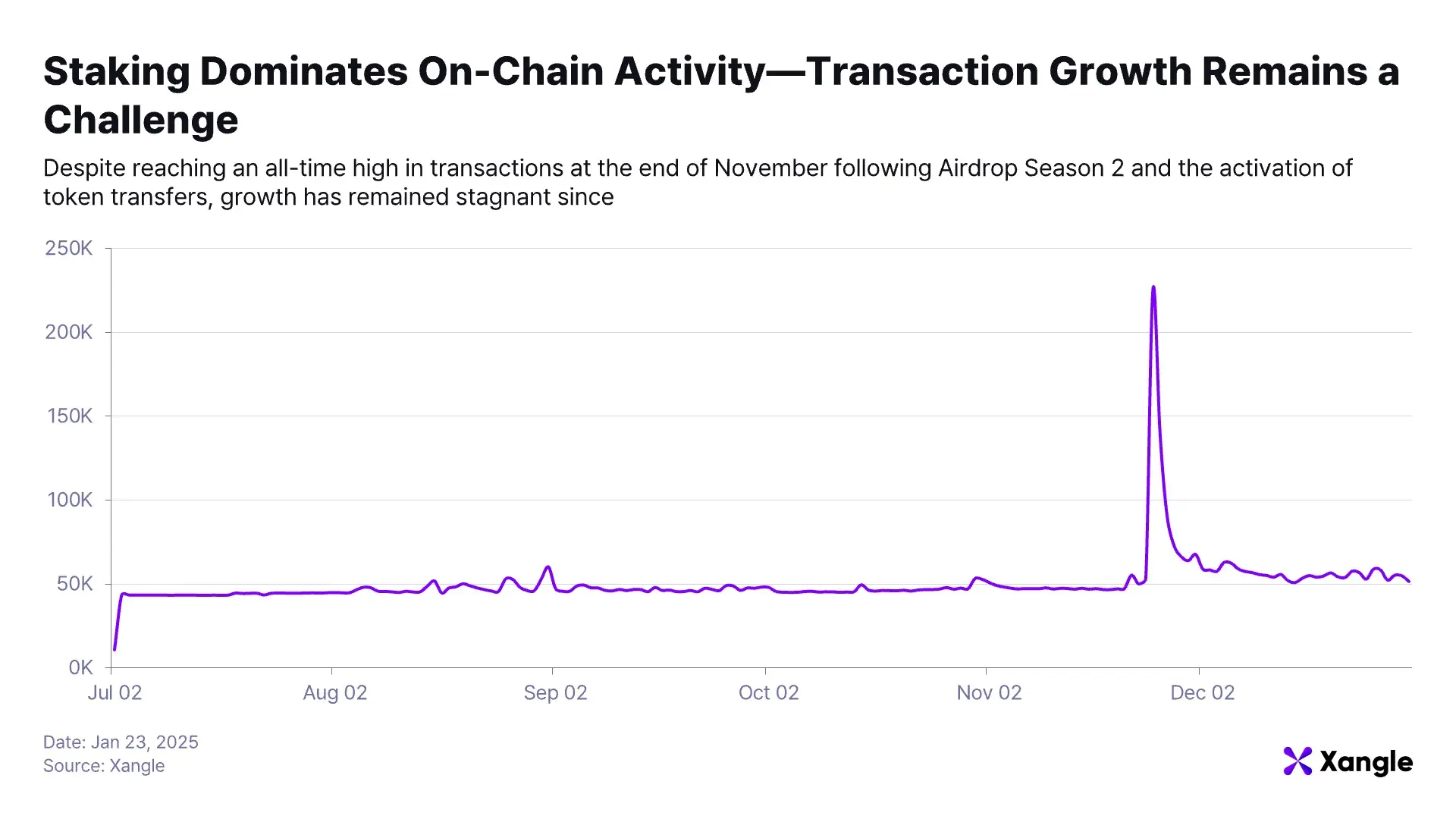
Transaction volumes peaked in November, coinciding with the Airdrop Season 2 and staking campaigns, but have since moderated. This trend suggests that on-chain activity has been primarily concentrated in staking, highlighting the need for broader user engagement strategies. As Zircuit pivots towards AI agents and DeFAI, these emerging narratives could serve as key drivers for sustained long-term ecosystem growth.
5. Closing Summary
In Q4 2024, Zircuit successfully executed its Phase 2 mainnet launch and TGE, securing its foothold within the rollup ecosystem. Its phased airdrop framework played a pivotal role in driving participation, propelling TVL past $700M, and positioning Zircuit among the top three rollups. The EigenPie and Zircuit Staking initiatives further cemented themselves as key growth catalysts, significantly enhancing network liquidity and transaction volume. On the technological front, Zircuit has substantially improved proof efficiency through upgrades such as Chunk Prover and zkTrie transition, while SLS 2.0/3.0 will further reinforce network security. The potential adoption of a zkVM could provide additional scalability benefits. With a robust infrastructure now in place, all eyes are on how far Zircuit can push the growth of its ecosystem through its DeFi and AI narratives even beyond the airdrop phase.
Disclaimer
I confirm that I have read and understood the following: The information contained in this article is strictly the opinions of the author(s). This article was authored free from any form of coercion or undue influence. The content represents the author's own views and does not represent the official position or opinions of CrossAngle. This article is intended for informational purposes only and should not be construed as investment advice or solicitation. Unless otherwise specified, all users are solely responsible and liable for their own decisions about investments, investment strategies, or the use of products or services. Investment decisions should be made based on the user’s personal investment objectives, circumstances, and financial situation. Please consult a professional financial advisor for more information and guidance. Past returns or projections do not guarantee future results. This article was written at the request of Zircuit. All content in this article was written independently by the author(s), and neither CrossAngle nor Zircuit had any editorial control or influence over the content. The author(s) may hold the cryptocurrencies mentioned in this article at the time of writing.
Xangle or its affiliated partners own all copyrights of the written or otherwise produced materials and content provided on the platform. Any illegal reproduction of such content, including, but not limited to, unauthorized editing, copying, reprinting, or redistribution will result in immediate legal actions without prior notice.