Scroll 4Q24 Review
Table of Contents
1. Project Overview
2. 4Q24 Highlight
3. Key Partnerships and Updates
3-1. $SCR token launch: Binance partnership and airdrop
3-2. Strengthening the ecosystem: A DeFi and community-centric expansion
3-3. Technical updates for developers and users
4. On-Chain Performance
5. Closing Summary
1. Project Overview
Scroll, founded in 2021, successfully launched its mainnet in October 2023 as an Ethereum Layer 2 solution. Utilizing zk-rollup technology, it addresses Ethereum’s scalability challenges. Built on Type 2 zkEVM, Scroll maintains high compatibility with Ethereum while optimizing performance with low transaction fees and fast processing speeds. Its proprietary technologies, including the Poseidon hash function and zkTrie, streamline zk-proof generation, and its multi-layered architecture maximizes transaction throughput. Scroll aims to further enhance performance and efficiency by transitioning to zkVM in the future. Scroll’s close collaboration with the Ethereum Foundation and recognition from Ethereum co-founder Vitalik Buterin drew industry’s attention. With substantial investments from Polychain Capital, Sequoia Capital, and others, Scroll is positioning itself as a global financial infrastructure platform that aims to empower underserved communities and developing countries.
2. 4Q24 Highlight
$SCR Token Launch: Binance Partnership and Airdrop
- Successfully launched the $SCR token in partnership with Binance.
- Conducted an airdrop claim event to encourage community participation and strengthen its user base.
- Addressed community concerns over insider selling allegations with detailed clarifications.
- Opened Session Season 2 with plans to distribute future airdrop points.
Enhancing the DeFi Ecosystem and Community Engagement
- Focused on revitalizing the DeFi ecosystem through multichain and native protocols.
- Launched Scroll DAO governance and community-driven programs.
- Introduced the ‘Level Up’ initiative and real-world services to encourage user contributions and DApp development.
Technical Updates for Developers and Users
- Introduced the OpenVM framework for the zkVM transition, improving efficiency and scalability.
- Released Scroll SDK and Gadget to enhance rollup and multichain development environments.
- Improved cross-chain interoperability with Chainlink CCIP integration and adoption of the ERC-7683 standard.
3. Key Partnerships and Updates
3-1. $SCR token launch: Binance partnership and airdrop
Binance partnership drives $SCR token launch success
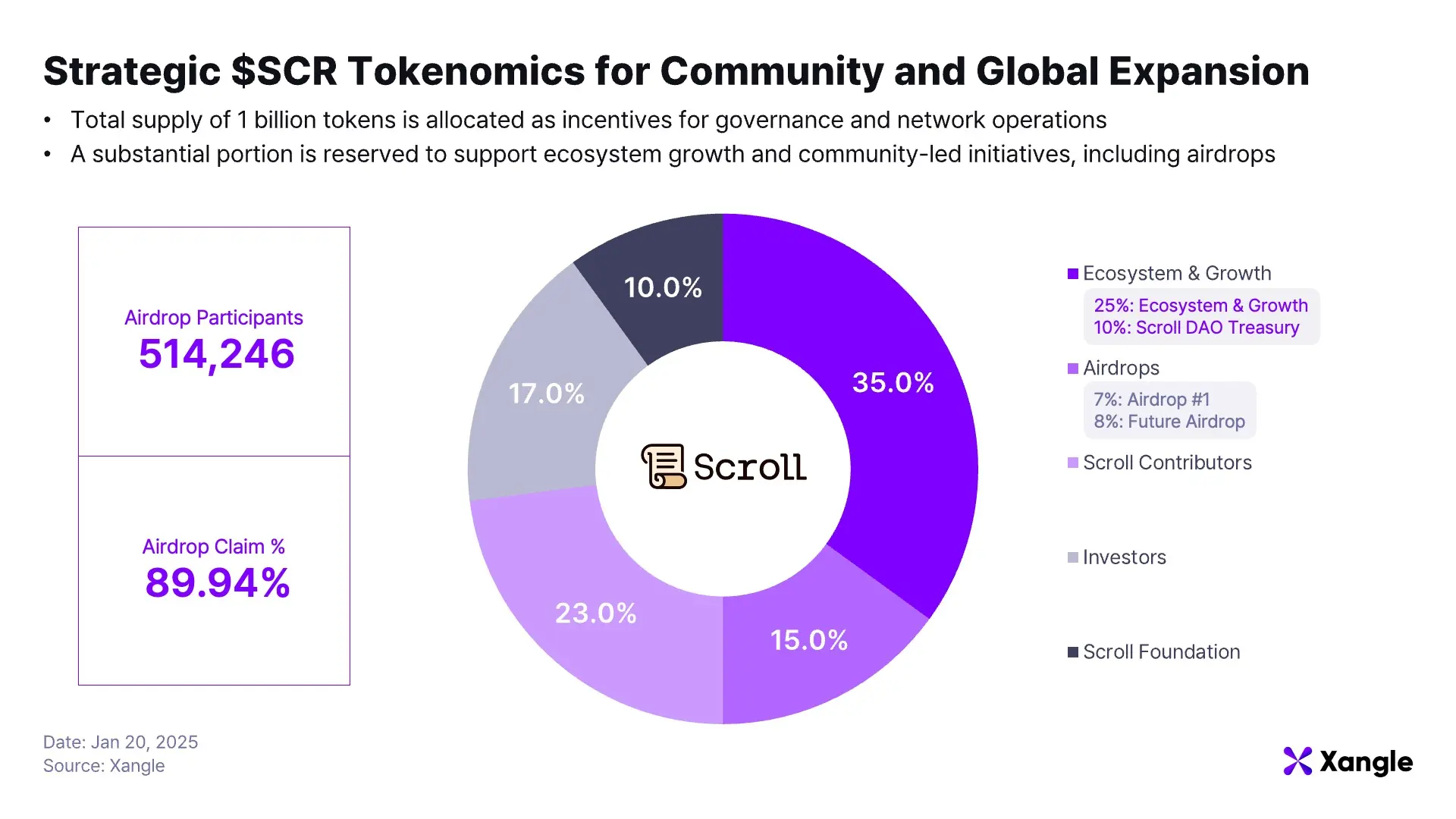
In October, Scroll achieved a major milestone by launching its $SCR token, marking its expansion into the global ecosystem. The token's total supply of 1 billion is distributed as follows:
- 35% is allocated to ecosystem and growth initiatives.
- 15% is dedicated to community airdrops.
- 23% is reserved for the team and advisors.
- 17% is allocated to investors.
A key feature is that 10% of the ecosystem allocation goes to the Scroll DAO Treasury, supporting early community projects and incentive programs—this establishes a foundation for sustainable growth. Through its airdrop program, Scroll strengthens community-centered governance by rewarding early contributors.
https://x.com/sandyzkp/status/1844641893310750962
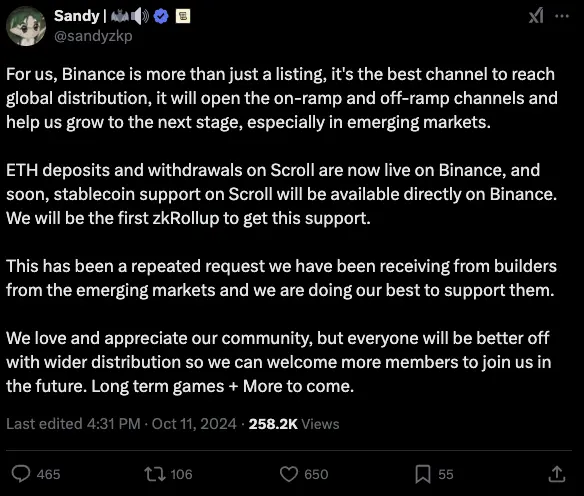
The partnership with Binance represented a strategic move to attract global users and drive ecosystem growth. Binance Launchpool received 5.5% of the $SCR allocation, aimed at promoting stablecoin adoption and on-chain activity in emerging markets. When concerns arose about the size of the Launchpool allocation, Scroll co-founder Ye Zhang explained that these funds came from a separate pool than the ecosystem growth fund, preserving the community's allocation. To prevent token concentration, pre-market purchases were capped at 2,500 $SCR per person. Though initially controversial, the $SCR launch evolved through community feedback and adjustments. The subsequent listings on major exchanges like OKX and Bybit expanded user access significantly, marking an important milestone for the project.
Airdrop claim event strengthens community engagement
Scroll's first $SCR token airdrop in October significantly expanded its user base. The event, which allocated 7% of the total supply, launched on October 22 following an October 19 snapshot. The airdrop achieved remarkable participation, with 514,246 users claiming their tokens—representing an 89.94% claim rate. The distribution reached 50.5 million SCR tokens, with 92.5% of eligible tokens successfully claimed. Marketing initiatives, particularly the Scroll Badge program, generated strong anticipation that energized the entire ecosystem. Native DEXs, including Pencils Protocol, experienced substantial trading volume increases, enhancing ecosystem liquidity. This momentum propelled Scroll to briefly lead all ZK-rollup networks in TVL.
Scroll refutes accusations of token dumping by the network’s core team members
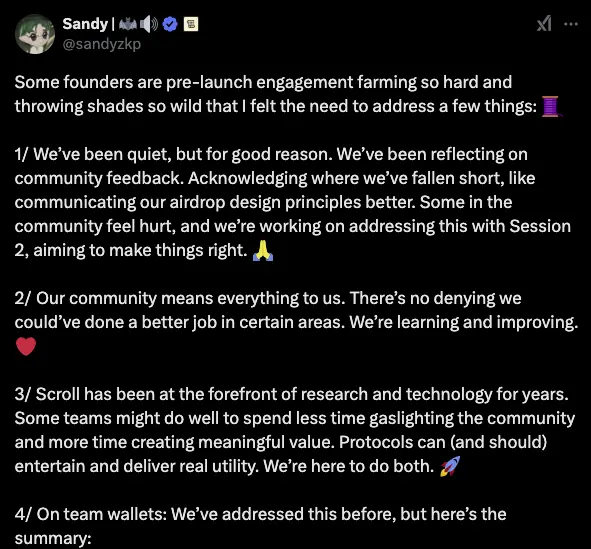
On October 23, concerns emerged when 2.1 million $SCR tokens were transferred to Binance wallets, prompting speculation about token dumping by members of the network’s core team. The Scroll Foundation quickly addressed these concerns, explaining that the tokens were allocated for market-making (MM) activities to enhance liquidity, rather than foundation-initiated selling. They confirmed that the precise transfer of 2,099,999 SCR tokens came from a designated MM partner contract wallet, separate from the Treasury.
https://x.com/sandyzkp/status/1861987868920676594
Co-founder Sandy Peng directly addressed the situation, acknowledging the need for better transparency during the airdrop process. She outlined specific improvements, including enhanced wallet transparency protocols and stricter controls to separate Treasury allocations from airdrop and incentive programs. Scroll's swift response in addressing community concerns is a constructive move. It will be important to observe whether this approach is maintained in the execution of its upcoming airdrop and circulating supply plans.
Session Season 2: Enhanced airdrop rewards await
Scroll has launched Airdrop Session Season 2, expanding community engagement through tangible rewards. During Season 1, users earned "Marks" points through ecosystem activities such as DeFi participation and asset bridging. While this initiative helped Scroll achieve a $1 billion market cap and leading TVL in the ZK ecosystem, the significant drop in TVL after Season 1 has prompted a strategic revamp. Season 2 features a streamlined Marks system and introduces activity-specific boosts, particularly for liquidity provision (LP). Airdrop 1 participants had their Marks counter reset on October 22, 2024, while non-eligible users kept their existing Marks and earning potential. Responding to community input, Scroll has unveiled improved dashboards and session pages, making contribution tracking more intuitive. The success of Season 2 will largely depend on how effectively it addresses user disappointment from Season 1's conclusion. Through these improvements, Scroll aims to rebuild community trust and revitalize ecosystem engagement—though the long-term impact of these initiatives remains to be proven.
3-2. Strengthening the ecosystem: A DeFi and community-centric expansion
Revitalizing the DeFi landscape with multi-chain integrations and native protocols
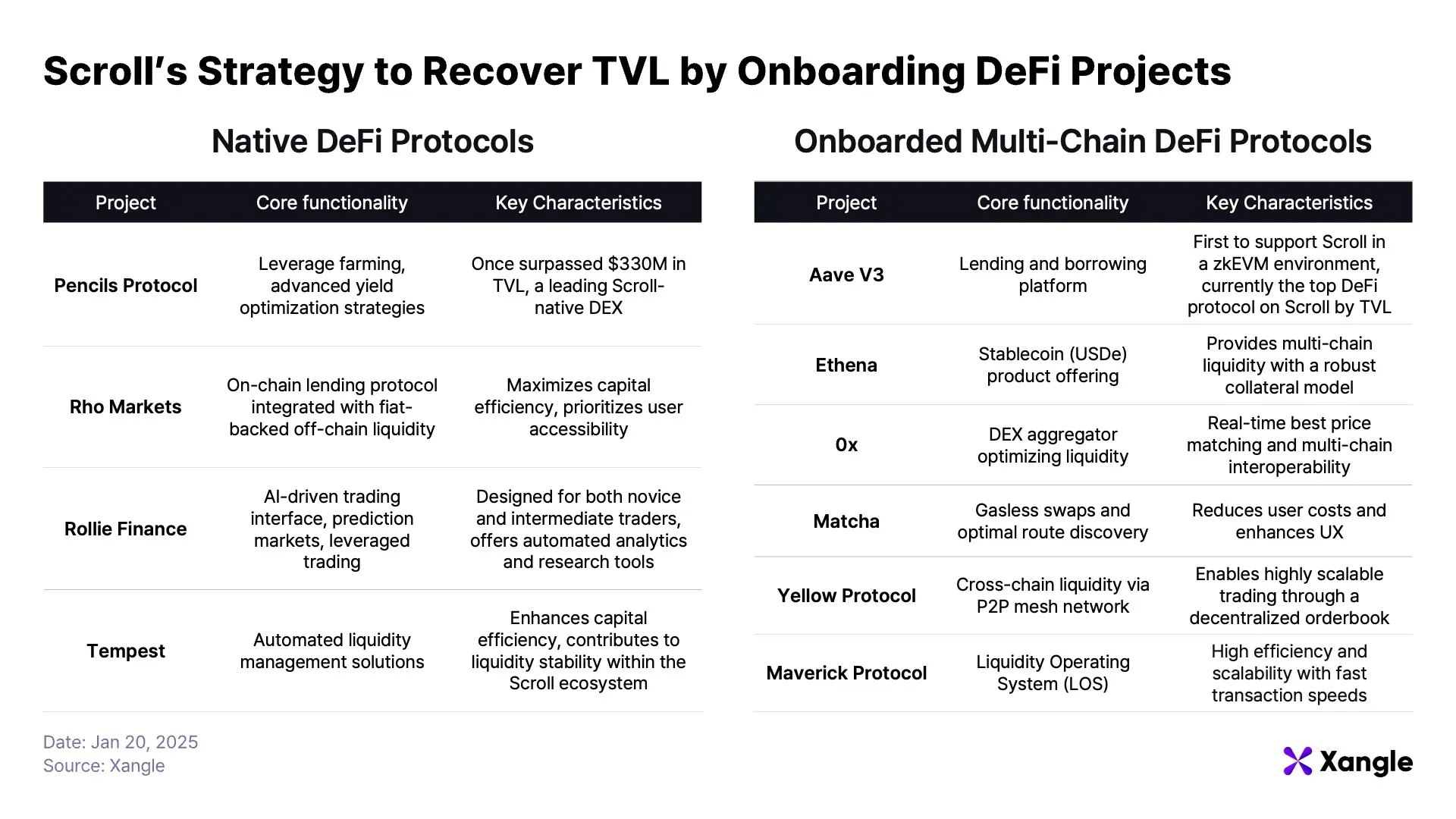
In Q4, Scroll’s ecosystem experienced a significant expansion with the onboarding of multiple DeFi projects across chains. Aave V3, the first lending and borrowing platform to support Scroll within the zkEVM ecosystem, now leads in total value locked (TVL), providing a robust and secure financial infrastructure. Ethena has introduced stablecoin solutions utilizing USDe, while 0x optimizes liquidity provision to secure the most competitive pricing for users. Matcha enables gasless swaps and real-time trade routing, minimizing transaction costs. Yellow Protocol facilitates cross-chain liquidity connectivity through a P2P mesh network, and Maverick Protocol enhances capital efficiency with its scalable Liquidity Operating System. As more multi-chain DeFi projects integrate with Scroll, the platform continues to strengthen its scalability and utility.
Native protocols are also playing a pivotal role in Scroll’s DeFi ecosystem. Pencils Protocol, which previously exceeded $330 million in TVL, has emerged as a flagship platform, offering advanced yield strategies such as leveraged farming. Rho Markets bridges on-chain lending with off-chain liquidity solutions to maximize capital efficiency. Rollie Finance supports prediction markets and leveraged trading through an AI-powered interface, while Tempest ensures stable liquidity management through automated solutions.
Since its launch, Scroll’s DeFi ecosystem has experienced rapid growth, surpassing $740 million in TVL as of September 2024, solidifying its position as the leading ZK rollup ecosystem. However, following an airdrop at the end of October, TVL for native protocols declined, raising concerns about long-term ecosystem stability. Despite this challenge, continued onboarding of multi-chain DeFi projects and enhancements to native protocols suggest that Scroll’s DeFi sector is well-positioned for sustained growth. The key question remains whether Scroll can solidify its foothold in the DeFi market through technological innovation and strategic ecosystem development.
Launching Scroll DAO governance and community-driven initiatives
https://gov.scroll.io/delegates
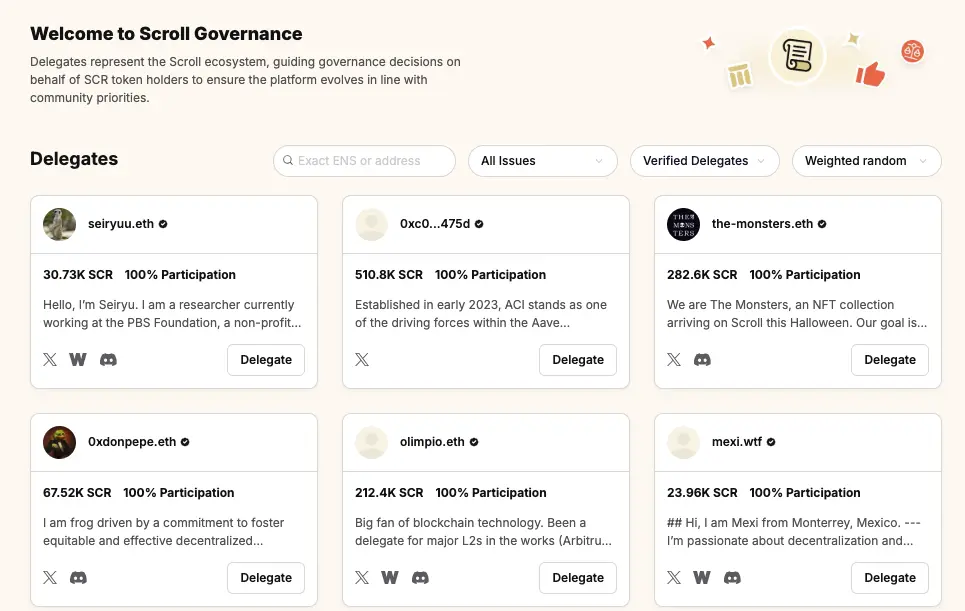
Scroll is reinforcing its decentralized, community-driven ecosystem with the introduction of Scroll DAO governance system. The Delegate Program allows $SCR token holders to participate in governance through elected delegates, who play a pivotal role in shaping the protocol’s development priorities based on community feedback. This initiative aims to establish a governance model rooted in transparency and trust, ensuring that decision-making remains community-driven.
To further encourage ecosystem engagement, Scroll has launched initiatives such as the ZK Talent Badge and the Articles Bounty Contest. The ZK Talent Badge is an on-chain credential that recognizes contributions to ZK technology, allowing developers to build verifiable on-chain resumes. Meanwhile, the Articles Bounty Contest provides a platform for developers to share insights on Ethereum and ZK technology, fostering innovation and knowledge-sharing within the community. These programs are instrumental in driving global participation and collaboration within the Scroll ecosystem.
Driving user engagement and dApp development through the ‘Level Up’ Initiative and real-world applications
Scroll is aiming for global mass adoption by strengthening its consumer applications and developer ecosystem. The platform recently onboarded ADrop, an edtech project that utilizes ZK technology to propose new anonymized data processing methods and ad monetization models. Additionally, Scroll is focusing on expanding financial solutions for unbanked and underserved populations in financially excluded regions such as LATAM, Africa, and Southeast Asia by facilitating local stablecoins and yield products. These initiatives go beyond traditional DeFi applications, driving the development of Non-DeFi use cases and unlocking new market opportunities.
https://scroll.io/blog/fireblocks-x-scroll
To enhance both security and scalability, Scroll has partnered with Fireblocks. Fireblocks’ MPC-based wallet infrastructure ensures the secure management and transactions of $SCR tokens and network assets, while also lowering adoption barriers for enterprises and applications. With Fireblocks integrating across over 2,000 financial institutions and enterprises, this collaboration strengthens Scroll’s competitive position in payments and asset management.
Scroll continues to foster DApp development and user engagement through the ‘Level Up’ program. This initiative includes hackathons, grant programs, and educational workshops for developers across DeFi, NFTs, gaming, and privacy-focused applications. Over the past year, LevelUp has attracted 11,708 new active users, with over 90% voluntarily discovering and engaging with the platform on their own. Solidity modules and challenges have gained significant traction, recording over 13,000 page views.
Looking ahead, Scroll plans to expand its education programs and hackathons, including the upcoming Scroll Open Hackathon, a six-week intensive program designed to help builders design, launch, and scale products that attract users, revenue, distribution, and capital. More details can be found at open.scroll.io.
3-3. Technical updates for developers and users
Enhancing efficiency and scalability by adopting the OpenVM framework for the transition to zkVM
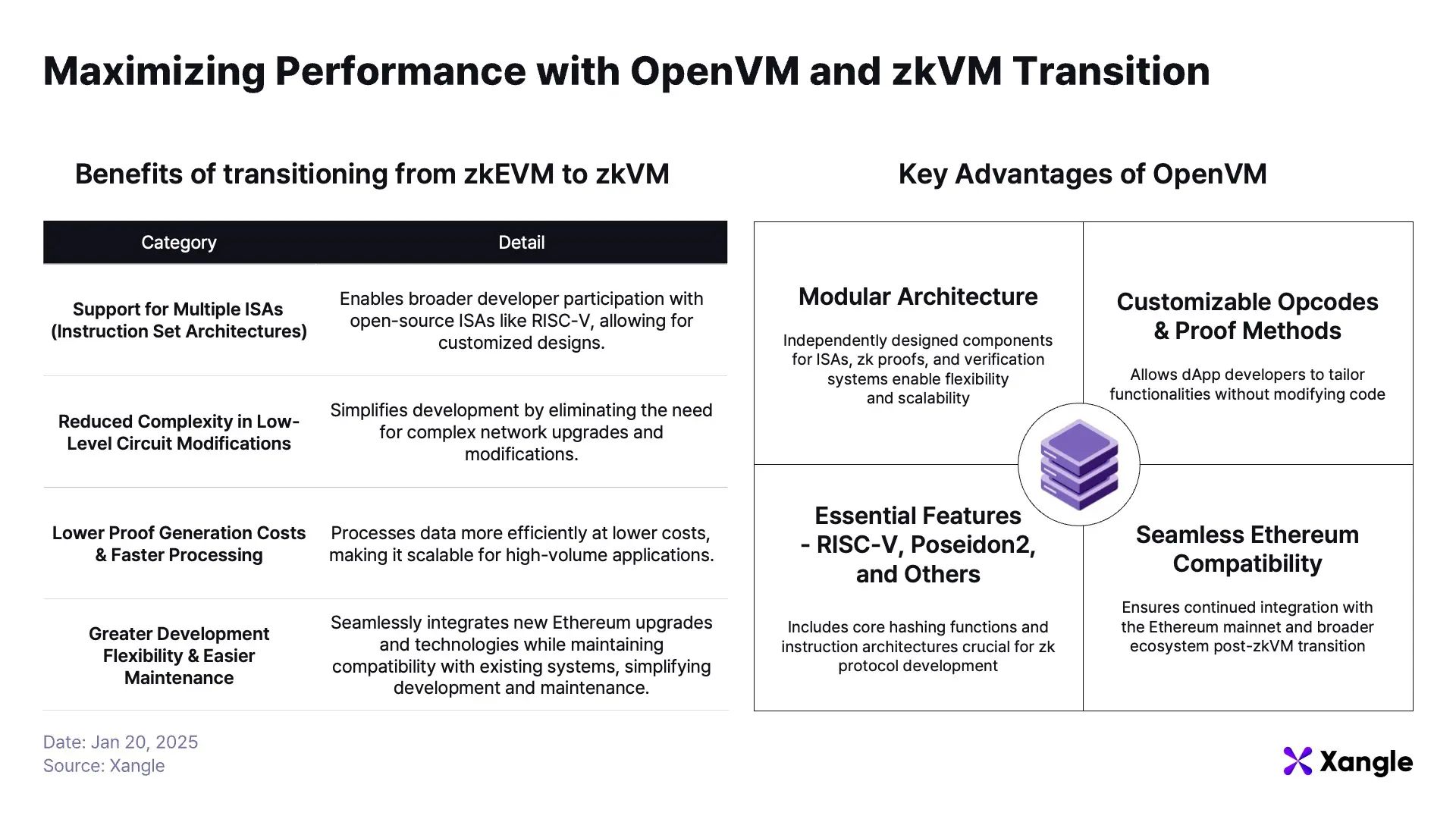
To enhance both chain performance and development scalability, Scroll has announced a transition to zkVM alongside the adoption of the OpenVM framework. Unlike zkEVM, which requires modifications whenever new features are introduced in Ethereum upgrades, zkVM supports diverse Instruction Set Architectures (ISA) and simplifies proof generation using standard programming languages. This transition not only reduces operational costs but also provides developers with a more efficient environment for building applications. With zkVM provers now demonstrating service-level performance and cost efficiency, more zk-rollup projects are shifting away from zkEVM in favor of zkVM.
Scroll’s adoption of the OpenVM framework serves as a foundational solution for this transition to zkVM. By modularizing zk-rollup components—including ISA (which defines computation methods and instruction sets within zk-rollups), ZK circuits, and proof systems—OpenVM offers greater flexibility for DApp developers. It enables them to seamlessly integrate custom execution logic (opcode) or new proof mechanisms without requiring additional code modifications. Designed for easy integration, the initial release (v0.1) includes features such as RISC-V, Keccak, and Poseidon2, essential hash functions for zk-rollup development. By maintaining Ethereum mainnet compatibility while maximizing the security and scalability benefits of ZK technology, Scroll aims to build a more innovative and efficient zk-rollup ecosystem.
Advancing rollup and multi-chain development with the Scroll SDK and Gadgets
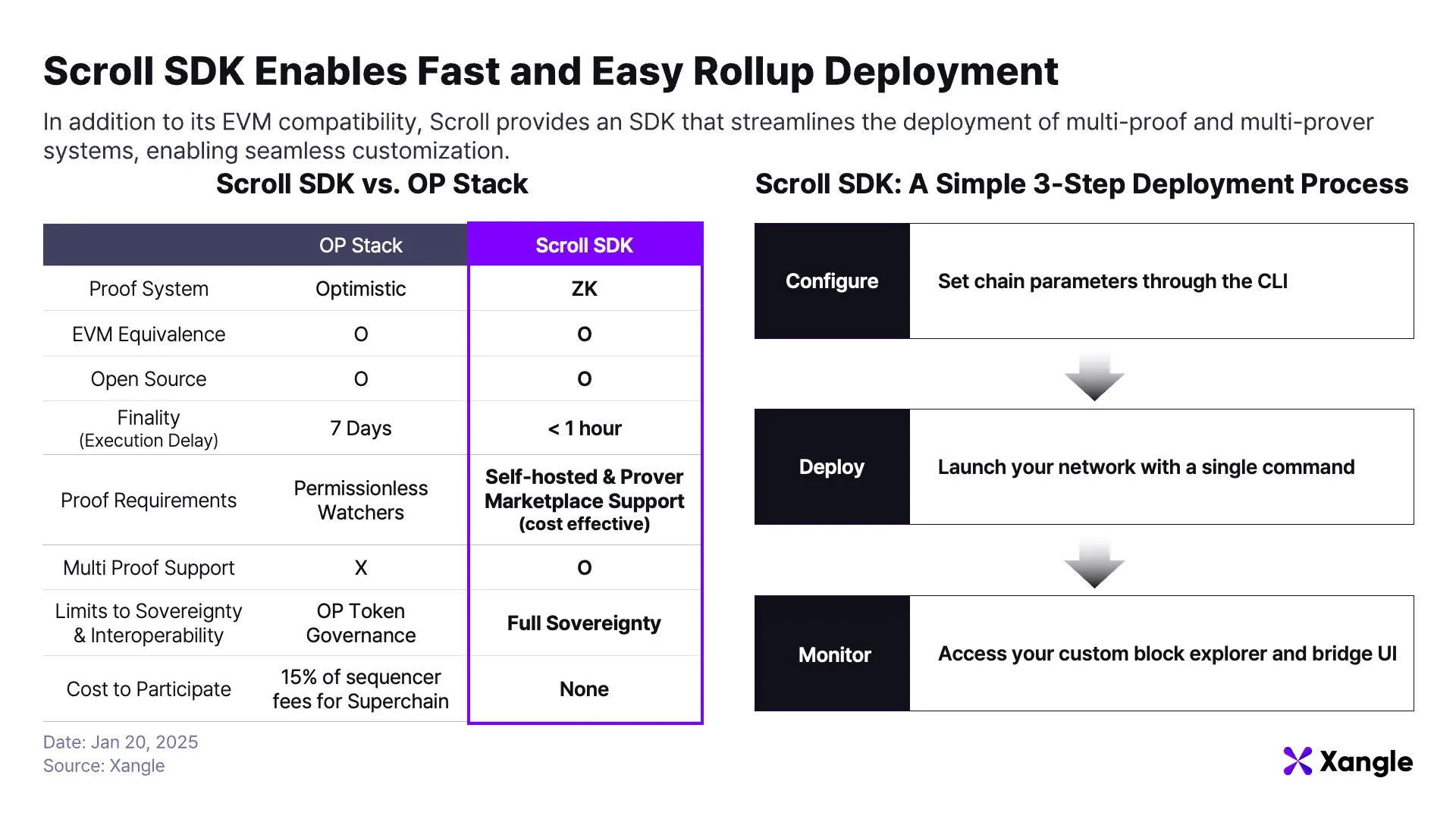
Scroll has launched the Scroll SDK, providing an application-specific rollup deployment infrastructure to facilitate Ethereum-based multi-chain expansion. Recently, Layer 2 projects have shifted from merely scaling their networks to adopting SDK-driven strategies—such as Optimism’s OP Stack and Arbitrum’s Orbit—to simplify application-specific rollup deployment. In line with this trend, Scroll SDK supports a degree of compatibility with the existing Ethereum ecosystem, allowing developers to build and deploy applications without extensive learning curves.
While Scroll’s long-term goal is to transition its network to zkVM, the SDK also supports zkEVM for now to prioritize developer onboarding convenience. This enables Ethereum developers accustomed to Solidity, Vyper, and EVM-based tools to continue building applications without needing to learn new paradigms. Scroll SDK further enhances efficiency by offering sub-one-hour transaction finality, a multi-proof system, and a flexible proving environment, ultimately reducing operational costs and lowering the barriers to rollup deployment and management.
Beyond ecosystem expansion, Scroll’s SDK strategy could also positively impact liquidity aggregation and user adoption. However, its long-term success remains to be seen, given the intensifying competition among Layer 2 solutions like Optimism and Arbitrum. The extent to which each SDK enhances ecosystem support and technological capabilities will likely be a decisive factor in determining their market positioning.
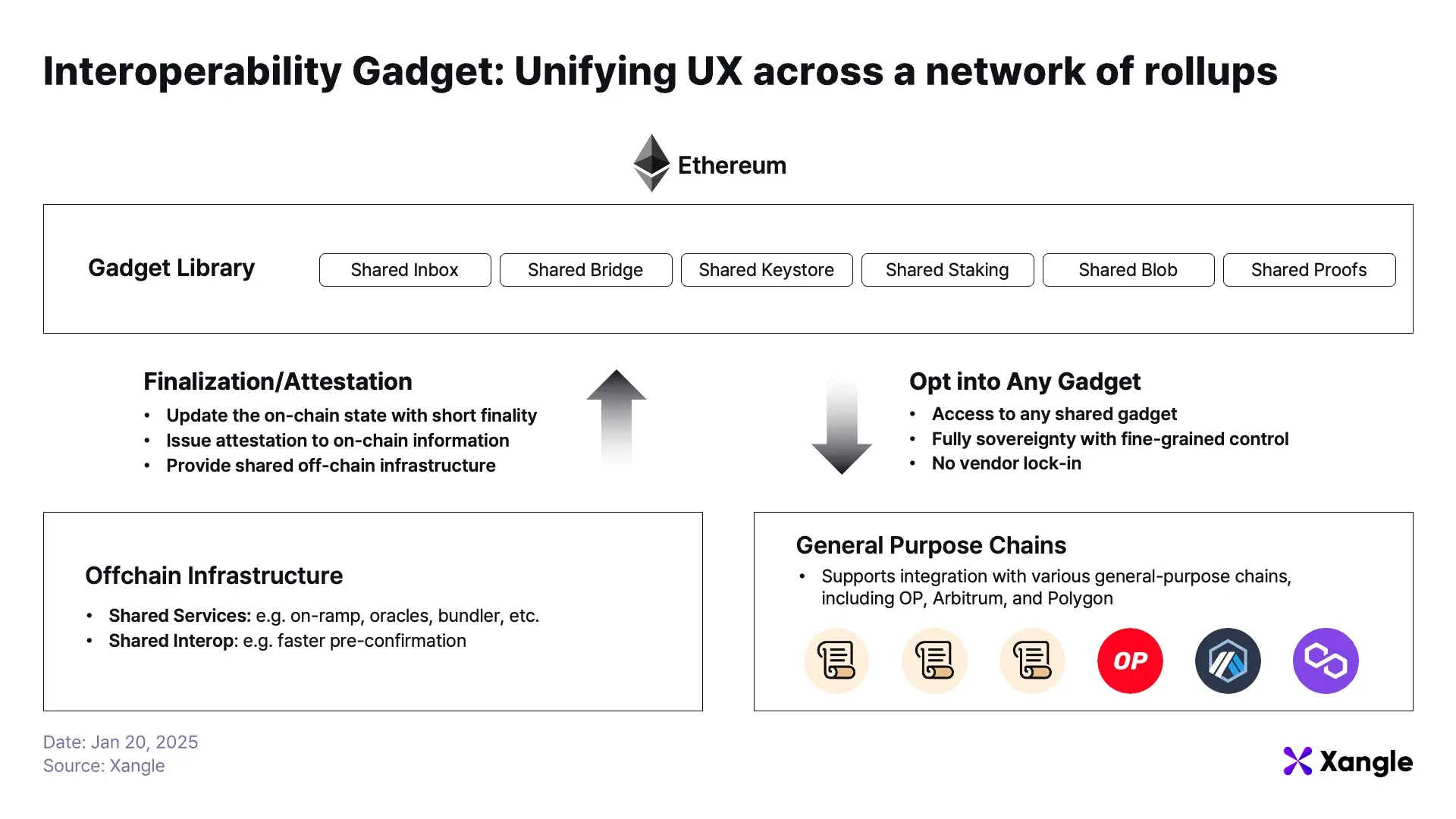
Scroll’s modular infrastructure, Gadgets, aims to drastically reduce development complexity and deployment costs by seamlessly integrating on-chain and off-chain environments. These include: Shared Inbox, which standardizes cross-chain messaging, Shared Bridge, which enables secure and efficient asset transfers, and Shared Keystore, which uses MPC-based security to enhance protection. All Gadgets are offered on an opt-in basis, ensuring developers are not locked into specific service providers or bridge solutions. By enabling seamless asset and data exchange between rollups, Scroll strengthens interoperability across the ecosystem while providing developers with a faster and more secure DApp launch environment and users with a consistent UX and expanded liquidity access.
Notably, Gadgets standardize and share high-cost, high-risk infrastructure components like bridges and large-scale data management. This approach not only reduces operational expenses but also allows development teams to focus on differentiating their core services. As a result, Gadgets present an attractive solution for enterprises and developers pursuing multi-chain strategies. More importantly, by proactively addressing the most challenging aspects of the L2 market—bridging, security, and data verification—Scroll positions itself for broader ecosystem adoption as Gadget usage scales.
Enhancing UX via cross-chain interoperability: Chainlink CCIP and ERC-7683
https://scroll.io/blog/chainlink-ccip
Scroll has integrated Chainlink’s Cross-Chain Interoperability Protocol (CCIP) to further expand its multi-chain ecosystem. As a highly secure and reliable cross-chain solution, CCIP enables developers on Scroll to implement secure cross-chain token transfers, messaging, and smart contract execution. Particularly, CCIP’s programmable token transfer feature allows transactions to execute atomically across chains, improving flexibility and efficiency. This integration strengthens Scroll’s interoperability within the multi-chain ecosystem and accelerates the development of new decentralized applications (dApps).
Additionally, Scroll has announced support for the ERC-7683 standard, a cross-chain intent-based messaging framework developed by Uniswap and Across Protocol. ERC-7683 allows developers and projects to efficiently specify cross-chain operations, streamlining processes such as shared liquidity network utilization, seamless UX design, and customizable pricing and payment mechanisms. By adopting this standard, Scroll enhances the ease of cross-chain integration, fostering greater developer adoption and project expansion.
4. On-Chain Performance
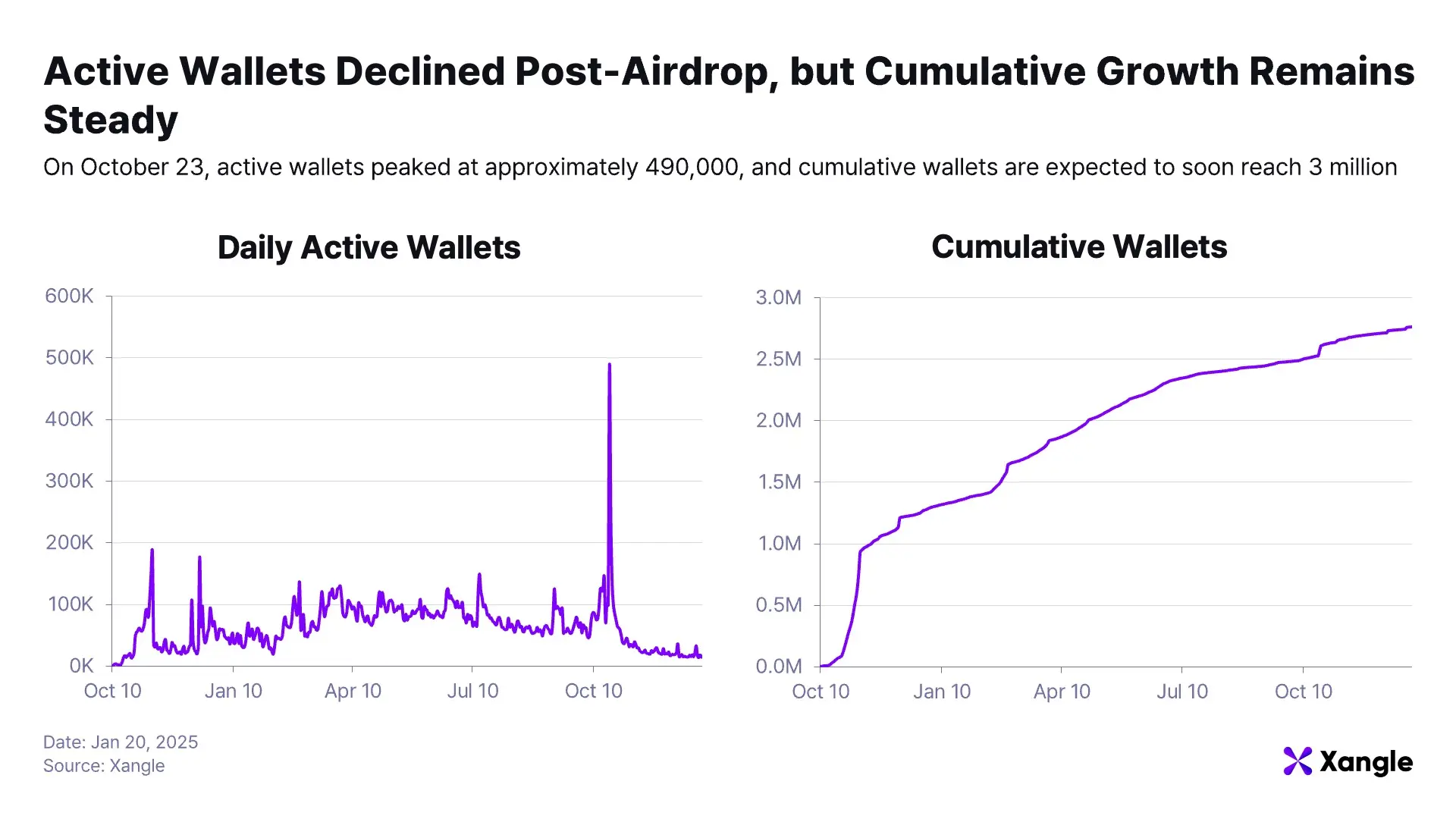
Following the airdrop, the daily active wallet count surged to a peak of 490,000. However, as the initial excitement around token claims subsided, numbers declined. Despite this, cumulative wallet growth has remained steady, approaching 3 million.
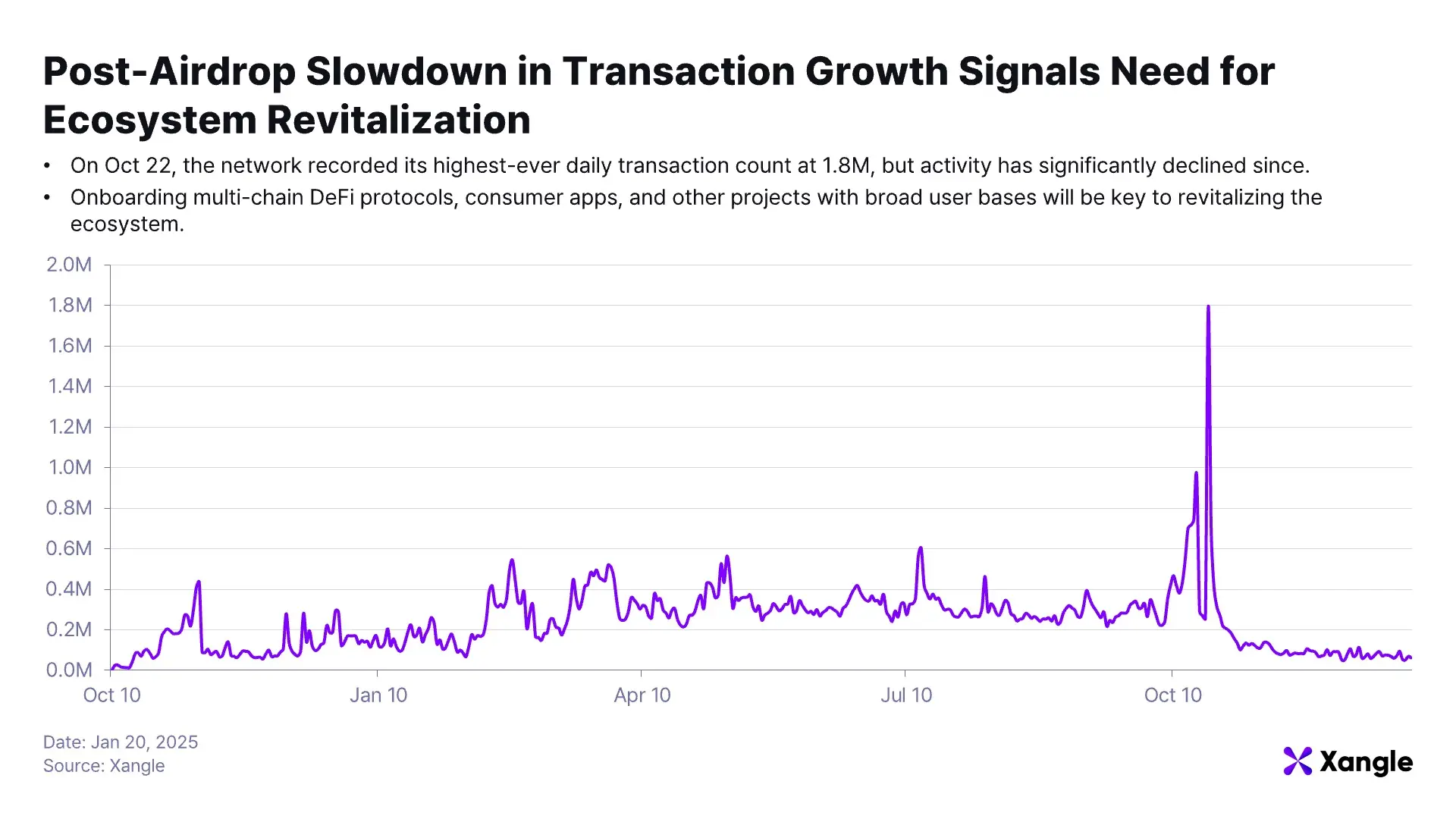
At its peak, the network recorded the highest-ever number of transactions following the airdrop. However, transaction growth has since slowed significantly, indicating that short-term participants have exited. This underscores the need for Scroll to onboard new projects—such as Scroll Open and Session 2—and implement stronger user retention strategies to reinvigorate the ecosystem.
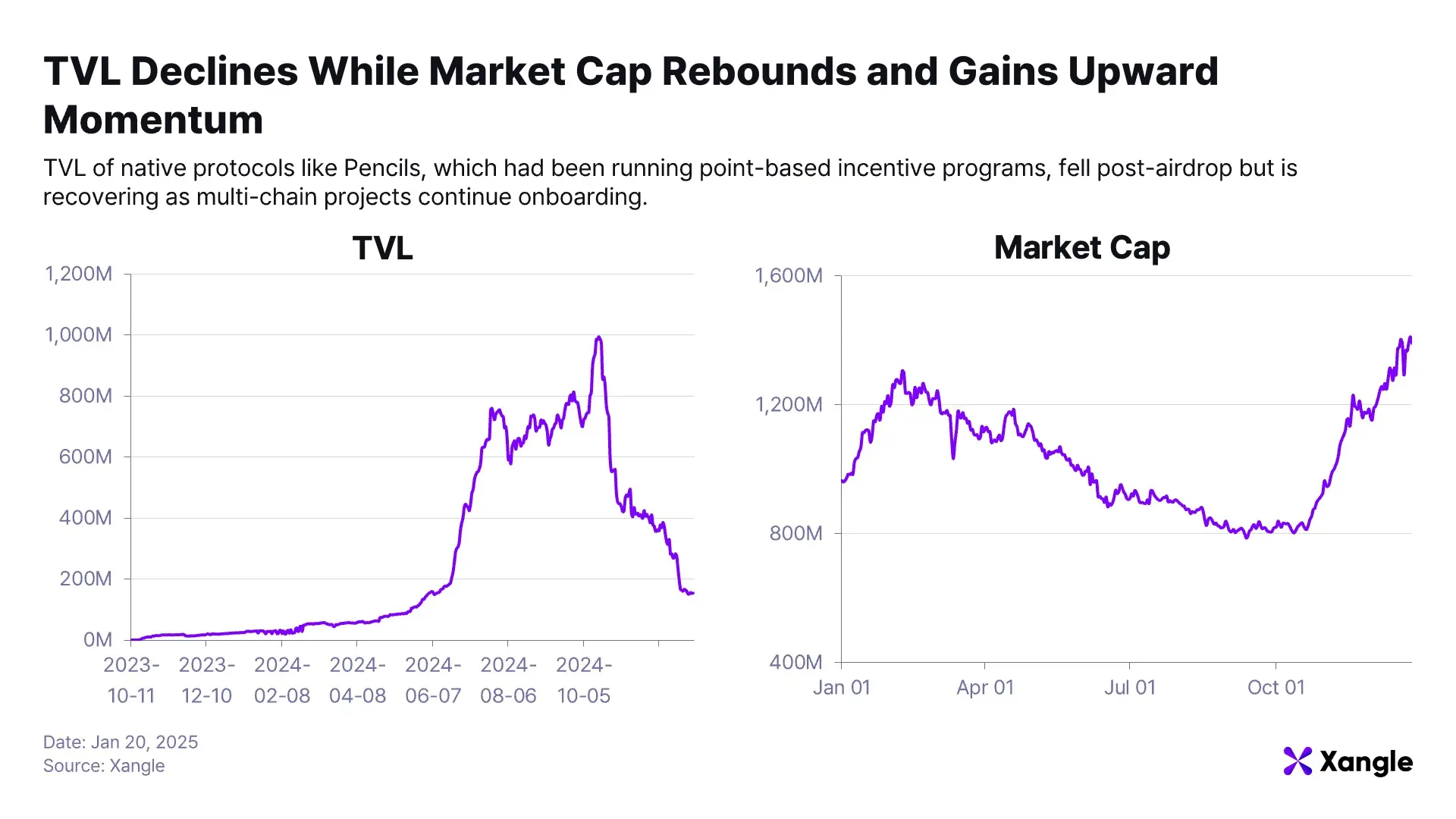
While the airdrop initially boosted TVL across native protocols, TVL saw a temporary decline before showing a gradual recovery, aided by the onboarding of new multi-chain projects. Meanwhile, market capitalization has rebounded from its lowest point, continuing its upward trajectory. This rise appears to be driven not only by overall market trends but also by speculation surrounding World Liberty Financial, a DeFi project linked to the Trump family. Notably, the project’s advisor is co-founder Sandy, fueling further interest.
5. Closing Summary
Throughout Q4, Scroll focused on expanding its user base in the Layer 2 market through an airdrop and a partnership with Binance, while also diversifying its ecosystem by onboarding both native and multi-chain DeFi projects. However, challenges remain, including the decline in TVL and transaction activity post-airdrop. On the positive side, the steady increase in cumulative wallets, continued technological advancements such as the Scroll SDK and OpenVM, and the team's responsiveness to community feedback position Scroll for potential long-term growth. As these developments gain traction, Scroll's medium- to long-term prospects look increasingly promising.
Disclaimer
I confirm that I have read and understood the following: The information contained in this article is strictly the opinions of the author(s). This article was authored free from any form of coercion or undue influence. The content represents the author's own views and does not represent the official position or opinions of CrossAngle. This article is intended for informational purposes only and should not be construed as investment advice or solicitation. Unless otherwise specified, all users are solely responsible and liable for their own decisions about investments, investment strategies, or the use of products or services. Investment decisions should be made based on the user’s personal investment objectives, circumstances, and financial situation. Please consult a professional financial advisor for more information and guidance. Past returns or projections do not guarantee future results. This article was written at the request of Scroll. All content in this article was written independently by the author(s), and neither CrossAngle nor Scroll had any editorial control or influence over the content. The author(s) may hold the cryptocurrencies mentioned in this article at the time of writing.
Xangle or its affiliated partners own all copyrights of the written or otherwise produced materials and content provided on the platform. Any illegal reproduction of such content, including, but not limited to, unauthorized editing, copying, reprinting, or redistribution will result in immediate legal actions without prior notice.