Mind Network Unlocks Privacy at Scale with Fully Homomorphic Encryption (FHE)

Table of Contents
1. Mind Network: Evolving Privacy Infrastructure with Fully Homomorphic Encryption (FHE)
2. Scaling the Web3 AI Ecosystem Through Agents and Hubs
3. Strengthening Infrastructure Competitiveness via Global Partnerships with BytePlus and DeepSeek
4. Building RWA and Institutional Finance Infrastructure with Encrypted Messaging Onchain
5. Conclusion: Mind Network in the Privacy-First Era
1. Mind Network: Evolving Privacy Infrastructure with Fully Homomorphic Encryption (FHE)
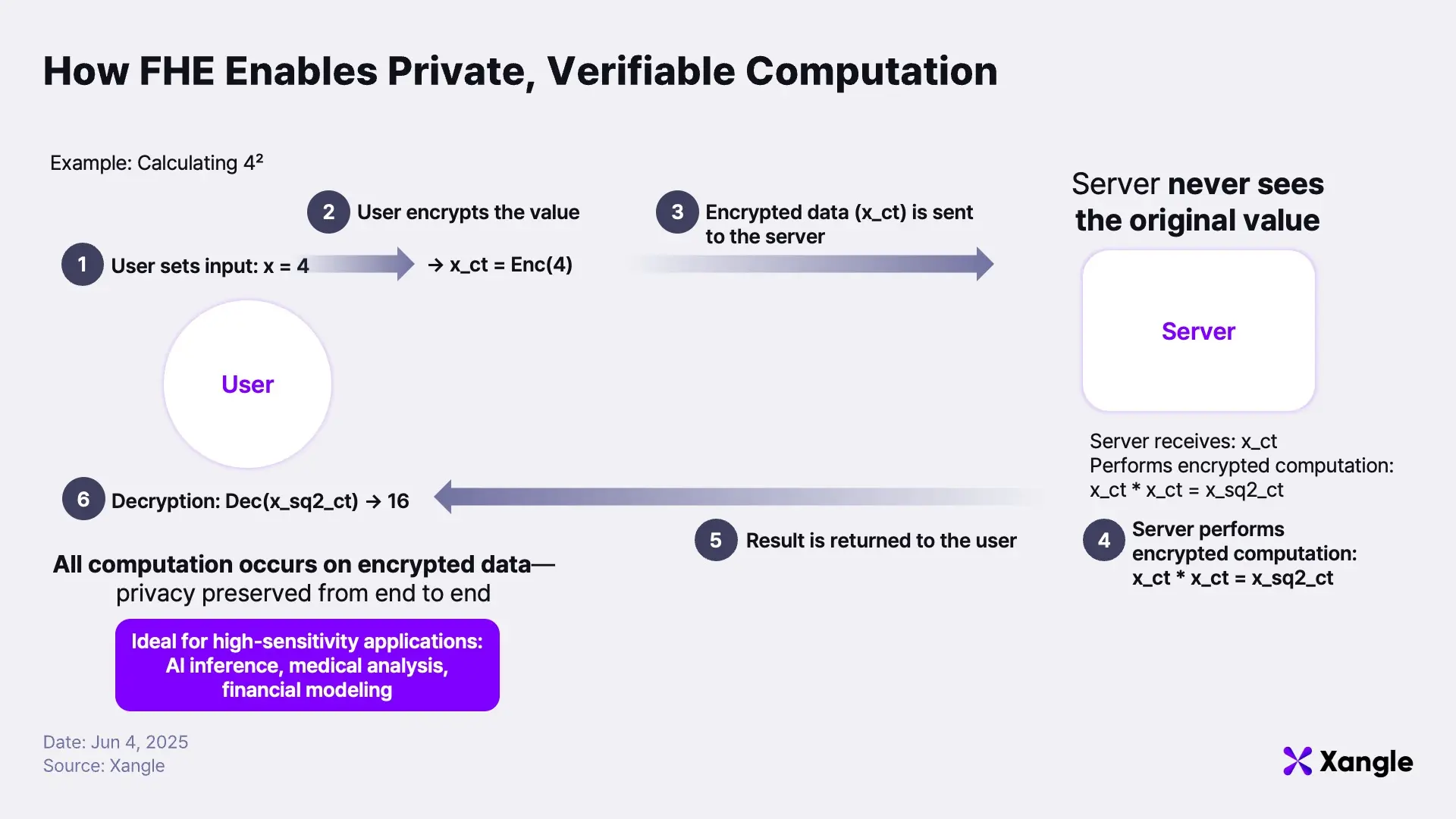
Mind Network is a project built on Fully Homomorphic Encryption (FHE), designed to simultaneously deliver data privacy and trustworthy AI infrastructure. While most blockchain–AI convergence discussions have stopped at the level of data verification/recording or providing computing resources, Mind advances the conversation with a deeper technical approach through FHE. In practice, servers can process data without ever directly viewing or storing its contents. This ensures that sensitive information remains concealed throughout the computation process, strengthening both the reliability and transparency of AI applications.
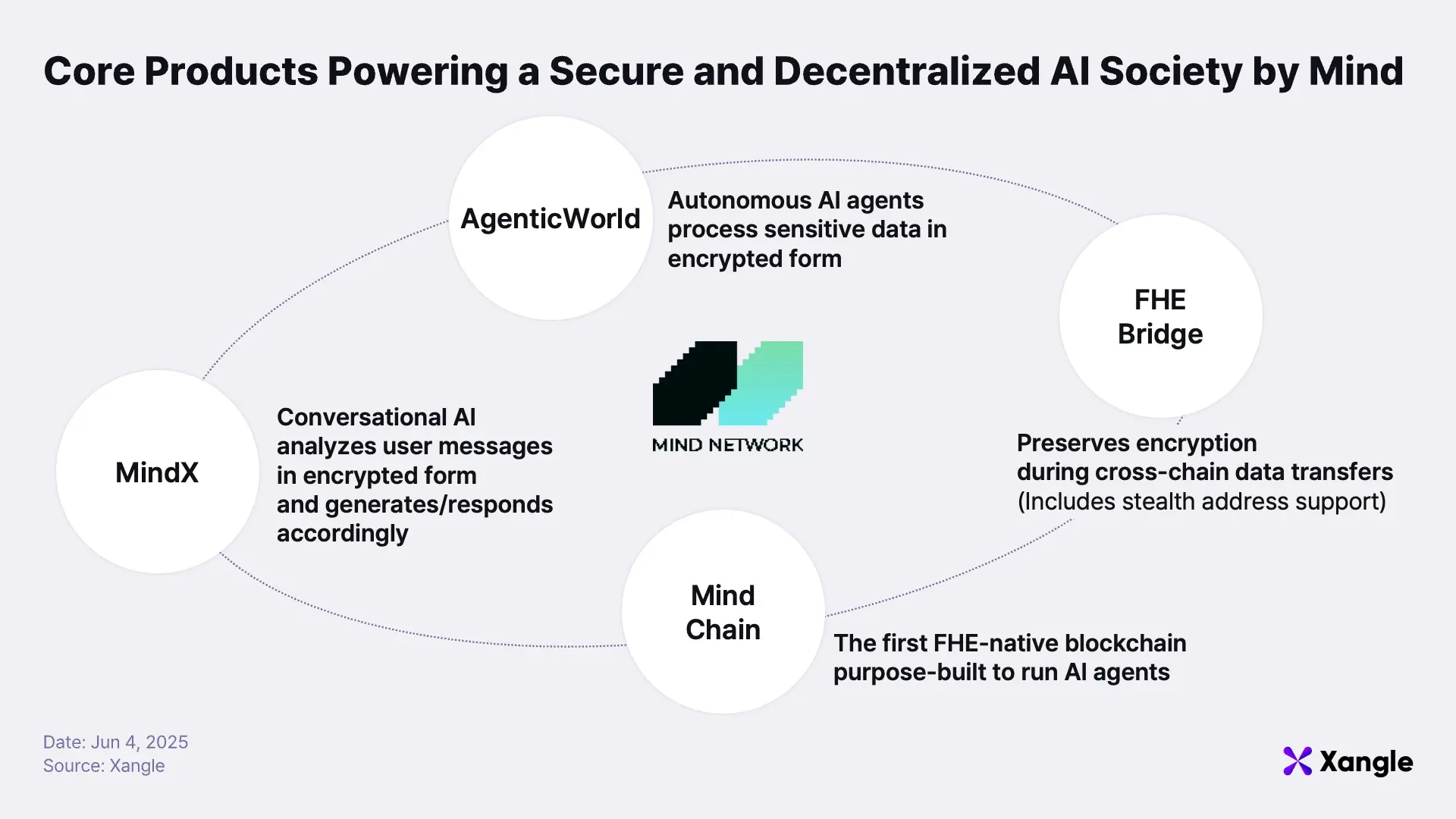
With this narrative as its foundation, Mind is targeting domains where precision and privacy are indispensable—notably finance, healthcare, and autonomous AI agents. To drive real adoption in these fields, the project goes beyond mere data encryption by introducing production-grade products such as AgenticWorld, MindX, and FHE Bridge, expanding its ecosystem around concrete use cases. In parallel, Mind is activating a fully independent, privacy-first AI economy through its own chain and the $FHE token economy. (For more detail on the technology and approach, see Xangle’s earlier report: “Trustworthy AI, Engineered by Mind with FHE”)
Mind’s technical vision has already gained strong validation. The project has raised over $12.5 million from leading institutions including Binance Labs, HashKey, Animoca Brands, and Chainlink, while also securing research support from the Ethereum Foundation. At a time when both regulatory pressures and market demand for AI privacy are rising in parallel, Mind is establishing itself as one of the most concrete and practicable privacy-centric AI infrastructure projects in the industry today.
2. Scaling the Web3 AI Ecosystem Through Agents and Hubs
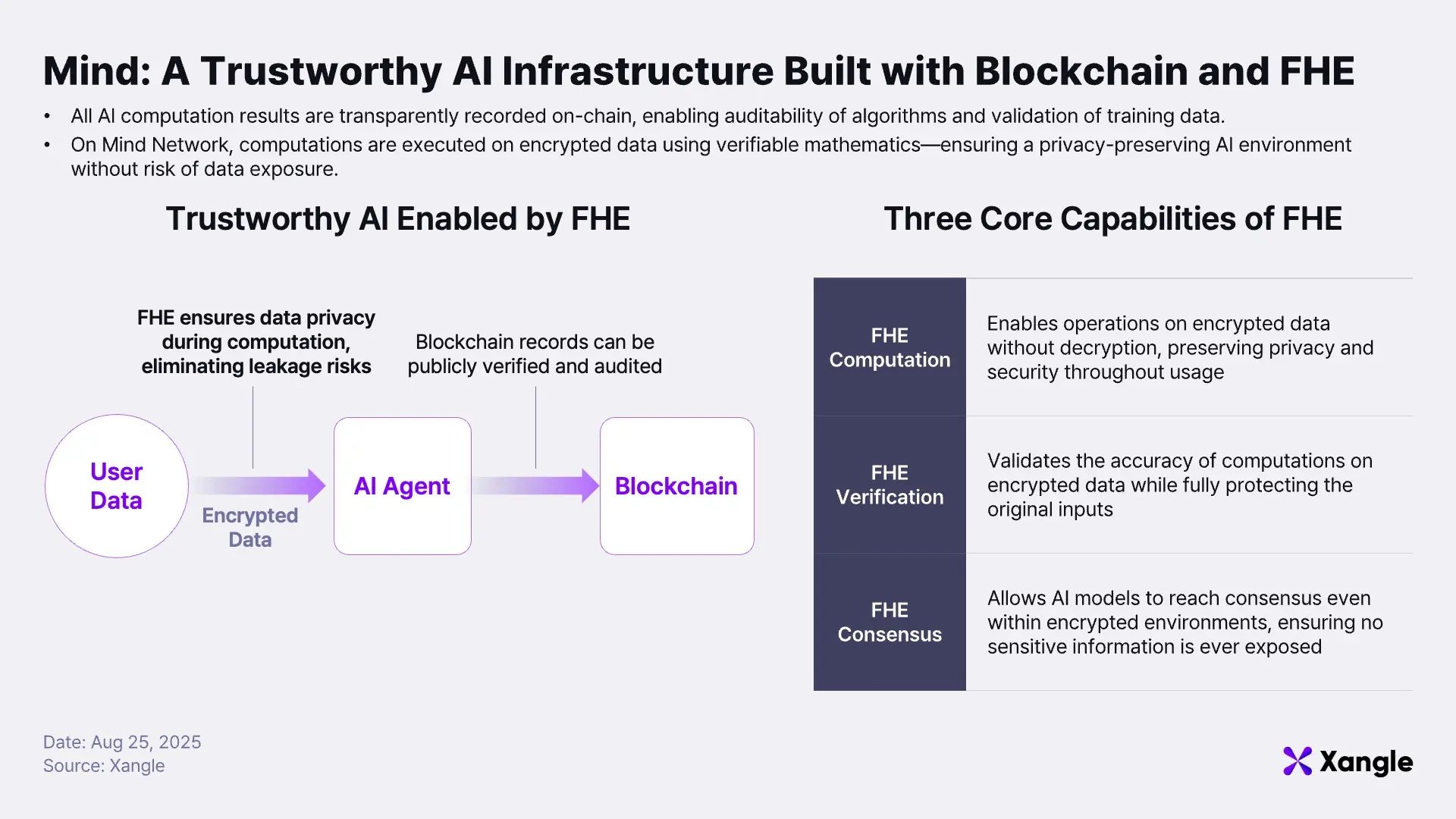
Mind Network is scaling out AgenticWorld, a Web3 autonomous economic platform built on FHE (Fully Homomorphic Encryption), to enable conversational AI programs—agents—to learn independently, perform tasks, and interact with users. While other agent platforms have highlighted tool integrations yet struggled with real adoption, Mind achieved a breakthrough by partnering with global AI firm DeepSeek to commercialize and deploy functional agents on the Cozeplatform.
Agents integrated with Coze operate directly with the DeepSeek LLM, processing all conversations and reasoning in a fully encrypted state. Users are able to verify performance, training, and reward data transparently onchain. Coze itself functions as an all-in-one platform where both beginners and developers can design and deploy AI applications using visual orchestration and LLM integration. The success of this rollout marks an inflection point, demonstrating that Web3-native agents with privacy and trust guarantees can be validated and scaled in real market environments.
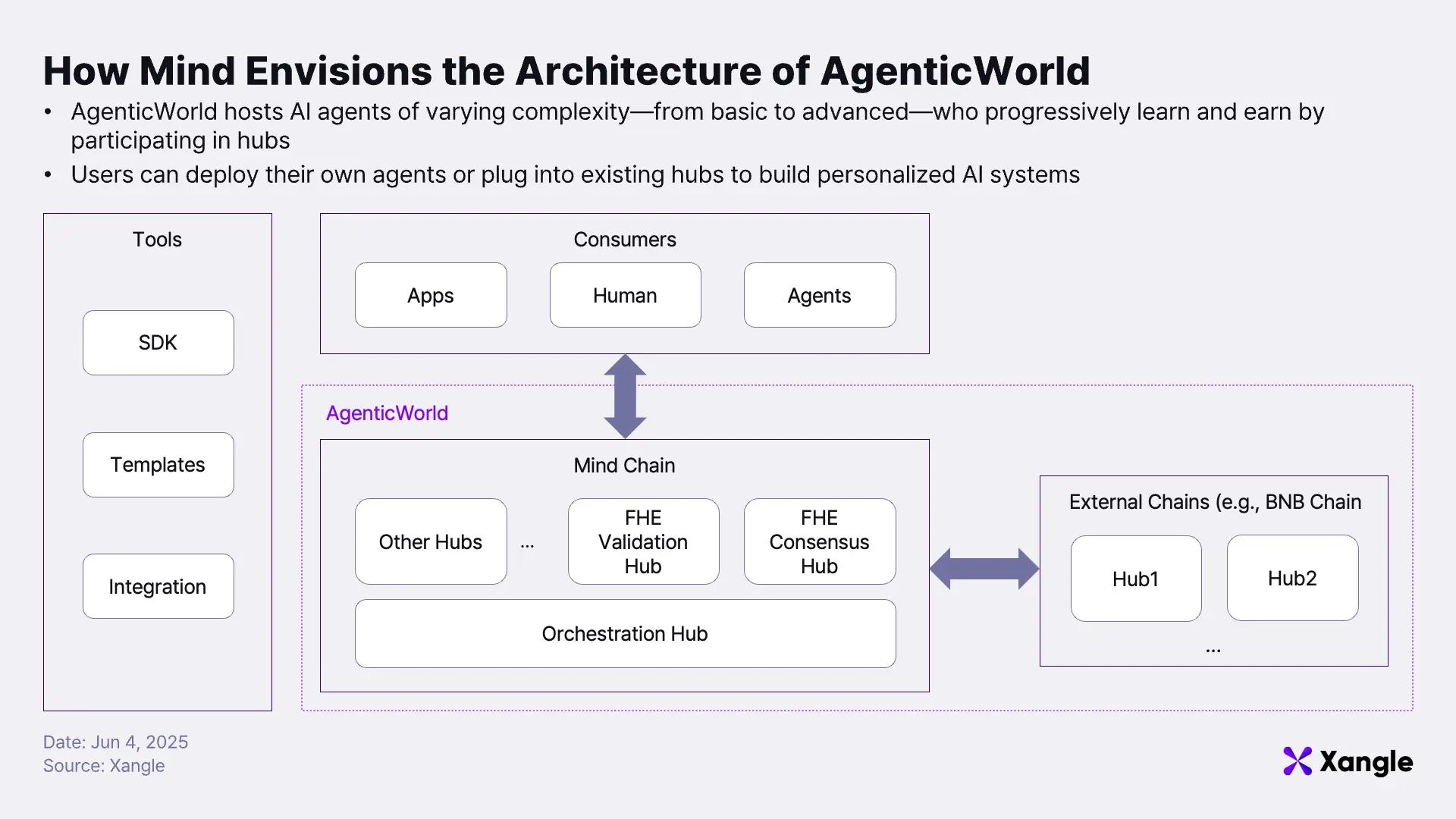
At the core of AgenticWorld lies the Hub, which continues to see feature updates. Hubs act as focal points where multiple agents cluster around specific themes or objectives, sharing data and collectively engaging in training and reward mechanisms.
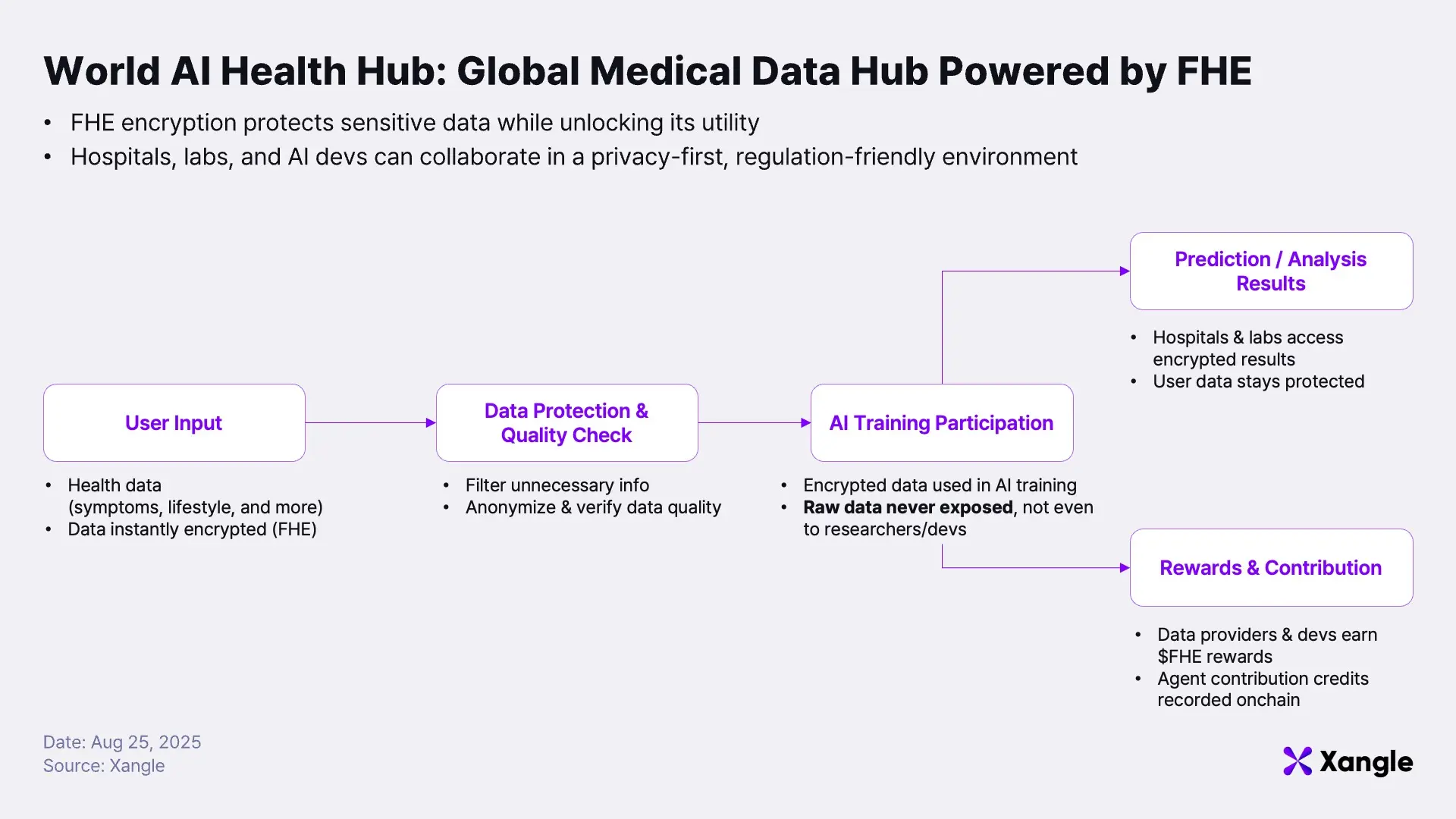
The most notable example is the World AI Health Hub, where sensitive medical data is processed securely using FHE and large-scale user participation drives privacy-friendly AI training. In Phase 1, around 350,000 users activated agents, while over 410,000 agents computed encrypted health data to support model training. Phase 2 introduced a 5 million $FHE reward pool, ensuring that individual data contributions are compensated with direct, tangible incentives rather than remaining passive inputs.
The World AI Health Hub also underscores Mind’s technical differentiation by leveraging leading partners in the Web3 privacy stack. Mind provides the underlying FHE infrastructure, while Zama, a top open-source FHE solution provider, supplies FHE coprocessors enabling privacy-preserving computation. This ensures that medical data is never exposed in plaintext, resulting in a privacy-first AI healthcare infrastructure. The system satisfies stringent compliance regimes such as GDPR and HIPAA, while also serving as a live demonstration of how FHE could scale into real-world medical research and healthcare operations atop a large user base.
Mind is also broadening the Web3 agent ecosystem through strategic partnerships. Its integration with Lucy, developed by Delysium, extends FHE beyond agent-level security to the protection of autonomous AI operating systems (AI OS). Lucy serves as the execution framework for Delysium’s AI Agent Network, built in collaboration with Microsoft and OpenAI, facilitating interactions across wallets, protocols, and user data. With Mind’s FHE incorporated, agents can exchange and coordinate data in privacy-preserving environments, enabling trustworthy intelligent coordinationacross the network.
Partnerships extend further. Integration with Virtuals, a well-known Web3 agent platform, applied Mind’s FHE to the G.A.M.E framework, establishing an Encrypted Consensus model in which agents form agreements and distribute rewards based on encrypted voting. This enhances both the fairness and the credibility of the agent ecosystem. Meanwhile, collaboration with GAIB links FHE to the tokenization of GPU resources, enabling onchain AI revenue streams (AID). The result is a foundation that balances privacy protection with regulatory-grade transparency, even in large-scale capital operations and cross-chain yield strategies.
Ecosystem traction is already visible. AgenticWorld hosts more than 87,000 FHE-protected agents, 2.2 million CitizenZ accounts, and over 150 million encrypted transactions to date. Additionally, Mind was recently selected as an official service partner for the BNB Chain Kickstart Program, opening opportunities for new Web3 projects to leverage Mind’s privacy infrastructure for secure growth. Participation and scale are expected to accelerate further, but whether this momentum translates into high-utility agents and tangible real-world use cases remains an important factor to monitor.
3. Strengthening Infrastructure Competitiveness via Global Partnerships with BytePlus and DeepSeek
Mind Network is extending its reach beyond intra-Web3 collaborations by forming strategic partnerships with global Web2 enterprises, thereby broadening its competitiveness. The most prominent example is its work with DeepSeek. By integrating its proprietary FHE Rust SDK into DeepSeek’s open-source model, Mind became the first Web3 project to embed a verifiable security layer within a large-scale LLM ecosystem. This integration enables AI models to perform computations without decrypting data, ensuring that sensitive inputs and outputs remain encrypted throughout the inference process.
The collaboration has already advanced from pilot experiments to real-world deployment. On the Coze platform, FHE-enabled DeepSeek agents have been launched, ensuring that all conversations and reasoning are processed in encrypted form, while outcomes and reward mechanisms are transparently verifiable onchain. This milestone not only validates the feasibility of privacy-preserving AI in practice, but also highlights the scalability of Mind’s security layer to other large AI models and enterprise services.
Mind is also actively building partnerships with global cloud providers. Its collaboration with BytePlus (a subsidiary of ByteDance) introduced an FHE-based Model Context Protocol (MCP) to address long-standing issues of manipulability and unverifiability in AI agent outputs. MCP allows multiple nodes to submit and agree on encrypted validation results, evolving agents on the BytePlus cloud from simple inference tools into verifiable and trusted infrastructure. Developers can integrate MCP into services as modular plugins, while users can complete validation securely via wallet signatures, demonstrating strong interoperability even in Web2 cloud environments.
The partnership with Alibaba Cloud further underscores Mind’s ability to perform at enterprise scale. Mind has deployed its exclusive FHE security layer, already integrated with the DeepSeek inference engine, across Alibaba’s global infrastructure. This establishes the foundation for hybrid AI workloads spanning both public blockchains and Web2 environments to run securely. The collaboration proves that Mind’s security stack is not only critical for cloud environments serving billions of users but also easily integrable into Web3 platforms, cloud services, LLM ecosystems, and large-scale applications. Considering the vast user bases of these enterprises, such cloud partnerships represent a pivotal turning point, likely to accelerate Mind’s expansion and entrench it as infrastructure-grade security for AI at scale.
4. Building RWA and Institutional Finance Infrastructure with Encrypted Messaging Onchain
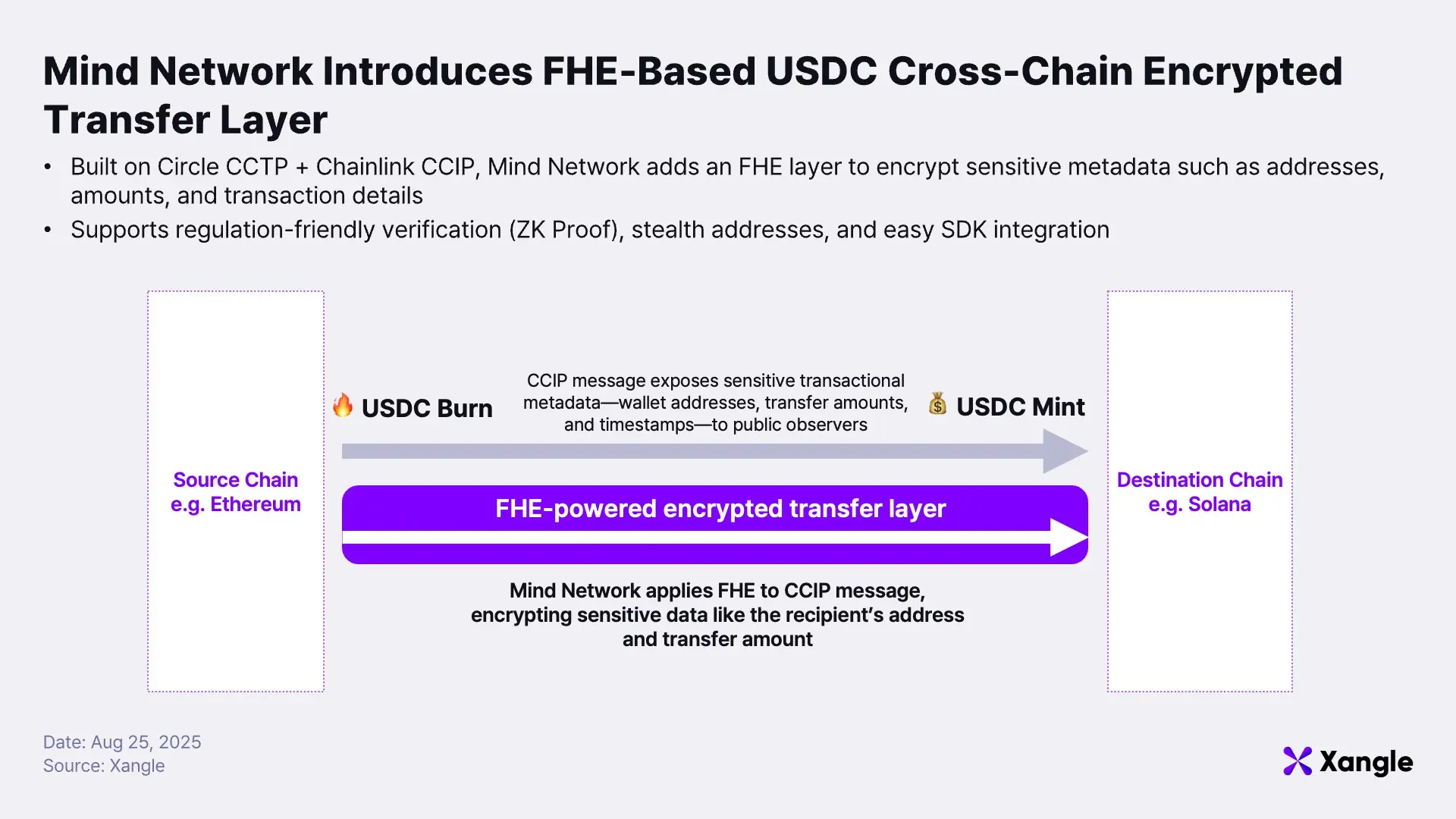
With demand for stablecoins accelerating and Layer-1s and Layer-2s positioning themselves as global settlement layers for cross-border transfers, Mind Network introduces infrastructure that addresses both privacy and regulatory-grade transparency; two conditions institutions and large investors consistently demand for large-scale asset movement. By integrating an FHE-based encryption layer atop Circle’s CCTP (Cross-Chain Transfer Protocol) and Chainlink’s CCIP (Cross-Chain Interoperability Protocol), Mind enables transaction-level privacy in cross-chain USDC transfers.
This design allows asset managers, institutional investors, and DAOs to move capital without exposing sensitive details such as addresses, amounts, or metadata, while retaining verifiability. The approach carries significance as a potential solution to the long-standing “paradox of transparency” that has impeded institutional adoption of public blockchains. Still, disclosures to date have focused primarily on technical architecture and theoretical applicability, leaving the scale and scope of institutional usage an open question.
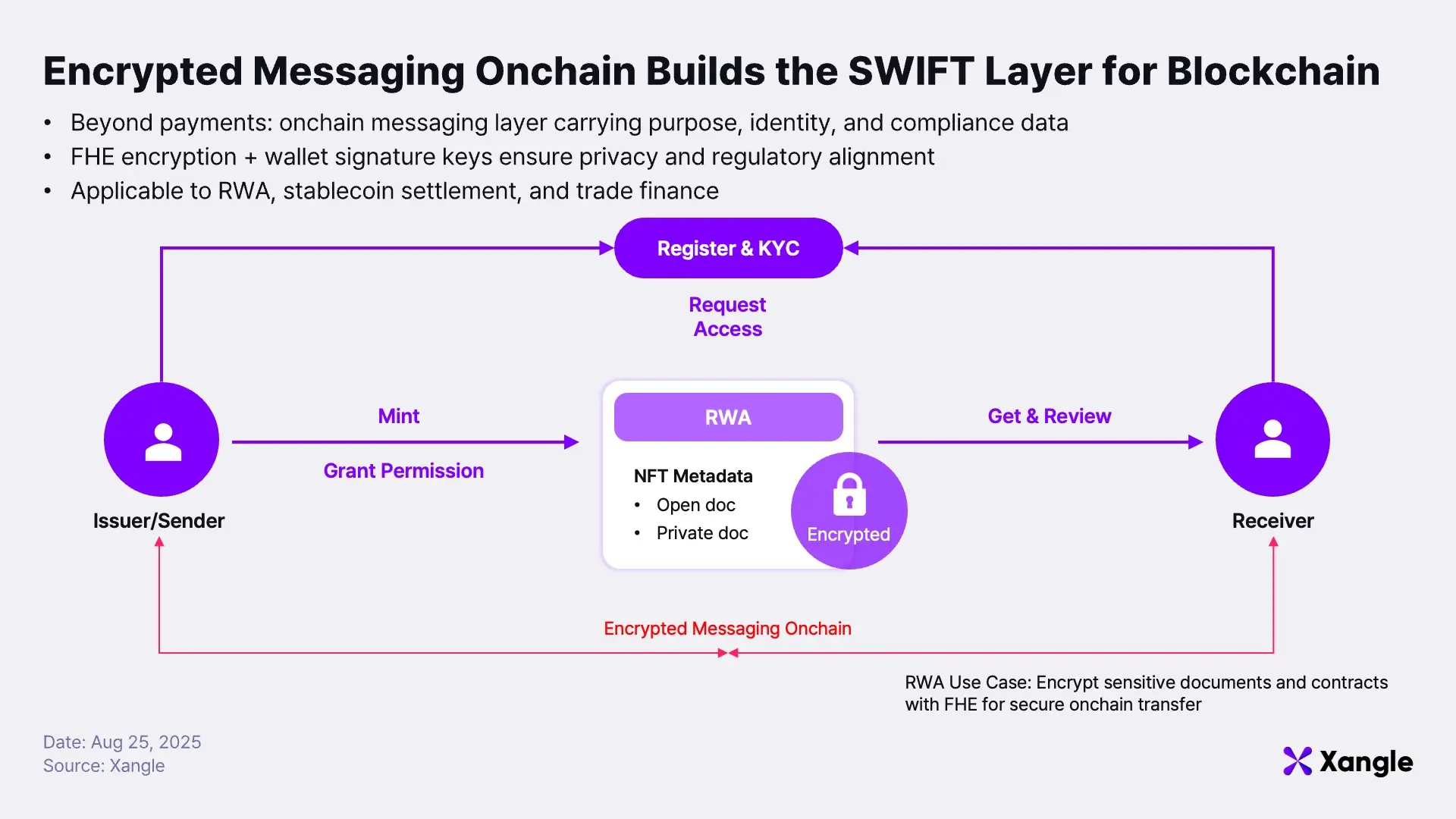
Mind has advanced further with the launch of Encrypted Messaging Onchain (ENC)—a protocol that attaches encrypted messages, contracts, and remittance records directly to blockchain transactions. In effect, ENC represents a “blockchain-native SWIFT.” Whereas SWIFT has long served as the global standard for securely relaying payment instructions between financial institutions, Web3 has lacked an equivalent messaging layer with embedded security and compliance guarantees. Public blockchains traditionally record only addresses and amounts, limiting their ability to carry complex contract logic or compliance proofs. ENC addresses this gap by generating keys via wallet signatures and embedding structured, access-controlled data into transactions. The result is end-to-end security and onchain compliance for financial use cases such as RWA tokenization, trade finance, and cross-border settlements.
Although still early in its commercialization, ENC has already attracted interest from enterprises handling sensitive data and capital flows. Mind has signed a technology partnership with Ant Digital Technologies (a subsidiary of Ant Group) to pursue FHE-powered innovation across encrypted RWA, onchain personal data transmission, and automated end-to-end encryption. This collaboration builds directly on ENC, targeting native compliance, privacy, and communication functionality for RWA verticals such as real estate, stablecoin payments, and cross-border finance.
If adoption materializes, ENC could evolve into the next-generation Web3 standard in the same way SWIFT became the backbone of global settlements in traditional finance. The structural risk of exposing positions, strategies, and transactions has been a primary barrier keeping institutions and large investors out of DeFi and onchain markets. Mind’s suite of products addresses this directly, offering FHE-based privacy infrastructure that goes beyond simple security to encompass regulatory compliance and verifiable transparency. The result is a credible path for Mind to establish itself as infrastructure-grade financial plumbing for Web3, satisfying the combined demands of privacy, compliance, and transparency across use cases from RWA tokenization to stablecoin settlement and cross-chain asset management.
5. Conclusion: Mind Network in the Privacy-First Era
At the intersection of AI and blockchain, the most urgent requirements are privacy and verifiable trust. As large-scale AI models move into commercialization, concerns over the exposure and use of personal and sensitive data are intensifying. In parallel, highly regulated verticals such as finance and healthcare are making verifiable security a non-negotiable requirement. Mind Network seeks to address these challenges head-on with Fully Homomorphic Encryption (FHE), advancing beyond theoretical proposals to deliver production-grade applications such as agents, health hubs, and cross-chain financial infrastructure.
What is particularly notable is the rapid expansion of Mind’s partnerships beyond the Web3 ecosystem to include global technology enterprises such as DeepSeek, BytePlus, and Alibaba Cloud. These collaborations prove that Mind’s technology is not confined to experimental deployments, but can operate as a security layer integrable into Web2 infrastructures serving billions of users. As such, Mind is positioning itself not merely as another blockchain project, but as a security and consensus layer for next-generation AI trust infrastructure, with the potential to capture converging demand from both the AI and blockchain industries.
The key challenge ahead is whether these advancements can evolve into sustained market adoption and durable real-world use cases. Expansion within Web3 and early traction with major Web2 players provide a strong foundation, but large-scale adoption of privacy infrastructure will require overcoming practical constraints around performance, cost efficiency, and user/developer experience. Even so, as the era of AI governance and data regulation accelerates, the strategic importance of privacy-centric infrastructure will only intensify. Against this backdrop, Mind Network stands out as one of the most credible projects pursuing an AI–blockchain ecosystem built with privacy as its foundation, making its future trajectory a critical one to watch.
Disclaimer
I confirm that I have read and understood the following: The information contained in this article is strictly the opinions of the author(s). This article was authored free from any form of coercion or undue influence. The content represents the author's own views and does not represent the official position or opinions of CrossAngle. This article is intended for informational purposes only and should not be construed as investment advice or solicitation. Unless otherwise specified, all users are solely responsible and liable for their own decisions about investments, investment strategies, or the use of products or services. Investment decisions should be made based on the user’s personal investment objectives, circumstances, and financial situation. Please consult a professional financial advisor for more information and guidance. Past returns or projections do not guarantee future results. This article was written at the request of Mind Network. All content in this article was written independently by the author(s), and neither CrossAngle nor Mind Network had any editorial control or influence over the content. The author(s) may hold the cryptocurrencies mentioned in this article at the time of writing.
Xangle or its affiliated partners own all copyrights of the written or otherwise produced materials and content provided on the platform. Any illegal reproduction of such content, including, but not limited to, unauthorized editing, copying, reprinting, or redistribution will result in immediate legal actions without prior notice.
![[CIS Partner Summit Highlights] Ault's Financial Super App Strategy: OnlyBulls](https://resource.xangle.io/files/content/C1A19E1DB41B7FB86076143803C40D8E_1790125531662.webp)
![[Xangle RWA Series] Solana RWA: A Look at the Key Players](https://resource.xangle.io/files/content/F779A005246C0299246537AACB3A39F2_1782287059970.webp)