Trustworthy AI, Engineered by Mind with FHE


Table of Contents
1. The AI Era Demands Trustworthy Infrastructure
2. ZK Was Only the Beginning — FHE Defines the Future of Privacy
3. Mind's Engines: Powering the Infrastructure of Decentralized AI
3-1. AgenticWorld: Building an AI economy where agents learn and earn autonomously
3-2. FHE Bridge: Next-gen infrastructure for privacy-preserving cross-chain transfers
3-3. MindX: FHE-powered AI assistant for privacy-preserving interactions
4. Designing a Privacy-Centric AI Economy with $FHE and Mind Chain
5. Closing Remarks: How Mind Is Shaping the Standard for Trustworthy AI
1. The AI Era Demands Trustworthy Infrastructure
AI is rapidly evolving beyond routine tasks such as search, writing, and image generation, extending into high-stakes decision-making areas like disease diagnosis, accounting, and investment evaluation. Despite this deep integration into daily life, trust in AI’s operational integrity and data handling remains largely unestablished. For most users, AI functions as a “black box”: opaque in terms of what data it learns from, how it makes decisions, and where sensitive information might be exposed. Control over this data and its governance remains equally ambiguous.
In response to these concerns, there is growing interest in the convergence of AI and blockchain technology. Blockchain is increasingly viewed as a foundational layer for building AI systems that can earn user trust. It offers key capabilities such as reward mechanisms for data contribution, verification of training data authenticity, and distributed computation. Recent developments include recording AI training processes and inference results on-chain, or defining model execution conditions through smart contracts. These efforts have contributed meaningfully to addressing some limitations in both the AI and Web3 ecosystems. However, most remain confined to tracking outputs or provisioning computational infrastructure, without delivering robust solutions for securely processing or safeguarding sensitive data during computation.
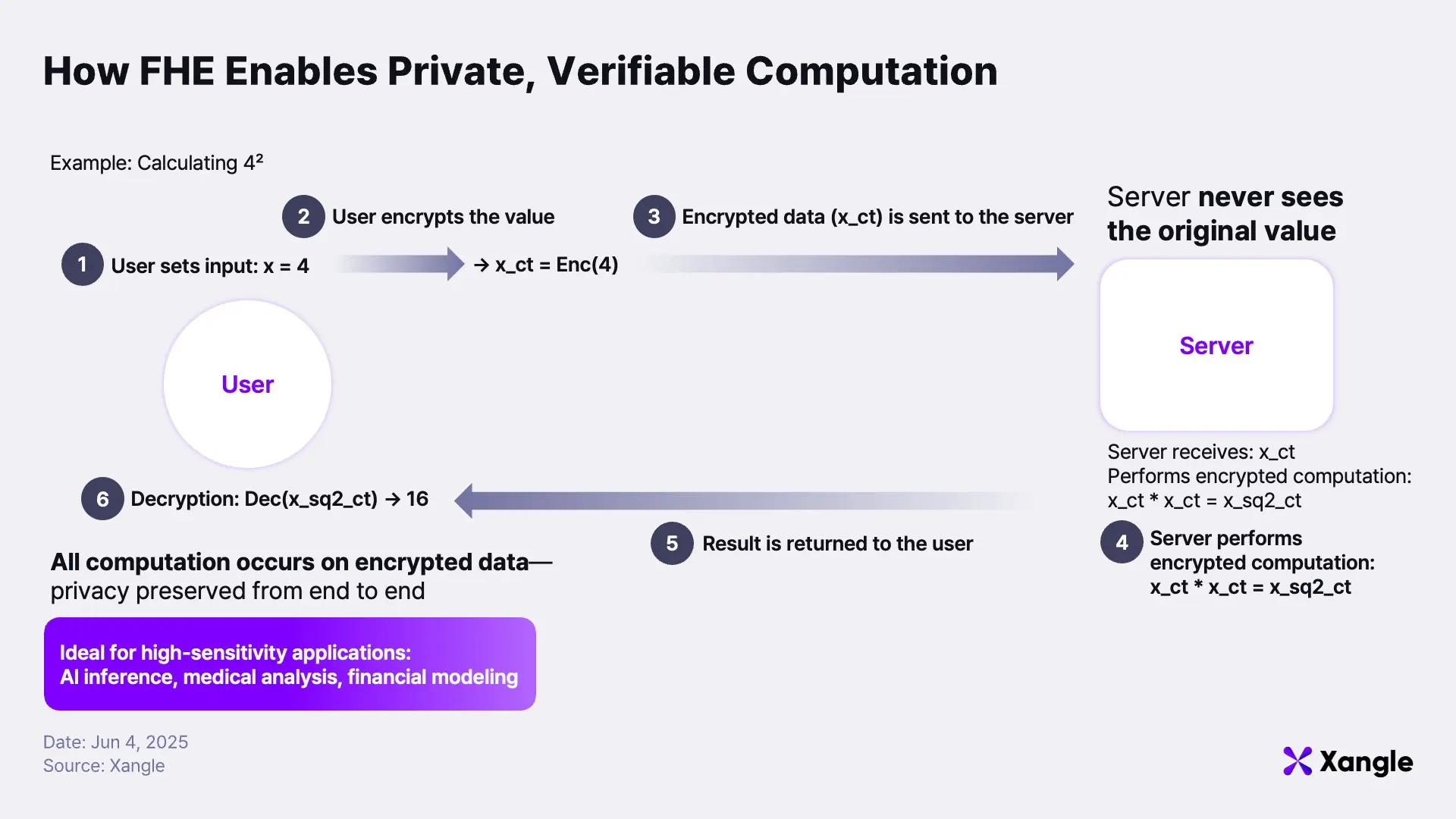
Mind Network aims to address the enduring challenge of AI data privacy by leveraging a critical cryptographic primitive: Fully Homomorphic Encryption (FHE). Its infrastructure ensures that data remains entirely concealed—even during active computation—establishing a model of absolute privacy. FHE enables a foundational principle: "utilize data without ever revealing it." This not only protects individual privacy but also introduces a technical foundation for building AI systems that maintain user trust without compromise. Mind’s architecture—centered around FHE—marks a fundamental reconfiguration of the structural requirements for trustworthy AI. It also reflects a practical realization of the Web3 ideal of personal data sovereignty, long championed as a core value of decentralized technologies.
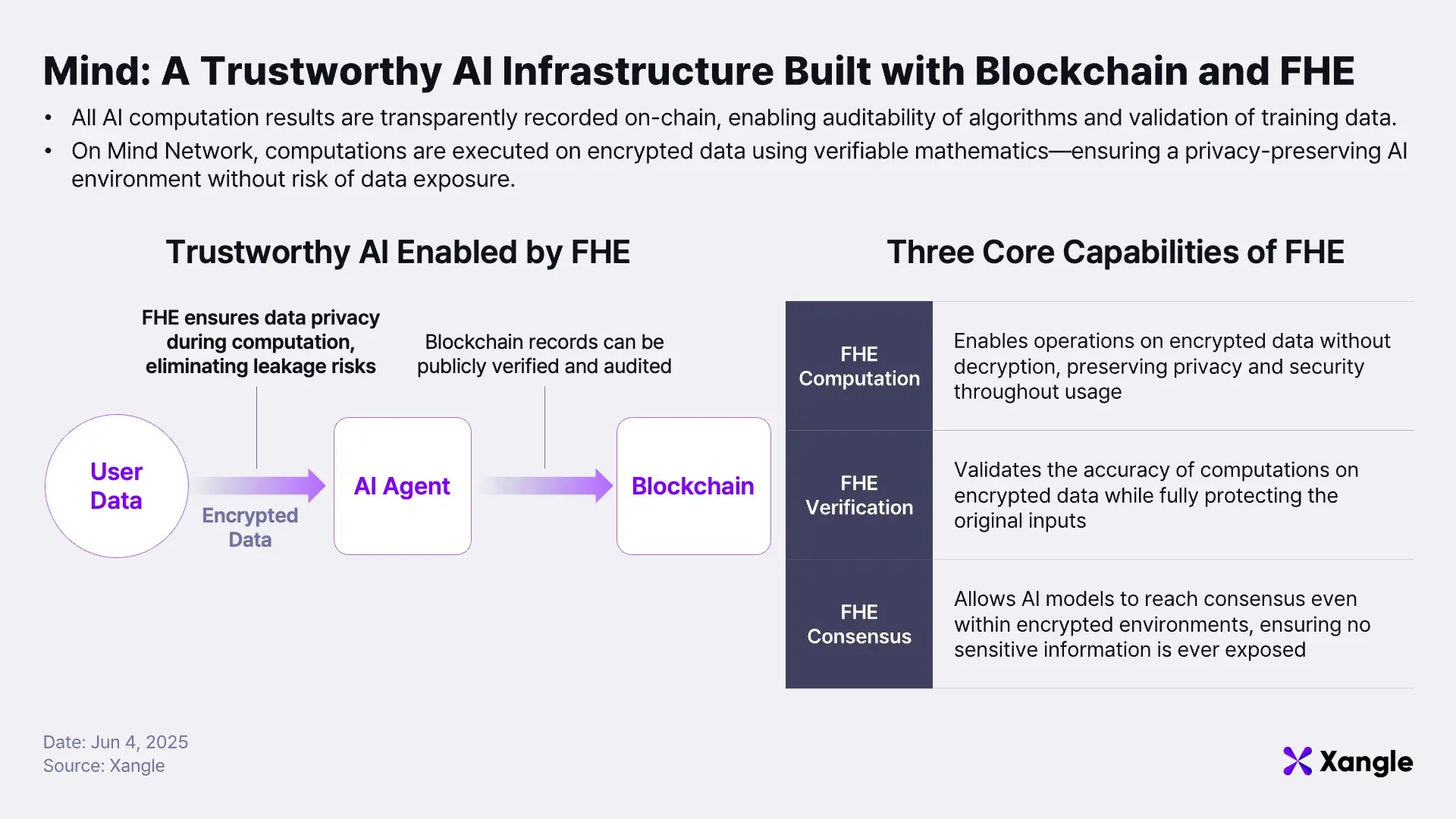
With FHE as its foundation, Mind Network presents a new paradigm for secured AI computation—a framework in which sensitive data can be processed safely even in open and permissionless environments such as blockchain networks. This capability is especially critical in domains like finance, healthcare, and autonomous AI agents, where precision and privacy must coexist. Moreover, this paradigm provides essential infrastructure for expanding real-world AI use cases across the Web3 ecosystem. The market has responded to this vision with strong support: Mind has raised over $12.5 million in funding from leading institutions including Binance Labs, HashKey Capital, Animoca Brands, and Chainlink, and has received two research grants from the Ethereum Foundation. As AI systems grow more sophisticated, stakeholders are demanding not only accurate results but verifiable transparency in how data is processed and validated. Mind’s infrastructure addresses this demand by embedding privacy, integrity, and auditability directly into the computational layer—offering a credible blueprint for the next generation of trustworthy AI.
2. ZK Was Only the Beginning — FHE Defines the Future of Privacy
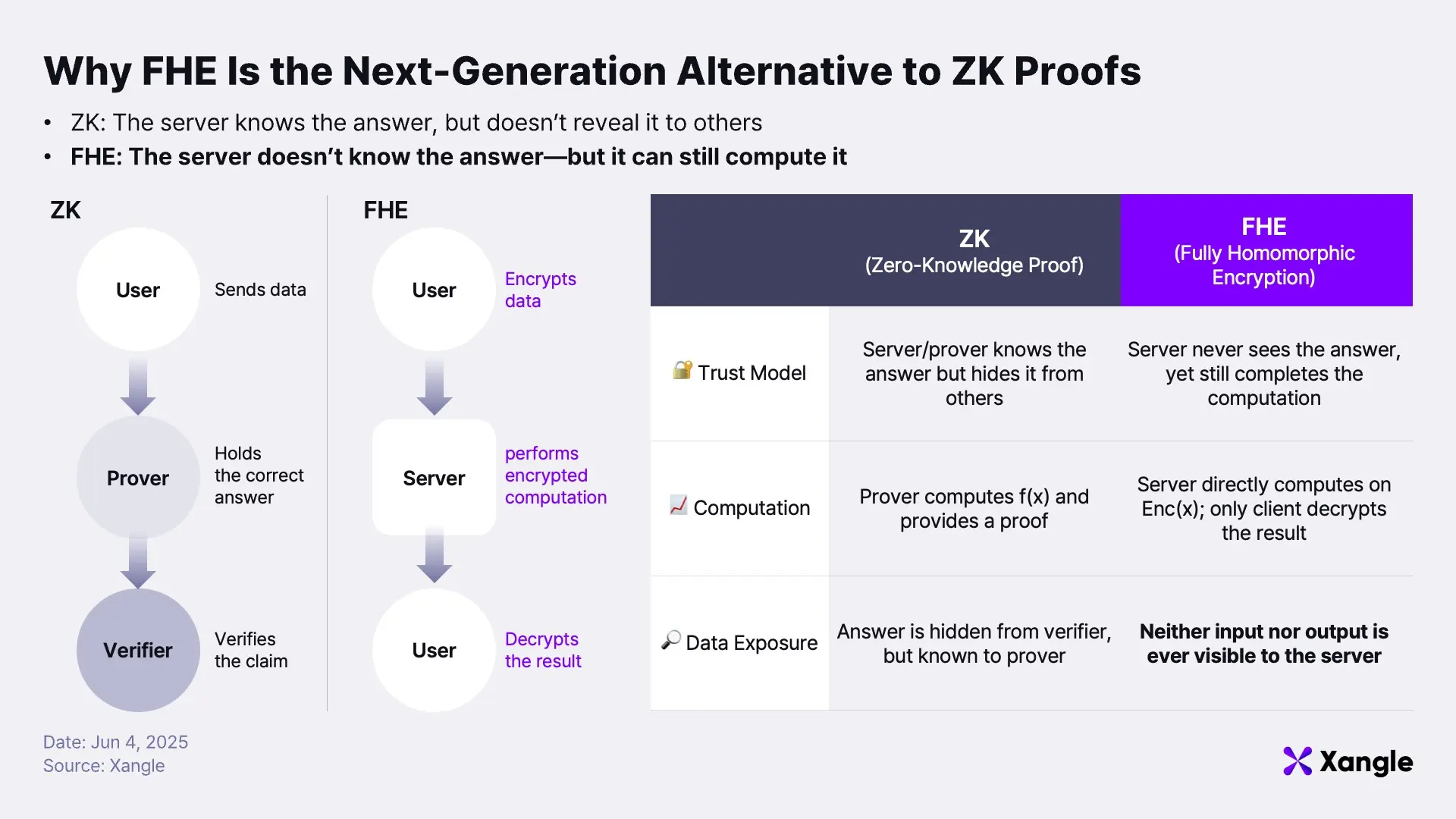
ZK (Zero-Knowledge Proof), now a flagship privacy technology in the Web3 ecosystem, has been hailed as groundbreaking for its ability to prove truths without revealing underlying data. However, because ZK is primarily geared toward verification, it faces limitations in AI environments where computation itself is the core requirement. AI systems must not only verify legitimacy but also compute over data—ideally without decrypting it. This is precisely where FHE (Fully Homomorphic Encryption) is gaining traction as the next paradigm of privacy-preserving technology beyond ZK.
FHE enables computation on encrypted data—without ever decrypting it. It allows operations like addition and multiplication to be performed directly on ciphertext, maintaining end-to-end encryption throughout the process. The computing party gains no access to the content, and only the data owner can decrypt the final result. This approach provides a meaningful alternative to conventional privacy methods, particularly in AI inference, machine learning, and high-risk computations on public blockchains. For instance, an AI model could analyze patient data without ever accessing its contents, delivering a diagnosis decryptable only by the patient. Such architecture enables privacy and trust to coexist—critical in decentralized settings.
Although FHE may appear novel, it has deep roots in cryptographic theory. The foundational concept—computing on encrypted inputs—was proposed in 1978 by Rivest, Adleman, and Dertouzos. However, for decades it remained theoretical due to prohibitive computational costs. A pivotal advancement came in 2009, when Craig Gentry introduced the first practical FHE scheme using lattice-based structures and bootstrapping techniques. Subsequent schemes such as BGV, BFV, and CKKS have driven improvements in performance and accuracy. More recently, high-speed variants like TFHE have made FHE increasingly viable for real-world use, mirroring the path taken by ZK.
Building on this momentum, Mind Network is applying FHE directly to blockchain and AI applications. It was the first in the industry to adopt TFHE-rs v1.0.0, a high-performance Rust-based library developed by Zama. TFHE’s strengths in bitwise operations and rapid bootstrapping make it well-suited for high-speed, precision-critical AI inference. For machine learning requiring approximate arithmetic, Mind leverages HEAAN, a CKKS-based library. For general-purpose encrypted computation, it integrates OpenFHE. This composite toolchain enables task-specific optimization while offering practical flexibility. By combining these libraries, Mind ensures not just technical completeness, but also real-world applicability—developed in collaboration with leading ecosystem partners to accelerate the path from cryptography to production.
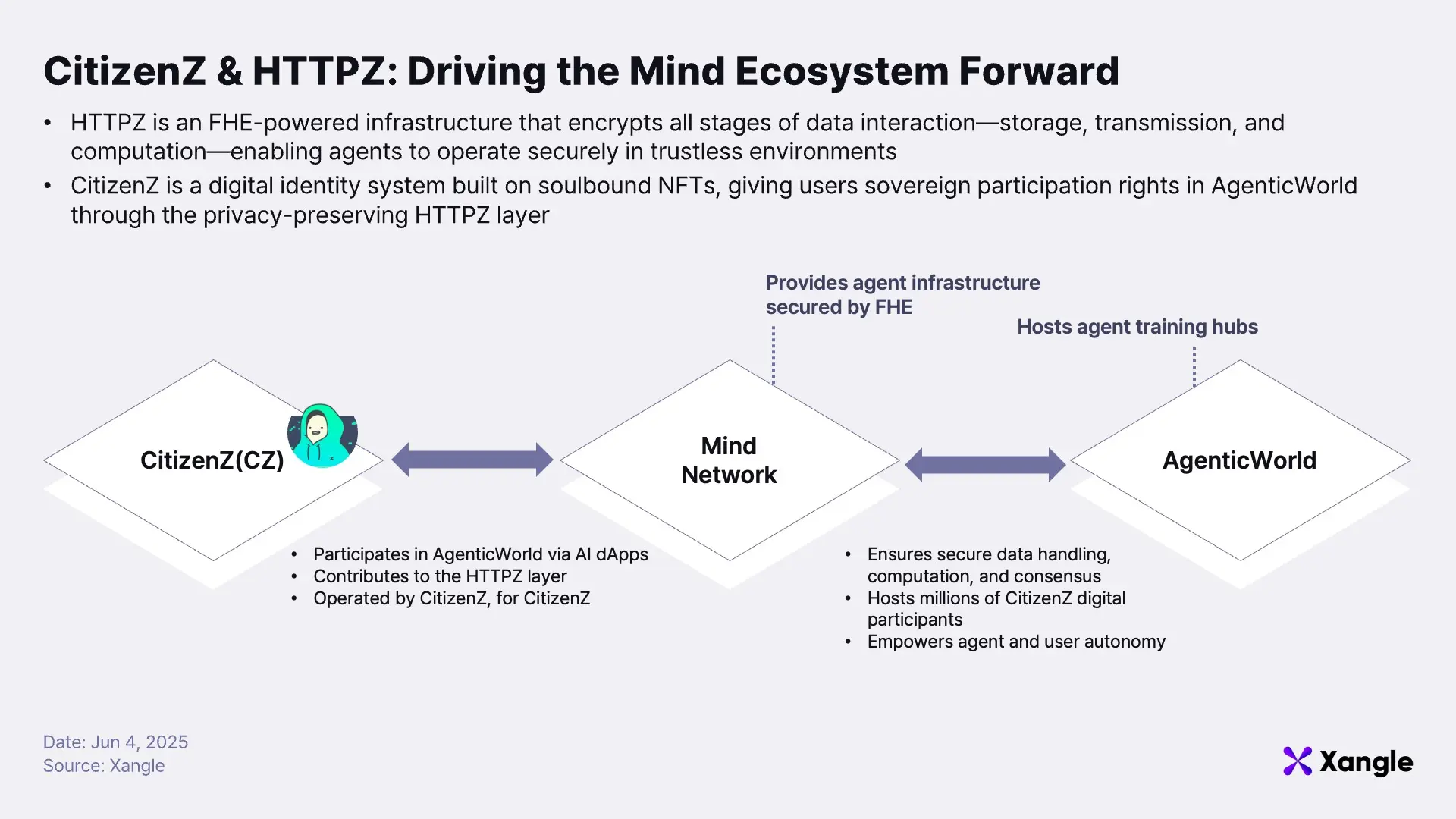
Rather than limiting FHE to isolated modules, Mind embeds it at the architectural level across its systems. At the core is a proprietary communication protocol, HTTPZ, designed to maintain encryption across data storage, transmission, and computation. Built on this foundation is a suite of privacy-centric AI products:
- AgenticWorld, where users stake tokens to create and operate AI agents
- FHE Bridge, enabling cross-chain transfer of assets and data in fully encrypted form
- MindX, a personal AI assistant that secures user settings and conversation histories via FHE
Each of these systems is built around the concept of user sovereignty. Users retain full control over their data while interacting with AI. This vision culminates in CitizenZ, a digital citizenship framework where privacy and agency are guaranteed by design—a model for participation in a zero-trust, post-platform society
Mind is also integrating FHE into blockchain-native designs, ensuring it functions effectively on public networks. This includes mechanisms such as restaking architectures, encrypted on-chain validation, and open reward participation models. For example, in partnership with Phala Network, Mind has developed a governance system that combines TEE (Trusted Execution Environment) and FHE. Individual votes remain private, while only aggregate outcomes are published on-chain—achieving both privacy and verifiability. In institutional transactions, FHE Bridge ensures full encryption of transaction content and participant addresses, while maintaining compliance with legal and regulatory standards.
FHE, as developed by Mind, is evolving into a core infrastructure technology for the convergence of AI and Web3. If ZK is a method to prove without revealing, then FHE is a way to compute without seeing. This enables a fundamentally new level of privacy, allowing AI systems to operate on sensitive data without compromising confidentiality. As AI increasingly assumes decision-making roles in society, the ability to produce verifiable outcomes while preserving the integrity of the computational process lays the groundwork for a new model of human-AI interaction.
As with ZK in its early days, FHE still faces technical challenges. Its computational complexity and performance limitations must be addressed before it can support high-throughput AI systems with sub-second responsiveness. Continued progress in algorithmic optimization, hardware acceleration, and standardized tooling will be essential to unlock full-scale applications. Despite these hurdles, FHE stands out not merely as a cryptographic tool—but as a transformational technology that can redefine the norms and infrastructure of the AI era.
3. The Three Core Engines Powering a Decentralized AI Society
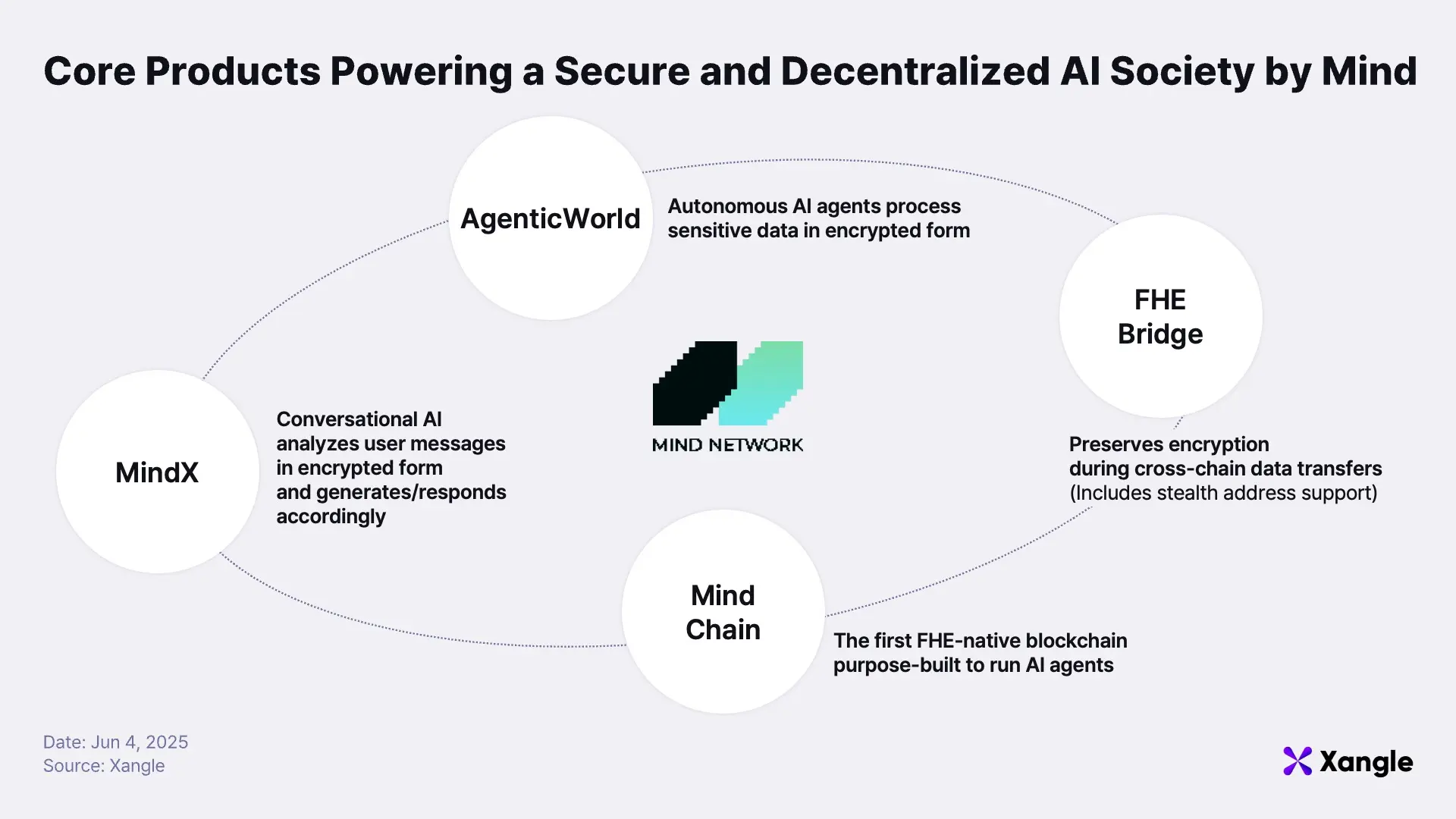
Mind Network is not simply a technology initiative—it is actively accelerating the formation of a decentralized AI society by deploying Fully Homomorphic Encryption (FHE) in real-world products. At the center of this effort are three foundational engines:
- AgenticWorld, a self-directed AI environment where users can create and operate autonomous agents
- MindX, a privacy-preserving conversational assistant
- FHE Bridge, a protocol enabling encrypted asset and data transfers across chains
Each engine is independently functional yet deeply interconnected, collectively forming the infrastructure for the privacy-centric AI economy that Mind envisions. Complementing these engines is Mind Chain, a newly introduced blockchain built to natively implement FHE at the protocol layer—ensuring computational integrity and privacy directly on-chain, and establishing Mind as a next-generation bridge between Web3 and AI.
3-1. AgenticWorld: Building an AI economy where agents learn and earn autonomously
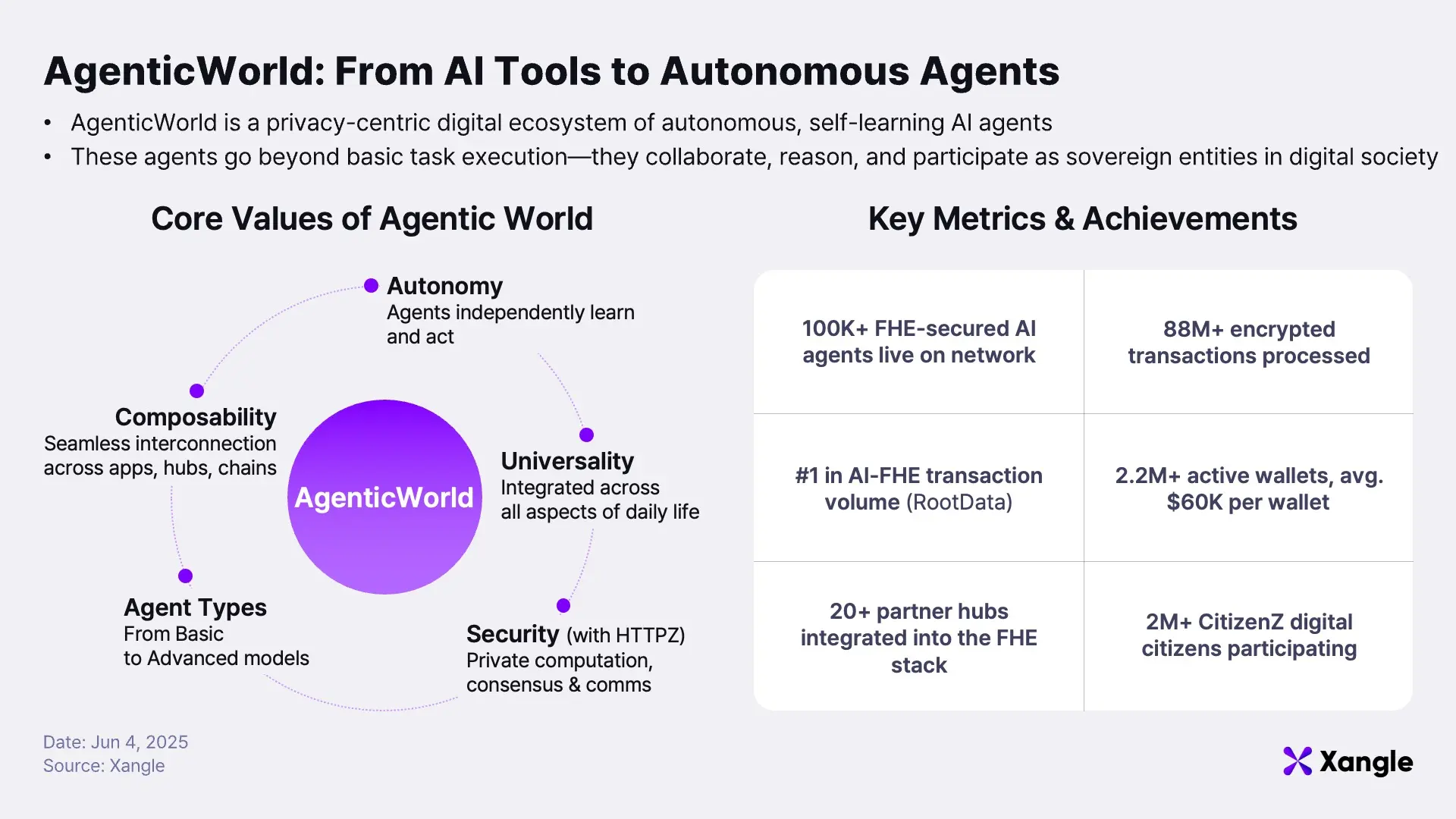
AgenticWorld is more than a platform for executing AI tasks. It is a decentralized AI ecosystem where agents operate as autonomous economic participants: they learn, make decisions, perform tasks, and earn rewards. Users stake $FHE tokens to activate agents and assign them tasks—ranging from computations to collaborations—across various hubs. Rewards are distributed in real-time based on performance, with all computations protected by FHE to ensure complete privacy. The platform adopts a multi-hub architecture, expanding the operational contexts in which agents can act. This structure facilitates interaction and cooperation among agents, enabling them to behave, evolve, and adapt across varied environments—mirroring human-like growth.
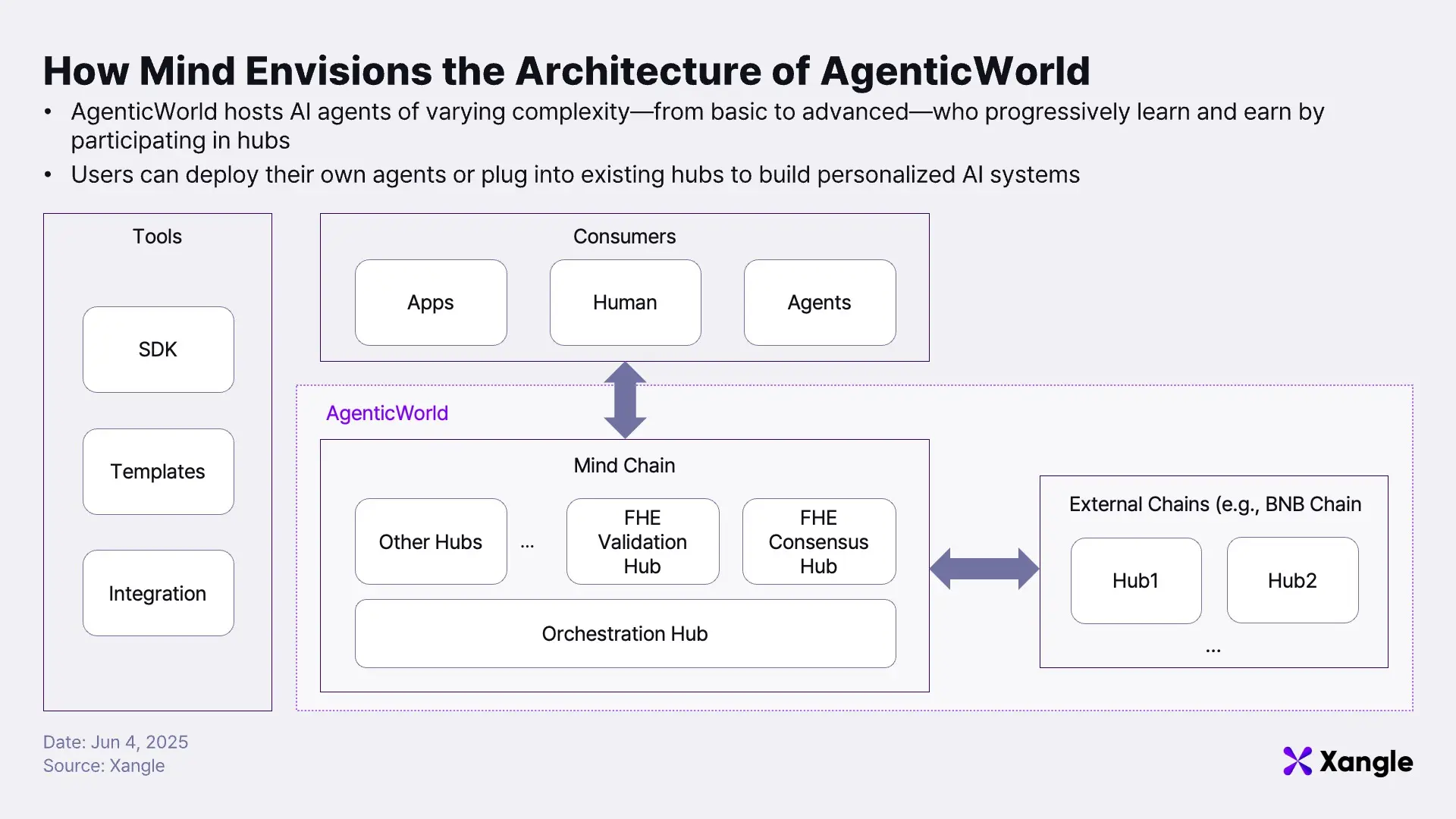
AgenticWorld is designed not only as a deployment layer for AI models, but as a foundational pillar of a learning-based AI economy. Agents begin in the Basic Hub, where they acquire core skills, and advance to more sophisticated hubs such as DeepSeek and the World AI Health Hub. Over time, they transition from passive executors to investable, trainable assets—an important distinction from most Web3-based AI platforms. All agent activity is recorded transparently on-chain via smart contracts. A tiered reward mechanism governs compensation based on task complexity and performance, enabling agents to function as autonomous economic actors within a self-sustaining ecosystem.
The feasibility of AgenticWorld is already being validated through real-world deployments. DeepSeek, an AI alternative to ChatGPT, has integrated Mind’s FHE Rust SDK to enable fully encrypted AI interactions—from user queries to model responses. This architecture addresses two major issues with conventional LLMs: the lack of interpretability in AI reasoning, and the exposure of sensitive data. In DeepSeek, both inputs and outputs remain encrypted throughout the interaction and are written immutably to the blockchain, preserving integrity and auditability while eliminating tampering risks. The platform is now actively expanding into high-trust domains such as healthcare, education, and finance.
Extending this vision, Mind Network has launched the World AI Health Hub, a specialized hub for trusted healthcare applications within the AgenticWorld ecosystem. Designed to handle sensitive medical data without infringing on user privacy, all input is encrypted locally on the user’s device before being processed in an FHE-secured framework. Agents in this hub are trained to analyze encrypted symptom data, predict health conditions, and build individualized health profiles. This demonstrates the feasibility of applying on-chain AI to real-world, privacy-sensitive verticals such as diagnostics and medical research.
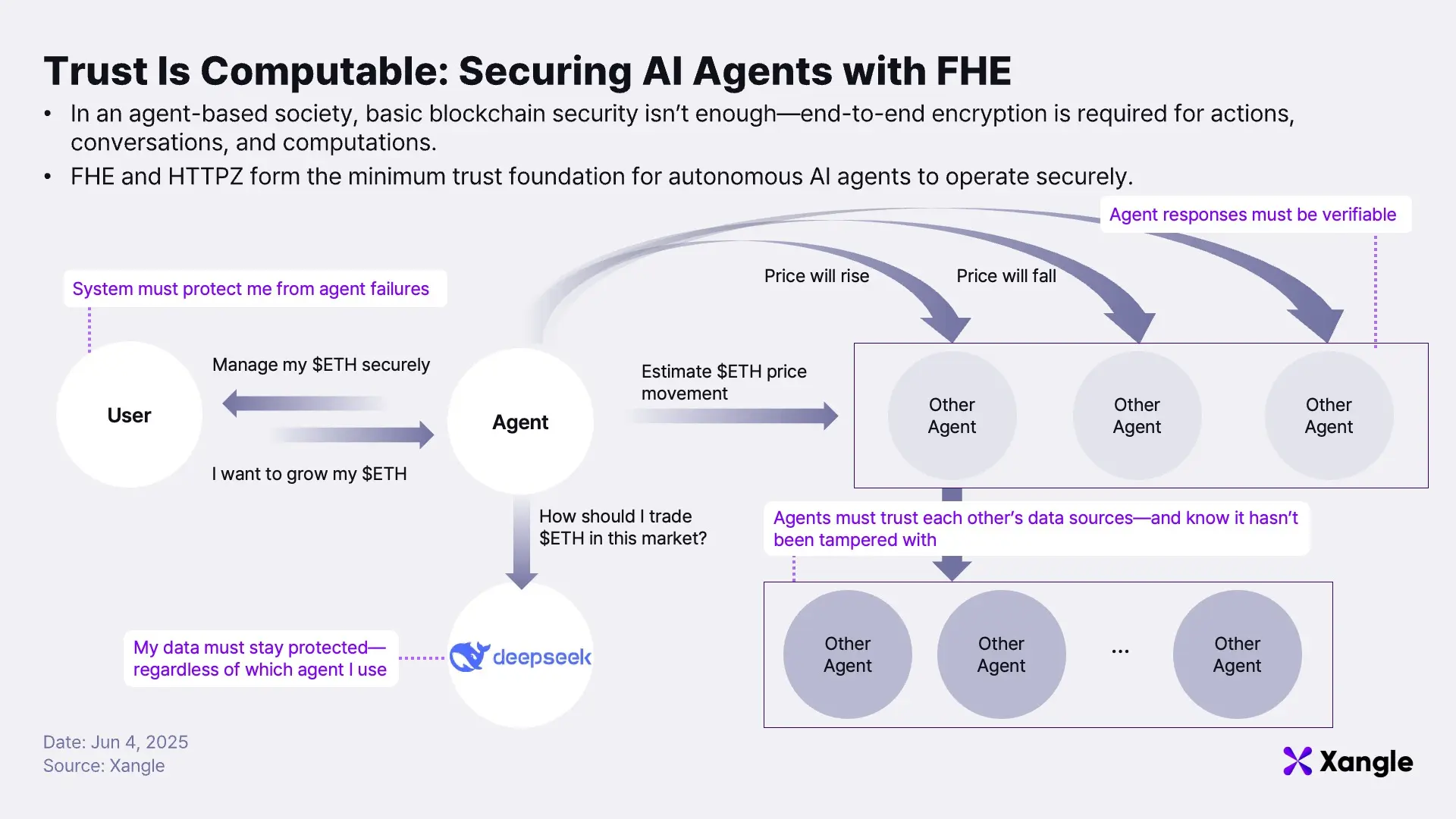
In addition to refining individual hubs, Mind Network is also enhancing multi-agent collaboration. By partnering with initiatives like ElizaOS and Virtuals, FHE is being deeply embedded across the AI framework to ensure sensitive data remains encrypted even during computation. In the Swarm mode, for instance, agents coordinate via encrypted voting mechanisms—enabling secure and trustless consensus without centralized control. This framework could have far-reaching applications in Web3 governance, DeFi strategy development, and collaborative AI research. As of now, AgenticWorld supports over 111,000 FHE-secured agents, more than 2 million active wallets, over 20 FHE-enabled hubs, and has processed more than 80 million encrypted transactions.
However, several technical challenges must still be addressed for AgenticWorld to evolve into a truly autonomous AI economy. Improving model accuracy and response speed remains a priority, as does enhancing inter-hub interoperability to enable seamless agent collaboration. FHE computations are inherently resource-intensive, posing scalability constraints in real-world deployments. To overcome this, optimization of algorithms and integration of hardware acceleration are essential. Reducing per-operation costs and increasing network scalability will be decisive factors in achieving mass adoption. Mind’s technical roadmap and partnership strategies must continue evolving in step with these challenges. Only by doing so can the network realize its vision of a decentralized, privacy-first AI future.
3-2. FHE Bridge: Next-gen infrastructure for privacy-preserving cross-chain transfers
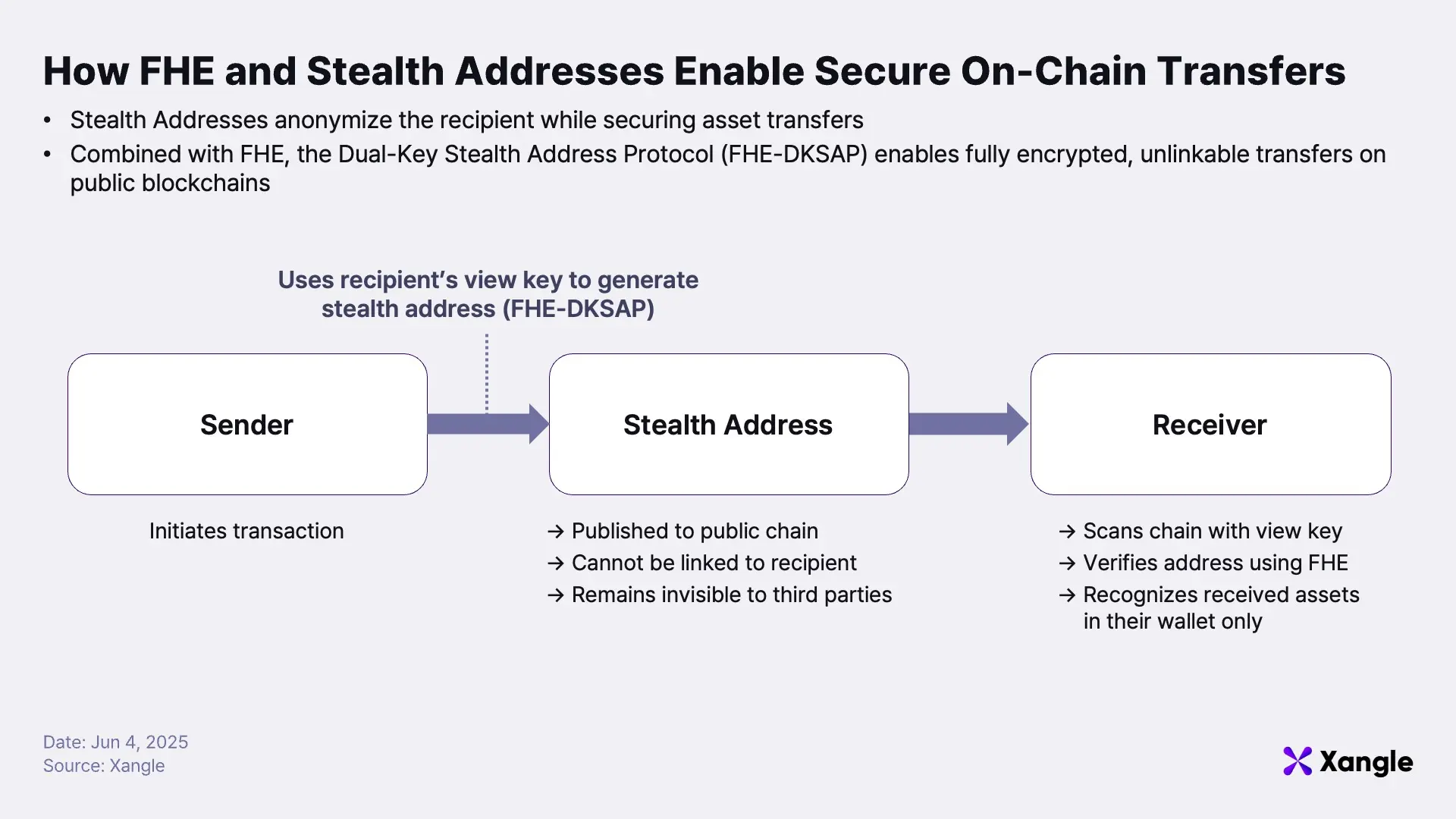
FHE Bridge is a next-generation cross-chain infrastructure that enables the private transfer of assets and data across Ethereum, BNB Chain, and MindChain. Developed by Mind Network, it addresses the structural privacy limitations of conventional bridges—such as transaction traceability and address exposure—by combining Fully Homomorphic Encryption (FHE) with a Stealth Address Protocol (SAP). This architecture ensures that every stage of message transmission is encrypted in a quantum-resistant environment, enabling users to maintain FHE-native privacy guarantees across any network.
Beyond foundational encryption, a recent integration with Chainlink CCIP marks a pivotal evolution: positioning FHE Bridge as an enterprise-grade cross-chain solution. This enables secure value transfer from CBDC chains to public blockchains, as well as confidential, high-frequency data exchange within DeFi ecosystems. The stealth address mechanism guarantees that all transactional history remains invisible—simultaneously satisfying regulatory compliance and privacy demands. This dual assurance makes FHE Bridge a compelling solution not only for regulated financial institutions but also for privacy-sensitive enterprises.
From the user perspective, interoperability with AgenticWorld allows AI agents to gain greater operational flexibility in asset handling and task execution. For institutions, FHE Bridge opens a pathway to automate privacy-preserving, cross-chain data operations at scale—making it a critical enabler for real-world adoption of Web3 infrastructure.
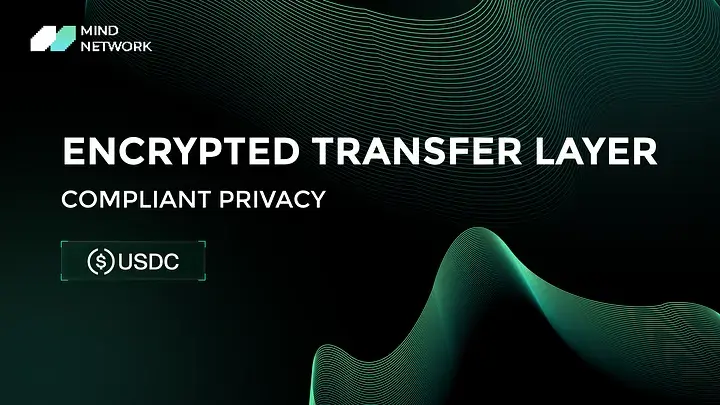
Real-world adoption of FHE Bridge is also accelerating as its privacy capabilities expand to meet enterprise and institutional demands. In a recent use case, Mind Network added an FHE-based privacy layer to Circle’s USDC Cross-Chain Transfer Protocol (CCTP), encrypting wallet addresses and transaction amounts end-to-end. Importantly, this was achieved without altering Circle’s existing infrastructure—encrypted messages were securely transmitted using Chainlink CCIP. This allows institutional users to move USDC across multiple chains while maintaining full privacy, with the system currently live on Ethereum, Arbitrum, Polygon, and other major networks.
Nonetheless, several challenges remain before FHE Bridge can fully mature into a foundational layer for institutional-grade finance. These include improving transaction throughput, reducing stealth address generation costs, and developing regulatory frameworks that reconcile complete transactional invisibility with transparency requirements. This is especially critical for handling sensitive on-chain assets like CBDCs or Real World Assets (RWAs), where compliance frameworks must strike a balance between privacy and auditability. Despite these hurdles, FHE Bridge represents a meaningful step forward in solving the long-standing challenge of cross-chain interoperability—leveraging cutting-edge encryption to unlock a new standard for secure and private blockchain communication.
3-3. MindX: FHE-powered AI assistant for privacy-preserving interactions
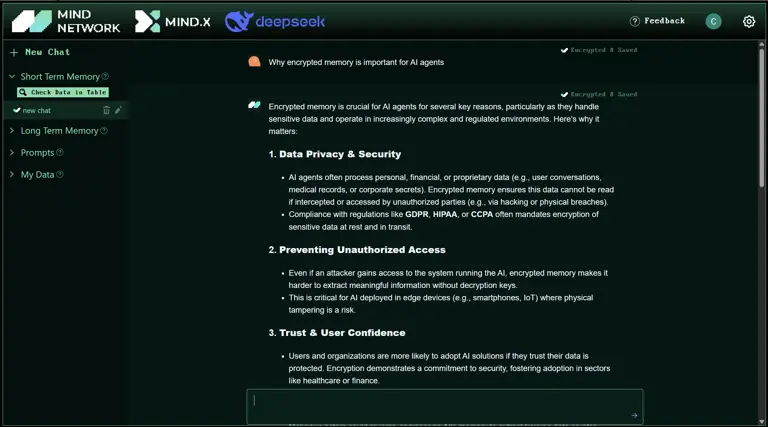
MindX is an FHE-powered conversational AI platform designed from the ground up with privacy at its core. Unlike conventional chatbots, which store user interactions and personal data on centralized servers, MindX encrypts every conversation, interaction history, and personal setting—making them inaccessible without the user's private key. This architecture enables users to encrypt their own data, which is then processed in encrypted form by the AI. Even the service provider cannot access the underlying data, setting MindX apart from existing AI platforms in a fundamental way.
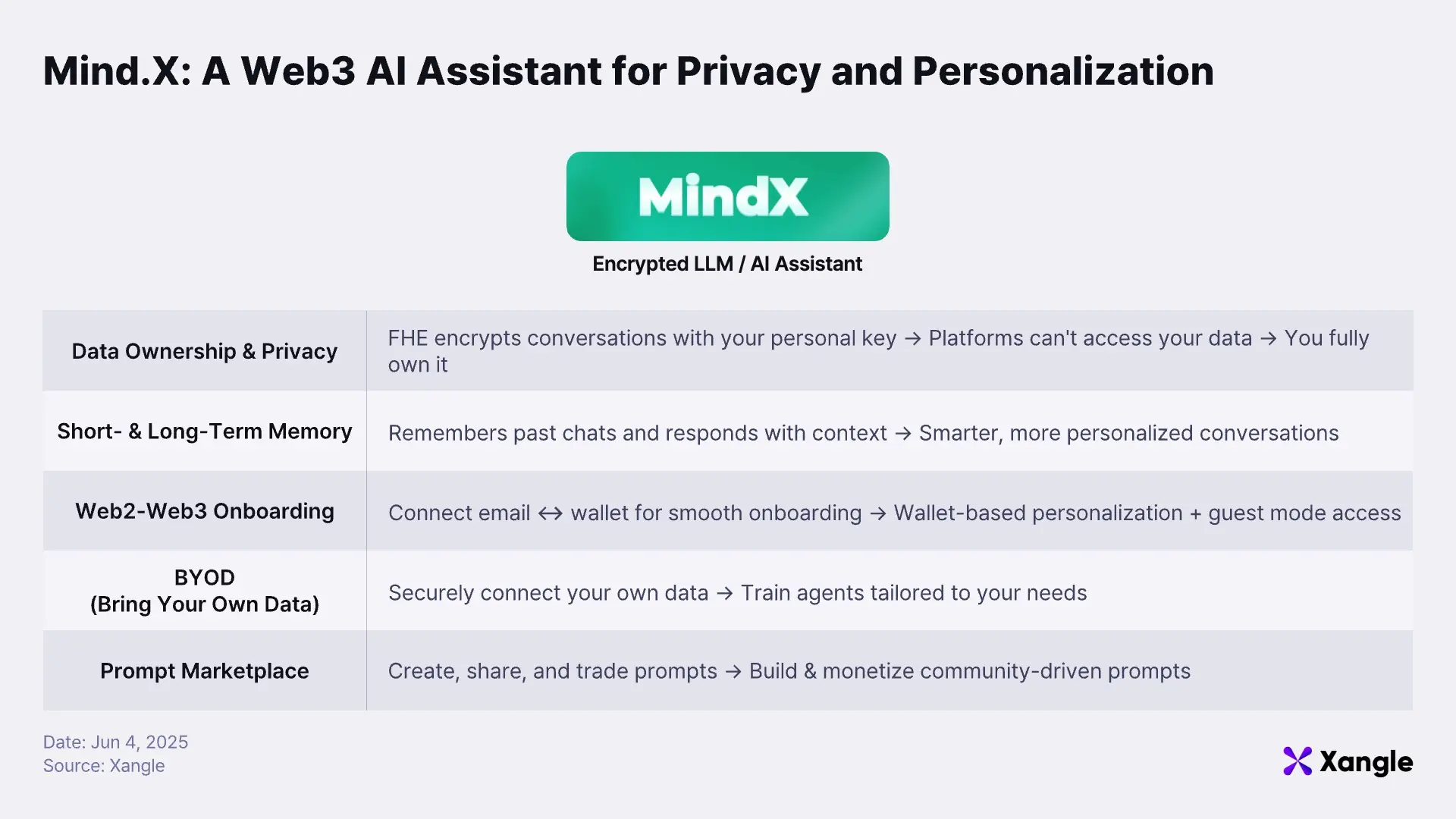
Though built on Web3 principles, MindX is carefully designed to be intuitive for Web2 users as well. Users can log in using familiar methods—linking an email account with a wallet—without needing prior knowledge of crypto, ensuring a seamless onboarding experience into the Web3 environment. This approach preserves the core Web3 values of privacy and digital asset ownership without compromising on user accessibility.
Functionally, MindX extends far beyond privacy. A “context-persistent interface” enables both short- and long-term memory functions, allowing the AI to deliver personalized and consistent interactions over time. This transforms the assistant from a simple chatbot into a relational, adaptive personal AI. Looking ahead, upcoming features such as Bring Your Own Data (BYOD) will allow users to securely connect their own datasets for personalized responses and custom AI behavior. A Prompt Marketplace is also in development, where community-generated prompts can be shared and monetized, further enriching the platform's ecosystem.
That said, MindX still faces key hurdles before it can achieve mass adoption and fully realize its potential as an autonomous AI platform. Chief among these are expanding its user base and demonstrating the practical utility of its agents. Since community-driven features like BYOD and the Prompt Marketplace are still under development, sustained user engagement and refined UX design will be critical to success. Additionally, delivering high-quality AI interactions while maintaining FHE-level privacy will require ongoing advancements in model optimization, performance tuning, and strategic technology partnerships. If these conditions are met, MindX has the potential to set a new standard in privacy-centric AI services and emerge as a defining interface for the Web3 era.
4. Designing a Privacy-Centric AI Economy with $FHE and Mind Chain
Mind Network initially launched on BNB Chain, but soon encountered limitations in ensuring full privacy while executing AI agents on-chain. Fully Homomorphic Encryption (FHE) requires extensive computational resources, which posed both technical and economic challenges when operating within the constraints of existing Layer 1 chains. To overcome these limitations, Mind developed MindChain—a custom EVM-compatible blockchain optimized for FHE workloads. Similar to an appchain, MindChain is purpose-built to serve as dedicated infrastructure for AI computation and privacy preservation. This architectural shift enables Mind to deliver verifiable, encrypted AI execution at scale.
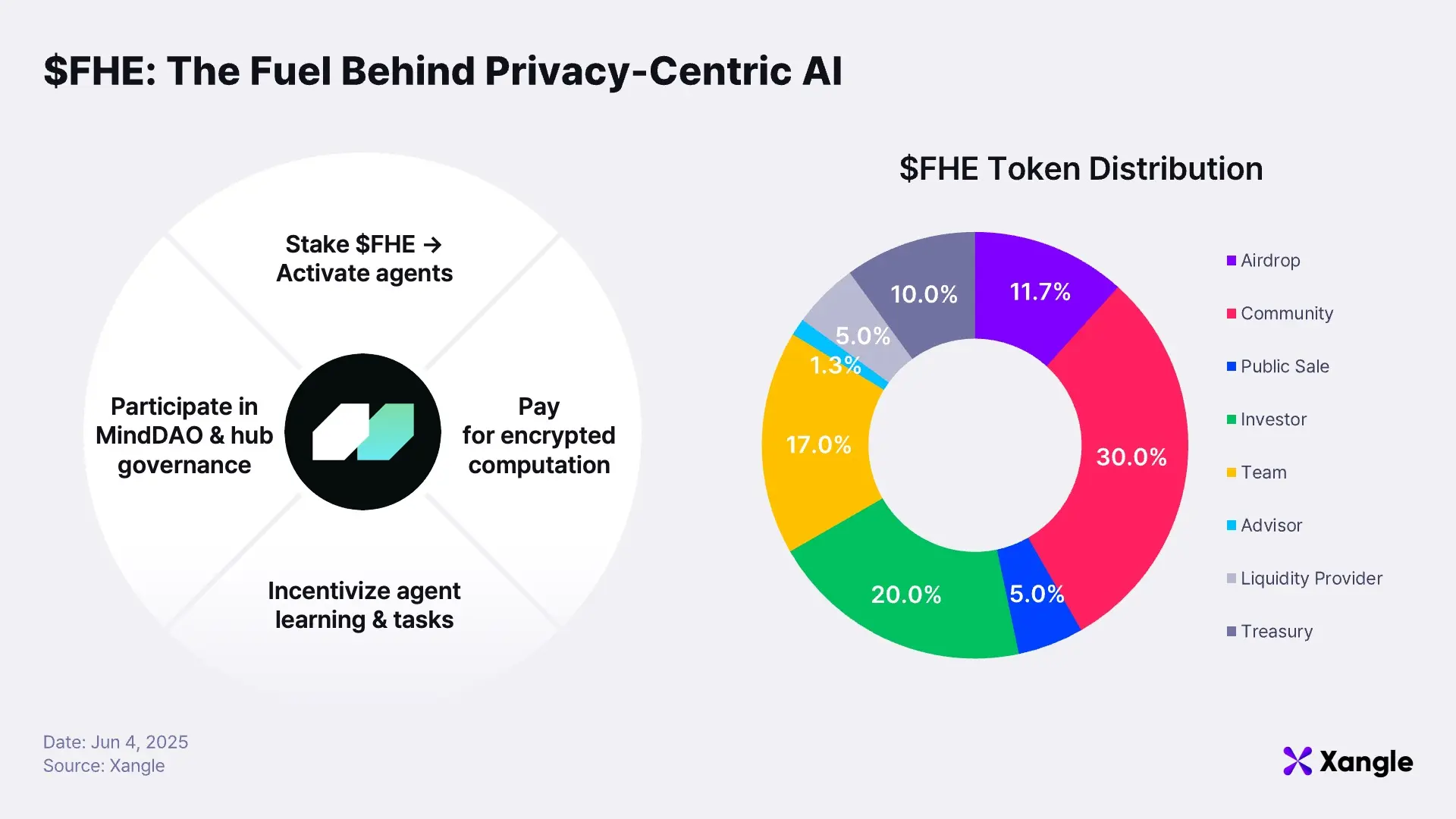
At the core of the Mind Network ecosystem is the $FHE token, which plays a multi-faceted role—governance, computation fuel, reward mechanism, and economic backbone. Users can stake $FHE to activate AI agents within AgenticWorld, earning real-time rewards in $FHE based on the tasks and computations those agents perform across various hubs. This creates a self-reinforcing utility cycle: FHE-powered computation → privacy protection → reward distribution → governance participation, positioning $FHE as the key asset in a privacy-centric AI economy.
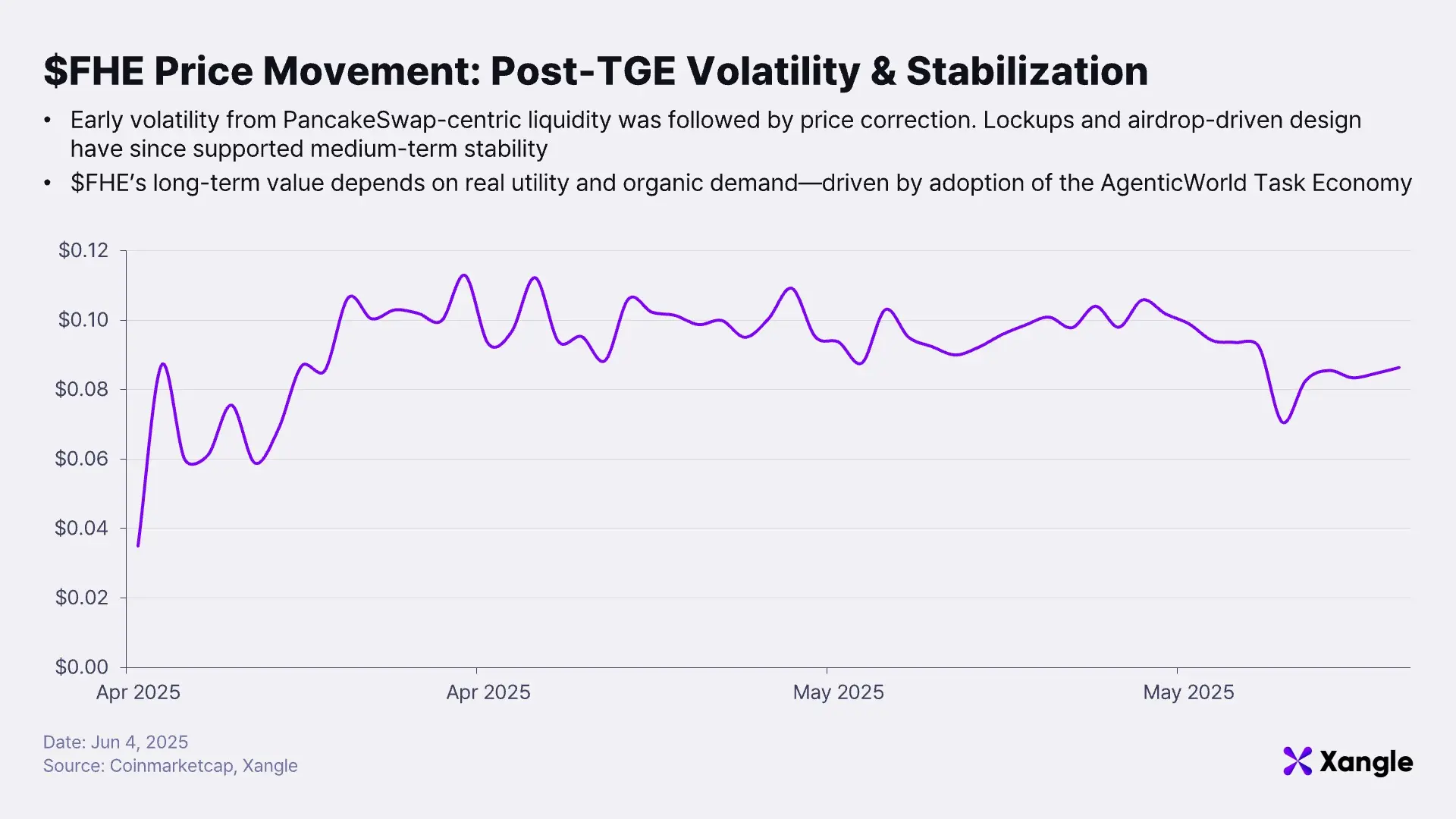
$FHE was first introduced to the market on April 10, 2025, through a Token Generation Event (TGE) supported by a strategic partnership with Binance Wallet and PancakeSwap. While the token experienced a short-term surge post-launch, a relatively high initial circulating supply (24.9%) led to early profit-taking and price correction. Nonetheless, the tokenomics are structured for long-term stability: 41.7% of the total supply is allocated to community incentives and long-term airdrops, while team and early investor allocations are subject to a 12-month lockup and a 48-month vesting schedule.
As of June 4, 2025, $FHE is available on Binance Futures and select platforms like Binance Alpha, but has yet to be listed on the spot markets of major centralized exchanges (CEXs) such as Binance itself. Roughly 80% of $FHE's trading volume still comes from PancakeSwap V3, indicating that liquidity remains largely DeFi-native. Mind Network is now pursuing cross-chain expansion to Ethereum and other networks in an effort to diversify liquidity and increase accessibility, while maintaining its DeFi-first strategy.
Given its post-TGE stage, it is too early to conclusively evaluate the success of $FHE’s tokenomics. The most important near-term determinant is real demand creation within the ecosystem. Although several use cases within AgenticWorld are already live, recurring real-world token utility has yet to scale meaningfully. To address this, the Mind team is actively expanding hub infrastructure, pursuing cross-chain interoperability partnerships, and rolling out Agent-as-a-Service offerings. Efforts to secure additional CEX listings are also underway to strengthen distribution and visibility. The long-term viability of $FHE depends on how rapidly and effectively real usage is introduced across the ecosystem. If the Task Economy within AgenticWorld begins operating at scale—generating continuous $FHE consumption as agents execute tasks and earn rewards—it could initiate a self-reinforcing demand cycle. Such momentum would not only drive price stability and appreciation but also solidify $FHE’s position as a functional, in-demand utility token within a privacy-first AI economy.
5. Closing Remarks: How Mind Is Shaping the Standard for Trustworthy AI
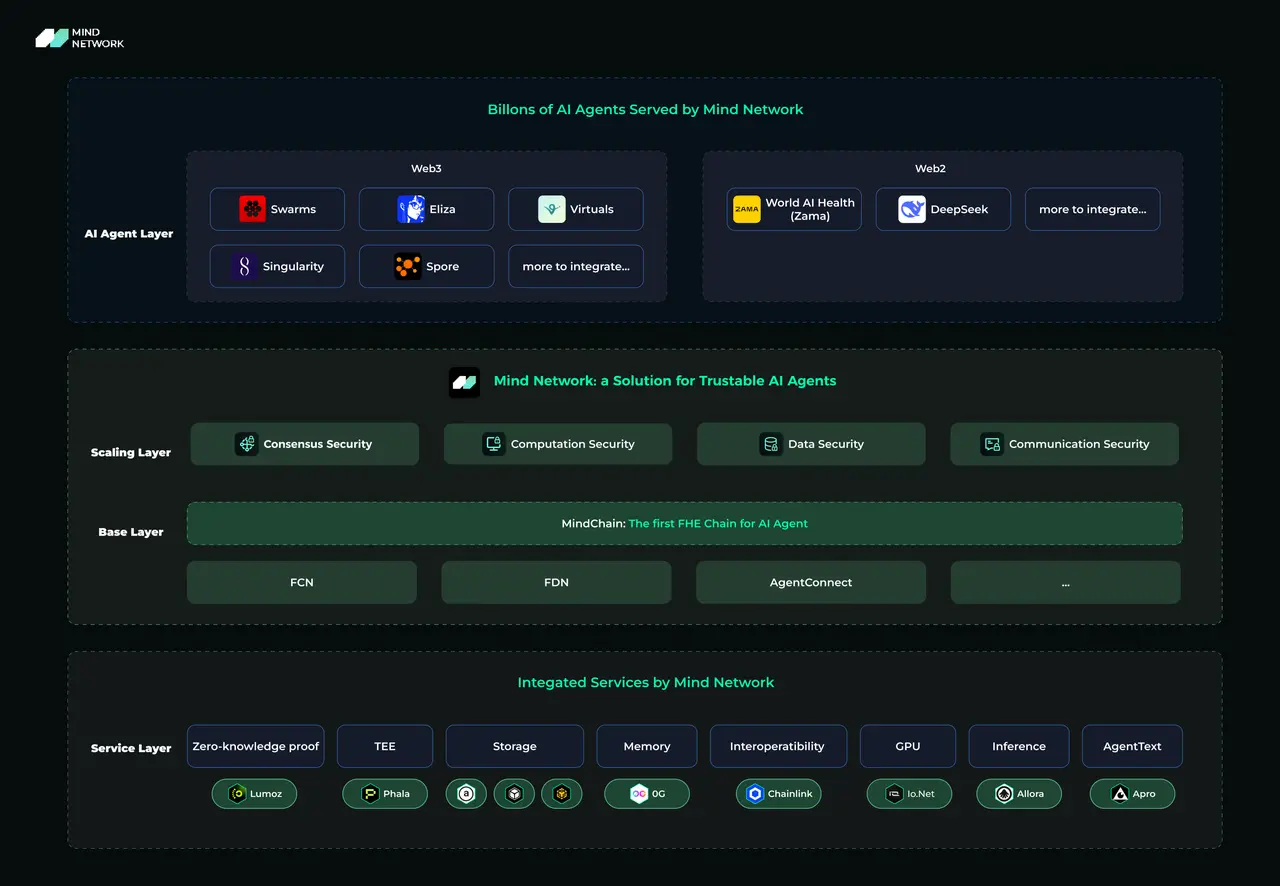
https://docs.mindnetwork.xyz/minddocs/product/mindchain
Mind Network offers a compelling solution to one of the most pressing challenges in modern computing: reconciling the seemingly incompatible demands of AI computation and personal data privacy. By bringing Fully Homomorphic Encryption (FHE) to a usable level of performance, Mind is pioneering a secure and verifiable on-chain AI infrastructure. Core products such as AgenticWorld, MindX, and the FHE Bridge have moved beyond theoretical design and into practical implementation—each addressing a specific layer of the AI stack. At the same time, strategic collaborations with projects like DeepSeek, Swarms, and Allora underscore both the technical feasibility and real-world demand for Mind’s architecture. These integrations validate Mind’s position as a technically competent and execution-ready project within the Web3 ecosystem.
That said, several critical challenges remain before Mind can scale into a truly universal infrastructure. The computational overhead and throughput limitations inherent to FHE continue to serve as major constraints to adoption, and the platform’s long-term success will depend on how effectively the team can optimize these performance bottlenecks without compromising its foundational privacy guarantees. In addition, to reach audiences beyond the crypto-native user base—particularly enterprises and mainstream users—Mind must develop a user experience (UX) layer that abstracts away the underlying technical complexity. It will be essential for individuals and businesses to interact with privacy-preserving AI applications without needing to understand the intricacies of cryptography, blockchain infrastructure, or Web3 tooling.
Despite these hurdles, Mind Network today represents one of the most concrete and operationally mature efforts to build a privacy-first AI infrastructure. Its application of FHE is not limited to enhancing trust in AI outcomes—it is also structured to meet the high privacy standards required by enterprises and institutions. In an era of intensifying global data protection regulations, Mind’s architecture holds relevance well beyond the Web3 space, offering extensibility into regulated, enterprise-grade Web2 environments.
The vision of “trustworthy AI” is no longer a conceptual ideal—it is a technical benchmark that can now be engineered. Among the projects working toward this goal, Mind appears to be one of the closest to reaching it. With continued advances in scalability, usability, and ecosystem integration, Mind Network has the potential to define the next-generation standard for decentralized, privacy-preserving AI.
Disclaimer
I confirm that I have read and understood the following: The information contained in this article is strictly the opinions of the author(s). This article was authored free from any form of coercion or undue influence. The content represents the author's own views and does not represent the official position or opinions of CrossAngle. This article is intended for informational purposes only and should not be construed as investment advice or solicitation. Unless otherwise specified, all users are solely responsible and liable for their own decisions about investments, investment strategies, or the use of products or services. Investment decisions should be made based on the user’s personal investment objectives, circumstances, and financial situation. Please consult a professional financial advisor for more information and guidance. Past returns or projections do not guarantee future results. This article was written at the request of Mind Network. All content in this article was written independently by the author(s), and neither CrossAngle nor Mind Network had any editorial control or influence over the content. The author(s) may hold the cryptocurrencies mentioned in this article at the time of writing.
Xangle or its affiliated partners own all copyrights of the written or otherwise produced materials and content provided on the platform. Any illegal reproduction of such content, including, but not limited to, unauthorized editing, copying, reprinting, or redistribution will result in immediate legal actions without prior notice.
![[CIS Partner Summit Highlights] Ault's Financial Super App Strategy: OnlyBulls](https://resource.xangle.io/files/content/C1A19E1DB41B7FB86076143803C40D8E_1790125531662.webp)
![[Xangle RWA Series] Solana RWA: A Look at the Key Players](https://resource.xangle.io/files/content/F779A005246C0299246537AACB3A39F2_1782287059970.webp)