Monad: Built for Mastery, Not for Hype

1. Why Some Chains Endure — and Others Don’t
2. Monad: The Six-Dimensional Layer 1
3. Community: Often Overlooked, Always Essential
4. Ecosystem Architecture: As above, so below
5. Payments: The Final Piece in Monad’s Financial Architecture
6. Strategy, Executed Right
1. Why Some Chains Endure — and Others Don’t
In Anna Karenina, Leo Tolstoy opens with one of the most famous lines in literary history:
“All happy families are alike; each unhappy family is unhappy in its own way.”
The line implies that happiness requires balance — stable income, good health, and harmony among family members. The absence of even one of these elements is enough to break that balance and invite unhappiness.
The same principle applies to Layer-1 blockchains. Success in this space demands equilibrium across multiple fronts: technology, ecosystem maturity, and community strength. A chain that thrives must possess all of these in harmony. Many Layer-1s have risen by emphasizing a single advantage, some with technology, others with community or ecosystem, yet over time, survival hinges less on what a network excels at and more on what it lacks nothing of. In that sense, “successful chains succeed for similar reasons, while failed chains fail in their own ways.”
Ethereum and Solana, for example, each embody distinct strengths. Ethereum has become the most trusted network thanks to its unmatched stability and decentralization. Solana, by contrast, has captured market share through speed and user experience. While often critiqued for its lower decentralization and thinner DeFi stack, Solana still outpaces most competitors in both node count and TVL. Ethereum, despite slower execution, achieves balance through L2 scalability and strong security guarantees.
Cardano (ADA) and Tron (TRON) illustrate the opposite case, proving that technological strength alone doesn’t ensure longevity. Cardano offers fast throughput and a loyal community, yet its growth has plateaued due to sluggish developer adoption and limited real-world applications. Tron delivers high transaction speeds and a wide dApp ecosystem, but weak developer inflows and low community engagement have eroded its relevance. Solana, though a late entrant, leveraged its clear edge in performance and usability to rapidly expand its ecosystem and achieve mainstream positioning.
In the end, blockchain success is never defined by technical performance alone. Sustainable growth depends on balance — among speed, community, and developer activity. Even a chain that excels in one dimension will struggle to endure if another pillar is missing.
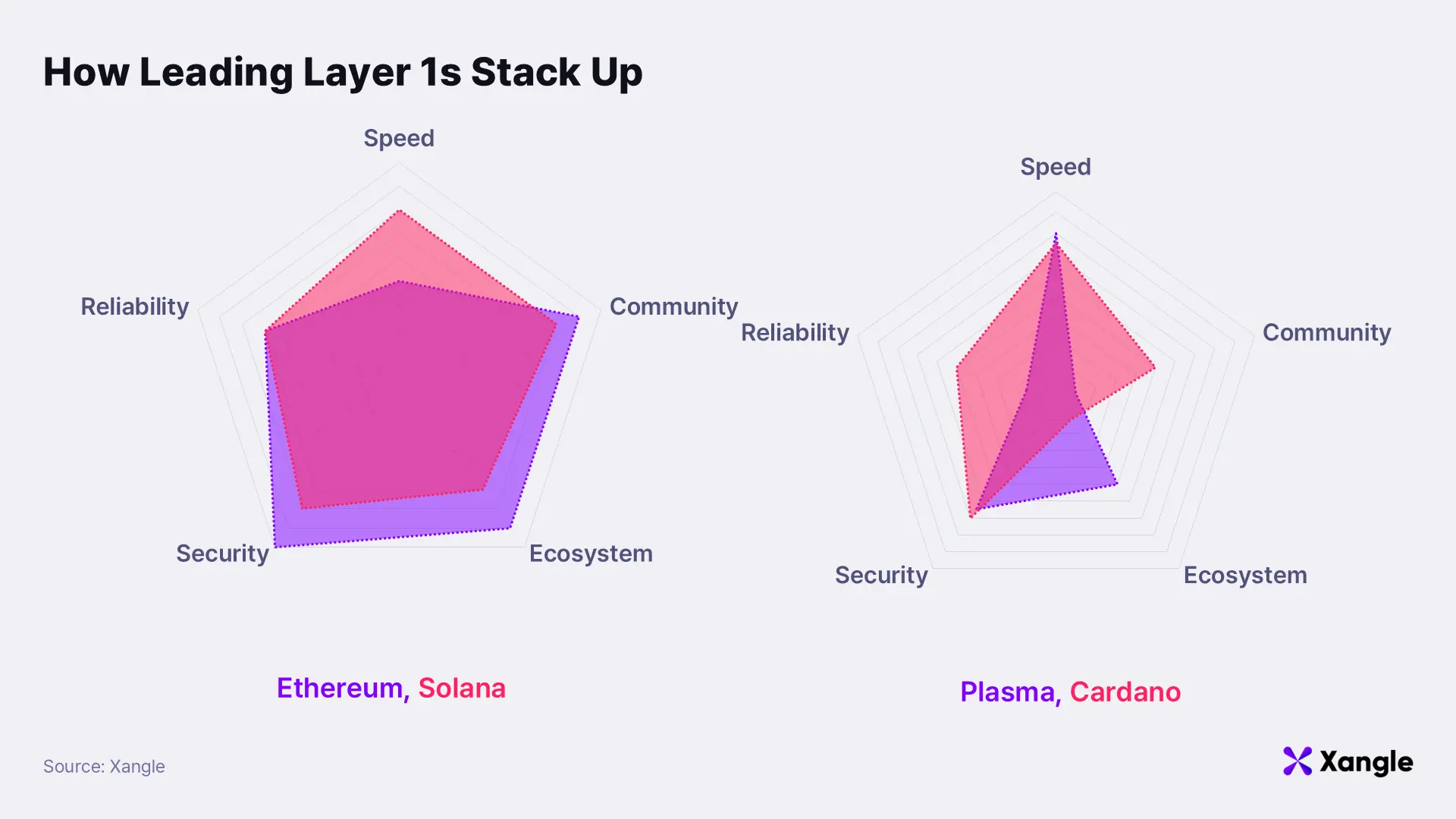
Ultimately, a blockchain that stands the test of time is not a specialist that excels in a single domain, but a generalistcapable of balancing strength across multiple dimensions. Technical excellence alone does not guarantee endurance, and even the most vibrant community cannot sustain a network in isolation. A durable Layer 1 requires a robust developer base to maintain its ecosystem, a stable and well-designed token economy, practical strategies for user acquisition, and the operational agility to adapt to shifting market dynamics.
Viewed through this lens, Monad exemplifies that balance. Its strength lies not in any single defining feature, but in its well-rounded execution across all critical layers of success. Rather than being extraordinary for one capability, Monad is distinguished by how completely it integrates them — making it, in essence, the Layer 1 most optimized for sustainable success.
2. Monad: The Six-Dimensional Layer 1
Monad’s defining strength, and the source of its growing recognition, lies in its engineering sophistication. Its core advantage is speed, augmented by full EVM compatibility. In essence, Monad delivers the throughput of Solana while preserving the Ethereum ecosystem’s developer stack and composability. This dual capability is enabled by Monad’s proprietary MonadBFT consensus algorithm, which parallelizes both transaction execution and consensus, maximizing network efficiency.
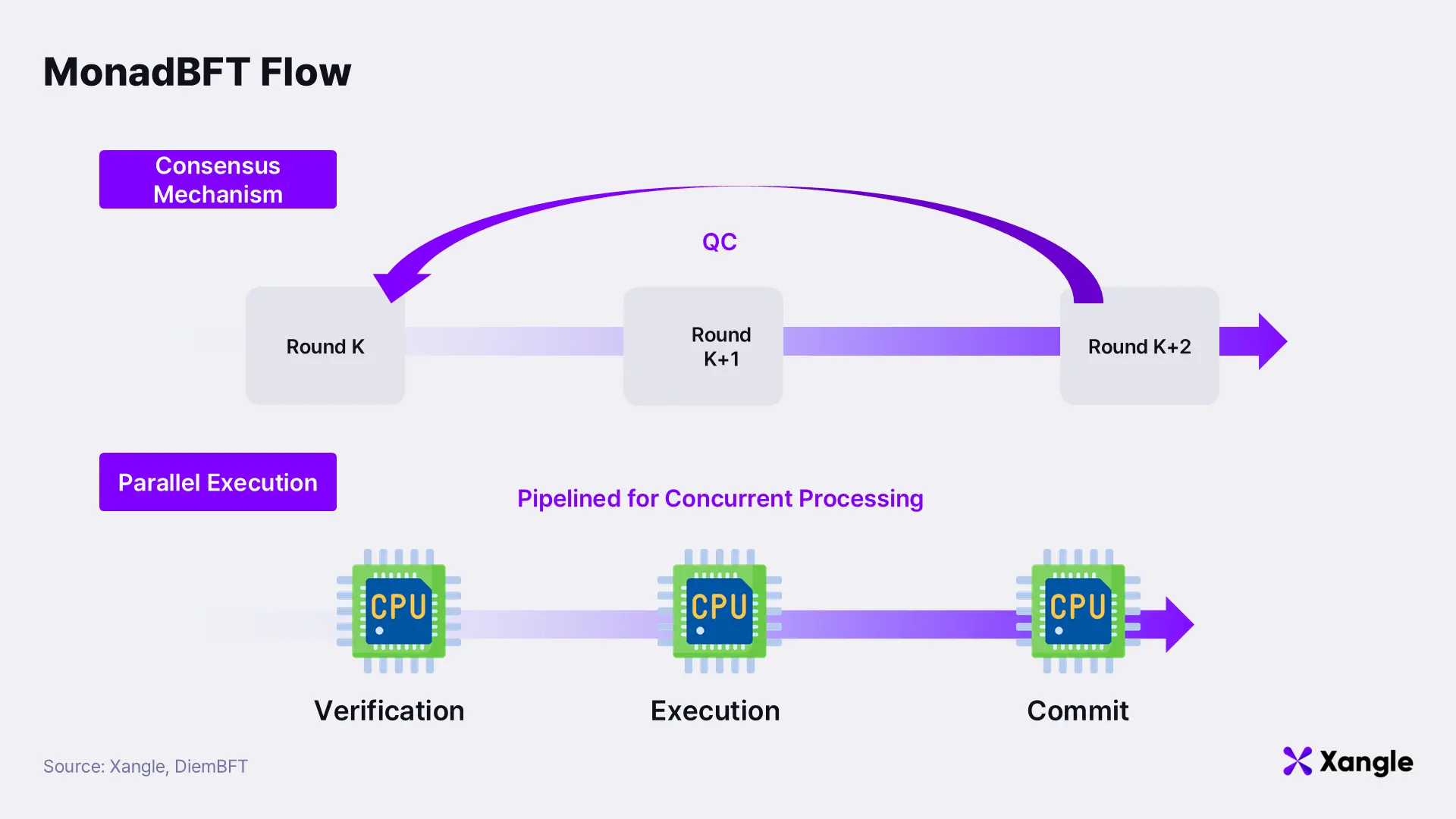
The MonadBFT consensus mechanism adopts a pipelined BFT architecture inspired by HotStuff and DiemBFT. At its core is the Quorum Certificate (QC), which is a cryptographic proof that a quorum of nodes (2f+1 out of 3f+1) has agreed on a proposed block. Because each new proposer must reference the previous QC, consensus progresses as a continuous and verifiable chain of agreement.
Traditional BFT systems execute block creation and state updates sequentially. MonadBFT departs from this by restructuring the process into a pipelined architecture, allowing verification, execution, and commit phases to run concurrently on separate threads. This design enables the network to sustain over 10,000 transactions per second (TPS) and achieve sub-second finality. Beyond consensus optimization, Monad addresses a deeper bottleneck in blockchain performance, data access, through MonadDB, its purpose-built parallel database.
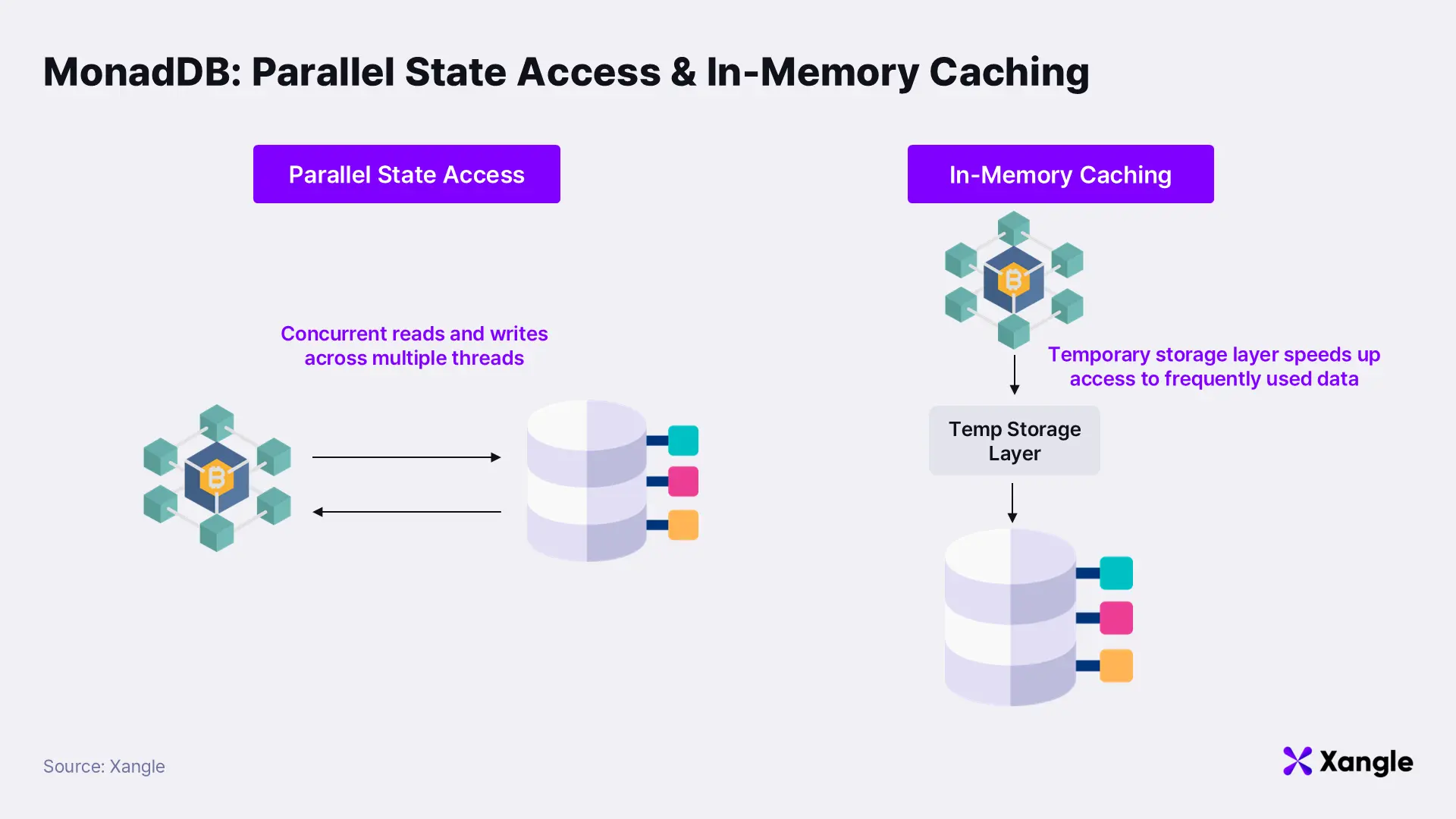
MonadDB manages state data as independent snapshot units, enabling concurrent read and write operations within a multithreaded environment. This architecture eliminates the storage-lock problem that has long constrained traditional EVM chains, guaranteeing both high concurrency and low I/O latency. Its in-memory caching layer further accelerates throughput by storing frequently accessed data within a temporary storage tier.
As a result, Monad achieves full EVM compatibility while delivering up to 10× higher execution efficiency than Ethereum. Developers can therefore deploy existing Solidity contracts and Ethereum toolchains, including Foundry and Hardhat, without modification, yet experience Solana-grade performance.
Just as important as technology is the team’s composition and background. Monad was founded by engineers from the former High-Frequency Trading (HFT) team at Jump Trading; a group that managed over $1 trillion in annual trading volume in traditional financial markets before leading Jump’s Solana DeFi team, where they architected on-chain trading infrastructure. Their direct, hands-on expertise in ultra-low-latency systems and execution optimizationhas been fully translated into Monad’s blockchain architecture.
Over the past three years, Monad has systematically recruited top-tier talent across HFT, market making (MM), distributed systems, and compiler optimization, assembling an elite 40-person engineering team. The group’s collective mission centers on solving one of blockchain’s hardest technical challenges: achieving both speed and consistency — the long-standing “hard problem” of distributed ledger design.
The investor base is equally remarkable. In its 2024 Series A round, Monad raised $225 million, led by Paradigm, with participation from Coinbase Ventures, Placeholder, Lemniscap, Electric Capital, and Castle Island Ventures. Strategic partners such as Jump, Wintermute, and Pantera, institutions that sit at the intersection of crypto and traditional trading, also joined the round. This structure reflects more than capital allocation; it signifies a foundation built on technical credibility and market trust. With a cutting-edge product, proven founders, and the backing of top-tier venture capital, Monad has emerged as one of the most anticipated Layer 1 networks in development.
Yet even an exceptional founding team, high-profile investors, and superior technology do not guarantee success. By design, Layer 1 networks remain some of the hardest environments in which to achieve long-term survival. True success requires mastery of two core dimensions: attracting developers who will build meaningful applications on the network, and securing users who will actively engage with it. Achieving both demands not only strategic clarity but also the endurance to sustain long-term execution. Advanced technology alone cannot carry a network; it must be accompanied by a cultural foundation and incentive structure that encourage people to gather, build, and stay.
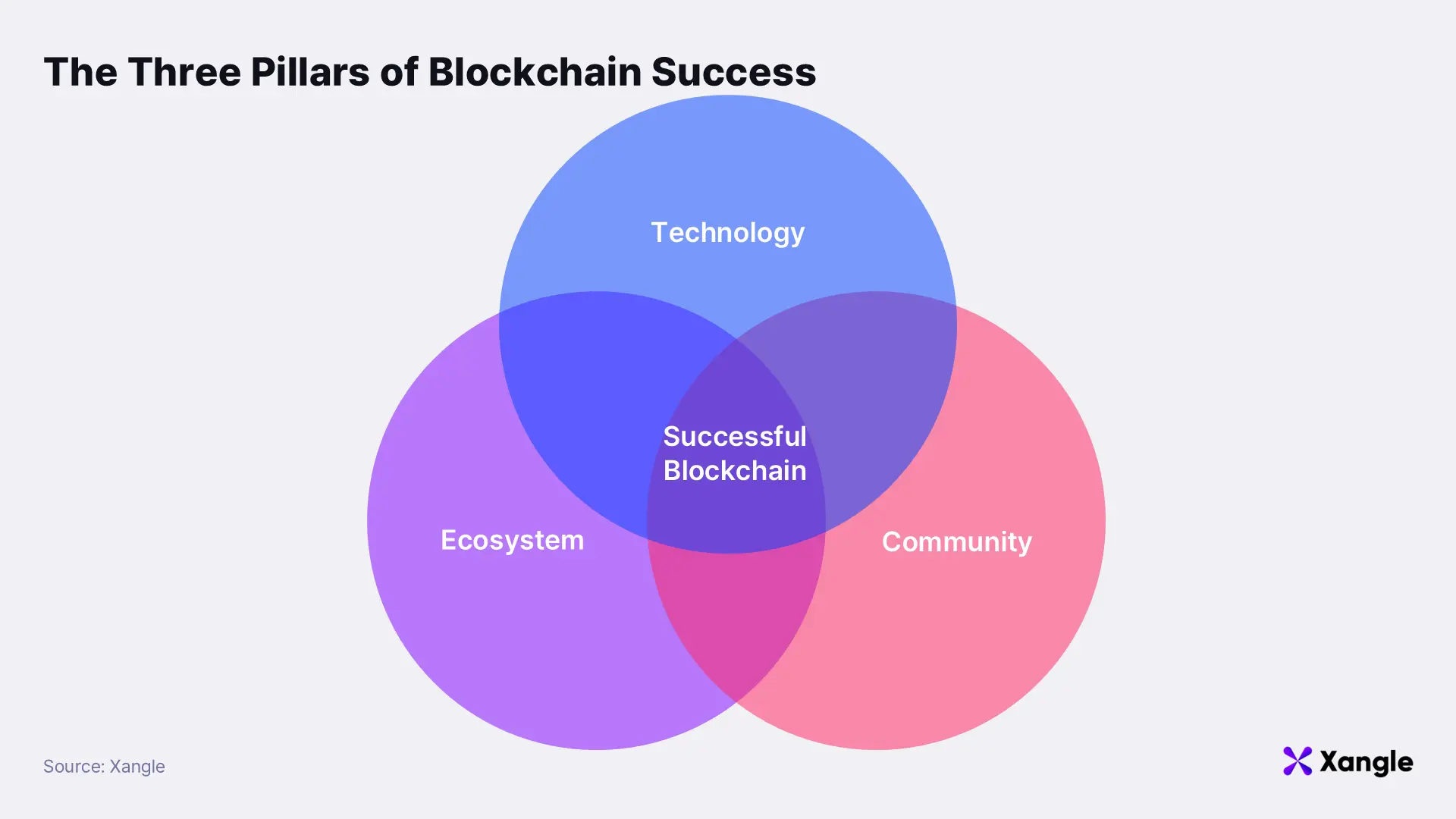
More specifically, the foundation of a successful Layer 1 rests on three interlocking pillars. First, technology lowers entry barriers by providing accessible and reliable infrastructure for both developers and users. Second, communitybreathes life into that technology, turning code into culture and creating the narrative that drives real adoption. Third, the ecosystem amplifies community activity by enabling diverse projects and services to interact, generating network effectsthat form a sustainable economic loop within the Layer 1. When these three elements align, a Layer 1 transcends its role as a mere technical experiment and evolves into a living, self-sustaining economic organism. And it is precisely within this dynamic equilibrium that Monad’s greatest strength can be found.
3. Community: Often Overlooked, Always Essential
Community is often underestimated in blockchain discussions — perhaps because it cannot be measured in metrics like technology, revenue, or capital raised. Yet it is the lifeblood of any blockchain network. It is not technology that attracts people; rather, it is the narratives people create that give technology its legitimacy. Few examples illustrate this better than Solana and Hyperliquid.
Solana has long been recognized as a developer-centric ecosystem rather than a user-centric one. The Solana Foundation and Solana Labs have hosted global hackathons and meetups such as Hacker House and Solana Breakpoint, creating spaces for developers to meet and collaborate in person. On platforms like Twitter (X) and Discord, the Solana community cultivated a distinct culture bound by memes and humor. The phrase “Solana Summer” evolved from a passing meme into a symbolic expression of collective identity.
The collapse of FTX and Alameda Research in 2022 dealt a devastating blow to Solana. As FTX, its primary investor and financial backer, imploded, the price of SOL fell by more than 90%, and the market consensus declared the chain “finished.” Yet the Solana community demonstrated extraordinary resilience. With centralized funding gone, independent developer groups quickly emerged, reinforcing the network’s decentralized development model. Grassroots funds such as Superteam DAO and Colosseum Ventures were established, initiating the ecosystem’s self-reconstruction. The rallying cry “Build in the Bear” spread widely, urging developers to keep shipping regardless of market conditions. Over the following months, activity surged again through milestones like the launch of Solana Mobile (Saga), the Helium migration, and the rapid growth of Jupiter and Drift. Community-driven projects including BONK, Jupiter, and Tensor further accelerated the recovery, allowing Solana to forge a distinctly post-FTX identity.
Hyperliquid, by contrast, showcased the power of community through a completely different strategy. The protocol made a radical decision: it raised no venture capital and instead distributed ownership directly to its community. In the short term, this was a high-risk move; unlike VCs, community participants could sell their tokens and leave at will. But Hyperliquid turned that risk into an advantage, underpinned by exceptional product execution and deep user loyalty. Even after its TGE, users stayed engaged not merely as investors but as co-operators of the protocol. Governance remained firmly community- and holder-driven, while its mascot Purr transcended meme status to become a cultural emblem. In doing so, Hyperliquid established a model where participation itself becomes value, which resulted in transforming its community into the project’s most powerful asset.
The question, then, is what kind of community Monad is building. The project prioritizes commitment and participation over wealth or credentials. Rather than simply promoting its technology, Monad has designed a framework that allows participants to enjoy the process of co-creating the network itself. Community members contribute in various ways, from meetups and code reviews to meme creation, and these contributions are recorded and evaluated directly on-chain.
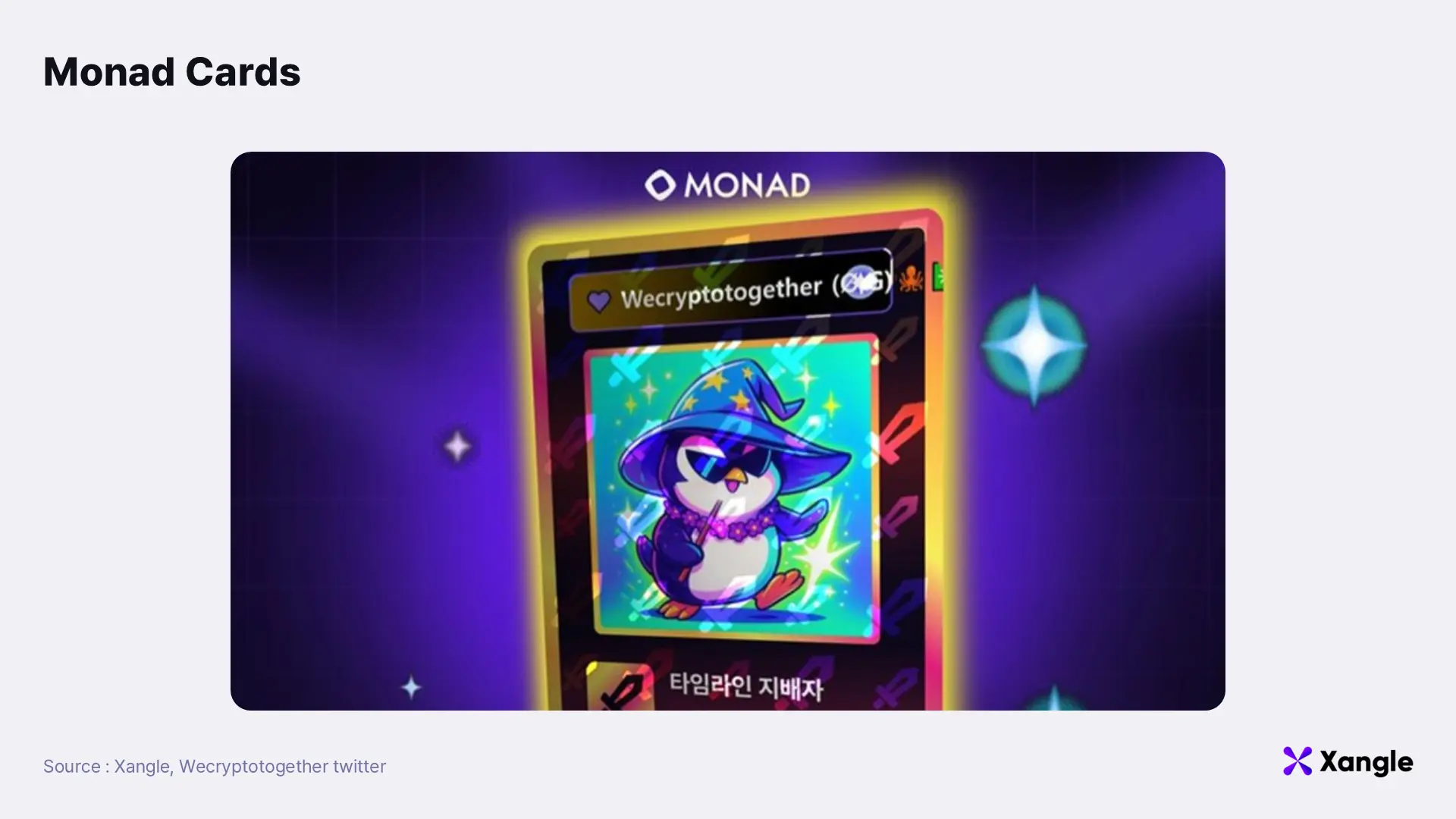
What sets Monad apart is its inclusive approach. Rather than limiting recognition to those already committed to the project, Monad extends its reach through the Monad Card System, a social graph built around Twitter accounts that enables participation regardless of prior involvement. This mechanism has allowed Monad to organically introduce itself to influential figures across the broader Web3 ecosystem, creating natural bridges for potential participants to join its community.
Monad’s recent airdrop also reflected this philosophy. Allocation was determined not only by community engagement but also by on-chain activity. Eligible participants included active traders on major DEXs such as Hyperliquid and Phantom Wallet; users trading meme-launch tokens on Pump.fun and Virtuals; and participants in leading DeFi protocols such as Aave, Euler, Morpho, Pendle, Lighter, Curve, PancakeSwap, and Uniswap. Holders from top NFT communities — including Azuki, CryptoPunks, Pudgy Penguins, Mad Lads, Milady Maker, Sappy Seals, and Solana Monkey Business — were also among the recipients. In addition, Monad Card holders, Legion fundraising platform participants, Backpack exchange users, and members of Fantasy Top, MetaDAO, and ARC communities were all eligible for the distribution.
This flexible and inclusive architecture is propelling Monad’s community beyond the bounds of a simple fandom into an open ecosystem. Acting as the connective tissue between technology and narrative, the community functions as a form of soft power that aligns developers and users toward a shared vision. More than a tool for short-term hype or speculative attention, Monad’s community structure is building a long-term growth foundation rooted in trust, participation, and shared ownership.
4. Ecosystem Architecture: As above, so below
A blockchain cannot thrive on community alone. Equally vital is the ecosystem that operates on top of it. No matter how advanced the technology or how capable the team, a network without an active ecosystem cannot generate meaningful network effects. As a newly launched chain, however, Monad inevitably lags behind long-established players like Ethereum or Solana in ecosystem maturity. To close that gap, Monad has introduced a dedicated acceleration initiative titled “Monad Momentum: Accelerating Ecosystem Growth.”
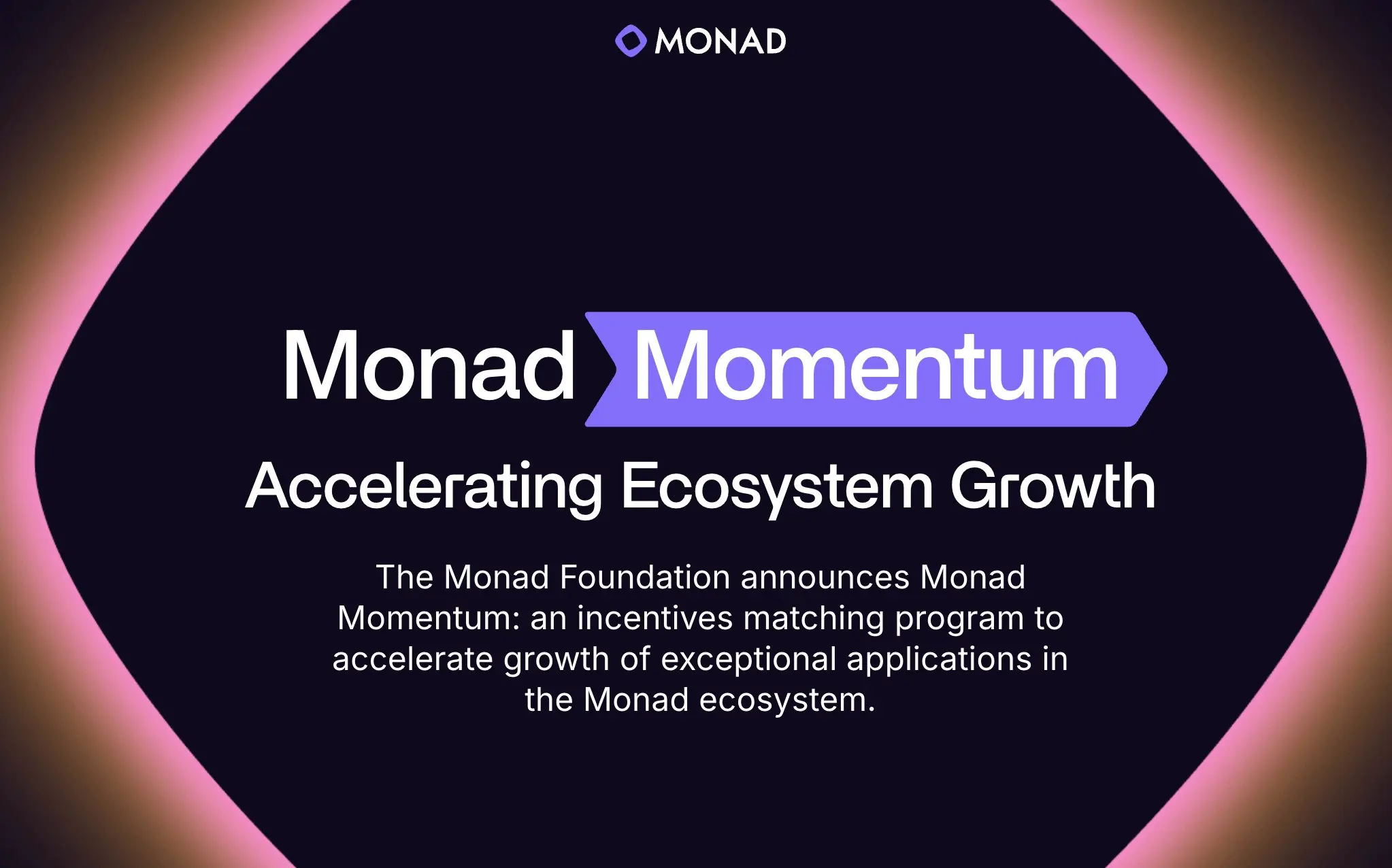
Monad Momentum is designed to drive ecosystem growth at maximum velocity by combining top-down and bottom-up approaches. The Monad Foundation directly identifies and supports promising projects while maintaining an open structure that empowers teams to acquire users and scale organically.
This approach is carefully engineered to avoid the inefficiencies and disconnects that arise when foundations unilaterally select teams, as well as the chaos and short-term speculation that can emerge in fully user-driven ecosystems. Participating teams submit detailed proposals outlining their growth strategies, incentive models, and user acquisition plans. Only those demonstrating strong execution capability and long-term sustainability are selected through a competitive evaluation process and rewarded accordingly.
At its core, token distribution is never unconditional. Teams must first invest their own resources to qualify for support; a direct application of the “Skin in the Game” principle. The structure aligns incentives so that projects aim for genuine user growth and durable performance, not quick rewards.
The matching model at the heart of Monad Momentum redefines the traditional grant process. Conventional programs tend to push teams toward meeting funding requirements rather than producing results. Monad begins from the belief that each team understands its users best — DeFi projects know traders’ needs, game studios grasp what keeps players engaged, and NFT marketplaces recognize what motivates collectors to transact. Instead of enforcing a single incentive formula, Monad adjusts rewards around practical metrics such as user acquisition, liquidity depth, trading volume, and retention, tailoring each incentive to the project’s profile.
Monad Momentum is built for continuity, not as a one-off campaign. The program follows a phased wave structure, progressing in multiple rounds that evolve with live performance data. Each wave recalibrates reward ratios, increases incentives for outperforming teams, and strengthens the feedback loop that keeps the ecosystem self-sustaining. The result is a balanced incentive model, one that avoids both the rigidity of foundation-driven programs and the volatility of fully open systems while cultivating steady, organic growth.
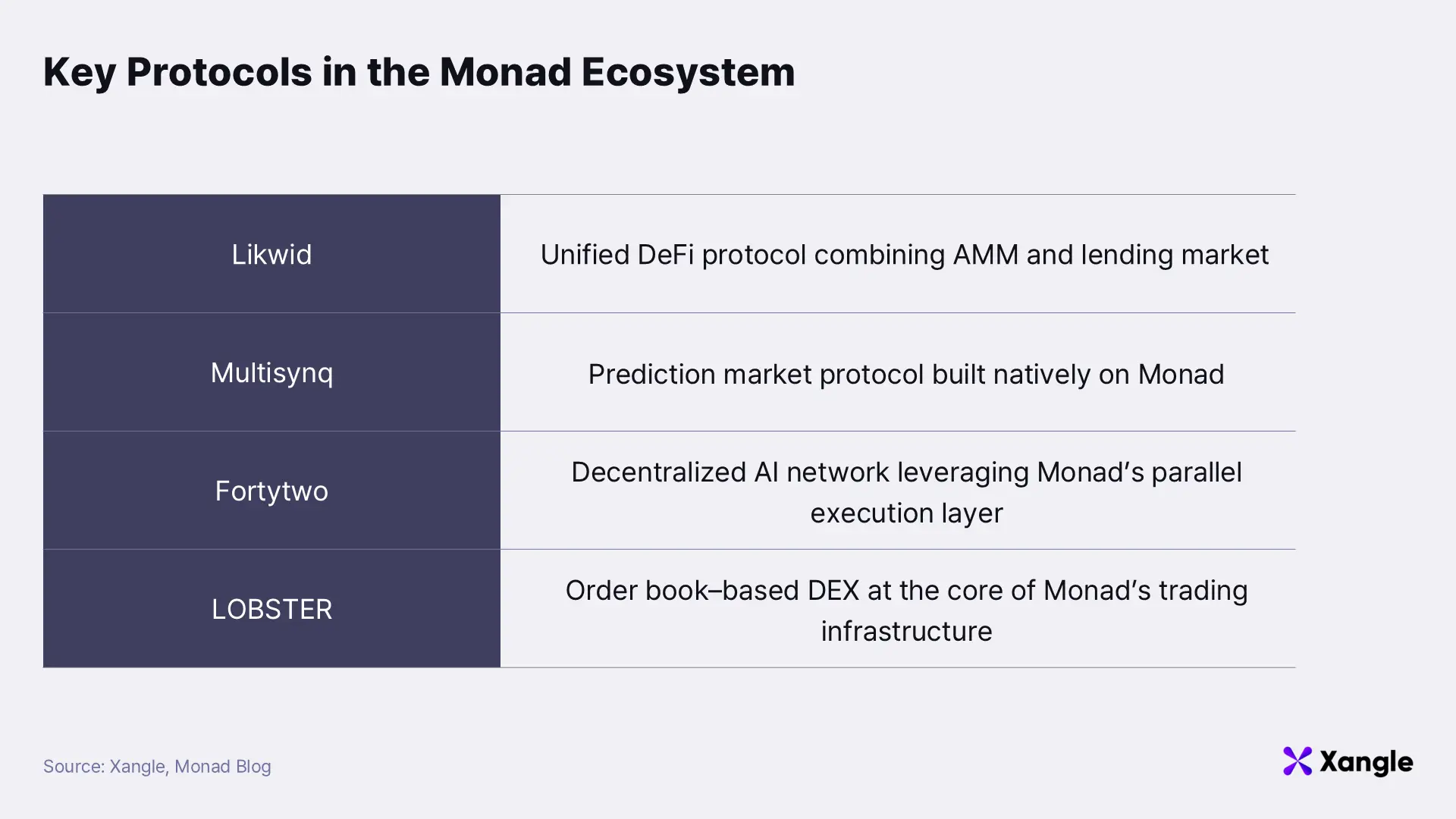
Several flagship projects already embody this approach, such as Likwid, Multisynq, Fortytwo, and LOBSTER, each forming a cornerstone of Monad’s expanding ecosystem.
- Likwid unifies AMM and lending markets, enabling leveraged trading and liquidity provision simultaneously, all without oracles.
- Multisynq serves as a prediction-market protocol combining on-chain data and external events so anyone can trade tokenized probabilities of future outcomes.
- Fortytwo uses Monad’s high-performance parallel execution environment to build a decentralized AI networkwhere distributed nodes handle model training and inference, and AI agents exchange data directly on-chain.
- LOBSTER functions as Monad’s order-book DEX, offering centralized-exchange-level speed and precision while replicating Solana-grade performance within an EVM-compatible environment.
Together, these projects anchor Monad’s DeFi, data, AI, and trading infrastructure, forming the foundation of a cohesive, high-performance ecosystem identity that sets Monad apart.
5. Payments: The Final Piece in Monad’s Financial Architecture
Monad has already built a strong community and an engaging ecosystem — yet that alone does not guarantee success. For a blockchain network to truly cross into mainstream adoption, it must be powered by a killer application capable of driving explosive user growth. Just as Ethereum carved out its place through DeFi and Real-World Asset (RWA) tokenization, and Solana through memes and community culture, Monad’s greatest potential lies in payments.
As one of the few Layer 1 blockchains to receive strategic investment from Coinbase, Monad naturally developed close ties with Circle, the global payment infrastructure provider behind USDC. On the very day of its mainnet launch, Monad announced an official partnership with Circle, positioning itself as a central hub for onchain payments built around USDC. It also deepened this foundation by integrating multi-chain stablecoin transfer and data synchronization infrastructure via collaboration with Chainlink, securing both stability and scalability as core pillars.
Monad’s stablecoin strategy, however, goes far beyond distribution. Instead of treating stablecoins solely as a payment instrument, the project envisions them as part of a comprehensive financial layer that integrates payments, foreign exchange, and remittances. The cornerstone of this expansion is Monad’s acquisition of Portal, a leading stablecoin payment infrastructure company.
Portal enables enterprises, financial institutions, and fintechs to adopt stablecoin-based payments with ease and currently processes millions of dollars in daily transaction volume. This acquisition was not a simple technology play but a strategic move to set the global standard for onchain payments. With Portal integrated, Monad is positioning itself to transcend traditional financial infrastructure, challenging the global dominance of Visa and Mastercard in payments and SWIFT in cross-border remittances, to become the next-generation financial layer for a borderless, blockchain-based economy.
Monad has also joined the Blockchain Payment Consortium (BPC), a collaborative initiative including Solana, Polygon, and Stellar, aimed at establishing technical and regulatory standards for cross-chain payments. This membership marks Monad as one of the key networks shaping the next-generation stablecoin payment standard, offering an early glimpse into its long-term vision.
Ultimately, Monad’s ambition extends far beyond being a faster blockchain or a more efficient DeFi ecosystem. Its goal is to unify global capital flows around stablecoins, creating a seamless financial network where payments, remittances, and asset transfers all occur natively onchain — positioning Monad at the center of a new global financial order.
6. Strategy, Executed Right
Monad has assembled every essential ingredient for success: cutting-edge technology, a strong and committed community, a rapidly expanding ecosystem, and a clear vision for the financial transformation driven by stablecoins. Yet what truly distinguishes Monad is not the mere presence of these elements, but the efficiency and strategic precision with which they have been brought together.
From the outset, Monad moved with intent, swiftly recruiting exceptional engineering talent to build a technically robust, high-performance Layer 1 from the ground up. It then strengthened its presence through community-led engagement, using initiatives such as airdrops and other participatory campaigns to raise awareness and attract early adopters. The Monad Momentum incentive program, a meticulously designed framework, fostered an ecosystem where developers and users could grow together. On this foundation, Monad expanded into the payments sector through strategic acquisitions and global partnerships, securing its position at the forefront of blockchain-based financial innovation.
This progression represents more than rapid expansion; it reflects strategic clarity and disciplined execution. Monad understands what to build to grow, how to scale sustainably, and when to act decisively to lead the market. As its mainnet launch approaches, Monad stands not as a speculative newcomer but as a blockchain advancing toward success with vision, precision, and the resolve to see its strategy through.
Disclaimer
I confirm that I have read and understood the following: The information contained in this article is strictly the opinions of the author(s). This article was authored free from any form of coercion or undue influence. The content represents the author's own views and does not represent the official position or opinions of CrossAngle. This article is intended for informational purposes only and should not be construed as investment advice or solicitation. Unless otherwise specified, all users are solely responsible and liable for their own decisions about investments, investment strategies, or the use of products or services. Investment decisions should be made based on the user’s personal investment objectives, circumstances, and financial situation. Please consult a professional financial advisor for more information and guidance. Past returns or projections do not guarantee future results.
Xangle or its affiliated partners own all copyrights of the written or otherwise produced materials and content provided on the platform. Any illegal reproduction of such content, including, but not limited to, unauthorized editing, copying, reprinting, or redistribution will result in immediate legal actions without prior notice.
![[CIS Partner Summit Highlights] Ault's Financial Super App Strategy: OnlyBulls](https://resource.xangle.io/files/content/C1A19E1DB41B7FB86076143803C40D8E_1790125531662.webp)
![[Xangle RWA Series] Solana RWA: A Look at the Key Players](https://resource.xangle.io/files/content/F779A005246C0299246537AACB3A39F2_1782287059970.webp)