Ekubo — Reshaping the Liquidity Wars

Table of Contents
1. Redefining AMMs from the Ground Up for Broader Adoption
2. Ekubo: The Final Boss of AMMs on Starknet
2-1. A next-generation AMM from the team behind Uniswap
2-2. Ekubo setting the standard for AMM design
3. Market Data Underscores Ekubo’s Growth Potential
3-1. Adoption and market share validate competitive positioning
3-2. Tokenomics engineered for sustainable growth
4. Ekubo’s Role in the Emerging BTCFi Era
5. Ekubo and the Next Chapter of DeFi
1. Redefining AMMs from the Ground Up for Broader Adoption
DeFi has expanded at breakneck speed under the vision of achieving financial decentralization via smart contracts. Yet as the sector has matured, its complex user experience and structural limitations have come into sharper focus. Market participants still face multiple barriers to entry: unintuitive interfaces, high fee burdens, limited interoperability across chains, and persistent bridge risks. AMM (Automated Market Maker)-based DEXs, in particular, continue to grapple with declining LP (Liquidity Provider) profitability driven by fragmented liquidity, inefficient pricing curves, and low capital efficiency.
At present, one of the most significant bottlenecks to DeFi scalability is precisely this combination of low capital efficiency and siloed liquidity architecture in AMMs. Most designs to date reveal clear shortcomings across both user experience and monetization models; from single-pool architectures and impractical slippage to the structural, ongoing losses borne by LPs. Simply attracting more liquidity or lowering trading fees is insufficient to address these issues as the underlying architecture of the AMM itself requires a fundamental redesign.
Ekubo tackles these inefficiencies head-on, positioning itself as a next-generation AMM built for peak performance in the Ethereum ecosystem. Purpose-built on Ethereum Layer 2 Starknet from inception, Ekubo offers a high degree of functional completeness, enabling an environment where traders can capture meaningful, realized profits. Since launch, it has rapidly climbed to third place in Ethereum spot trading volume, underscoring its competitive edge. Its token price has also broken past previous all-time highs, further cementing investor confidence. On the tokenomics side, Ekubo incorporates a fee-driven token buyback mechanism and a permanently locked team allocation — aligning long-term trust with sustained value appreciation.
2. Ekubo: The Final Boss of AMMs on Starknet
2-1. A next-generation AMM from the team behind Uniswap
Ekubo was conceived by Moody Salem, a core developer at Uniswap — the global leader in the DEX market. Salem played a pivotal role in every major Uniswap release from v2 to v4, contributing in particular to the introduction of concentrated liquidity and the design of scalable AMM architectures. His work helped define industry standards, but it also sparked a question: “If we were to design an AMM from the ground up today, what would it look like?” Ekubo is the direct answer to that question as it is not just another DEX, but a new generation of AMM built to address and surpass the structural limitations of Uniswap’s design.

Moody Salem, core developer of Ekubo
Believing that the market needed a higher-performance, more scalable alternative, Salem founded Ekubo Inc. Within just a few months, the team launched Ekubo’s mainnet product on Starknet, a ZK-rollup–based Layer 2 for Ethereum. The protocol immediately claimed 75% of all DEX trading volume on Starknet, cementing its role as a cornerstone of the network’s DeFi stack. Shortly thereafter, an EVM-compatible version built in Solidity was released, extending Ekubo into the broader Ethereum ecosystem and establishing the framework to operate seamlessly across multiple chains. This combination of an elite development pedigree, proven execution speed, and rapid post-launch adoption has enabled Ekubo to secure a central position in both the Starknet and Ethereum ecosystems — and to expand market share at a pace rarely seen in the AMM sector.
2-2. Ekubo setting the standard for AMM design
The driving force behind Ekubo’s rapid growth lies in its approach of redesigning the structural inefficiencies of existing AMMs from the ground up. At the heart of this redesign is its singleton architecture, where all liquidity pools are managed within a single smart contract. This architecture enables cross-pool trades, liquidity provision or withdrawal, and other operations to be chained together in a single transaction, with asset transfers batched only at the final step. The result is a substantial boost in both processing efficiency and capital utilization.
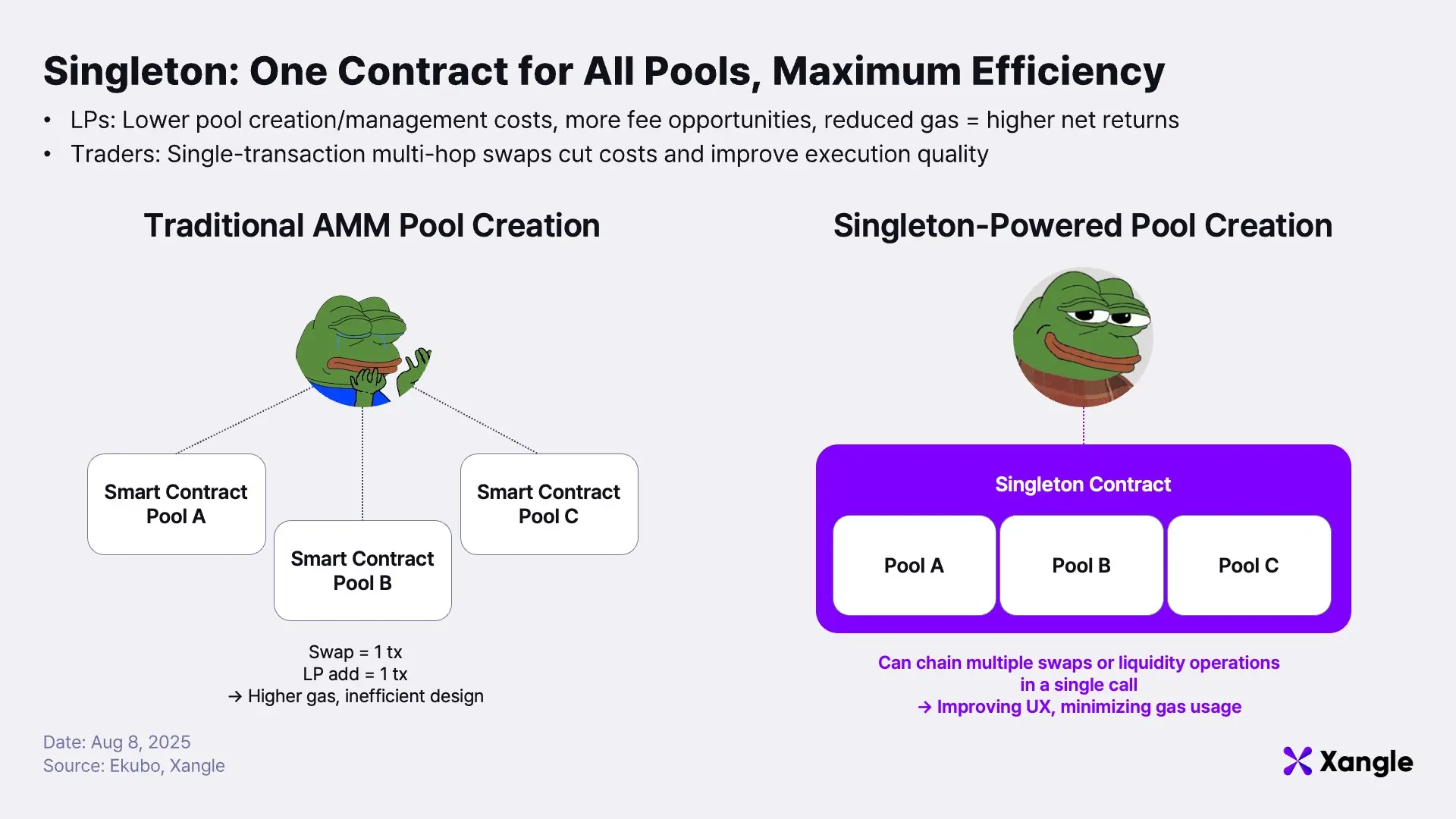
Consider a user swapping tokens along the A → B → C path: a traditional DEX would require three separate contract calls, each incurring its own settlement and gas costs. On Ekubo, the entire sequence is executed in a single call, with a one-time settlement at the end of the transaction. This not only lowers gas fees and expands revenue opportunities for LPs across multiple pairs, but also delivers traders lower swap costs and better execution in multi-hop trades. It is, in essence, a live implementation of the “Hooks + Singleton” framework planned for Uniswap v4 — a testament to Ekubo’s technical leadership.
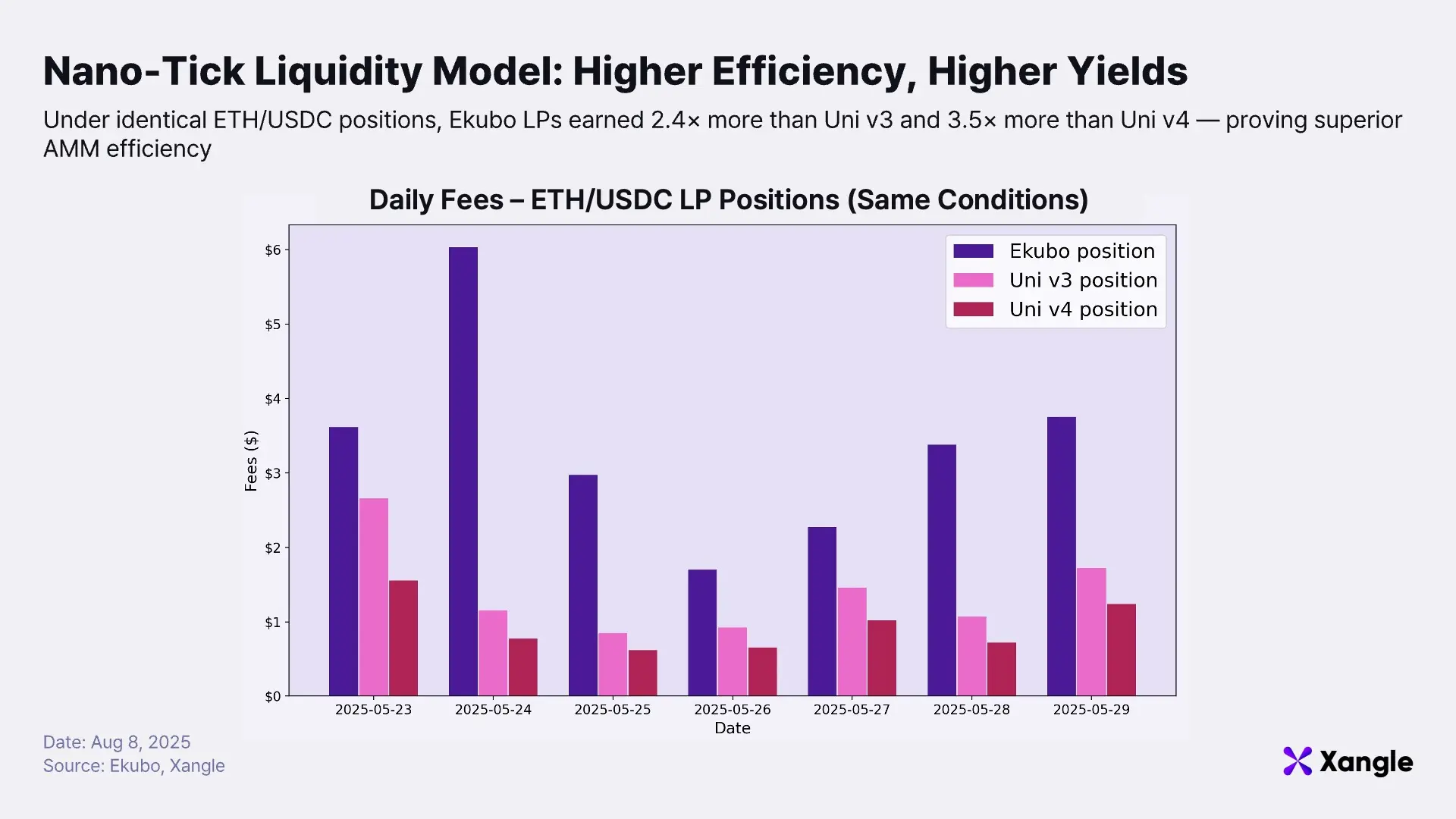
Ekubo’s second major innovation is its nano-tick concentrated liquidity model. Whereas Uniswap v3 allows liquidity placement in increments as fine as 0.01%, Ekubo pushes this precision 100× further to 0.0001% increments. LPs can therefore target far narrower price ranges, achieving centralized-exchange-level execution precision with minimal slippage. In practice, Ekubo processes 75–80% of Starknet’s total DEX trading volume while holding only ~5% of the network’s total liquidity — clear evidence of its capital efficiency. As of July 2024, LP yield per unit of capital was roughly 3.5× higher than that of Uniswap v4, underscoring how granular liquidity placement can simultaneously maximize both efficiency and profitability.
Additionally, Ekubo’s modular Hooks framework allows for the seamless integration of advanced features without interrupting protocol operations. TWAMM (Time-Weighted Average Market Maker), on-chain limit orders, and oracle-based pools are already live, and custom AMM logic can be added with minimal friction. This Hooks concept, pioneered by Ekubo, has since been adopted in updated versions of other major DeFi protocols. Unlike competitors that introduced extensibility as an afterthought, Ekubo launched with these capabilities from day one — giving users access to custom settlement logic, flexible liquidity range settings, and advanced execution tools from the outset, and in doing so, shaping the trajectory of AMM design across the broader DeFi space.
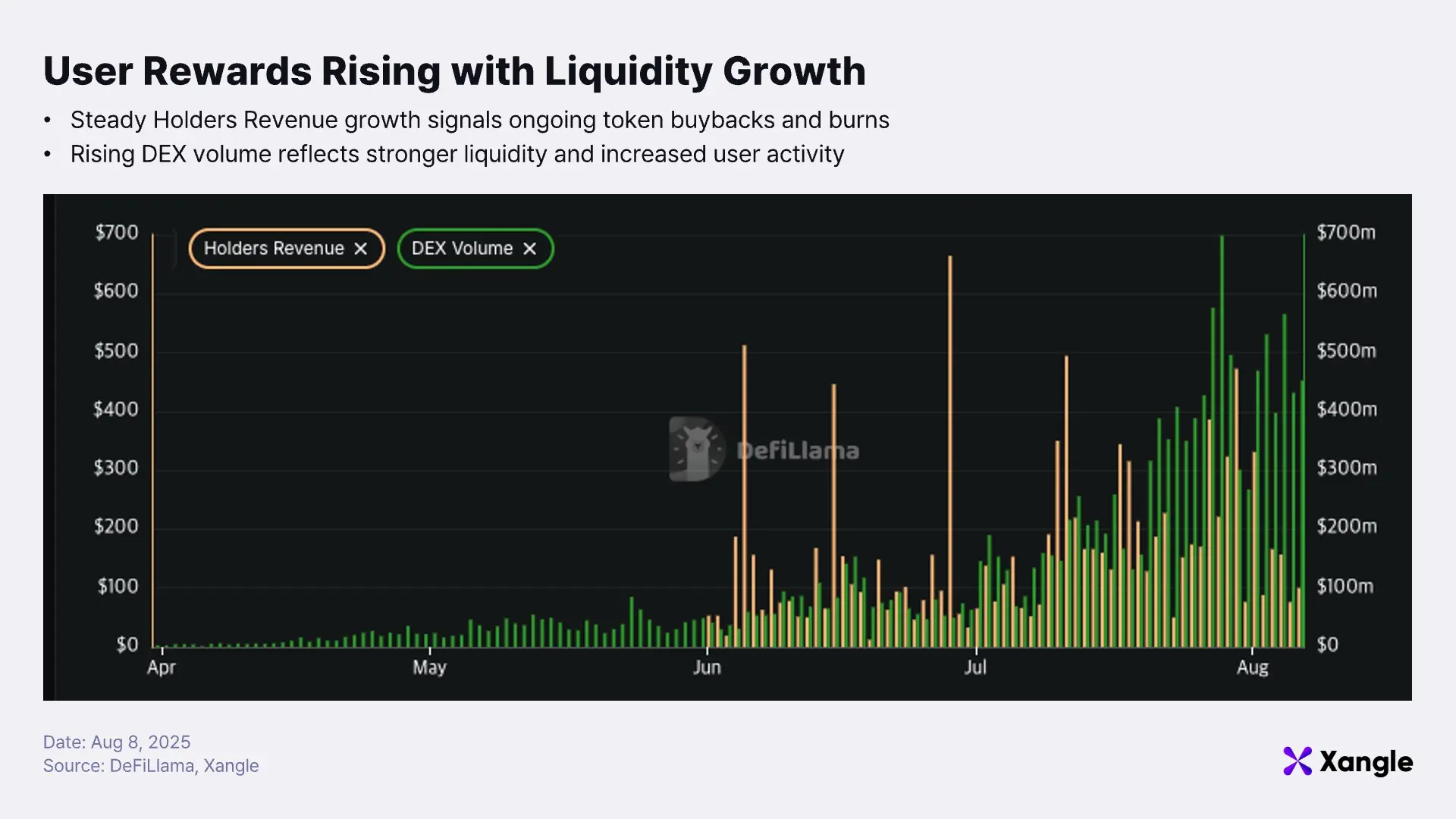
Ekubo’s revenue model also diverges sharply from that of conventional DEXs. Rather than charging traders a transaction fee, Ekubo levies a withdrawal fee only when LPs remove liquidity. This fee matches the trading fee rate of the pool and is accumulated as protocol revenue, which — subject to DAO approval — is used for $EKUBO token buybacks and ecosystem growth. The structure reduces trading costs, improving competitiveness for traders, while incentivizing LPs to keep capital deployed for longer durations, thereby strengthening liquidity depth over time. The direct correlation between trading volume growth and holder revenue has already been demonstrated, proving the linkage between protocol earnings and token value. While some LPs may initially view the withdrawal fee as a hurdle, Ekubo’s blend of superior capital efficiency, high-quality execution, and strategic liquidity management opportunities meaningfully offsets that concern.
3. Market Data Underscores Ekubo’s Growth Potential
3-1. Adoption and market share validate competitive positioning
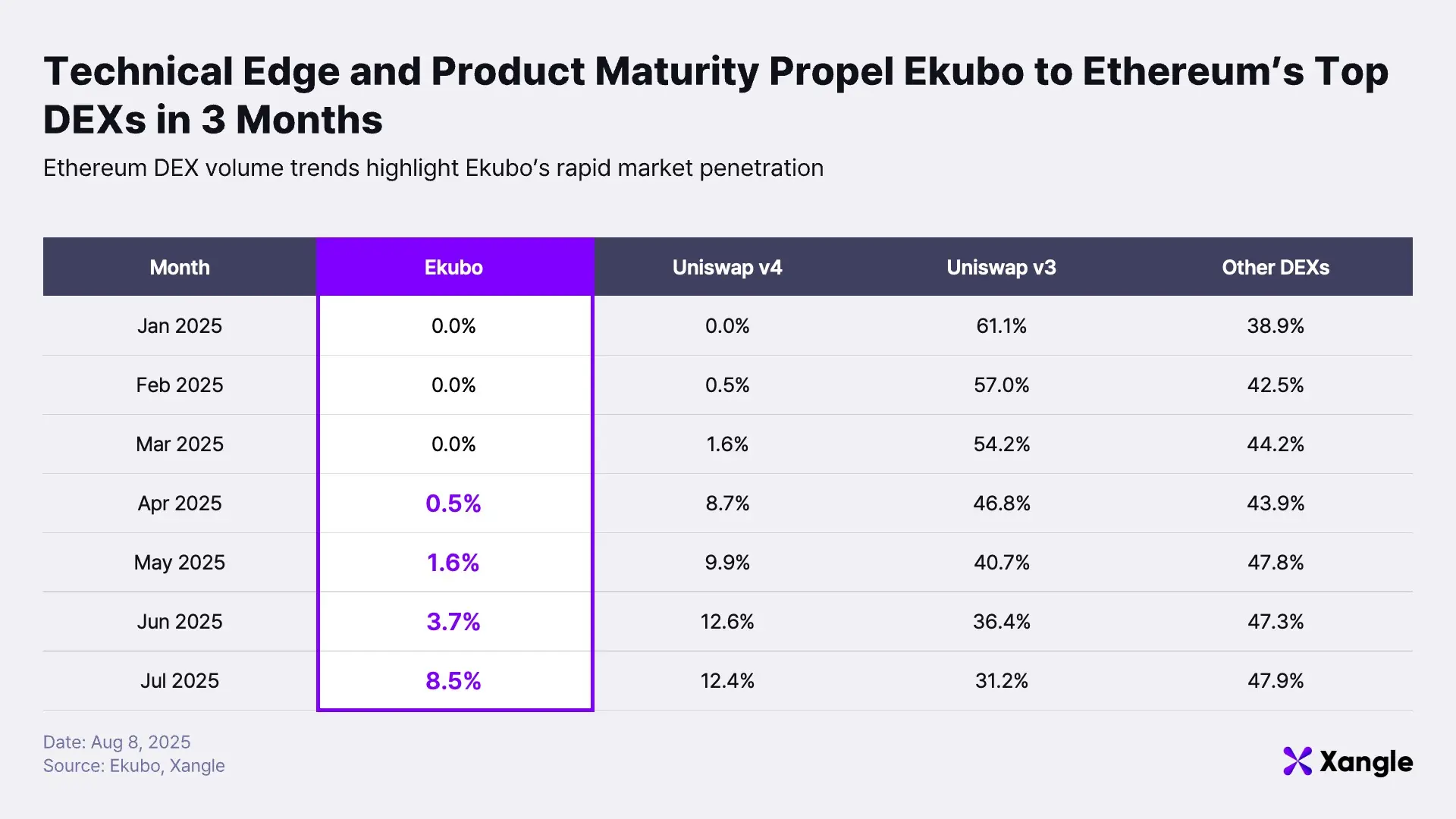
Despite originating on Starknet, an Ethereum Layer 2, Ekubo has rapidly carved out market share in an already saturated DEX landscape, attracting significant industry attention. In the first half of 2025, it entered the Ethereum mainnet around the same time as Uniswap v4. Within just three months, and without the advantage of established brand recognition, Ekubo expanded its user base to capture an 8.5% market share by trading volume.
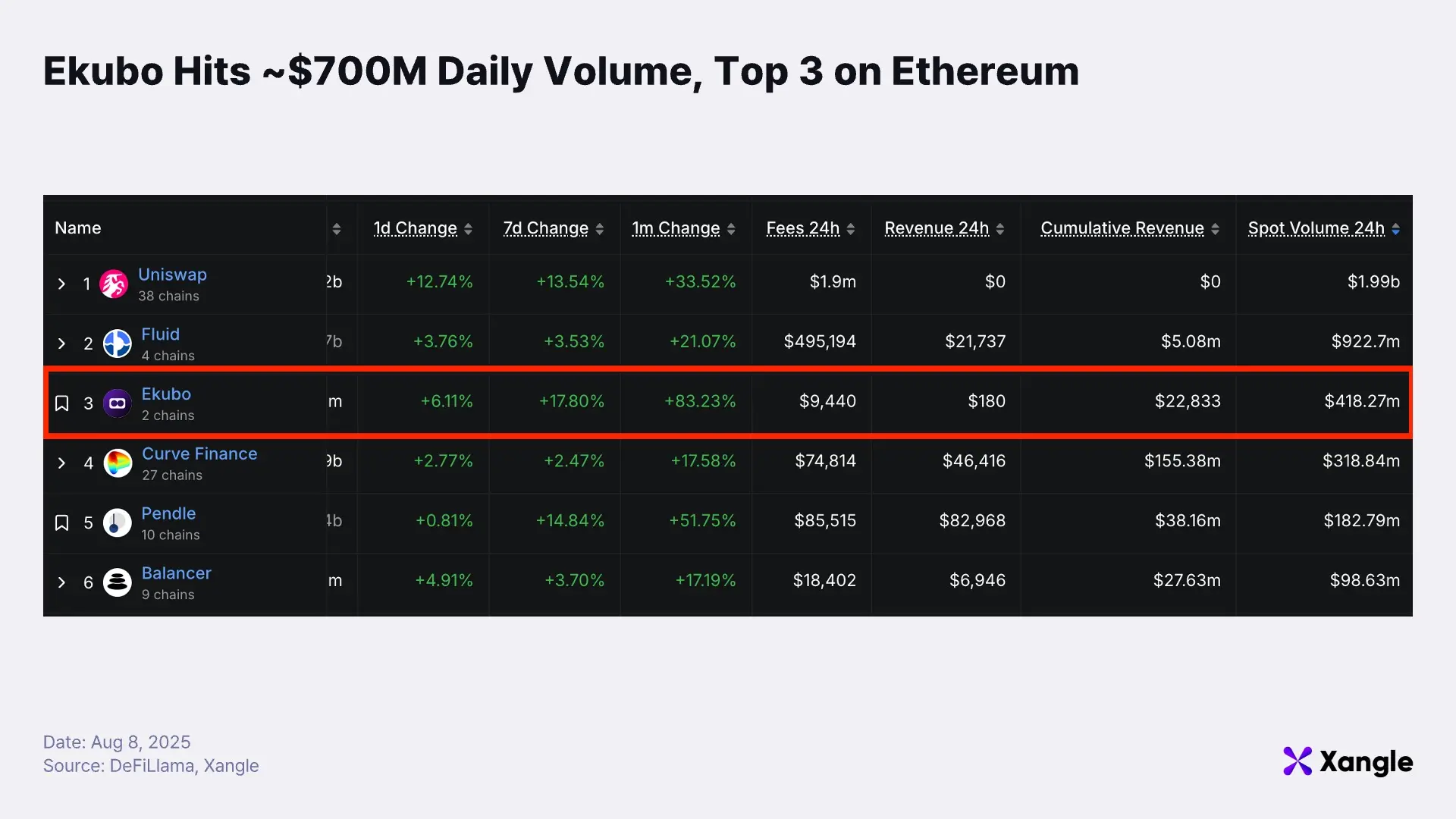
Ekubo has since ranked among the top three Ethereum spot DEXs, with daily trading volumes at times reaching as high as $700 million. By achieving measurable success in both Starknet and Ethereum, two fundamentally different environments, it has demonstrated strong technical capabilities and market fit. This ability to compete head-to-head with leading DEXs like Uniswap while pursuing performance-led differentiation has positioned Ekubo as a “dark horse” in the AMM market. Looking forward, the potential inflow of BTC via Starknet’s BTCFi initiative, including a BIP-347 and OP_CAT–based bridge, together with the expansion of its fee-based token model and the execution of ecosystem-driven strategic growth initiatives, could enable Ekubo to secure a firm foothold as a next-generation AMM.
However, this pace of growth is not without risk. Potential vulnerabilities include the single point of failure (SPoF) inherent in its singleton architecture, gas cost burdens and potential front-running risks arising from its complex nano-tick design, heavy reliance on founder Moody Salem, limited operational flexibility due to its “Permanent No-Sell” token structure, challenges in scaling beyond Ethereum, constraints in marketing reach, and susceptibility to shifts in market sentiment. To address these challenges, Ekubo is pursuing a multi-faceted strategy, strengthening code audits, optimizing gas efficiency in its nano-tick model, gradually transferring governance authority to the community, expanding strategic partnerships, and exploring alternative funding mechanisms.
3-2. Tokenomics engineered for sustainable growth
Ekubo’s tokenomics place greater emphasis on long-term ecosystem stability and robust governance than on short-term price appreciation. Beginning with its token distribution, Ekubo adopted a Time-Weighted Average Market Maker (TWAMM) mechanism for its DAO-led public sale instead of the conventional auction or whitelist model. This approach was intended to ensure fair access among participants, preventing large, single-block purchases that could trigger abrupt price spikes and allowing tokens to be acquired evenly over a set period.
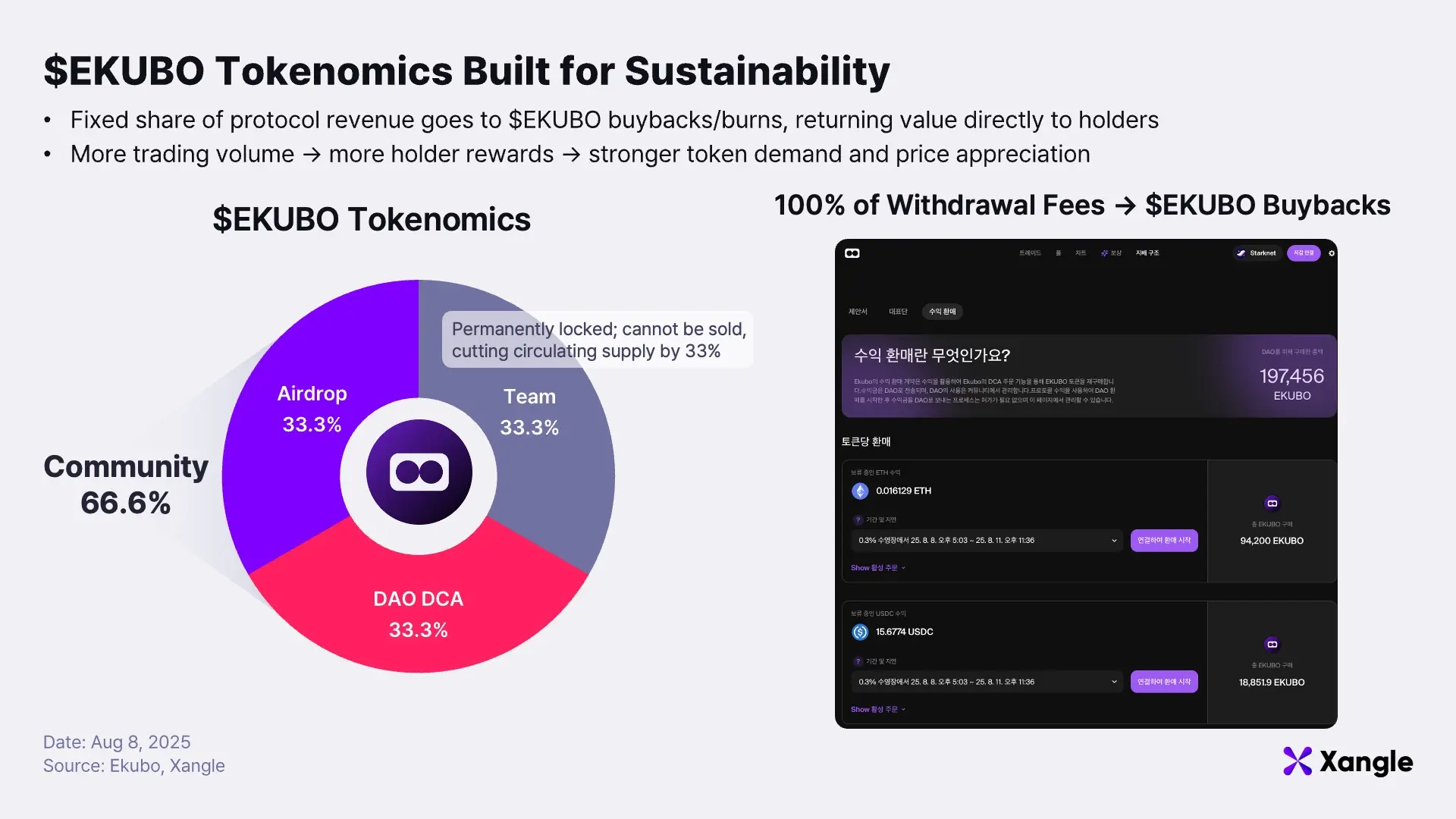
The most distinctive element of the allocation structure is the “permanent no-sell” commitment applied to the team’s share. One-third of the total token supply was allocated to the team and distributed fully unlocked at issuance. However, under a governance agreement with the DAO, these tokens can never be sold under any circumstances, eliminating the risk of insider sell pressure entirely. This design firmly aligns the team’s incentives with the long-term success of the protocol, positioning them as committed governance participants and stakeholders whose focus remains on ecosystem growth and stability.
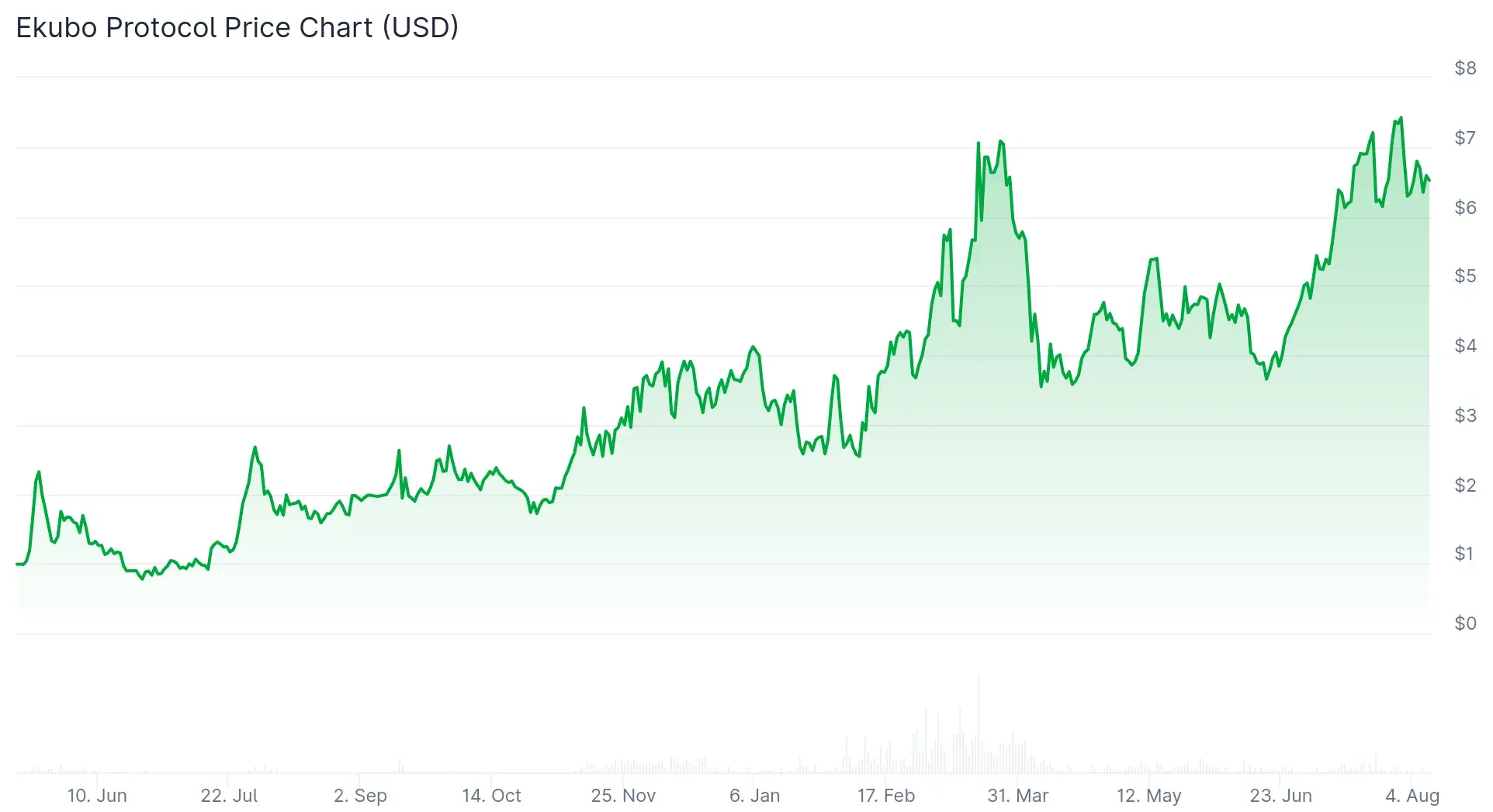
Ekubo token price chart hitting a new all-time high following steady gains after the TGE
Ekubo’s monetization structure further strengthens sustainability by directly linking protocol revenue to token value. Protocol fee revenue, upon DAO approval, is allocated toward (i) team development costs, (ii) ecosystem funding and partnerships, (iii) liquidity provider incentives, and (iv) buyback and burn of EKUBO tokens. DeFi analysts project that if trading volume scales to the $500M–$3B monthly range, annual revenue could range from several million dollars to more than $150 million — a structure that ties the token’s valuation not just to supply management but to a tangible, recurring flow of protocol earnings. This combination of design and growth expectations has driven EKUBO’s steady upward trajectory since its TGE, with the token recently surpassing its previous all-time high and attracting renewed attention from the market.
4. Ekubo’s Role in the Emerging BTCFi Era
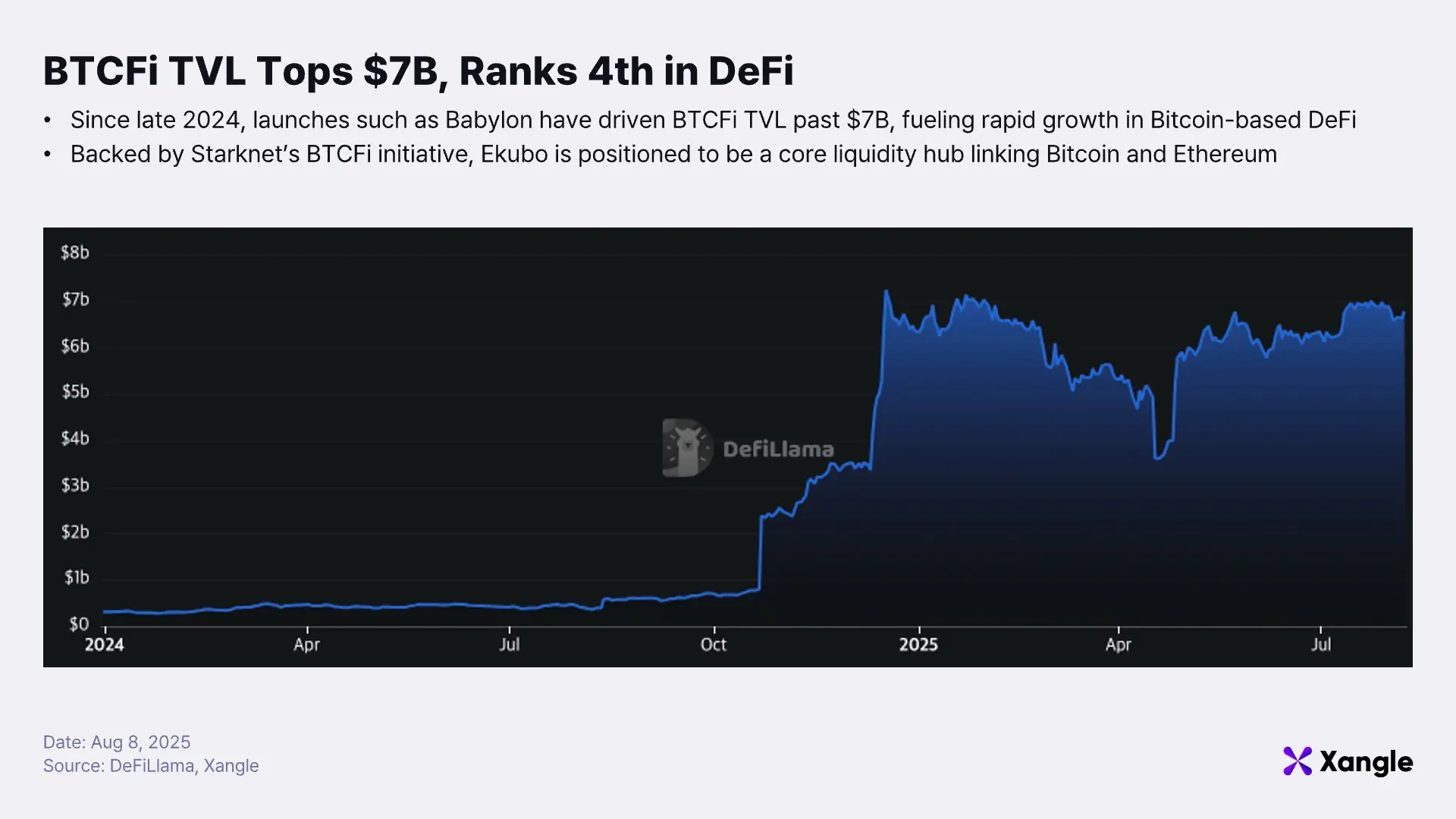
Historically, Bitcoin has been constrained by the “store of value” narrative, remaining largely on the sidelines of the smart contract–driven decentralized finance (DeFi) movement. That began to change in 2024 with the emergence of new technical possibilities such as OP_CAT, Runes, and BitVM, sparking the rapid rise of a Bitcoin-centric DeFi ecosystem now referred to as BTCFi. Protocols like Babylon, Lombard, and Solv have launched in quick succession, and by the second half of 2024, BTCFi’s total TVL had surpassed $7 billion, propelling it to fourth place among all DeFi sectors in a remarkably short period and signaling an explosive growth trajectory.
What is particularly noteworthy is how the BTCFi market is becoming increasingly intertwined with Bitcoin’s number-one market capitalization and showing signs of deepening integration with Ethereum-based DeFi. Many BTCFi protocols are being developed in Ethereum Layer 2 environments, and with institutions steadily expanding their BTC holdings, the demand for deploying BTC-based liquidity is set to grow further. Against this backdrop, Ekubo’s role extends far beyond simply enabling BTC trading. It has the potential to become both the primary liquidity hub connecting Bitcoin and Ethereum and a core transactional infrastructure for the BTCFi era.
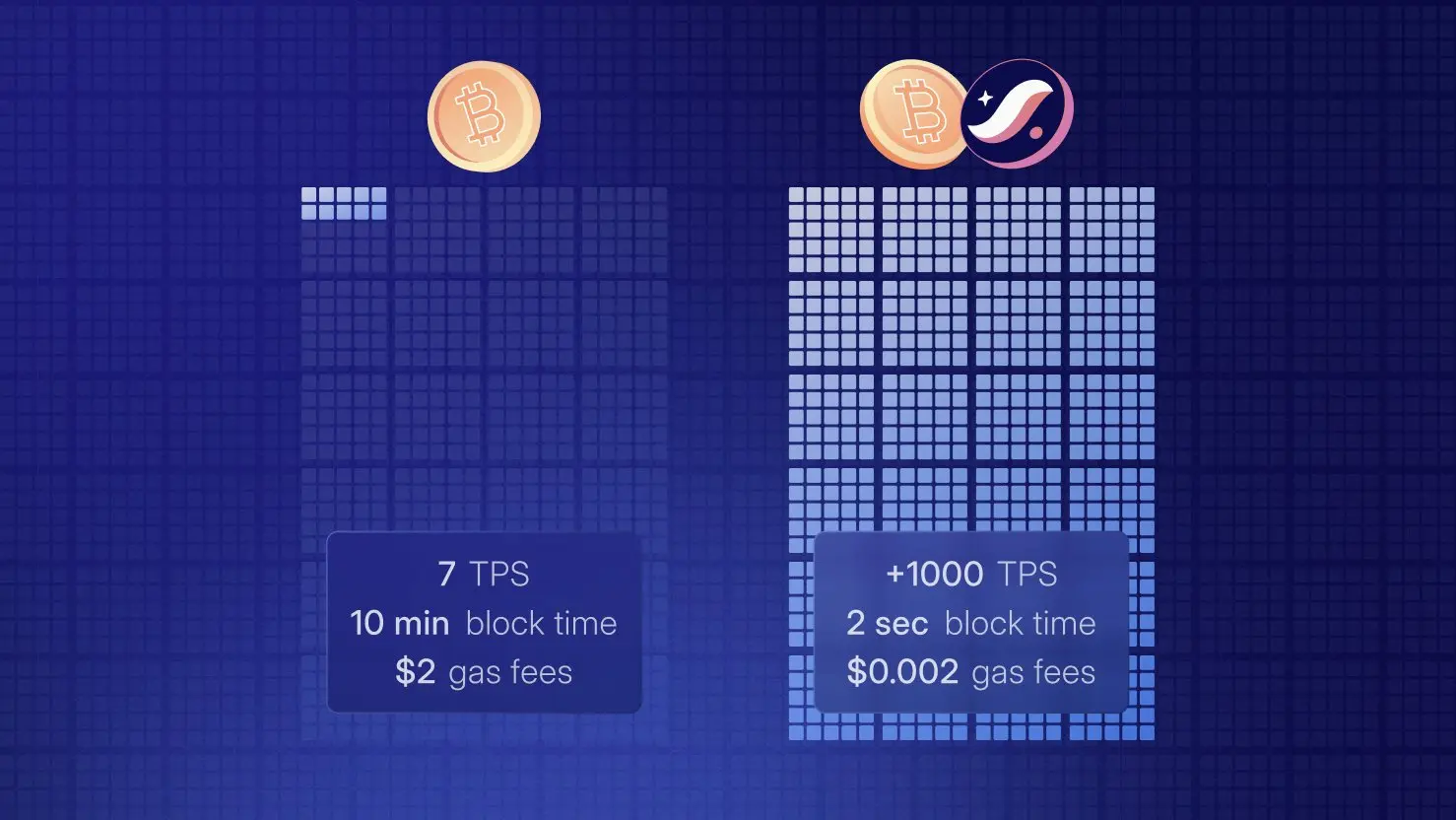
Starknet will be the very first Layer 2 settlement on Bitcoin
The Starknet Foundation has already recognized this momentum, formally announcing its “BTCFi Season” initiative to accelerate Bitcoin’s transformation from a passively held asset into one that can be actively utilized. This vision addresses “the reality that most Bitcoin remains idle in wallets and exchanges” and aligns with a strategy to use an OP_CAT–based native bridge to bring BTC on-chain as executable capital. Starknet’s combination of fast and cost-efficient transaction throughput, ZK-based security, strong compatibility with Ethereum, and native bridging infrastructure makes it an ideal execution environment for BTCFi. In effect, Starknet already possesses the structural prerequisites to serve as a decentralized financial hub where BTC-based assets can actively circulate and be put to work.
Ekubo sits at the forefront of this BTCFi movement as a core AMM protocol and stands to benefit directly from BTC inflows into Starknet. A key advantage lies in its pool factory architecture: the moment BTC-based assets are bridged into Starknet, corresponding trading pools can be created automatically. For instance, when a Rune-based bridge mints BTC-pegged assets (assets pegged to Bitcoin’s value), a single governance vote on Ekubo can deploy BTC/ETH, BTC/USDC, and other trading pairs within minutes, allowing liquidity providers to participate immediately. This design is markedly faster and more efficient than traditional AMM deployment models, ensuring that liquidity depth and trading efficiency are in place from the very moment BTC assets begin circulating.
Moreover, Ekubo’s flexible architecture is well-positioned to accommodate the evolving needs of BTCFi. Its governance timelock feature could eventually integrate with Bitcoin’s upcoming covenant functionality, enabling protocol changes on Starknet to be synchronized directly with Bitcoin. Similarly, its TWAMM (Time-Weighted AMM) functionality could mature into an institutional-grade trading solution for large BTC positions, automating gradual execution while mitigating slippage — an ideal fit for the capital deployment requirements of BTCFi’s large-scale liquidity flows.
5. Ekubo and the Next Chapter of DeFi
Originating in the Starknet ecosystem, Ekubo has demonstrated the ability to deliver exceptional trading efficiency and capital productivity even in liquidity-constrained environments, powered by its innovative architecture, including singleton architecture, nano-tick–based concentrated liquidity, and on-chain Hooks. Rather than relying on short-lived incentive programs, Ekubo has been built on structural design principles and sustainable tokenomics. This foundation has enabled the protocol, within a short period since launch, to expand beyond Starknet and rank third in daily Ethereum spot trading volume, followed by its token price reaching a new all-time high.
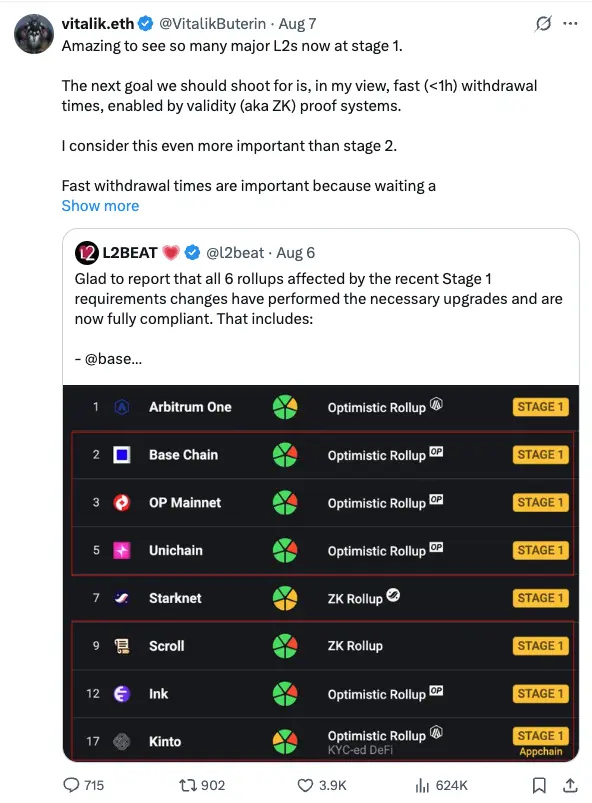
Vitalik Buterin has frequently discussed ZK technology’s potential as the "endgame" for scaling and privacy
Beyond its technical achievements, Ekubo’s rapid growth is driven by a clear strategic vision for the DeFi market. By leveraging Starknet’s ZK-rollup, which combines speed, cost-efficiency, and privacy protection, Ekubo is positioned to secure a decisive competitive advantage in an environment where large-scale inflows from whales and institutional capital are increasingly likely. If Starknet extends its reach to Bitcoin, Ekubo could serve as a critical gateway linking the financial ecosystems of Ethereum and Bitcoin. This alignment of technical innovation, ecosystem positioning, and market timing places Ekubo in a strong position to emerge as one of the most influential players in the next chapter of DeFi.
Disclaimer
I confirm that I have read and understood the following: The information contained in this article is strictly the opinions of the author(s). This article was authored free from any form of coercion or undue influence. The content represents the author's own views and does not represent the official position or opinions of CrossAngle. This article is intended for informational purposes only and should not be construed as investment advice or solicitation. Unless otherwise specified, all users are solely responsible and liable for their own decisions about investments, investment strategies, or the use of products or services. Investment decisions should be made based on the user’s personal investment objectives, circumstances, and financial situation. Please consult a professional financial advisor for more information and guidance. Past returns or projections do not guarantee future results. This article was written at the request of Starknet. All content in this article was written independently by the author(s), and neither CrossAngle nor Starknet had any editorial control or influence over the content. The author(s) may hold the cryptocurrencies mentioned in this article at the time of writing.
Xangle or its affiliated partners own all copyrights of the written or otherwise produced materials and content provided on the platform. Any illegal reproduction of such content, including, but not limited to, unauthorized editing, copying, reprinting, or redistribution will result in immediate legal actions without prior notice.
![[Xangle RWA Series] DeFi - DEX](https://resource.xangle.io/files/content/EA4C1A723876A93DDBB60B1694F2F92E_1787015213570.webp)