World Mobile, Redefining Connectivity Through DePIN

Table of Contents
1. Why Has 5G Failed to Deliver on Its Promised Coverage and Speed?
1-1. Unresolved quality issues and economic limitations of 5G
1-2. Not just Korea: Connectivity barriers span developing and advanced economies
1-3. Could Web3 unlock a new path for expanding telecom infrastructure?
2. World Mobile: Solving Connectivity Gaps Through Decentralized Telecom
2-1. AirNodes: Telecom nodes that generate real revenue based on usage
2-2. Technical flexibility proven in the field — Even by SpaceX’s Starlink engineers
2-3. EarthNodes: Blockchain infrastructure for fair and transparent rewards
3. Evaluating WMTx Tokenomics and Node Profitability
3-1. Incentive mechanisms that reward users
3-2. A token value mechanism linked to real revenue
3-3. Is node investment profitable?
4. Korea Market Entry Strategy and Future Challenges
4-1. Validating a security- and privacy-centric telecom model for developed markets
4-2. Key challenges for long-term business sustainability
5. Closing Statement
1. Why Has 5G Failed to Deliver on Its Promised Coverage and Speed?
In May 2023, South Korea’s Fair Trade Commission imposed a total fine of 33.6 billion KRW (~$25 million) on the country’s three major telecom providers—SKT, KT, and LG U+—after finding that actual 5G speeds were up to 25 times slower than advertised. Operators had marketed eye-catching slogans like “20Gbps—20 times faster than 4G LTE,” suggesting that a 2GB HD movie could be downloaded in just 0.8 seconds. In practice, however, users experienced speeds averaging only 0.8Gbps.
This disparity stemmed from the premature commercialization of 5G, launched before the underlying infrastructure was ready. From the operators’ perspective, pressure was mounting. In the global race to secure the title of “world’s first 5G commercial launch,” South Korea pushed its rollout ahead of the U.S. and China—activating service just two hours earlier to claim the lead. But this symbolic victory came at a cost: the launch rested on an incomplete infrastructure and quickly drew widespread criticism over service quality.
Technically, nationwide deployment of 5G is far more demanding than that of previous generations. 5G relies primarily on high-frequency spectrum above 28GHz (millimeter wave, or mmWave), in contrast to 4G/LTE networks, which used sub-3GHz frequencies. These higher frequencies enable faster data transmission but come with trade-offs: shorter range and greater vulnerability to obstacles. Signals can be blocked by buildings—or even by the human body—requiring a much denser network of base stations and repeaters to ensure stable coverage. This leads to significantly higher infrastructure costs, creating a structural barrier to widespread adoption.
Even in a geographically compact country like South Korea, these physical constraints caused noticeable service degradation. After focusing initial deployments in urban centers, operators were forced to continue installing small-cell base stations and repeaters over an extended period to close coverage gaps. In short, 5G’s high-speed capabilities are structurally tied to steep costs and labor-intensive infrastructure buildouts.
So, where does 5G performance stand today? While the theoretical speeds touted at launch remain out of reach, South Korea has made substantial progress through continued infrastructure investment. As a result, it now ranks first globally in average 5G speeds.
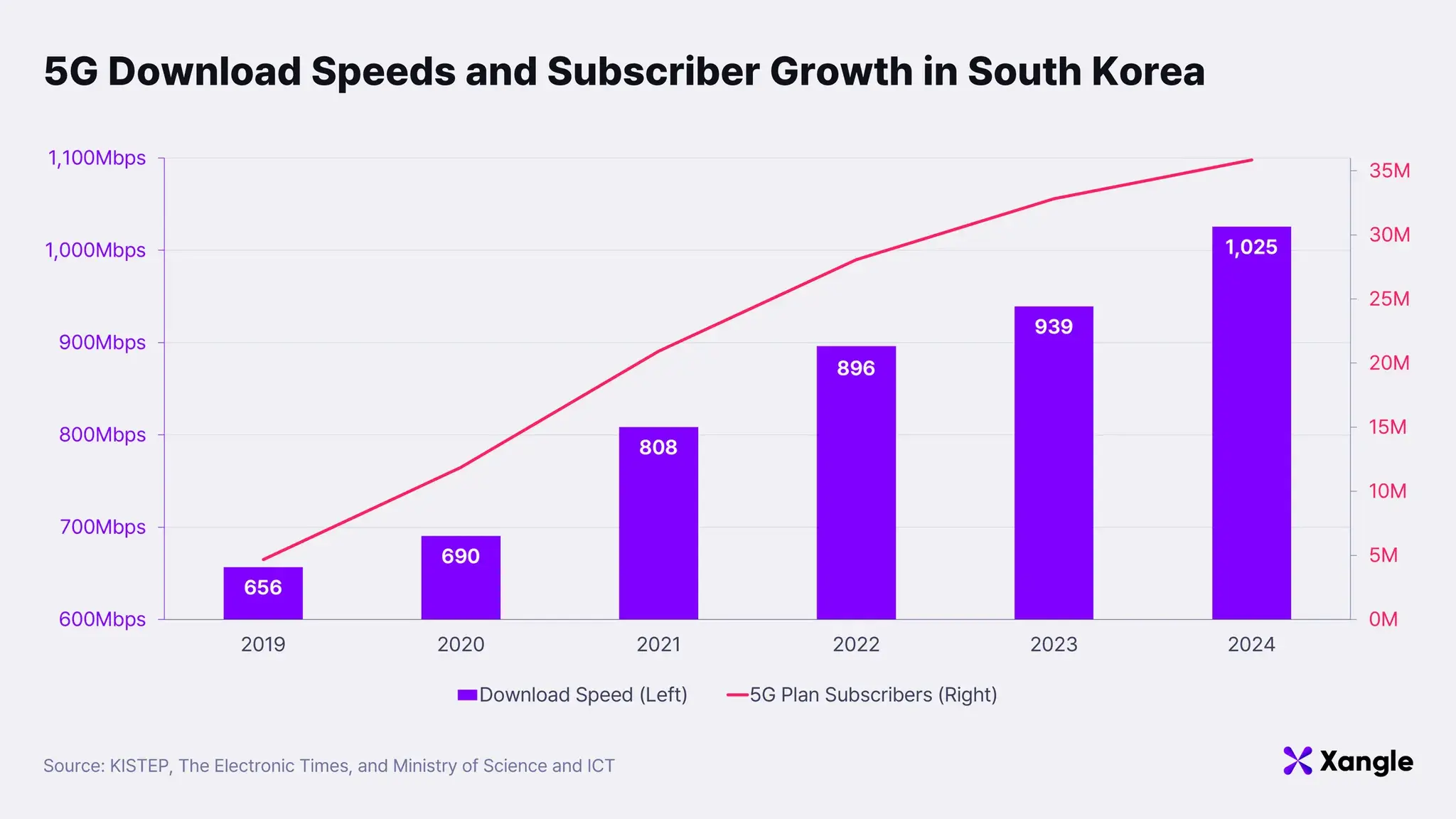
(As of 2024, South Korea’s average 5G download speed is more than three times faster than the average across seven other countries—including the U.S., Canada, Germany, and Japan—and 1.8 times faster than Norway, the top performer among them at 584.14Mbps.)
1-1. Unresolved quality issues and economic limitations of 5G
Despite ongoing improvements, 5G quality issues from the user’s perspective remain far from fully resolved. While outdoor networks have approached nationwide coverage in South Korea, service quality continues to degrade sharply in indoor environments—such as buildings and subways. This reflects a structural limitation inherent to high-frequency 5G: the denser the population, the more granular equipment deployment and signal tuning are required to maintain service quality.
At the same time, growing concerns about the economic feasibility of continued infrastructure investment are emerging, particularly as 5G subscriber growth slows. Indoor repeaters pose a notable challenge, as uncontrollable variables, such as building layout, density, and architectural materials, make indiscriminate investment increasingly difficult for telecom providers. In response, operators have adopted a targeted approach, installing small-scale repeaters only in areas with concentrated user complaints. Achieving the next generation of communication infrastructure will require both highly adaptable network architectures and compatible hardware. However, in the absence of a clear return on investment, further infrastructure expansion is likely to stall.
This dynamic leads to a negative feedback loop: delays in network quality improvements hinder the rollout of new services and large-scale, data-intensive applications, ultimately stifling innovation before it can scale.
1-2. Not just Korea: Connectivity barriers span developing and advanced economies
These limitations are not confined to South Korea. The dense infrastructure required by high-frequency 5G networks presents even greater obstacles in countries with vast territories or underdeveloped infrastructure.
In the United States, for example, the sheer size of the landmass and dispersed population make widespread base station deployment logistically and economically challenging. As a result, rural and remote areas often lack even basic 4G/LTE coverage, let alone 5G. While cities like New York and San Francisco do enjoy high-speed connectivity, such coverage is limited to specific urban zones.
In developing regions such as Africa and Southeast Asia, the situation is often more pronounced. Many areas still lack foundational telecommunications infrastructure, with some communities unable to access even basic internet services. High-frequency 5G is ill-suited to these environments, and the capital expenditure required to deploy it becomes an even greater barrier. Under the current centralized telecom infrastructure model, achieving truly global coverage remains out of reach.
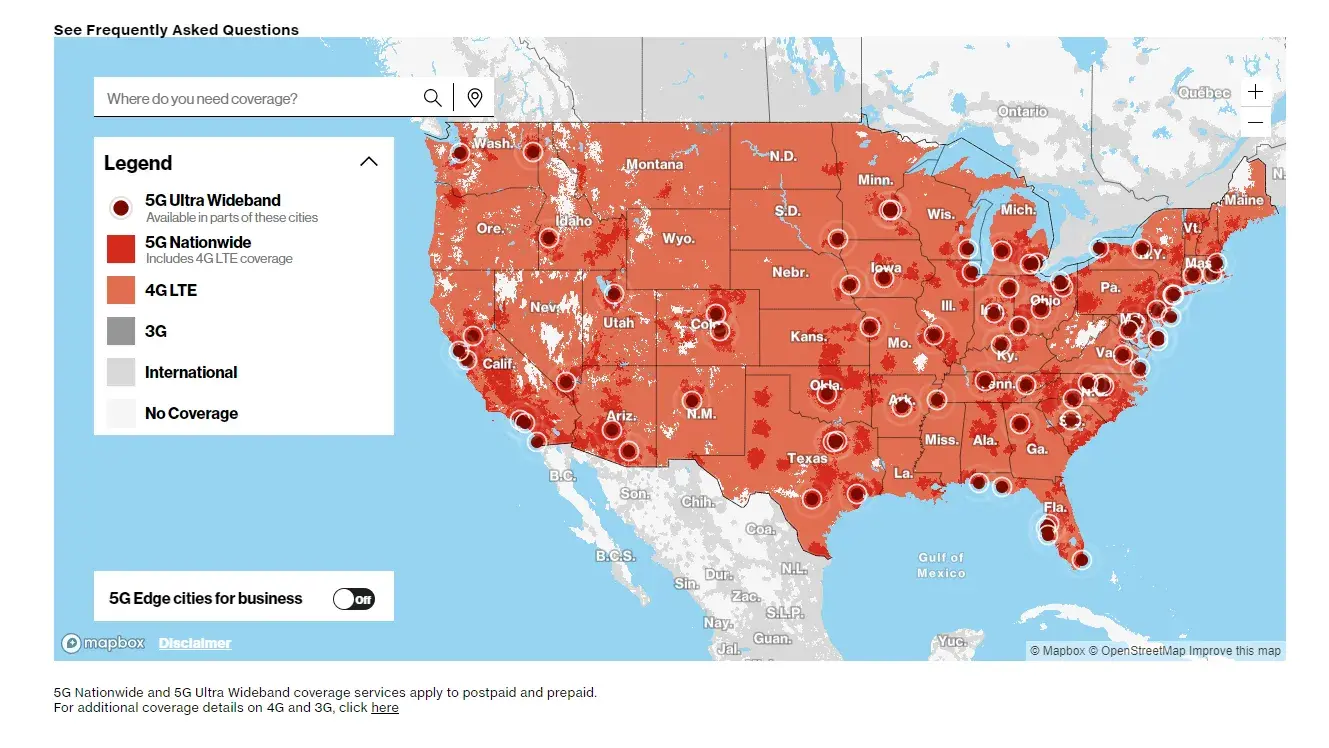 Source: Top Ten Reviews – U.S. 5G coverage remains concentrated in dark red urban zones
1-3. Could Web3 unlock a new path for expanding telecom infrastructure?
Overcoming the persistent economic and technical barriers to telecom expansion demands a fundamentally different approach. One potential solution lies in the decentralized incentive mechanisms enabled by Web3.
Imagine a model in which telecom nodes are purchased and operated by individuals or local communities—earning revenue based on actual network usage. Alternatively, consider a system where investors fund infrastructure deployments in underconnected areas and receive a share of the generated income. These frameworks point toward the possibility of autonomously expanding, distributed telecom networks, driven by bottom-up incentives rather than centralized planning.
World Mobile represents a live case study of this model. With the mission of connecting the world’s “unconnected,” it sells node infrastructure to individuals, empowers them to operate localized telecom services, and redistributes revenue to both node operators and token holders.
While regulatory and infrastructural constraints in developed markets like South Korea may limit direct participation in telecom deployment, investment-based participation in global node infrastructure remains a viable entry point. Such involvement could contribute meaningfully to this new model of telecom expansion—and may open the door to other regionally tailored forms of engagement.
What sets World Mobile apart from traditional telecom operators? And how does it leverage technology and token-based incentives to build scalable, user-operated infrastructure? This report explores the model’s architecture, mechanisms, and broader potential in depth.
2. World Mobile: Solving Connectivity Gaps Through Decentralized Telecom
Even today, nearly half the world’s population—billions of people—remain disconnected from the internet. The issue isn’t technological but economic: telecom companies have no incentive to invest in low-profit, high-cost regions like rural, coastal, mountainous, or desert areas. As a result, connectivity has remained largely confined to urban centers, while vast areas of the world remain in ’telecom blackouts’.
But the growth potential in these underserved regions is enormous—if only connectivity were available. With network access, residents could engage in remote learning, access Web3 financial tools like DeFi, or use internet banking services. In fact, research shows that a 10-percentage-point increase in mobile broadband penetration correlates with a 2.5% increase in Africa’s per capita GDP. Applied to Africa’s total GDP of $2.6 trillion, that equates to an additional $65 billion in economic value.
(International Telecommunication Union. (2019). Economic contribution of broadband, digitization and ICT regulation: Econometric modelling for Africa.)
World Mobile aims to unlock that value through a decentralized telecom infrastructure that anyone, anywhere can install and operate—allowing participants to share in the value they help create. At the core of this vision are the AirNodeand EarthNode, which deliver both network connectivity and trust-based reward systems, embodying a true Telecom DePIN (Decentralized Physical Infrastructure Network).
2-1. AirNodes: Telecom nodes that generate real revenue based on usage
AirNodes provide the core network connectivity in World Mobile’s architecture. These nodes support a range of services—from cellular voice and SMS to internet access—and can be purchased via the World Mobile platform. Anyone can become an operator by following official installation guidelines. Even without technical expertise, users can participate as long as they have a stable power supply and internet connection. This makes it possible to deploy telecom infrastructure virtually anywhere—and generate revenue in the process.
Importantly, participation isn’t limited to node operators. Individuals can also join as investors. For example, a Korean user can purchase a Spark Node, which is then deployed by World Mobile in underserved areas of Pakistan. Local residents use the network for internet access, and usage-based revenue is distributed to the investor. This structure allows contributors to support global telecom development—and earn recurring income—without directly installing the hardware. At present, AirNodes are sold out, and Spark AirNodes for Pakistan are periodically released on a first-come, first-served basis.
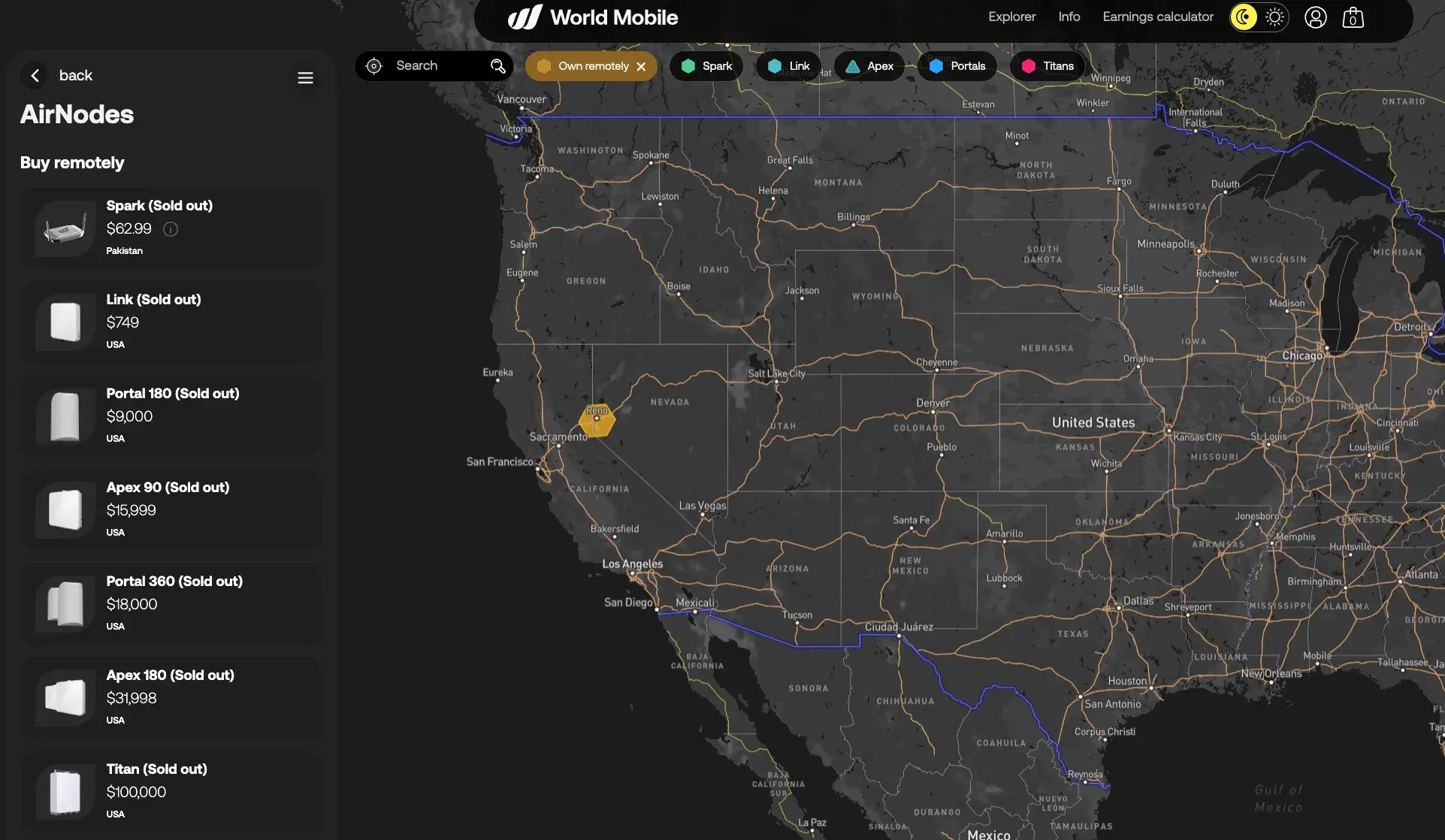 Source: World Mobile – Active AirNode Listings
In the U.S., World Mobile has expanded further, offering telecom plans through its own network and in partnership with established carriers—generating revenue in a structure similar to traditional telecom operators. The company also provides global data plans and travel eSIMs that work across approved carrier networks in supported countries. As of now, the travel eSIM supports 52 countries—including South Korea, which was recently added through partnerships with SKT and KT.
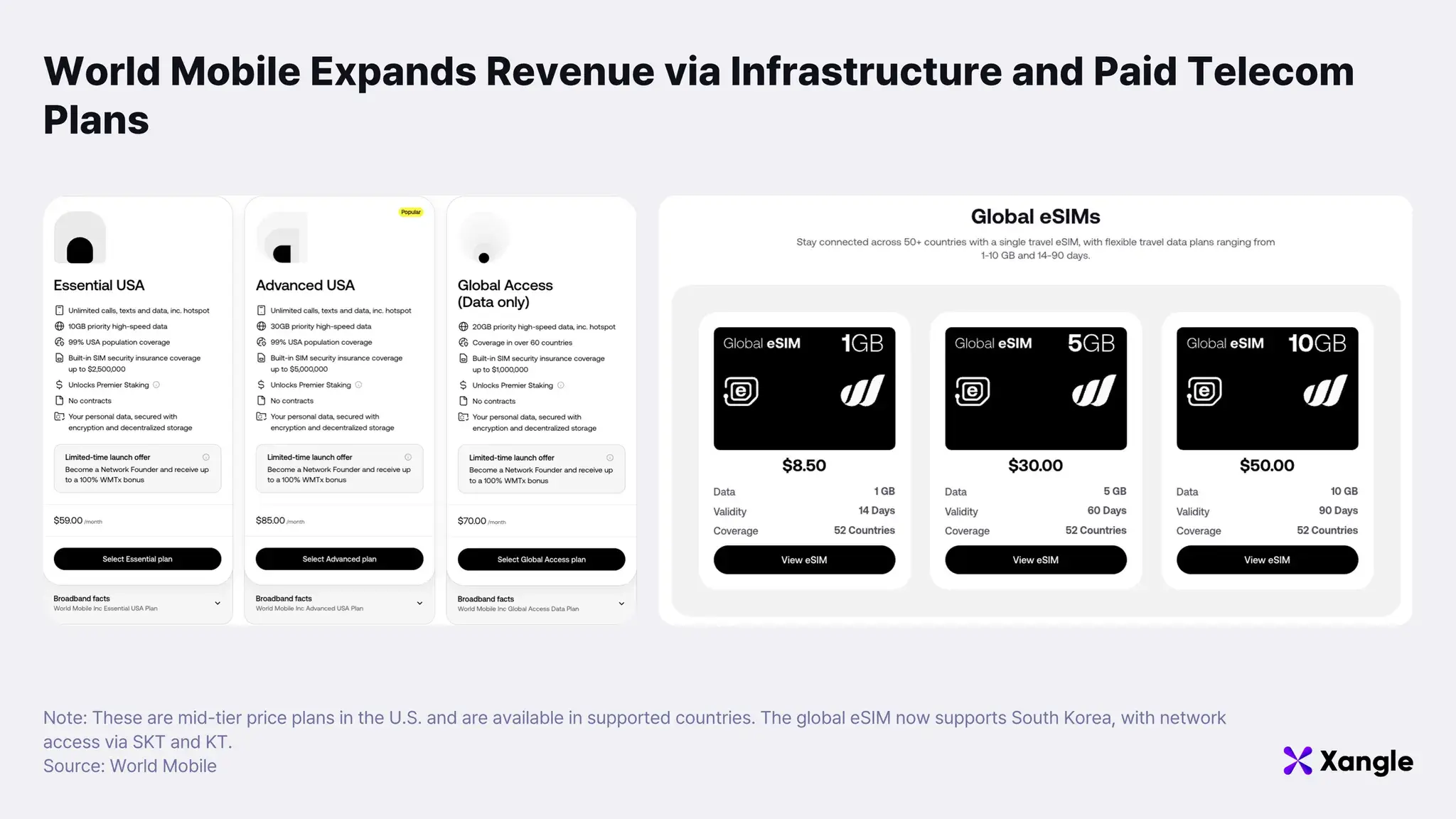
Performance data related to node deployments and plan sales is publicly available on the World Mobile Dashboard. As of June 2025, the project had: Over 2 million daily active users, more than 45,000 AirNodes sold, and a total network data throughput exceeding 760 TiB per day—the equivalent of downloading 194,560 HD movies (4GiB each) every 24 hours.
These figures demonstrate that World Mobile is evolving beyond its initial infrastructure buildout phase and transitioning into a real operational global telecom provider.
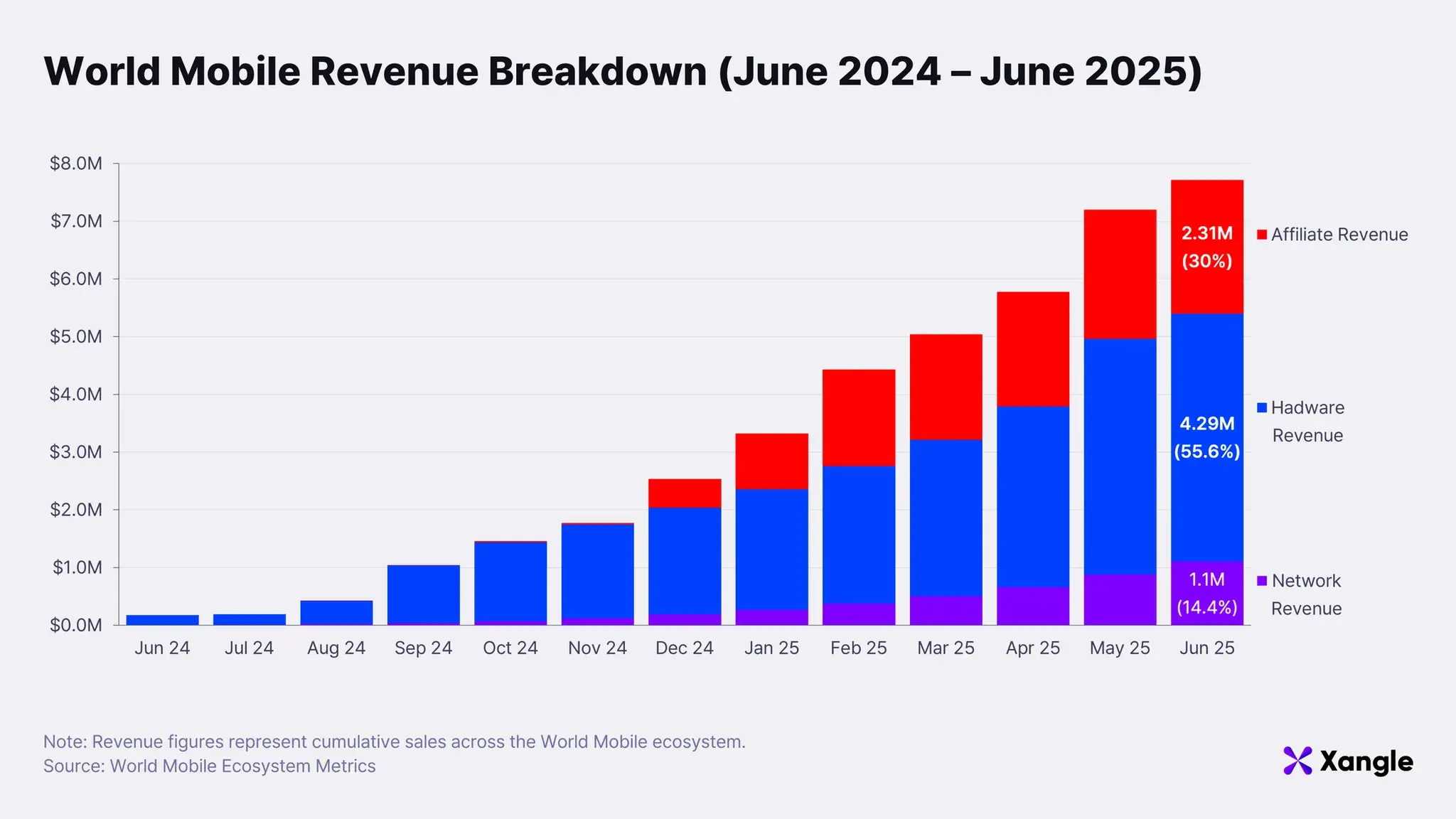
Revenue data further supports this growth. Over the past year, total ecosystem revenue surged from $170,000 to $7.71 million, which is a 42-fold increase. While early revenue was largely driven by AirNode sales, service-based income is gaining traction. As of June 2025, $1.1 million, or 14.4%of total revenue, was generated from telecom plan usage, a figure that continues to rise steadily. Affiliate program income, awarded for referring new users to World Mobile’s services and products, is also growing—highlighting the active participation of real users in expanding the ecosystem. This visible connection between physical network expansion and tangible economic value confirms that World Mobile’s business model is not only viable but actively scaling.
2-2. Technical flexibility proven in the field — Even by SpaceX’s Starlink engineers
World Mobile’s accelerating revenue growth can be attributed to two key factors: its technological flexibility and aggressive international expansion. Rather than merely promoting a vision, the team is demonstrating the real-world viability of decentralized telecom through on-the-ground deployments. The project is designed for accessibility and cost-efficiency. Infrastructure is built using off-the-shelf commercial hardware, eliminating the need for costly custom components. This enables fast, low-cost rollout—even in remote areas. To ensure sustainability, World Mobile also supports renewable power sources such as solar energy, allowing nodes to operate in regions with unreliable electricity access.
World Mobile tailors its tech stack to each region’s specific needs—combining different telecom technologies as required. In Mozambique, it deployed high-altitude aerostat balloons, launching Africa’s first aerial telecom network. In North Carolina, where communications were disrupted by Hurricane Helen, World Mobile restored service by integrating Starlink’s satellite internet with AirNodes—rapidly reestablishing connectivity in the disaster zone.
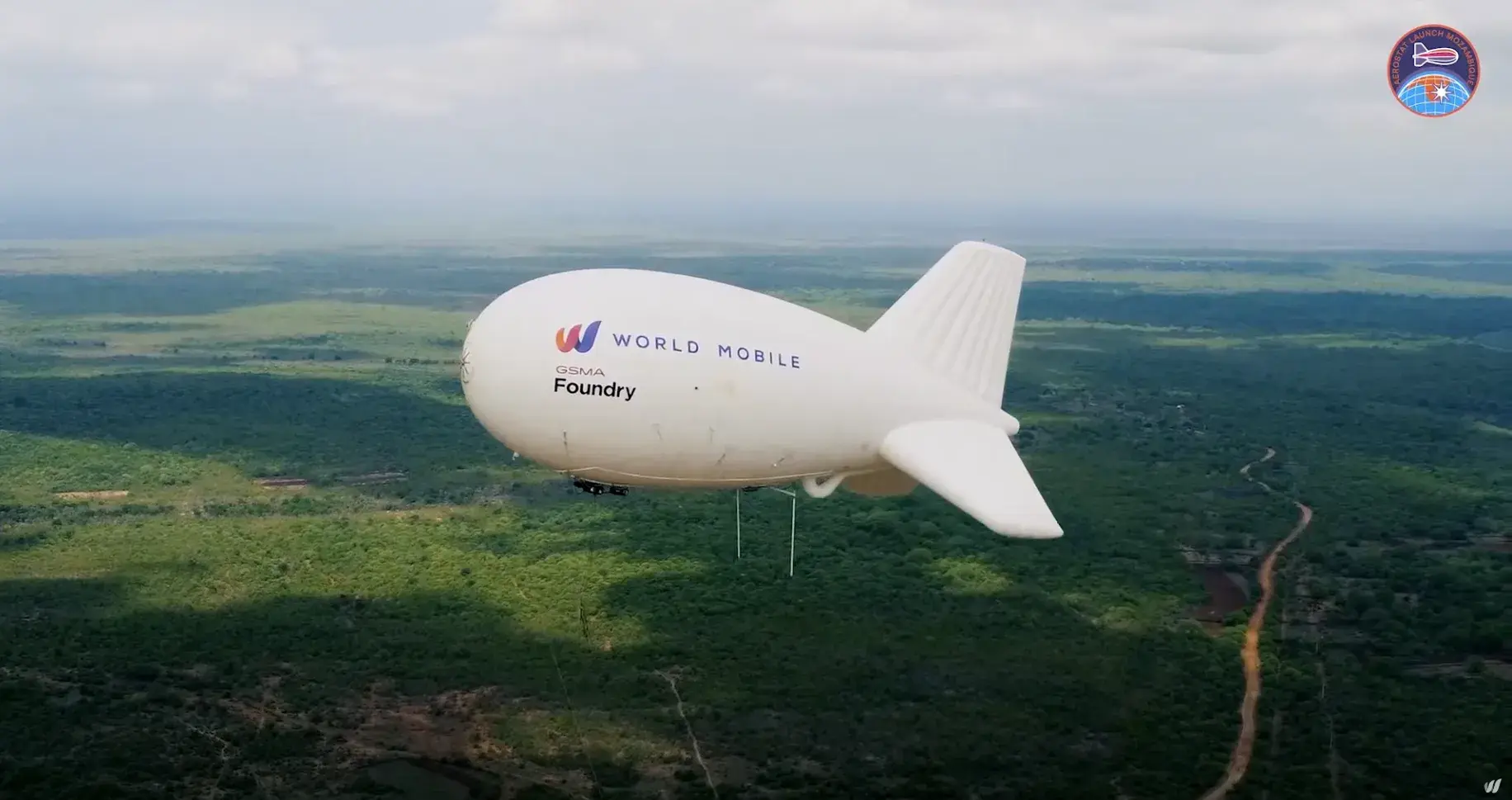 Source: World Mobile YouTube – Aerostat AirNode in the skies over Mozambique
During the North Carolina recovery effort, Mike Coryell, an engineer from SpaceX’s Starlink team, volunteered on-site and helped connect World Mobile’s system to the Starlink satellite network. He praised the project’s flexible design and forward-looking vision, noting that AirNodes allowed for more efficient satellite utilization, requiring fewer Starlink relays to cover the same area. He also emphasized that, unlike traditional carriers, which often face delays in disaster recovery, World Mobile’s adaptable architecture enabled faster service restoration.
Despite operating in a harsh environment, the combined AirNode-satellite setup proved to be highly efficient and scalable. These field deployments continue to validate World Mobile’s decentralized model, not just in theory but in practice.
Beyond satellite integration, the platform supports a wide range of complementary technologies—including Free Space Optics (FSO), mesh networking, TV white space, and CBRS spectrum. This allows World Mobile to deliver robust coverage even in regions where conventional connectivity has long been considered infeasible.
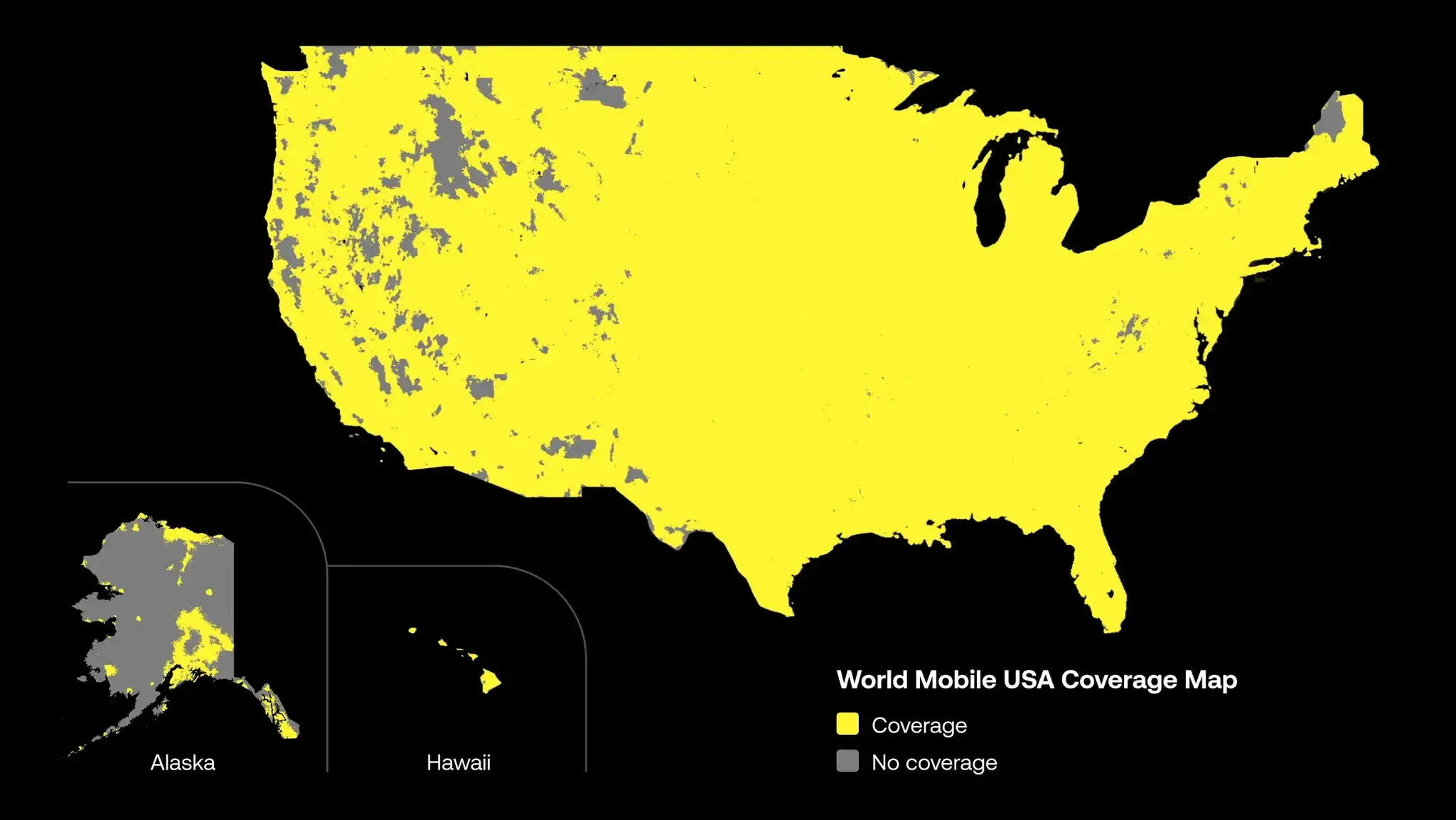 Source: World Mobile – Coverage map of U.S. residential network zones
2-3. EarthNodes: Blockchain infrastructure for fair and transparent rewards
If AirNodes deliver telecom connectivity to users, EarthNodes serve as the backbone of the World Mobile network—processing telecom activity, validating transactions, and powering the reward system. These nodes do not collect personal data. Instead, they record anonymized traffic data—voice minutes, messages, data usage, and wallet activity—which forms the basis for usage-based billing and token distribution. More than just a connectivity layer, EarthNodes enable a trust-based economic model, fusing telecom revenue with blockchain infrastructure.
EarthNodes are not open to just anyone. World Mobile has issued a fixed supply of 1,000 EarthNode NFTs (ENNFTs), which confer the right to operate a node. Initially priced around $3,500 USD, ENNFTs are now traded at significantly higher valuations—reflecting both scarcity and strong income potential. ENNFT holders can run an EarthNode and earn WMTx token rewards, proportional to the node’s traffic volume and total network activity. Rewards are not fixed but scale dynamically based on real usage, aligning operator incentives with network growth.
Let’s examine the technical architecture and revenue mechanics that power this model.
1) A Layer 3 blockchain built for telecom — WMC powered by Arbirum Orbit
World Mobile initially launched as a decentralized application (dApp) on Cardano (ADA). However, to more effectively process telecom-specific data, it later developed a dedicated blockchain: the World Mobile Chain (WMC). Technically, WMC is categorized as a Layer 3 blockchain. It executes transactions using Arbitrum Orbit, and **submits the results to Base—Ethereum’s Layer 2 network—**for settlement. Ethereum functions as the final settlement layer for Base, meaning that WMC, built on top of Base, inherits Ethereum’s security guarantees indirectly. This structure enables WMC to achieve high performance and scalability on its own chain, while benefiting from the trust and security of the Ethereum mainnet.
In terms of performance, WMC is designed to meet the demands of real-world telecom environments. It achieves an average block time of approximately 0.3 seconds and can process over 7 million transactions per day. Internal testing has demonstrated throughput of 544 transactions per second (TPS)—well above typical public blockchain performance. While top-tier telecom providers may require tens of thousands of TPS, WMC addresses this gap by processing data off-chain. Telecom traffic is aggregated and batched off-chain, with only DACerts (Data Availability Certificates)submitted on-chain to attest to the data. This structure enables WMC to handle high-volume data efficiently while benefiting from the security guarantees of Ethereum.
EarthNodes play a much broader role than standard validating Nodes. They function as distributed data centers, bridging traditional telecom infrastructure with blockchain systems. In addition to processing transactions, EarthNodes manage decentralized identity (DID) functions—enabling telecom services without reliance on costly centralized servers. Users’ telecom activity is immutably recorded on-chain, while their identity is protected through DID protocols. This ensures the system remains transparent, tamper-proof, and privacy-preserving.
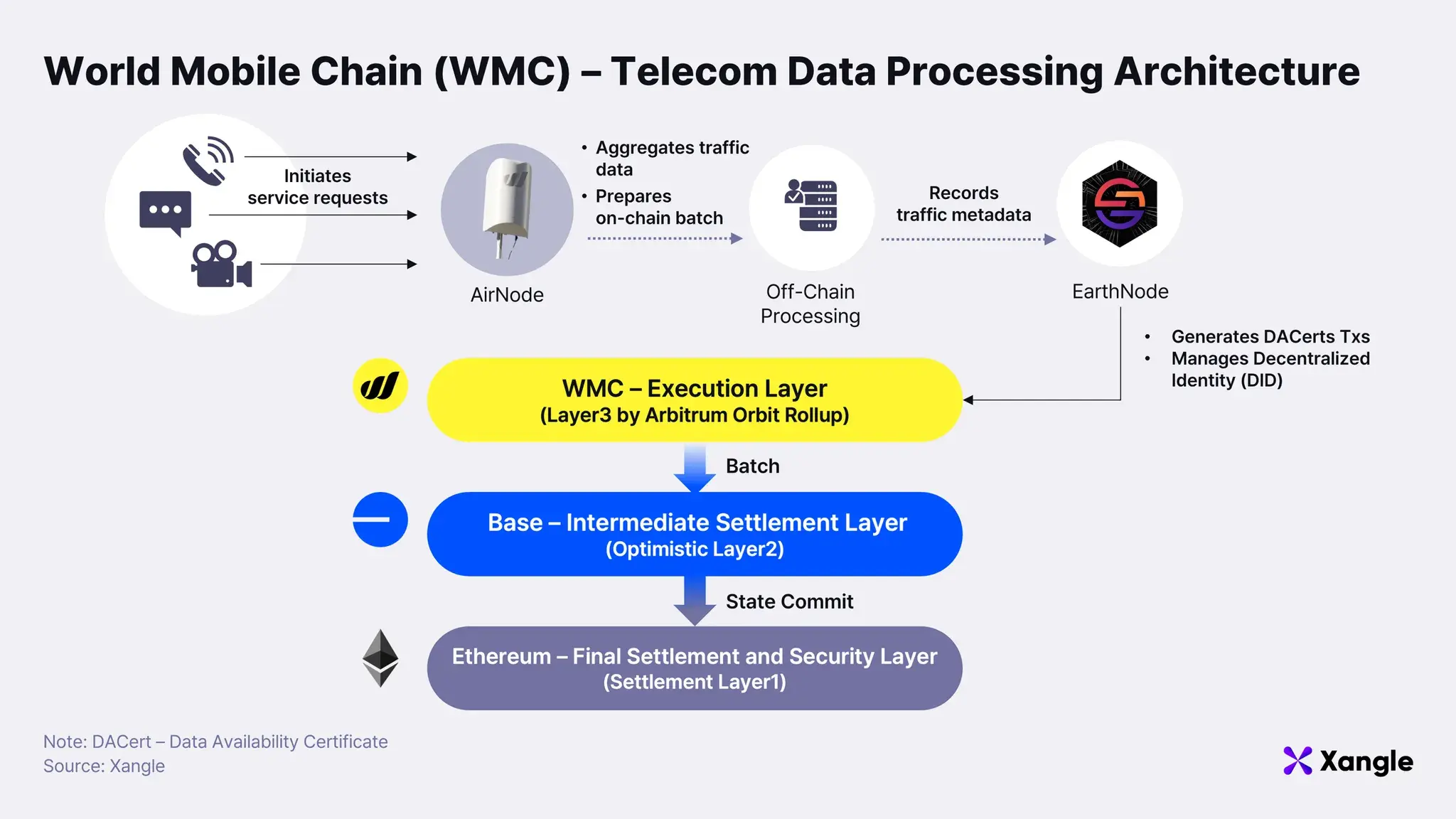
The World Mobile Chain (WMC) is currently operating in its testnet phase. EarthNode Operators (ENOs) are using the Aya Testnet to examine the system architecture, refine their node setup, and ensure stable performance ahead of full deployment. Once the mainnet goes live, EarthNodes will begin validating blocks and receive WMTx token rewards in return.
But where does this validator revenue come from?
2) EarthNode rewards are tied to real telecom revenue
World Mobile distinguishes itself from most blockchain projects by offering actual telecom services, not just token-based incentives. Revenue generated from those services—mobile plans, data usage, and Wi-Fi connectivity—is redistributed across the network. At the heart of this structure are the EarthNode Operators (ENOs), who are not merely validators, but active participants in the operation of a global telecom infrastructure.
ENOs are rewarded in WMTx, the native token of the WMC ecosystem, based on the volume and quality of traffic processed by their node and the overall activity of the network. This reward is not inflationary. It originates from real-world telecom revenue. Specifically, World Mobile buys back WMTx on the market using fiat-based service revenue and redistributes those tokens to operators. In effect, on-chain rewards are directly backed by real economic activity, not by speculative token issuance.
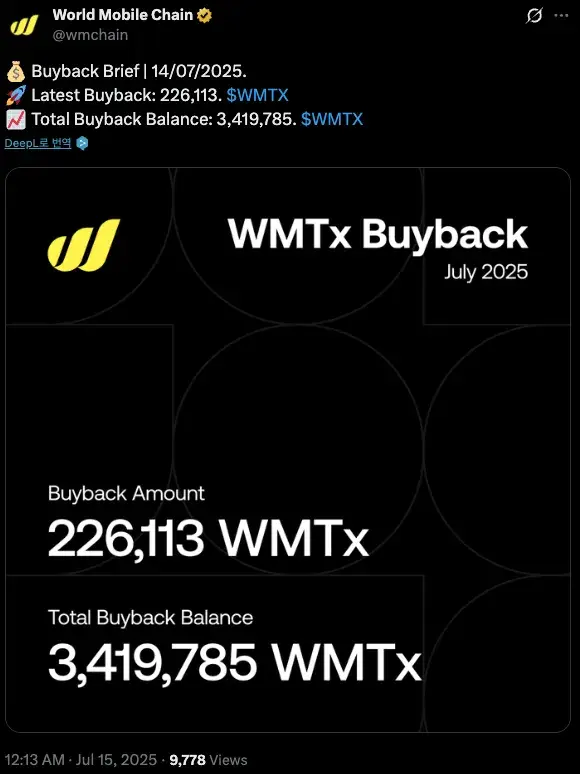 Source: World Mobile X – World Mobile regularly discloses WMTx buyback volumes.
EarthNodes process traffic that occurs on the telecom network and record those interactions on-chain, forming the foundation of the project’s transparent billing system. Importantly, none of the data logged contains personal information—it simply reflects proof that the network was used. This ensures strong guarantees in both security and privacy. To summarize: whenever users consume data, it becomes a telecom transaction, which is then translated into a rewardable on-chain record. The more users and more traffic a node handles, the greater the earnings for the operator.
WMTx token holders can also participate indirectly in the network’s revenue model. By staking their WMTx to a specific EarthNode Operator, they are entitled to a share of the revenue generated by that node. In other words, it is possible to engage in the economic activity of the network and receive rewards without directly operating a node.
EarthNode Operators in World Mobile are more than just blockchain validators who receive rewards for processing blocks. They function as verifiers of real-world telecom service delivery and distribution, recording usage and receiving a share of actual telecom revenue. This structure exemplifies how blockchain infrastructure can move beyond abstract decentralization to become directly integrated with real economic activity. In essence, the source of EarthNode revenue is real telecom business income, and World Mobile’s foundation lies in transparently distributing that revenue to global participants through a combination of blockchain and shared-economy principles.
Although World Mobile remains small in scale compared to incumbent telecom giants, its globally targeted model is well-positioned to scale rapidly—particularly in regions where traditional infrastructure is lacking. By enabling voluntary participation even in areas overlooked for economic reasons, World Mobile demonstrates one of the most practical and impactful use cases of decentralized physical infrastructure (DePIN) to date.
3. Evaluating WMTx Tokenomics and Node Profitability
3-1. Incentive mechanisms that reward users
WMTx is not simply a payment token. It is designed to provide direct economic incentives to users of World Mobile's telecom services. When users access services—such as voice calls, data, or messaging—through the World Mobile app or compatible devices, they can receive 2.5% to 15% cashback in WMTx through the Premier Staking program.
In addition, WMTx holders receive tiered VIP benefits, including streaming subscriptions, global eSIM data packages, and airport lounge access. In this way, WMTx serves as more than a payment method—it creates a reward loop that links service usage → reward accrual → reinvestment in services. This user-centric model offers a structure that traditional telecom providers have not delivered.
Ultimately, World Mobile aims to break the conventional notion that “telecom fees are sunk costs” by introducing a structure where telecom payments can be recovered like an asset. This transforms users from mere consumers into value creators and beneficiaries, forming a user-aligned economic model for telecom.
3-2. A token value mechanism linked to real revenue
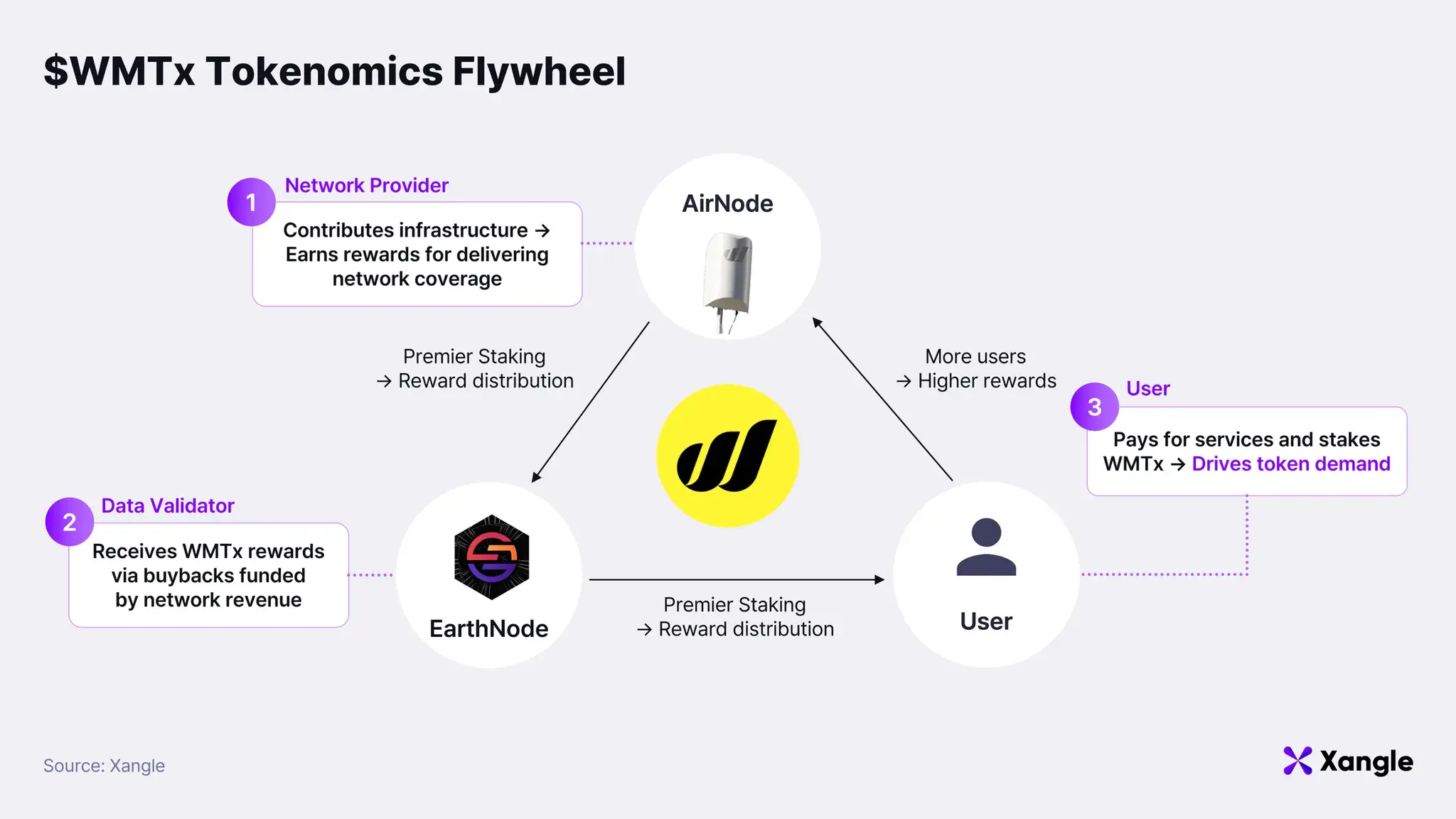
WMTx is not just an incentive token—it functions as a revenue-sharing mechanism linked directly to real-world telecom income. When users pay for services in fiat (e.g., USD), the revenue is used on the backend to buy back WMTx. This introduces sustained demand pressure on the token and redistributes revenue in a way that supports token value. The repurchased tokens are allocated to EarthNode operators and stakers. Compared to traditional inflationary reward models, this mechanism is more favorable in defending token value.
This design distinguishes World Mobile’s model from traditional telecoms in two key ways:
First, service revenue is not monopolized by the telecom provider, but shared with network participants. EarthNode operators and stakers receive WMTx based on actual usage—measured by traffic data—rather than mining. Eligibility to operate nodes is limited and managed via EarthNode NFTs (ENNFTs).
Second, users also benefit indirectly from this structure. Subscribers who participate in Premier Staking can gain returns linked to network revenue, not only through staking rewards but also through potential token appreciation. In effect, this is a form of buyback-based redistribution.
In this way, WMTx is not a speculative asset designed for short-term price appreciation—it is a participatory asset, enabling contributors to share in the value generated by expanding global telecom infrastructure. As more users join the network and traffic increases, token demand and rewards grow in tandem—enhancing the value of the ecosystem.
The resulting flywheel—service usage → revenue generation → token buybacks → token value increase → stronger incentives → infrastructure growth—is what positions WMTx as the core asset of a digital telecom economy.
3-3. Is node investment profitable?
For World Mobile, expanding telecom infrastructure is a critical step toward increasing network revenue. To support this growth model, AirNode sales must provide a sufficient return on investment for participating investors. Recent data provides an estimate of Spark Node profitability.
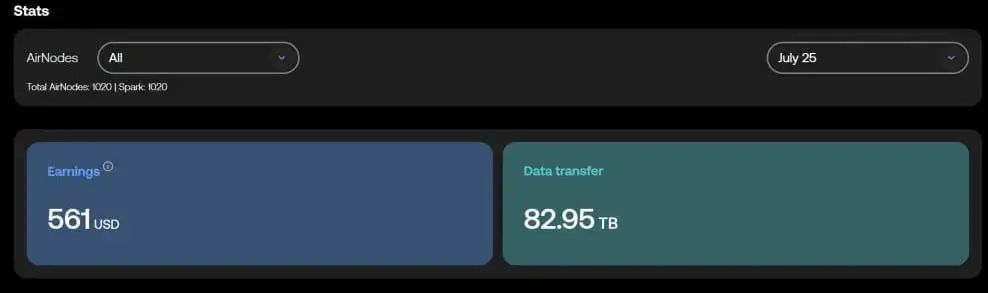 Source: World Mobile Korea Community – Shared by Korean EarthNode Operator “KTOP”
The dashboard above shows performance data from 1,020 Spark Nodes installed and remotely operated in Pakistan. According to the operator, the rewards shown were accrued over 9 days, from July 1 to 9. Based on this, the profitability estimates are as follows:
- Payback Period per Node: ~2.8 years
- Annualized ROI: ~35.3%
- Revenue per 1TB of Data Relayed (≈250 HD movies): $6.76
These figures are based on a single operator’s dashboard, so broader benchmarking would require a larger dataset. However, the World Mobile team currently promotes a projected annual ROI of up to ~40% and a payback period of ~2.5 years. They also note that profitability will improve as user adoption and data throughput increase over time.
At present, Spark Nodes allocated for Pakistan are being released in batches of 5,000 units approximately every two weeks, and each batch has consistently sold out within minutes. This level of demand suggests continued investor confidence in the model. For those evaluating AirNode investment potential, the following details the specific revenue calculation:
Profitability Breakdown
Assumptions:
- 1,020 AirNodes
- Total revenue over 9 days: $561
- Total data relayed: 82.95 TB
Per-Node Daily Revenue:
- $561 ÷ 1,020 ÷ 9 = $0.061
Payback Period:
- $62.99 ÷ $0.061 = 1,032 days ≈ 2.8 years
Annual ROI:
- ($0.061 ÷ $62.99) × 365 = ~35.3%
Revenue per 1TB Relayed:
- $561 ÷ 82.95 = $6.76
4. Korea Market Entry Strategy and Future Challenges
4-1. Validating a security- and privacy-centric telecom model for developed markets
World Mobile has validated the effectiveness of its hybrid telecom model in some of the world’s most connectivity-challenged environments—from remote regions of Africa to hurricane-hit areas of the United States. However, in developed markets like Korea, where mobile coverage is already comprehensive, basic connectivity alone does not offer a compelling differentiation. To succeed in Korea, World Mobile must position itself not only as a platform for infrastructure investment and revenue sharing, but also as an alternative telecom solution that emphasizes security and privacy.
There are three core pillars supporting World Mobile’s privacy- and security-first model:
- Decentralized Identity (DID): EarthNodes manage user identity through decentralized identifiers rather than centralized servers, giving users stronger control over their personal data.
- Multi-Layered Architecture: The World Mobile Chain (WMC) is a Layer 3 rollup built on Ethereum Layer 2 (Base). Through Merkle roots and DACerts, it guarantees the integrity of both on-chain and off-chain data while minimizing the exposure of large-scale telecom logs.
- VPN Encryption & SIM Swap Insurance: The network offers encrypted traffic via VPN and provides insurance against SIM swap attacks and mobile number hijacking—protecting users from online activity risks.
However, building awareness and trust around these concepts—particularly in the Korean market—requires a phased and strategic approach. This go-to-market plan can be divided into two key phases:
Phase 1: Expand Participation via AirNode Investment
Actively market AirNode investment opportunities to Korean investors, enabling them to participate in global infrastructure expansion and receive a share of telecom service revenue. Increasing access to WMTx by pursuing additional exchange listings will also be essential to support adoption and liquidity.
Phase 2: Launch a Pilot Program through MVNO Licensing
Pursue a Mobile Virtual Network Operator (MVNO) license to offer trial services within Korea. While this will require setting up a local subsidiary and navigating Korea’s complex regulatory framework, World Mobile could partner with existing Mobile Network Operators (MNOs) under a resale-based model—aligned with the Ministry of Science and ICT’s initiative to promote the MVNO market. This would enable World Mobile to build trust through limited service trials while introducing its decentralized telecom brand to Korean users.
That said, legal and regulatory frameworks—such as the Radio Waves Act, Protection of Communications Secrets Act, and Location Information Act—must be thoroughly reviewed in advance. Tailored licensing strategies and expert legal guidance will be prerequisites for market entry; technical excellence alone is not sufficient.
To secure a meaningful foothold in advanced markets, World Mobile must pair its technical rollout with continuous education campaigns and user engagement programs that clearly demonstrate the value of its privacy- and security-enhancing model. Backed by pilot deployments and data-driven validation, this dual-track strategy can earn trust from both consumers and regulators—and potentially catalyze a meaningful shift in user behavior and telecom infrastructure design in developed economies.
4-2. Key challenges for long-term business sustainability
As a crypto asset, WMTx is inherently subject to volatility, and its price may fluctuate significantly depending on broader market conditions. If the token’s price drops sharply, the value of rewards distributed to node operators may decline, dampening their motivation to participate. Conversely, if the token overheats, it could become difficult for new users to acquire WMTx, thereby creating a barrier to service expansion.
To mitigate these effects, World Mobile already distributes a portion of rewards in stablecoin-equivalent assets and conducts WMTx buybacks using service-generated revenue. However, the project must establish a more flexible policy framework capable of dynamically responding to different token price scenarios. For example, if price volatility exceeds a predefined threshold, the reward distribution mechanism could automatically adjust its composition. Alternatively, a price stabilization fund could be deployed to buffer against market shocks.
At the same time, delivering consistent service quality and operational reliability will require strong, resilient partnerships with global providers like Starlink and local Mobile Network Operators (MNOs). It is essential to set clear performance benchmarks—including latency, availability, and data throughput—at the contract stage and implement regular performance audits.
Operational and technical working groups should be established to enable joint response in the event of network disruptions. These groups would be responsible for coordinated issue resolution, including hardware replacements and network optimization tasks when needed. Such a foundation of collaborative risk management and technical governance is essential to ensuring the stability of the WMTx-based economic model—and will be critical for World Mobile to position itself as a credible, sustainable telecom solution in advanced markets.
5. Closing Statement
World Mobile is building a new telecom paradigm grounded in decentralized infrastructure. Anchored by a Layer 3 blockchain, the project has constructed a global ecosystem composed of AirNodes, EarthNodes, and the WMC chain—delivering connectivity through physical infrastructure and distributing value through the WMTx token economy. After launching commercial networks and validating its technology in developing regions, World Mobile is now seeking to extend its model to advanced markets such as South Korea.
Unlike many Web3 projects that center revenue models around token sales without contributing meaningful utility, World Mobile operates a functioning telecom network and redistributes the resulting revenue back into its ecosystem. This makes it a rare example of Web3 infrastructure with real-world application and economic flow. At the same time, traditional telecom operators continue to grow revenue by monetizing user data through derivative business lines. In contrast, World Mobile’s commitment to user privacy—eschewing direct data monetization—requires the project to develop alternative competitive advantages to ensure long-term viability.
To that end, I believe the project should focus on onboarding a broader array of consumer-facing applications and services to the World Mobile Chain. These offerings will be critical in generating additional revenue streams and competing with incumbent telecom providers. While current initiatives—such as the decentralized industrial infrastructure project with 51nodes in Germany and the self-sovereign identity (SSI) development partnership with PwC Italy for the EU digital identity framework—are meaningful, World Mobile must now expand its reach to include builders creating user-centric, service-layer applications.
In the next installment of this report series, we will revisit World Mobile’s progress by examining updates in Korean market penetration, revenue growth, and newly onboarded partnerships. As the team continues to pioneer the decentralized telecom industry with conviction and momentum, we will follow their journey with sustained attention and anticipation.
Disclaimer
I confirm that I have read and understood the following: The information contained in this article is strictly the opinions of the author(s). This article was authored free from any form of coercion or undue influence. The content represents the author's own views and does not represent the official position or opinions of CrossAngle. This article is intended for informational purposes only and should not be construed as investment advice or solicitation. Unless otherwise specified, all users are solely responsible and liable for their own decisions about investments, investment strategies, or the use of products or services. Investment decisions should be made based on the user’s personal investment objectives, circumstances, and financial situation. Please consult a professional financial advisor for more information and guidance. Past returns or projections do not guarantee future results. This article was written at the request of World Mobile. All content in this article was written independently by the author(s), and neither CrossAngle nor World Mobile had any editorial control or influence over the content. The author(s) may hold the cryptocurrencies mentioned in this article at the time of writing.
Xangle or its affiliated partners own all copyrights of the written or otherwise produced materials and content provided on the platform. Any illegal reproduction of such content, including, but not limited to, unauthorized editing, copying, reprinting, or redistribution will result in immediate legal actions without prior notice.